
You drained your 1972 Idlewood pool last week and the bottom looks like a topographic map — etched white plaster, exposed aggregate in three patches, a stain ring at the old waterline that no acid wash will lift. The bid in your inbox says “replaster — $6,400” as if all three words mean the same thing. They don’t. Standard plaster, quartz, and Pebble Tec are three fundamentally different interior systems with three different lifespans, three different price points, and three very different relationships to Clarkston’s water chemistry.
Clarkston is a pool renovation market. Most in-ground pools here were built between 1968 and 1992, which puts the average shell somewhere between 33 and 57 years old. The original marcite has been chipped out and replaced — usually two or three times — and the homeowner asking for a fourth resurface in 2026 has a real decision to make: keep choosing the cheapest finish and replace it every 8 years, or step up one tier and buy 15-to-20 years of life out of a single job.
This is a material-by-material walkthrough of the three interior finishes we actually quote in Clarkston. Real cost ranges, real lifespan expectations measured against DeKalb County water, real failure modes, and the prep work underneath that determines whether any of them last.
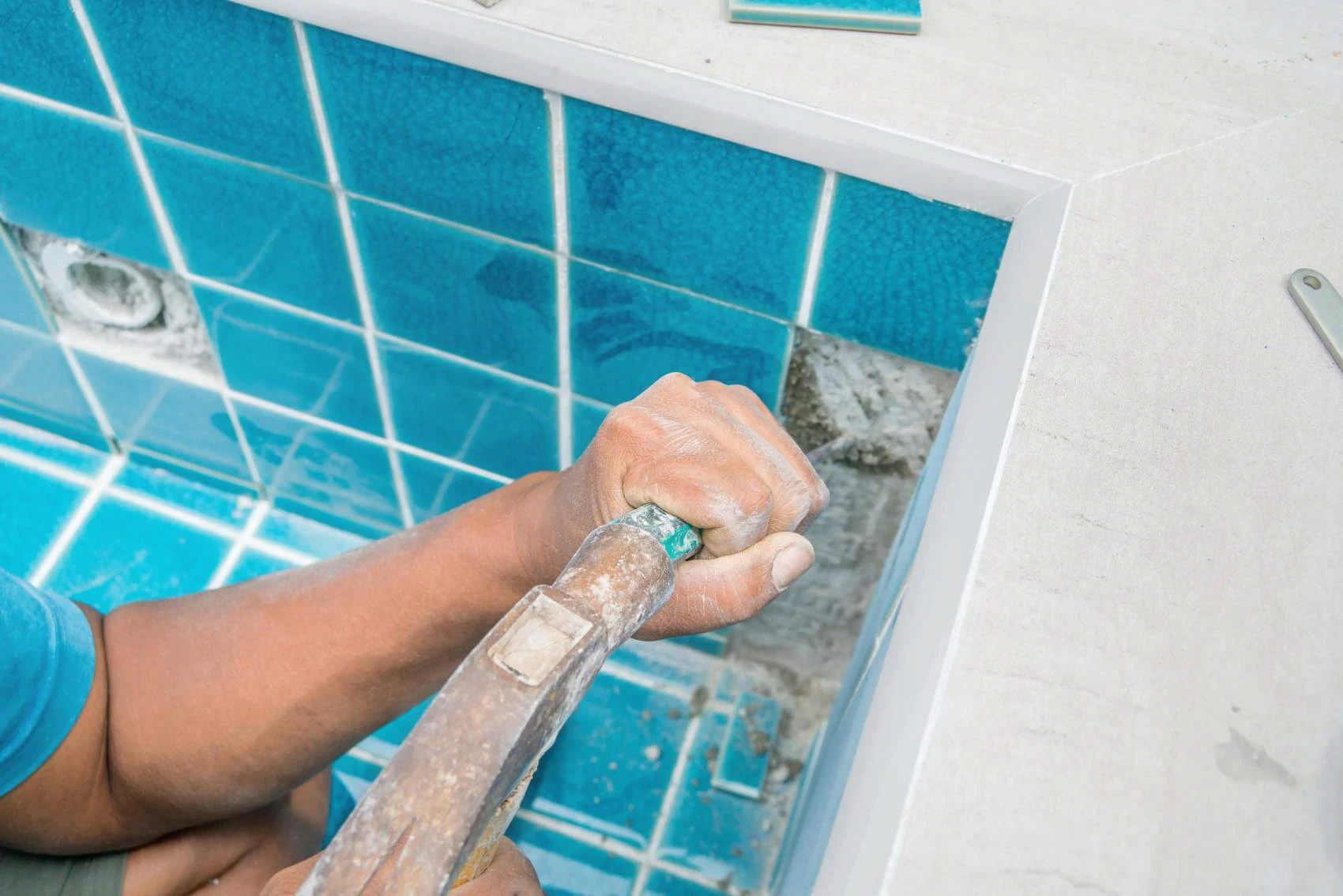
A note before the material breakdown: the finish itself is roughly 55% of the line-item cost on a resurface. The other 45% is chip-out, bond coat, tile work, start-up chemistry, and the labor underneath. Skimp on the underneath and the finish on top fails on a schedule no warranty will cover. We’ll get to that in the prep section.
Standard White Plaster — The $5,800 to $7,200 Option
White marcite plaster — a hand-troweled mix of white portland cement, marble dust (calcium carbonate aggregate), and water — is the original 1960s-era pool finish and still the cheapest interior available. On a 14,000-gallon Clarkston pool of typical 1970s-era dimensions (16×32, 3.5–8 ft depth), a standard replaster runs $5,800 to $7,200 turnkey, including chip-out and start-up.
The appeal is simple: low entry price, bright white reflective interior, and a finish every plaster crew in metro Atlanta knows how to apply. The reality is the finish gets etched, stained, and pitted on a Clarkston timeline that’s shorter than national average.
Why Clarkston is hard on standard plaster: DeKalb County water runs at roughly 110 to 140 ppm calcium hardness (as CaCO₃) straight from the tap — meaningfully harder than Gwinnett County’s ~80 ppm. Hard fill water shifts the calcium saturation index upward, which over a multi-year cycle drives calcium nodule deposits, scaling lines, and the gray “ghosting” patches you see along the bond beam after year 4 or 5. The opposite problem — soft, calcium-hungry water — etches the marble dust right out of the matrix and roughens the surface enough that algae starts to anchor in the porosity.
Realistic lifespan in Clarkston: 7 to 10 years before genuine end-of-life. Pools with diligent weekly chemistry and a saturation index held between -0.2 and +0.3 can stretch toward 10. Pools run on auto-pilot with the chlorinator dialed too high and pH drifting low fail closer to 6.
Where it makes sense: rental properties, pools the homeowner plans to sell within 5–7 years, or projects where the renovation budget is genuinely capped and the alternative is leaving the pool unusable for another season.
Quartz Aggregate — The $8,400 to $11,800 Mid-Tier
Quartz finishes — sold under brand lines like Diamond Brite Quartz, StoneScapes Quartz, and Krystal Krete — are a step up the materials ladder. Same portland cement base as standard plaster, but the marble dust is replaced (or partially replaced) with crushed silica quartz aggregate. The result is a finish that’s harder, denser, less porous, and more chemically stable.
The numbers on quartz hardness tell the story. Standard plaster’s marble-dust aggregate rates around 3 on the Mohs hardness scale. Quartz aggregate rates at 7 on the Mohs scale — more than double — and that hardness translates directly into stain resistance, etch resistance, and a meaningful jump in working life.
Pricing on a 14,000-gallon Clarkston pool: $8,400 to $11,800 turnkey, depending on color choice and chip-out scope. Light-color quartz blends (white-silver, bahama) run at the lower end of the range; deeper color blends (midnight blue, oceanside) carry a $700–$1,200 color premium because the pigment loadings are heavier.
Realistic lifespan in Clarkston: 12 to 15 years with adequate chemistry. The harder surface resists both etching (calcium-hungry water) and scaling (calcium-saturated water) better than standard plaster, which means DeKalb’s hard fill water punishes a quartz finish less aggressively. Color holds well — the visible quartz aggregate is the color carrier, and quartz doesn’t fade the way pigment-only plaster does.
What quartz isn’t: the finish is still trowel-smooth to the foot — slightly rougher than standard plaster but nowhere near the texture of pebble. If the goal is a glassy, slick interior, quartz holds that promise. If the goal is the natural-stone visual look, quartz doesn’t deliver it.
Where it makes sense: homeowners staying in the property 10+ years, pools where the renovation budget can absorb a $3,000 step up from standard plaster, and Clarkston water situations where the calcium hardness is on the higher end of the DeKalb range (a 15-year quartz finish is the right call against 140 ppm tap water).
Pebble Tec and Pebble Finishes — The $10,800 to $15,400 Premium Tier
Pebble finishes are a different category of product entirely. Where plaster and quartz are trowel-smooth cement-and-aggregate blends, pebble finishes are an aggregate-dominant system. The trowel applies a thick layer of polymer-modified cement carrying a high volume of river-rounded or quarried pebble aggregate (3/8″ down to 1/8″ depending on product line), and after curing the surface is acid-washed and pressure-rinsed to expose the stone. What you walk on is mostly pebble, with cementitious binder filling the interstitial gaps.
The brand landscape: Pebble Tec is the trade-name original (Pebble Technology International, the company), and most homeowners use “Pebble Tec” the way they use “Kleenex” — as a generic for the whole category. The actual product lines worth knowing for Clarkston work are PebbleTec Classic, PebbleSheen, and PebbleFina from PTI, plus StoneScapes Mini Pebble and Wet Edge Primera Stone from competing manufacturers. Each has distinct aggregate size and texture; PebbleSheen and StoneScapes Mini Pebble are the most popular for Clarkston remodels because the smaller aggregate is easier on bare feet.
Pricing on a 14,000-gallon Clarkston pool: $10,800 to $15,400 turnkey. The range is wider than plaster or quartz because color and aggregate selection matter more. A standard mid-blue PebbleSheen lands at the low end; specialty color blends with glass-bead inclusions (Aqua Cool, Caribbean) land in the upper $14k range; full upgrade to the larger PebbleTec Classic aggregate adds another $800–$1,500.
Realistic lifespan in Clarkston: 18 to 22 years with adequate chemistry. The cementitious binder still erodes on the same calcium-saturation curve as plaster, but the pebble aggregate doesn’t erode — and because the pebble is the visible surface, the finish keeps its visual integrity even as the binder slowly wears. By year 18 a pebble finish is showing its age in the form of slightly proud aggregate; that’s a different failure mode than the etched, stained, blotchy end-of-life appearance of standard plaster.
What pebble isn’t: smooth. The exposed-aggregate surface has texture you can feel on bare feet — most homeowners adapt within a week, but families with very young children or anyone with foot sensitivity should specify the smaller-aggregate product lines (PebbleFina or StoneScapes Mini Pebble) instead of the standard 3/8″ aggregate. We’ve also seen abrasion concerns on swimsuit fabric — competitive swim teams using a pebble pool for daily training will wear out lycra faster than they would in a plaster pool.
Contract language worth demanding on any pebble bid: “Product line and color: [specific brand line, e.g. StoneScapes Mini Pebble — Aqua Cool]. Aggregate exposure level: medium (acid wash and pressure rinse to ASTM C642 absorption ≤6%). Bond coat: SGM Diamond Bond or equivalent two-coat slurry. Start-up: 28-day brushing schedule, owner-administered or contractor-administered (specify which) with written chemistry log.” Anything vaguer than that is a contractor leaving themselves room to substitute a lower-spec product.
Where it makes sense: Clarkston’s many 1960s-era Lake Capri and Idlewood pools where the homeowner plans to stay 15+ years; pools that are getting a comprehensive renovation (new coping, new tile, new equipment) where it makes no financial sense to pair $20,000 of perimeter work with a 7-year plaster interior; and any homeowner who’s already replaced standard plaster more than once and is tired of the 8-year cycle.
The Prep Work Underneath — What Actually Determines Lifespan
Every interior finish, regardless of which one you choose, lives or dies on the prep work underneath it. We’ve pulled 4-year-old Pebble Tec off shells where the original installer skipped the bond coat — and watched the same homeowner blame the product. The product was fine. The prep wasn’t.
Here’s the honest sequence on every Clarkston resurface we run, in order:
- Drain and inspection (day 1): pool drained to sump, shell walked dry, every crack measured, every tile tested with a tap test, every penetration (skimmer throats, return inlets, light niches, main drain housing) opened and inspected. We mark structural cracks in chalk on the shell wall before anyone touches a chipping hammer — what doesn’t get marked doesn’t get fixed.
- Chip-out (days 2–3): the old plaster comes off down to clean gunite. On a typical 1970s Clarkston pool that’s been replastered twice already, the chip layer is 3/8″ to 5/8″ thick. Partial chip-outs (“scuff and recoat”) are how cheap bids hit their price — and they’re how 18-month delaminations happen. The finish bonds to whatever it’s troweled onto, and old plaster surfaces are not a substrate.
- Crack repair (day 3): any crack wider than 1/16″ gets V-grooved and packed with a hydraulic cement designed for submerged work. Active structural cracks (anything wider than 1/8″ or showing measurable movement on a width gauge) require a rebar staple-and-patch — a real structural repair, not a cosmetic fill.
- Bond coat (day 4): a two-coat slurry primer (SGM Diamond Bond or equivalent) goes on the entire prepared shell. This is the mechanical bridge between old gunite and new interior. This step is the one most often skipped on cheap bids. A bond coat adds roughly $400–$600 to material cost on a typical pool and 4–6 labor hours; contractors trying to hit the lowest possible number cut it first.
- Interior application (day 5): the plaster, quartz, or pebble system goes in. Two-person crew on a 14,000-gallon pool, typically 6–9 hours of continuous trowel work. Pebble adds an acid-wash and pressure-rinse step (day 6).
- Fill and start-up (days 6–10): the pool fills (DeKalb water meter rate matters here — most Clarkston homes fill a 14,000-gallon pool in 18–28 hours of continuous flow). Chemistry start-up runs 7–14 days with daily brushing on plaster and quartz, 28 days of structured brushing on pebble.
Clarkston-specific note: when we excavate around bond beam repairs on the older Idlewood and Lake Capri pools, we routinely hit decomposed granite from the Stone Mountain pluton at 4 to 8 feet of depth. That’s relevant for two reasons. First, it means the pool shells were poured against a stable granitic subgrade — structurally those shells are sound at 50 years old in a way pools built over Piedmont clay alone are not. Second, the granite influences groundwater chemistry around the pool and contributes to the higher calcium loading in nearby fill water.
DeKalb County Permits, Water, and Freeze Cycles — Local Variables
Three local factors meaningfully affect a Clarkston resurface project beyond just the finish choice.
DeKalb permit turnaround: interior resurfacing alone doesn’t typically require a separate permit in DeKalb. But the moment the scope includes new tile, new coping, plumbing repairs, electrical bonding work, or any structural shell repair, you’re into the permit window — and DeKalb’s 3-to-4-week permit turnaround (compared to Gwinnett’s 10–14 days) means a project that should run 14 days from drain to fill can stretch to 35–42 calendar days. Plan for that on any renovation that combines interior with perimeter work. Note also that despite Clarkston being an incorporated city, residential pool permits run through DeKalb County Planning & Sustainability at 178 Sams St., Decatur — not through Clarkston city hall.
DeKalb water hardness: the calcium hardness number on your fill water determines saturation index, and saturation index determines whether your finish scales or etches. DeKalb’s 110–140 ppm calcium hardness is meaningfully higher than Gwinnett’s, which means Clarkston pools live in slight calcium-saturation territory by default. Standard plaster handles that worst (gray ghosting, calcium nodules by year 4); quartz handles it better; pebble handles it best. If you’re choosing standard plaster anyway, plan to run a slightly acidic pH target (7.4 instead of 7.6) and add a sequestering agent (HEDP-based scale inhibitor) every spring opening.
Clarkston freeze events: 8 to 14 freeze events per winter is enough to stress waterline tile thinset bonds when tile and coping aren’t installed to proper standards, but it’s not aggressive enough to threaten an interior plaster, quartz, or pebble finish below the waterline. The interior finish failure mode in Clarkston is almost always chemistry-driven, not freeze-driven. The waterline 4–6 inches of tile is where freeze events matter — and that’s why a quality resurface bid includes inspection (and often replacement) of the waterline tile band at the same time as the interior.
Cost Decision Framework — Which Finish for Which Clarkston Pool
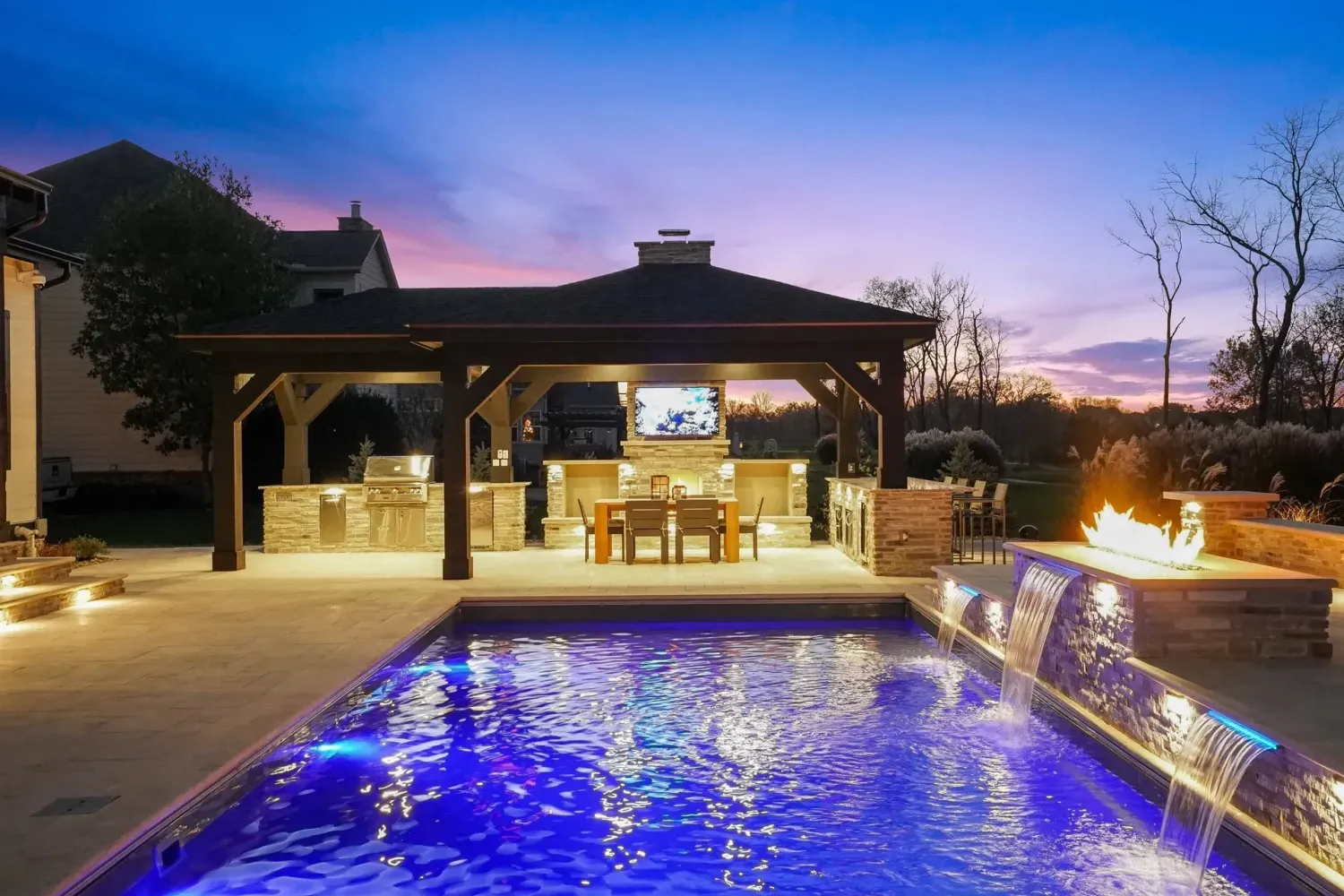
The right finish isn’t the most expensive one or the cheapest one — it’s the one matched to how long you plan to keep the pool and what your water chemistry discipline actually looks like. Here’s the honest decision framework we run with Clarkston homeowners at the on-site estimate:
Choose standard white plaster ($5,800–$7,200) if: you’re selling within 5–7 years, the pool is on a rental property, your renovation budget is genuinely capped, or you’re comfortable replacing the interior again in 8 years. The math works out to roughly $800/year amortized over a realistic Clarkston lifespan.
Choose quartz ($8,400–$11,800) if: you’re staying in the home 10–15 years, you want a glassy smooth interior, you’re not interested in pebble texture underfoot, or your DeKalb tap water tests on the higher end of the calcium range. Quartz amortizes to $700–$850/year over a 13-year working life — actually cheaper per year than standard plaster despite the higher up-front price.
Choose pebble ($10,800–$15,400) if: you’re staying 15+ years, you’ve already replaced standard plaster more than once, you’re doing a comprehensive renovation where the perimeter is also being redone, or you want the natural-stone visual depth that only an exposed-aggregate finish delivers. Pebble amortizes to $600–$770/year over a 20-year working life — the cheapest of the three on a true cost-of-ownership basis.
That last number is what gets lost in most bid conversations. Standard plaster is the cheapest finish to buy and the most expensive finish to own. Pebble is the most expensive finish to buy and the cheapest finish to own. Which one is “right” depends entirely on which math problem you’re actually solving.
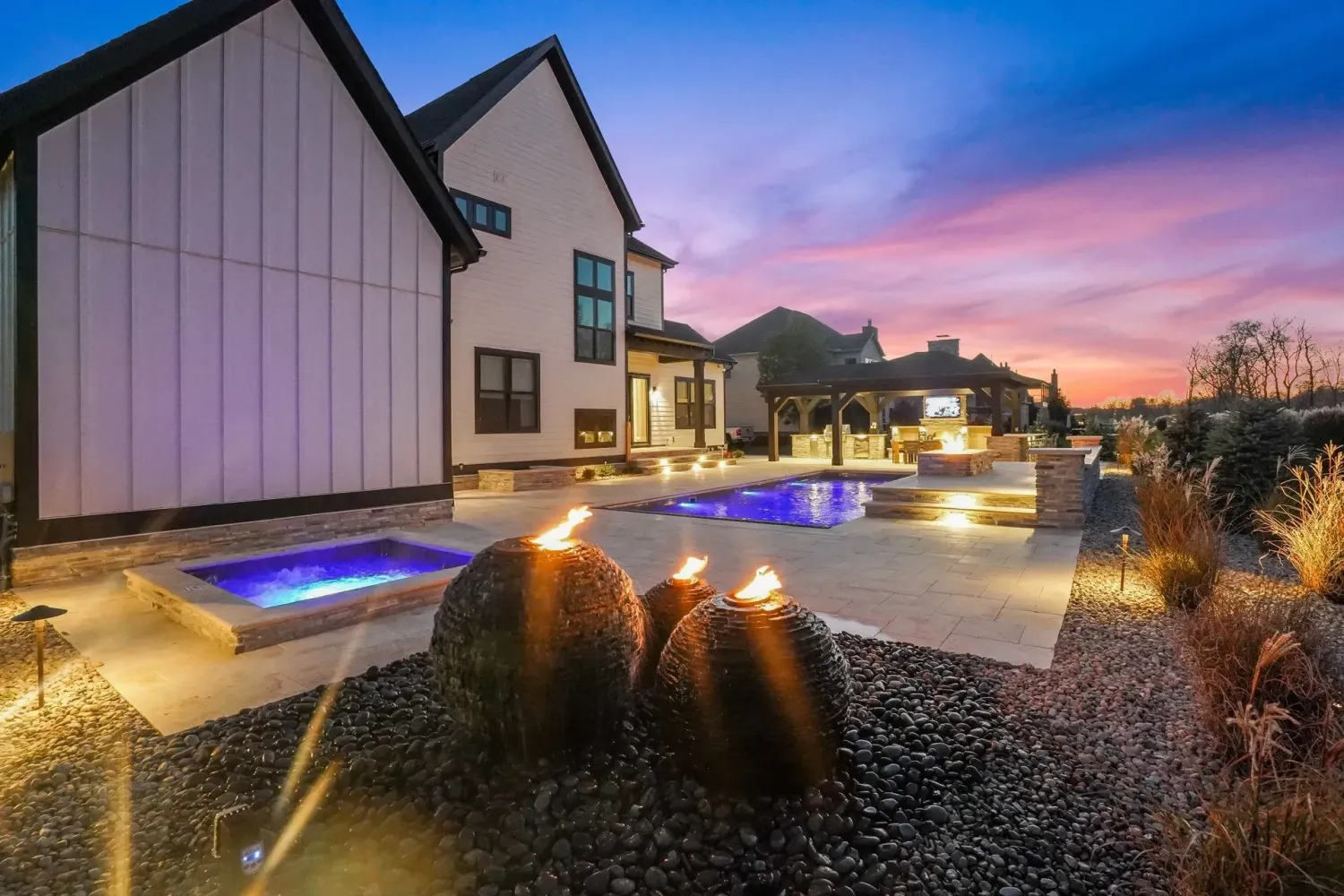
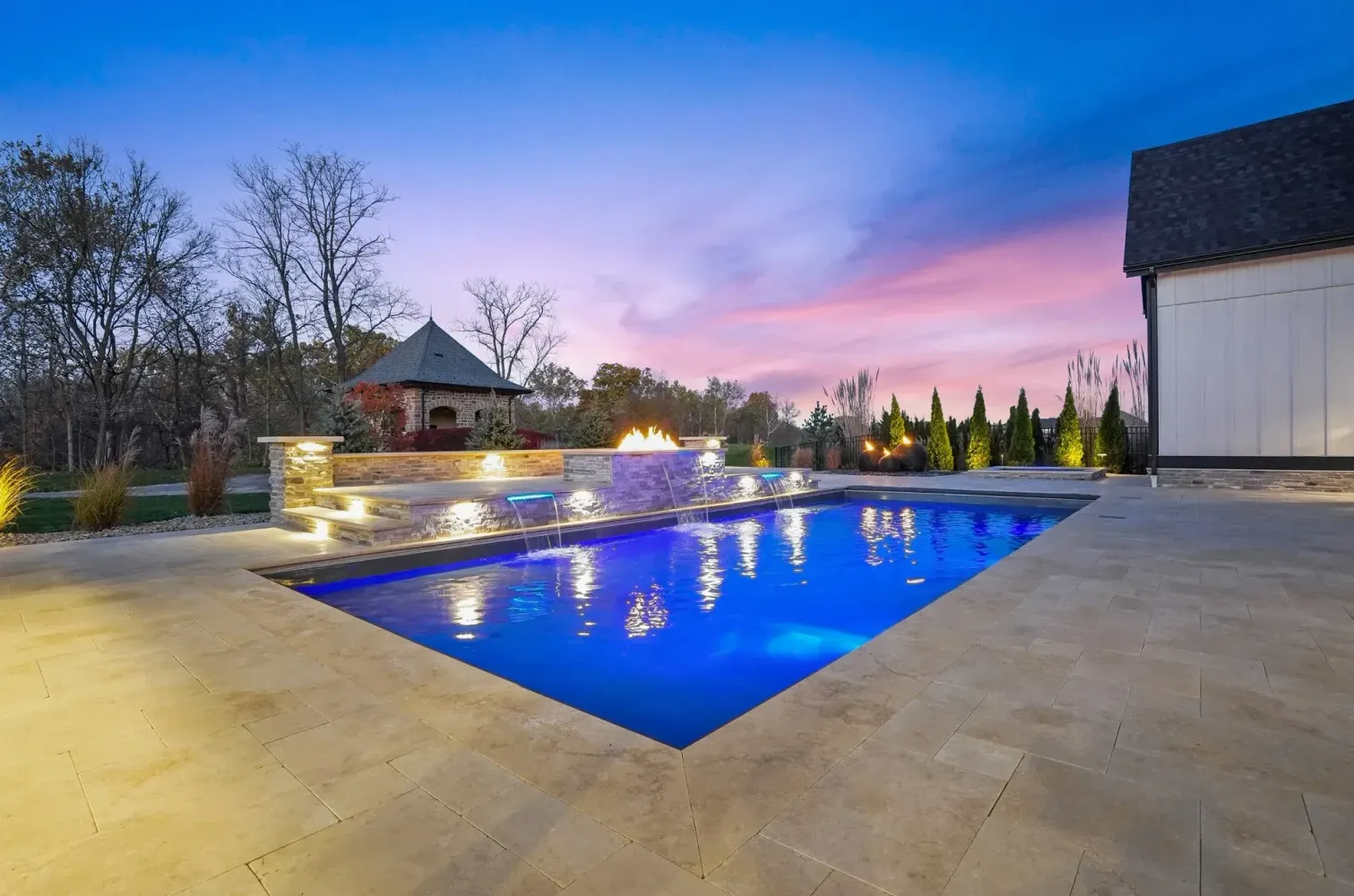
One more variable — color choice and water reading: the color of your interior finish drives the apparent color of the water column. White or pale finishes read pale aqua. Mid-blue and gray-blue finishes (most popular Clarkston choice) read clear blue to deep blue. Dark blue, deep gray, and black finishes read near-black at depth — dramatic but harder to spot a problem in (a lost ring, a swimmer in distress, algae getting started). On any pool with kids who swim, we generally steer toward mid-blue rather than near-black, regardless of which product family you pick.
One last point worth saying out loud: a resurface is a 7-to-22-year decision depending on what you put in. The conversation worth having on the front end is which lifespan you’re actually buying — and which spec language is in writing on the contract to make sure that’s what shows up on the truck.
Pool resurfacing across 20+ cities within 30 miles of Winder, GA
We bid every Clarkston resurface against the actual cost-of-ownership math — so you know whether the cheapest finish is the right finish, or whether stepping up one tier saves you a job in 8 years.