
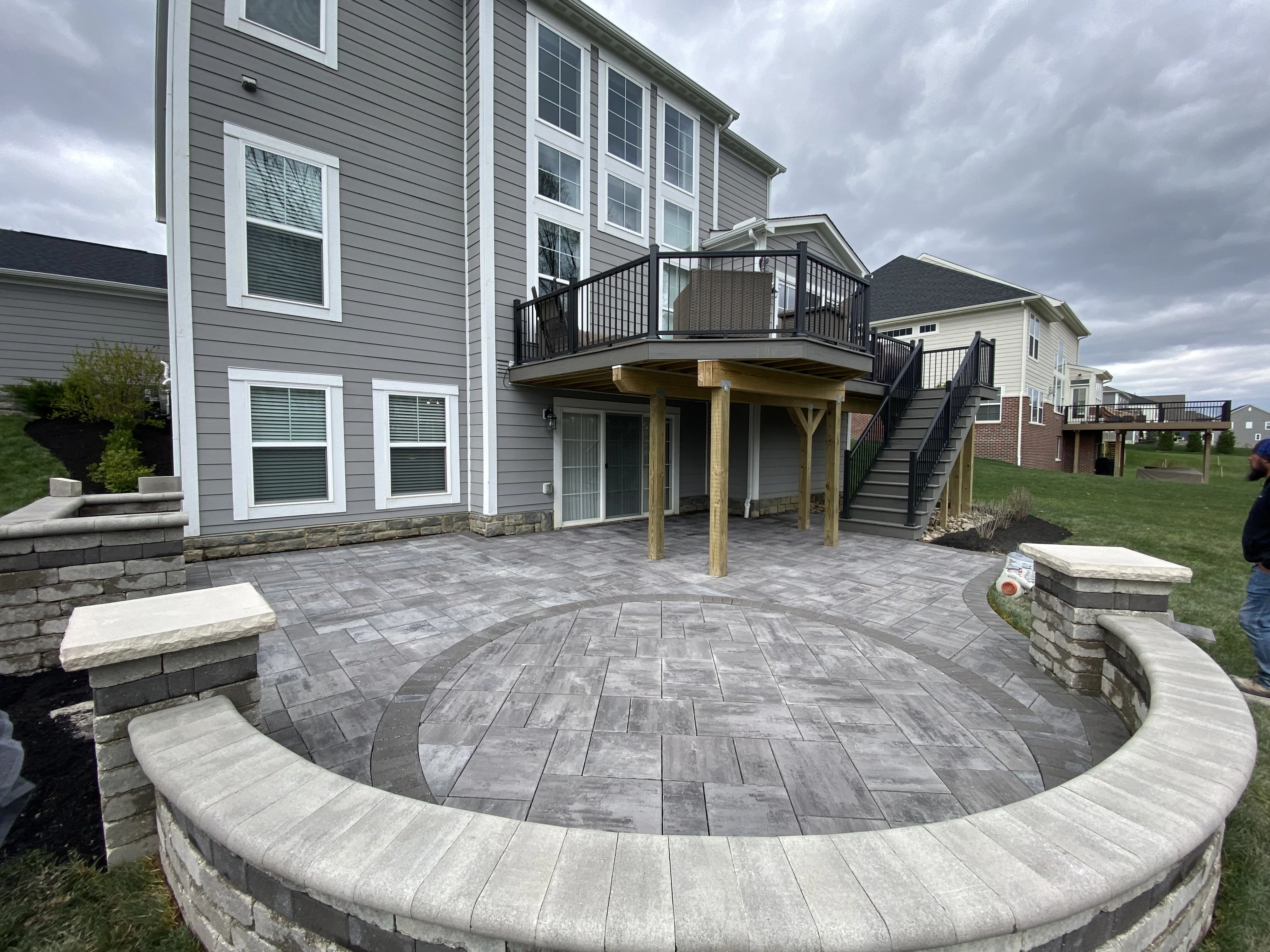
Patios, pool decks, outdoor kitchens, fireplaces, pergolas, and the transitions between them — designed and built as one project, not assembled in phases.
Most hardscape jobs in Metro Atlanta end up as four separate contractors working in sequence — a paver guy, a mason for the fire feature, a kitchen sub, and a pergola carpenter who all show up months apart, each solving for their own piece. That’s why the final result looks assembled instead of designed.
Primetime designs, permits, and builds the full envelope from one scope — one grade plan, one material palette, one crew walking the site from the first sketch to the last joint of polymeric sand.
A great backyard isn’t a list of features glued together over five years. It’s a single designed space where the patio, the pool deck, the kitchen, and the fire feature all know about each other — because one set of drawings said so before the first shovel hit the dirt.
The typical Metro Atlanta hardscape story goes like this: a patio goes in year one, then a kitchen gets bolted to the back of the house in year two, then a fire pit gets dropped onto a fresh slab in year three. Each piece makes sense on its own. None of them relate. The grades fight each other, drainage backs up against the house, and the material palette reads like a showroom sample board — because that’s exactly what it is.
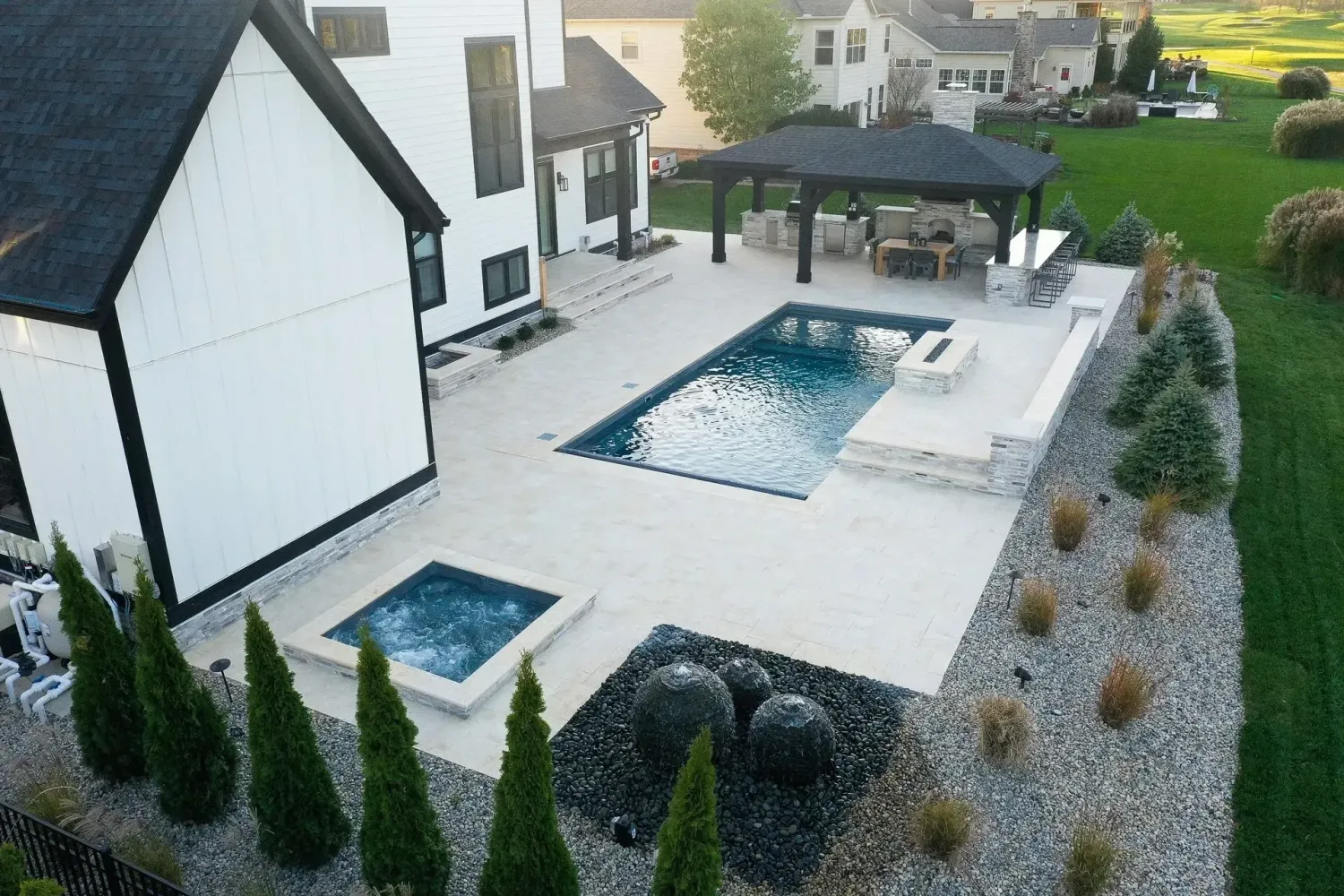
Our process starts with one design. Grades are engineered across the whole envelope — not just the piece you’re building this year. The material and feature palette gets consolidated into something that reads as a single room, not three. We build in the correct sequence, with the pool and landscape planned together from day one, because the transitions between stone, water, lawn, and shade are what make a backyard feel designed instead of decorated.
“Hardscape is plumbing, electrical, and drainage disguised as stone. Skip any of the three and the stone looks great — for about two summers.”
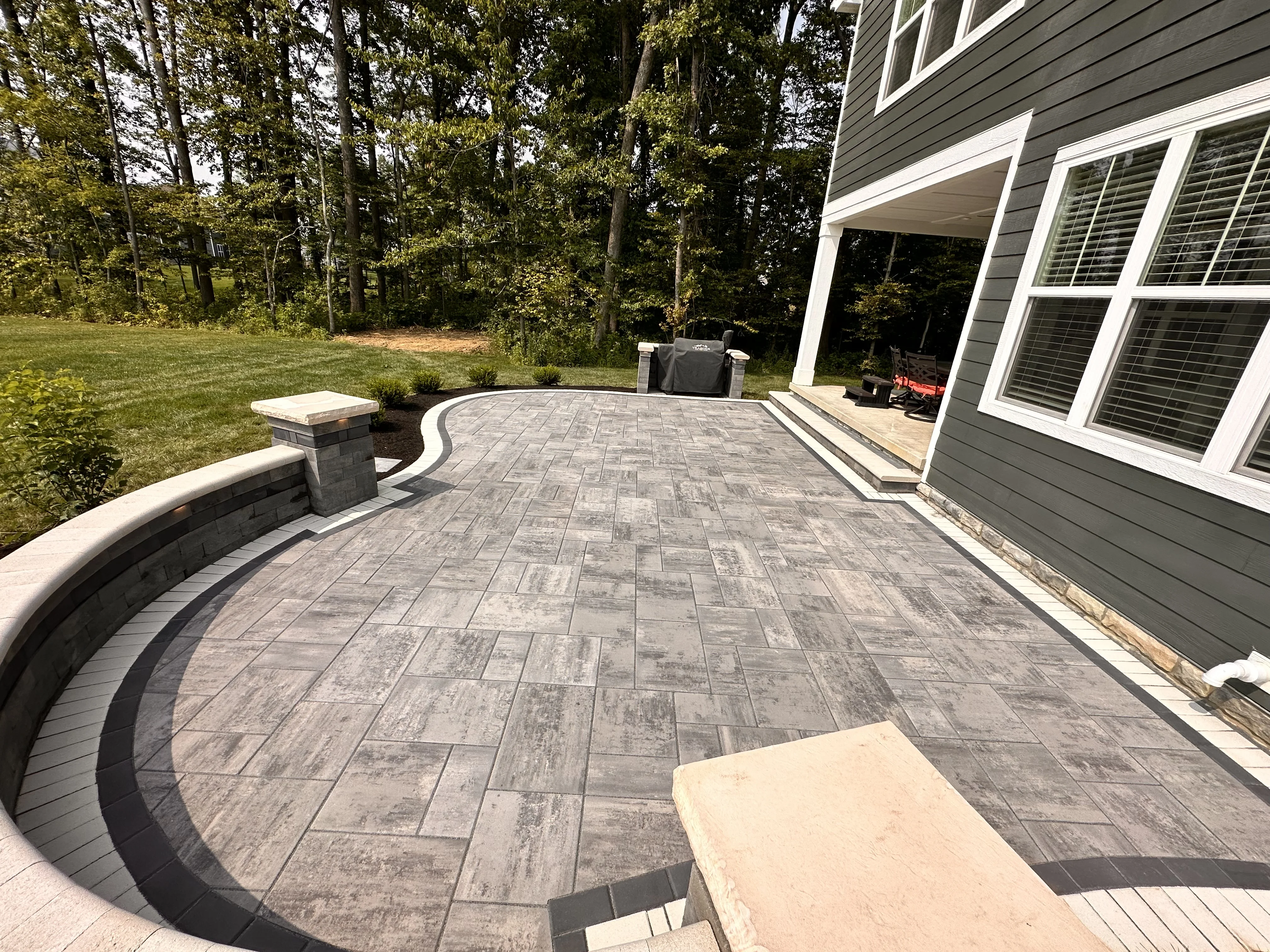
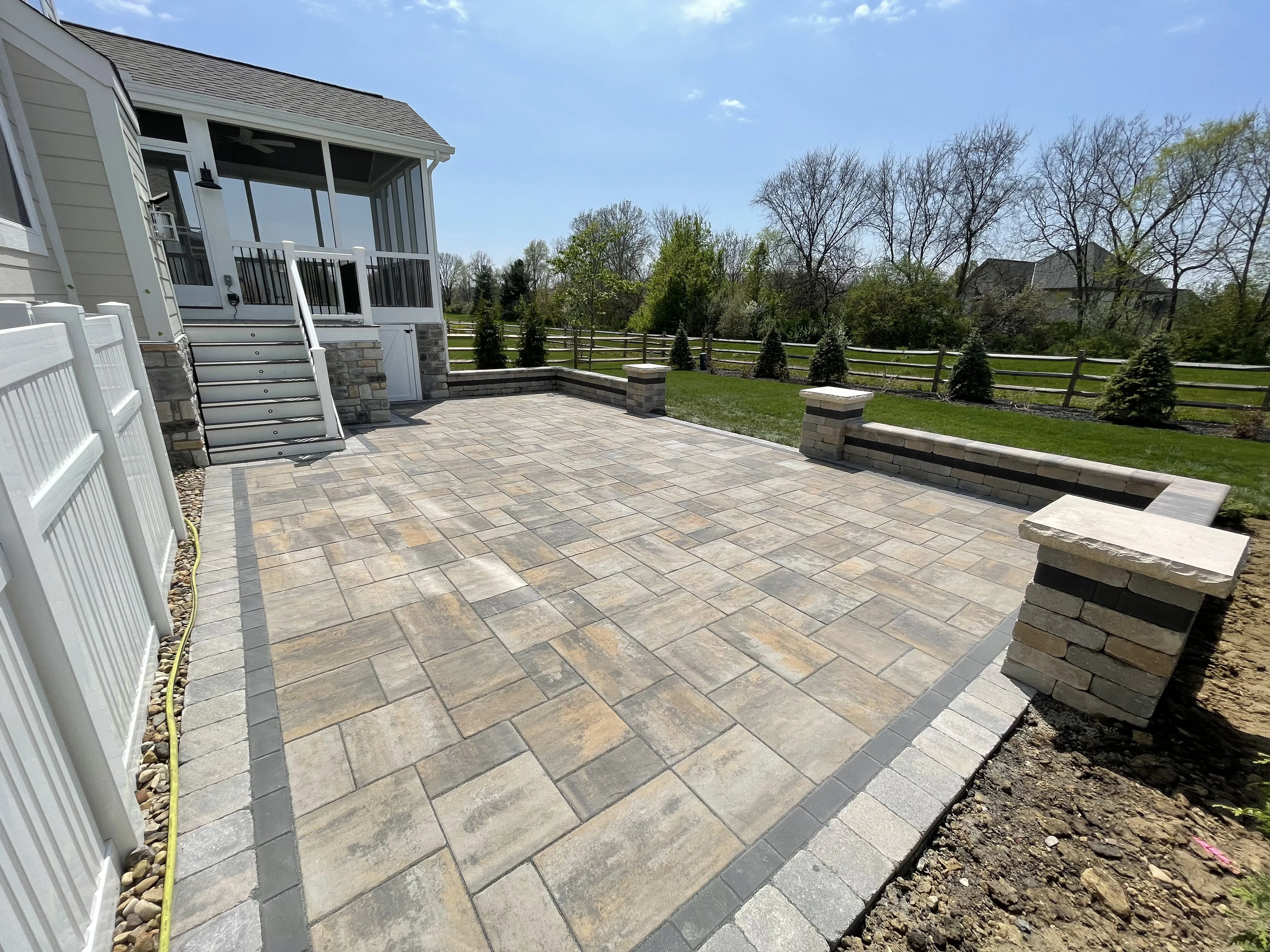
Primetime Pools — Winder, GAPavers, poured concrete, and natural travertine each do something different — and each one lives or dies on what’s buried under it. The failure point on 90% of failed hardscape isn’t the surface. It’s the base.
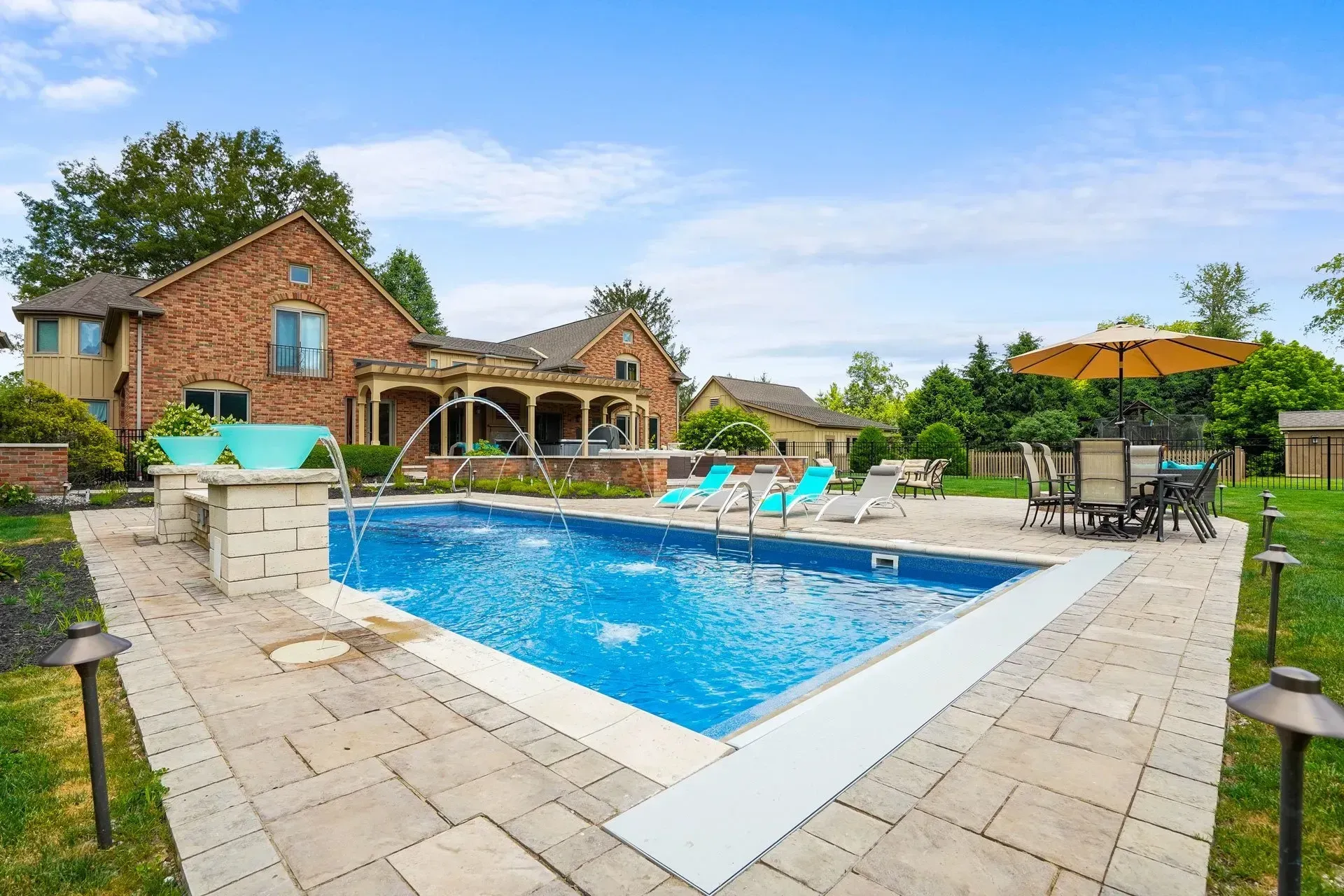
Paver patios read as traditional and repair piece-by-piece if something shifts; poured concrete gives you a seamless modern look but telegraphs every crack; travertine is the luxury play — cool underfoot, graceful around water, and forgiving on the eye — but demands real sub-base work to sit flat over time. We walk you through the tradeoffs against your home’s architecture and how you’ll actually use the space.
Base prep is where we don’t negotiate. 8 to 10 inches of compacted crusher run for foot-traffic patios. 12 inches under anything that will see a vehicle — a catering van, a mason truck, future construction. Edge restraint on every linear foot of paver field. Polymeric sand swept, activated, and re-swept so the joints lock together and the weeds can’t win. These are not upgrades. They are the reason your hardscape still looks new at year seven.
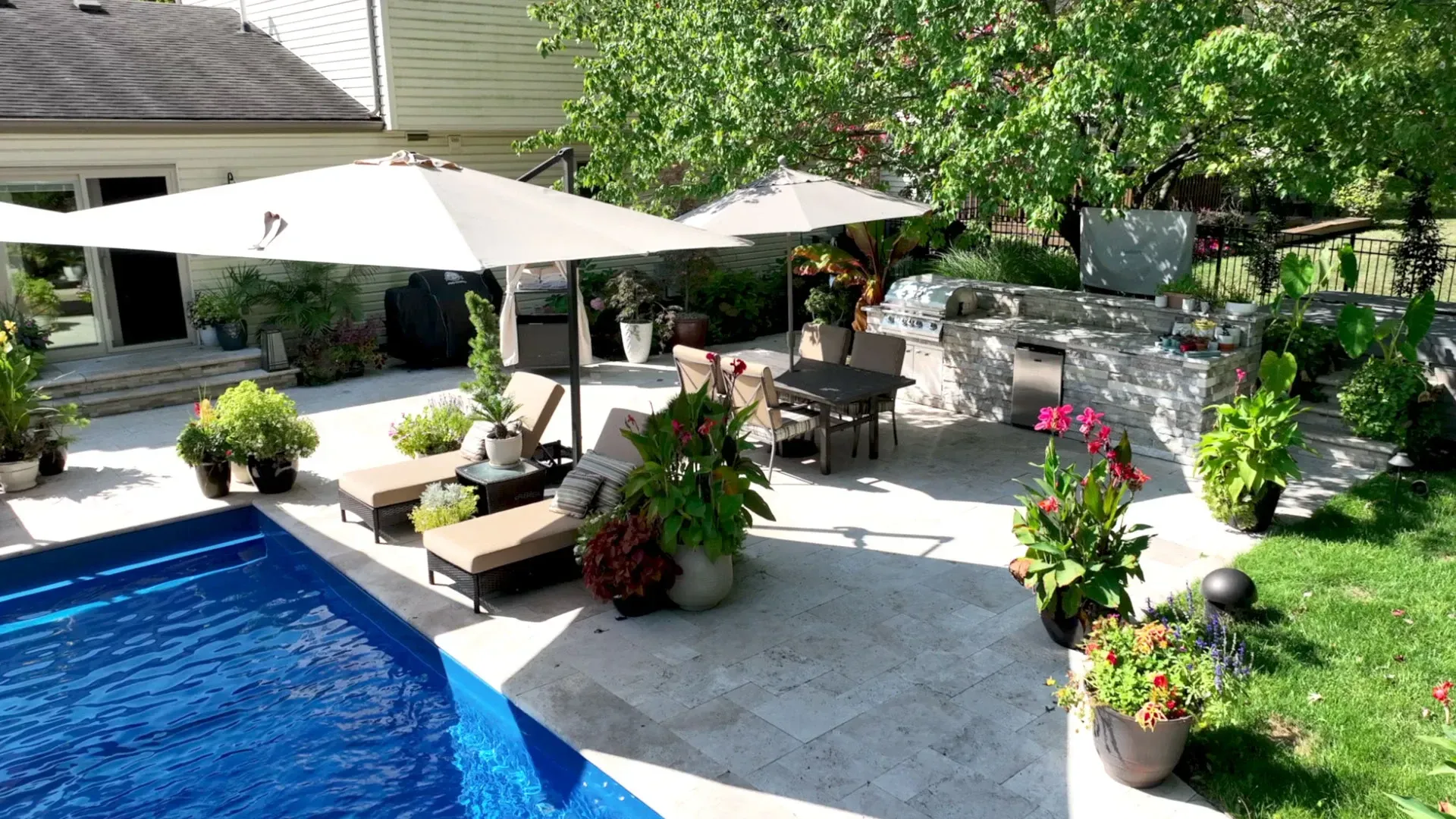
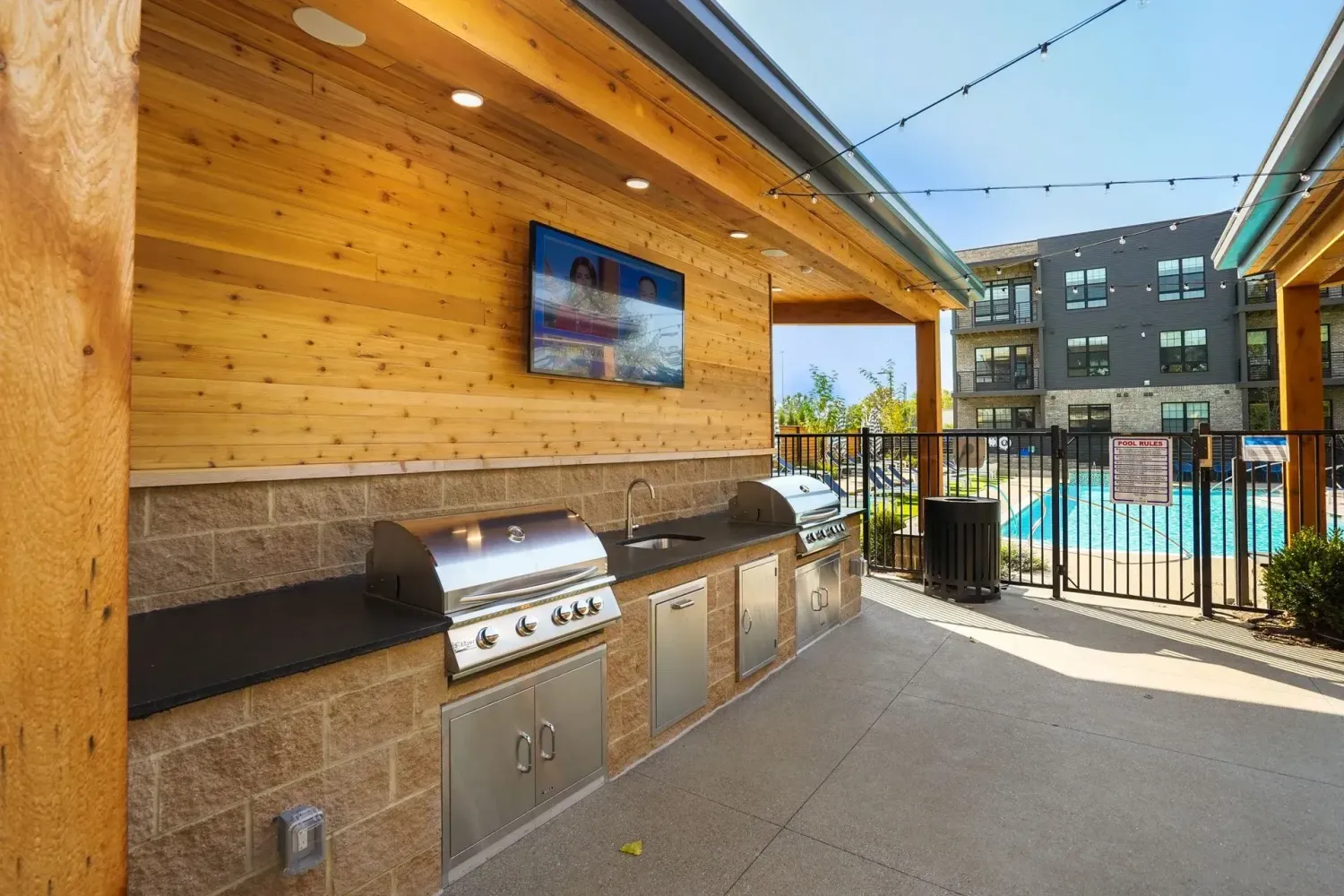
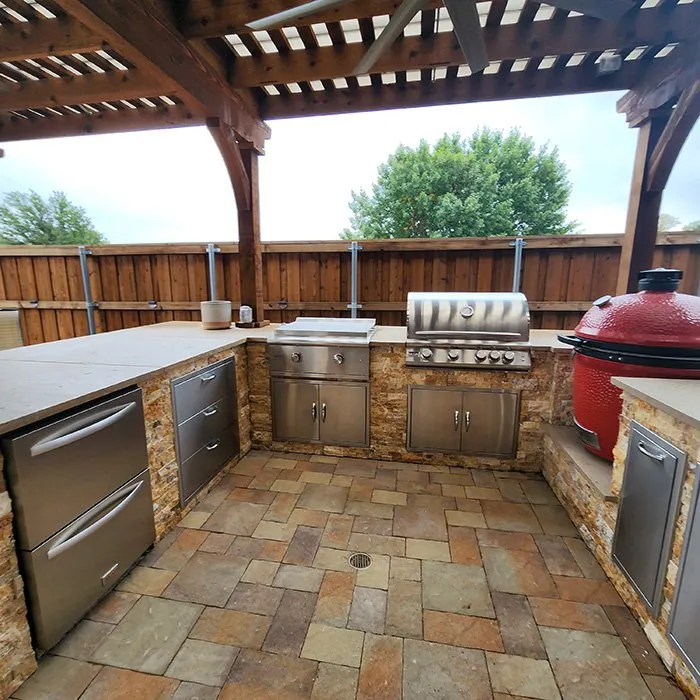
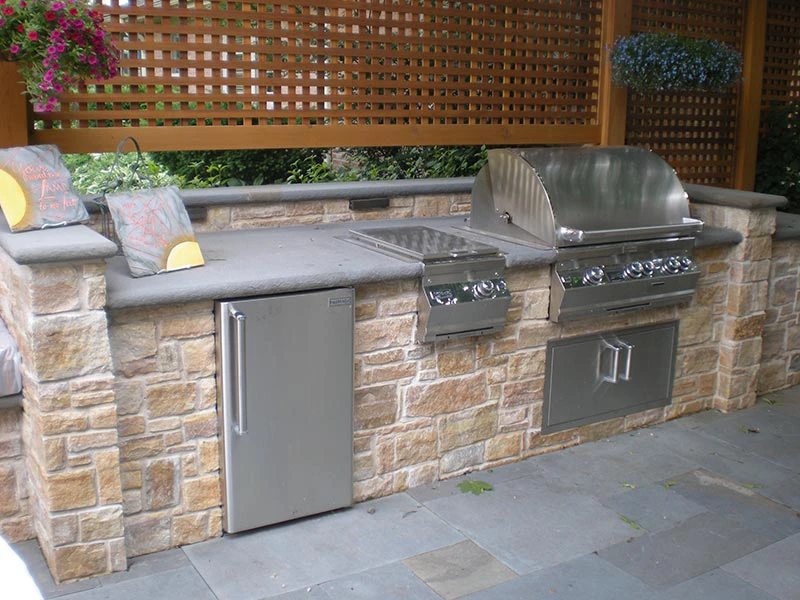
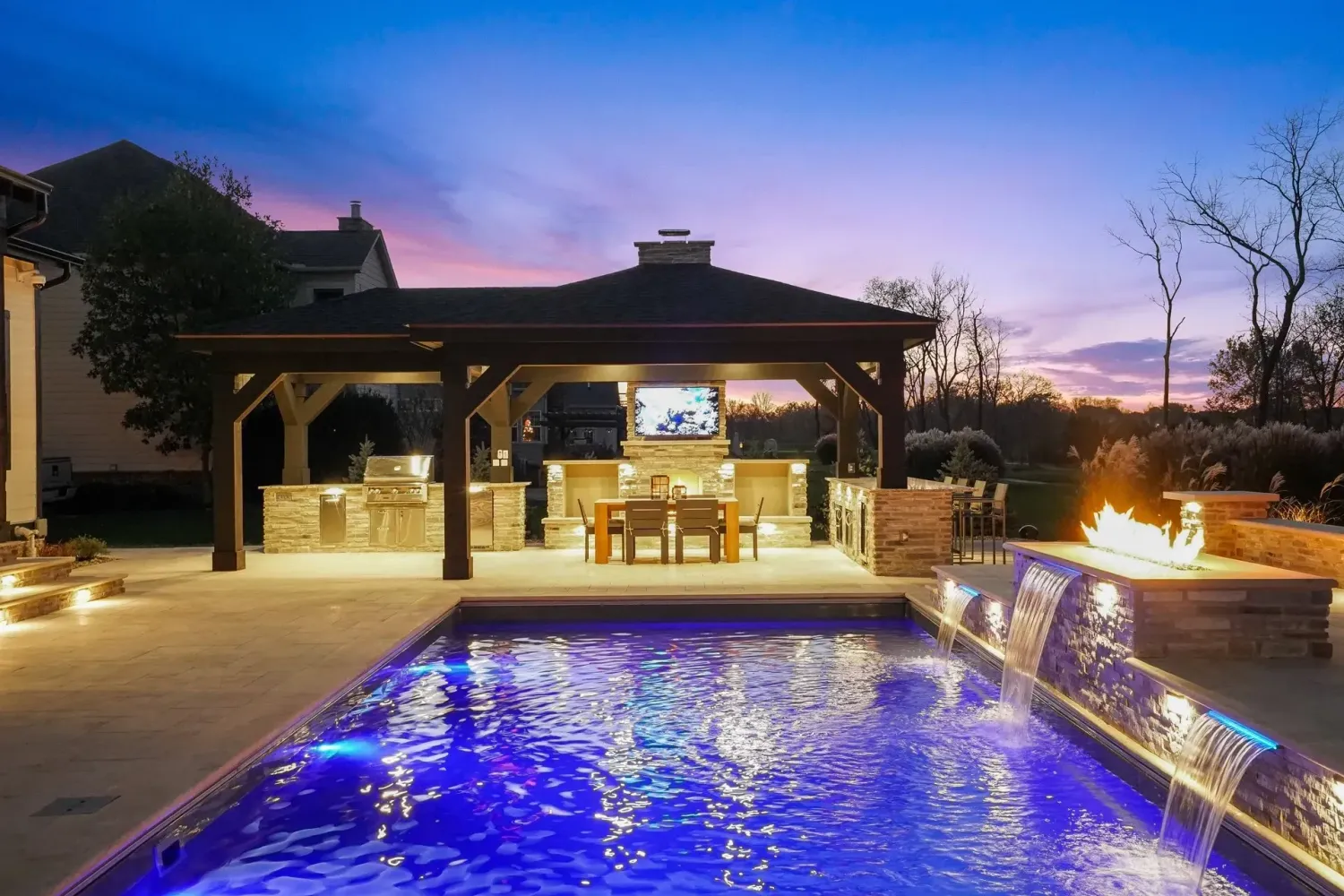
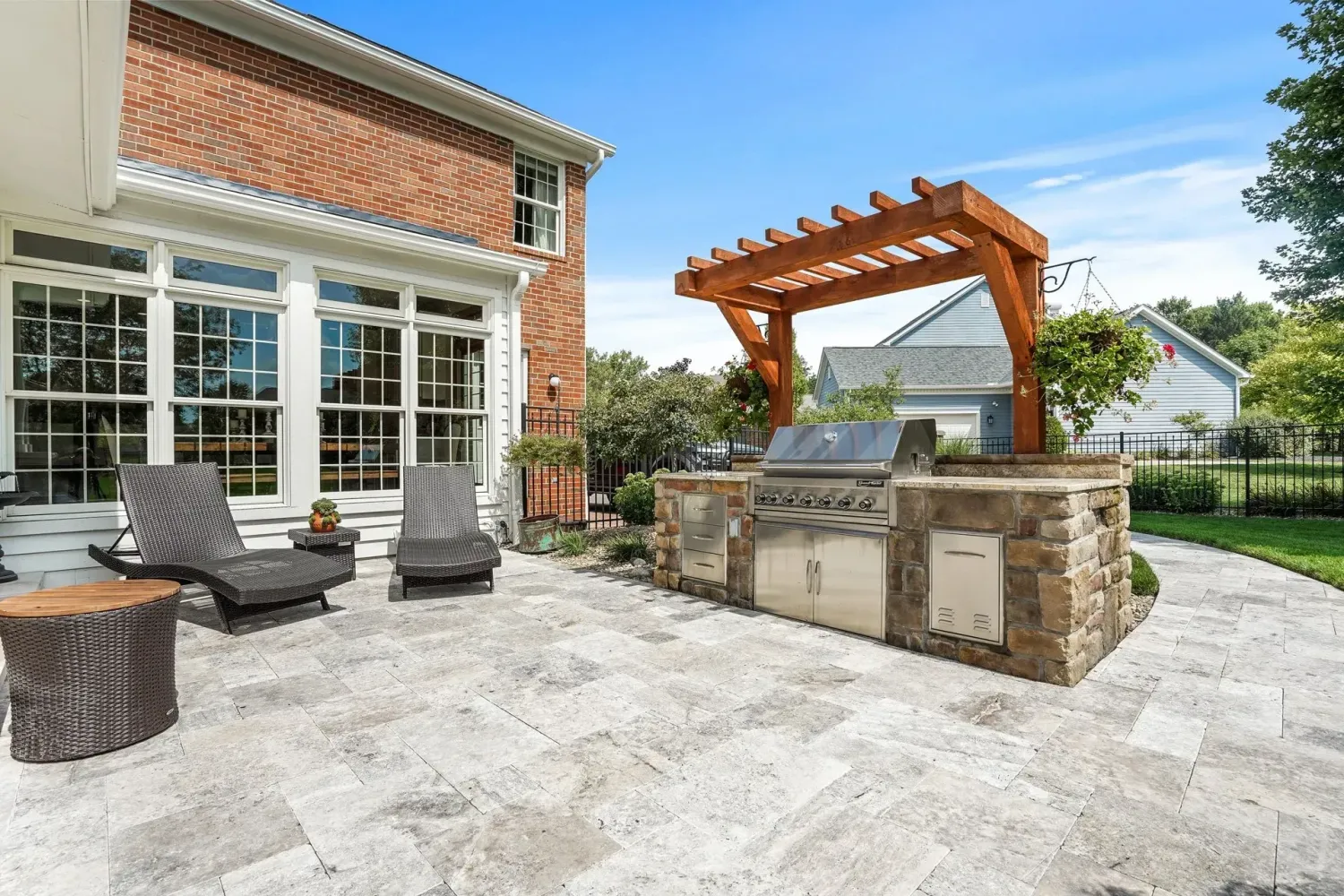
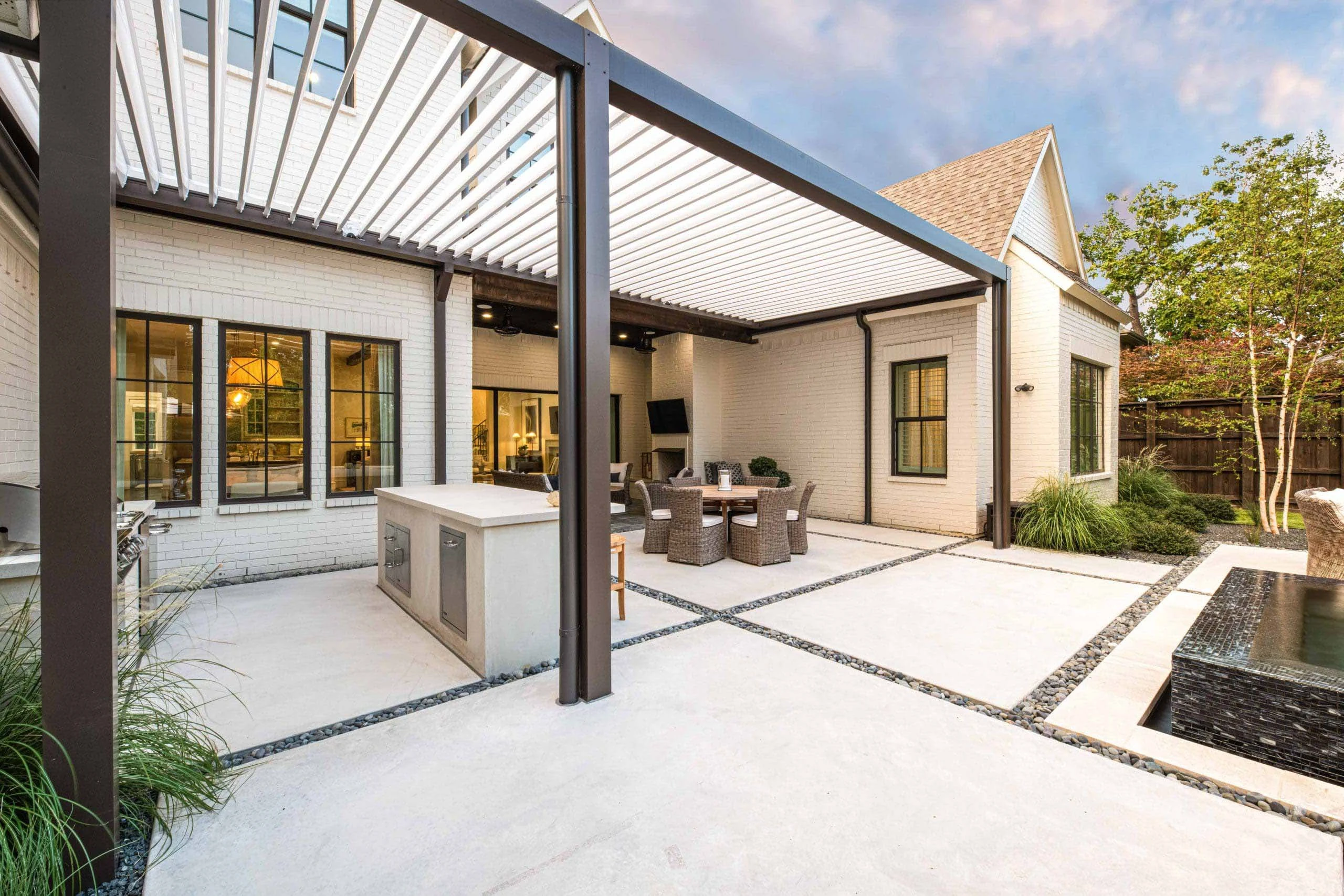
A real outdoor kitchen isn’t a grill island dropped on a slab. It’s a permanent structure with footings, gas, water, drainage, power, and ventilation — engineered like a piece of the house, because that’s what it becomes.
We start with the structural footing for the kitchen wall — below frost, tied into the patio structure, sized for the full weight of the masonry plus stone counter plus appliances. Too many outdoor kitchens get built on a 4-inch slab and start cracking at the base within two winters. Ours don’t. The wall is framed in steel or CMU block, veneered in stone or stucco, and topped with a stone counter that gets the support it needs from below.
Utilities get roughed in before the wall goes up. Gas line sized to the BTU load of every burner on the pad, water and drain for the sink with a proper trap and vent, dedicated GFCI circuits for the fridge and ice maker, and hood venting where the grill sits — because a 60,000 BTU grill under a pergola without ventilation is a grease-fire risk and a carbon-monoxide problem you don’t find out about until a guest feels sick.
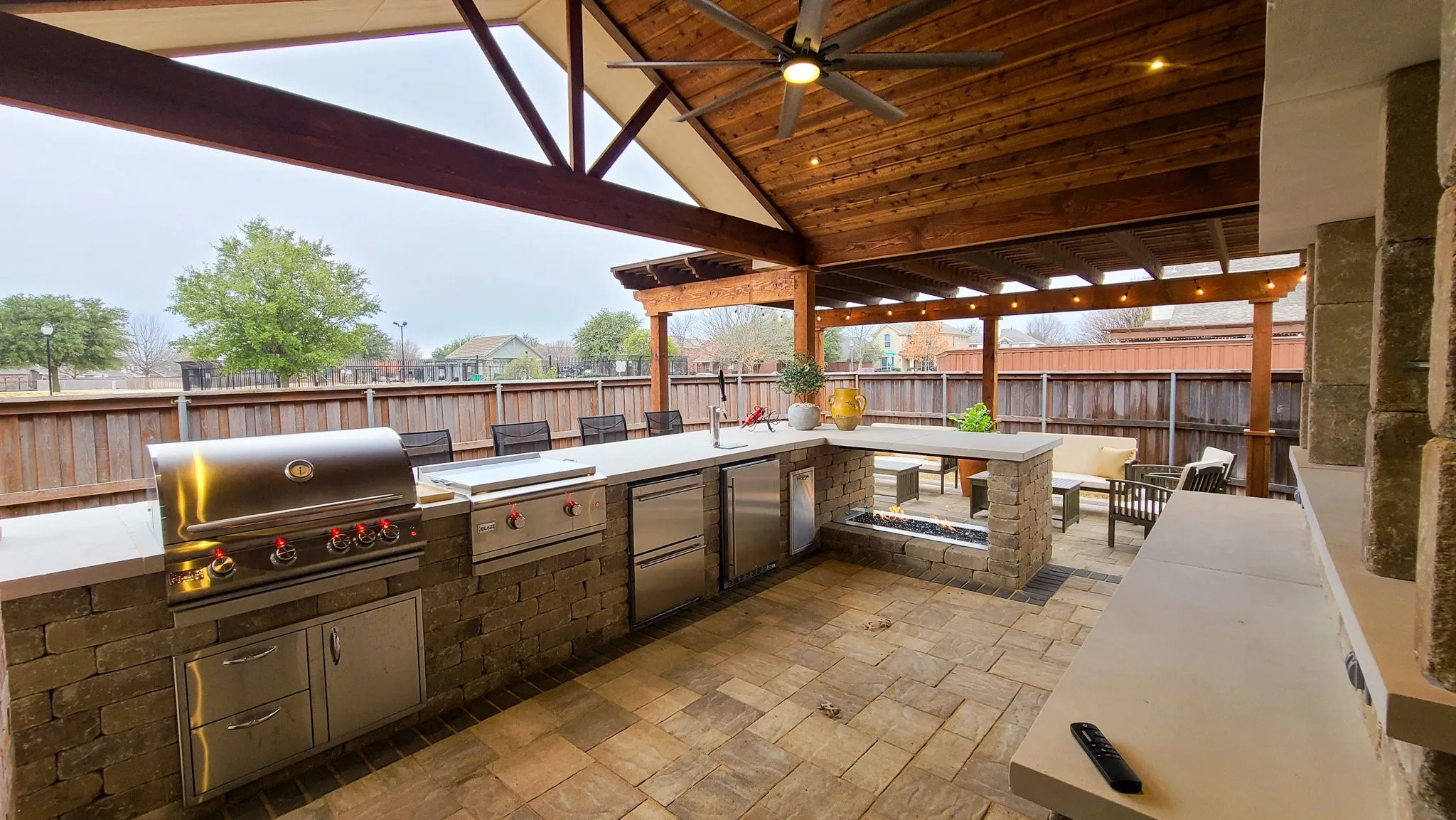
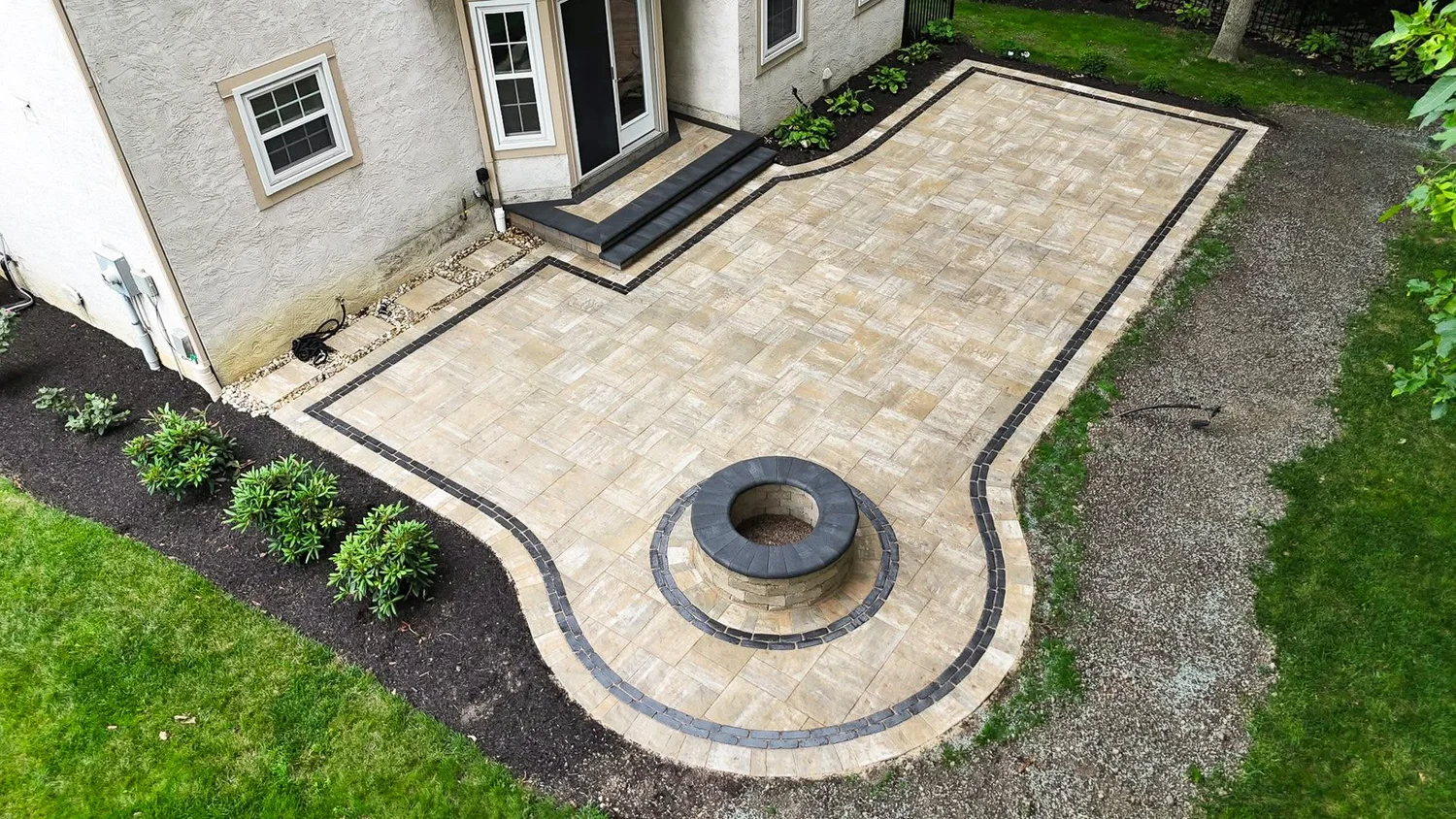
A fire feature is the single hardscape element that makes a backyard usable nine months a year instead of four. Done right, it’s a structural masonry piece. Done wrong, it’s a code violation that smokes you off your own patio.
The first decision is wood vs. gas. Wood is the real experience — the crackle, the smell, the ceremony — but needs a proper firebox, chimney draft, and a chase that meets clearance codes to any combustible structure. Gas is the on-demand option — one button, no ash, no smoke — and runs off the same line we size for the outdoor kitchen. Most of our clients go gas for the fire pit and wood for the fireplace. The two play different roles.
Chimney masonry is where cheap fireplace builds fail. We build full flue liners, proper throat geometry so the draw pulls smoke up instead of out, and a cap that keeps rain out of the firebox. Hearth detailing — the raised stone apron that defines the seating zone — is dry-fit before mortaring. Clearance codes apply to every combustible within a defined radius, and we don’t flex on them, because a roof fire starts in a fireplace that was built two feet too close to the eave.
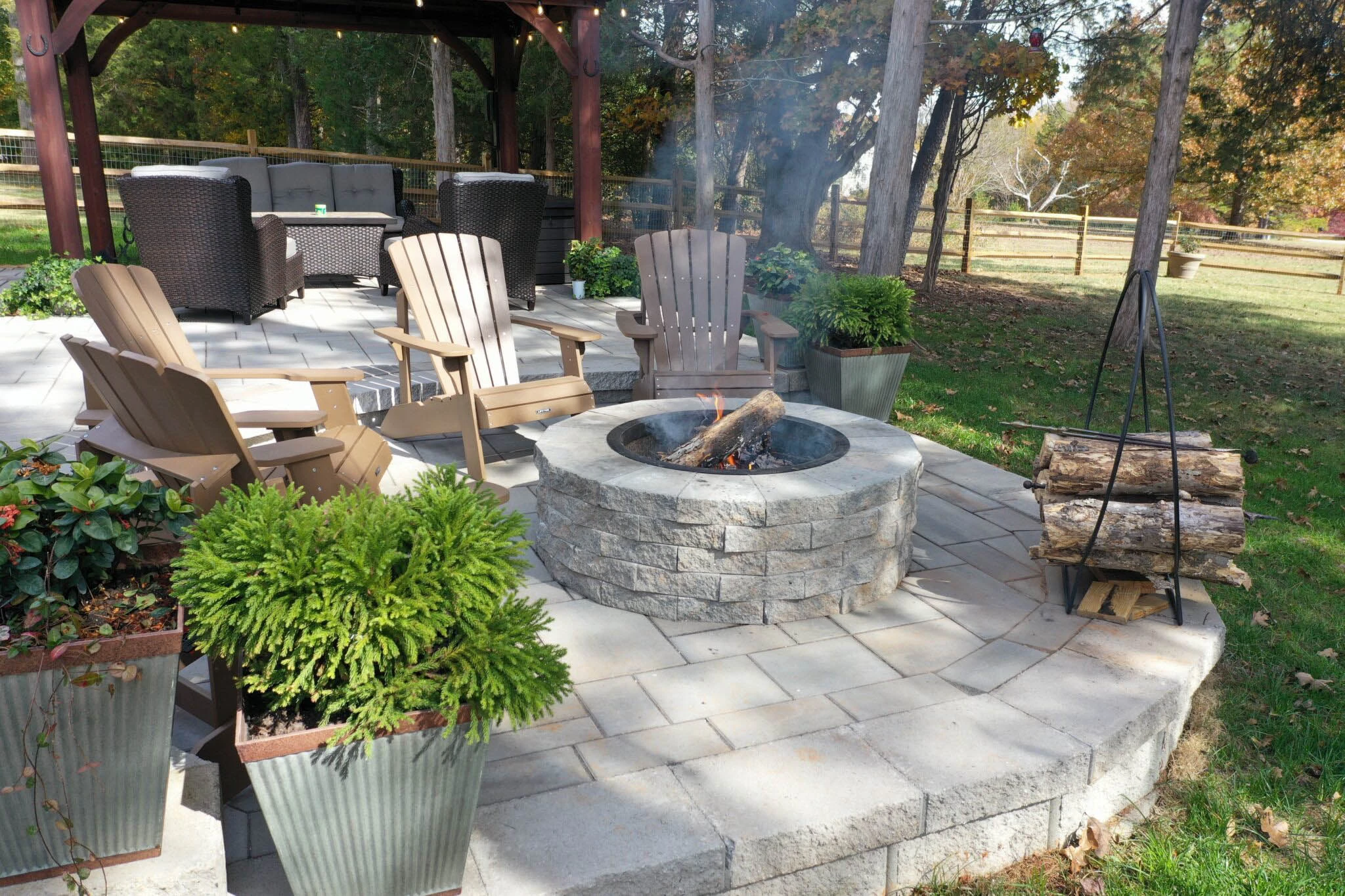
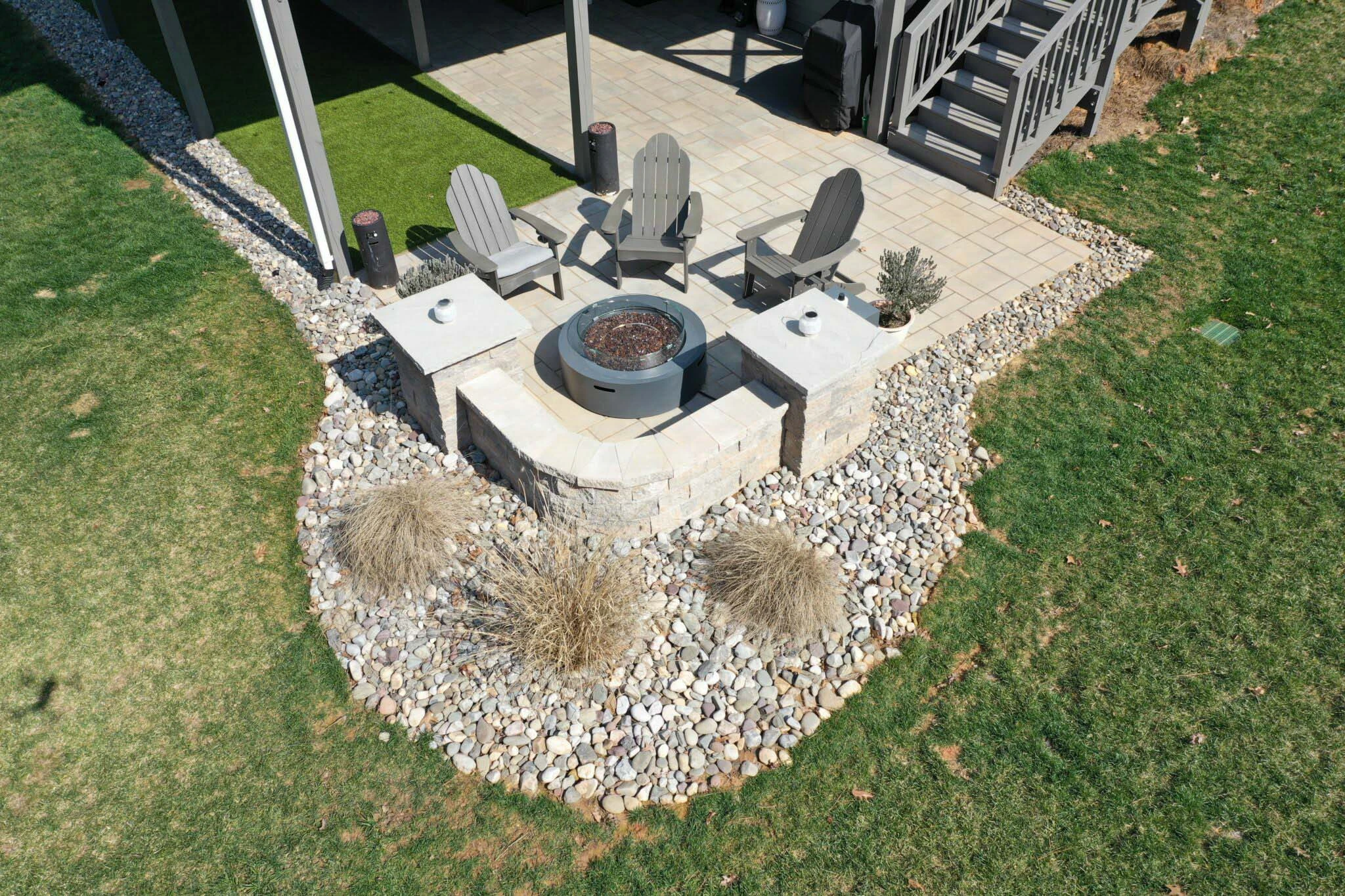
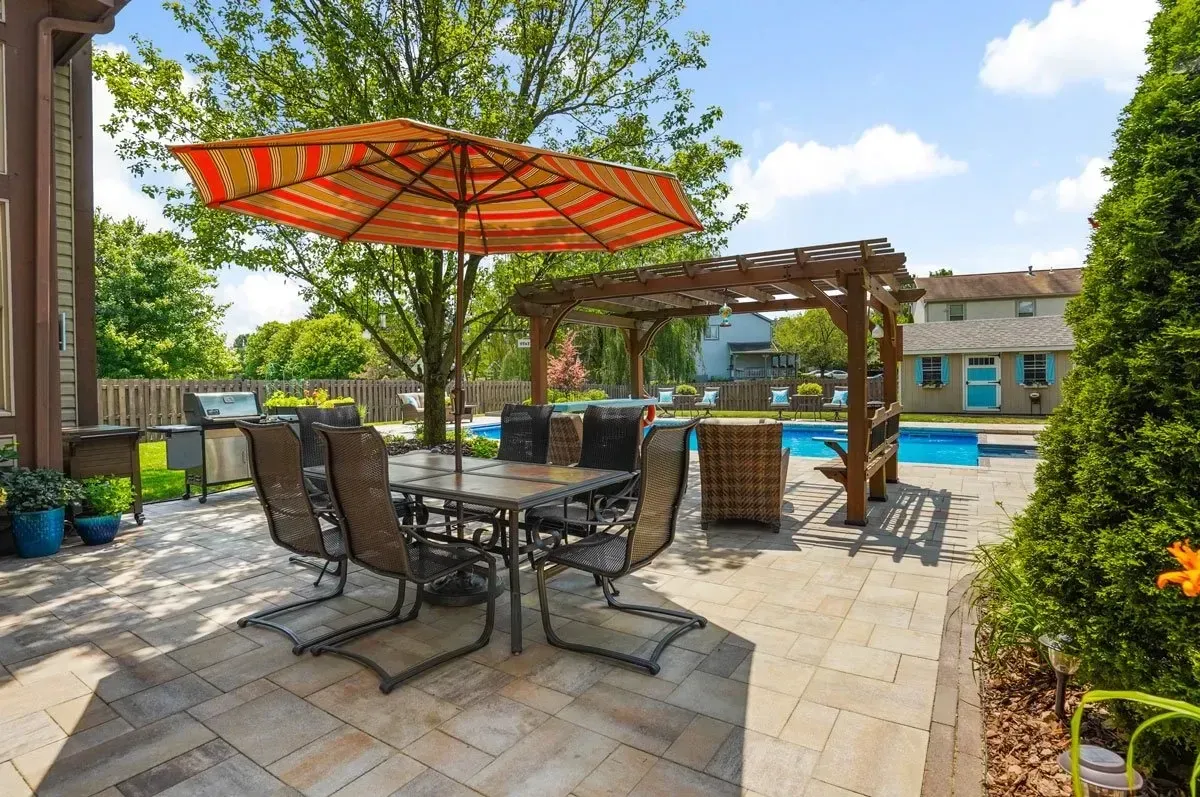
A pergola is an architectural statement — not a kit from a big-box store. Steps and stairways are not an afterthought — they are the transitions that tell your eye the space was designed on purpose.
Attached pergolas tie into the house — usually through a ledger board bolted through the band joist, flashed properly, and carried on engineered posts. Freestanding pergolas are the better move most of the time. They don’t drag water or framing issues into the wall of your house, they can be located where the shade is actually needed, and they allow for a cleaner cantilever. We build both, and we’ll tell you which one makes sense on your lot and why.
The louvered-vs-open decision is a lifestyle decision. Louvered pergolas (adjustable aluminum louvers) give you full control over sun and rain — open for a clear day, closed for a summer downpour — and run off a remote or an app. Open pergolas are the traditional look — cedar or stained hardwood, slats running across the top, a shade rating around 50%. They’re quieter, more architectural, and cheaper. We build both.
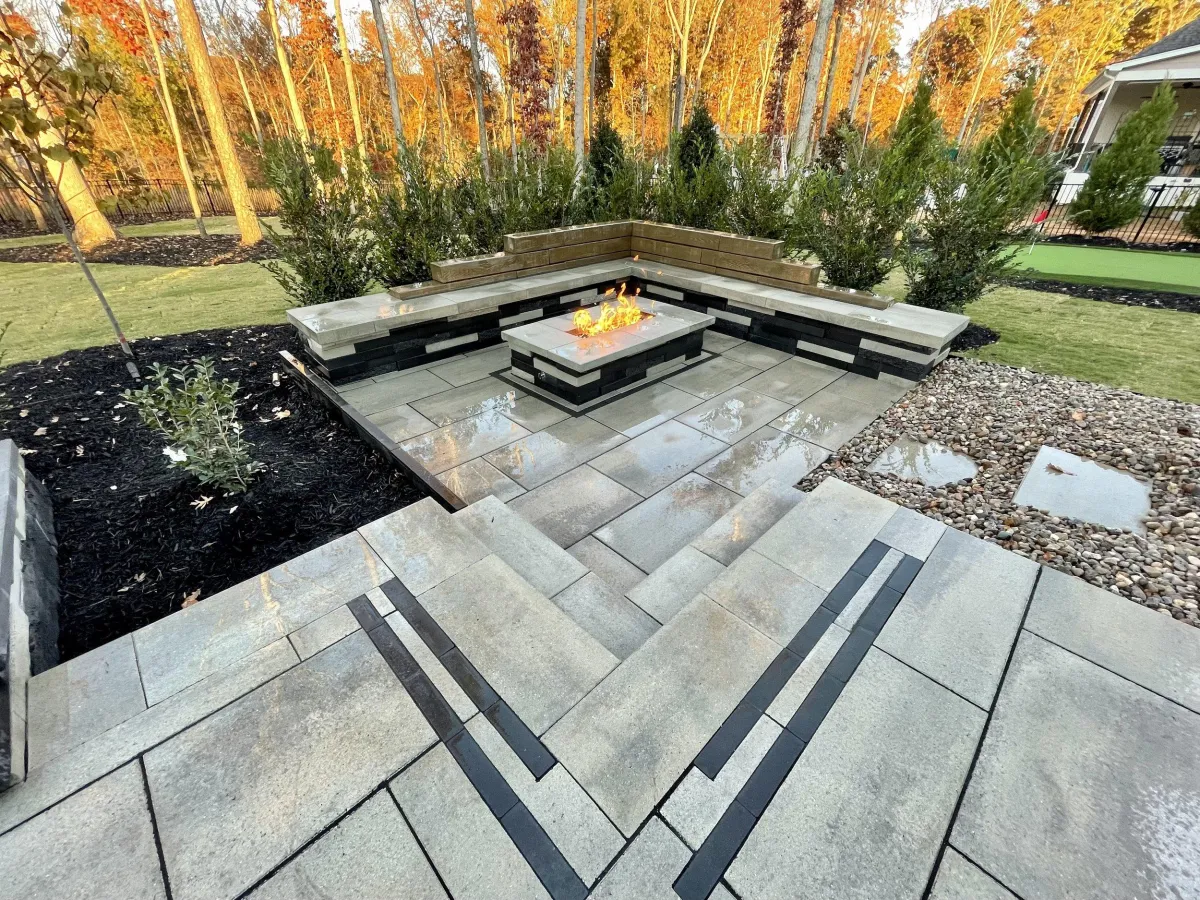
Steps and stairways are where great hardscape earns its keep. A single broad tread that transitions from the house level down to the pool deck does more for the sense of a designed space than almost any other detail. We lay them out with a consistent riser-to-tread ratio, cap them in the same coping material used around the pool, and light them low — because a step you can’t see at night is a liability and a step you can see is a moment.
When you hire four different hardscape contractors across three years, you also hire four different theories of drainage — and those four theories meet on your property, where they argue with each other every time it rains. The water you’re watching pool against your foundation isn’t a mystery. It’s the result of nobody owning the full envelope.
Primetime runs the whole scope on one contract. One grade plan, one set of drawings, one permit package pulled against the full site. Drainage and grading across Georgia red clay is something we’ve built our process around — pitched base layers, perimeter French drains where the slope demands, and foundation-protective grading on every build — because a patio that pools water against the house is worse than no patio at all.
Most Primetime clients build a pool and hardscape together, and that’s our favorite kind of project — because we can coordinate pool plumbing chases, deck grade, coping line, and patio transitions as a single set of decisions instead of trying to bolt a pool to a patio someone else built two years ago. We’re locally owned, fully insured, and based in Winder. If something needs attention in year five, we’re still the people answering the phone.
One site visit, one honest conversation about what your backyard can actually be, and a firm line-item quote. No pressure. No phased sales pitch.
Call Us Now