
Segmental block, natural stone, tiered and curved retaining systems — engineered for Georgia red clay, hydrostatic pressure, and the grade changes that made your lot hard to build on in the first place.
Walk any Metro Atlanta neighborhood and you’ll find failed retaining walls — bulging, tilting, cracking — built by crews that treated them as a stacking job. The block face almost never fails first. What fails is the base, the drainage, and the reinforcement behind the wall. Primetime engineers the base, drainage, and geogrid reinforcement as part of the scope — not as an upgrade, not as an optional line item.
Most failed retaining walls in Georgia failed because of what’s behind and below them — not the block face. The stones you see are decorative armor. The structure that actually holds back saturated clay is the compacted base, the drainage aggregate, the perforated pipe, and on taller walls, the layers of geogrid tying the wall mass into the hillside itself.
Hydrostatic pressure, shrink-swell clay, and freeze-thaw cycles punish shortcuts. Red clay holds water like a sponge, and when that water has nowhere to drain, it pushes on the back of your wall with thousands of pounds of lateral force per linear foot. DIY walls and walls built by unqualified contractors typically fail within 5 to 8 years — the classic signs are a bulge in the middle, a lean at the top, and a hairline crack walking across the cap stones.
What Primetime does differently: we over-dig the footprint to reach undisturbed soil, build a compacted crushed-stone base in lifts, lay geotextile fabric to separate soil from aggregate, install geogrid reinforcement tie-backs on anything taller than four feet, and engineer a full drainage system — aggregate chimney, perforated pipe, and a daylighted outlet — before the first block is set. The block goes on last. The wall is built from the soil up.
“A retaining wall isn’t a stack of decorative blocks. It’s an engineered structure holding back hundreds of thousands of pounds of saturated clay.”
Primetime Pools — Winder, GAEvery retaining wall project begins on-site: a slope survey, a soil evaluation, a drainage read, and an honest conversation about what the wall needs to do — hold back a grade, terrace a slope, or back up to a pool shell.
Our assessment walk takes the grade change in two directions, identifies where surface water lands in a hard rain, and reads the soil profile at the base and back-cut of the wall. Georgia red clay behaves differently than sandy loam, and a wall’s height, batter, and reinforcement have to be designed around the actual soil you have — not the generic spec in a block manufacturer’s pamphlet.
Most Metro Atlanta counties — Gwinnett, DeKalb, and Fulton included — require a building permit once a retaining wall exceeds 4 feet in height measured from the bottom of the footing to the top of the wall. Tiered walls can trigger that threshold even when each individual wall is shorter, depending on how close the tiers sit to each other. We handle the drawings, the stamped engineering where required, and the permit submission so nothing gets built that can’t be legally documented later.
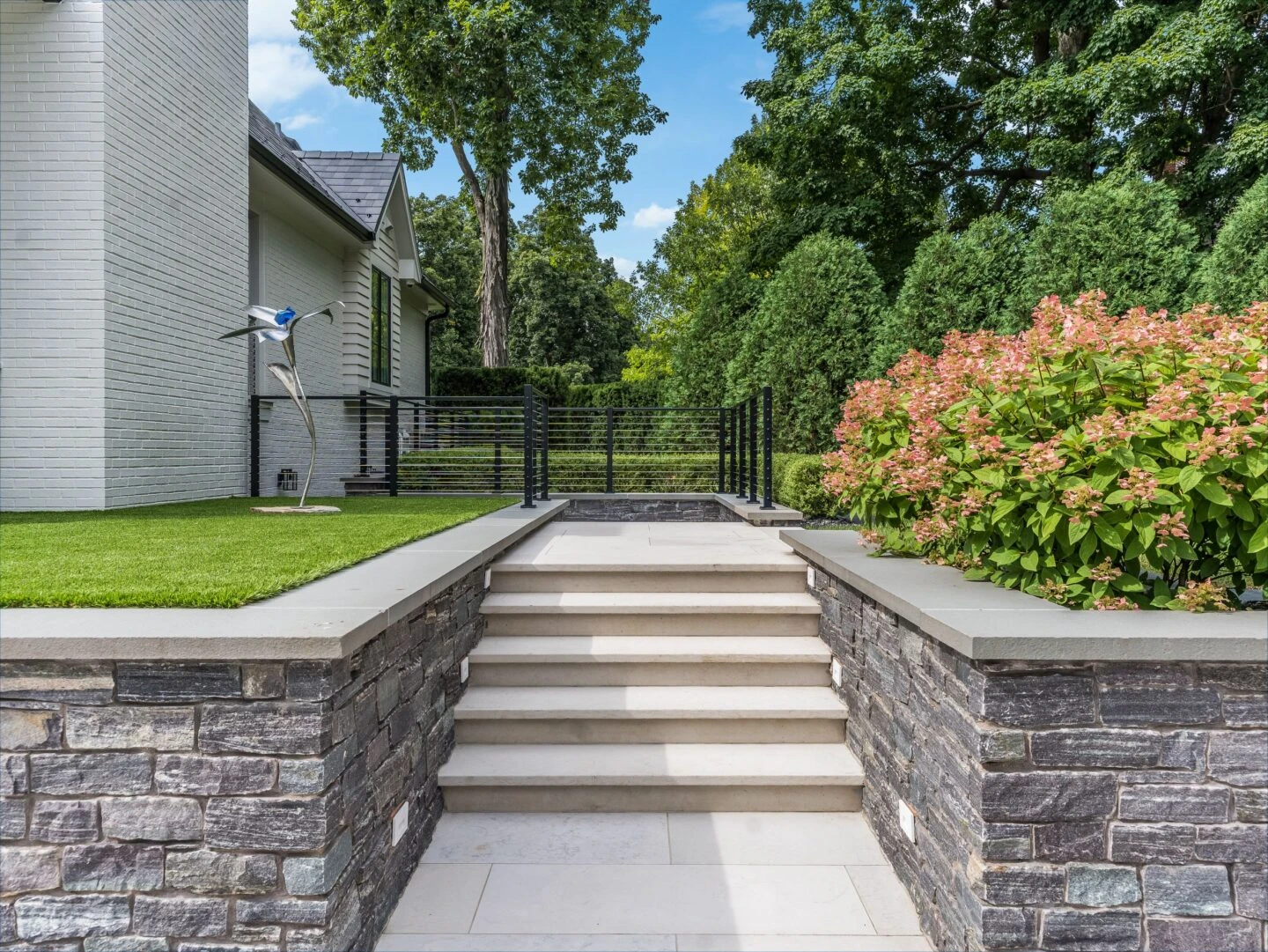
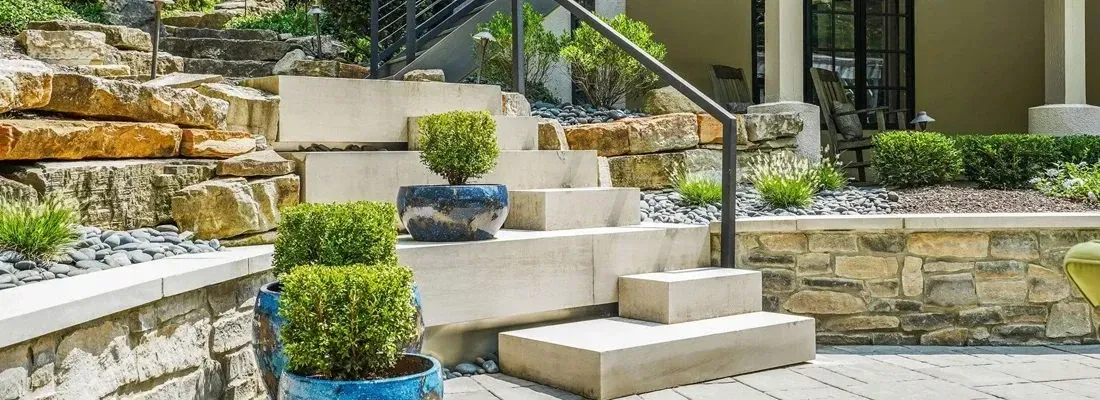
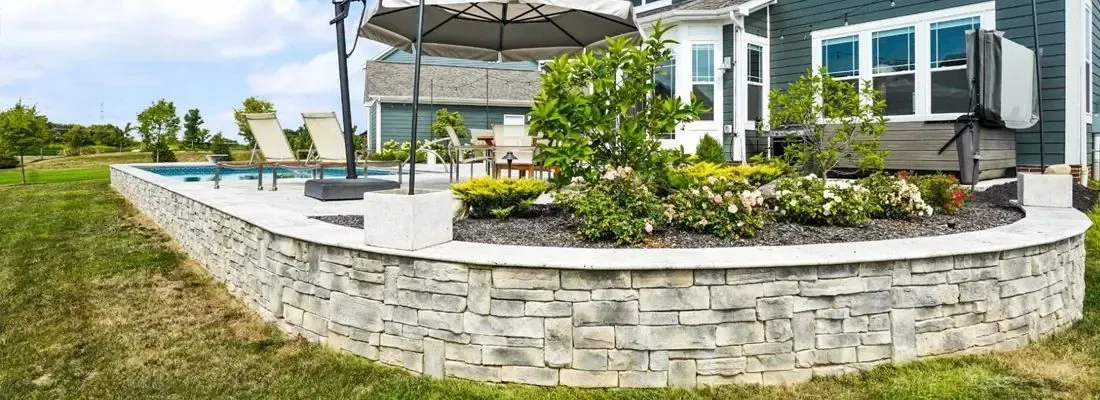
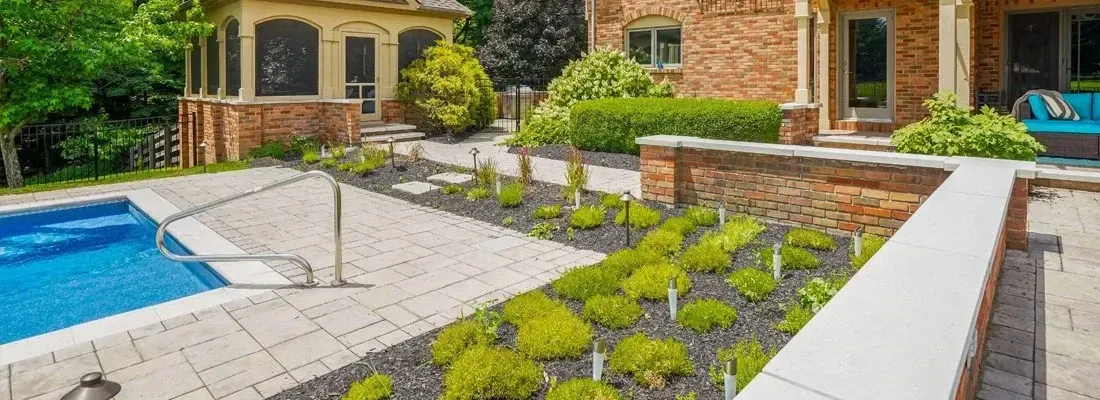
A retaining wall is only as stable as the compacted base beneath it and the reinforcement tying it back into the hillside. This is the phase where most failed walls were doomed before the first block was ever set.
We over-dig the footprint to reach undisturbed native soil, then build the base in compacted lifts of 3/4-inch crushed stone — not sand, not pea gravel, not fill dirt. Each lift is run with a plate compactor to 95% or better before the next lift goes down. Geotextile fabric separates the native soil from the aggregate so fines don’t migrate up and turn the base into mud over time.
On any wall taller than 4 feet — or shorter walls carrying a surcharge load from a driveway, pool, or structure — we install geogrid reinforcement. Geogrid is a high-tensile geosynthetic mesh laid horizontally between block courses and extending back into the compacted backfill by specified distances that increase as the wall gets taller. It mechanically ties the block face into the soil mass behind it, converting a stacked-block facade into a reinforced earth structure.
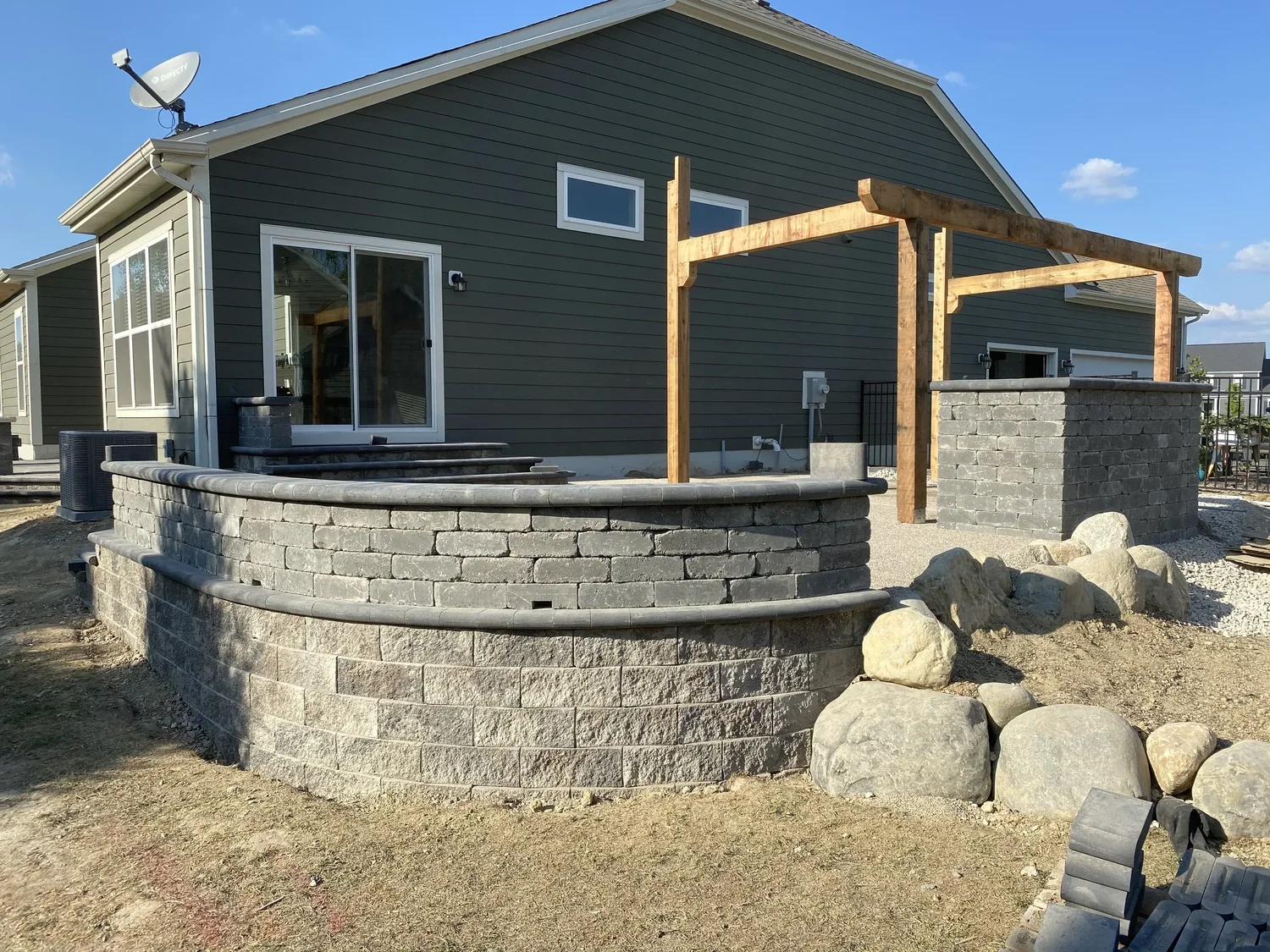
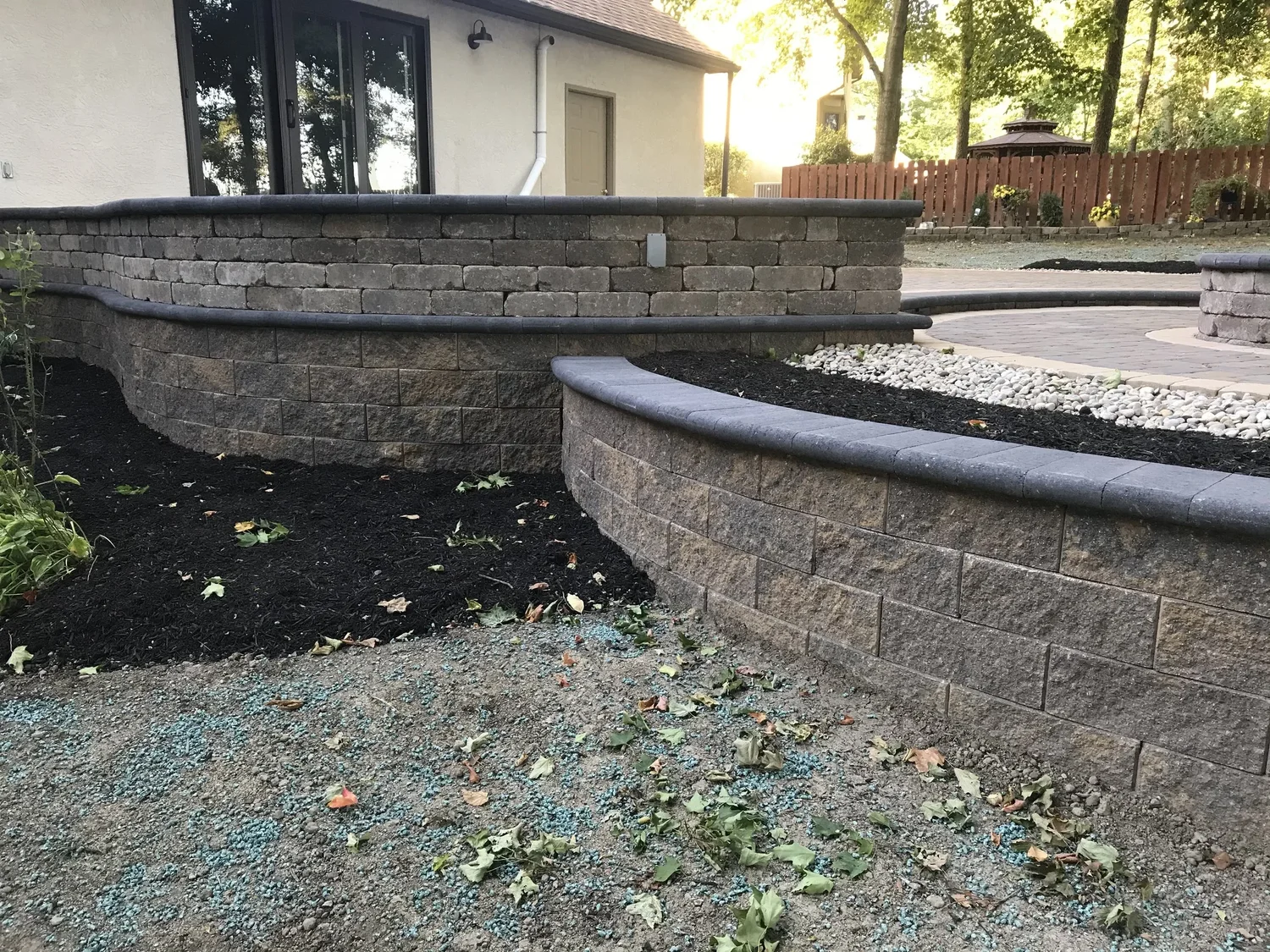
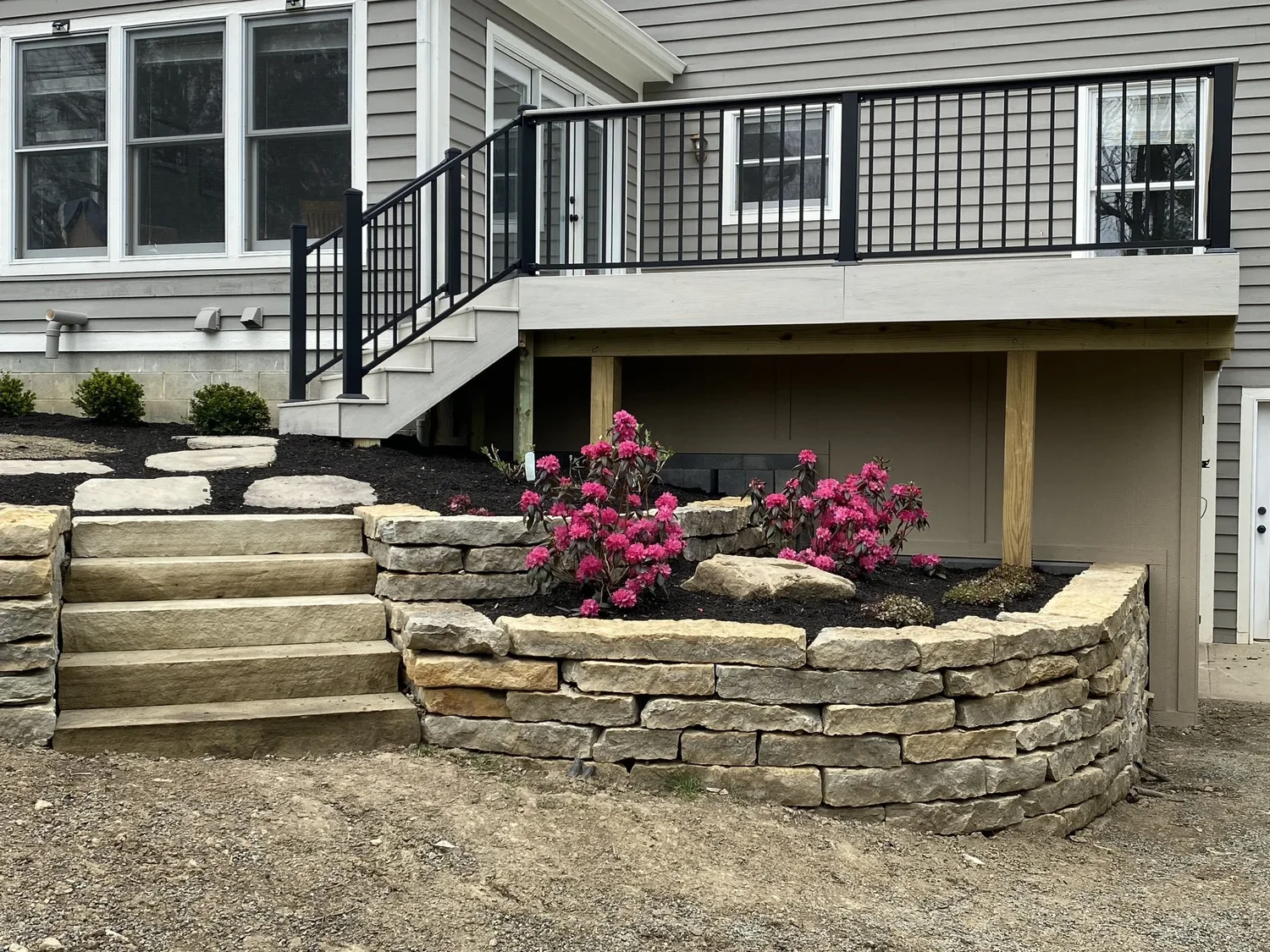
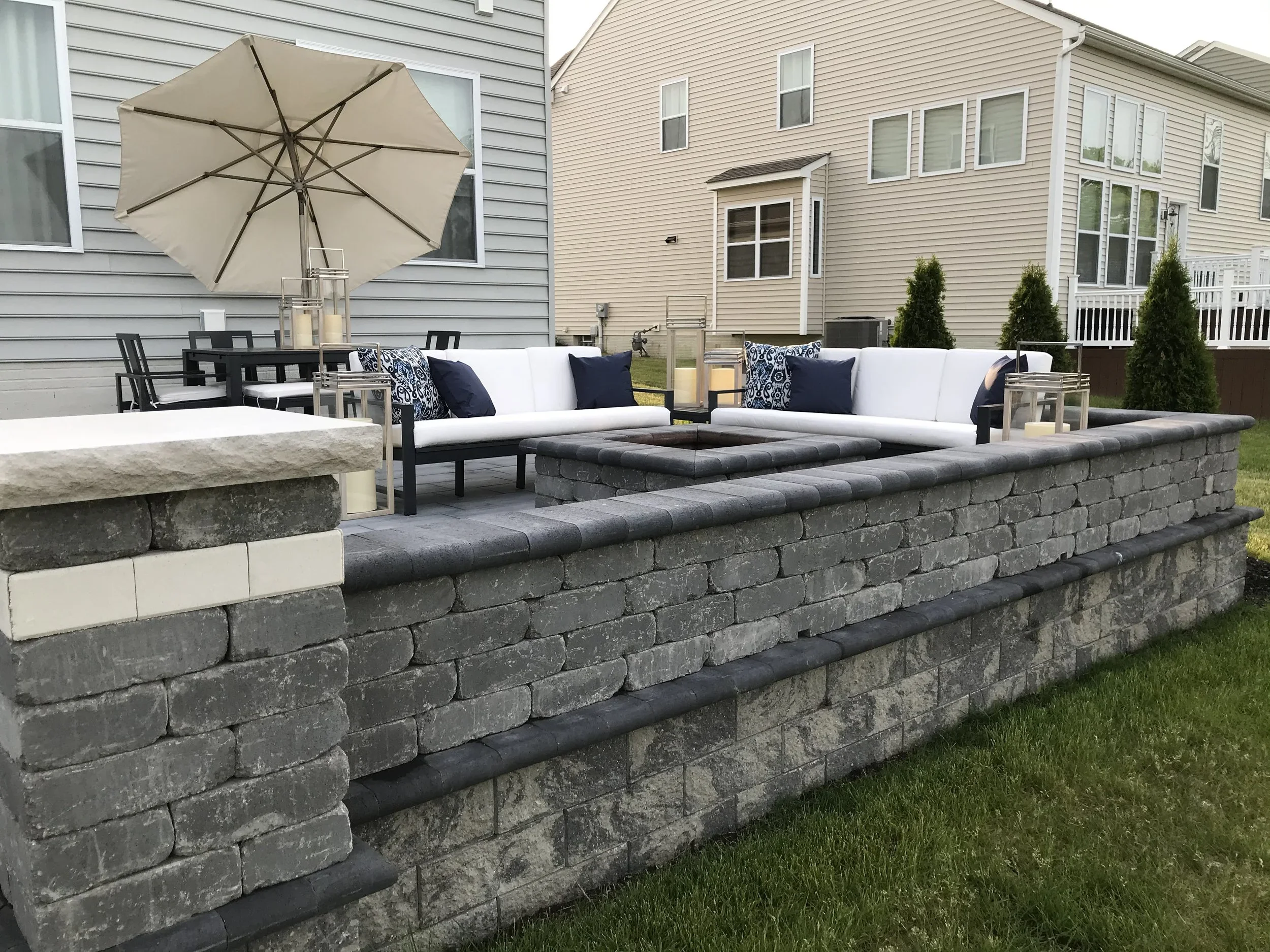
Once the base, drainage, and geogrid are right, the block goes on. Segmental retaining wall systems, natural fieldstone, travertine caps, tiered walls, curved walls, and pool-adjacent walls each get a different approach.
We build in segmental retaining wall block (SRW) — Techo-Bloc, Belgard, and similar engineered systems — along with natural fieldstone, dry-stack mortared stone, and travertine-capped hybrid walls. Block selection depends on wall height, budget, and the architecture of the home; we’ll set actual samples on-site so you see how a face looks against the brick, siding, and stone you already have.
Every Primetime wall is built with batter — a backward lean of roughly an inch per foot of wall height — that uses gravity to work against overturning force. Tiered walls get analyzed as a single system so the lower wall isn’t quietly carrying the surcharge of the upper wall it wasn’t designed for. Curved walls get radius-cut blocks, not forced miters. Pool-adjacent walls get the same attention to waterproofing and load transfer as the pool shell they sit next to.
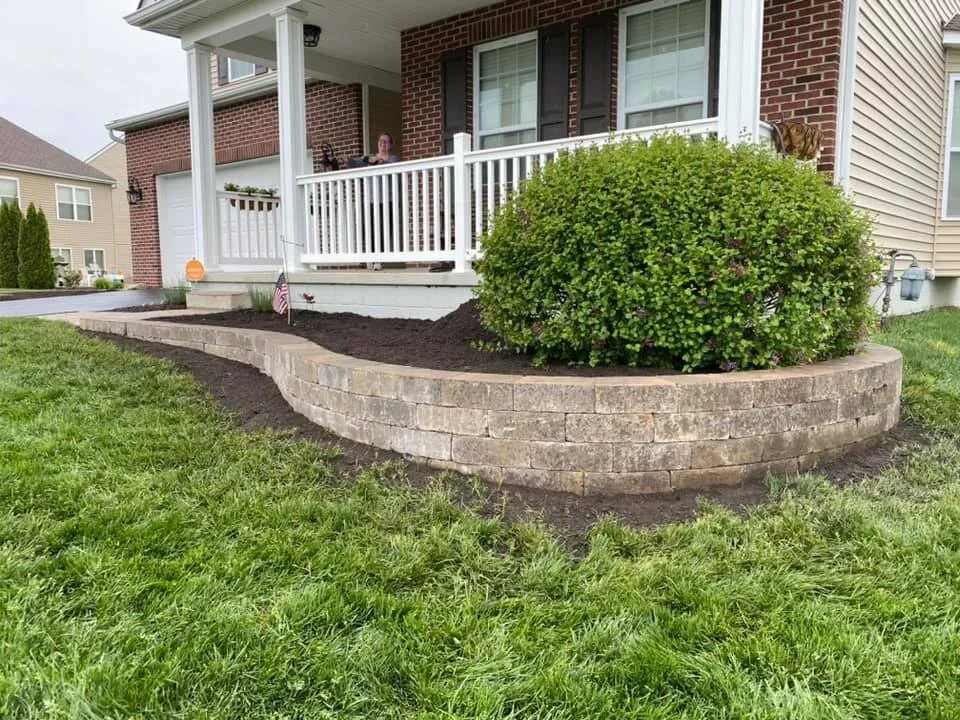
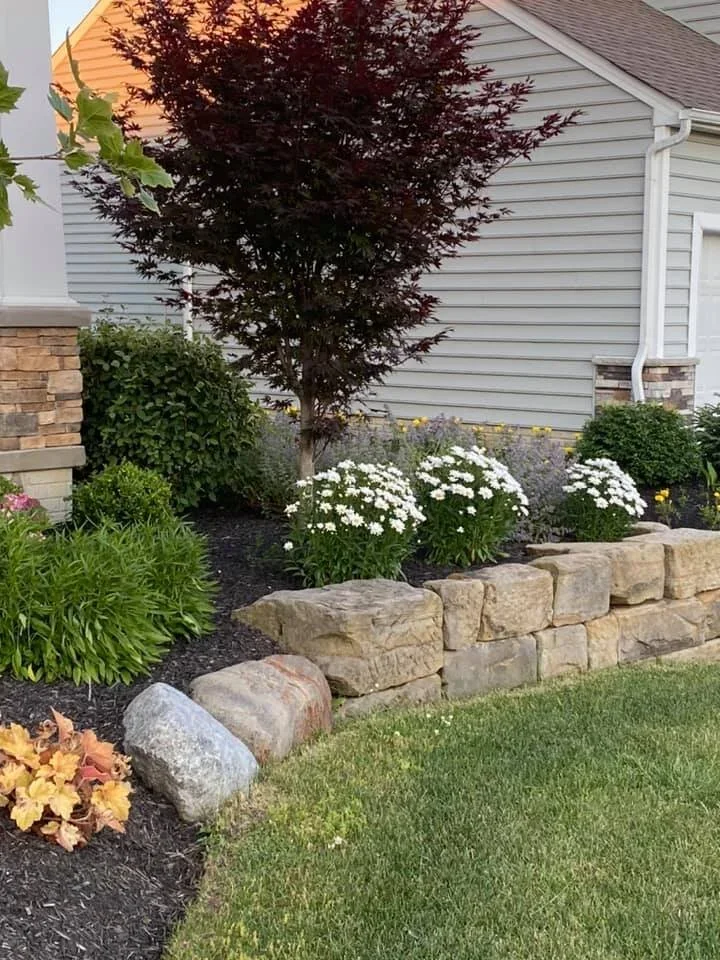
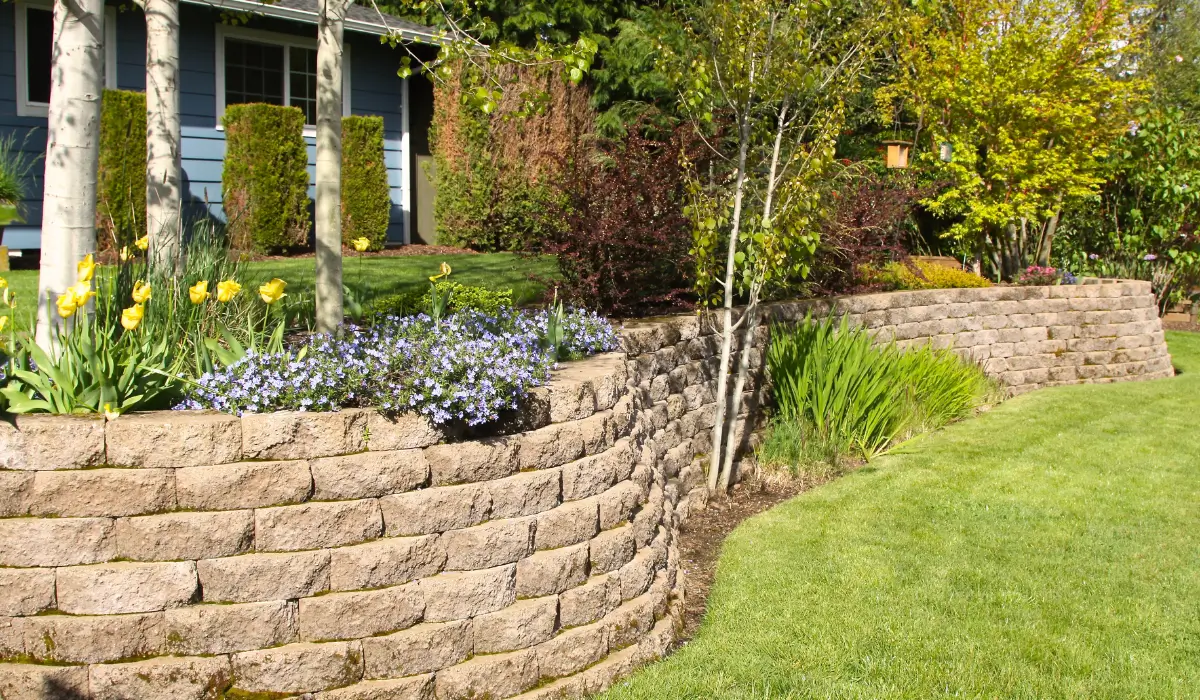
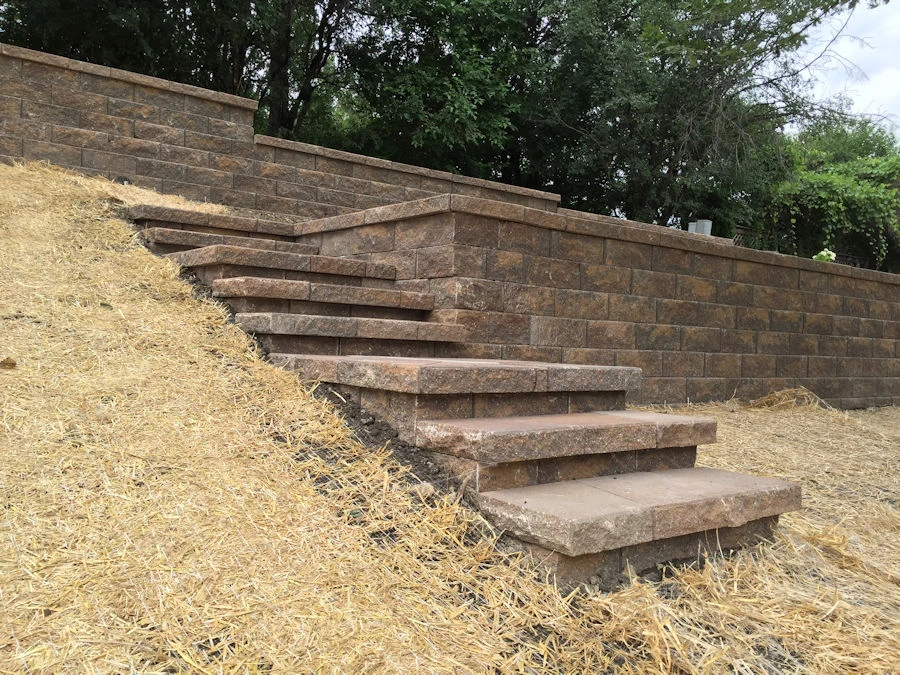
A retaining wall with no drainage is a dam. Saturated clay behind a 6-foot wall can exert more than a ton of lateral force per linear foot. The single variable separating a 5-year wall from a 50-year wall is where the water goes.
Every Primetime wall is built with a drainage chimney of clean 3/4-inch crushed stone rising directly behind the block face for the full height of the wall. Water moving through the backfill hits that aggregate zone and drops vertically instead of pressing horizontally on the wall face. At the base, a perforated drain pipe (weep drain) collects the water and carries it laterally to a daylighted outlet — never into a blind stub that silts up in two seasons.
Where specified by design or code, we install weep holes through the block face to give surface water a secondary escape. The back-slope of the surrounding grade is pitched away from the wall — not toward it — and surface drainage is routed with swales or French drains to keep roof runoff and downspout discharge from feeding the backfill zone. Geotextile wrapping the aggregate keeps fines from migrating in and clogging the system.
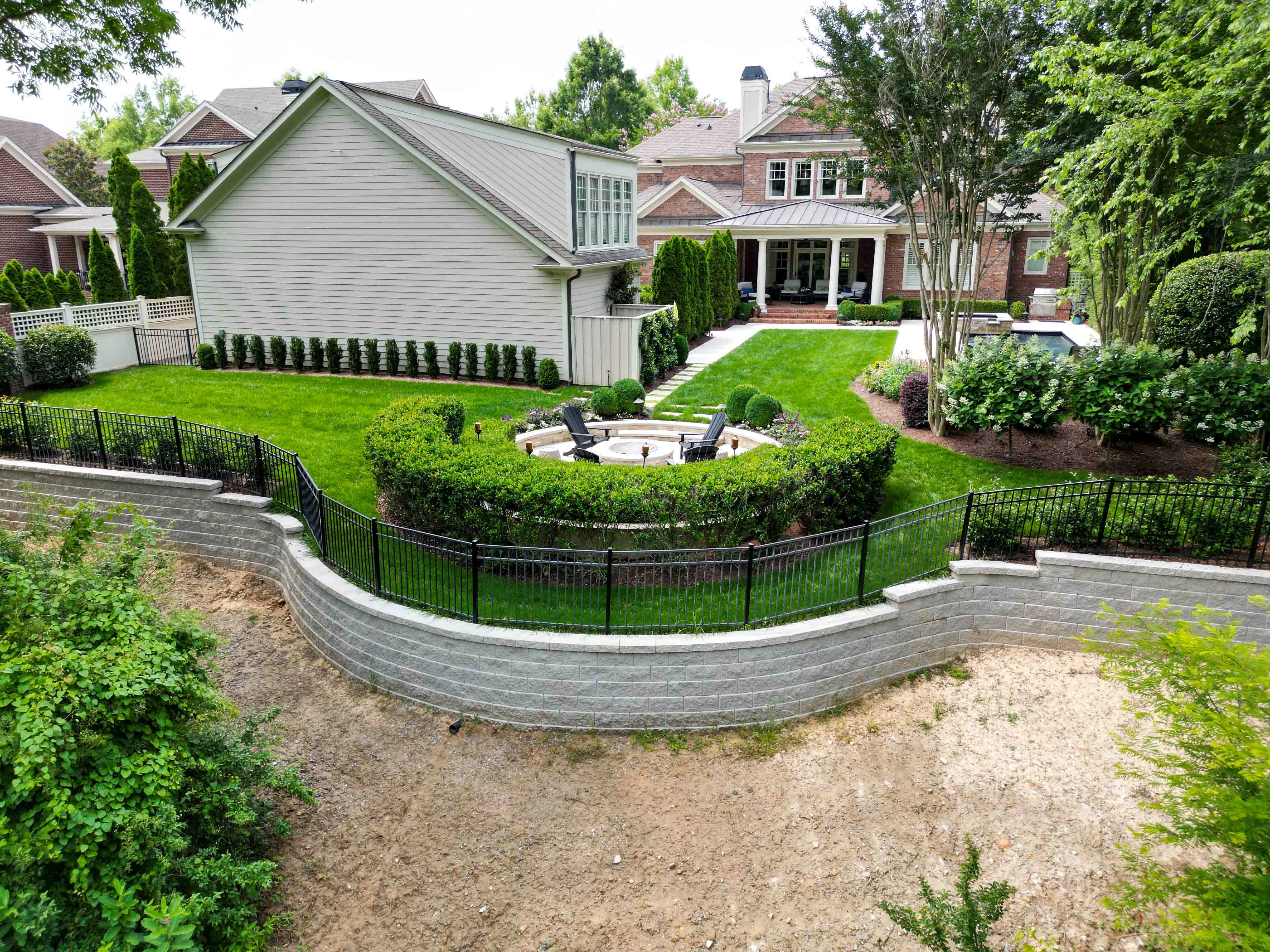
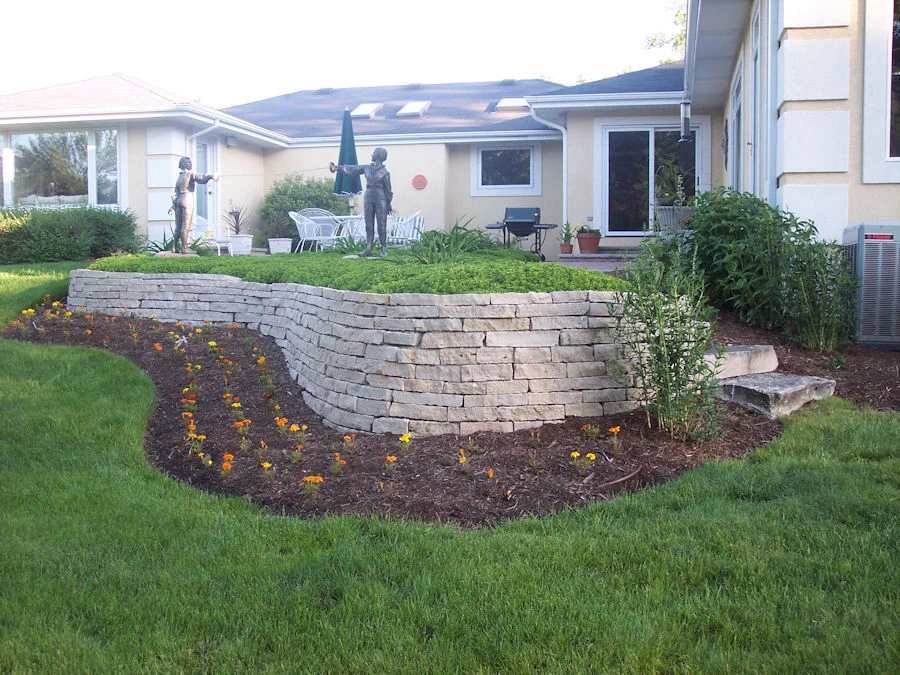
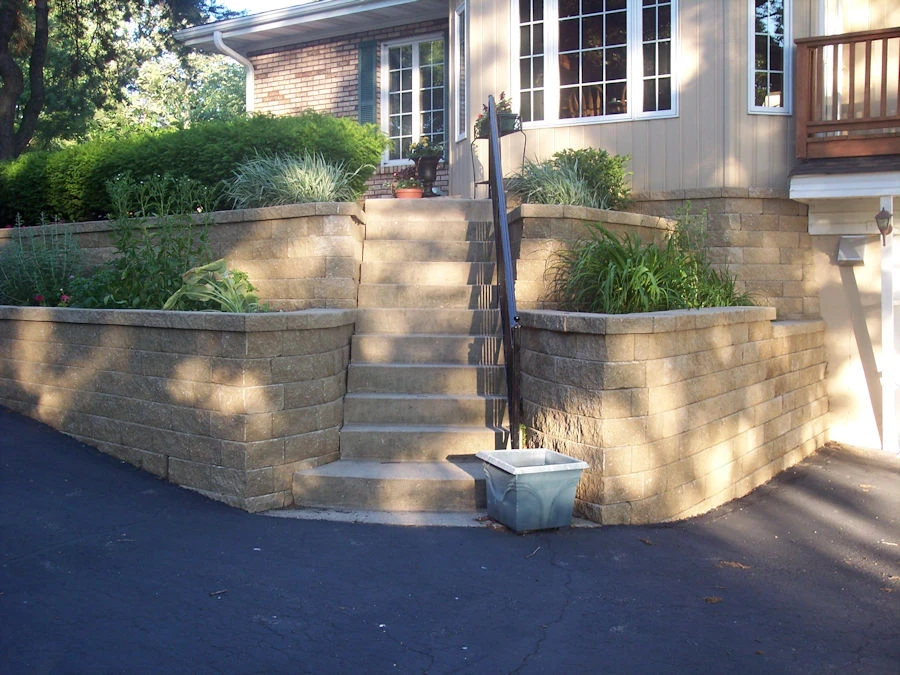
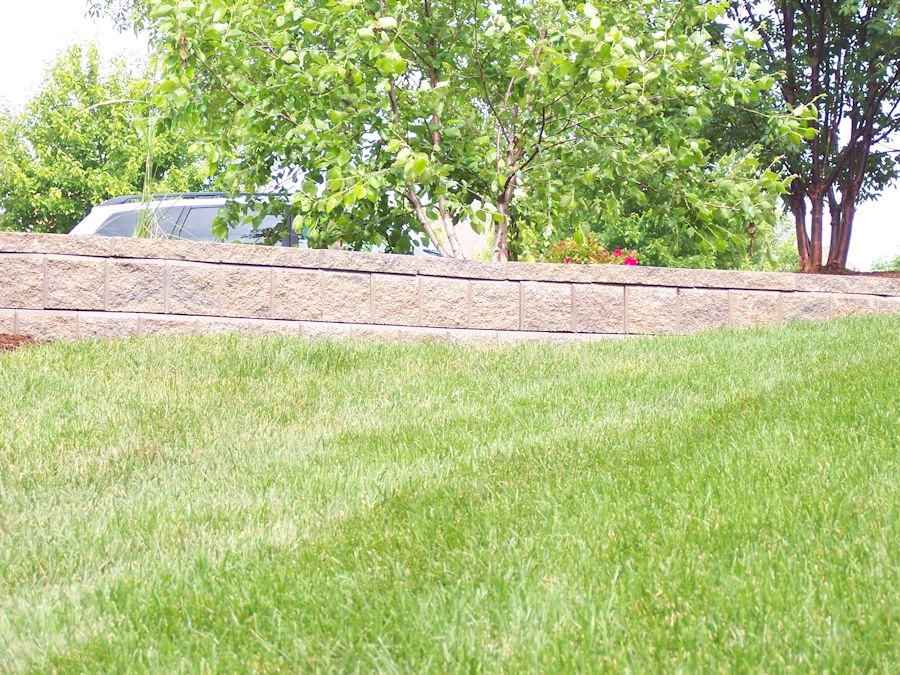
Every retaining wall we build in Metro Atlanta is designed to meet or exceed the local permit requirements — Gwinnett, DeKalb, and Fulton all have specific thresholds, and we build to them even on walls that sit below the permit line. A wall that’s built right doesn’t care whether a permit was technically required. It still doesn’t move.
Walls that back up to pools get the same attention we give the pool shell itself — waterproofing, load transfer, and drainage separation between the wall and the pool structure. A pool-adjacent wall that fails takes the pool deck and sometimes the shell with it. We’ve seen enough of those to know exactly what fails and why.
We’ve rebuilt enough failed walls across Metro Atlanta — walls built by other contractors, DIY walls, and walls dropped in by volume landscapers — to know exactly what fails, why it fails, and how long it takes. When we build a new wall, we’re building with that failure catalog in our heads.
One honest site walk. We’ll read the grade, the soil, and the drainage — then tell you exactly what the wall needs, what it costs, and what it shouldn’t cost.
Call Us Now