
Driveways, pool decks, patios, and walkways — built on base preparation that survives Georgia’s freeze-thaw, red clay, and the kind of summer storms that expose cut corners.
They fail because of the 8 inches of base underneath. Settling, sinking, tilting, heaving, joints blowing out after the first hard winter — almost every one of those problems traces back to how the ground was prepared before a single paver was set. Most installers cut this stage. We don’t.
Primetime’s base spec — over-excavation, aggregate in compacted lifts, geotextile separation fabric, a true screeded sand bed, and rigid edge restraint — is the thing that puts 20+ years on your install when the driveway down the street is already failing.
A paver installation is only as good as what’s underneath it. Done right, it becomes a 30-year surface that outlives the house’s roof and most of its appliances. Done wrong, it’s a slow-motion failure that starts looking tired by year four and needs to be ripped out by year seven.
Pavers beat poured concrete and stamped concrete on three fronts that matter: repairability, longevity, and visual flexibility. When something settles or a tree root lifts a section, you pull out six pavers, fix the base, and reset them — the job is invisible when it’s done. Poured concrete cracks mean saw-cutting and a contrast patch that never matches. Stamped concrete cracks are terminal. And pavers age gracefully; stamped concrete’s color is a surface layer that fades under Georgia UV.
Base prep in Georgia is not a generic template. Red clay holds water, expands when it’s wet, and punishes any installer who sets pavers directly on disturbed soil. Our base spec — over-excavation to the right depth, compacted graded aggregate in lifts, woven geotextile separation fabric between clay and base, a precision-screeded sand setting bed, polymeric joint sand, and rigid edge restraint — is the full sequence. Skip one step and the surface tells on you inside two winters.
“The difference between a paver patio that lasts 4 years and one that lasts 30 isn’t the pavers. It’s the gravel base no one sees.”
Primetime Pools — Winder, GAEvery paver material has a personality: what it costs, how it wears, how it handles Georgia sun, and what it feels like barefoot in July. We’ll walk you through the honest differences before you commit.
Concrete pavers — Techo-Bloc, Belgard, and similar lines — are the workhorse. Dimensionally consistent, widest color and texture range, strongest warranties, and engineered for freeze-thaw cycling. The concrete-paver premium lines now carry through-body color and UV-stable pigments that hold tone for decades. This is what we install on most driveways and the majority of patios and pool decks.
Natural travertine is our most popular pool-deck surface. Quarried stone, cooler underfoot than concrete, refined look that reads like an upscale resort. Tumbled and unfilled travertine has a higher porosity, so it wants a penetrating sealer on a 3–5 year cycle. Clay brick sits at the other end — historic character, holds its red color forever (it’s fired clay, not coated), but a narrower size and color palette. Best for walkways and accent bands.
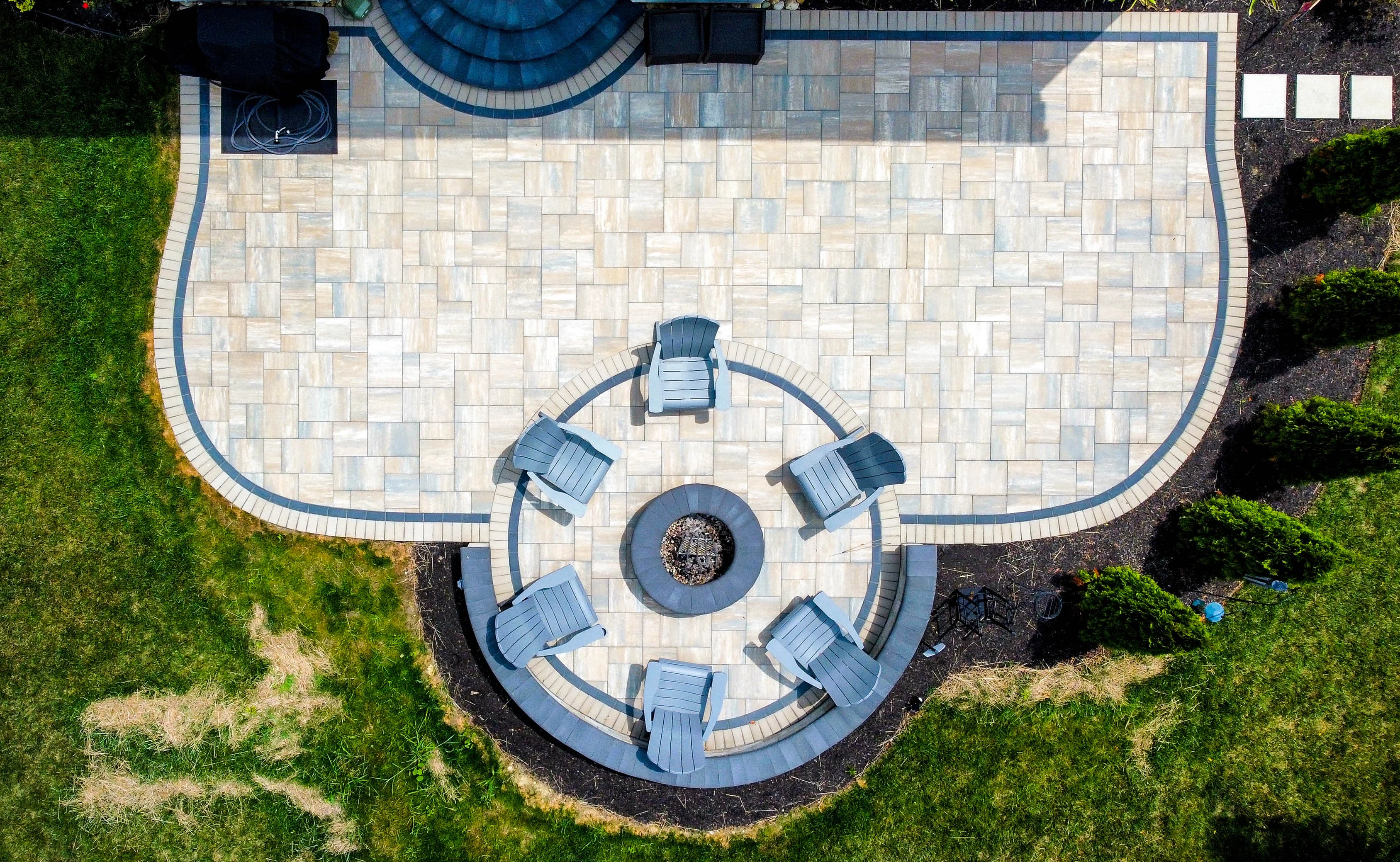
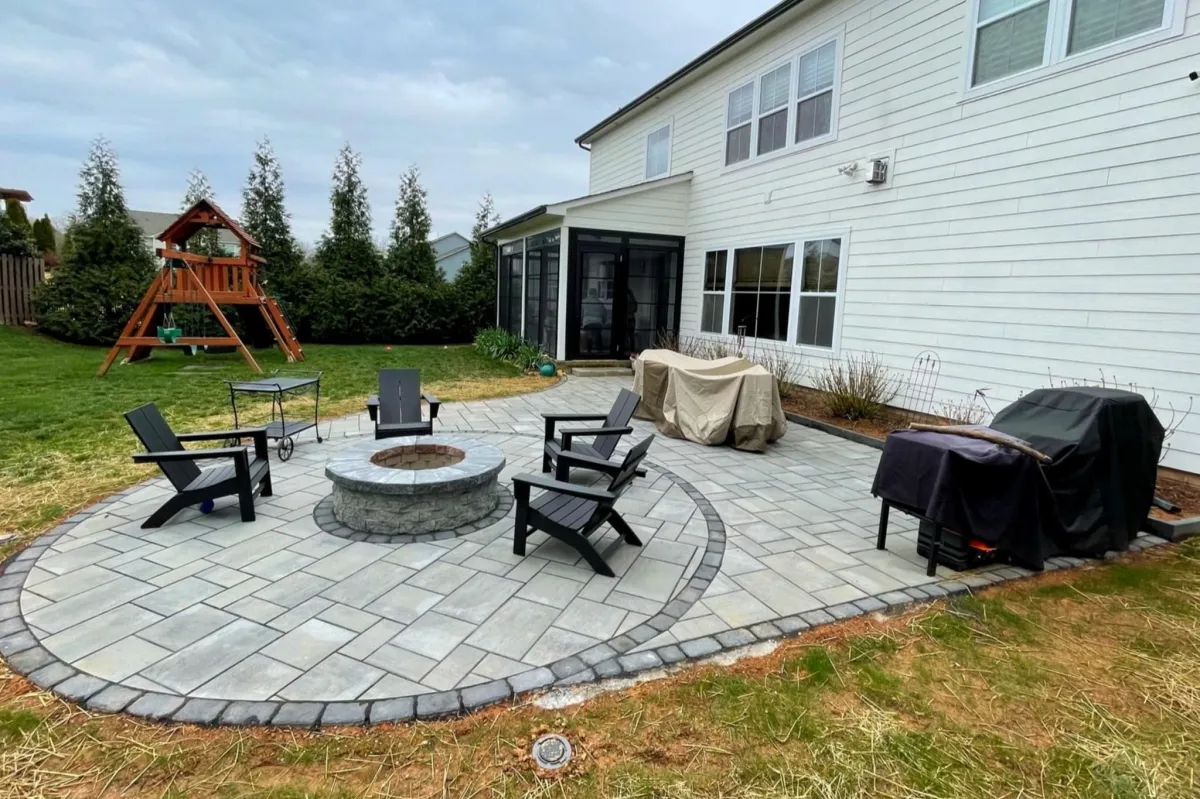
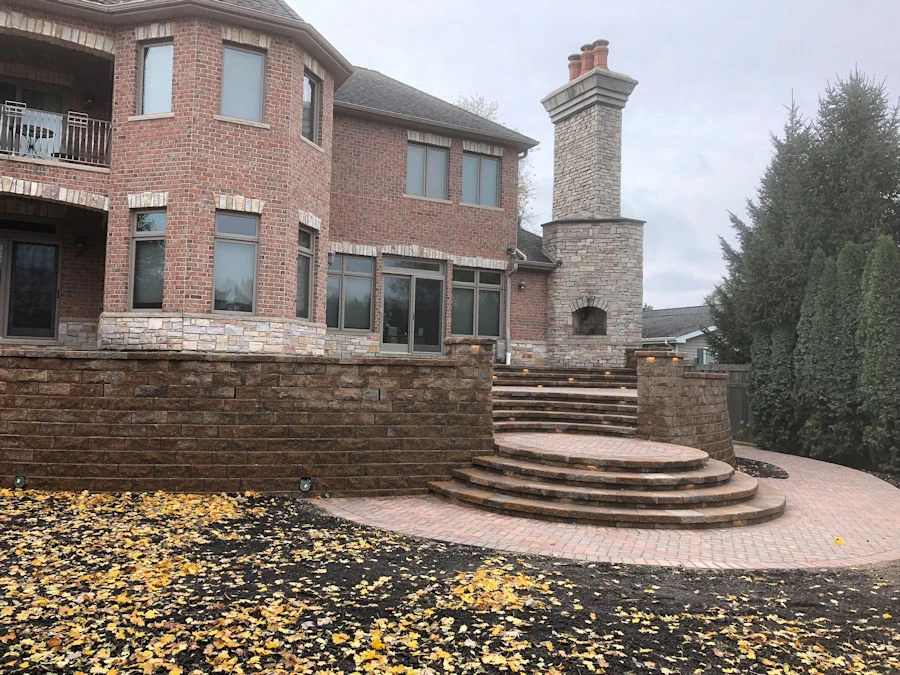
This is where volume contractors save money and you lose 10 years of life out of your install. Our base spec is non-negotiable — and it’s why our work still looks right when the neighbor’s is sinking.
Every Primetime paver job starts with over-excavation — we dig deeper than the minimum so the base can actually do its job. For pedestrian areas (patios, pool decks, walkways) that’s 8–10 inches of compacted base. For driveways and any surface that will carry vehicles, we spec 12 inches minimum, because a 4,500-lb SUV on a 4-inch base is how driveways rut and dip inside two years.
We install woven geotextile separation fabric between Georgia’s red clay subgrade and the base stone. Skip this step and the clay slowly pumps up into the aggregate every time the ground gets saturated — which in Georgia is often. The base itself goes in as Graded Aggregate Base (GAB) placed in lifts — 3–4 inches at a time, each lift mechanically compacted with a plate compactor or reversible roller before the next lift goes down. Then a screeded sand setting bed, precision-leveled to the finish grade.
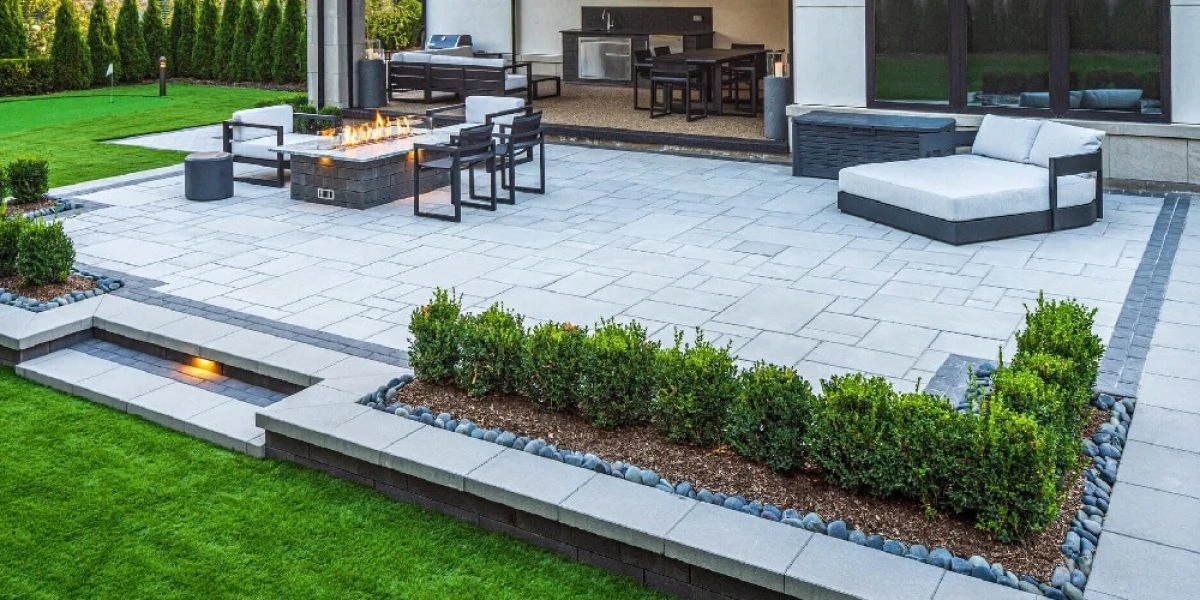
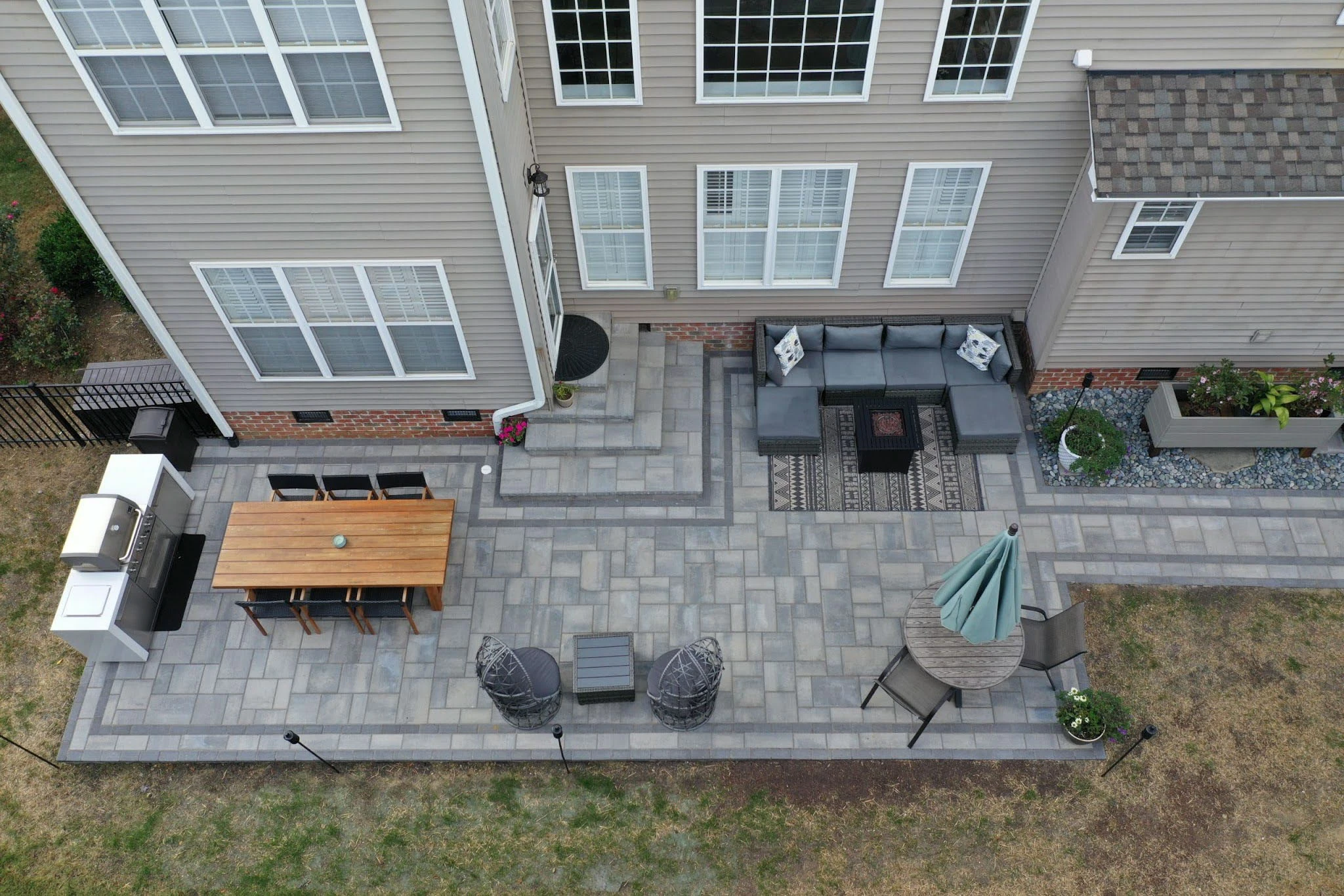
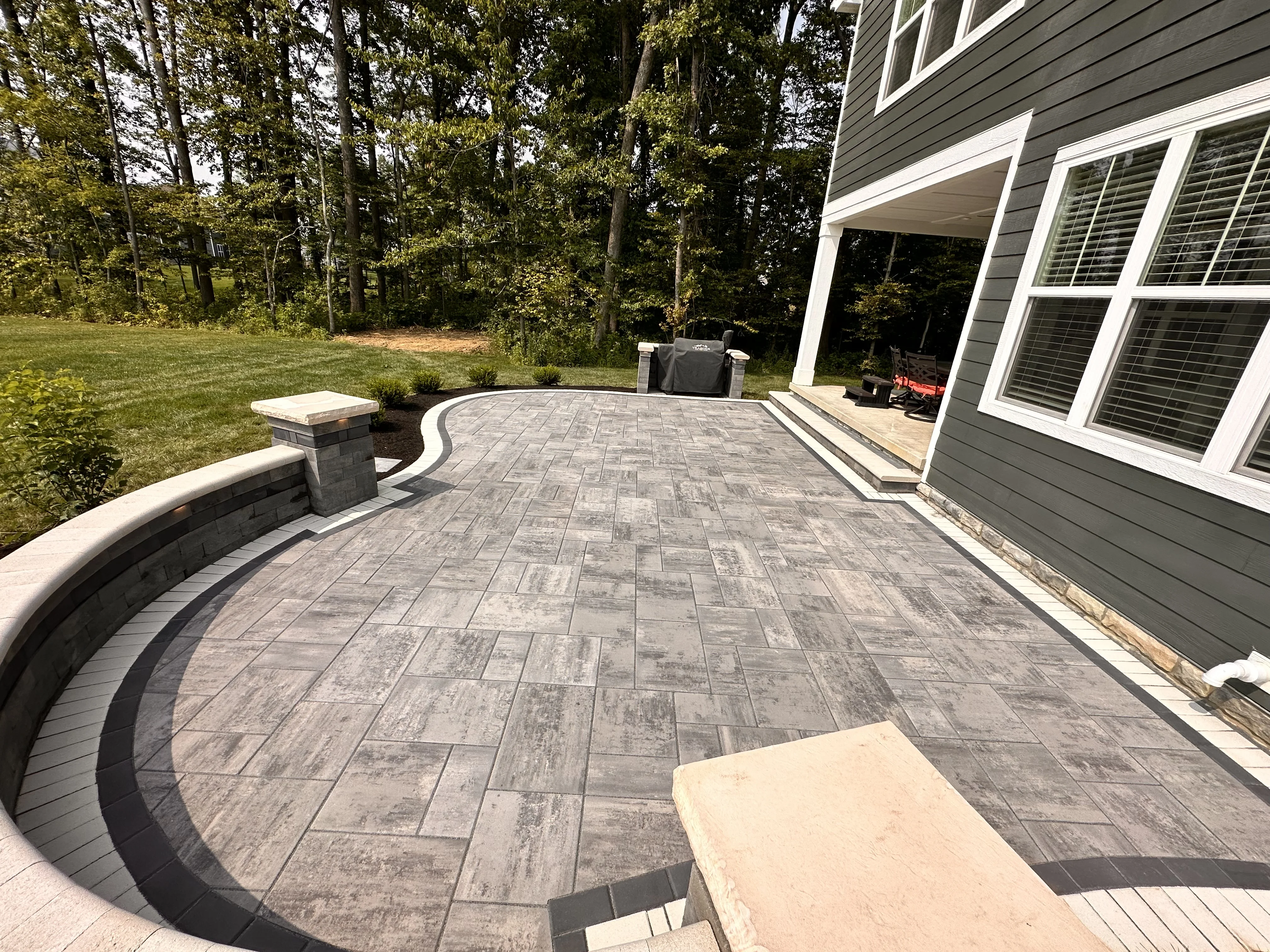
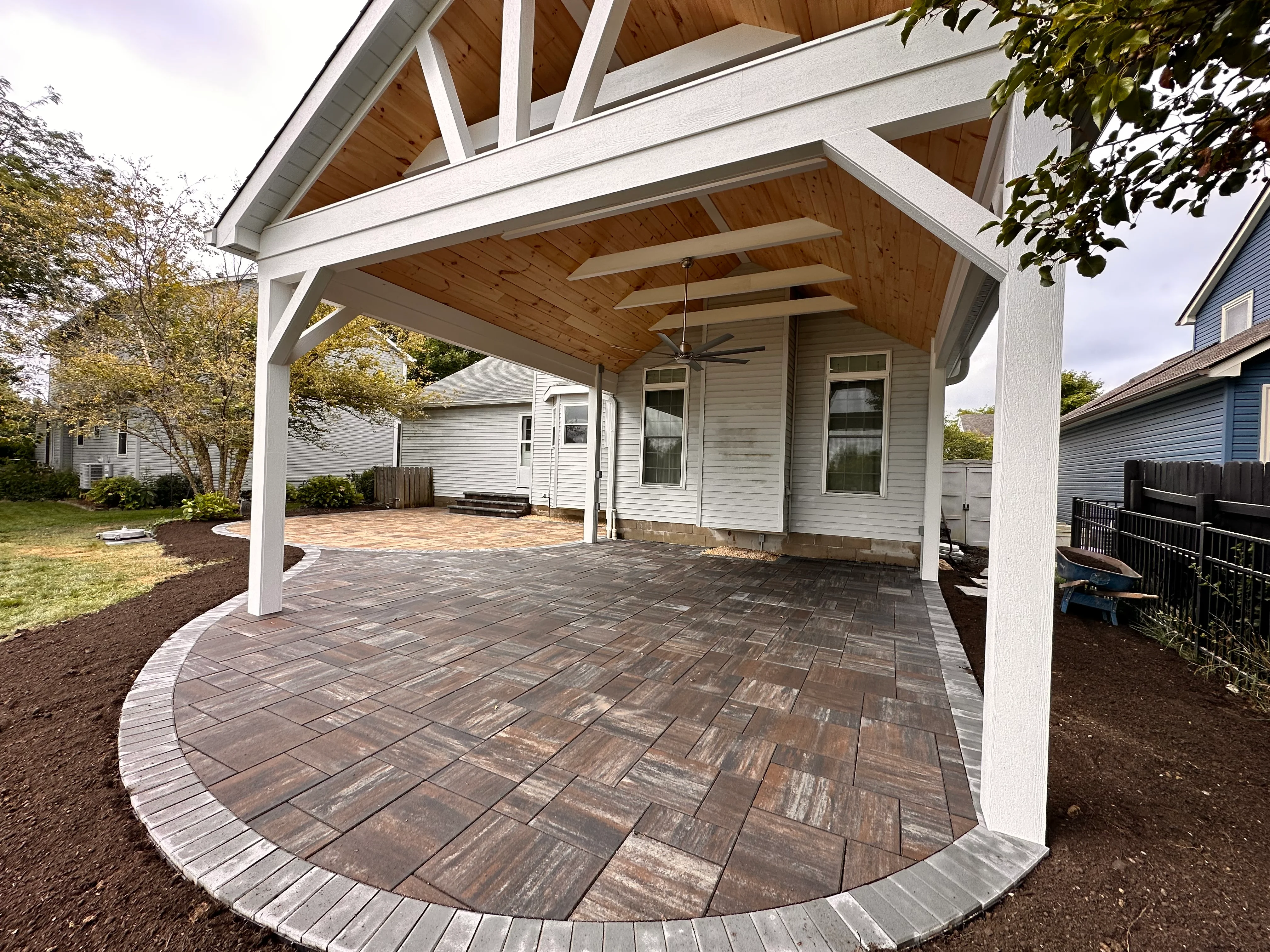
A running bond looks different than a herringbone — and it also performs differently. Interlock strength, cut waste, edge treatment, and how the pattern reads against the house all live here.
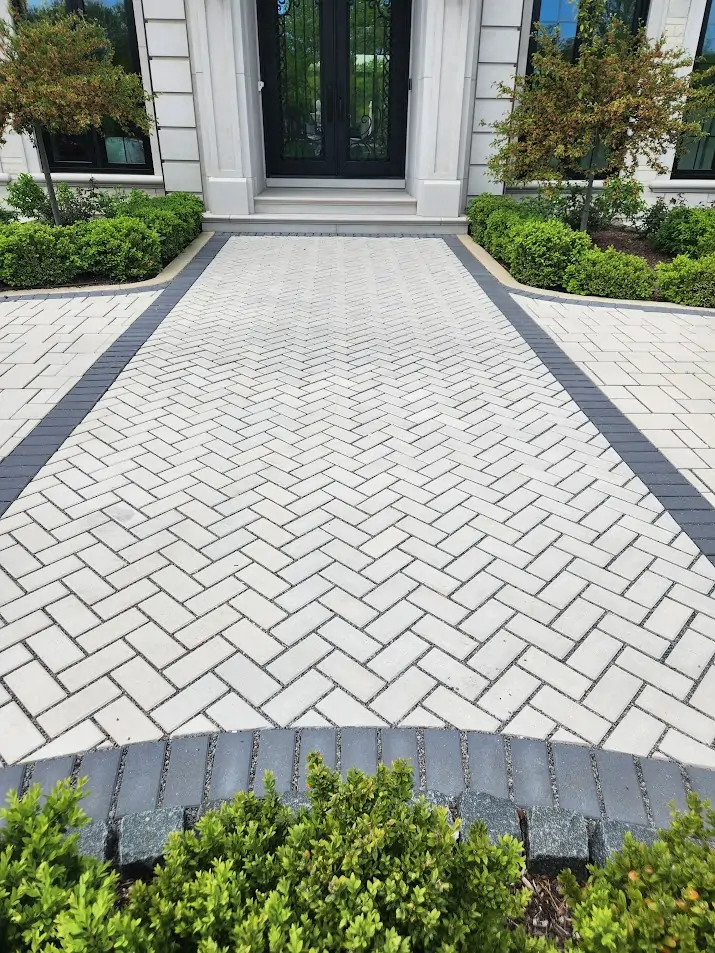
The pattern is the first decision most homeowners want to make and the one we walk through slowest. Running bond is clean, modern, easy on the eye — but lower interlock strength, so we reserve it for patios and walkways, not driveways. Herringbone — either 45 or 90 degrees — has the highest interlock strength of any paver pattern, which is why it’s the industry standard for driveways and anywhere a vehicle will turn its wheels. Random ashlar mixes three or four paver sizes into a European-style layout — perfect for travertine and for pool decks where the look should read as organic rather than gridded.
Every install starts from a snapped chalk line — a true 90-degree reference against the main sight line of the house. We lay from that line outward. Border courses go in last, cut on a wet saw to exact dimension, and the whole field is tight-jointed, not gapped for sand. Cut pavers smaller than 1/3 of a full unit get replaced with a larger cut from the next paver over — those tiny slivers are where weeds and weakness start.
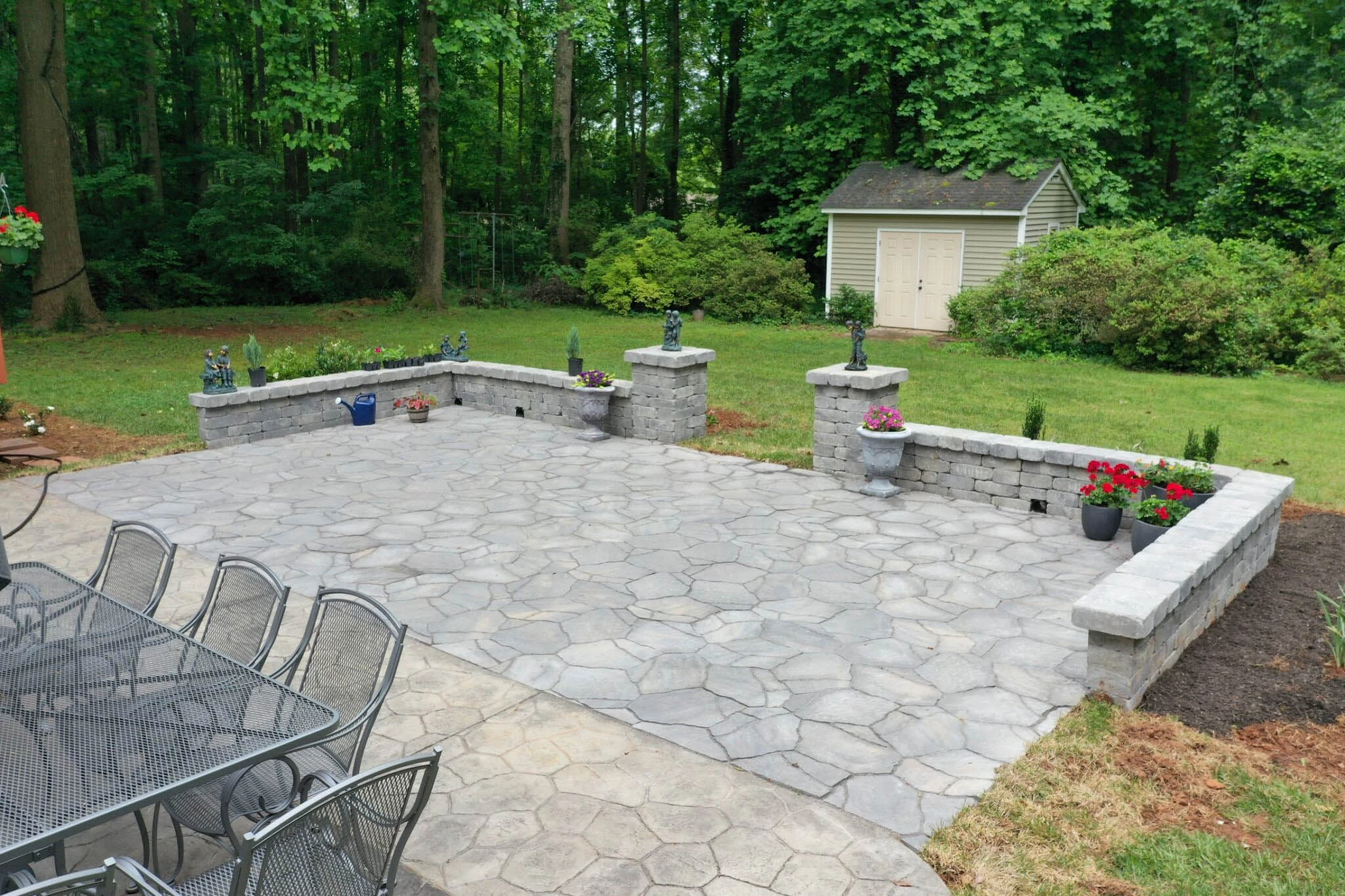
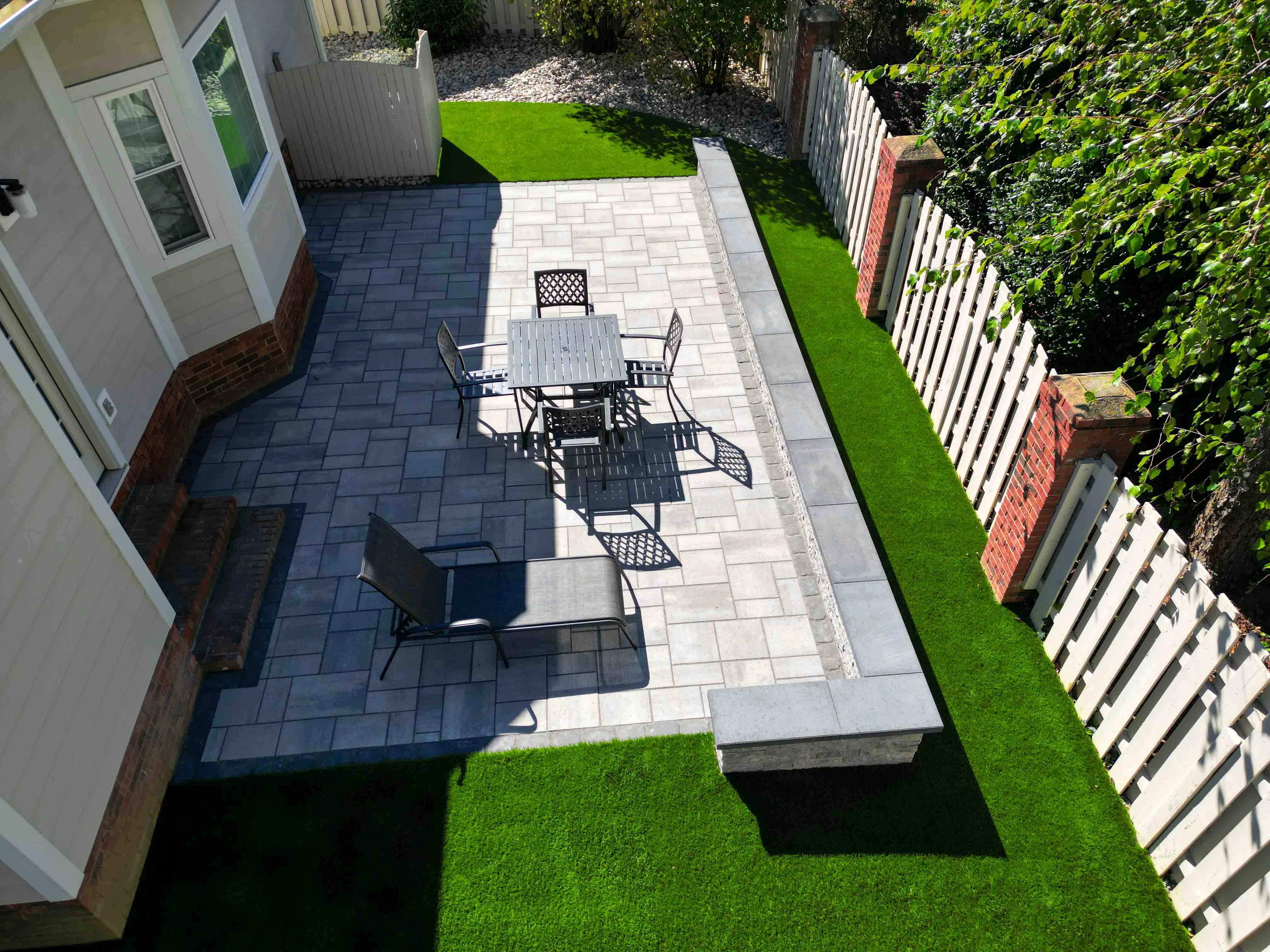
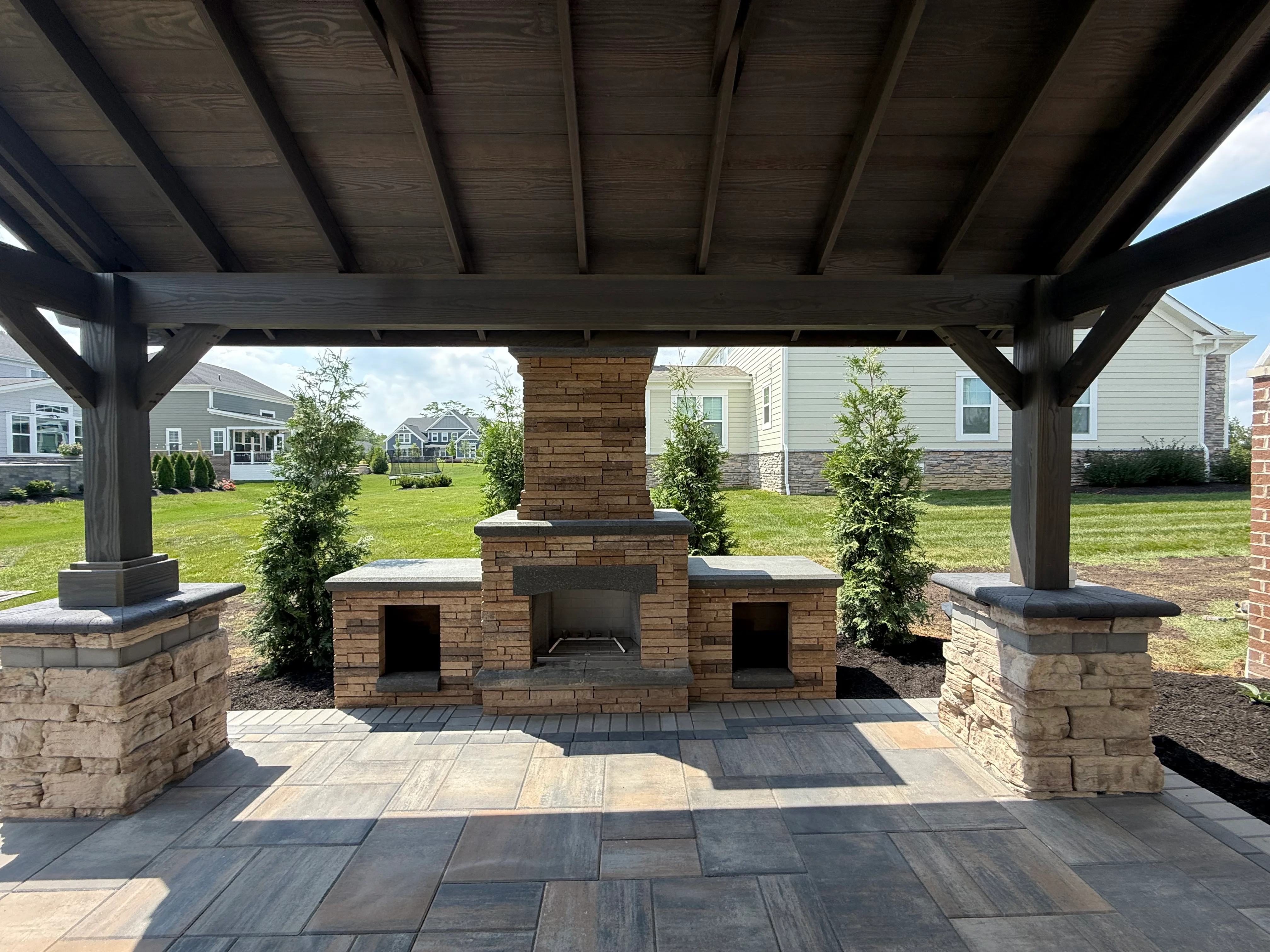
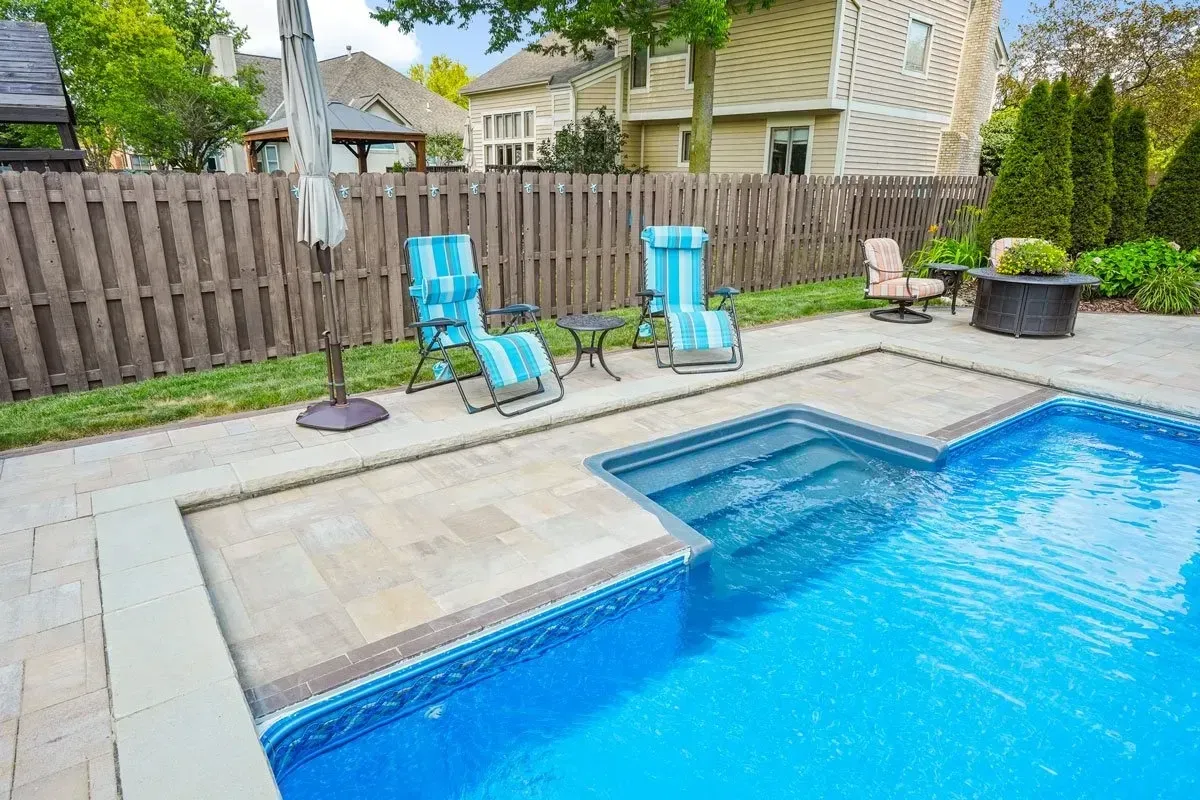
The last day of a paver job is where most of them are lost. Polymeric sand activated wrong, edge restraint skipped or undersized, sealer applied too early — each one is a ticking clock.
Edge restraint is what keeps the outer courses from walking outward under load. We spec it on every install — rigid plastic edge (Snap-Edge type) for pedestrian patios and walkways, aluminum for premium installations where it’ll occasionally be visible, and a poured concrete curb for driveways where pavers meet lawn. Skip it and the perimeter spreads an eighth of an inch a year until the field pattern starts opening up.
Polymeric joint sand is what locks the pavers together and stops weeds. The activation window is tight — swept in fully, blown clean of dust, then water-activated within minutes of placement, with a gentle shower pattern that soaks the joint without washing the sand out. Done right, the sand hardens into a flexible polymer that handles freeze-thaw. Done wrong — too much water, not enough water, dust left on the paver face — you’ll see joint crumbling by the next summer. We finish with a penetrating sealer on travertine, an optional color-enhancing sealer on concrete pavers, and a maintenance schedule you can actually follow.
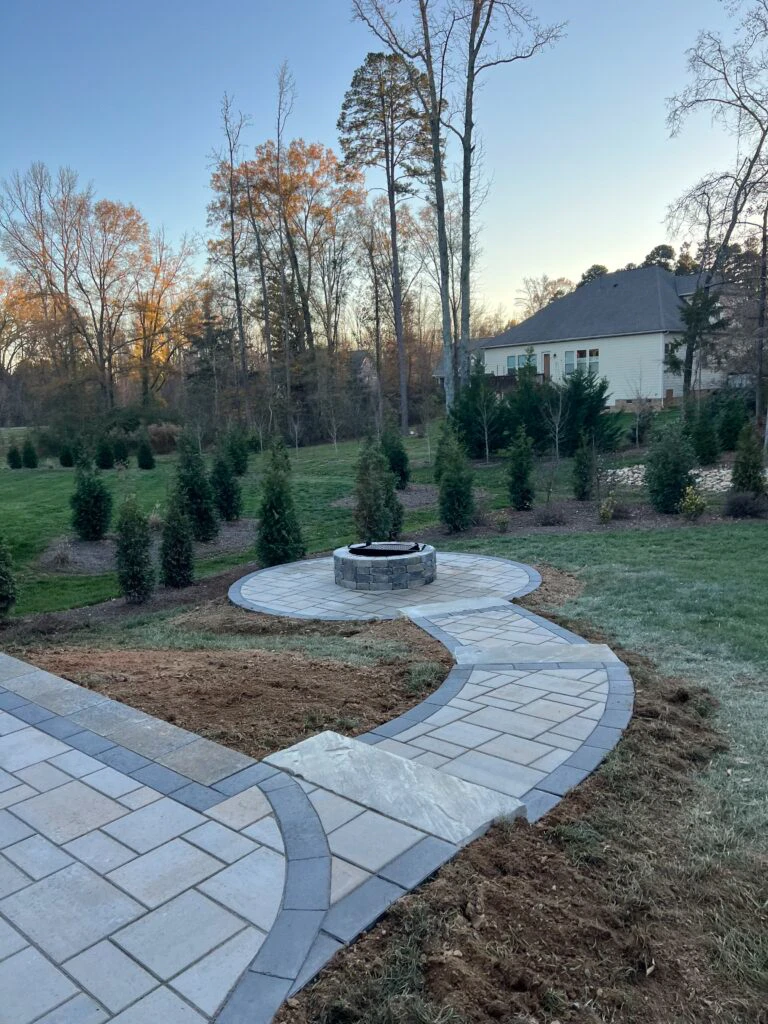
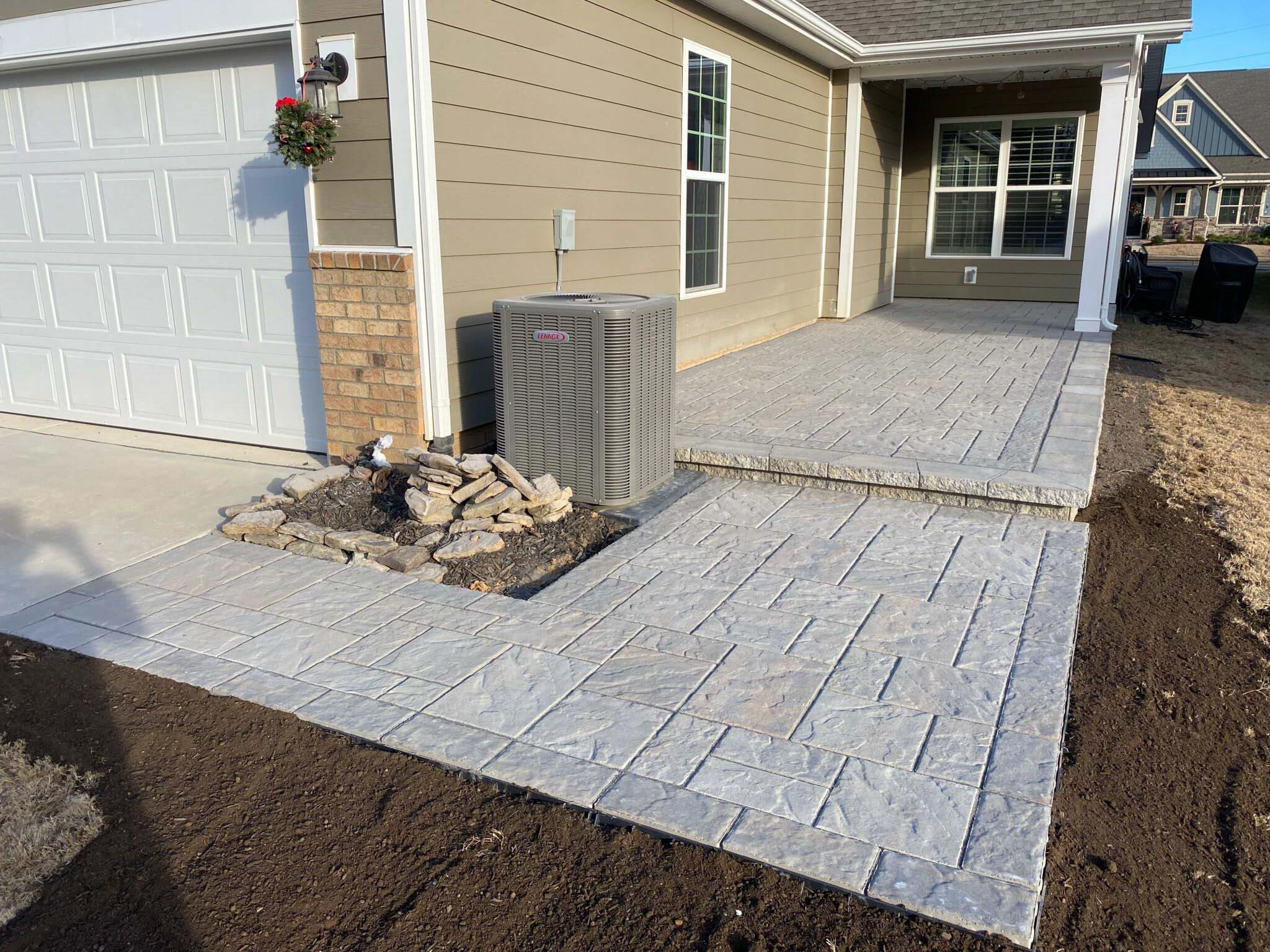
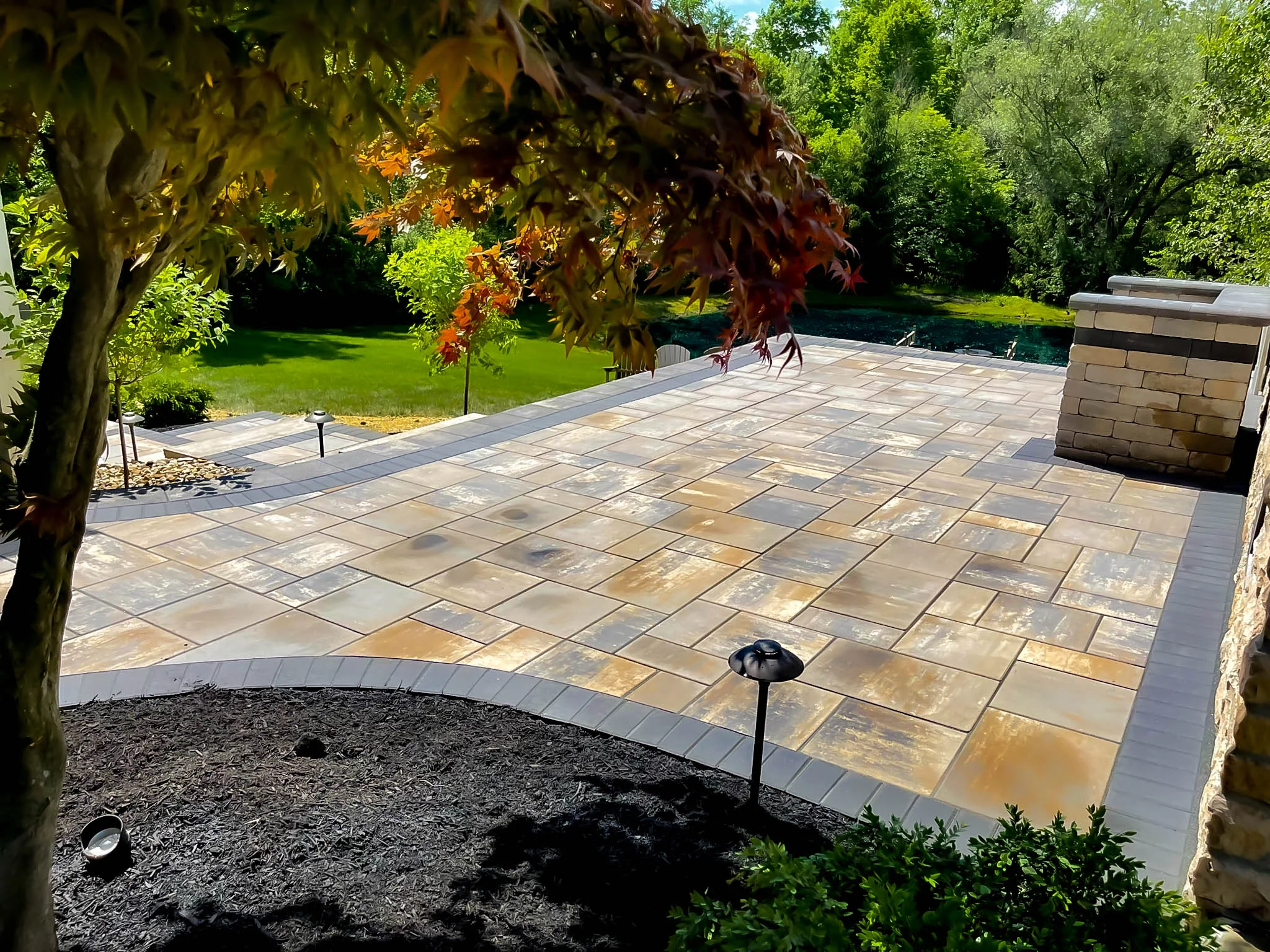
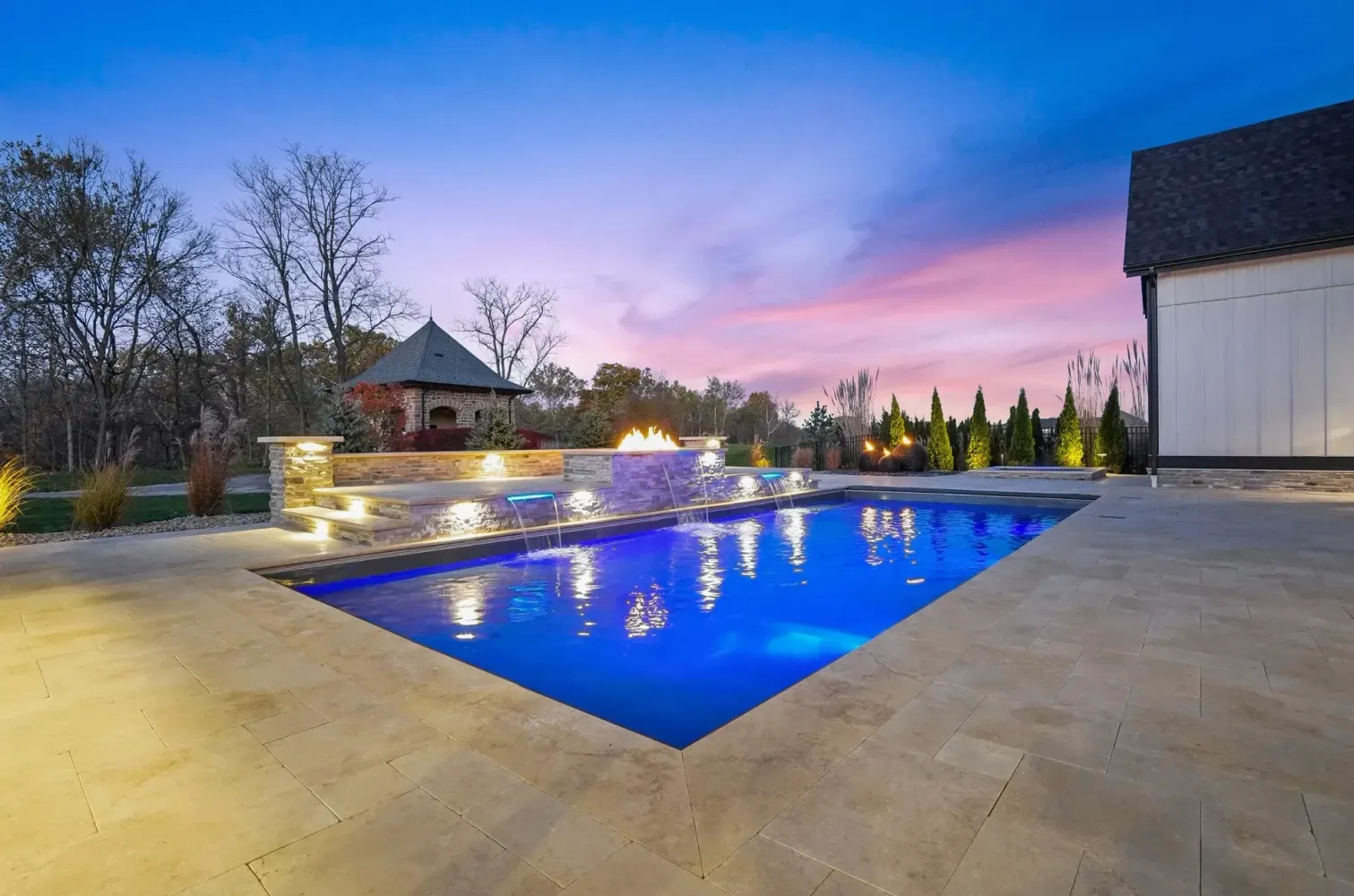
Most paver crews only do pavers — so when the job meets the pool coping, the retaining wall, or the lawn, there’s a hand-off and a seam where two companies didn’t quite agree. We build pools, decks, patios, and hardscape as one integrated scope. The paver line meets the coping with a planned detail, not a compromise.
Base prep photos available on request. We photograph every base stage — over-excavation depth, fabric placement, aggregate lifts, compaction, screed bed — so you can see the work you paid for before it disappeared under stone. Most installers don’t, because they don’t want the record to exist.
We fix other companies’ failed paver work regularly — sunken sections, heaved edges, blown-out joints, pavers spreading at the perimeter. Doing those repairs is what taught us every failure mode there is, and more importantly, what to do at the front end to prevent them. If your pavers are holding up in year fifteen, it’s because of what we did in week one.
One on-site walk, one honest quote, and a base spec that’s the same whether we’re building a 200-square-foot walkway or a 3,000-square-foot driveway.
Call Us Now