
Every spring we get the same question from Clarkston homeowners standing on a sun-baked patio behind a 1970s ranch in Idlewood or Lake Capri: “Which paver actually stays cool enough to walk on in July?” The honest answer is not a single material name. It’s a three-part equation — albedo, surface texture, and thermal mass — and once you understand it, the brand-name marketing collapses into a much simpler decision. A pale, textured, low-density paver beats a dark, polished, dense one every summer.
The reason that question matters more in Clarkston than in, say, Cumming or Milton is geography. DeKalb County summer highs sit in the 90–94°F band, but the older, lower-elevation Clarkston neighborhoods sit under a dense canopy of mature oak and poplar that traps humidity and pushes dew-point readings ten degrees above what the airport reports. A 92°F air temperature with 75% humidity translates to a paver-surface temperature, measured at the top of the stone in direct sun, of 130 to 150°F at 2 p.m. We have measured it with an infrared thermometer on Lake Capri renovation jobs. That is the temperature your bare feet are walking on between the pool steps and the lounge chair.
So the decision is not aesthetic. It is thermal. Below, we walk through the five paver categories that actually show up on Clarkston pool decks — concrete pavers, clay brick, porcelain, travertine, and bluestone — and how each one performs against the heat-load math your feet are doing on a July afternoon.
How a Paver Actually Stays Cool — Albedo, Mass, and Texture
Before you compare materials, you have to understand what makes any deck cool or hot. There are three variables, and contractors who only talk about “natural stone vs. concrete” are skipping two of them.
1. Albedo and Solar Reflectance Index (SRI). Albedo is the percentage of solar radiation a surface reflects rather than absorbs. White reflects roughly 80%; black absorbs roughly 95%. The construction-industry version of this number is SRI, scored 0 to 100, where a standard black asphalt surface sits at SRI 0 and a clean white roof membrane sits near SRI 100. The LEED cool-surface threshold for hardscape is SRI 29. A premium ivory travertine reads around SRI 55–62. A charcoal-tumbled concrete paver reads SRI 12–18. That difference alone — same air temperature, same time of day — produces a 25 to 35°F surface-temperature gap between two pavers sitting six inches apart.
2. Thermal mass. A dense paver stores more heat. Once it absorbs energy across a 95°F afternoon, it radiates that heat back into the evening — which is great for a fall fire-pit patio and miserable for a midday pool deck. Lower-density materials (clay brick, certain travertines) reach a lower peak temperature and release it faster after sunset. Higher-density materials (porcelain, dense bluestone, dense concrete pavers) hold heat longer.
3. Surface texture. A textured or honed surface scatters incoming light and breaks up direct foot contact area. The same stone in a polished finish can run 8–12°F hotter than in a honed or flamed finish, because polished surfaces transfer heat more efficiently to skin (more contact area). Texture also matters for slip resistance — and on a pool deck in DeKalb County, where 8 to 14 freeze events per year stress every joint, you want a coefficient of friction (wet, dynamic) of 0.60 or above.
Spec the SRI in writing. If a contractor is selling you “the cool paver,” ask for the manufacturer’s published SRI value on the spec sheet, not a brochure adjective. A real cool-deck spec reads: “Paver to achieve LEED SSc7.1 hardscape SRI ≥ 29 per ASTM E1980, color and finish per submittal.” That language pins the supplier to a number you can verify with an infrared thermometer the day after install.
Concrete Pavers — Mid-Tier vs. Premium
Concrete pavers are the workhorse of the Atlanta pool-deck market. Cast under hydraulic pressure from sand, gravel, cement, and iron-oxide pigment, they range from $7/sqft commodity product to $28/sqft premium architectural slabs. The cooling performance varies dramatically across that range, and the price difference is almost entirely about color stability and finish quality, not structural performance.
Mid-tier concrete pavers in the $9 to $14 per square foot bracket — think Belgard Holland Stone, Pavestone Plaza, or contractor-grade tumbled product — run hot in summer. Most are pigmented through the body with iron oxides that produce warm browns and tans, but the cement matrix absorbs heat aggressively. We have measured Holland Stone in a charcoal blend at 142°F on a 91°F July afternoon in Clarkston. The same stone in an “autumn blend” (more buff, less black) measured 124°F — still hot, but tolerable for bare feet for short stretches.
The cooling problem with mid-tier concrete is not the material itself. It is the color choices buyers gravitate toward. Charcoal, river-blue blend, and “tuscan” mixes all carry enough dark pigment to drop SRI below 20. If you want a mid-tier concrete deck that stays under 130°F, you have to commit to an honest pale-buff or near-white blend — and most homeowners do not love how that looks against a 1970s brick ranch in Idlewood.
Premium concrete pavers are a different conversation. Techo-Bloc Industria Smooth in the Champlain Grey or Greyed Nickel color reads around SRI 32–38 — over the LEED cool threshold — and benefits from a high-pressure manufacturing process that produces a denser, more uniform surface. Cambridge Maytrx with ArmorTec sealer in the natural color blend reads similar SRI numbers. These run $22 to $28 per square foot installed in the Clarkston market and, in our temperature testing, top out around 118–124°F on the same 91°F afternoon that pushes Holland Stone to 142°F.
The premium concrete tradeoff is freeze-thaw. DeKalb’s 8 to 14 freeze events per year are enough to expose any thin-spalled or under-cured concrete. The good news: Techo-Bloc and Cambridge both warrant against freeze-thaw spalling for life in residential applications. The bad news: a third-tier no-name concrete paver sold by a big-box store has no such warranty, and we have torn out enough of them at year 7 in Brockett and Hambrick to know the cheap material costs more over the long run.
Clay Brick — The Underdog Cool-Deck Material
Clay brick gets almost no attention in modern pool-deck marketing, and that is a marketing failure, not a material failure. Fired clay pavers — true brick, not concrete brick-look — are one of the coolest-running surfaces you can put around a pool, especially in a pale buff, salmon, or “rosé” color family.
The physics works in clay’s favor on two fronts. First, fired clay has lower thermal mass than dense concrete or porcelain, so it reaches a lower peak temperature. Second, the iron-and-silica pigmentation in pale clay bodies produces inherently higher reflectance than dyed concrete — typical SRI 40–52 for a buff or rosé clay paver, climbing to SRI 58 for the palest ivory clays. We have measured pale clay pool decks in Decatur at 116°F on the same afternoon a charcoal concrete deck two streets away measured 144°F. Same air temperature. Same time of day.
The clay tradeoff is freeze-thaw durability. A Class SX (Severe Weathering) clay paver tested to ASTM C902 is rated for at least 50 freeze-thaw cycles per year, which is overkill for Clarkston’s 8 to 14. But you have to actually spec the SX rating in the contract — clay pavers also come in MX (Moderate Weathering) and NX (Negligible Weathering) grades, and an MX paver installed around a Clarkston pool will start scaling at year 6 or 7 along the waterline edge where wet-dry cycling is constant.
Installed cost for SX-rated clay pavers in the Clarkston market runs $18 to $26 per square foot — comparable to premium concrete. We use them more often than the marketing volume would suggest, especially on traditional or transitional homes where the warm clay tones match an existing brick exterior. They are the right answer more often than they get specified.
Porcelain Pavers — The High-SRI Specialist
Porcelain is the newest entrant in the residential pool-deck market and the most misunderstood. A 20mm structural porcelain paver — not the 9mm interior tile homeowners sometimes confuse it with — is a vitrified ceramic slab fired at 2,300°F, with effectively zero water absorption (under 0.5% per ASTM C373) and extraordinary stain and chemical resistance.
On the SRI question, porcelain is a tale of two products. The ivory, beige, and “natural stone replica” colors from manufacturers like Marshalls Stoneworks Porcelain, Mirage, and Florim measure SRI 42–58 — solidly above the LEED cool threshold. The “charcoal slate” and “smoked oak” colors that have become trendy in 2024–2025 read SRI 14–22 and run hotter than mid-tier concrete. Same material category. Wildly different thermal behavior.
The porcelain advantage for Clarkston pools is freeze-thaw resilience. With near-zero water absorption, there is nothing inside the paver to freeze and expand. We have not seen a single freeze-spalled 20mm porcelain unit in seven years of installing them across DeKalb County — and that includes a stretch of pools in the 1990s-era Edinburgh subdivision that go through 12 freeze cycles every winter. Porcelain also resists pool chemistry: muriatic acid, trichlor tabs, salt-chlorinator splash, sunscreen — none of it stains.
Contract language for slip rating. Porcelain pavers ship in multiple surface textures: polished (do not use within ten feet of a pool), honed, textured, structured, and “external R11”. The number that matters is the wet, dynamic coefficient of friction. Spec it explicitly: “Paver shall achieve a wet DCOF of ≥ 0.60 per ANSI A326.3, with a minimum DIN 51097 Class C rating for barefoot wet areas.” Without that line, suppliers will substitute a cheaper R10 product that does meet code but is meaningfully more slippery the first time a kid runs out of the pool.
Installed cost for 20mm structural porcelain in Clarkston: $24 to $34 per square foot depending on color, format, and whether it sits on a pedestal system or a mortar bed. The cooling performance, in the right pale color, is the best of any paver category we install — and the freeze-thaw resilience is unmatched. The penalty is install precision: porcelain is unforgiving of base settlement, which makes it a difficult retrofit over Cecil clay subgrade without a fully engineered base section.
Travertine — The Default Cool Deck (and Where It Fails)
Travertine has earned its reputation. A natural sedimentary limestone formed in mineral springs and quarried in Turkey, Iran, and Italy, travertine carries thousands of microscopic air-filled pores that reduce thermal mass and lift reflectance simultaneously. An ivory or walnut-cream travertine in a tumbled finish reads SRI 50–62. On the same afternoon a charcoal concrete deck measures 142°F, a tumbled ivory travertine deck four feet away measures 112 to 118°F. We have done this comparison enough times to predict the numbers within two degrees before we walk up with the infrared gun.
Where travertine fails in Clarkston is freeze-thaw — but not in the way most contractors describe it. The stone itself, in a 1.25″ structural thickness, handles 8 to 14 annual freeze cycles without issue. What fails is the setting bed. Travertine is hygroscopic; it absorbs water through its porous body, and that water sits at the interface between the back of the paver and the mortar bed. When the temperature drops below 28°F, the moisture freezes and shears the paver loose from the bed. We see this every February in Clarkston pools where the travertine was set on a standard portland mortar bed instead of a polymer-modified ANSI A118.4 thinset over a properly compacted, drained base.
The fix is a spec, not a substitute material. Travertine on a Clarkston pool deck needs:
- A 6-inch compacted GAB base over the Cecil-clay subgrade, separated by a non-woven geotextile
- A 1-inch reinforced concrete slab if the pool deck spans more than 10 feet from the pool to a structure (Clarkston’s 52 inches of annual rainfall and clay subgrade make this non-negotiable on long spans)
- Polymer-modified thinset rated ANSI A118.4 or A118.15
- A penetrating, breathable sealer reapplied every 24–30 months — never a topical film sealer, which traps moisture and accelerates the freeze-shear failure
Installed cost in Clarkston: $19 to $28 per square foot for standard 12″ × 24″ or “French pattern” tumbled travertine. Premium walnut-cream or silver travertine can push $32 per square foot. For most Clarkston pool decks we estimate, travertine in an ivory or walnut-cream tumbled finish is the price-performance winner — provided the contractor specs the setting bed correctly. About a third of the failed travertine decks we tear out in Clarkston are stone issues. The other two thirds are setting-bed issues from contractors who treated travertine like a Belgard concrete paver.
Bluestone & Limestone — When the Aesthetic Trumps the Math
Pennsylvania bluestone and the broader limestone family — Indiana limestone, French limestone, Jerusalem gold limestone — show up on roughly one in eight Clarkston pool-deck builds we estimate. They are not the cool-deck pick on physics alone, but they earn their slot when the architecture demands them.
Bluestone in the “full color” range (warm browns, ochres, rust) measures SRI 28–36 — right at the LEED threshold — and runs about 125–132°F on the test afternoon. Bluestone in the “select blue” range (the cool-toned dense blue-gray most homeowners picture) drops to SRI 18–22 and runs hotter, 134–140°F. The thermally honest bluestone choice is full color in a thermal (flamed) finish. The thermally hot one is select blue in a honed finish.
Indiana limestone in a buff color reads SRI 44–52 — better than full-color bluestone — and runs around 118–124°F. Jerusalem gold limestone reads similarly. The challenge with limestone on a Clarkston pool deck is calcium-sensitivity: pool water with hard alkalinity can etch the surface over years of splash, leaving a “white wash” pattern around the perimeter. This is cosmetic, not structural, and it can be slowed with a quality sealer — but it is real, and homeowners should know about it before they commit.
Installed cost: bluestone runs $22 to $34 per square foot; limestone runs $24 to $36 per square foot depending on origin and finish. They are not the value pick. They are the architectural pick — and on Clarkston’s older Tudor-revival and stone-fronted ranches in Idlewood, they are sometimes the only paver that makes the back of the house look intentional.
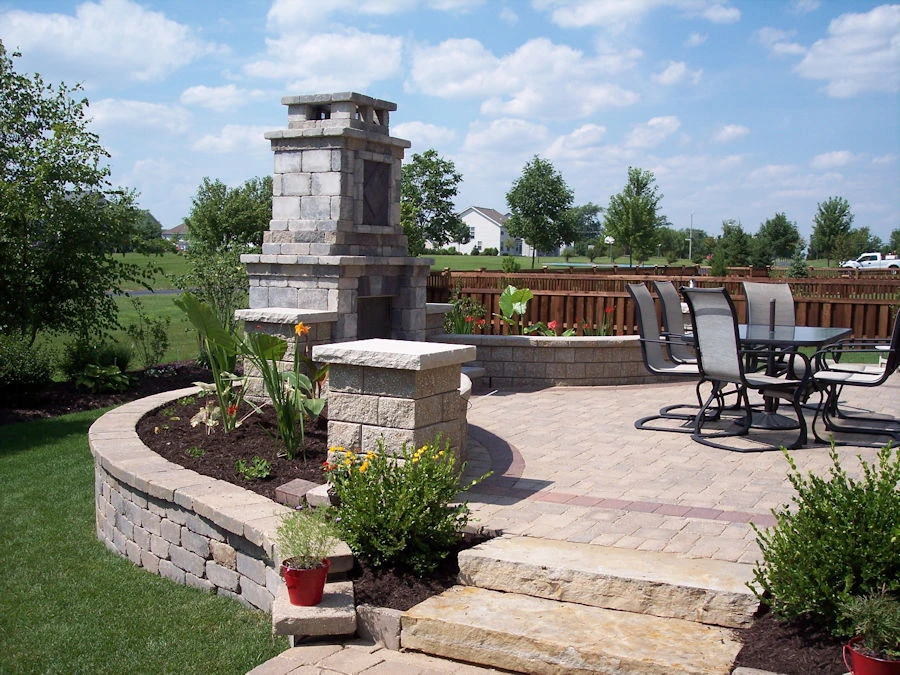
The Honest Recommendation for a Clarkston Pool Deck
If we are designing a pool deck for a 1970s ranch in Lake Capri or Idlewood — the typical Clarkston renovation profile — and the homeowner asks for the single best decision, the recommendation reads like this:
For most budgets ($19–$28/sqft installed): tumbled ivory travertine, French pattern, 1.25″ thickness, set on a 6-inch GAB base with ANSI A118.4 thinset over a 1-inch reinforced slab if the deck spans more than 10 feet to a structure. Penetrating sealer at install and at 24-month intervals. This is the price-performance answer on roughly 60% of the Clarkston decks we build.
For premium budgets ($24–$34/sqft installed): 20mm structural porcelain in an ivory, beige, or pale travertine-replica color, with a wet DCOF specified at 0.60+ on the submittal. The porcelain trade — slightly less natural appearance, slightly higher install precision required — is worth it for the freeze-thaw resilience and zero-stain performance on DeKalb water (which runs harder than Gwinnett’s at 110–140 ppm CaCO₃ and leaves more mineral residue on porous stone over time).
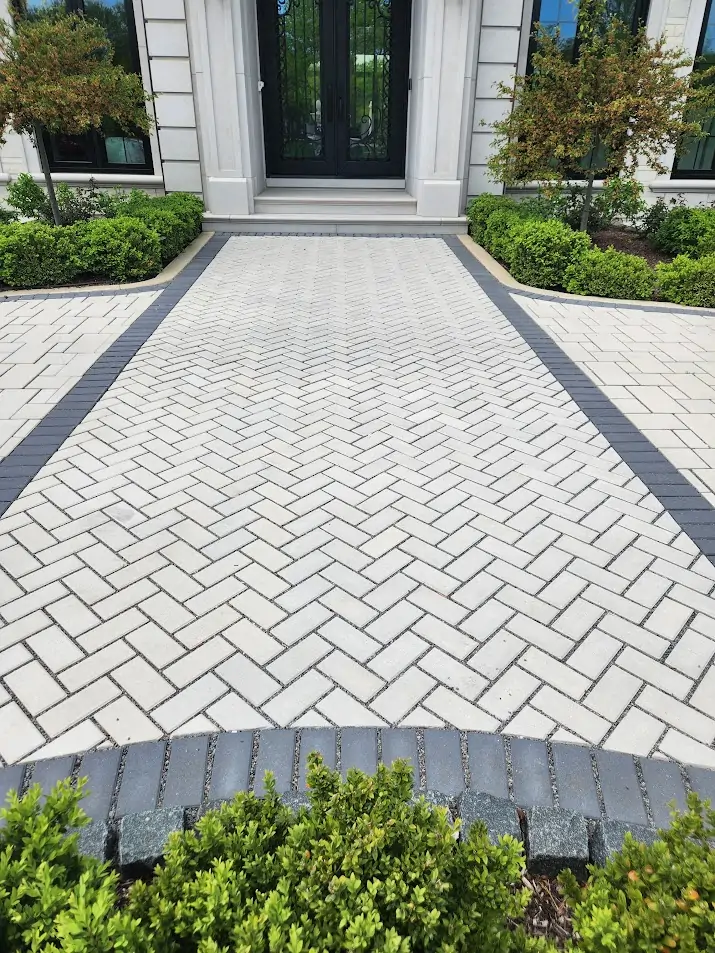
For traditional architecture matching mid-century brick ($18–$26/sqft installed): SX-rated pale clay brick — usually a buff or rosé — in a herringbone or running bond pattern. Same setting-bed protocol as travertine. The cooling performance equals or beats travertine in the palest colors, and the visual match to a 1970s Clarkston brick ranch is unparalleled.
For premium concrete buyers ($22–$28/sqft installed): Techo-Bloc Industria Smooth in Champlain Grey or Greyed Nickel, or Cambridge Maytrx in the natural blend. Both clear the LEED SRI threshold, both carry lifetime freeze-thaw warranties, and both will hold their color for 20+ years against DeKalb sun exposure. The mid-tier concrete savings ($10–$13/sqft) is not worth the thermal penalty or the year-7 color fade we see on commodity pavers in Brockett and Hambrick.
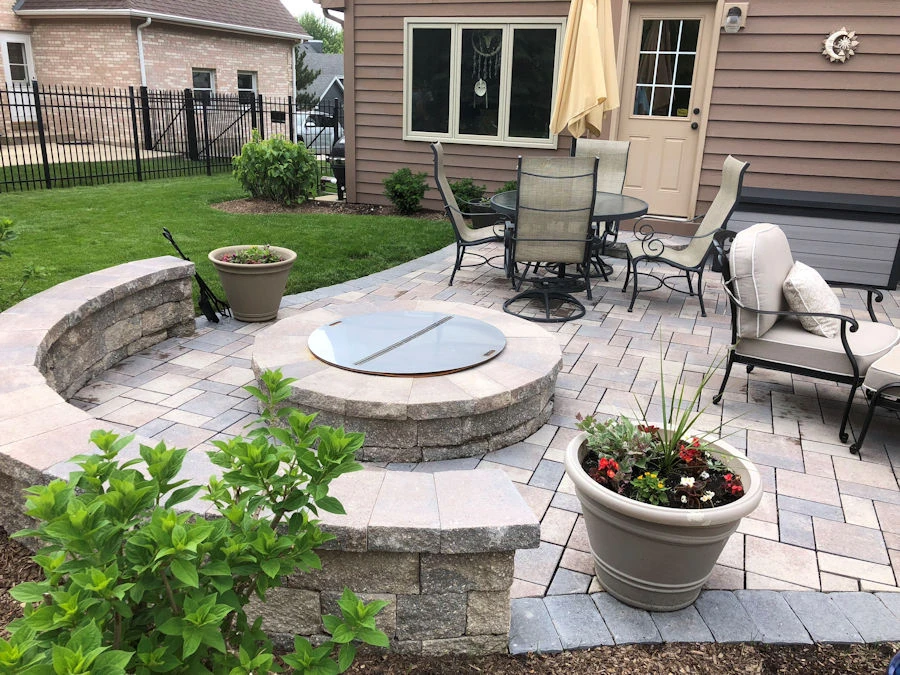
What we do not install on Clarkston pool decks, regardless of budget: charcoal or “river-blue” concrete pavers (too hot, fade fast), polished porcelain (slip hazard wet), select-blue bluestone in a honed finish (hot and slick), travertine on a portland mortar bed without a reinforced slab on long spans (freeze-shear failure inside three winters), or Eldorado Stone manufactured-stone veneer applied as a deck surface (it is a vertical product — it does not belong horizontal in a wet zone). Each of those exists in the local market, and each of them we have had to tear out for a homeowner who trusted the wrong contractor.
The right paver for a Clarkston pool deck is not about brand loyalty or square-foot price. It is about an SRI number on a spec sheet, a texture rating in a contract, a base section drawn on a plan, and a setting-bed adhesive named by ANSI class. Get those four things right and almost any paver in the right color family will give you a deck that runs under 125°F in July, survives 14 freeze events in February, and still looks intentional fifteen years later. Skip them and the most expensive paver in the catalog will fail by year 5.
Pool decks and pavers across 20+ cities within 30 miles of Winder, GA
Every Clarkston deck we design starts with the SRI, slip rating, base section, and thinset class written into the contract — so you know what you’re walking on in July, and what’s still flat in February.