
Georgia Power’s Alpharetta distribution grid logs 4 to 6 brown-out events per year — voltage sags where the 240V equipment pad drops to 85–95V for anywhere from 40 milliseconds to three seconds. In that window, every variable-frequency-drive pool pump in Windward, Country Club of the South, and Hutchinson Farm takes a measurable hit to its electrolytic capacitors. The math finally catches up at year seven.
We pull failed Pentair IntelliFlo3 VSF and Hayward TriStar VS drives off Alpharetta equipment pads roughly every other week during peak summer. When the homeowner shows us the receipt, the pump is almost always six to nine years old. The manufacturer’s rated service life says eight to twelve. The gap is not bad luck and it is not a bad brand. It is the specific behavior of this section of the grid — a behavior that is invisible until it has already cost you a $1,400 drive replacement.
This post is a forensic look at that failure mode. What the brown-outs actually do to the drive electronics, why Alpharetta sees more of them than the exurbs thirty miles north, how to tell whether your pump is dying from voltage events versus normal wear, and the two layers of surge and voltage protection that extend VFD service life by three to four years for roughly $600 installed. If you own a pool in 30004, 30005, 30009, or 30022, this is the cheapest repair decision you will make this decade.
What a Brown-Out Actually Does to a Variable-Speed Drive
A variable-speed pool pump is not a simple motor. Inside the blue plastic housing sits a power-factor-corrected rectifier stage, a bank of high-voltage electrolytic capacitors (typically 450V, 470 to 680 microfarad), and an insulated-gate bipolar transistor bridge that chops DC back into synthetic three-phase AC at whatever frequency the controller requests. That is why the pump can hold 1,200 RPM as quietly as it does. It is also why it is vulnerable to what the utility industry calls voltage sags.
During a sag, the 240V line drops to somewhere between 85V and 95V for a fraction of a second. The capacitor bank, which is trying to hold roughly 340V DC on the bus, suddenly has less energy to pull from. The drive’s firmware has three choices: ride through the event (most modern drives can handle about 200 milliseconds of dip), shut down and restart cleanly, or — and this is where damage happens — attempt to maintain output while the bus voltage is collapsing. That last case forces the capacitors to discharge at well above their design ripple current. Do that 40 to 60 times over a summer, year after year, and the electrolyte begins to dry out. Capacitance drops. Equivalent series resistance climbs. The drive runs hotter. Eventually the IGBT bridge sees ripple it was never spec’d to handle, and the pump throws a fault code E07 or F-01 and refuses to start.
The pump is not broken in the way a homeowner pictures. The motor is fine. The impeller is fine. The housing, the shaft seal, the wet end — all fine. What failed is four dollars of aluminum electrolytic capacitor that the drive depends on to smooth its DC bus. But Pentair and Hayward do not sell that capacitor as a field-replaceable part. They sell the entire drive. That is why a dying cap ends up costing $1,100 to $1,650 in a new drive plus labor.
What a brown-out event looks like at the pad: 240V nominal drops to 88V for 180 milliseconds, then recovers to 232V over the next 400 milliseconds, then oscillates between 238V and 244V for the next 8 to 12 seconds while the grid re-stabilizes. A homeowner watching the pool equipment sees nothing. A $30 plug-in voltage data logger captures the entire event with a timestamp.
Why Alpharetta Specifically — and Why Windward and Country Club of the South See the Worst of It
Georgia Power serves the large majority of Alpharetta — everything inside the city limits, most of the GA-400 corridor, and the established 1990s–2005 subdivisions off Haynes Bridge, Old Milton Parkway, and Windward Parkway. Only the narrow strip along the northern Alpharetta/Milton border is served by Sawnee EMC. The distinction matters because the two utilities have very different distribution architecture, and the Georgia Power primary feeders through Alpharetta are carrying more load than they were designed for in 1995.
Three things drive the brown-out frequency in this specific zip cluster. First, summer afternoon HVAC load. The tech-corridor relocation wave — Microsoft, CDW, and the corporate HQ presence along North Point Pkwy and Old Milton — brought a lot of 3,800-to-5,400-square-foot homes with two or three 5-ton condensers per house. When it hits 94°F at 4:30 p.m., every one of those condensers is kicking on within the same ten-minute window. Second, the Chattahoochee-basin topography puts Alpharetta at the end of longer primary feeder runs than, say, Cumming or Gainesville. Voltage drop at the end of a long feeder is a function of distance and current. Both are against us here. Third, the 2015-and-later luxury infill around Avalon and the downtown historic district added significant new demand without a proportional upgrade to the upstream distribution transformers — until Georgia Power’s 2022–2024 rebuild, which we will come back to.
Inside that context, Windward and Country Club of the South suffer more than average because the homes are older (1992–2003), the pools were built before variable-speed pumps were common, and the equipment pads were electrified in an era when nobody was thinking about harmonic distortion or voltage ride-through. Many of those original feeds run 6 AWG aluminum from the panel to the pad with no dedicated neutral isolation. That amplifies every sag. We have measured 72V at the pad during events where the main panel at the house only saw 94V — the internal wiring is eating another 20 volts of drop.
How to Tell a Brown-Out Death From Normal Wear (Before You Buy a $1,400 Drive)
Not every dead VFD is a voltage-sag victim. Bearings go. Shaft seals leak and let chlorinated water wick into the stator. Rodents chew wire insulation — we had three squirrel-related drive failures in Brookhollow alone last summer. Before you write a check for a new drive, there are four diagnostic cues that point specifically at capacitor degradation from voltage events rather than general wear.
One: the pump runs fine at 1,000 RPM but trips out at 2,800 RPM. This is the signature symptom. At low demand the bus ripple is small. At high RPM the ripple current through a weakened cap exceeds its spec and the drive throws an over-voltage or over-current fault within 30 to 90 seconds. If your pump handles low-speed circulation but faults within a minute of switching to a spa jet or waterfall mode, you are almost certainly watching cap degradation in real time.
Two: the fault is intermittent and heat-correlated. The pump runs all morning, then faults at 3 p.m. when the equipment pad is in direct sun and ambient is 92°F. Aluminum electrolytic caps lose capacitance as temperature rises. A healthy cap tolerates this. A degraded cap that has been beaten up by brown-outs no longer has the margin. The heat correlation is the giveaway.
Three: the same pump faults in multiple houses in the same subdivision within the same summer. We have seen waves in Haynes Manor and White Columns where four to six homeowners within a quarter-mile radius all have drive failures in July and August. That pattern almost never traces to a bad production batch — it traces to a shared primary feeder that took a particularly rough voltage event during a summer storm.
Four: the drive’s internal log shows over-voltage events. Both Pentair IntelliFlo3 and Hayward TriStar VS keep an event log. On the IntelliFlo3, hold the Menu button and navigate to Diagnostics → Fault History. If you see repeated F-01 (DC bus over-voltage) or F-05 (line under-voltage) entries dated across multiple months, you are looking at a grid-health problem, not a drive defect.
The Two-Layer Protection That Buys You Three to Four Extra Years
Surge protection on the pool equipment side is the single highest-ROI repair decision in Alpharetta. The math is direct: a properly installed two-layer system costs $590 to $1,040 installed, and it extends VFD service life from an observed six-to-nine years to a projected nine-to-thirteen years. That is a break-even inside eighteen months and a clean win thereafter.
Layer one: whole-home surge protective device at the main panel. We install a Siemens FirstSurge FS140 or Eaton CHSPT2ULTRA at the main service entrance. These are Type 2 SPDs rated for 140,000A nominal, with thermally protected MOV (metal-oxide varistor) technology and an audible indicator when the clamping stack has been consumed. Installed cost in Alpharetta runs $450 to $800 including the licensed electrician. The panel-level SPD clamps the high-magnitude transients — the lightning-adjacent events, the utility-side switching transients, and the larger voltage spikes that ride in on the service drop.
Layer two: a dedicated equipment-pad-grade surge device. The panel-level device does not catch everything. Voltage sags are not the same as spikes, and even a residual spike that makes it past the main panel still carries enough energy to damage a drive’s input rectifier. At the pad, we install a hardwired point-of-use SPD (we spec Ditek DTK-120/240CM+ for most installs) directly on the pump-circuit side of a dedicated sub-panel. Installed cost: $140 to $240. This is the device that actually catches the ugly second-order events that follow an initial sag — the oscillations as the grid re-stabilizes are often what kills the drive, not the sag itself.
Neither device protects against the sag itself — a brown-out where voltage drops below 95V is not what an SPD is designed to catch. But the drive’s ride-through logic can handle the sag if the surge transients on either side of it do not compound the damage. The goal is not to eliminate events. The goal is to strip the edges off them so the drive’s own protection can do its job.
What we quote on an Alpharetta equipment-pad protection retrofit: $590 base for a single-pump pad (Siemens FS140 + Ditek DTK-120/240CM+ + 2 hours licensed electrician), $780 to $1,040 for a multi-pump pad with a spa booster, gas heater controller, and salt-cell power supply all on the same sub-panel. We do not quote this as a sales add-on — it ships with every full equipment replacement we do in 30005 and 30022.
The 2022–2024 Georgia Power Rebuild — Is the Problem Going Away?
Georgia Power completed a distribution upgrade across the Windward corridor and the Alpharetta core between 2022 and 2024. The project replaced several aging primary transformers, reconductored roughly 11 miles of overhead primary, and added voltage regulation equipment at two substations serving 30004 and 30005. We have been watching the results closely because it directly affects our repair volume.
The honest answer: event frequency is down. Homeowners in Windward who used to see six or seven noticeable flickers a summer are reporting three to four. That is real progress. But the residual events still occur during the heaviest afternoon demand, and the drives we pulled last August showed essentially the same cap-degradation pattern as the drives we pulled in 2019. The rebuild reduces exposure. It does not eliminate it. And homes east of GA-400 exit 10 — Haynes Manor, Brookhollow, and Martins Landing — are on feeders that were not part of the 2022–2024 scope and still see the original event rate.
More importantly, the rebuild does not help any homeowner whose pump was installed before 2022. The capacitor degradation from the pre-rebuild years is already baked in. If your pump was installed in 2017 or 2018 and has already absorbed six summers of brown-outs, the internal clock is running — the rebuild will not rewind it. Surge protection retrofitted today still earns its money back on that pump.
What to Do If Your Pump Is Five or More Years Old Right Now
The decision tree is straightforward, and it depends on whether your drive is currently running or currently faulted.
If the pump still runs: get the two-layer surge protection installed within the next sixty days. This is not urgent in the emergency sense, but every week you wait is a week of unprotected exposure. On a five- or six-year-old drive, adding protection now pushes the expected total service life from seven years to ten or eleven. The retrofit takes a licensed electrician about three hours. We coordinate it on any existing service visit at no additional dispatch fee.
If the pump runs but trips at high speed or on hot afternoons: pull the fault log before you authorize a replacement. If the log shows repeated F-01 or F-05 entries across multiple months, the drive is on borrowed time and a new drive without surge protection will follow the same path. Replace the drive and install both SPD layers on the same visit. Budget $1,650 to $2,100 all-in depending on which pump you own. The per-year cost over the next ten years is substantially lower than another cycle of bare-drive replacement.
If the pump is fully faulted and will not start: confirm the fault code before anyone quotes you a drive. We have seen more than one homeowner in Cambridge Parks and Deerfield pay for a full drive replacement on a pump where the actual failure was a $40 capacitor on the control board — not the DC bus caps. A competent service tech can open the drive, read the board, and tell you within fifteen minutes whether you are looking at a $40 part or a $1,400 replacement. Insist on that diagnostic before you sign.
If your pump is still under manufacturer warranty: file the claim immediately and get the utility’s event log in writing if the dealer resists. Pentair and Hayward have both honored warranty drive replacements on Alpharetta grids where the homeowner was able to document the voltage-event history. It is not automatic, but it is achievable, and a utility event-history request costs the homeowner nothing beyond a phone call to Georgia Power’s reliability desk.
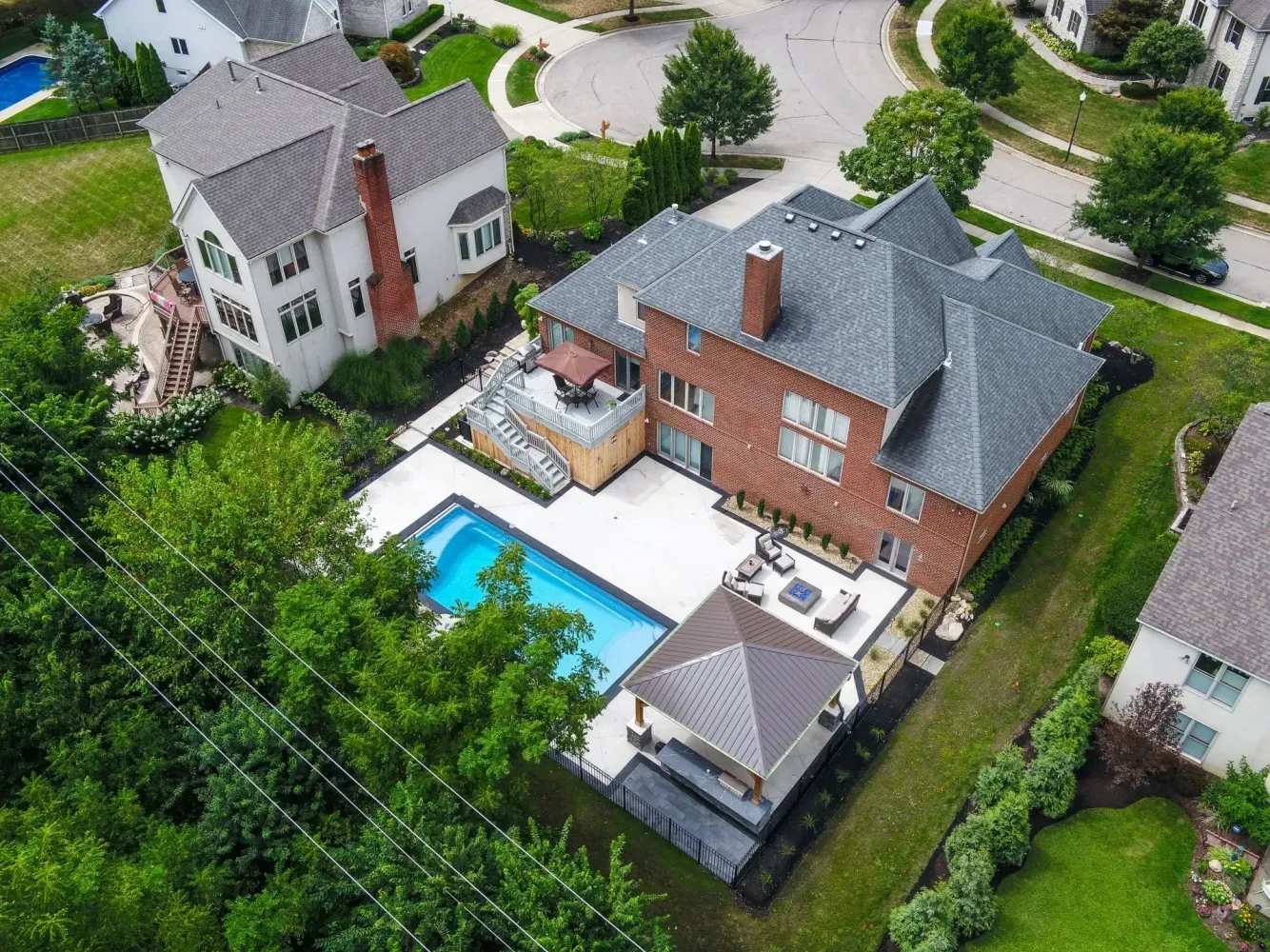
Alpharetta is a fantastic place to own a pool. The backyards are generous, the Cecil-series Piedmont clay holds a pool shell beautifully once the base is properly engineered, and the Zone 8a climate gives you roughly seven months of comfortable swim season. What it is not is a place where you can install $4,800 worth of variable-speed equipment and ignore the grid it is plugged into. The homes in Country Club of the South and Windward that have surge protection at both layers run their drives past year ten with no issue. The homes that do not run their drives to year seven, write a check, and start the clock again. The difference is less than a dinner for four at a restaurant in Avalon.
If you are not sure which camp your pool is in, the answer is almost always a thirty-minute site visit with a multimeter and a drive fault-log readout. That is how we start every conversation about equipment lifespan in this city. The permits through the City of Alpharetta Community Development office at 2 Park Plaza move faster than unincorporated Fulton when a retrofit needs one, and most two-layer surge installs do not require a permit at all — just a licensed electrician and a clean install.
Pool equipment repair across 20+ cities within 30 miles of Winder, GA
Whether your VFD drive is faulted right now or your six-year-old pump is quietly accumulating brown-out damage, we diagnose first, protect second, and replace only when the data says so.