
Q: Why does a pool permit at Windward Parkway close out on a different timeline than a near-identical build three miles north in White Columns? A: Because one address is fed by Georgia Power and the other by Sawnee EMC — and the two utilities run on completely different inspection calendars, pricing tables, and service-drop protocols.
Almost every pool builder in north Fulton will quote a schedule before they look at the meter base. That is a mistake. On the Alpharetta–Milton seam, the utility serving your address decides when your equipment pad gets energized, how much the service upgrade costs, and whether the final inspection happens on a Tuesday, a Thursday, or any business day of the week. Filing the wrong paperwork costs two weeks on a schedule that is already tight.
This post is for the Country Club of the South homeowner about to sign a contract, the Cambridge Parks couple wondering why their neighbor’s pool started up faster, and the Microsoft transfer buying into a 2015 infill lot near Avalon with a two-year-old subpanel. The utility question is not a footnote. On this border, it drives the entire equipment-pad sequence.
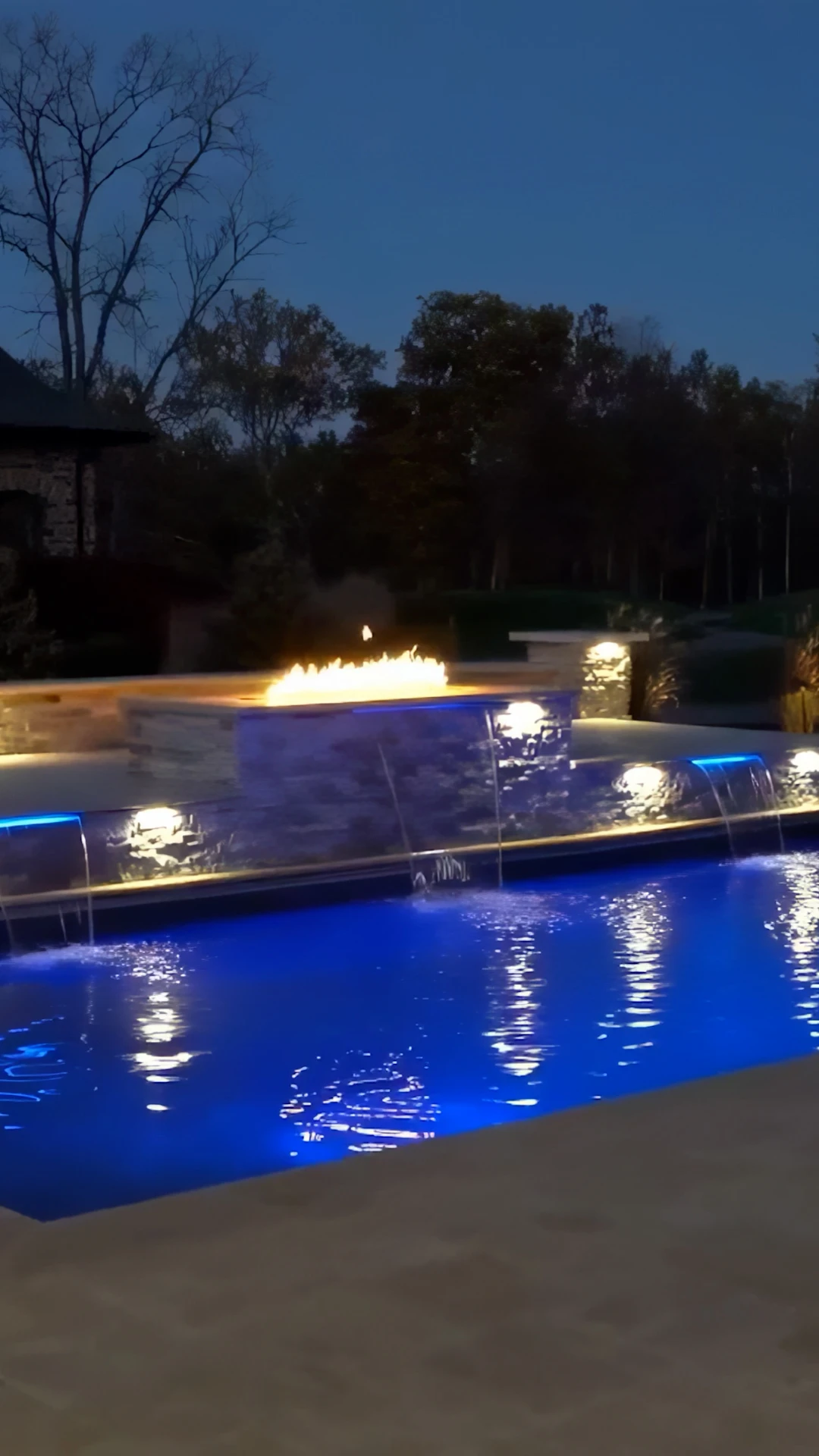
The Alpharetta–Milton Border Is a Utility Boundary, Not Just a City Line
Alpharetta sits in northern Fulton County at roughly 1,100 feet of elevation, along a gently rolling ridge that runs up to the Chattahoochee. The city proper is about 69,000 people, but the service area we care about for pool construction is the full North Fulton band — Alpharetta, Milton, Johns Creek, Roswell — roughly 230,000 residents and one of the highest custom-pool densities in Georgia.
Here is what most pool owners in 30004, 30005, 30009, and 30022 never learn until the permit desk hands it back: southern Alpharetta, roughly south of Windward Parkway, is exclusively Georgia Power territory. As you move north toward Milton — into areas like Haynes Manor, northern White Columns, and the Sawnee Ridge pockets that pre-date Alpharetta’s annexation — you hit a Sawnee EMC footprint. The electric cooperative’s territory was grandfathered in decades before the subdivision boundaries existed, and it does not follow the street grid.
The result is that two houses on opposing sides of the same cul-de-sac can be on different utilities. I have built pools 400 feet apart where one equipment pad energized in six business days and the other took eleven. Same builder, same electrician, same permit office. Different utility calendars.
How to check the utility at the meter base: Georgia Power meters carry a diamond logo stamped into the housing. Sawnee EMC meters carry a rectangular cooperative stamp — usually reading “Sawnee EMC, Cumming GA.” Do this check before you sign anything. Not after. The meter is the source of truth, not the mailing address, not the subdivision, not the county GIS layer.
Inspection Rhythm — Daily vs Tuesday/Thursday
The single biggest schedule variable on the Alpharetta border is inspection cadence. Georgia Power inspectors roll on a daily rotation. Submit a service-drop request Monday, and you are typically on the schedule by Wednesday or Thursday. Typical turnaround on the meter set and energize-to-panel sequence runs 5 to 7 business days once the equipment pad is ready and the City of Alpharetta rough-in inspection has cleared.
Sawnee EMC runs a different schedule. Their inspection rotation for the Alpharetta–Milton border runs primarily Tuesday and Thursday. Miss a Tuesday by a day and your next window is the following Thursday. Turnaround from request to energize typically runs 7 to 10 business days, and in peak pool season — May through July — I have watched that stretch to 14. The cooperative is not slow. It is methodical. Their service area runs across six counties and they batch work by geography to keep truck rolls efficient.
For the builder, this means the equipment pad pour, the bonding grid, the subpanel landing, and the pressure test all have to align differently depending on which side of the utility seam the house sits on. On a Georgia Power address, you can finish bonding on a Friday and call for inspection Monday morning. On a Sawnee EMC address, finishing bonding on a Friday means calling for inspection the following Tuesday — and if the inspector needs a second trip, you are another forty-eight hours past that. The math looks small until you stack it against a pool-school date committed to a family’s summer plans.

Service Upgrade Pricing — What the Pad Draws and Who Pays
A modern pool equipment pad is not a minor load. A Pentair IntelliFlo3 variable-speed pump, a Jandy Pro VS salt cell controller, a Raypak 406A gas heater ignition board, a transformer for low-voltage landscape and pool lighting, and a dedicated LED niche circuit will collectively pull somewhere between 40 and 60 amps at peak, with a continuous draw under 25. On most 1990s Windward and Country Club of the South panels — 200-amp main services — there is headroom for the pool as long as the existing HVAC, range, dryer, and EV charger loads are documented honestly.
The break point comes on homes built before 1995 or on some of the mid-2000s Ashebrooke and Martins Landing subpanels where the original builder specced the service light. If the load calculation pushes over 85% of the main breaker rating, the utility requires a service upgrade before energizing the new pool subpanel.
Here is the pricing gap that rarely makes it into a pool contract:
- Georgia Power service upgrade (100A to 200A, or 200A to 320A meter base swap): typically $280 to $480 in utility coordination and connection fees, plus the homeowner’s electrician work.
- Sawnee EMC service upgrade on the same job: typically $180 to $320 in cooperative fees.
Sawnee is generally cheaper on the upgrade itself. Georgia Power tends to be faster on the paperwork. That tradeoff is real and it is worth modeling into the proposal up front rather than discovering it at week six of a twelve-week build.
Before you sign a pool contract in Alpharetta: Ask your builder two questions. One — “Have you confirmed the utility serving this address by inspecting the meter base stamp?” Two — “Have you pulled a load calculation against the existing panel schedule, with all current loads documented?” If the answer to either is no, the schedule in the proposal is a guess.
City of Alpharetta Community Development — Why In-City Permits Move Faster
Permit routing adds another layer. A pool built inside Alpharetta city limits is permitted through the City of Alpharetta Community Development office at 2 Park Plaza. A pool built on the Milton side — even on the same street grid — routes through Milton’s Community Development and, in unannexed pockets, back to Fulton County. Alpharetta in-city pulls typically come back in 10 to 14 business days. Milton runs 12 to 18. Unincorporated Fulton can stretch to 21.
Alpharetta’s review process is also more predictable on the electrical rough-in. The city coordinates its rough-in inspection directly with Georgia Power’s service-drop calendar, so on in-city Georgia Power addresses, a single phone call can align the two inspections back-to-back. On Sawnee EMC addresses — even when they are inside Alpharetta city limits — the homeowner or builder has to coordinate with the cooperative separately, because the city’s inspector is signing the electrical rough-in, but Sawnee EMC is signing the meter set.
This is where the handoff breaks most often. A builder who has done twenty pools in south Alpharetta assumes the city-utility coordination extends to every address, misses the Sawnee piece, and the pad sits bonded-but-unenergized for a week while everyone waits for a meter set that nobody officially requested. On the Windward/Country Club side of the line, this never happens. On the north-border Sawnee pockets, it happens constantly.
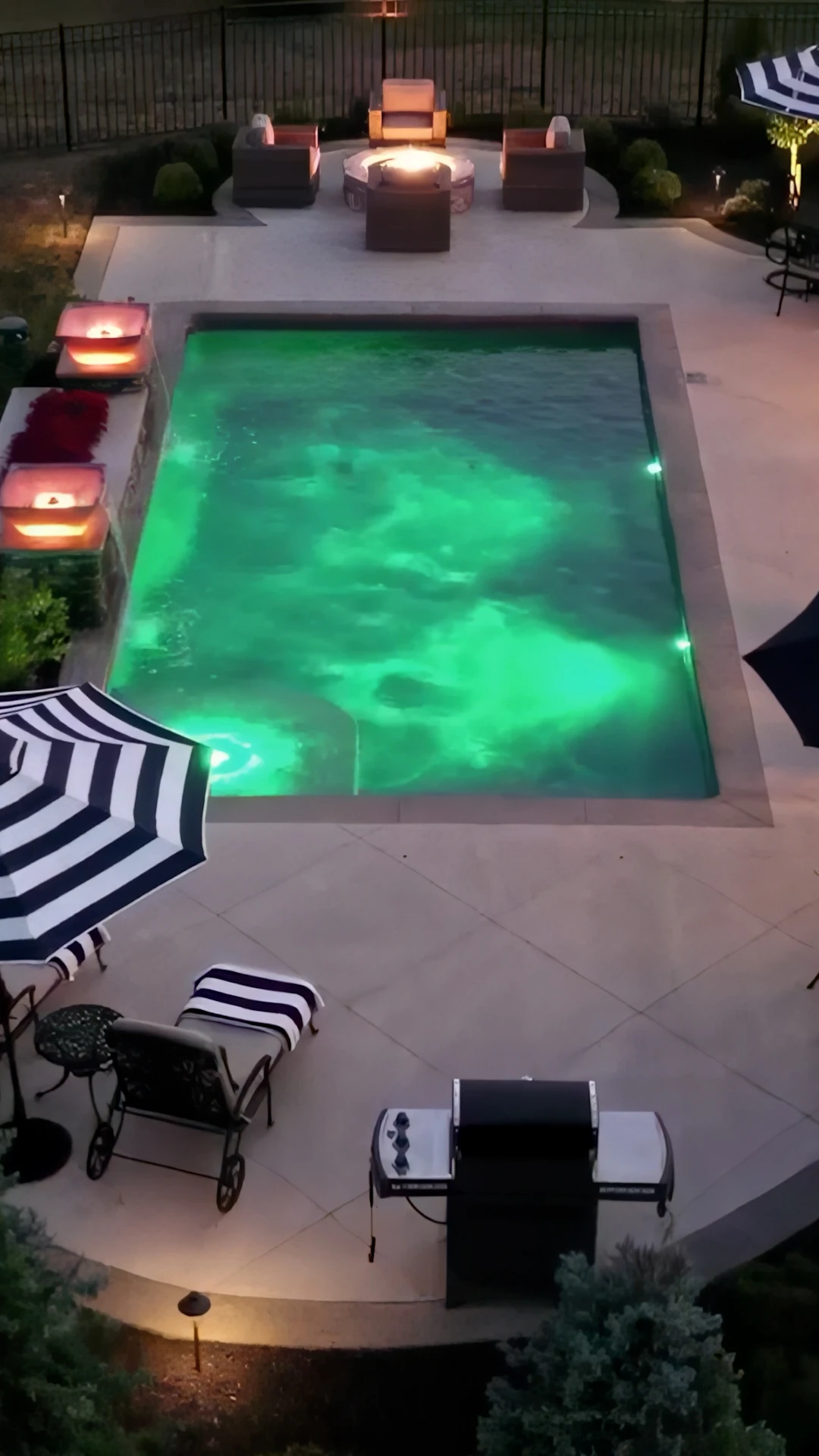
ARB Review, Piedmont Clay, and the Sequencing That Follows
Utility coordination is one of three schedule gates on a North Fulton pool. The other two are ARB review and the soil itself, and they both lean on the utility call more than homeowners expect.
The Windward and Country Club of the South ARBs run a 3 to 4 week architectural review. That review locks elevation, setback from the home, equipment pad location, and screening. Once approved, it is binding. If the approved pad location is on the far side of the yard from the existing subpanel, the trench run can add 80 to 120 feet — and on a Sawnee EMC address, every extra foot of trench compounds the inspection problem because the cooperative is less flexible about splitting the bonding inspection from the trench inspection. Georgia Power will often sign both in one visit. Sawnee rarely does.
Under all of it sits Cecil-series Piedmont clay — the dominant soil across Alpharetta and most of North Fulton. Cecil clay is a moderately high shrink-swell soil, meaning it expands in wet weather and contracts in drought. For an equipment pad, that means an undersized footing will tilt within 18 to 24 months. We spec a minimum 6-inch compacted base over 4-inch engineered fill on every Alpharetta pad, and we oversize the pad dimensions by 8 inches on each side beyond the equipment footprint so that minor movement does not stress the conduit penetrations. In older Hutchinson Farm lots where the builder hit pockets of Appling sandy loam instead of Cecil clay, we adjust the drainage slope rather than the base spec — but the bonding grid layout stays identical either way.
The sequence on a typical 14 to 16 week Alpharetta build looks like this: week 1–4 ARB + permit submittal (parallel); week 4–6 excavation and steel; week 6–8 plumbing, gunite, and electrical rough-in; week 8 utility request filed with correct form for the correct utility; week 9–10 meter set + energize for Georgia Power, week 10–11 for Sawnee EMC; week 11–13 finish coping, deck, interior plaster; week 13–14 start-up and pool school. The difference between filing with Georgia Power and filing with Sawnee is not dramatic — but filing the wrong utility’s form is a two-week hit that cannot be recovered.
What Alpharetta Homeowners Should Verify Before Week 8
By the time an equipment pad is rough-in ready, the utility paperwork should already be in motion. That means the verification needs to happen at contract signing — not at rough-in. Here is the short list of what we verify on every Alpharetta build, and what you can verify yourself on a build in progress:
- Meter-base stamp: Physically inspect the meter housing. Diamond stamp = Georgia Power. Rectangular cooperative stamp = Sawnee EMC. Photograph it and save the image to the project file.
- Matching paperwork: Confirm the service-request form filed at week 7 or 8 matches the utility on the meter. Georgia Power and Sawnee EMC use different forms. Georgia Power’s request routes through their commercial/residential new-service portal; Sawnee’s routes through their member services office in Cumming.
- Panel schedule documentation: Your electrician should hand you a photo of the panel schedule with all existing circuits labeled and a calculated load total in amps. If that total plus the pool load pushes over 85% of the main breaker rating, the service upgrade has to be filed before the meter set request — not after.
- Bonding grid coverage: The pool shell, the metal coping track, every metal component within 5 feet of the water’s edge, and every metal component on the equipment pad all tie to a continuous bonding grid per NEC §680. The inspector will look for this at rough-in. A failed bonding inspection on a Tuesday in Sawnee territory means no second inspection until Thursday at the earliest.
- Trench depth and conduit type: Direct-bury conduit from subpanel to equipment pad runs at a minimum 24 inches below grade with a warning tape buried 12 inches above. Both utilities require this; neither will sign off without it.
- City inspection sign-off: The City of Alpharetta rough-in inspection must clear before the utility meter set. On in-city Georgia Power addresses, these can be stacked same-day. On Sawnee addresses they usually cannot.
None of this is exotic. It is standard practice on any properly run pool build. What makes Alpharetta distinct is the utility seam — and the fact that a builder who has never worked north of Windward Parkway can miss the Sawnee handoff entirely on their first Milton-adjacent project. When you interview builders for a North Fulton pool, that question — “how do you handle the Georgia Power to Sawnee EMC transition?” — separates the crews who have built here from the crews who are about to learn.
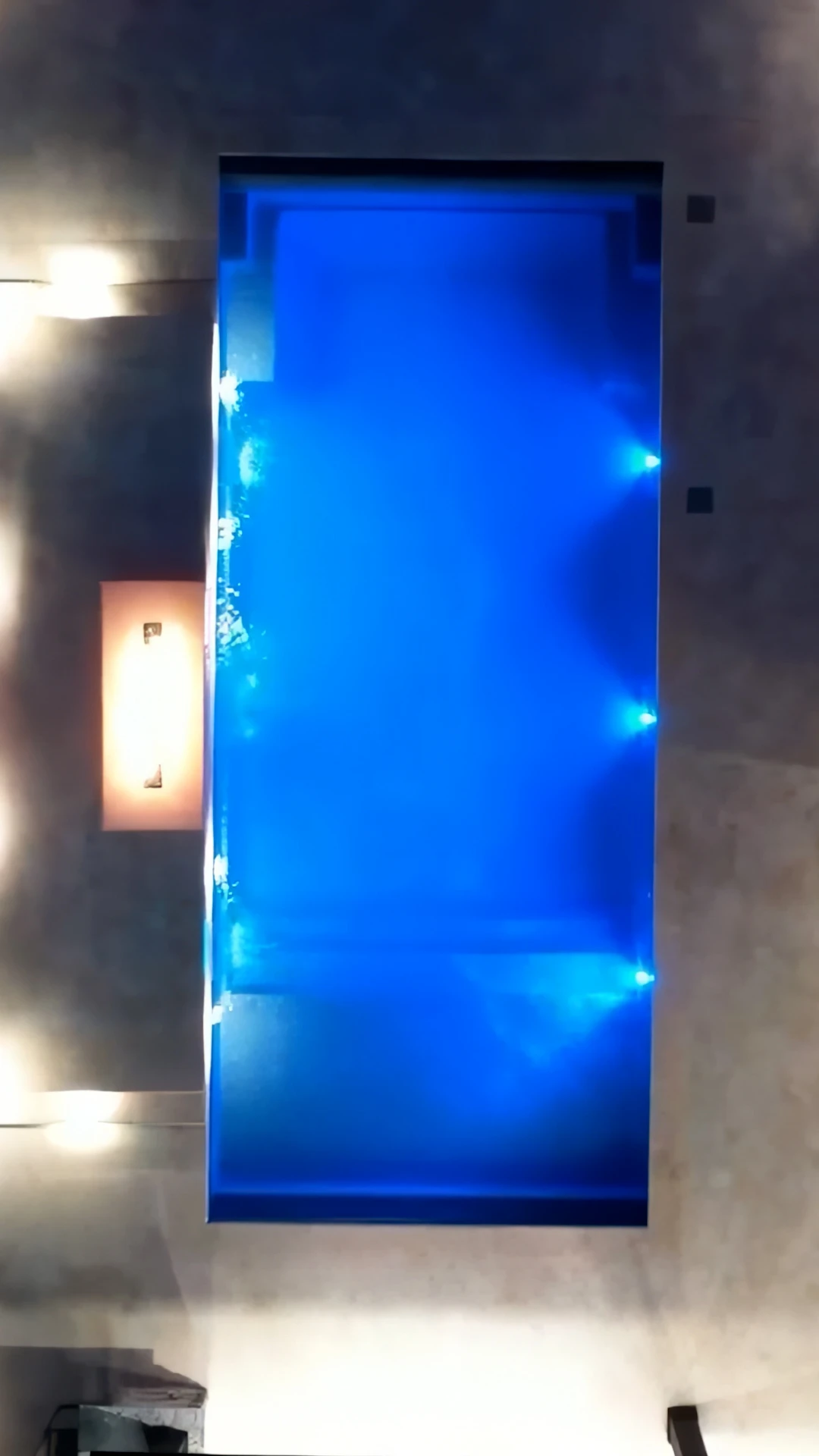
One more note on the Avalon-adjacent luxury townhome infill. The 2015-and-later builds around Avalon and the Alpharetta City Center zone were almost universally wired to 200-amp or 320-amp services with modern panel schedules. On those homes, the load calculation rarely triggers a service upgrade. The utility question still matters — most Avalon-area addresses are Georgia Power — but the equipment pad coordination is a straight sequence rather than a diagnostic puzzle. On the older Windward and Country Club of the South panels, the diagnostic comes first.
The Alpharetta market is not getting easier. Tech-corridor relocations from Microsoft, CDW, and the corporate HQs along the GA-400 spine are driving more custom pool starts in North Fulton than any other submarket in the metro. The good builders will keep asking the utility question before they quote a schedule. The builders who do not will keep losing two-week gaps and blaming the permit office.
Custom Pool Construction across 20+ cities within 30 miles of Winder, GA
From Alpharetta’s Windward and Country Club of the South neighborhoods across the Sawnee EMC seam toward Milton, we coordinate the utility, the permit, and the equipment pad as one sequence — not three surprises.