
A pergola in Clarkston doesn’t fail in a storm. It fails quietly, one humid August at a time — gray streaks on the rafter tails, a carpenter bee hole in the ledger, a post base that stays dark three days after the rain stops. The material you pick decides whether that happens by year four or never, and whether you’ll spend $1,200 every other summer keeping it handsome.
Here’s the problem we walk into on Clarkston backyards. A homeowner in Idlewood or off Brockett Road bought a cedar pergola six or seven years ago, and it looked beautiful for about eighteen months. Then the stain wore thin on the rafter tops, mildew moved in on the shaded side, and carpenter bees found the end grain. Now the choice is a weekend of sanding, a contractor bill, or a teardown.
Meanwhile, the neighbor two houses down put up a powder-coated aluminum structure the same year. It looks roughly the way it did on install day. It also cost more up front, and some people think it looks like a carport. Both of those facts are true, and both matter.
This is a weather-and-upkeep comparison built for Clarkston conditions: high humidity, thick tree canopy, creek corridors, summer highs in the low 90s, and 8 to 14 freeze events per winter. We’ll run western red cedar, pressure-treated southern yellow pine, and powder-coated aluminum through humidity, insects, refinishing intervals, span, and year twelve.
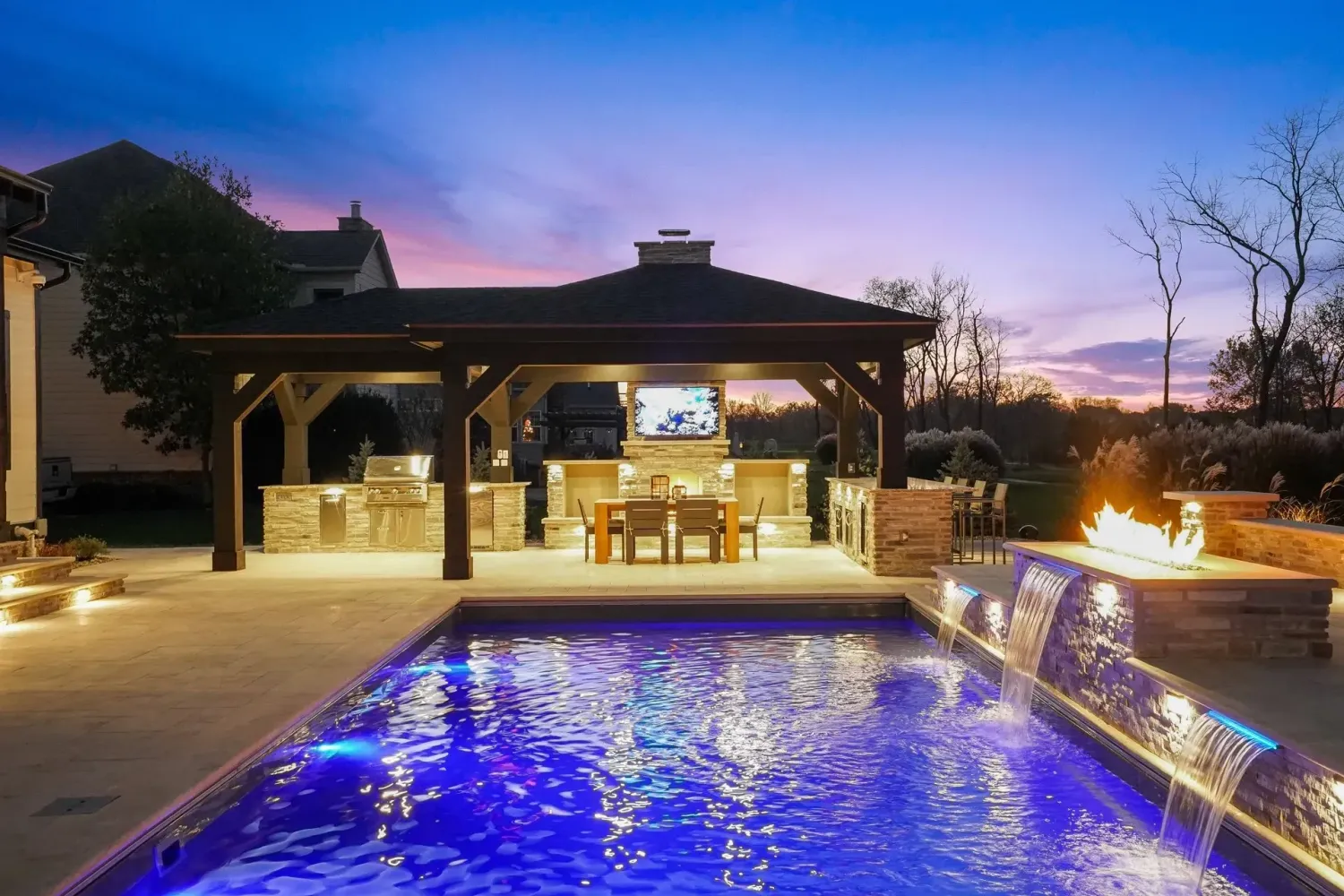
What Clarkston’s Humidity Does to a Pergola Before Year Five
Clarkston sits around 1,036 feet, lower than the north-Atlanta suburbs, and plenty of backyards in Lake Capri and Toney Valley back up to wooded greenway along Pole Bridge Creek or the South Fork of Peachtree Creek. Low elevation, dense canopy, and nearby water keep humidity high from May through September. Add about 52 inches of rain a year and wood rarely dries out fully.
Wood is hygroscopic. It takes on moisture from the air and gives it back, swelling and shrinking each time. A cedar rafter that sits at 12% moisture content in a dry October might climb to 18% or 20% during a wet July week. Every swing opens the surface checks a little wider, lets more water into the grain, and gives mildew spores a foothold. Fungal decay generally needs wood moisture above about 20% for sustained periods, and a shaded pergola under oaks near a creek can live in that zone for weeks at a time.
Three places fail first, and they fail on almost every wood pergola we inspect in this part of DeKalb:
- Top faces of rafters and purlins. They take direct rain and UV. The finish breaks down here two to three times faster than on the vertical faces.
- Post bases. Splashback from the patio keeps the bottom 6 to 12 inches wet. If the post sits directly on concrete without a standoff base, water wicks up the end grain.
- Notched joints. Anywhere a rafter is notched to sit over a beam, water pools in the cut. That’s where soft spots show up first.
Aluminum doesn’t have any of those problems. It doesn’t absorb water, it doesn’t swell, and fungus can’t eat it. Its enemy in Clarkston’s climate is different: UV and moisture attacking the powder-coat finish, and galvanic corrosion where aluminum touches the wrong metal. Both of those are controllable at the spec stage, which is the whole point of this comparison.
Freeze cycles add to it. When a wet, checked beam freezes, the ice widens every crack it sits in; over a decade, hairline checks become coin-width splits. Aluminum ignores freeze-thaw.
The moisture meter test: On any wood pergola older than three years, we put a pin-type moisture meter into the post base and the top of a rafter two days after a rain. Readings above 19% mean the finish has stopped doing its job and decay has a window. Readings under 15% mean the structure is drying properly and a recoat will hold.
Cedar vs. Pressure-Treated Pine vs. Aluminum — The Material Grid
Three materials cover nearly every pergola built in Clarkston. Each behaves differently in our weather, and the differences don’t always line up with price. Here’s how they compare, starting with the two wood options side by side, then wood against aluminum.
Pressure-treated pine is a legitimate budget choice — its treatment handles rot better than cedar’s oils. What it doesn’t handle is movement. Framed wet in April, PT rafters can bow visibly by September. We use kiln-dried-after-treatment (KDAT) stock where budget allows.
Cedar moves far less and looks better from day one, but its rot resistance lives only in the heartwood. Sapwood-heavy cedar in a shaded Clarkston yard can go soft in seven or eight years. Specify heartwood for the members that matter.
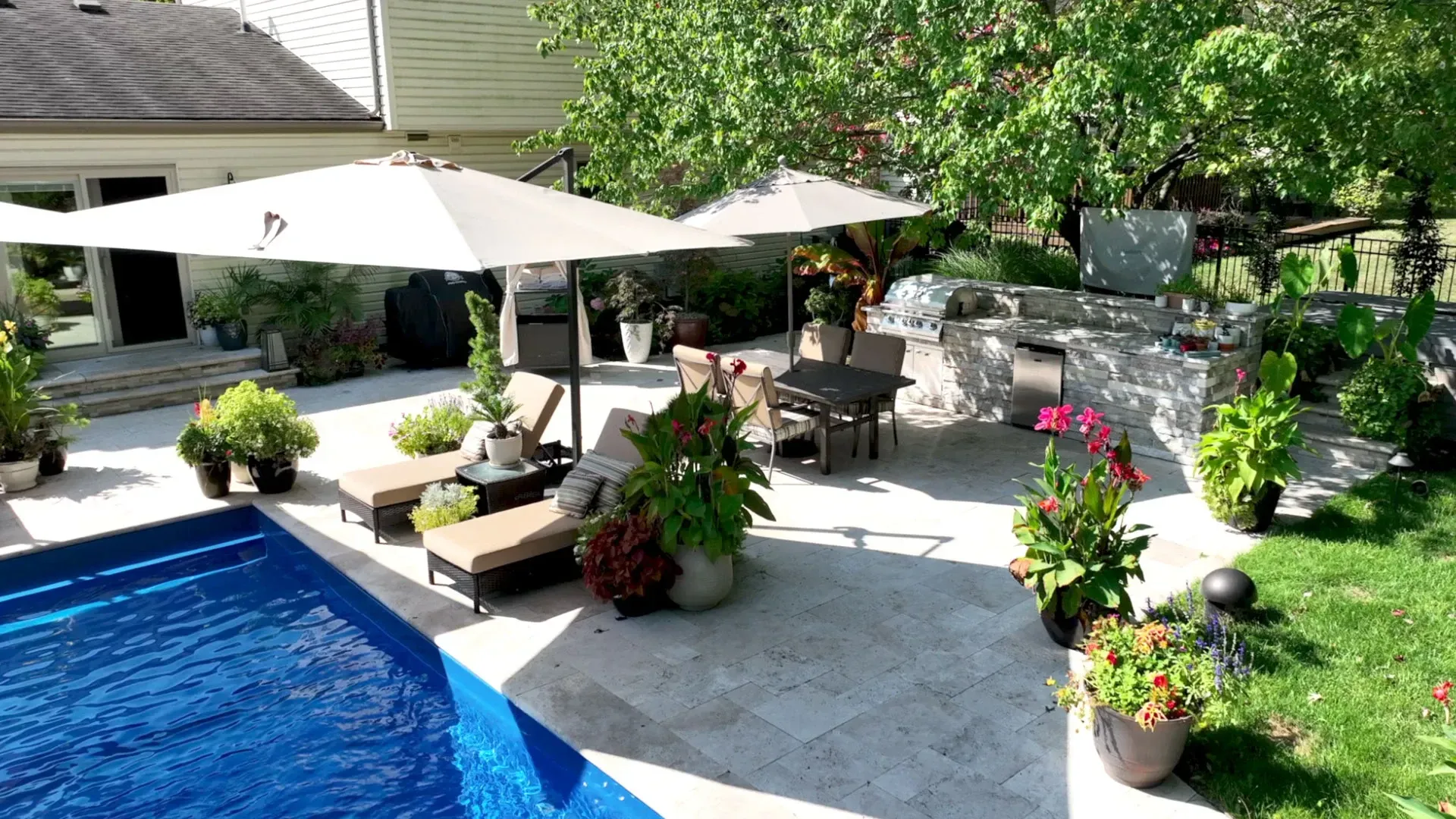
On the aluminum side, there are several respected manufacturers in the fixed and louvered market, including StruXure, Azenco, and Equinox. We don’t have a favorite to sell you. What we look at is the extrusion alloy (6063-T6 is the common structural spec), wall thickness, the powder-coat standard, and whether the manufacturer publishes engineered span tables for our wind and snow loads. Two products that look identical on a showroom floor can be very different in wall thickness and coating quality.
Carpenter Bees, Termites, and Mildew — The Insect and Fungus Ledger
If you’ve lived in Clarkston for more than one spring, you’ve seen them: fat black-and-yellow bees hovering around the eaves in April. Eastern carpenter bees don’t eat wood, but they excavate perfectly round half-inch holes into it to lay eggs, and they prefer soft, unpainted, weathered softwood. Cedar is one of their favorites. Once a pergola beam has gone gray and the stain has worn off, it’s an invitation.
One gallery isn’t structural. But bees return to the same wood every year, and woodpeckers follow the larvae. We’ve pulled beams near Friendship Forest and off Indian Creek Drive with a foot of wood torn open. That is structural.
Prevention on wood is simple but requires discipline:
- Keep a film-forming or heavily pigmented finish on the wood. Bees avoid painted and well-finished surfaces.
- Seal all end grain, especially rafter tails, with an end-grain sealer at installation.
- Plug existing holes in late fall after the bees have left, using a wood dowel and exterior glue.
Termites are the other half of the ledger. Eastern subterranean termites are active throughout DeKalb County, and they reach wood through soil contact or hidden mud tubes. A pergola post set directly in soil or in a concrete footing that holds water is a direct route. PT posts rated for ground contact resist termite attack well. Cedar posts in the ground do not hold up — cedar heartwood is only moderately resistant to termites, and we don’t recommend burying it. Every wood post we set in Clarkston sits on a galvanized standoff base above a concrete pier, with at least an inch of air between the end grain and the concrete.
Mildew is cosmetic but constant. Under water oaks on a north exposure, wood grows black streaks in one summer without a mildewcide finish, and the growth sinks into the grain. On aluminum it wipes off with mild detergent.
Aluminum’s only pest issue is wasps and mud daubers moving into hollow beams and posts through open ends. Every aluminum structure we install gets its end caps and drain holes checked before we leave, because a missing cap turns a beam into a nest in one season.
Refinishing Intervals and the Real Ten-Year Upkeep Bill
This is where the pricing gap between wood and aluminum narrows — and on many Clarkston lots, flips. The purchase price is only the first line of the bill. The rest is maintenance, and in our humidity it adds up fast.
Cedar
A quality semi-transparent, oil-based penetrating stain — products like Sikkens Cetol SRD, TWP 1500, or Penofin are common choices — lasts about two to three years on vertical surfaces in a shaded, humid lot. The top faces of rafters may need attention every eighteen months. A proper recoat means cleaning, brightening, a light sanding where the finish has failed, and two coats. For a 12×16 pergola, a professional recoat runs $900 to $1,800, depending on height, access, and how far the old finish has broken down.
Skip a cycle and the cost goes up. Once cedar has weathered to gray, the next recoat requires stripping or heavy sanding to reach clean wood, which can double the labor.
Pressure-Treated Pine
PT pine can’t be stained right away. It needs to dry — typically three to six months in our summer weather — until the moisture content drops below about 15%. Stain it too early and the finish peels. After that, the recoat schedule looks similar to cedar’s, every two to three years, at a similar cost. The upside is that a missed cycle on PT is less dangerous structurally because the chemical treatment keeps protecting against rot. The downside is appearance: weathered PT turns a flat gray-green and the checks get deep.
Powder-Coated Aluminum
Maintenance is an annual rinse with a garden hose and a soft brush, and a touch-up pen for any scratches from ladders or furniture. That’s it. The key variable is the powder-coat standard. Architectural coatings are rated under AAMA specifications, and the difference matters in a humid, high-UV climate. Coatings meeting AAMA 2604 are designed to hold color and gloss for years of exterior exposure, and AAMA 2605 is the highest tier. Cheaper products may only meet AAMA 2603, which is intended for less demanding use and will chalk and fade faster, especially in dark colors.
Ten-year upkeep estimate on a 12×16 structure: Cedar — four professional recoats at $900–$1,800 each, plus bee-hole repair and board replacement, lands around $4,000 to $8,000. PT pine — three or four recoats, roughly $3,000 to $6,500, plus replacing any boards that twisted or split. Powder-coated aluminum — under $300 in cleaning supplies and touch-up paint.
Add those to the install price and a cedar pergola at $12,000 becomes a $16,000 to $20,000 decade. A fixed aluminum structure at $14,500 stays close to $14,800.
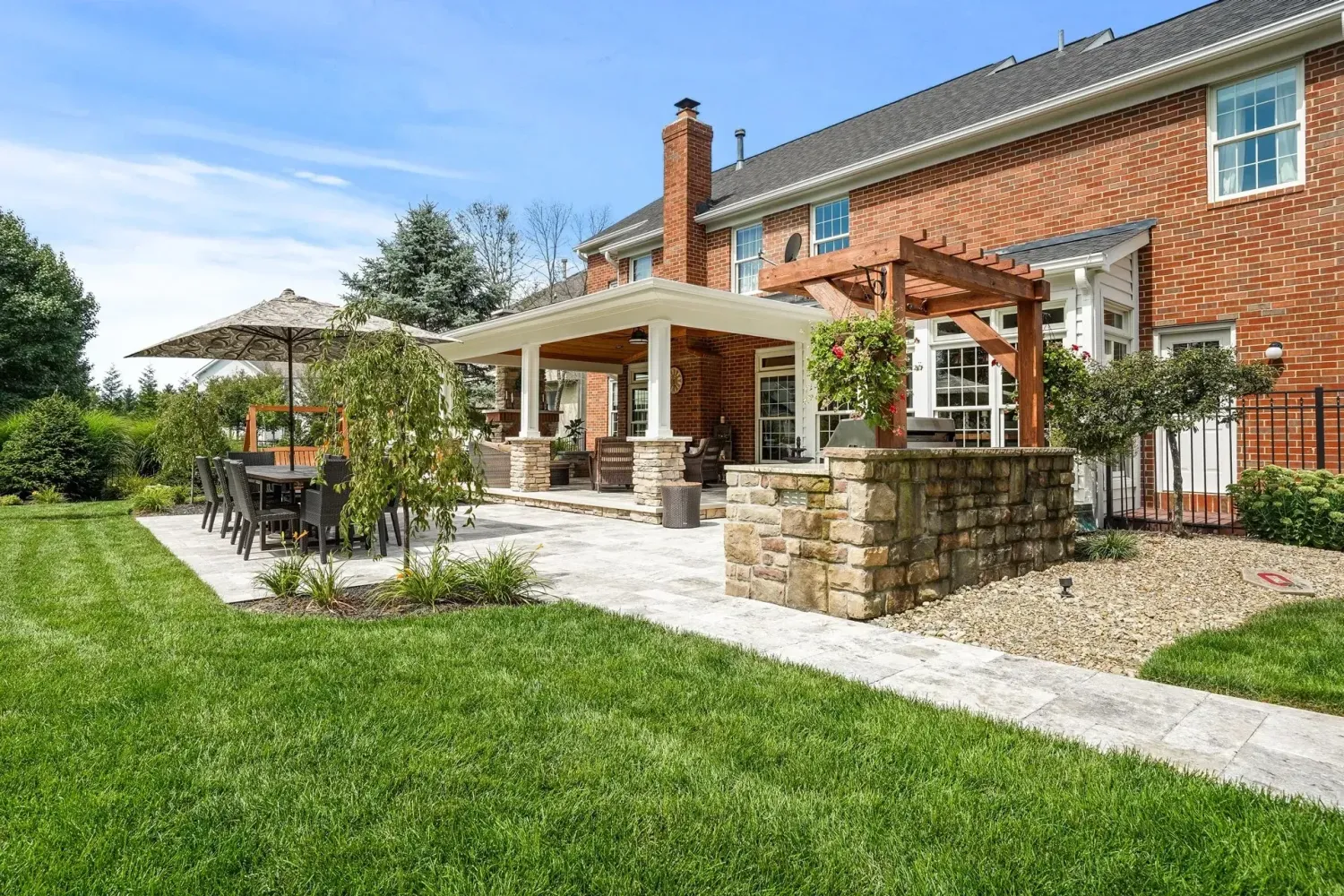
The fastener question belongs in this section because it shows up as a maintenance bill later. Modern pressure-treated lumber contains copper, which corrodes standard steel fasteners. Code requires hot-dip galvanized or stainless-steel fasteners and connectors in treated wood (IRC R317.3). We use G185 galvanized hardware or stainless on PT, and stainless on cedar to prevent black tannin streaks. On aluminum, fasteners should be stainless or coated specifically for aluminum; plain steel in contact with aluminum creates galvanic corrosion, and a pergola near a salt-chlorinated pool deck accelerates it.
Span, Posts, and Footings — What Each Material Can Physically Do
Clarkston backyards are rarely flat or wide open. The older 1960s and 1970s lots in Lake Capri and Hambrick often have grade changes and mature trees that dictate where posts can go. That makes span capability a design issue, not just an engineering one.
Wood beams span based on size and species. A doubled 2×10 cedar beam typically spans around 10 to 12 feet between posts on a standard pergola load; a doubled 2×12 in southern yellow pine gets you a bit farther. Push beyond that and you need glulam or steel, or more posts. More posts mean more footings, more visual clutter, and more places to trip on the patio.
Engineered aluminum beams, especially the deeper extruded profiles used by louvered roof manufacturers, can often span 16 to 20 feet or more between posts, depending on the product and the local load requirements. That lets you shade a full dining area and outdoor kitchen with four posts at the corners and nothing in the middle. On a sloped lot where one corner has to land in a tricky spot, that flexibility is valuable.
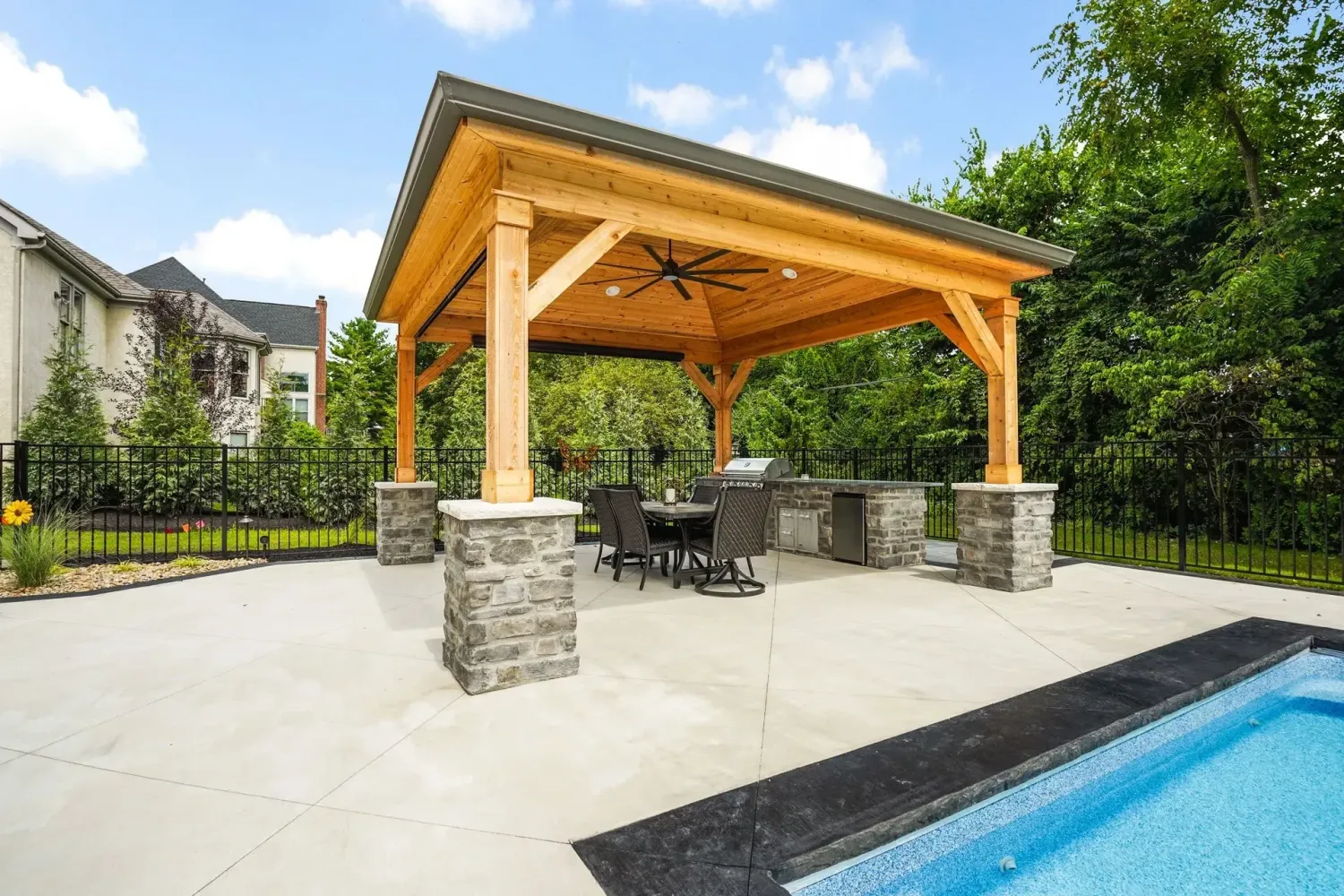
Heavy timber changes the equation. A pavilion with 8×8 cedar columns spans wider openings, and the stone-veneer wrap lifts the wood away from patio splash — the biggest source of post rot we see. Want wood and wide spans? Build heavy timber with protected bases.
Footings matter too. Clarkston sits on Cecil-series Piedmont red clay, with decomposed granite 4 to 8 feet down near the Stone Mountain pluton. Pergola piers at 24 to 36 inches rarely reach the granite, but clay holds water around them. We add a gravel base where soil allows and set every post on a raised standoff.
Aluminum posts bolt down with engineered base plates. Closed louvered roofs carry real wind load, so on existing patios we core-test slab thickness before anchoring.
DeKalb County permits: Clarkston residential projects are reviewed through DeKalb County Planning & Sustainability at 178 Sams St. in Decatur. Attached structures, solid or louvered roofs, and anything with electrical — fans, lights, heaters — should be expected to go through review. Plan on 3 to 4 weeks for turnaround, slower than Gwinnett’s typical 10 to 14 days, and bring engineered drawings for any aluminum system.
What Each Pergola Looks Like at Year Twelve in Clarkston
This is the question homeowners should ask, and almost nobody does. Here’s what we honestly find on twelve-year-old structures around Clarkston, Stone Mountain, and Decatur.
Cedar at Year Twelve — Maintained
Heartwood, standoff bases, recoats on schedule: it looks warm and solid, with some beam checking and a few replaced rafter tails. Upkeep so far runs roughly $5,000 to $9,000. Nothing else looks quite like it.
Cedar at Year Twelve — Neglected
Silver-gray, with dark mildew on the shaded side, carpenter bee holes in the beams, and soft spots at the notches and post bases. Split rafter tails. On sapwood-heavy builds, replacement often beats restoration.
Pressure-Treated Pine at Year Twelve
Structurally sound in most cases, because the treatment keeps protecting. Visually, it’s the weakest performer. Deep checks, twisted rafters, and a blotchy finish are common unless it was built with KDAT lumber and stained consistently. It works well painted or given a solid stain, which hides the grain and the movement.
Powder-Coated Aluminum at Year Twelve
A good one with a quality AAMA 2604 or 2605 coating looks almost new — some slight gloss loss, maybe a few touched-up scratches. A cheap one with a lower-grade coating has chalked and faded, especially in dark bronze and black. Louvered systems may need gasket or motor service by this point; ask about parts availability and warranty terms before you buy.
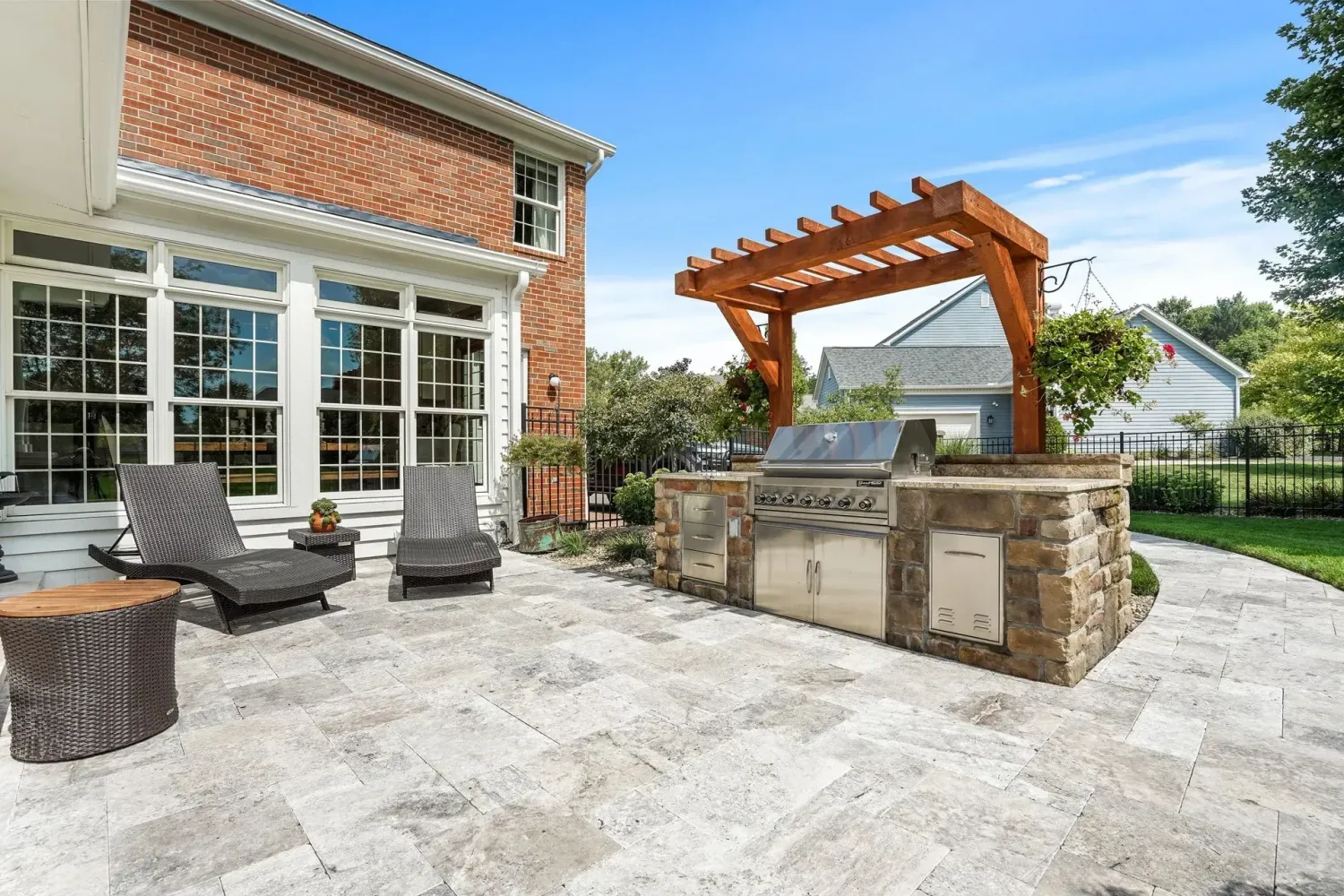
So which one should you build in Clarkston? Here’s how we usually advise it:
- Choose cedar if the pergola is a design centerpiece, you love the look of real wood, and you’re committed to a recoat every two to three years — or budgeting for someone to do it.
- Choose pressure-treated pine if budget is the priority, you’re comfortable with a painted or solid-stained look, and you want rot protection without cedar’s price.
- Choose powder-coated aluminum if your lot is shaded and humid, you want low maintenance, you need long spans, or you’re considering a louvered roof that opens and closes.
The wrong answer is picking a material without a maintenance plan for this climate.
Pergolas and shade structures across 20+ metro Atlanta cities from our Winder, GA home base
Every pergola we design starts with the lot’s shade, moisture, and span requirements — then we match material, finish, and footing to the next twelve years.