
Every pool-builder blog in metro Atlanta tells you the same thing: gas firepits are the modern choice, wood is the sentimental one, go gas. That advice is correct in Dunwoody. It is flat wrong at 1,270 feet of elevation in Dawson County, where the nights are colder, the hardwood is free off your own lot, and the county’s burn rules read nothing like Atlanta’s.
We’ve installed both kinds of fire features on pool decks from Foxcreek to Etowah River Club, and the pattern we see on mountain lots is the opposite of the metro pattern. Homeowners here start out assuming gas is the premium choice, price out the gas line run from their Amicalola EMC service drop, get the quote back for a wood version at less than half the cost, and then sit on their neighbor’s wood firepit at 42°F and realize the heat output isn’t even close. This post is the argument for the fire feature that most Dawsonville lots were built for — and what it actually takes to put one in correctly.
We’ll name real numbers. A properly built masonry wood firepit in Dawsonville runs $1,200 to $2,800 installed. A comparable gas firepit runs $3,400 to $5,800 once you include the dedicated line, pressure regulator, and permit. Heat output on a hardwood load is 60,000 to 80,000 BTU of radiant warmth at the seating ring. A 36-inch gas firepit on natural-gas service from Amicalola EMC’s pipeline partners delivers 40,000 to 50,000 BTU of convective heat, most of which rises straight past you. At 30 freeze events per year, that gap becomes the entire conversation.
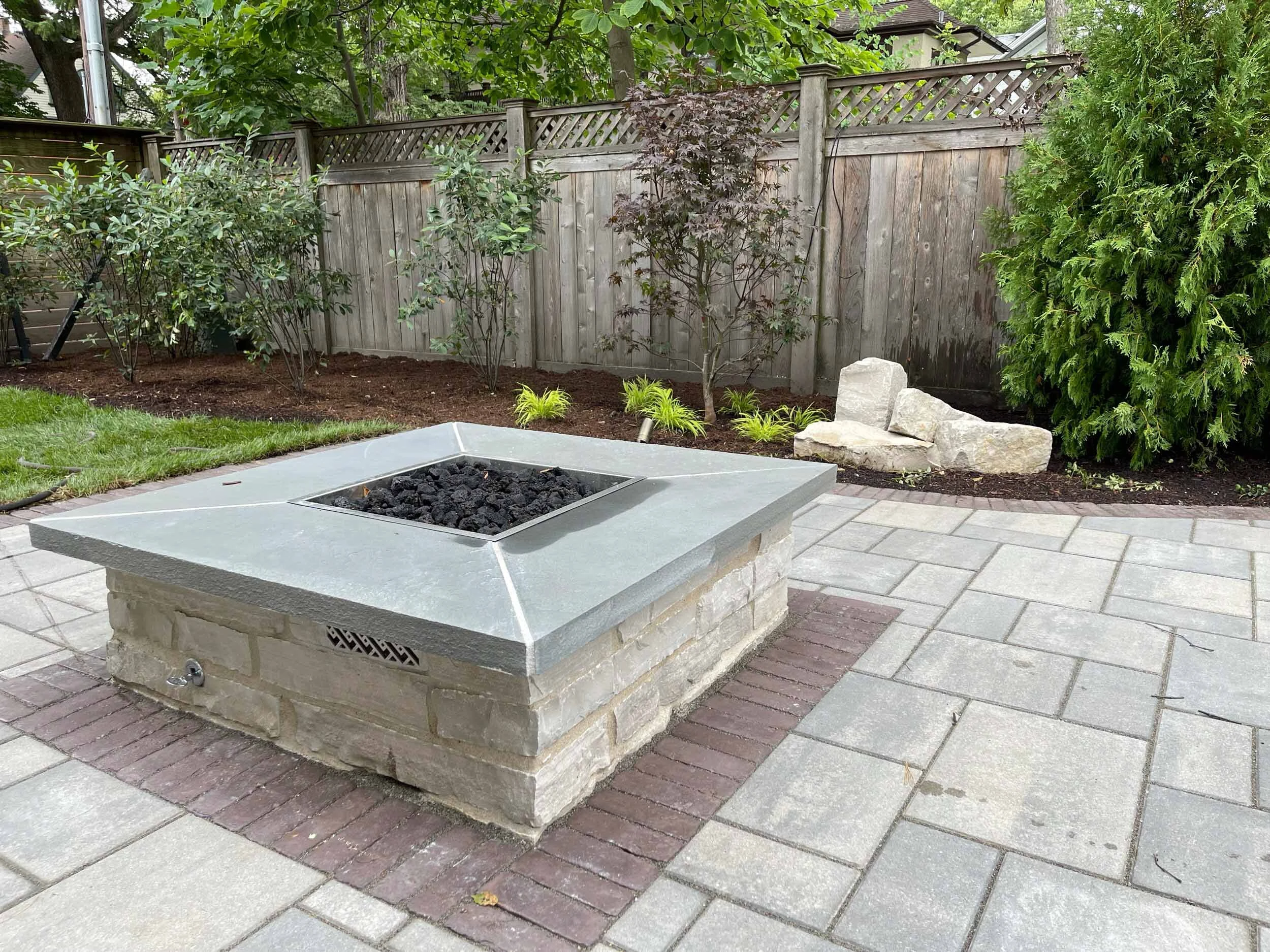
Why Dawsonville’s 1,270-ft Elevation Changes the Math
Drive twenty minutes south of Snellville and you’re in Piedmont clay country — 900 feet of elevation, maybe eighteen freeze events a year, and a climate where a gas firepit on a polymer-plank deck makes perfect sense. Drive up GA-400 to Dawsonville and you’ve climbed almost 400 vertical feet. You’re inside USDA Zone 7b with a hard lean toward 8a. You’re seeing roughly 30 nights below 32°F annually instead of 20. The difference isn’t cosmetic — it’s the difference between a fire feature that extends shoulder season and a fire feature that defines winter.
Radiant heat and convective heat don’t behave the same way on a 38°F night with a breeze off the Etowah. Gas flame produces mostly convective heat — warm air that rises straight up. That’s fine in a screened pavilion with a ceiling fan reversing down. On an open paver deck in Mountain Laurel at 8 PM in late October, the heat drives past the seating ring before anyone feels it. Wood-fire coals — actual hardwood coals, not the first-five-minutes flame stage — throw radiant IR heat sideways, which is what hits skin and clothing. That’s why a wood firepit three feet shorter and half the BTU on paper feels twice as warm on a mountain night.
We tell every Dawsonville client the same thing during the initial walk: if you’ll sit outside after dark between November and March more than twelve nights a year, a wood firepit is the right call. If you won’t, go gas and pocket the difference. The elevation is what flips the ratio.
Heat output, apples-to-apples: 24-inch hardwood load of oak or hickory = 60,000–80,000 BTU radiant. 36-inch gas burner at 0.5 in. water-column = 40,000–50,000 BTU convective. On a 38°F Dawsonville night with a light breeze, the wood feels roughly 1.8x warmer at the seating ring.
The Dawson County Permit Reality (vs. Atlanta Metro)
Permits are where the argument for wood really lands. In most of metro Atlanta — Gwinnett, DeKalb, Fulton, Cobb — a permanent masonry wood-burning firepit triggers a specific permit, neighbor-notification window, and an HOA review that can stretch the timeline by six to twelve weeks. Dawson County doesn’t play that game the same way. Permits for residential fire features route through the Dawson County Department of Planning & Development at 25 Justice Way, and the reviewers there are dealing with a 3,300-person town where the baseline housing stock still includes plenty of working burn barrels. The tolerance for residential wood fire is practically and culturally higher.
That doesn’t mean you skip the permit. It means the permit process — when you run it the way Primetime Pools does — takes closer to five business days than five weeks. We pull residential fire-feature permits for masonry firepits under the same mechanical/structural scope as a stamped hardscape pad. The plans show the footing spec (4-inch compacted stone base, 6-inch concrete pad for the firepit floor), the firebrick liner layout, and the clearance-to-combustibles dimension, which Dawson County enforces at 10 feet from any structure and 15 feet from overhanging roof lines.
The other quiet advantage: open-burning regulations. Georgia EPD runs a statewide summer burn ban from May 1 through September 30 in 54 counties. Dawson County is included, like every metro county, but the ban applies to open burning of vegetation — not to a permanent masonry firepit used for recreation. That’s a code distinction Atlanta-metro homeowners have to argue through HOA boards. In Dawsonville it’s assumed. You can legally use a properly built firepit year-round. You just can’t burn brush piles in it from May to September.
Airflow Is the Spec That Gets Ignored Everywhere Else
Most of the wood firepits we tear out and rebuild in Dawsonville have the same failure: no combustion airflow. Someone stacked twenty courses of stone with mortar all the way to the ground and dropped a steel fire ring in. The fire chokes after the first hour, the stone face soots up black in a season, and the neighbors smell smoke at 9 PM because incomplete combustion produces three times the particulate of a well-aerated fire.
The fix is an airflow spec that almost nobody prices for: 4 to 6 vent holes of 1.5-inch diameter drilled or built into the masonry below the fire ring, spaced evenly around the perimeter. That opens a passive draft — cold air under, hot gas up — which is the same principle as a chimney but scaled for an outdoor pit. The result is a visible difference in burn quality. Coals stay red longer. The column of smoke above the fire cuts by half or more. Creosote doesn’t deposit on the inside of the stone, which is what eventually cracks the mortar joints from the inside out.
We use a stainless-steel fire ring insert from Plow & Hearth or BrickWood Ovens on most builds — the ring sits inside the masonry with a 2-inch gap on all sides, and the vents feed that gap. The ring replaces every ten to fifteen years; the stone shell lasts thirty-plus with decent mortar. That’s the part of the build that separates a firepit that still looks new in 2036 from one that looks like a grill after three winters.
Airflow spec we build to: 4–6 vent holes, 1.5" diameter, spaced evenly under the fire ring. 2" air gap between stone shell and steel insert. Result: cleaner combustion, half the smoke, no creosote on the interior stone.
Mountain Subsoil: Why Excavation Costs Are Different Here
Dawsonville soil is not Piedmont clay. You’ll hear local pool builders call it saprolite, residuum, or weathered granite — all three terms are right depending on depth. Topsoil is thin, often under 12 inches over rock. At typical firepit footing depth of 18 to 24 inches, we’re already cutting into weathered granite and chert seams. On some lots that’s a mild nuisance. On others — Riverbend and the upper reaches of Chestatee are the worst we’ve seen — it’s a rock excavation job that adds $8 to $14 per cubic yard over a standard dig and occasionally requires a handheld hydraulic breaker to finish the cut.
We site-check every mountain firepit before we quote it. The giveaways are visible on the walkthrough: exposed outcrop on a slope, a driveway cut that shows layered rock, an old stump hole with gravel-colored fill. Those three signals together mean the excavator is going to find rock at 14 inches instead of 36. We price accordingly and tell the homeowner up front — the alternative is a mid-project change order that feels like a surprise, and we hate that conversation more than the client does.
The upside of mountain subsoil is drainage. A Dawsonville firepit footing drains three to five times faster than the equivalent footing in Dacula or Loganville clay. Water doesn’t pond under the pad, the base stone stays dry, and frost heave — which is real at this elevation — has less material to grab. Properly built, a mountain firepit has a longer functional life than its Piedmont equivalent.
Hardwood Sourcing at Dawson County Scale
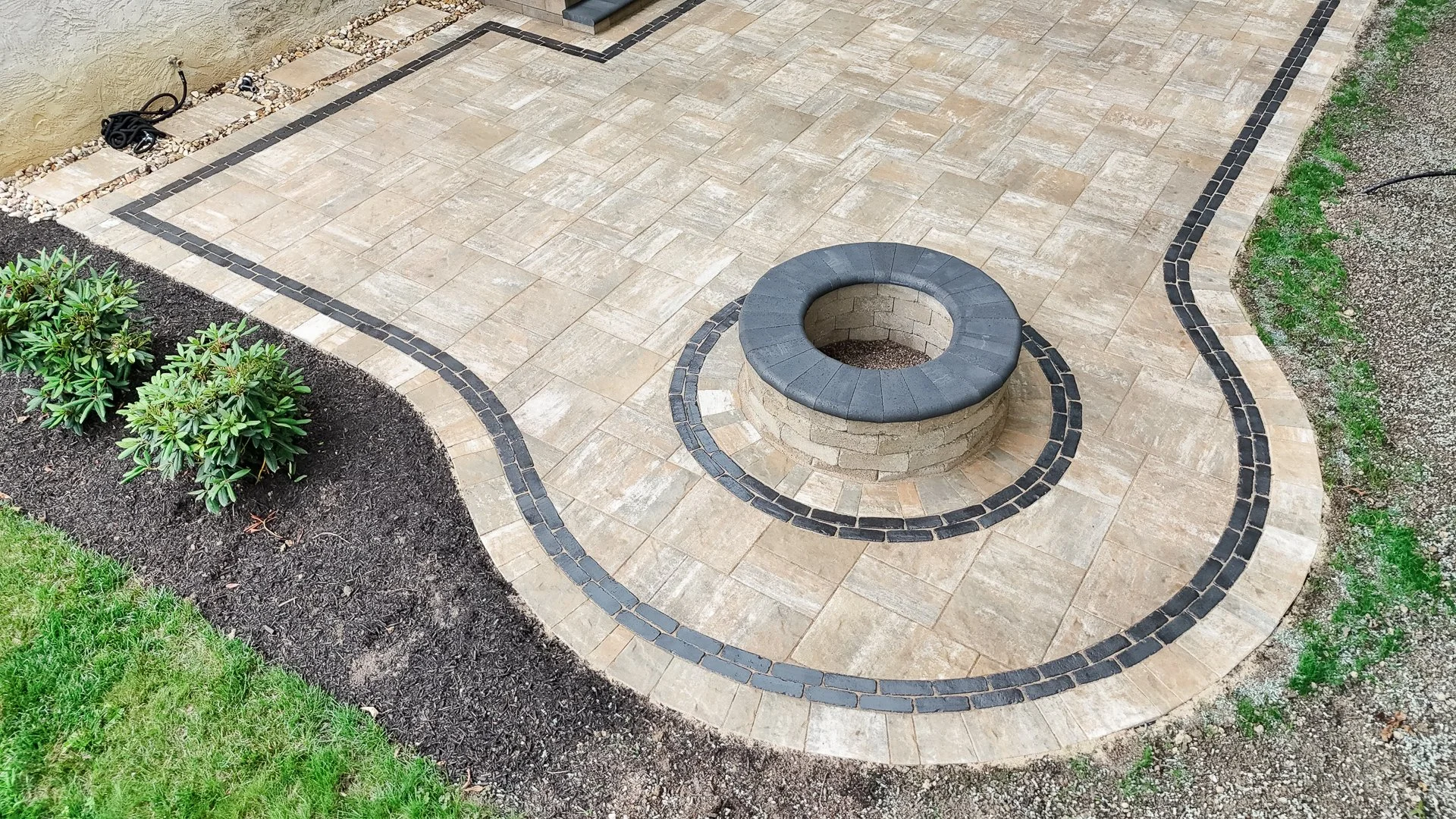
The hidden economics of wood-burning in Dawsonville is fuel cost. On a metro Atlanta lot you’re buying bundled seasoned hardwood from Home Depot at $6 to $8 per bundle, which is nine dollars of heat for an evening. On a typical Dawsonville lot — half-acre to two-acre, with mature hardwood somewhere on the property — you’re burning white oak, red oak, or hickory that either fell on its own or got thinned in the last three years. The fuel cost is zero minus the chainsaw gas.
Clients in Applewood and Etowah River Club regularly tell us they haven’t bought firewood in a decade. The county’s tree canopy does the job. What matters is seasoning — hardwood needs 12 to 18 months of air-dried curing below 20% moisture to burn clean. We tell every wood-firepit client to stack a cord of split oak under a simple shed roof on the side of the garage the first year they own the pit. By year two the seasoning is right and the fires are smokeless.
There’s a cultural piece to this that’s hard to separate from the practical one. Dawsonville was a moonshine-country town before it was a GA-400 bedroom community. The Dawsonville Pool Room, the Thunder Road history, the Amicalola Falls weekends — the relationship to hardwood fire here is older and less self-conscious than it is in a Sandy Springs subdivision. A wood firepit on a Dawson County lot reads correctly. A gas firepit can still look like someone imported suburbia to the foothills.
Gas Versus Wood: The Honest Comparison Grid
This is the grid we walk through with every Dawsonville homeowner who starts the conversation with "we’re going gas, I just need a price." We don’t argue them out of it. We show the numbers and let them decide.
Installed cost
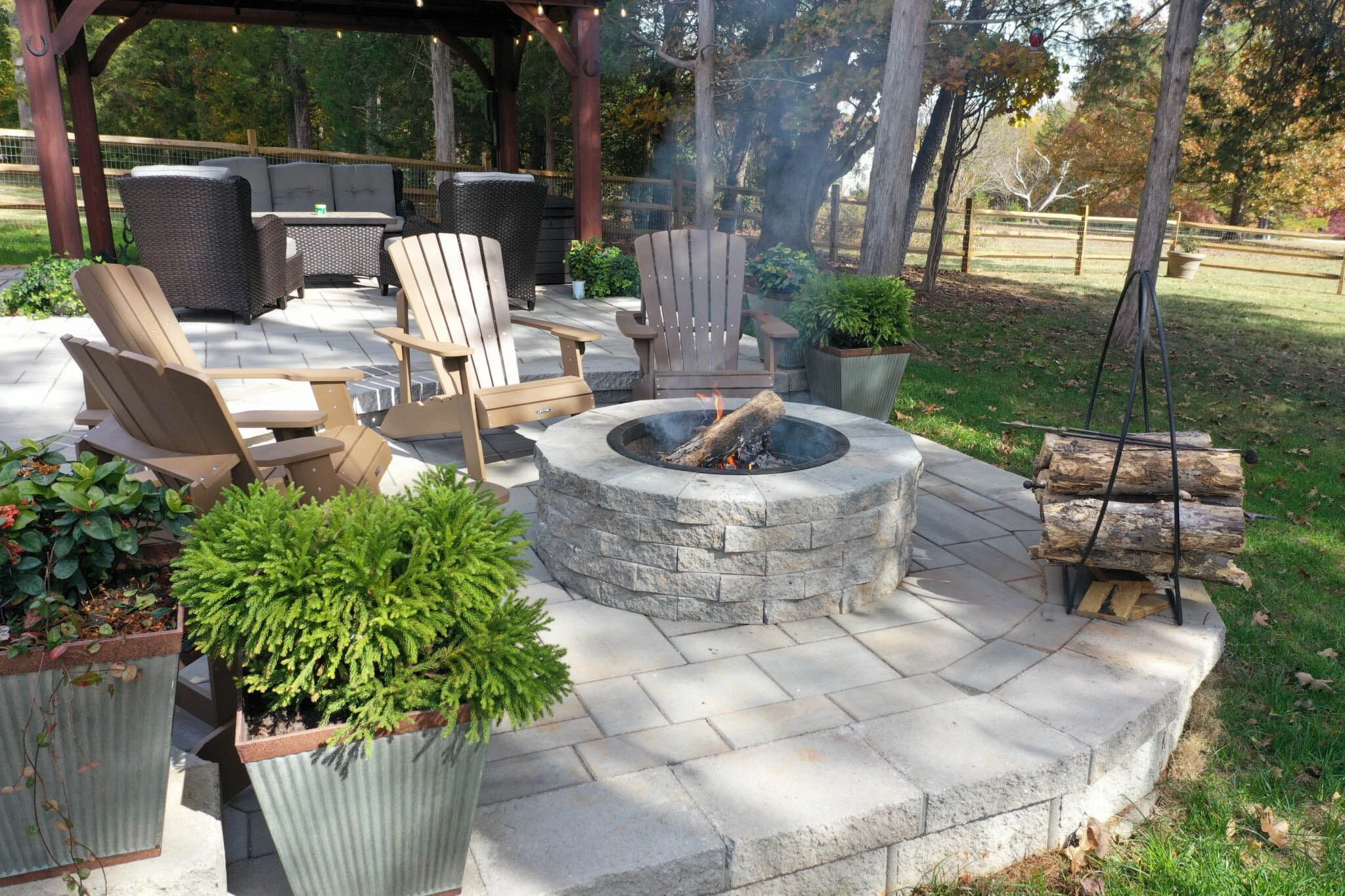
Wood masonry firepit, 42" diameter, stacked-stone exterior, steel ring insert, proper airflow vents, 4-inch compacted base and 6-inch concrete pad: $1,200 to $2,800 depending on stone selection and seating-wall integration. Gas firepit of comparable footprint with dedicated line run, regulator, key valve, lava rock or tempered glass media, and permit: $3,400 to $5,800 in Dawson County. The gas number climbs fast if the line run exceeds 40 feet or the pit sits on the far side of the pool from the meter.
Operating cost
Wood with a self-sourced lot: $0 in fuel, maybe $40 a year in chainsaw blades and gas. Wood with purchased seasoned hardwood: roughly $400 a year for twenty evenings of use. Gas on Amicalola EMC’s partner natural-gas service: about $1.20 to $1.80 per hour of burn at full flame — $250 to $400 a year for the same twenty evenings.
Heat output
Wood wins cleanly at Dawsonville elevation. 60,000 to 80,000 BTU radiant at the ring beats 40,000 to 50,000 BTU convective for cold-weather seating. On a 55°F fall evening the difference isn’t huge. On a 35°F January night it’s the whole experience.
Convenience
Gas wins. Turn a key, sit down. Wood takes twenty minutes of startup and forty minutes of cleanup. For a homeowner who’ll use the pit eight nights a year, that’s a real cost. For a homeowner who’ll use it forty nights a year, the startup ritual becomes part of the value.
Permit and timeline
Wood in Dawson County: five business days, straightforward. Gas in Dawson County: ten to fifteen business days because of the gas-line inspection, which is a separate hit after the structural sign-off.
Property value at resale
This one surprises people. In the Dawsonville market — where the buyer profile is "I left the city for more land and real weather" — a well-built wood firepit reads as authentic. A gas firepit reads as transplanted. Realtors we talk to in the GA-400 corridor price both as premium features, but the wood version gets the stronger emotional reaction in showings between October and March.
Siting a Wood Firepit on a Sloped Dawsonville Lot
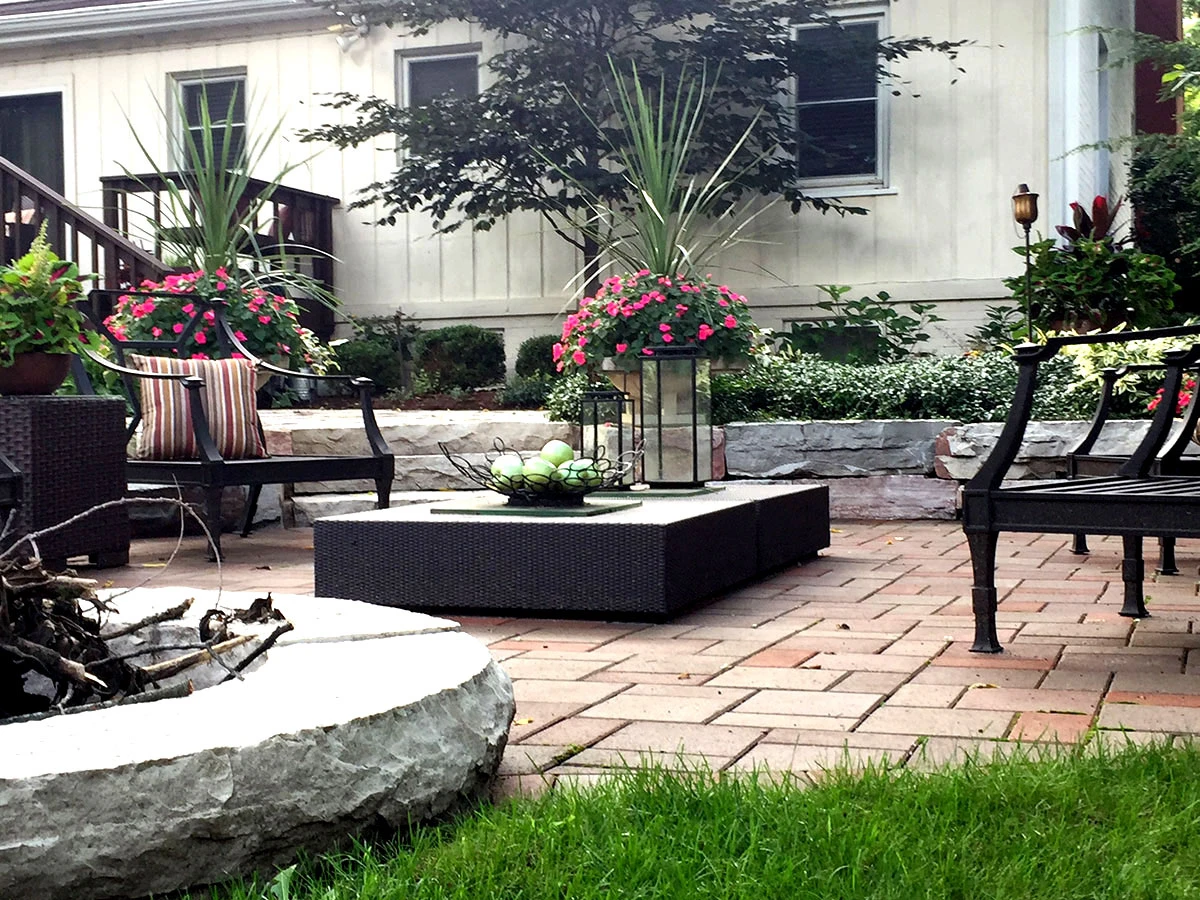
The housing stock in Dawsonville is heavily 1970s-through-2000s split-levels on half-acre-plus lots, and almost every one of them has real grade change. That’s a design constraint, not a problem. We side the firepit on the flattest usable terrace, which on most mountain lots means a cut-and-fill landing 30 to 50 feet behind the house rather than immediately off the back door.
Three siting rules we hold to on every mountain build:
- Prevailing wind matters more than sight lines. North Georgia foothill wind in winter runs predominantly out of the northwest. Site the firepit so the house sits northwest of the pit — smoke blows away from the structure, not into it.
- Uphill siting beats downhill siting. Put the firepit above the house on a sloped lot if you can. Embers and warm air move uphill on the nighttime thermal inversion, which is a real phenomenon at 1,270 feet of elevation.
- 10-foot structural clearance, 15-foot overhead clearance. Dawson County’s minimum is the floor. We build to 12 and 18 on sloped lots because the terrain can steer a loose ember further than a flat-lot simulation predicts.
The seating ring sits 54 inches out from the fire face on our standard build. That’s the dimension where radiant heat is strong enough to warm a person in a medium-weight jacket but the seated hip isn’t close enough to char the cushion in a spark event. Closer than 48 inches is uncomfortable on high-output burns. Further than 60 inches loses the radiant signal on cold nights. The fifty-four-inch mark is the Goldilocks spec we’ve landed on after fifty-plus Dawsonville builds.
Dawson County clearance defaults we build to: 12 ft from any structure, 18 ft from overhanging roof lines on sloped lots, 54-inch seating distance from the fire face. Higher than code minimum on purpose.
What a Proper Wood Firepit Build Actually Costs in 2026
Here’s the line-item breakdown for a 42-inch masonry wood-burning firepit on a typical Dawsonville half-acre lot, no rock blasting, stacked-stone exterior, steel insert, 20-inch seating wall ring:
- Excavation and compacted stone base, 4-inch depth, 8-foot working diameter — $280–$420
- 6-inch reinforced concrete pad, 5-foot diameter — $340–$480
- Firebrick interior lining, refractory mortar — $180–$260
- Stacked-stone exterior, local granite or Tennessee fieldstone, 20" tall — $380–$720
- Stainless-steel fire ring insert, 36", with 4 vent holes — $140–$240
- 20-inch seating wall ring at 54" radius, same stone — $320–$720 (optional; converts pit into a full outdoor room)
- Permit, site prep, labor, cleanup — included in the $1,200–$2,800 total
The rock-blasting premium, when it hits, runs $8 to $14 per cubic yard of rock volume encountered. On a standard firepit footing we’re looking at 2 to 4 cubic yards at risk, so the worst-case adder is roughly $60 total on the low end and $240 on the upper end. It’s rarely a deal-breaker, but it’s a number we quote up front on any Riverbend, Chestatee, or upper Big Canoe lot.
Add a Big Green Egg or Primo ceramic grill into an adjacent stone surround and the full outdoor-kitchen number climbs into the $8,000 to $14,000 range. That’s a separate build we quote on its own, not something we attach to a firepit estimate — but it’s the next feature most Dawsonville clients ask about after they’ve had one winter with the pit.
When Gas Is Still the Right Answer in Dawsonville
This isn’t a pure argument for wood. Three Dawsonville scenarios push us toward gas every time, and we’ll talk homeowners into it when the build fits:
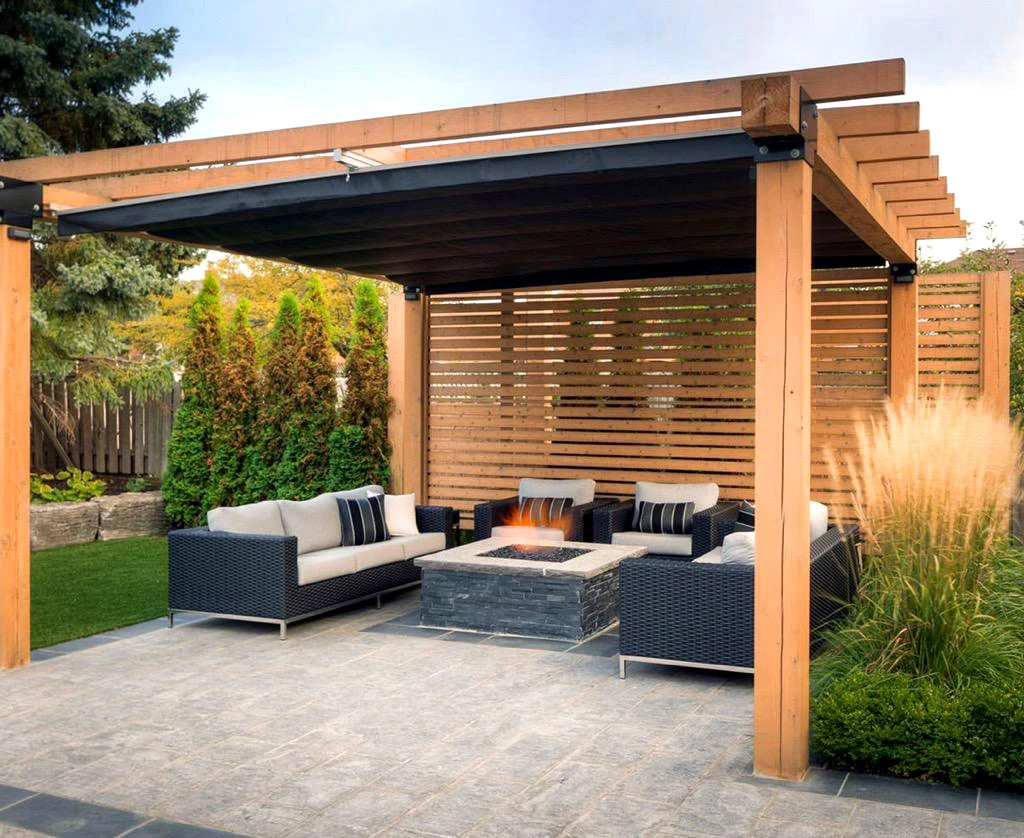
Covered pavilions. If the firepit sits under a roof — screened or open — gas wins on code, cleanup, and heat retention. Wood smoke needs a chimney or it stains the pavilion ceiling in a single season. Gas in a pavilion with a ceiling fan reversed to push down captures convective heat that would otherwise escape outdoors.
Homeowners in their seventies. The sourcing, splitting, stacking, and cleanup of wood is physical work. We’ve built gas firepits for Kensington Ridge retirees who originally wanted wood and changed their minds after one honest conversation about the annual labor. The right fire feature is the one that gets used — and gas gets used when wood becomes a chore.
HOA-constrained subdivisions. A handful of newer Dawsonville subdivisions have written HOA rules against visible woodpiles, which defeats the economics of wood. If you can’t store a cord of seasoned hardwood on-site, the fuel cost advantage disappears and gas becomes the cleaner choice. We check the HOA language before we quote the build so the homeowner doesn’t pay for a firepit they can’t feed.
Outside those three cases — and the occasional client who simply prefers convenience at any cost — the mountain math favors wood on a Dawson County lot. The heat output, the permit path, the fuel cost, and the aesthetic all line up. It’s one of the few decisions in the 2026 pool-deck market where the older technology is also the better one.
Wood-burning & gas fire features across 20+ cities within 30 miles of Winder, GA
From Dawson County foothill lots at 1,270 feet to Piedmont subdivisions in the lowlands — we build fire features sized to the elevation, wind, and soil they actually sit on.