
The industry keeps repeating the same line: “compact the subgrade, install four inches of base, call it done.” On a Cecil-series lot off Hamilton Mill Parkway, that standard spec is exactly what produces the sunken corner, the widening joint, and the wall that leans eighteen months into its warranty. The standard spec is the problem.
We build hardscape in Dacula’s 30019 zip for a living. We also get called to re-level, re-pin, re-drain, and in a few cases fully rebuild patios and walls put in by other crews three to five years prior. The pattern across those callbacks is consistent enough that we can walk a yard and, before setting a single pin flag, tell you which failure mode we’re looking at. The soil does the talking.
This post is a forensic teardown. Five specific ways hardscape fails in the expansive clay that sits under almost every lot in Dacula — what’s physically happening in the soil, what the original installer skipped, and what the right detail actually looks like. It’s written for homeowners who’ve already watched one patio settle and are trying to make sure the next one doesn’t.
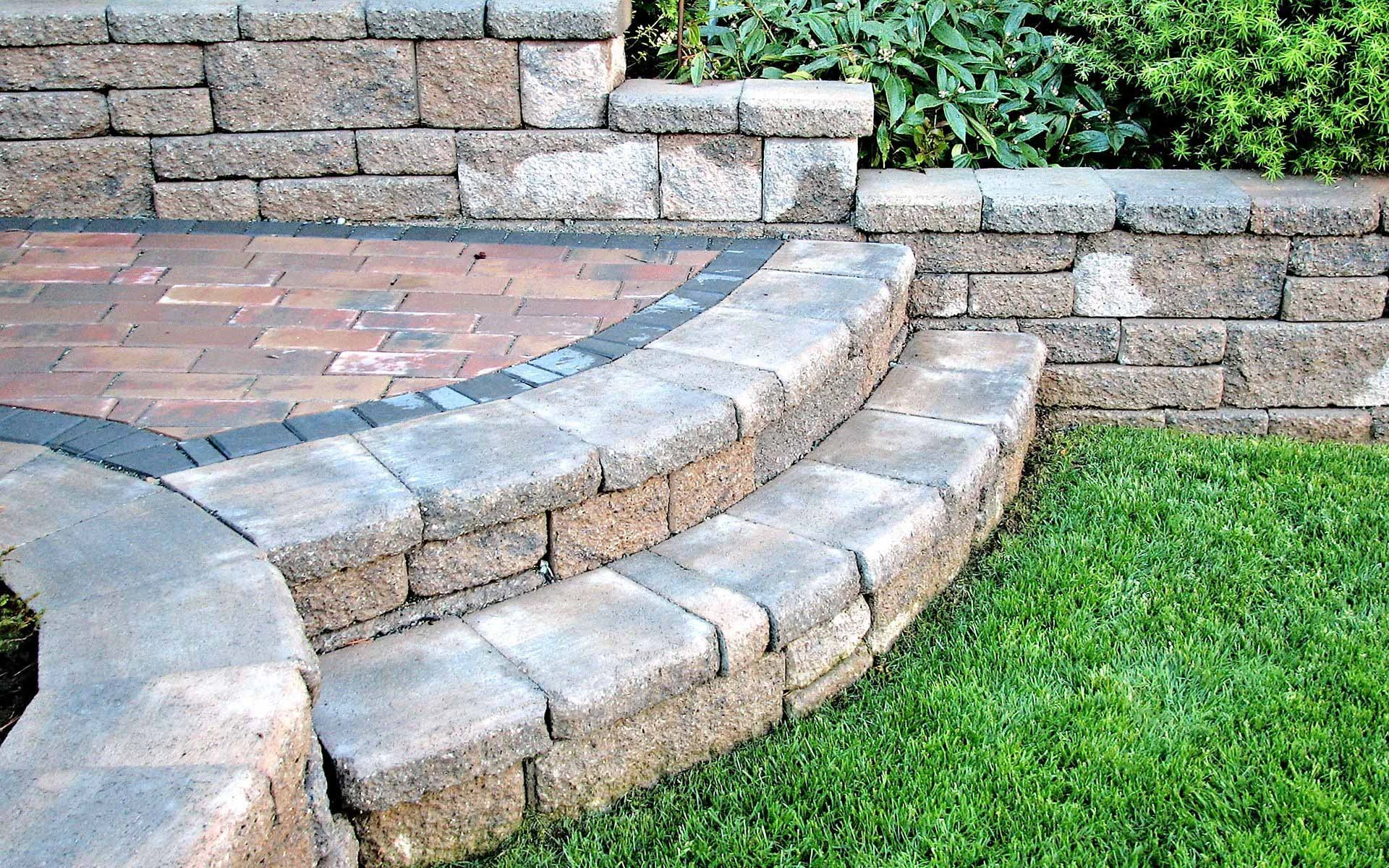
Before you can understand why hardscape fails here, you have to understand what’s actually under the turf. Almost every lot in Dacula sits on the Cecil soil series: a reddish-brown sandy clay loam topsoil grading into a dense, plastic clay B-horizon that runs anywhere from two to six feet thick. Below that, weathered granite saprolite — a partially decomposed parent rock that looks like dense gravel and behaves like a sponge with a slow drain. Above Hamilton Mill Ridge the saprolite surfaces higher, which is why some lots hit refusal at 30 inches and others keep going to six feet.
The specific mineral doing the damage is kaolinite-illite clay with a plasticity index in the 15 to 25 range. Plasticity index measures how much a soil can swell and shrink between its dry and saturated states. A PI of 15–25 is categorized as moderate-to-high expansive behavior — meaning a cubic foot of that clay can gain or lose roughly 4 to 8 percent of its volume depending on moisture. Multiply that across a 400-square-foot patio slab six inches into the subgrade and you have real, measurable movement happening every wet-dry cycle.
Dacula gets about 52 inches of annual rainfall and roughly 20 freeze events per year at Zone 8a latitude. The soil doesn’t get one chance to swell and shrink — it gets dozens, every single year. That cycle is the force driving every failure below. Compaction alone doesn’t stop it. Base depth alone doesn’t stop it. Only a properly engineered assembly — drainage + base + restraint + joint — resists it, and almost no one specs all four correctly on a residential bid.
Cecil clay at a glance: Plasticity index 15–25 · shrink-swell potential 4–8% by volume · dense B-horizon 2–6 feet thick · weathered granite saprolite below · drainage coefficient effectively zero without an installed pipe system.
Failure Mode #1 — Edge Dishing on the Paver Patio (Year 3 Onward)
The symptom is unmistakable. Year one, the patio looks flat. Year two, the joints start to open a hair on the outer ring. By year three, the outer 18 to 24 inches of field pavers are noticeably lower than the interior — sometimes a full inch below coping height at the perimeter. Water now pools on the outside edge where it used to sheet off. Polymeric sand has broken up and washed out of the outermost joints.
Mechanism: the outer perimeter of the patio is where the installer typically terminated the base layer and set the edge restraint. If the base was under-extended — meaning the compacted aggregate only ran to the edge of the paver rather than 6 to 12 inches past it — there’s no load-bearing shoulder supporting the outer course. As the Cecil clay beneath swells and shrinks seasonally, the unsupported edge has nothing to bridge against. It dishes outward and downward.
Compounding the problem: most installers use a spike-through-plastic edge restraint driven into native subgrade. In expansive clay, that spike is sitting in material that moves around it. The restraint walks outward, the field pavers drift, and the joint opening widens month over month. We’ve pulled spikes out of Dacula yards that had migrated 3/8″ of an inch in 24 months — still holding the plastic strip, but holding it in the wrong place.
The fix is an over-extended crushed stone base (minimum 8 inches of GAB compacted in two 4-inch lifts, extended 12 inches past the finished paver edge) combined with a cement-set soldier course instead of plastic edging on any patio over 300 square feet. The soldier course acts as a rigid beam against the base shoulder, and the mortar lock prevents individual paver migration on the outer ring. That’s the detail that survives year three.
Failure Mode #2 — Corner Depression at Downspout Discharges
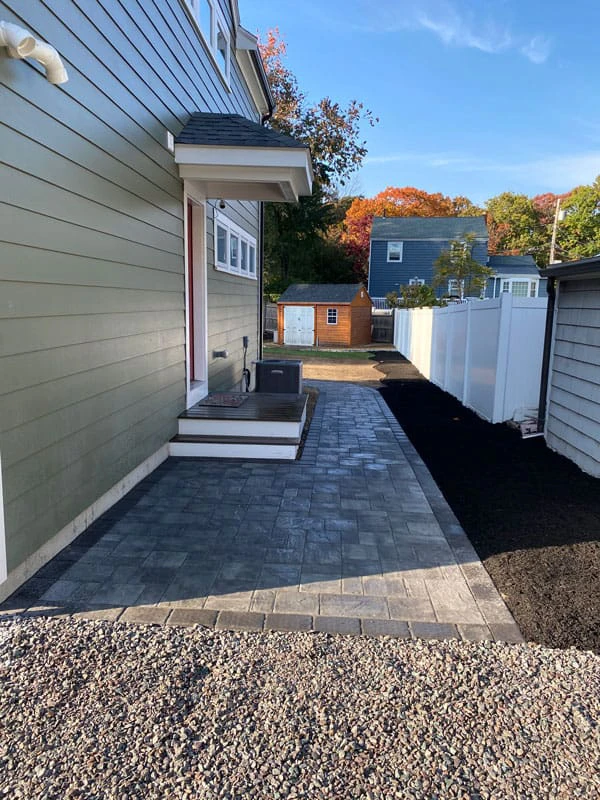
Drive through any Hamilton Mill or Sycamore Ridge subdivision and look at the patios that have aged five-plus years. On at least a third of them you’ll see the same tell: one corner of the patio is visibly lower than the other three. That corner is almost always the one closest to a gutter downspout.
The mechanism here is localized moisture loading. A single residential downspout in a Dacula-sized home discharges between 600 and 1,200 gallons of water during a 1-inch rainfall event. If that discharge hits grade within 8 feet of the patio edge with no buried pipe extension, it saturates the Cecil clay in a concentrated plume. That plume of saturated clay is now at peak swell — and in the same yard, the clay 15 feet away from the downspout is still at moderate moisture. You’ve created a differential settlement condition directly under the patio’s corner.
When the rainy season ends and that corner dries back down, the saturated clay shrinks more than the surrounding soil because it swelled more. The net effect across a single wet-dry cycle is a small downward movement at the corner. Across ten cycles, that adds up to half an inch or more. Pavers are unforgiving of differential settlement — once the base moves, the visible top course follows.
This is one of the easiest failures to prevent and one of the hardest to retroactively fix. Prevention is a 4-inch solid PVC downspout extension carrying the full discharge volume to a daylight termination at least 12 feet past the patio perimeter — ideally tied into a buried drainage main. Retrofit is harder: you typically have to lift the affected section, reset the base with a proper drainage layer, and re-seat the pavers. At that point you’ve paid for the install twice.
Drainage pipe spacing rule we use in Cecil clay: 4-inch perforated corrugated pipe wrapped in filter fabric, installed at a minimum of one run per 50 linear feet of patio edge, with solid PVC carrying any downspout discharge a minimum of 12 feet past the hardscape footprint.
Failure Mode #3 — Joint Widening and Silt Migration in Polymeric Sand
Polymeric sand is sold as a permanent joint material. In stable subgrade — think a sand-over-gravel New England coastal lot — it often is. In Cecil clay at a PI of 18, it frequently isn’t, and the failure mode is specifically tied to the soil behavior.
Here’s what happens. Polymeric sand is a blend of sand and a polymer binder that activates when wetted, hardening into a semi-rigid joint fill. Once cured, it’s designed to flex slightly with freeze-thaw and minor pavement movement. What it’s not designed for is the dual stress of (a) lateral soil pressure pushing clay fines up into the joint from below, and (b) the base layer flexing through seasonal swell-shrink cycles that open joint widths fractionally each summer-to-winter transition.
What we see on Dacula patios at the five-year mark is a specific pattern: the polymeric sand joints still look intact on the surface, but when you probe them they’re crumbly underneath, and the grout line is now a pale brown rather than the original gray or tan. That discoloration is silt migration — Cecil clay fines are working their way up through the base layer and contaminating the lower two-thirds of the joint. The joint looks finished, but mechanically it’s failed.
The countermove is a two-part detail. First, a non-woven geotextile fabric between the subgrade and the base course. The fabric doesn’t stop water, but it does stop fines migration — it keeps the clay below and the clean stone above as two separate layers rather than letting them blend into a contaminated sludge over time. Second, two polymeric sand applications, one at install and a refresh at year two after initial settlement has happened. A single application at install always ends up thin in places, and the thin spots are where silt migration starts. Budget the second application into the project from the beginning.
Failure Mode #4 — Retaining Wall Lean, Bulge, and Tip in Year Two
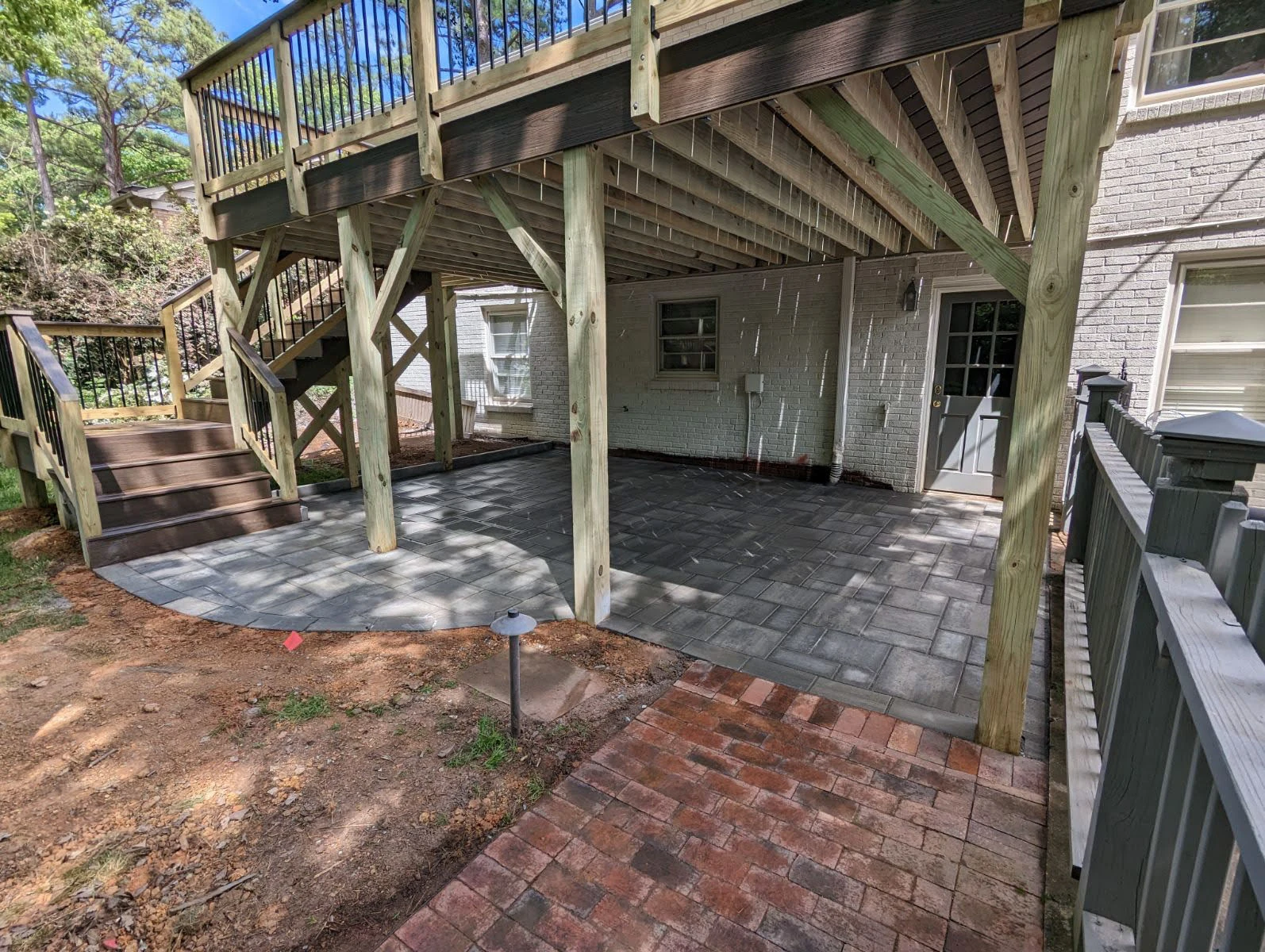
Retaining wall failure in Dacula clay has its own specific signature, and it tends to show up faster than patio failure — often within 18 to 30 months. The wall doesn’t collapse. It leans. Or the midsection bulges outward in a slow convex curve. Or the top course starts tipping forward while the bottom stays plumb. Each of those is diagnostic of a specific missing detail.
The physics are straightforward. A retaining wall is resisting two forces: the static weight of the retained soil, and the hydrostatic pressure of water saturating that soil after a rain event. In Cecil clay, the second force is the killer. Clay drains slowly. Water that enters the retained fill after a storm can sit there for days, pressing on the back of the wall at a pressure that builds with depth. On a 4-foot wall, saturated clay can exert 400 to 600 pounds per linear foot of lateral pressure at the base.
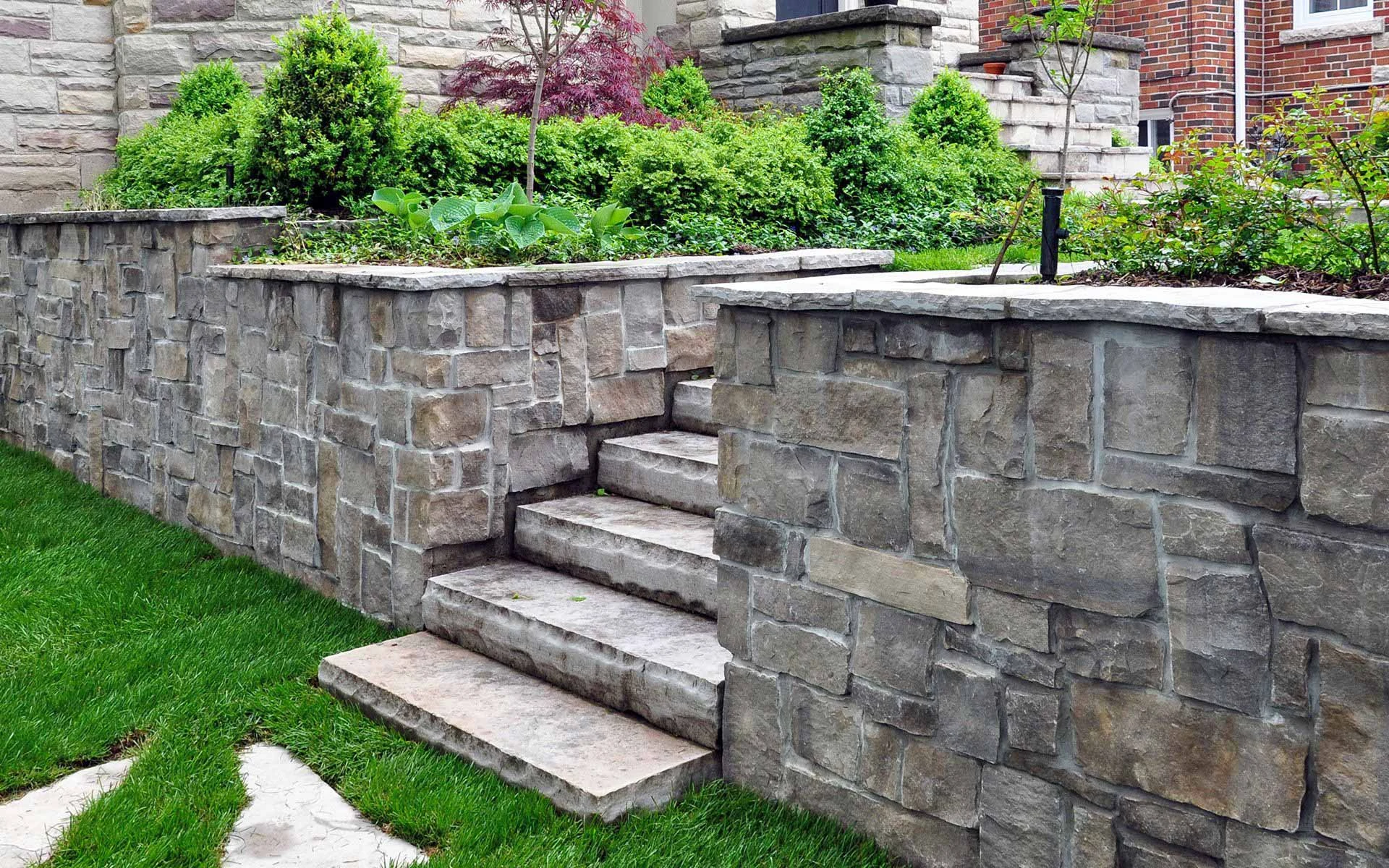
Block walls above three courses on Cecil clay need geogrid reinforcement — a polymer mesh that extends horizontally back into the retained soil and anchors the wall face to the hill it’s holding. Gwinnett County’s building department requires engineered design for any retaining wall over 4 feet in exposed height, but the PI of the soil means we recommend engineering any wall over 3 feet in Dacula regardless of code trigger. The tieback spacing we use on engineered walls in Cecil clay is geogrid every 24 inches of vertical rise — meaning a 5-foot wall gets three courses of geogrid, not one or two.
The other detail almost always missing on failed walls: a drainage composite or washed-stone drainage column behind the full face, discharging through weep outlets or a perforated pipe at the base. If water can’t get out, it just keeps pushing. The midsection bulge pattern we see in Dacula walls is almost always diagnostic of no drainage column — water built up behind the wall, the clay swelled against the middle courses, and the wall accepted the displacement at its weakest point.
Cecil clay retaining wall spec: Geogrid tieback every 24″ vertical · washed-stone drainage column 12″ thick behind wall face · 4″ perforated drain at wall base discharging to daylight or storm system · engineered design for any wall over 3 feet in exposed height · Gwinnett County permit required above 4 feet.
Failure Mode #5 — Base Layer Pumping and the Soft-Spot Mystery
The fifth failure is the one homeowners describe as “a soft spot in the patio.” You step on a particular paver and it flexes a millimeter or two — not enough to see, but enough to feel. Over time that soft spot grows, and eventually the pavers in the zone start rocking visibly under foot traffic. The failure is called base pumping, and its cause is specifically a clay-subgrade problem.
Here’s the sequence. Water gets into the base layer from above (through compromised joints) or from below (through capillary rise from saturated clay subgrade). Under load — someone walking across the patio, furniture resting, a grill cart rolling — the wet clay below the base momentarily compresses, and the saturated base aggregate flexes down with it. When the load releases, the base rebounds upward, but the fines in the clay get pumped into the base aggregate voids. This is a slow process. It takes thousands of load cycles, which is why it doesn’t appear for several years.
The result is a section of base that’s no longer clean, angular aggregate — it’s aggregate contaminated with clay fines, which means it no longer drains and no longer transfers load efficiently. That contaminated zone becomes permanently soft, and the pavers above it rock. Once pumping has happened, there is no surface repair. The only fix is a pull-and-rebuild of the affected area.
Prevention is the same geotextile fabric that blocks silt migration up into joints — only here it’s doing double duty. The fabric sits between the Cecil clay subgrade and the base course, and it prevents the clay fines from ever entering the aggregate voids regardless of how many load cycles happen above. A project we built off Hog Mountain Road in 2019 has been walked on daily for six years and still tests rigid under load — the only difference between it and the rebuild-candidates two doors down is a roll of fabric that added about $140 to the job cost.
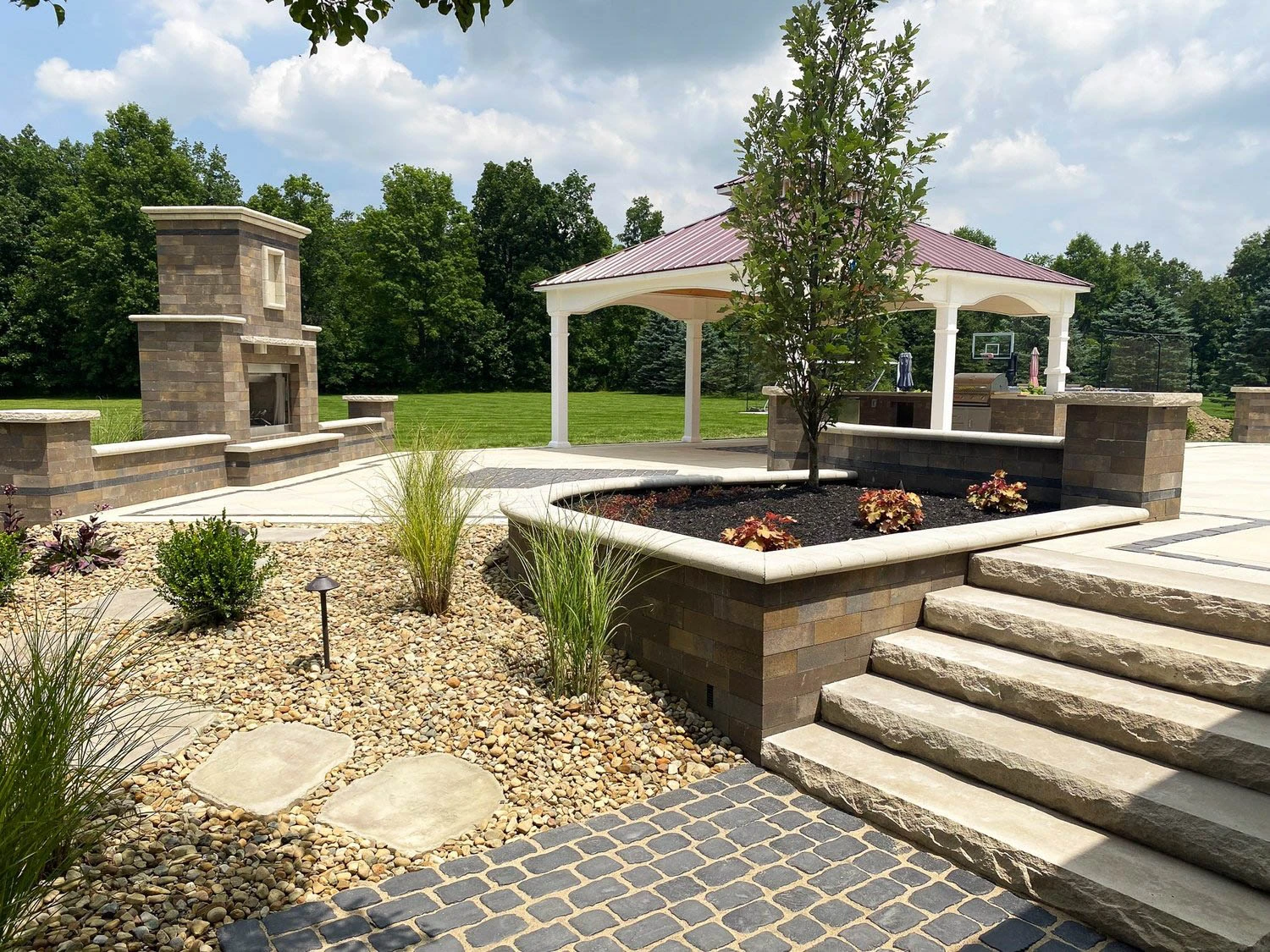
What a Properly Spec’d Hardscape Assembly Actually Looks Like in Dacula
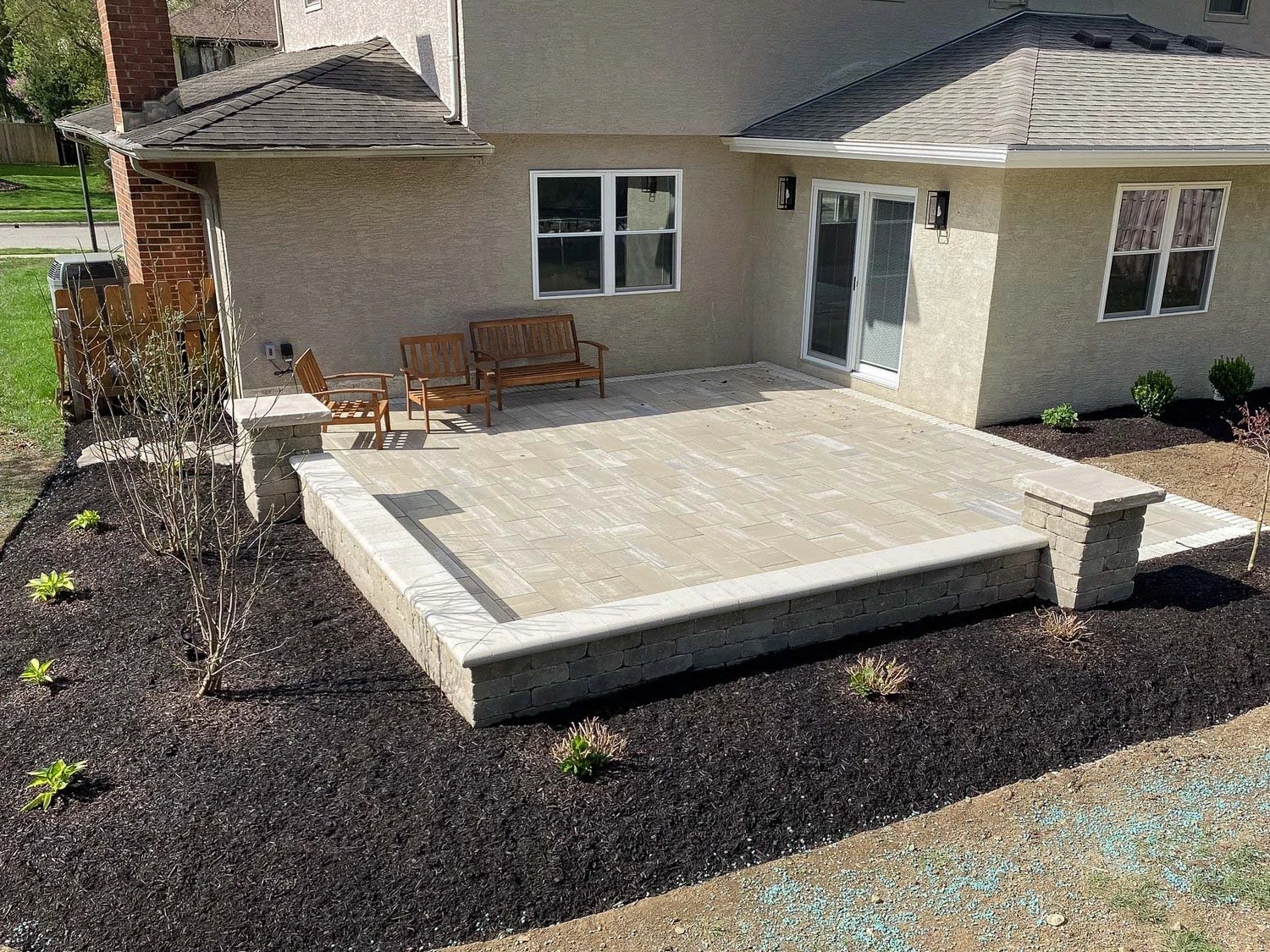
If you’ve read this far, you can probably anticipate the assembly. Build the whole project as a system that accounts for the soil, not as a finish layer sitting on compacted clay. Every detail below is a direct response to one of the five failure modes above, and every one of them shows up in the hardscapes we’ve built in Dacula that are aging well.
From the bottom up, the full assembly on a typical Dacula patio or wall project includes the following layers and details:
- Subgrade preparation: Excavation to 10–12 inches below finished paver elevation. Proof-rolled to identify soft zones. Any organics, root mats, or fill material removed and replaced with compacted GAB.
- Geotextile separation fabric: Non-woven needle-punched fabric over the entire compacted subgrade, extending 6 inches up the perimeter excavation walls. Blocks clay fines migration into the base.
- Drainage pipe: 4-inch perforated pipe wrapped in filter fabric, installed along the low edge of the patio or behind any retaining wall, daylighted to grade or tied into a drainage main. One run per 50 linear feet minimum.
- Base course: 8 inches minimum GAB (graded aggregate base), placed in two 4-inch lifts, each lift compacted to 95% Standard Proctor density with a plate compactor. Base extended 12 inches past the finished paver footprint on all sides.
- Setting bed: 1 inch of clean concrete sand or, for higher-end projects, a 1-inch cement stabilized bedding. Screeded flat, never disturbed after screeding.
- Paver field: Installed per manufacturer spec with hand-tight joint gaps, compacted once after full installation with a protected plate compactor.
- Perimeter restraint: Cement-set soldier course on any patio over 300 square feet. Plastic edge restraint is acceptable only on small, low-traffic installations in protected locations.
- Joint fill: Polymeric sand applied per manufacturer cure instructions, with a scheduled second application at 18–24 months to address initial settlement migration.
- Retaining walls: Geogrid every 24 inches of vertical rise on any wall over 3 feet, drainage column with washed stone behind the full face, base drain to daylight.
Is this more expensive than a bid that skips fabric, cuts base depth to 4 inches, and relies on plastic edging? Yes — typically by 15 to 25 percent on the line item. Is it more expensive than having a contractor pull apart the failed install and do it right on year five? No. And that’s the actual comparison. The cheap install becomes the expensive install the moment it starts to fail, and failure in this soil isn’t a question of if — it’s a question of which failure mode and how soon.
Every hardscape we build in Dacula, Hamilton Mill, Sycamore Ridge, Chandler Ridge, or anywhere else along the Cecil soil corridor gets built to the spec above. Not because it’s fancy — because it’s the minimum that survives the soil. If you’re evaluating bids for a new patio or retaining wall in 30019, ask the installer to walk you through their base depth, their fabric plan, their drainage pipe runs, their geogrid schedule, and their restraint detail. If any of those five answers is fuzzy, you’re looking at a future failure.
Hardscape design and construction across 20+ cities within 30 miles of Winder, GA
Dacula’s Cecil clay demands a specific engineering approach — over-extended base, geotextile separation, drainage pipe every 50 feet, geogrid-reinforced walls. We build to that spec on every project in Gwinnett County and the surrounding region.