
Three pavers. All rated beyond 200 freeze-thaw cycles. All ASTM-compliant. All capable of carrying a fully loaded 10,000-lb SUV up a 1,270-ft elevation driveway without cracking. And yet — walk the same three products fifteen years in, and the behavioral differences show up in ways the spec sheet never warned you about.
Here’s the tease, and we’ll defend each claim below. One: Para holds its joint lines tighter than the other two and saves you roughly 18 hours of polymeric sand re-sweeping across a 20-year ownership window. Two: Blu 60 is the fastest and cheapest install on the list — but only because its geometry is the most forgiving for crews working on the stony residuum common in North Dawson County. Three: Aberdeen’s tumbled face is the only one of the three that still looks intact to a visitor’s eye after year-five soil settlement pushes a joint out of alignment. Every paver eventually moves up here. Aberdeen just hides the evidence.
That’s the real answer to the question Dawsonville homeowners keep asking us. Not which paver is best, but which paver behaves best on your specific lot, over the specific 15–20 years you plan to own the house, given the specific 30-freeze-event winters this elevation delivers. The rest of this piece is the decision matrix. We’ve installed all three along Hwy 53, in Foxcreek, off Dawson Forest Road, and up near the Etowah River Club. The jobsites tell the story.
Why Dawsonville’s Climate and Subsoil Change the Math
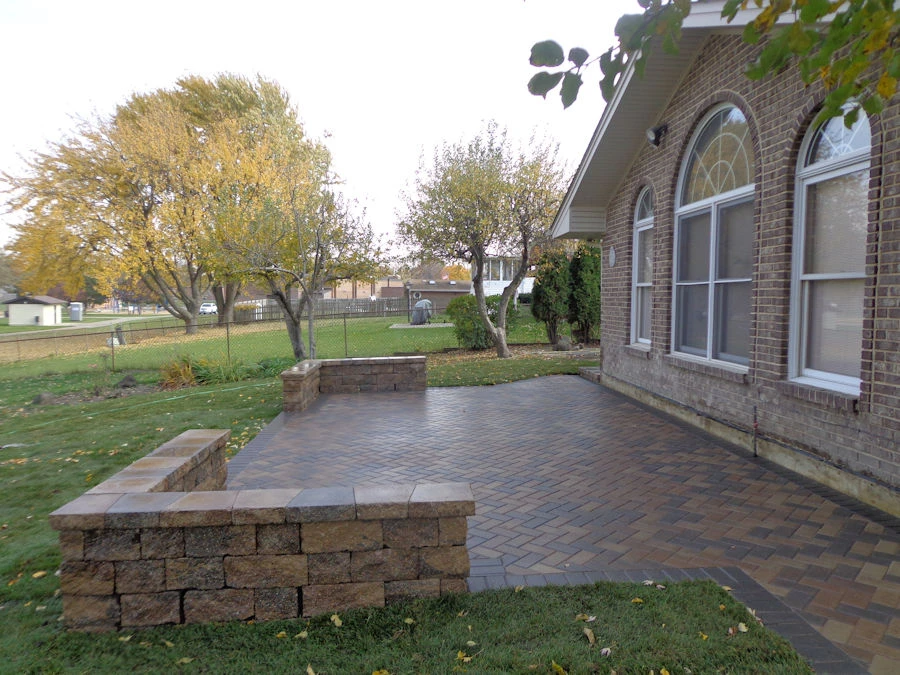
Before we pick apart the three products, understand the jobsite. Dawsonville sits on the USDA Zone 7b/8a border, but the real number driveway contractors care about is freeze events — roughly 30 per year at this elevation, compared to about 20 in lower-lying Dacula or Lawrenceville. Each freeze event is a chance for water trapped in joint sand, in paver micro-cracks, or under the bedding layer to expand and lift. Do that thirty times a winter for fifteen winters and you’ve cycled the surface 450 times. Every paver in this comparison is rated to survive it. What differs is how they behave while surviving it.
Then there’s the dig. Most of metro Atlanta deals with Piedmont clay, which excavates predictably. Dawsonville sits in the North Georgia foothills, and the subsoil is stony residuum — Cecil series topsoil thinning out over weathered granite and saprolite at two to six feet of depth. We’ve brought rigs to jobs in Applewood and Mountain Laurel where the trencher hit rock at 30 inches and the base prep required rock blast charges of $8 to $14 per cubic yard over standard dig pricing. If your driveway runs up a grade, the blast surcharge alone can swing the total budget by four figures. That changes what paver you should install before you even look at the paver.
One more factor: grade. Dawson County lots run steeper than Piedmont lots — we see 12 to 18 percent slopes on driveways pretty regularly, especially in Riverbend and Chestatee. A steep driveway puts shear load on the joints when vehicles brake or turn. The paver with the tightest joint geometry wins on steep drives. The paver with the most forgiving joint geometry wins on lots with compressible fill or known settlement risk. Those are different pavers.
The numbers to remember: 30 freeze events per year at 1,270-ft elevation, rock blast premiums of $8–$14/cy when saprolite shows up at 2–6 ft depth, and typical residential driveway slopes of 12–18% in the Riverbend and Foxcreek areas. These three variables pick your paver before aesthetics ever enter the conversation.
Techo-Bloc Para — Tightest Joints, Least Maintenance, Highest Install Cost
Para is Techo-Bloc’s modern rectangular paver with calibrated edges and a smooth face. On paper it’s their premium driveway product for homeowners who want a contemporary look and are willing to pay for precision. Install cost in the Dawsonville market runs $8 to $10 per square foot installed, all-in, for standard 2,000–3,500 sq-ft residential driveways. That premium buys you three things, and it’s worth understanding each.
First, joint width. Para’s edge calibration holds joints to roughly 1/16-inch, so polymeric sand fills tight and stays tight. We resurvey the driveways we install, and after five winters the Para installs we did in the Kensington Ridge and Chestatee neighborhoods have lost less than 10 percent of their original joint sand. By comparison, the industry average for tumbled rectangular pavers at the same age is 20–25 percent sand loss, which is the homeowner’s cue to pay a crew to re-sweep polymeric sand every three to four years. Over twenty years of ownership, that difference is worth roughly 18 hours of maintenance labor and $400–$600 in service calls.
Second, freeze-thaw performance. Techo-Bloc publishes freeze-thaw ratings per ASTM C1645, and Para’s dense wet-cast concrete structure absorbs less water than tumbled pavers with more open pore structure. Less water absorbed means less water to freeze, expand, and micro-fracture the paver face. On a 30-event-per-year freeze schedule, this matters. The face staying intact means it keeps looking like the day it was installed. That’s aesthetic durability, which is different from structural durability.
Third, load behavior on steep drives. The tight joints and calibrated edges resist the shear loads that come from trucks braking and tires twisting on grade. If your driveway runs up into Foxcreek or over the ridge toward the Etowah River, Para is the product that will still look laser-straight at year ten. The trade-off is installation sensitivity. Para is unforgiving of a mediocre base. The crew has to compact the gravel sub-base to 8 inches, screed the setting bed to a tight tolerance, and snap chalk lines tight. Para doesn’t hide crew mistakes the way tumbled pavers do. Hire the install cheap and you will see the consequences.
Techo-Bloc Blu 60 — Easiest Install, Best Value, Geometry That Forgives Crews
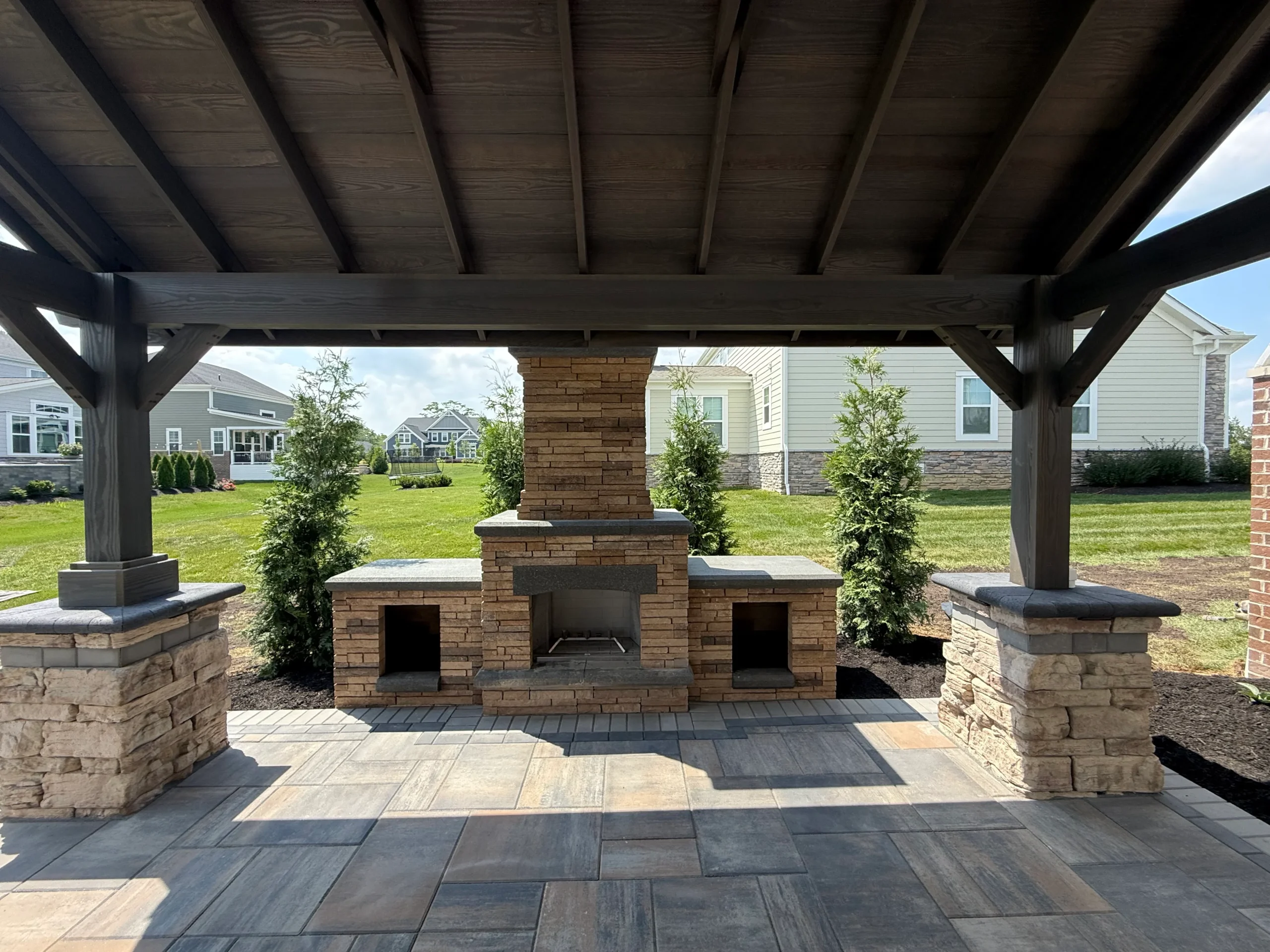
Blu 60 is the other end of the product line. It’s a smaller-format smooth-face paver, 60mm thick, sold in modular bundles that install fast because the geometry is simpler. Installed cost in Dawsonville runs $6 to $8 per square foot, a full $2 per square foot cheaper than Para on a like-for-like driveway. On a 2,500 sq-ft driveway that’s a $5,000 swing — real money.
What you give up is joint tightness and aesthetic precision, but what you gain matters in this region. Blu 60 installs fast because the crew can set two or three pieces at a time in a running bond pattern and the edge tolerances are more forgiving. On a Dawson County job where the sub-base has seen rock blasting and the screed bed is being laid over re-compacted saprolite, the forgiving geometry of Blu 60 hides the micro-variations a smooth Para install would broadcast. The paver is essentially self-aligning over a slightly imperfect base. In the field, that’s worth something — especially when equipment trucking up GA-400 into rural sub-divisions adds a real mobilization cost to every day the crew spends on base correction.
Freeze-thaw rating is comparable to Para — 200-plus cycles per ASTM — and for residential driveway loading, structural performance is indistinguishable over the first 15 years. Where the two part ways is the joint. Blu 60’s joint width runs 1/8-inch, twice Para’s, and will lose polymeric sand faster under Dawsonville’s 30-freeze-event winters. Expect a polymeric sand re-sweep every three to four years on a Blu 60 drive, roughly $300–$400 each time. Over twenty years that’s about $1,800 in maintenance versus $600 for Para. The savings at install are larger than the maintenance delta, so Blu 60 still wins on total cost of ownership — but not by as much as the sticker price suggests.
The real Blu 60 argument: on lots where the base has been rock-blasted and re-compacted from saprolite, Blu 60’s forgiving joint geometry is a feature, not a concession. On clean Piedmont-clay lots down in Duluth or Suwanee, you’d probably pick Para. Up here, you pick Blu 60 because the jobsite rewards it.
Techo-Bloc Aberdeen — The Tumbled-Face Long Game
Aberdeen is the tumbled product in this comparison — the one with the rough, knocked-back edges that mimic quarried stone. It installs at roughly $7 to $9 per square foot, sitting between Blu 60 and Para on cost. On paper it sounds like a compromise. In practice, Aberdeen solves a specific problem that Para and Blu 60 can’t solve on Dawsonville lots: aesthetic failure after soil settlement.
Here’s the problem. Dawsonville’s stony subsoil doesn’t settle uniformly. Over the first five years after install, any location where the contractor had to re-compact saprolite, backfill over utility trenches, or transition from blasted rock to native soil will settle a quarter to a half inch while the rest of the driveway stays put. That’s within code and within every paver manufacturer’s warranty. But on a smooth-faced paver like Para or Blu 60, a half-inch settlement is visually obvious — the joint line kinks, the light catches the edge difference, and the eye goes straight to the defect.
Aberdeen’s tumbled face breaks up those sight lines. The paver itself has a rustic, irregular top surface, so a small settlement shift reads as part of the design rather than as failure. Ten years in, an Aberdeen driveway with a quarter inch of cumulative settlement still photographs like a just-installed drive. A Blu 60 in the same condition reads as tired. That’s not a durability claim — all three pavers are structurally sound. It’s an aesthetic-durability claim, and for homeowners planning to list in 10–15 years, it’s the one that matters at resale.
Aberdeen also has the deepest chamfer of the three, which physically resists snow plow blades and the edge of a contractor’s scraper. Up near Big Canoe and Amicalola Falls, we see clients who get occasional snow — real snow, not metro Atlanta ice — and the paver edge matters when the plow catches it. Para’s crisp edge can chip if the plow operator isn’t careful. Aberdeen’s tumbled edge already looks like it’s been hit, so new chips don’t register. A quiet advantage, but it’s real.
Joint Sand, Base Depth, and the Stuff That Actually Fails
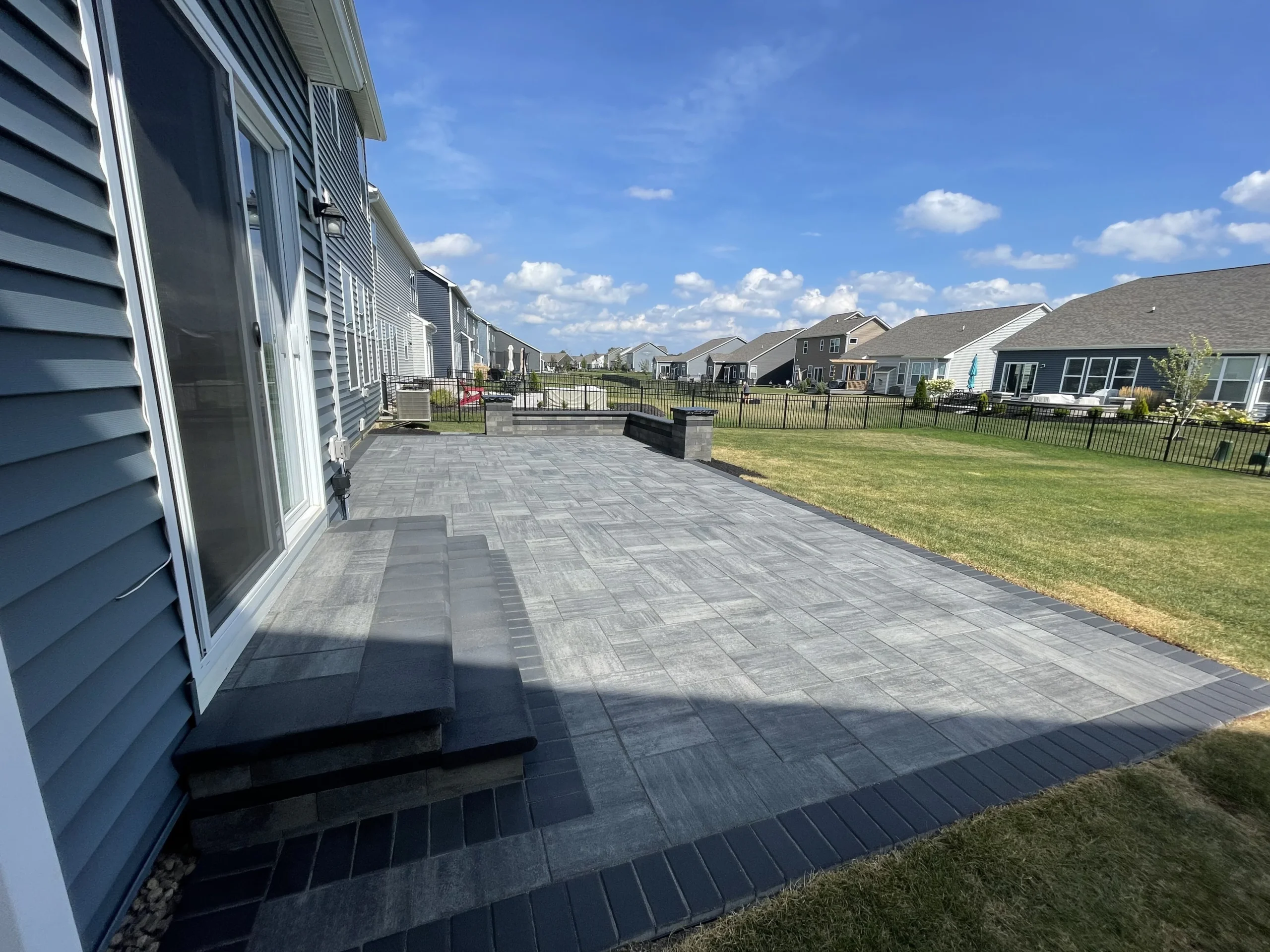
Every driveway failure we’ve seen in Dawsonville traces back to one of three root causes, and none of them is the paver itself. It’s the base, the joint sand, or the drainage. If you’ve pre-committed to a product because you like the color, at least understand what separates a 25-year install from a 10-year install underneath the surface.
Base depth. For a residential driveway carrying passenger vehicles, Techo-Bloc’s spec is an 8-inch compacted GAB base minimum, stepping up to 10–12 inches if the subgrade is soft clay or re-compacted fill. In Dawsonville’s stony subsoil, you can sometimes get away with 8 inches on undisturbed native ground because the parent material is weathered granite. On re-compacted fill or over rock-blasted sections, go to 12 inches every time. The crew who pitches you a 6-inch base to save money is setting up your driveway to fail at year seven.
Joint sand. Polymeric sand is a two-part system — sand plus polymer binder that activates when wet. Installed correctly, it resists freeze-thaw erosion for 8–10 years. Installed wet, or installed on a hot day without time for the polymer to cure, it fails at 18 months and you’re looking at hairline joint cracking and sand runoff. This matters more in Dawsonville than in Atlanta proper because the freeze-thaw count is higher. If your installer is sweeping polymeric sand on a humid August afternoon in Dawsonville, you have the right to ask them to come back when the forecast cooperates.
Drainage. Every paver driveway needs a plan for where the water goes. Dawsonville averages 55 inches of rainfall with mountain-pattern thunderstorms that dump 1–2 inches in 20 minutes, and on a 15-percent grade that runoff is moving. We design French drains at the base of steep driveway runs, and we specify 4-inch perforated pipe wrapped in filter fabric terminating at daylight or a dry well. Skip the drain and the water goes under the base, which undermines the sub-base over 5–7 years until a section of the drive sinks. At that point you’re not re-sweeping sand; you’re lifting 200 sq ft of pavers to rebuild the base.
Matching the Paver to the Lot — A Decision Matrix
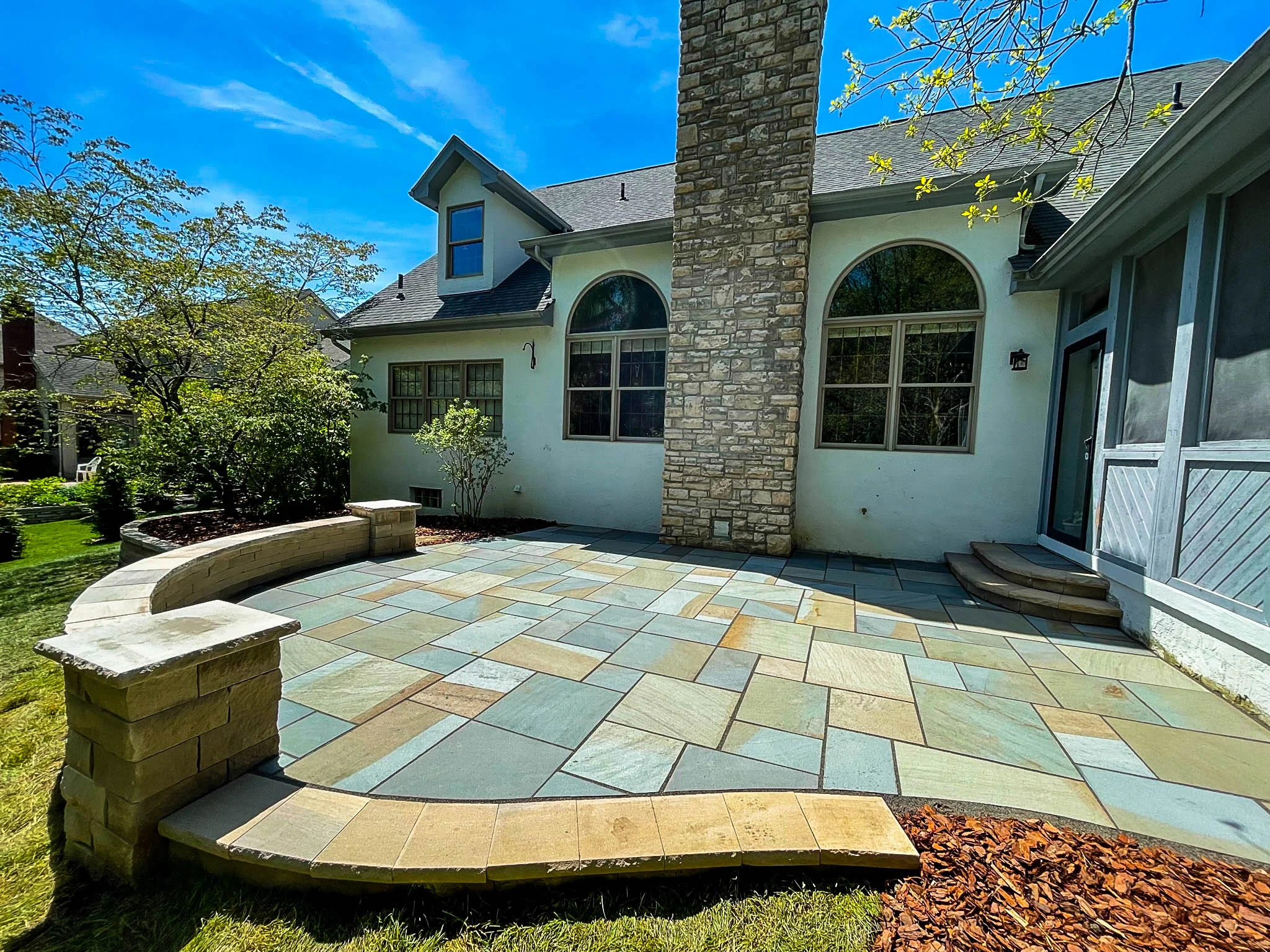
Here’s the way we actually recommend on jobsites, which is different from the way a showroom sells. The paver doesn’t lead the conversation. The lot does. Four variables we ask about before showing samples: elevation exposure, subsoil condition, driveway grade, and how long you plan to own the house. Each one moves the needle on different products.
If your lot is on the ridge side toward Big Canoe with high wind exposure and a 15-percent driveway grade, and you’re in the house for 20+ years: we recommend Para. The tight joints and calibrated edges resist shear on grade, the dense wet-cast structure absorbs less water for the freeze-thaw cycles, and the 20-year ownership window amortizes the install premium. You pay more upfront and roughly half the maintenance over time.
If your lot is in newer 2015+ construction on re-compacted builder fill, you have a 10-year ownership horizon, and the budget is a real constraint: we recommend Blu 60. The forgiving geometry handles the settlement that will happen on that fill, the install cost is the lowest, and 10 years is inside the window where the polymeric sand maintenance delta hasn’t compounded. You take the sticker savings and reinvest in a better base — 12 inches of GAB instead of 8 — which matters more than the paver choice.
If your lot has significant grade change with rock blasting in the dig, settlement is likely over years 3–7, and aesthetic durability matters because you plan to sell in 10–15 years: we recommend Aberdeen. The tumbled face hides the settlement you know is coming, the chamfered edge resists snow-plow damage up at higher elevations near Amicalola Falls, and the resale photography still looks great at year ten. The install premium over Blu 60 is small, and it buys you the one thing the other two can’t offer: concealment.
The uncommon case. Occasionally we install Para on flat driveways with clean subgrade where the homeowner wants the modern look — Foxcreek has a few of these. Or Aberdeen on a custom build in Mountain Laurel where the architect specified rustic. These aren’t wrong. They’re just the exceptions. For the representative Dawson County driveway, the decision tree above covers 80 percent of the jobs we close.
Fifteen Years In — What the Aging Paver Actually Looks Like
We pulled jobsite records from three Dawsonville driveways installed between 2009 and 2011 — one Para, one Blu 60, one Aberdeen — and went back to photograph them at the 14-to-16-year mark. Small sample, but instructive. Here’s what the aging looked like and what it cost the owners.
The Para driveway, installed in 2010 off Hwy 136 (Amicalola Falls Rd), was a 2,800 sq-ft run with a 12-percent grade. At year 15, joint sand had been re-swept once (year 9) for about $420. Two pavers near the garage apron had been lifted and reset after a sub-base wash-out when the owner found the downspout draining onto the drive; that repair ran $650 plus fixing the downspout. Otherwise the drive reads as near-new. The edges are still crisp. The joint lines still look laser-straight. The owner’s planning to stay another 10 years.
The Blu 60 driveway, installed in 2009 in the Applewood area, was a smaller 1,950 sq-ft drive on a flatter lot. At year 16, polymeric sand had been re-swept three times (years 5, 9, 13), totaling roughly $1,050. One small section near the street approach had settled a half inch and was re-bedded in 2022 for about $900. The paver field itself looks tired compared to the Para — the soldier course is visible as a slightly raised band where the field has settled evenly around it. The drive is functional and structurally sound, and it’ll do another 10 years without drama, but it reads its age.
The Aberdeen driveway, installed in 2011 near the Etowah River Club, was 3,100 sq ft with a 14-percent grade and heavy rock-blast work in the dig. At year 14, polymeric sand had been re-swept twice (years 5 and 11), totaling about $780. Three separate micro-settlement areas are visible to a trained eye but essentially invisible to a visitor — the tumbled face absorbs the movement into the texture. Owner recently listed the house and the driveway photographs in the listing look identical to the install-day photos in our records. The Realtor cited the driveway as a feature in the listing copy.
The takeaway. All three pavers delivered structurally. None of them failed. The difference was maintenance hours, aesthetic wear, and — for the owner planning a sale — the visual narrative the drive tells a prospective buyer. Para and Aberdeen both tell a good story. Blu 60 tells the truth about its age, which isn’t bad, just different.
Permits, Scheduling, and What a Dawson County Driveway Project Actually Looks Like
A paver driveway in Dawson County requires a grading permit from the Dawson County Dept. of Planning & Development at 25 Justice Way. If the driveway ties into a county road, you’ll also need a driveway/curb-cut approval from the county road department. Neither is a long process — we typically turn permits in 10–14 business days — but both are required before we cut the first line of the dig. Homeowners sometimes try to skip this step on long private drives and regret it when the installer hits a buried utility that wasn’t located.
Scheduling. The best install months in Dawson County are April, May, September and October — temperatures in the 60–75 range let the polymeric sand cure properly and the ground is workable. We avoid July and August paver installs when we can, because polymeric sand installed at 92 degrees on a humid afternoon won’t set right. We also avoid January and February when overnight freezes interrupt the base compaction and joint curing. If a homeowner calls us in November and wants the drive done before Thanksgiving, we’ll do it, but we set the expectation that the joint sand will need a fresh top-up in spring because the cold-weather application won’t be fully locked in.
Equipment access. Dawsonville’s rural lot pattern means our mini-excavator and compactor trucks come in via GA-400 to Hwy 53 or Hwy 9 and then up whatever private drive or subdivision road services the property. Most jobs we can set up in a day. Lots up in the Big Canoe corridor or past Chestatee occasionally require a shorter excavator because of overhanging hardwoods on the access drive. We figure this out on the site walk, not on install day.
Utility. Amicalola EMC serves most of Dawson County’s residential areas. If your driveway project involves re-routing a service drop, underground line relocation, or adding pathway lighting circuits, we coordinate with EMC on the meter and service-side work and handle the secondary-side install ourselves. It’s not usually a line-item the homeowner thinks about until the crew shows up, so we flag it during estimating.
Budget range. For a representative 2,500 sq-ft Dawson County residential paver driveway, all-in installed cost lands between $17,000 and $28,000 depending on the paver selected, the base depth required, whether rock blasting is needed, and whether drainage infrastructure has to be added. Para runs the high end. Blu 60 runs the low end. Aberdeen splits the middle. These are real numbers for jobs we’ve closed in the last 12 months, not MSRP theater.
Final thought. The three pavers in this piece are all good products. Any Primetime-installed drive in any of the three will outlast the finance term on most vehicles. The question is which one matches the lot you own and the timeline you plan to own it for. Bring us the parcel, the zip 30534 survey, and an honest answer about how long you’re staying, and we’ll walk you to the right product. That’s the job.
Paver driveways across 20+ cities within 30 miles of Winder, GA
From Dawsonville’s stony residuum up near Amicalola to the Piedmont clay down the GA-400 corridor, we build paver driveways that are engineered for the specific lot — base depth, freeze-thaw load, grade, and 15-year aesthetic durability.