
Why does a retaining wall that would pass plan review anywhere else in Gwinnett County get rejected twice inside Laurel Springs? Because the ARB isn’t evaluating structure. They’re evaluating the face. And in Suwanee’s premium subdivisions, the face decides what goes in the ground.
If you live off Peachtree Industrial Blvd in one of Suwanee’s estate-scale subdivisions, the question isn’t really “retaining wall or no retaining wall.” Grade makes that decision for you. The question is what the wall is wrapped in — natural stone, ashlar cultured veneer, or bare segmental block — and the answer decides three things: whether the ARB approves your plan, what you pay per square foot of face, and how the wall looks the year your kids graduate high school.
This is a material-by-material breakdown written specifically for homeowners inside Laurel Springs, The River Club, Bear’s Best Atlanta, Settles Bridge, Highgrove, and Village Grove. If your subdivision doesn’t have an ARB, the cost math still applies — but the rest of the decision framework is built around the review process we see week after week from 30024 addresses.
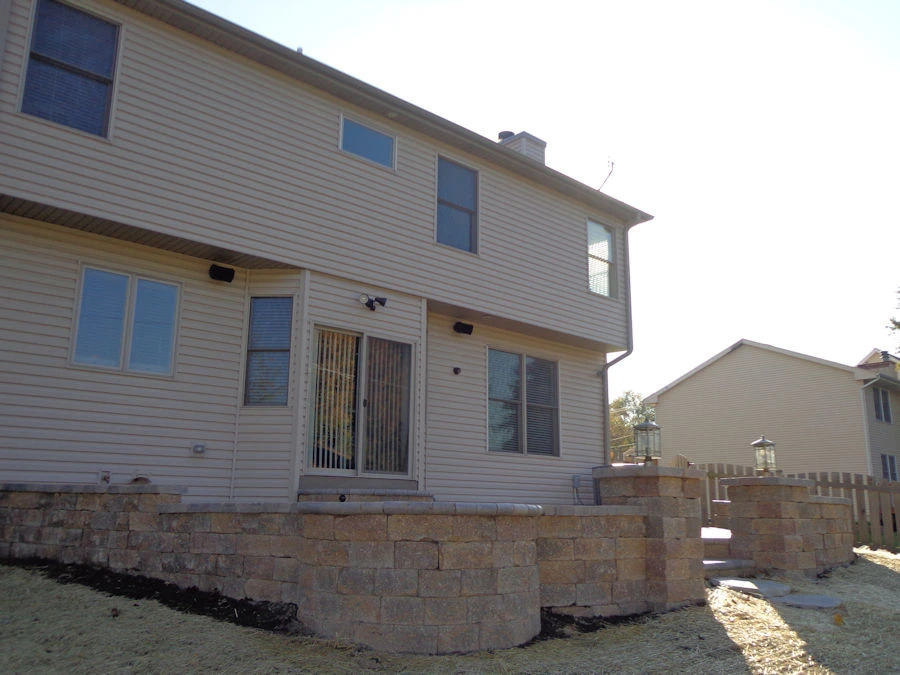
Why Suwanee’s Premium ARBs Reject Bare Segmental Block
Gwinnett County’s building code will let you retain up to 4 feet of grade with a competently installed segmental retaining wall — Allan Block, Versa-Lok, Keystone, Belgard Weston Stone — without a stamped engineer’s drawing. That code applies equally to Suwanee. The county permit goes through the Gwinnett Department of Planning & Development at 446 W. Crogan St., Lawrenceville, and it’s the same review regardless of whether your lot is in Laurel Springs or a 1980s ranch on the older side of Settles Bridge Rd.
The HOA review is a separate animal. Laurel Springs’ Architectural Review Board — one of the strictest in Gwinnett County, typical 3-to-4 week turnaround — explicitly restricts exterior hardscape materials to natural stone or approved ashlar-pattern cultured veneer. Bare tan segmental block of the kind you’d see on a new-build raised patio three miles away in Sugar Hill simply does not make it through. Bear’s Best Atlanta has similar restrictions. The River Club at Suwanee narrows it further: bluestone or granite only on visible faces.
The approval numbers tell the story. Across the plans we submit in Suwanee’s premium subdivisions, natural stone walls pass ARB review at roughly 99%. Cultured ashlar veneer runs about 78% — usually kicked back for color match or joint pattern, then re-submitted. Bare segmental block with no veneer sits near 12%, and the only ones that pass are rear-yard walls that aren’t visible from the street, from the cart path, or from a neighbor’s primary view corridor.
Gwinnett County permit rule: walls over 4 feet of retained grade require a stamped engineer’s drawing regardless of material. On Suwanee’s sloped Laurel Springs and Settles Bridge lots, many walls cross that threshold, so plan on engineering fees of $1,800–$3,400 before you ever hit the ARB.
Here’s the rub: the money you save picking segmental block over natural stone often disappears inside the ARB process. Two rounds of redesign, a structural re-stamp, and a delayed pool-build start that pushes concrete into fall clay season — the “cheap” wall ends up costing more than the stone one would have.
Natural Stone Walls: What You’re Actually Buying at $88–$148 Per Square Foot of Face
Natural stone — real quarried fieldstone, Tennessee sandstone, Pennsylvania bluestone ashlar, or Georgia granite — runs $88 to $148 per square foot of face in Suwanee as of the current pricing cycle. That’s dressed face price, which is the only price that matters for ARB-visible work. The wall behind the face is still engineered block or poured concrete in most installs; the $88-$148 is what you pay for the skin and for the craft to lay it.
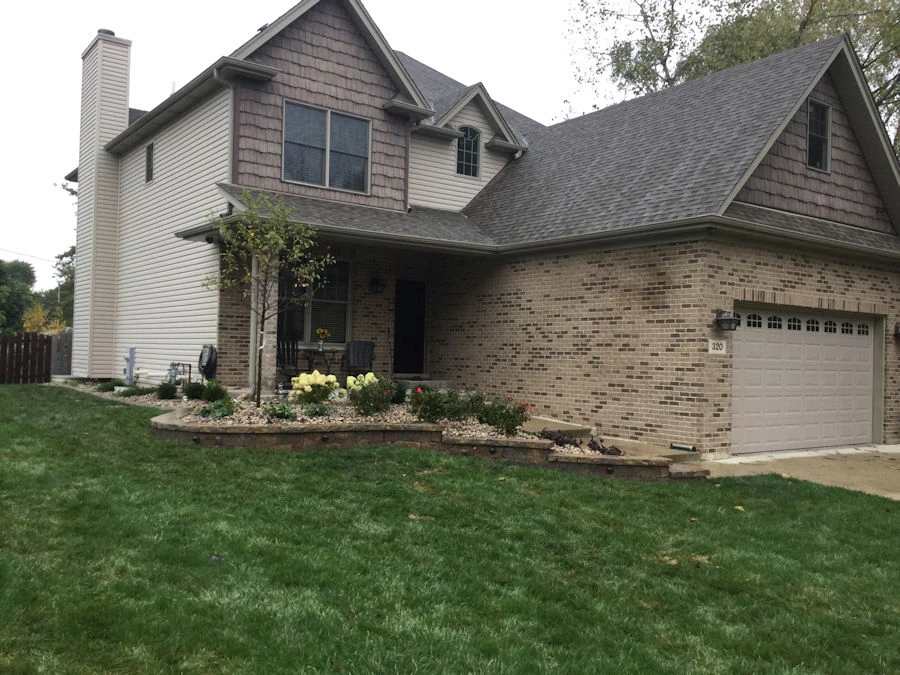
Why the wide band? Four variables move the number:
- Stone type. Tennessee fieldstone lands at the bottom — around $88–$102. Pennsylvania bluestone ashlar runs $115–$135. Georgia Elberton granite, cut and honed for The River Club’s face standard, pushes $138–$148 and occasionally higher for thicker veneer.
- Joint style. Dry-stack appearance with hidden mortar costs more than a struck joint. The ARB at Laurel Springs expects dry-stack face on prominent walls.
- Cap detail. A solid 3-inch full-depth cap runs $42–$64 per linear foot on top of the face price. Thinner bullnose caps on segmental systems retail for a fraction of that.
- Access. Estate lots in Laurel Springs and Settles Bridge with a single-lane driveway and a 28-yard setback add crane or buggy fees. River Club lots along the Chattahoochee can hit flood zone AE restrictions that raise costs further.
What you’re buying, durability-wise, is 40+ years of face life before any cosmetic refresh — and when we say refresh we mean re-pointing the mortar joints, not rebuilding the wall. The structural core behind the face follows the engineered system’s design life (typically 75 years for a properly built geogrid-reinforced block core, 100+ for poured). Natural stone doesn’t fade. It doesn’t pit. It doesn’t chalk out. Sun and Chattahoochee River fog do nothing to it.
Cultured Ashlar Veneer: The $52–$82 Middle Option
Cultured stone — manufactured concrete veneer products from Eldorado Stone, Cultured Stone by Boral, or ProVia — runs $52 to $82 per square foot of face in the Suwanee market. That’s a meaningful gap below natural, and it’s the reason most homeowners ask about it first. At Laurel Springs the only cultured products that reliably pass ARB review are the ashlar-pattern lines: Eldorado’s Cliffstone and RoughCut, Boral’s Country Ledgestone and Dressed Fieldstone. Random or rustic patterns get kicked back.
Install-day, cultured veneer and natural stone are hard to tell apart at 30 feet. Close up, trained eyes catch the repeat pattern — every cultured product has a finite number of unique molds, usually 18 to 36, which means a long wall will show the same face stone four or five times. That’s visible in the River Club’s ARB review process, which is why they simply don’t permit cultured at all.
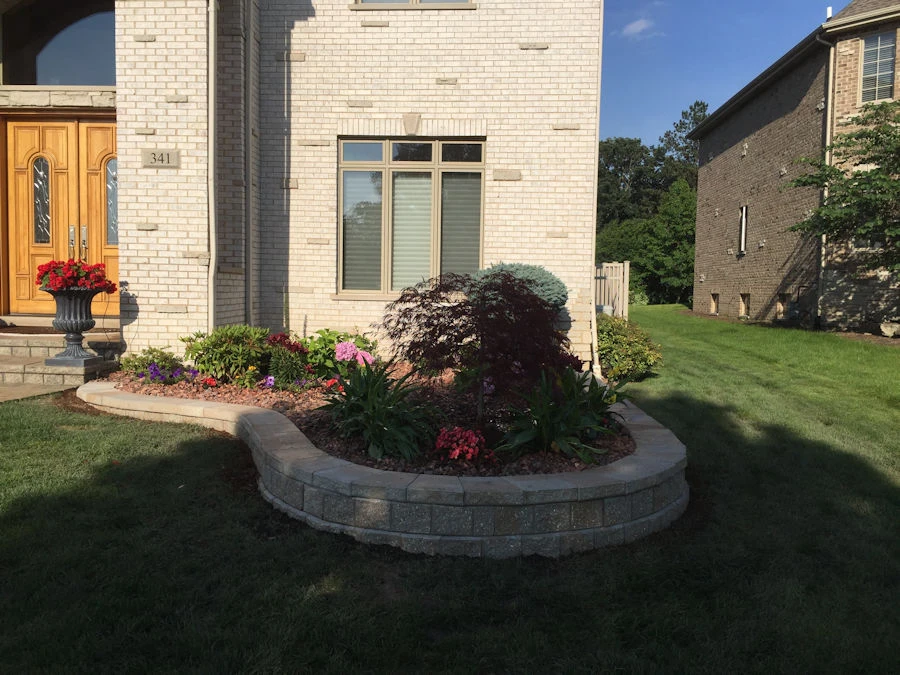
The durability gap opens between years 8 and 12. Cultured veneer is a pigmented concrete face, and Georgia sun is hard on pigment. Suwanee sits at roughly 1,063 ft elevation in USDA Zone 8a with around 20 freeze events per year and summers topping 90–94°F — that’s significant UV load and significant thermal cycling. Expect 15–25% color fade on south- and west-facing walls by year 10. North-facing walls hold color noticeably longer. Natural stone ignores this entirely.
Cultured also pits under hard freeze-thaw once any hairline crack opens in the veneer skin. A professional installation with a proper drainage plane, weep screed, and metal lath backing delays this significantly — we see 20-year veneer walls in Suwanee that still look clean — but it requires install standards that not every contractor follows.
Cultured veneer lifecycle math: a 300 sqft face wall in cultured at $68/sqft costs $20,400. The same wall in Tennessee fieldstone at $98/sqft costs $29,400 — a $9,000 delta. Plan on the cultured wall needing a full re-face or meaningful touch-up between years 15 and 22. Natural stone doesn’t trigger that decision.
Bare Segmental Block: Where It Works in Suwanee, Where It Doesn’t
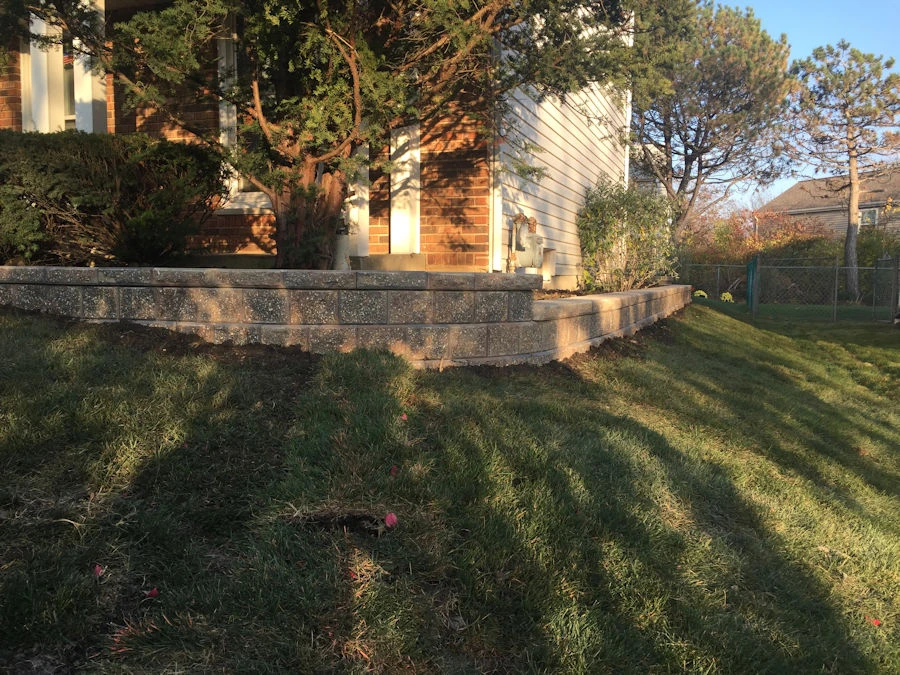
This is the material most Gwinnett homeowners outside of premium subdivisions default to — and for good reason. Allan Block, Versa-Lok, Keystone, and Belgard’s segmental retaining systems run $32 to $58 per square foot of face installed, which is a fraction of stone pricing. On a sloped lot off Buford Hwy or in a 1990s Village Grove build without HOA hardscape restrictions, a tan segmental wall with a matching paver cap is a sensible, attractive, code-compliant solution that will outlast the mortgage.
In Laurel Springs, The River Club, Bear’s Best Atlanta, and Highgrove, bare segmental is only viable for walls that are not visible from an ARB-reviewable line of sight. Rear-yard walls screened by existing tree canopy, side-yard terrace walls behind the garage, and any wall below finished patio level where only the cap is exposed — those pass. A bare segmental wall facing a neighbor’s deck or a cart path does not.
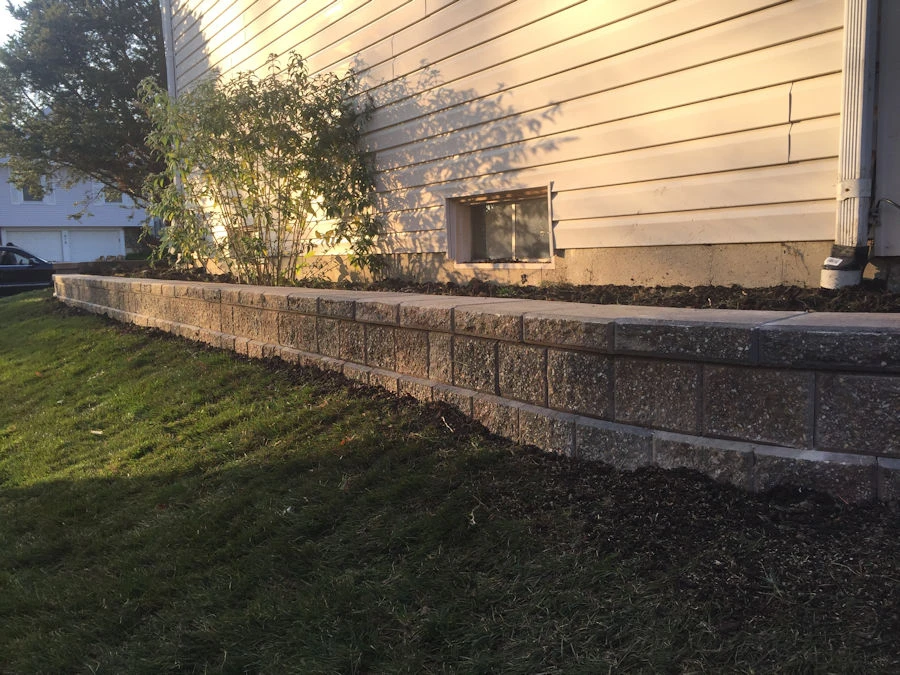
Where we see homeowners get into trouble: a builder or a cheaper contractor prices a whole-yard segmental system at $42/sqft, the math looks great, the homeowner signs, then the ARB returns the plan with a note that three of the five walls need re-facing. The cost-add to veneer those three walls after the fact ends up at 110–130% of what a full ashlar design would have been upfront, because mobilization happens twice and the block face has to be prepped for veneer adhesion.
The segmental systems themselves are engineered products and the structural design life is fine — 75+ years with proper geogrid reinforcement and drainage. The issue in premium Suwanee isn’t engineering. It’s the face.
Jackson EMC, Piedmont Clay, and Suwanee-Specific Install Considerations
Before the face decision, the soil and the utility service decide how the wall gets built. Suwanee sits on Cecil series Piedmont clay — the same red-leaning clay Dacula, Lawrenceville, and most of eastern Gwinnett shares. Cecil clay moves. It expands when wet, shrinks when dry, and it will push a poorly drained retaining wall out of plumb within five winters. Our standard spec for Suwanee walls over 3 feet includes a full-height drainage composite behind the block, a 4-inch perforated pipe at the footing with cleanouts at each end, and #57 granite backfill for the first 12 inches.
Properties closer to the Chattahoochee River — parts of Settles Bridge, the low-lying cul-de-sacs inside The River Club, and anything west of McGinnis Ferry Rd along the floodplain — sit on sandy loam deposits with better native drainage but also FEMA flood zone AE designations on some parcels. Zone AE restricts footing depths and requires elevation certificates before plan approval; we check the FEMA map before pricing any River Club job.
The utility service matters too. Suwanee runs on Jackson EMC for electric rather than Georgia Power, and Jackson EMC’s 240V service feeds the pool equipment, landscape lighting, and any low-voltage pier lanterns integrated into the wall. Locate tickets go to Georgia 811; Jackson EMC’s response window is typically tighter than Georgia Power’s, which helps keep schedules on track.
Equipment delivery routes through Peachtree Industrial Blvd (Hwy 141) and I-85 exits 111-113, then onto the subdivision spine road. Laurel Springs has internal gate protocols that require 72-hour notice for large-truck delivery; The River Club requires a pre-construction meeting with the community services manager before any hardscape mobilization. These aren’t dealbreakers, they just need to be built into the schedule.
Climate-wise, Suwanee gets roughly 52 inches of rainfall annually and Chattahoochee river fog most fall mornings, which is why we don’t mortar-set stone caps between late October and mid-March without a thermal blanket. A cold-weather set that looks fine in November can crack through the following summer as thermal cycling works a weak joint open.
Matching Material to Your Suwanee Subdivision
Here’s how we walk homeowners through the call in a typical first site visit. The answers change by subdivision, by lot, and by what’s already on the property — but the framework is consistent.
If you’re in Laurel Springs: plan on natural stone or approved Eldorado/Boral ashlar on every ARB-visible face. Rear yard walls screened by canopy can be segmental. Budget $105–$130 per square foot of face for a mix. ARB design fee is typically included as a line item in premium-material bids because the material pre-qualifies.
If you’re in The River Club at Suwanee: bluestone or Georgia granite only on visible work. Cultured veneer is not approved. Expect $120–$148 on the visible face. Schedule the pre-construction meeting first — it shapes the rest of the design.
If you’re in Bear’s Best Atlanta: natural stone or approved ashlar cultured. Similar economics to Laurel Springs. The ARB there is fast — often 10 business days on clean submissions with the right materials.
If you’re in Highgrove, Village Grove, or Woodbury: HOA restrictions are softer; cultured ashlar routinely passes. Natural stone is still a better long-term buy but cultured is a legitimate option. Budget $65–$95 per square foot of face.
If you’re in older Suwanee proper on a 1980s-1990s ranch or traditional home without an active ARB: segmental block with a quality paver cap is a legitimate, attractive, long-lived choice. Budget $38–$55 per square foot of face. Spend the material savings on drainage and on the cap detail — those are what you see and what keeps the wall in plumb.
The 40-year test: the wall you build this year is one your kids will see at their wedding. Natural stone ages invisibly. Cultured veneer needs attention by year 15. Bare segmental block in a premium subdivision ages into an HOA violation. Pick the material you’ll still be proud of at year 40, not just year 1.
Two last points that tip decisions. Natural stone materially increases resale appraisal in Suwanee’s premium comps — a 2024 comparative market analysis inside Laurel Springs showed an average $22,000–$38,000 premium on homes with natural-stone hardscape versus otherwise-identical homes with segmental block. Appraisers here are trained on the distinction. And natural stone integrates cleanly with the column-pier lanterns, the built-in urns at entry, and the integrated step details that define Suwanee’s signature ARB-approved look. Those are the details the judges notice. Those are the details that close.
Whatever you build, build it for Suwanee — for the clay that’s under it, the Chattahoochee fog that rolls over it on fall mornings, the Jackson EMC service that powers the lighting in its piers, and the ARB that has to live with it for the next forty years.
Retaining Wall Installation across 20+ cities within 30 miles of Winder, GA
Whether it’s a Laurel Springs ashlar face, a River Club bluestone wall, or a segmental build in older Suwanee — the material has to match the lot, the ARB, and the next forty years of Piedmont clay.