
Forsyth County approves 200-plus residential pool permits a year across 247 square miles, and roughly one in three of those homeowners will ask about a saltwater conversion within five years of their fill date. The sticker quote they see — $3,200 — is almost never the number they actually pay.
That gap between the headline price and the final invoice is not a scam. It is the difference between replacing a chlorinator cell and retrofitting an entire pool for a corrosive water chemistry it was never plumbed, bonded, or trimmed for. If your pool sits off Kelly Mill Road on Piedmont clay, or on a north-end lot along Sawnee Mountain with older ledgestone coping, the line items that matter are the ones nobody itemizes in the first phone call.
This post walks through the five hidden costs that turn a $3,200 conversion into a $5,960-to-$7,360 project in Forsyth County — and why the zone your pool sits in (south Forsyth subdivision versus north Forsyth estate lot versus Lake Lanier shoreline) changes every single one of them. Read this before the salesperson hands you the three-line proposal, not after.
The five hidden line items in order: (1) existing chlorinator removal and plumbing cap, $280-$420. (2) Metal-part replacement on older pools, $1,200-$1,800. (3) Stone coping sealer rated for saltwater, $680-$980. (4) Sacrificial zinc anode on the bond wire, $180-$280. (5) A 316-stainless hardware swap for ladder rungs, handrail sockets, and cover anchors, $420-$680. Added together, that is between $2,760 and $4,160 of work that almost never appears in a phone quote — on top of the $3,200 base. Every one of them is optional. Every one of them is also the thing that will cost you ten times more to fix after the fact.
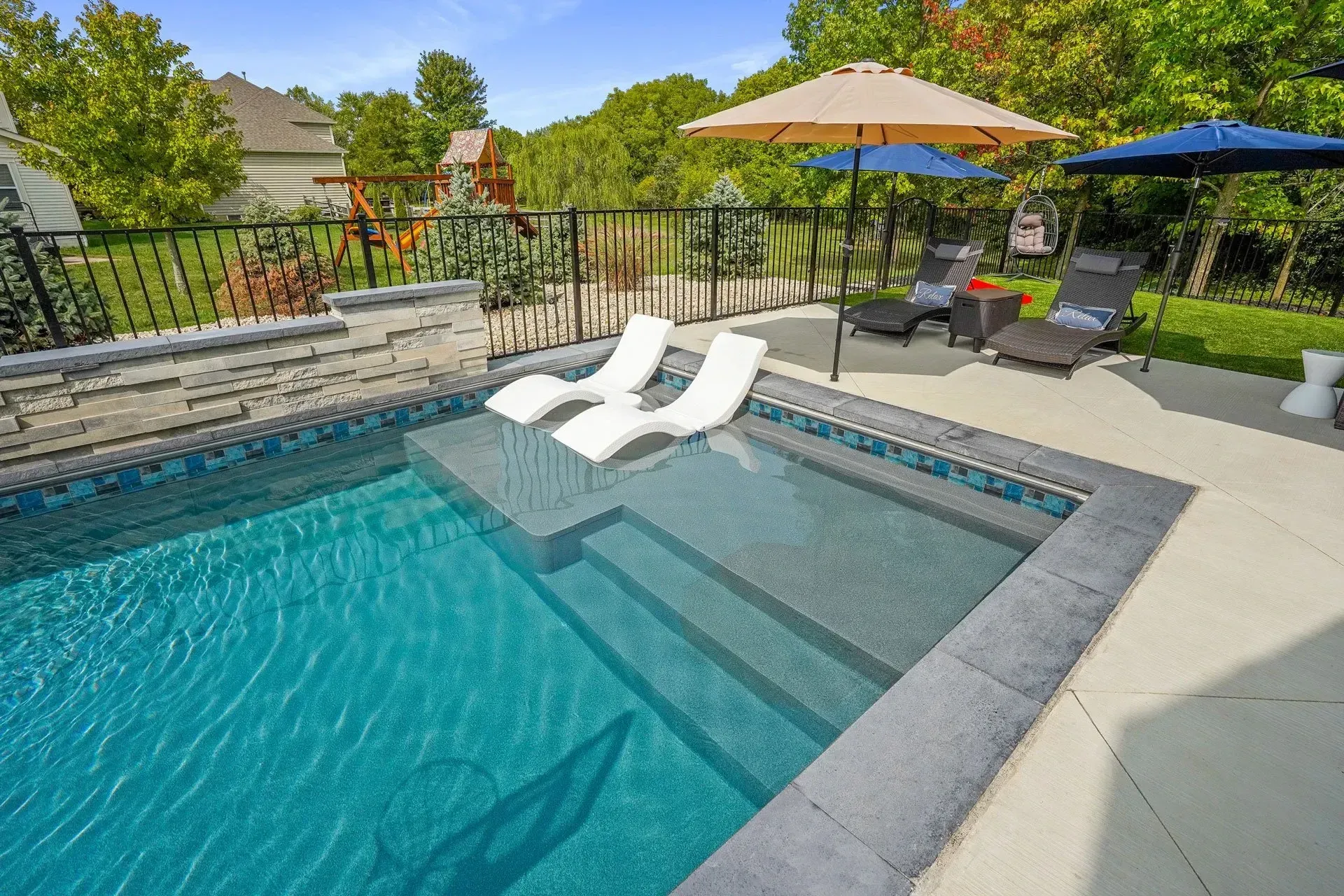
What a $3,200 Saltwater Conversion Quote Actually Covers
Before we talk about what’s missing, it’s worth being precise about what’s included. A nominal conversion in Forsyth County — the kind advertised at $3,200 — almost always covers three line items and only three:
- A salt chlorine generator cell sized to your gallonage (typically a Hayward AquaRite T-15, Pentair IntelliChlor IC40, or Jandy TruClear in the 40,000-gallon class)
- The initial salt charge — roughly 8-12 bags of pool-grade NaCl at about 40 pounds per bag
- A half-day of labor to mount the cell, wire it to the existing timer or automation, and balance water to 3,000-3,500 ppm salinity
That’s it. That is the entire scope of the cheapest conversion quote you will receive in Cumming, Coal Mountain, or Bethelview. What it does not cover is every downstream consequence of introducing a chemically active salt solution into a pool built to run on stabilized chlorine.
The rest of this post is the five line items that consistently get omitted — sometimes by accident, sometimes on purpose — and the specific Forsyth County conditions that make each one more or less expensive.
Mistake #1: Ignoring the Existing Chlorinator Removal and Plumbing Cap
If your pool was built in Forsyth County between 1998 and 2018 — and given the 85% post-1995 housing stock across the county, that covers the majority of existing pools — it almost certainly runs an inline erosion-feeder chlorinator plumbed after the heater return. A Hayward CL200 or a Pentair Rainbow 320 bolted vertically into two-inch PVC.
You cannot just leave it there. A chlorinator body full of residual trichlor tablets becomes a small chemistry bomb the moment you raise salinity to 3,200 ppm. The tabs hydrate, the cyanuric acid stabilizer locks up, and the housing cracks within one or two winter cycles.
Proper removal means cutting the feeder out of the plumbing loop, installing two slip couplings, and pressure-testing the cap. On a pool with accessible equipment-pad plumbing (most south Forsyth subdivisions off Bethelview Road or Post Road), this runs $280-$420. On older pools where the feeder sits inside a cramped equipment enclosure or the plumbing tees into the heater return under concrete, add another $180-$240 for concrete core-drilling or trenching.
Hidden cost #1: Chlorinator removal + plumbing cap + pressure test = $280-$420. Often omitted entirely from initial quotes because the salesperson assumes “the homeowner will handle it.” Nobody handles it. It stays there and leaks salt water down the pad for a year.
Mistake #2: Assuming Your Metal Parts Can Handle Salt
Salt does not just disinfect. It is electrically conductive, and conductive water accelerates galvanic corrosion on any metal in contact with it — including metal you cannot see. This is the single largest blind spot on older Forsyth County pools.
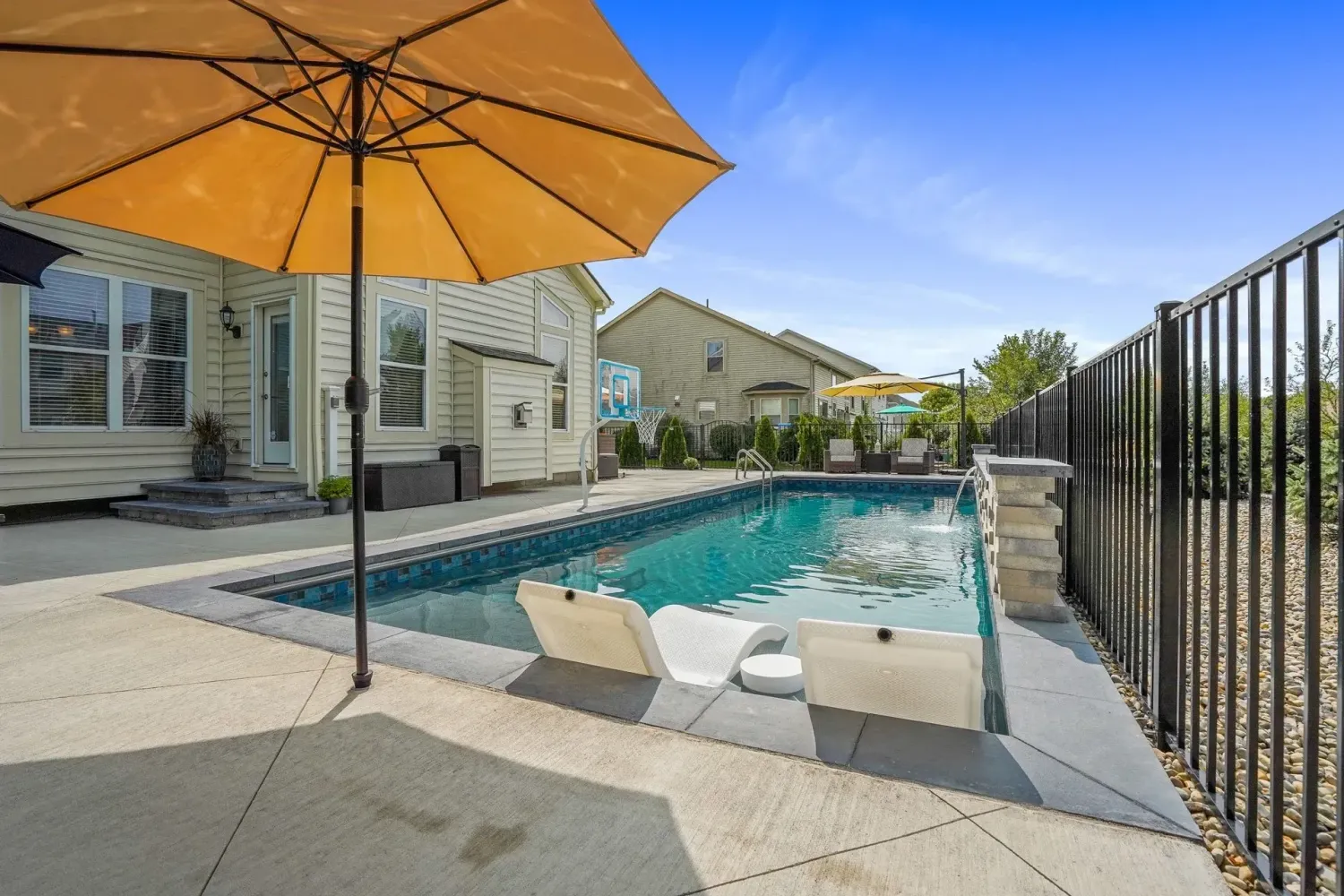
The parts that need a look are not the obvious ones. They are:
- Light niches and junction cans. Pre-2010 niches are usually brass or zinc-alloy with steel conduit stubs. Salt finds pinholes within 18 months.
- Handrail anchor sockets. Cast aluminum or cheap 304-stainless sockets pit under salt. A saltwater pool needs 316-stainless at minimum.
- Return jet inserts and skimmer equalizer plates. Plastic is fine. Any exposed brass or chrome-plated brass is not.
- Heater headers. Copper heat exchangers on a pre-2015 Hayward H-series or a pre-2012 Jandy LXi will corrode at twice the rate under saltwater. Cupronickel heat exchangers handle salt. Copper does not.
The average Forsyth County conversion inspection flags two to four of these components for replacement. Parts and labor land between $1,200 and $1,800 — and that assumes the heater itself is young enough to keep. If it isn’t, add $3,400-$4,800 for a new unit with cupronickel internals.
A reputable installer will walk your equipment pad with you before quoting, note every visible metal component, and flag the hidden ones. A cheap installer will hand you the $3,200 number on the phone without ever seeing the pool.
Mistake #3: Skipping the Coping Sealer on Natural Stone Decks
This is the one that stings most in north Forsyth County. The luxury estates north of Hwy 369 along Browns Bridge Road — and the newer Lake Lanier south-shore builds in 30028 — lean heavily on natural stone coping: cream travertine, bluestone, ledgestone, and limestone bullnose. Photo-grade stuff. It is also porous stuff.
Chlorine water evaporates off coping and leaves nothing behind. Saltwater evaporates and leaves a sodium chloride crystal residue that wicks into the top 2-4 mm of the stone. Over a single pool season, unsealed travertine coping on a saltwater pool will develop a chalky white bloom — efflorescence — along the water edge. Over two seasons, freeze-thaw cycling (Forsyth averages 22 freeze events per year) drives those crystals into the stone and begins to spall the surface.
A proper saltwater-rated penetrating siloxane sealer — Aqua Mix Sealer’s Choice Gold or Miracle 511 Impregnator are the two most often specified — applied in two coats to the coping and the first 18 inches of deck, runs $680-$980 depending on linear footage. For a standard 16×32 rectangle with 120 linear feet of coping, budget the high end.
Hidden cost #3: Saltwater-rated penetrating coping sealer, two coats = $680-$980. Reapply every 3-5 years. Cheaper topical sealers fail in 12-18 months and trap moisture behind the film, which is worse than no sealer at all.
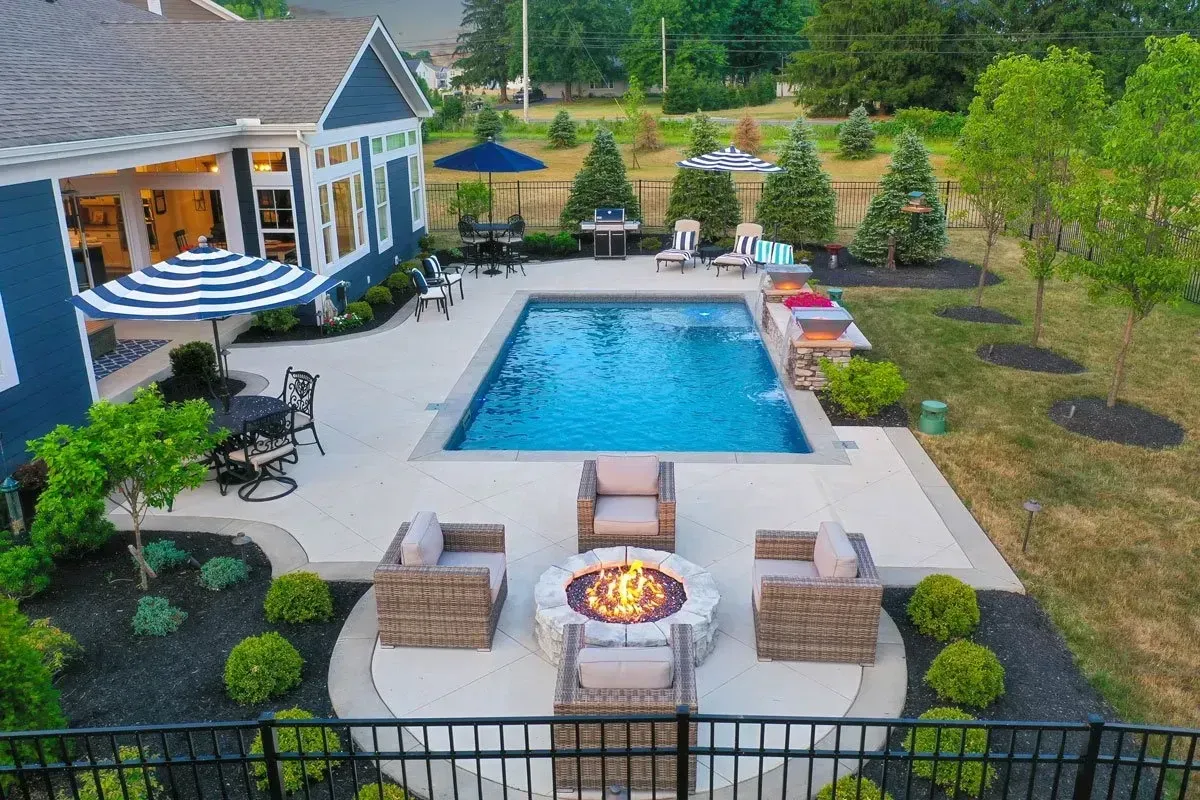
Mistake #4: Leaving the Sacrificial Zinc Anode Off the Scope
This is the line item that separates installers who have converted fifty pools from installers who have converted five. A sacrificial anode is a small block of zinc wired into the bonding grid of your pool. It is, by design, the metal your saltwater attacks first. Instead of eating your $1,400 handrail or your $280 light niche, the salt consumes a $35 chunk of zinc mounted inside the pump basket or on the bond wire at the equipment pad.
Installed anode, with the labor to open the bonding loop, land the zinc block in a brass bracket, and reseal the connection, runs $180-$280. It pays for itself the first time it saves a light niche. Every properly converted saltwater pool in Forsyth County has one. Maybe 40% of the cheap-conversion quotes you see include one.
Ask. If it is not on the line-item list, ask why, and ask what the installer is doing instead to protect the bonded metal. If the answer is some version of “the salt level is too low to cause problems,” keep shopping.
Mistake #5: Reusing 304-Stainless Hardware Instead of 316
Pool hardware — ladder rungs, handrail anchors, deck-mounted safety cover anchors, slide bolts, auto-cover track screws — comes in two common stainless grades. 304-stainless is the hardware-store default, and it is fine for a chlorine pool in a dry climate. 316-stainless contains roughly 2% molybdenum, which is the alloying element that gives 316 its dramatically better resistance to chloride pitting.
At 3,200 ppm salinity, 304-stainless will develop surface pitting within 12 to 24 months. 316 will look nearly identical to the day it was installed after five. The material cost difference is small — maybe $40-$60 per fitting. The labor to swap existing 304 hardware to 316 during a conversion runs $420-$680 on a typical pool with a handrail, ladder, and safety-cover anchor set.
Most quotes skip this entirely because the hardware is not visibly failing today. It just will be. Paying $500 during the conversion beats paying $1,800 during a post-season cover-pull when the anchor bolts shear off in the brass inserts.
How Your Forsyth County Zone Changes the Math
The five hidden costs above are not evenly distributed across the county. Where your pool sits changes which items are most expensive and which might not apply at all.
South Forsyth — GA-400 corridor, 30041 zip code
Tighter subdivisions off Bethelview, Post Road, and Kelly Mill. Most pools built 2005-2020, many vinyl-liner or smaller gunite rectangles. Equipment pads typically accessible. Concrete or paver decks more common than natural stone. Expected total hidden cost: $2,400-$3,100 on a $3,200 base — mostly because the coping sealer line item is smaller and the metal inventory is younger.
Central Cumming — 30040 zip code
County-seat sprawl. Mixed housing stock from 1990s builds near downtown Cumming to 2020+ subdivisions along Hwy 20. Variable. Expect the full spread of hidden costs roughly as listed above: $2,760-$4,160.
North Forsyth — Coal Mountain, Shady Grove, Lake Lanier shoreline, 30028 zip code
Three-to-five-acre luxury estate lots. Natural stone coping is the default. Older pools on the Lake Lanier south shore often pre-date 2005 and run original brass niches and copper heater headers. Rockier soil on ridgelines near Sawnee Mountain sometimes means the equipment pad is further from the pool, which increases plumbing cap labor. Expected total hidden cost: $3,800-$5,200, weighted toward the coping sealer and metal-part replacement line items.
The HOA and permit factor nobody mentions
Forsyth County has some of the densest HOA coverage in metro Atlanta — almost every residential subdivision built since the late 1990s falls under an active homeowners association, and that includes the bulk of the pool-owning population south of Hwy 369. Two things to know before you sign a conversion contract:
- HOA approval is rarely required for a saltwater conversion itself. You are not changing the exterior of the pool. What you may need approval for is any equipment-pad enclosure modification — an added sound barrier, a relocated pad, or a new heater vent.
- Some HOAs restrict visible salt discharge. Saltwater pools discharge small amounts of brine during backwash and drain-down cycles. A handful of the older estate-lot HOAs along Hwy 369 and the Lake Lanier shoreline have language in their covenants about “no discharge of pool chemicals onto neighboring property.” Read your covenants. A properly plumbed backwash line to a French drain on your own lot solves this; hose-bib discharge does not.
Permit-wise, Forsyth County Planning does not require a separate permit for a saltwater conversion. They do require an electrical permit if you are adding or modifying equipment-pad wiring for automation, which most modern cell controllers demand. Sawnee EMC handles the utility side. Plan a one-week buffer for the electrical permit if your installer needs it.
What a real line-item quote should look like
An honest Forsyth County saltwater conversion quote is not a number on the phone. It is a site walk, an equipment-pad inventory, and a line-item proposal that looks roughly like this:
- Base conversion (cell, salt, labor) — $3,100-$3,400
- Chlorinator removal + plumbing cap + pressure test — $280-$420
- Metal-part inspection + replacement (as needed) — $0-$1,800
- Coping sealer (natural stone decks only) — $0-$980
- Sacrificial zinc anode installed on bond wire — $180-$280
- 316-stainless hardware swap — $420-$680
- Water-chemistry startup and 30-day recheck — included
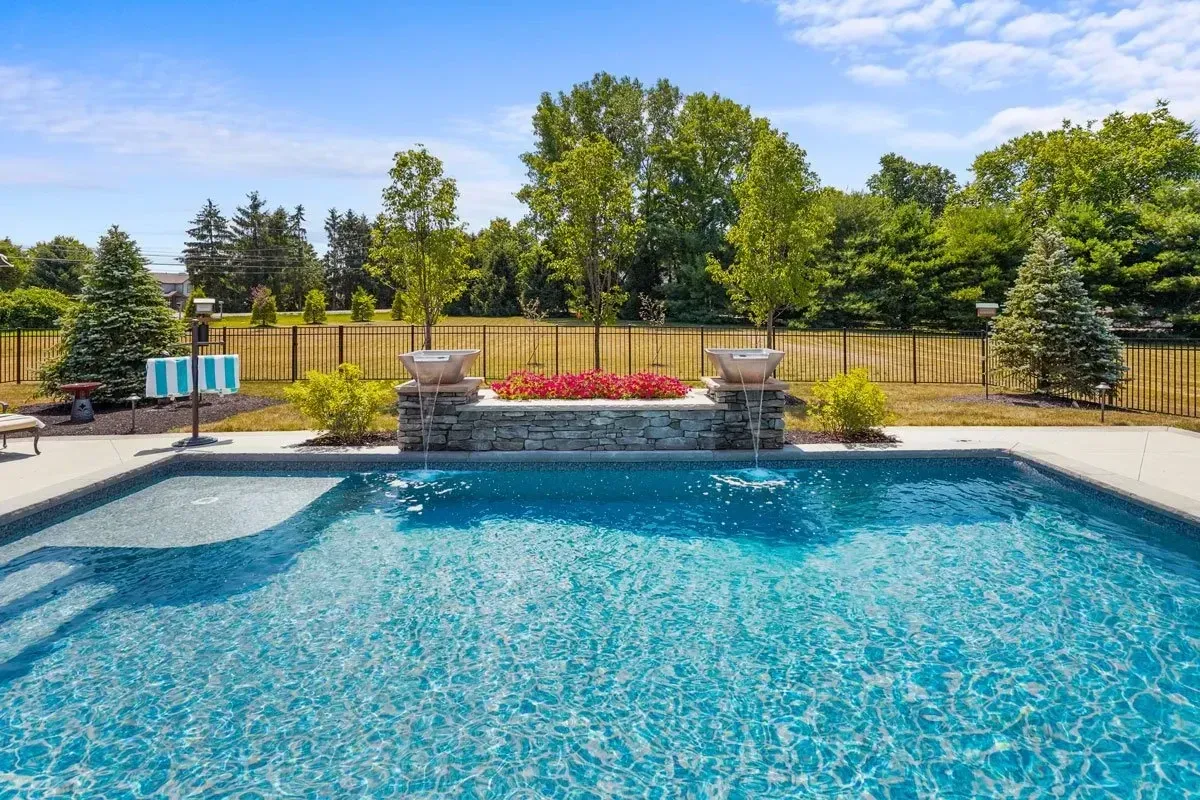
On a typical 18×36 rectangular Forsyth County pool with attached spa, older brass niches, and travertine coping, that proposal lands at $5,960 on the low end and $7,360 on the high end. That is the honest number. Anything under $4,000 is either incomplete scope or deferred maintenance you will pay for on the back end, with interest, when something corrodes.
What to ask every installer: Will you walk the equipment pad before quoting? What grade stainless is in your hardware swap kit? What anode are you installing and where on the bond? What sealer brand do you use on natural stone coping, and how many coats? If they cannot answer all four on the phone, you already have your answer.
When saltwater is the right call — and when it isn’t
None of this is an argument against saltwater pools. A well-installed, properly-scoped conversion produces softer water, more stable chlorine levels, less chemical handling, and — once the hidden costs are paid — lower year-over-year operating expense. It is a better pool for most homeowners who swim regularly.
It is not the right call if:
- Your pool is less than three years old and still under builder warranty — converting early can void coverage on metal components. Wait until year four or five, when the warranty savings are gone anyway.
- You have a heat pump or heater with a copper heat exchanger and no budget to replace it within two years. Conversion accelerates its failure clock.
- Your coping is unsealed natural stone and you are unwilling to commit to a recurring sealer schedule. The aesthetic damage from unsealed saltwater exposure is not reversible — you cannot un-etch spalled travertine.
- You are planning to sell the house within 18 months. The conversion will not materially raise your sale price, and you will eat the full upfront cost.
For everyone else — and that is the majority of pool-owning Forsyth County households, from south-Forsyth subdivisions off Post Road to the estate homes along Browns Bridge Road — saltwater is worth doing. Once. Correctly. With every line item on the page.
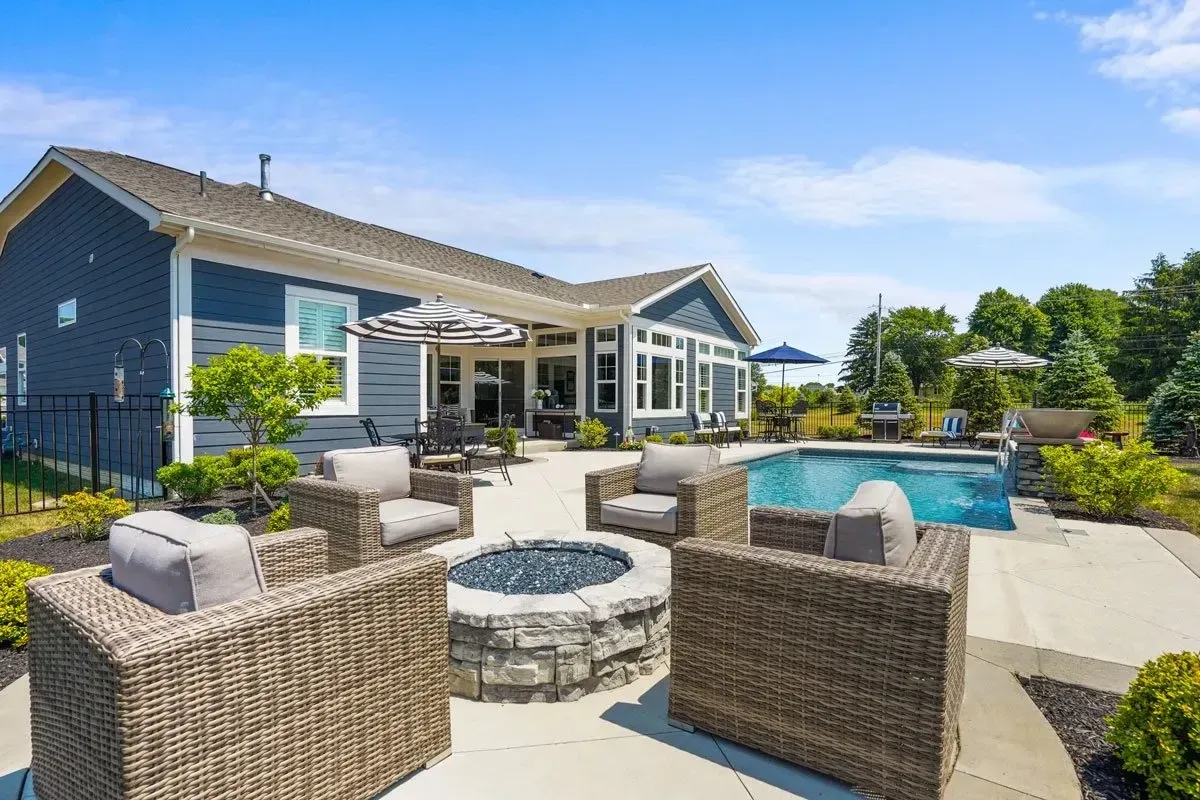
If you want that line-item quote — for a pool in Cumming proper, Coal Mountain, along the Lake Lanier shoreline, or anywhere in Forsyth County between — we will walk your pad before we give you a number. That is the only way this math actually works.
A last note on timing. Saltwater conversions in Forsyth County are best scheduled between late September and early March — after swim season, before the water warms back into the active algae range. Converting in October gives the new cell a full winter to balance salinity before the first heavy swim load. Converting mid-summer means you are playing catch-up on chlorine the whole time while the cell ramps in, and you will almost certainly shock the pool two or three extra times inside the first sixty days. The off-season schedule also gives your installer the time to do the site walk, the metal inventory, the sealer application, and the hardware swap in sequence rather than crammed into a single afternoon. The pool that gets converted correctly in October is the same pool that costs less to own in August.
Pool remodeling across 20+ cities within 30 miles of Winder, GA
Honest line-item saltwater conversion quotes, coping sealer, 316-stainless swaps, and metal-part inspections across Forsyth County and the rest of the Primetime service area.