
Everyone in Windward and Country Club of the South tells you the same thing: when plaster hits year 15, go Pebble Tec. They’re wrong about half the time — and the wrong half is costing homeowners $3,000–$5,000 they didn’t need to spend.
The conventional wisdom in North Fulton is that Pebble Tec is “the premium choice” and quartz aggregate is “the budget choice.” That framing has moved thousands of dollars in the wrong direction for fifteen years running. The real answer isn’t about premium or budget. It’s about how long you plan to own the house, what your Georgia Power municipal water chemistry is doing to the interior shell, and whether you’re resurfacing for yourself or for a future buyer.
We resurface a lot of Alpharetta pools built between 2005 and 2012. Those pools are hitting plaster end-of-life right now — roughly 2020 through 2027 — and the phone calls all sound identical. The owner has a pitted, stained, rough-to-the-touch interior. A neighbor told them Pebble Tec is the only answer. They want a quote. Then we ask three questions that change the recommendation about 40% of the time.
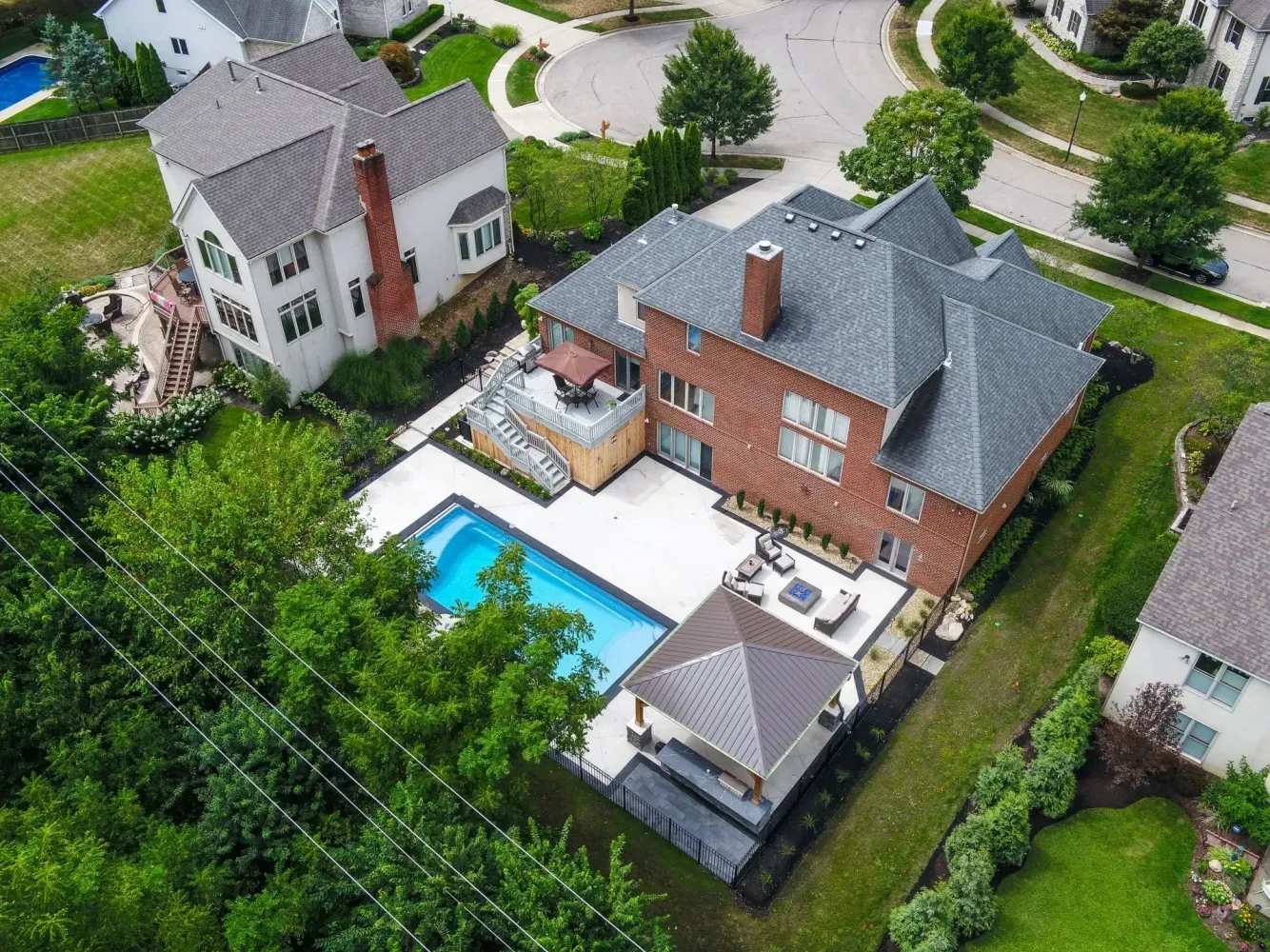
Why Alpharetta pools from 2005–2012 are all hitting the wall right now
Alpharetta saw a massive wave of backyard pool construction between 2005 and 2012 — the tail end of the pre-recession luxury boom, then the rebound years as tech-corridor relocations began filling Haynes Manor, Hutchinson Farm, and Cambridge Parks. Standard white plaster (Portland cement and marble dust) has a realistic service life of 12–18 years in this climate. That means the leading edge of that build wave began failing around 2020, and the back edge will push into 2027.
What failure looks like: pitting the size of a pencil eraser, gray-to-rust staining near returns and lights, a chalky residue on your hand after a swim, and — the homeowner tell — the plaster now feels like 80-grit sandpaper under your feet on the first step. That’s the calcium carbonate binder wearing out. Once it starts, it accelerates fast.
The pools in this window were almost all finished in exposed white or tinted plaster because that was the default North Fulton builder spec in 2008. Nobody was quoting Pebble Tec Sheen or Diamond Brite by default. Owners who chose upgraded finishes back then are still enjoying year-20 surfaces. Owners who took the builder default are now shopping.
Pebble Tec Sheen at $12–$16 per square foot installed — what you actually get
Pebble Tec Sheen is the smooth-polish variant of Pebble Tec’s aggregate family. It’s a blend of 1/8″ to 3/16″ naturally rounded pebbles bonded in white Portland cement, then polished to expose the top 30–40% of each stone. The result is a surface that looks pebbled from three feet away and feels semi-smooth underfoot — closer to river rock than to the bare Pebble Tec Classic.
For an average 500 sqft interior Alpharetta backyard pool (18′ x 36′ with an attached spa), installed cost in 2026 is running $12–$16 per square foot, which translates to $6,000–$8,000 on material and labor for the finish alone. Total resurfacing ticket — including chipping the old plaster, tile line replacement, startup chemistry, and refill with Georgia Power municipal water — lands between $15,500 and $22,000 on a pool that size.
What you’re buying isn’t just appearance. You’re buying an 18–25 year service life in Alpharetta’s specific water conditions, and a denser surface that resists the slightly acidic municipal supply coming out of the Chattahoochee-fed city water treatment. That matters more here than brochure material admits.
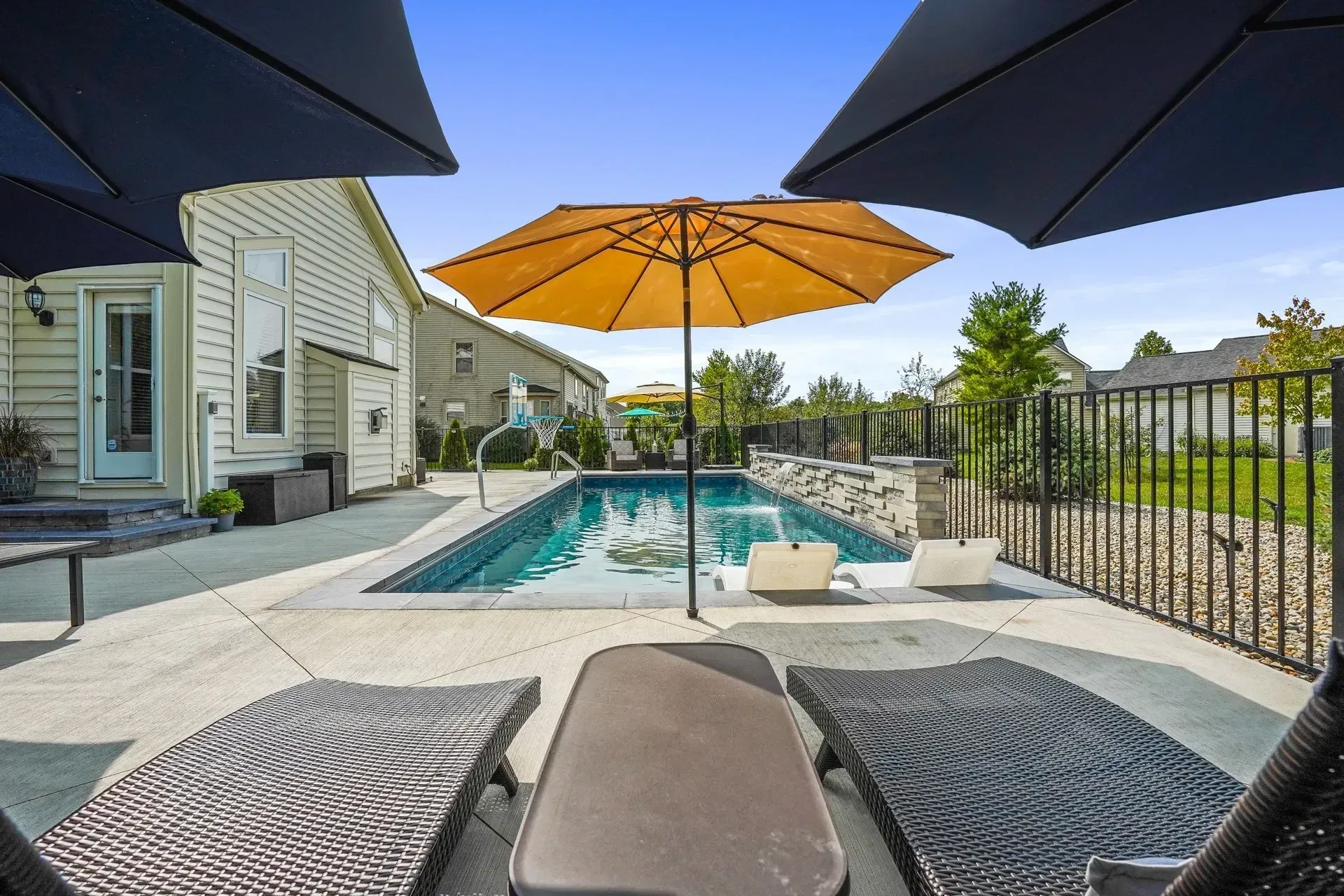
Quartz aggregate at $10–$14 per square foot — Diamond Brite and Marbletite Plus
Quartz aggregate finishes — the two common brands in North Fulton are Diamond Brite and Marbletite Plus — are a different animal. They blend crushed quartz (a harder silica aggregate, not natural rounded pebble) with white cement and pigments. The finish is smoother underfoot, visually more uniform, and offered in 15+ color variants from Aqua Quartz to Midnight Blue to French Gray.
Installed cost on the same 500 sqft Alpharetta pool: $5,000–$7,000 on the finish, with total resurfacing landing $13,500–$19,500. That’s a $3,000–$5,000 savings versus Pebble Tec on an identical pool.
The trade-off is service life. Quartz aggregate runs 15–18 years in good water chemistry. In Alpharetta’s slightly acidic municipal supply — 60–90 ppm calcium hardness depending on which Fulton treatment zone you’re on — that number compresses. We see quartz finishes start showing micro-etching at year 13 on pools where owners didn’t hold saturation index tightly. Pebble Tec under the exact same neglect goes 18+ years before anyone notices.
Head-to-head on a 500 sqft Alpharetta pool: Pebble Tec Sheen total resurface $15,500–$22,000 with 18–25 year life. Quartz aggregate (Diamond Brite / Marbletite Plus) total resurface $13,500–$19,500 with 15–18 year life in typical Alpharetta water chemistry.
Why Alpharetta’s water chemistry tilts the math — and nobody mentions it
This is the part that gets buried. Alpharetta’s municipal water, treated by Fulton County and fed largely from the Chattahoochee watershed, runs slightly acidic out of the tap — pH typically 7.2–7.6 at delivery. Calcium hardness sits at 60–90 ppm in most zip codes (30004, 30005, 30009, 30022). That’s below the 200–400 ppm range plaster and quartz aggregate prefer.
What that means in practice: unless your owner is aggressively adding calcium chloride at startup and holding Langelier Saturation Index between -0.3 and +0.3 all season, the water is going to pull calcium out of the interior shell. Pebble Tec’s denser river-stone aggregate resists that leaching better than crushed quartz. In our field data across Windward, White Columns, and Deerfield pools, we see Pebble Tec outlast quartz by 4–6 years in identical owner-neglect conditions.
If the owner is meticulous — tests weekly, adjusts, runs a good CYA program — the gap closes to 2–3 years. If the owner is typical (tests once a month, adds shock when the water looks off), the gap widens to 6+ years. Most Alpharetta pool owners fall into “typical.” Honest assessment matters here.
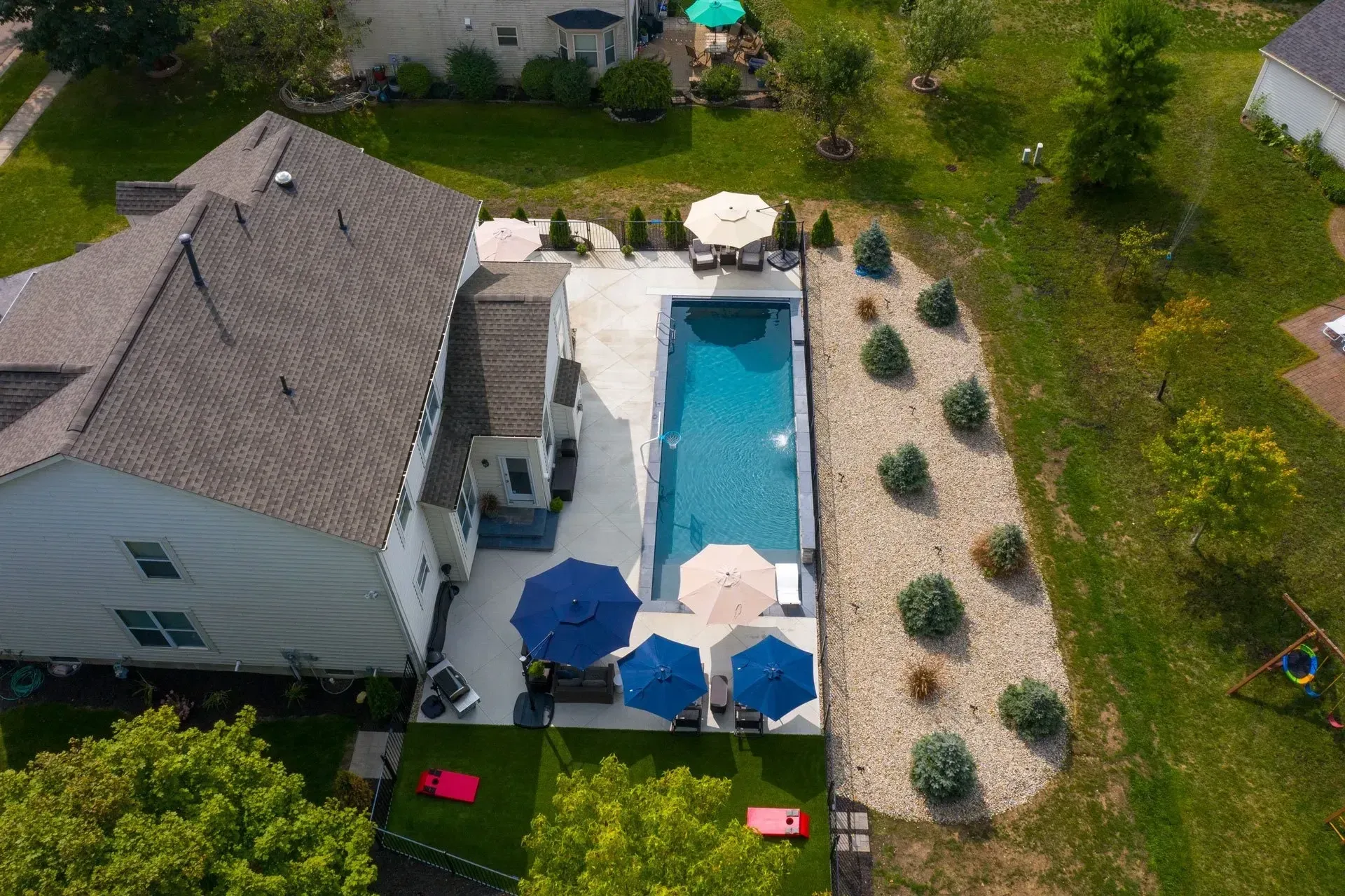
The stay-10-years vs stage-for-sale decision framework
Here’s the question we ask every Alpharetta owner sitting in front of a resurfacing quote: how long are you planning to stay in this house? The answer changes the recommendation more than the price difference does.
Staying 10+ years: Pebble Tec Sheen. You’ll amortize the $3,000–$5,000 premium across an extra 4–7 years of life and skip one midlife service event (acid wash at year 8, which runs $800–$1,400). Net math: you come out $1,200–$3,600 ahead over the ownership window, and you swim on a better surface for a decade.
Staging for market in 1–3 years: Quartz aggregate, every time. A buyer walking through a Country Club of the South listing cannot tell a fresh Diamond Brite finish from a fresh Pebble Tec Sheen finish from the deck. The water is blue. The surface is clean. The line item in the listing says “newly resurfaced” and the appraiser writes down the same value either way. You pocket the $3,000–$5,000 delta and the next owner inherits the shorter life curve.
Uncertain, 3–7 year window: This is where the call gets genuinely hard. Default to quartz unless the owner has evidence of tight water chemistry habits or a specific aesthetic preference for the pebbled look.
The Alpharetta permit and timing reality most resurfacing estimates skip
Resurfacing a pool in Alpharetta city limits does not require a full building permit the way new construction does — but it does require a plumbing/electrical inspection sign-off if you’re replacing returns, skimmers, lights, or the bonding grid during the drain-down. The City of Alpharetta Community Development office at 2 Park Plaza handles this in-city, and their turnaround is materially faster than unincorporated Fulton County permits: usually 5–8 business days versus the 2–3 week wait on the county side.
The pools that hit slowdowns are in the Sawnee EMC service sliver along the northern Alpharetta/Milton border. Georgia Power inspections run on one calendar; Sawnee EMC runs a different one, and coordinating a bonding re-inspection when you’re switching an old pool light to LED can add 7–10 days if nobody flagged it at the start.
HOA architectural review is the other timing variable. Windward and Country Club of the South both run 3–4 week ARB cycles for exterior modifications, and some ARBs treat a visible tile-line change or a water-color shift from aqua to French Gray as a modification requiring approval. On a Pebble Tec Sheen quote where the owner is switching from white plaster to a Midnight Blue aggregate, get the ARB question answered before the drain-down, not during.

A realistic 14-day resurfacing calendar for an Alpharetta pool
Owners ask how long the pool will be out of service. Honest answer on a standard Alpharetta resurface — assuming no surprise shell cracks and no HOA delay — is 14 days from drain to swim-ready, with the startup chemistry window running another 28 days.
- Day 1: Drain-down, pressure wash, inspection of shell, returns, and bonding grid.
- Day 2–3: Chip-out of failed plaster to sound substrate. Acid-etch if needed.
- Day 4: Tile line replacement (if in scope). Bond coat application.
- Day 5–6: Aggregate finish trowel application and initial exposure cycle.
- Day 7: Acid-wash exposure of the pebble or quartz. Final polish pass on Sheen finishes.
- Day 8: Inspection sign-off if plumbing/electrical were touched.
- Day 9: Refill begins — on a 500 sqft pool, that’s roughly 20,000 gallons at Alpharetta city pressure, which runs 18–26 hours.
- Day 10–14: Startup chemistry sequence, daily brushing, and balance adjustments.
Swim-ready at day 14. But the first 28 days on the calendar are where the new surface either bonds properly or starts the calcium-leaching cycle early. Owners who skip the aggressive brush schedule in weeks 3–4 are the ones whose Pebble Tec Sheen shows early spotting at year 3 instead of year 10. This matters more than the finish choice itself.
Choosing between Pebble Tec and quartz for your specific Alpharetta pool
The matrix we hand Alpharetta owners looks like this: how long you’re staying (under 3 years, 3–10, 10+), how meticulous your water chemistry habits are (loose, typical, tight), and what the backyard will look like around the pool after the resurface — Avalon-adjacent modern builds tilt aesthetically toward Quartz Midnight Blue and French Gray, while traditional Country Club of the South and Hutchinson Farm properties tend to land on Pebble Tec Sheen in Sierra or Tahoe Blue to match existing stacked-stone coping.
The one case where Pebble Tec is always the answer: owners with a saltwater chlorinator running 24/7 and a calcium hardness problem they’ve never fully solved. Pebble Tec’s aggregate density handles that chemistry better across a 20-year window, and the delta compounds every year. The one case where quartz is always the answer: sellers with a listing agent already booked, staging the backyard for a $1.8M–$3.5M North Fulton comp, where the 14-day timeline matters more than the 20-year curve.
Everything in between is judgment — and judgment is what you’re actually paying for when you call a resurfacing contractor who has done 200+ of these in Alpharetta specifically, not the generic metro-Atlanta number. Soil, water, ARB, and permit pacing all behave differently once you cross GA-400 into the North Fulton corridor.
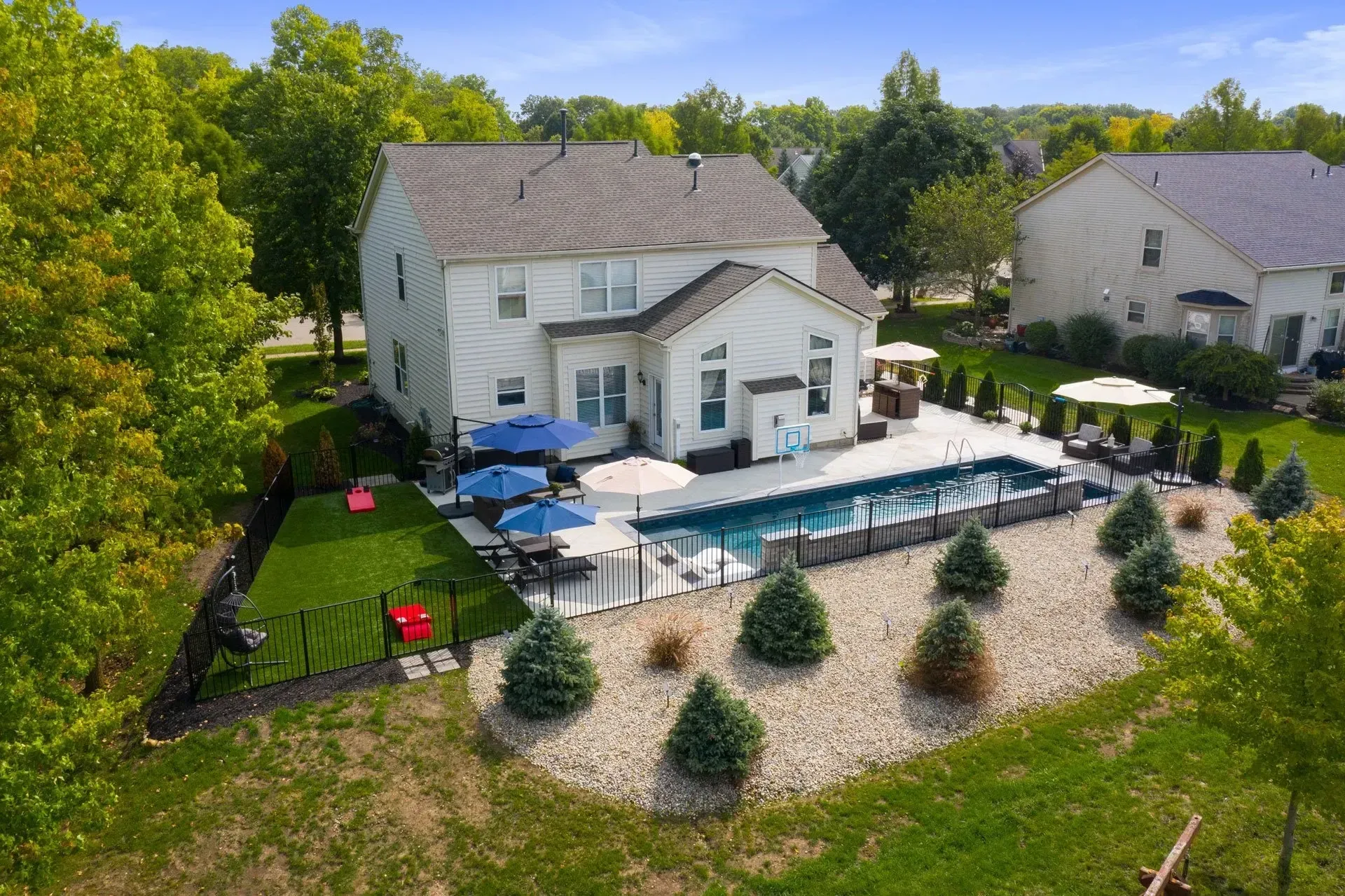
Alpharetta-specific rule of thumb: If your pool is in zip codes 30004 or 30005 (more established tree canopy, more leaf debris, slightly softer water off the Chattahoochee feed), Pebble Tec’s recovery curve after neglect is materially better than quartz. If you’re in 30009 or 30022 (newer infill, tighter lots, often saltwater systems), quartz performs within striking distance at a lower price.
The quote we send is never the same on two identical-looking pools, because the answer isn’t in the square footage. It’s in the ownership horizon, the water chemistry track record, and the resale math. Ask a contractor who won’t have that three-question conversation to leave the estimate on the counter and come back when they will.
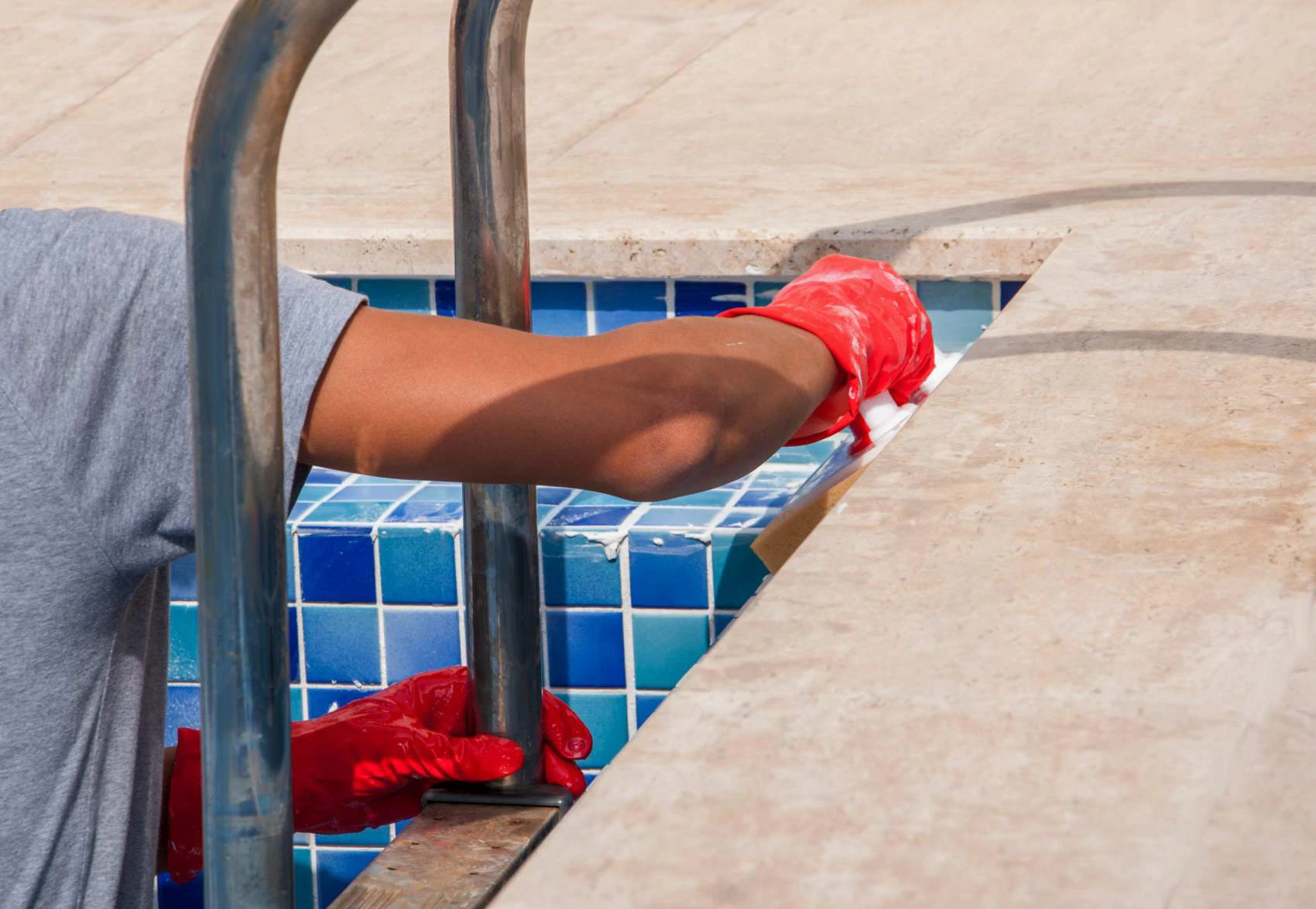
Pool remodeling and resurfacing across 20+ cities within 30 miles of Winder, GA
From a Pebble Tec Sheen resurface in Windward to a quartz aggregate staging job in Avalon-adjacent townhomes, we build the finish spec around the ownership horizon, not the brochure.