
Picture a Laurel Springs homeowner standing on a bare pad of Cecil-series Piedmont clay off McGinnis Ferry, holding a set of drawings for a resort-tier backyard — pool, travertine, pavilion, outdoor kitchen, fire, lighting — and asking the only question that matters: how long until we swim? The honest answer in this specific zip code, on this specific clay, under the Laurel Springs ARB, is six to nine weeks of continuous execution sitting on top of a four-week front-end.
This is a Suwanee-specific timeline. Not a generic “how long does a pool take” article. The moving parts that stretch a build from six weeks to nine — and occasionally to eleven — are all tied to the realities of building inside a gated, design-reviewed community at the north edge of Gwinnett County, on soils and under utilities that do not behave like suburban Cobb or south DeKalb. If you live in Laurel Springs, The River Club at Suwanee, Bear’s Best Atlanta, or Settles Bridge, the calendar below is the one your contractor should be handing you before you sign.
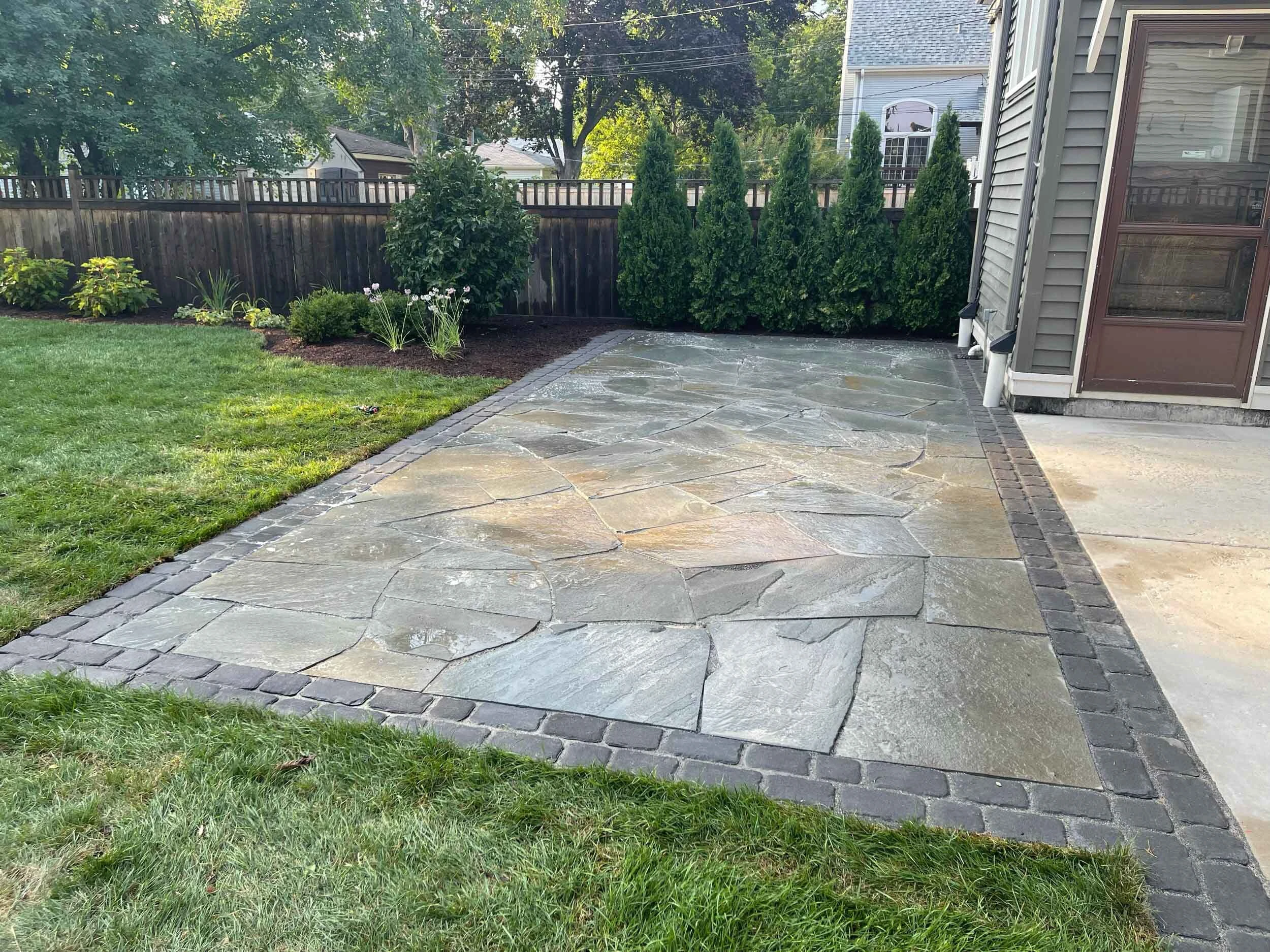
The four-week front-end is where most Suwanee projects actually win or lose their calendar. Laurel Springs in particular runs one of the strictest architectural review boards in Gwinnett County. Plans submitted on a Monday will not be on a Thursday agenda — expect a 3-4 week ARB turnaround running in parallel with Gwinnett Dept. of Planning & Development’s permit review out of 446 W. Crogan St. in Lawrenceville. The two processes do not talk to each other. You submit twice, track twice, and the slower of the two sets your ground-break date.
Below, week by week, is what a resort-tier execution actually looks like on a typical Laurel Springs or River Club lot — 1 to 3 acres, mature hardwoods, rolling Piedmont topography, often a significant grade drop from the rear of the house to the pool footprint.
Weeks Minus-Four to Zero: ARB, Permits, and Jackson EMC
Before a single blade of a mini-excavator touches dirt, four things have to resolve on parallel tracks: the ARB submittal, the Gwinnett County permit, the Jackson EMC service upgrade request, and the utility locates. Skip any one of these and week one of construction becomes week negative-two of standing around.
The ARB package for Laurel Springs is not a site plan. It is a presentation. Color renderings (3D preferred), material samples with manufacturer cut-sheets, elevation drawings of any vertical structure over 30 inches, drainage narrative, tree-impact plan, and a construction staging diagram that shows where the dumpsters and porta-johns will sit for the duration. The ARB reviews this against the community’s design guidelines — setbacks, visible materials from neighboring lots, lighting spill, pool enclosure style, pavilion roof pitch. Approval letters typically land 21 to 28 days after a complete submittal.
Gwinnett County’s permit review runs on a separate 10 to 15 business-day clock. Pool permits, accessory structure permits (pavilion), and electrical permits are three separate applications with three separate fee schedules. If the project includes a detached pavilion with roofed space, a land-disturbance permit may also trigger depending on disturbed square footage and proximity to the Chattahoochee buffer.
Suwanee permit realities: Homes in parts of Settles Bridge sit in FEMA Flood Zone AE due to Chattahoochee proximity. Flood-zone lots require an elevation certificate on file and may trigger additional setback review. Always pull a FIRMette before submitting.
Jackson EMC is the utility almost no one remembers. Suwanee is on Jackson EMC electric service, not Georgia Power, and a resort pool with a variable-speed pump, LED color lighting, gas heater ignition, and a full outdoor kitchen will not run on the existing 200-amp panel in most 2005-era Laurel Springs homes. A service upgrade to 320 amps or a dedicated sub-panel requires a 2-3 week lead from Jackson EMC from the day the electrician files the service request. Start it the same day the ARB submittal goes in — not the day construction begins.
Week 1: Layout, Excavation, and the Cecil Clay Reality
Ground-break week. Crews arrive Monday with a mini-excavator, a skid-steer, a dump trailer, and the orange spray-can set. First order is the actual layout — pool shell, pavilion footprint, outdoor kitchen pad, fire feature location, deck edges — all painted on the ground, checked against the ARB-approved plan and the permit set, walked with the homeowner before anyone digs. This is the last easy revision window. Once the hole opens, changes get expensive fast.
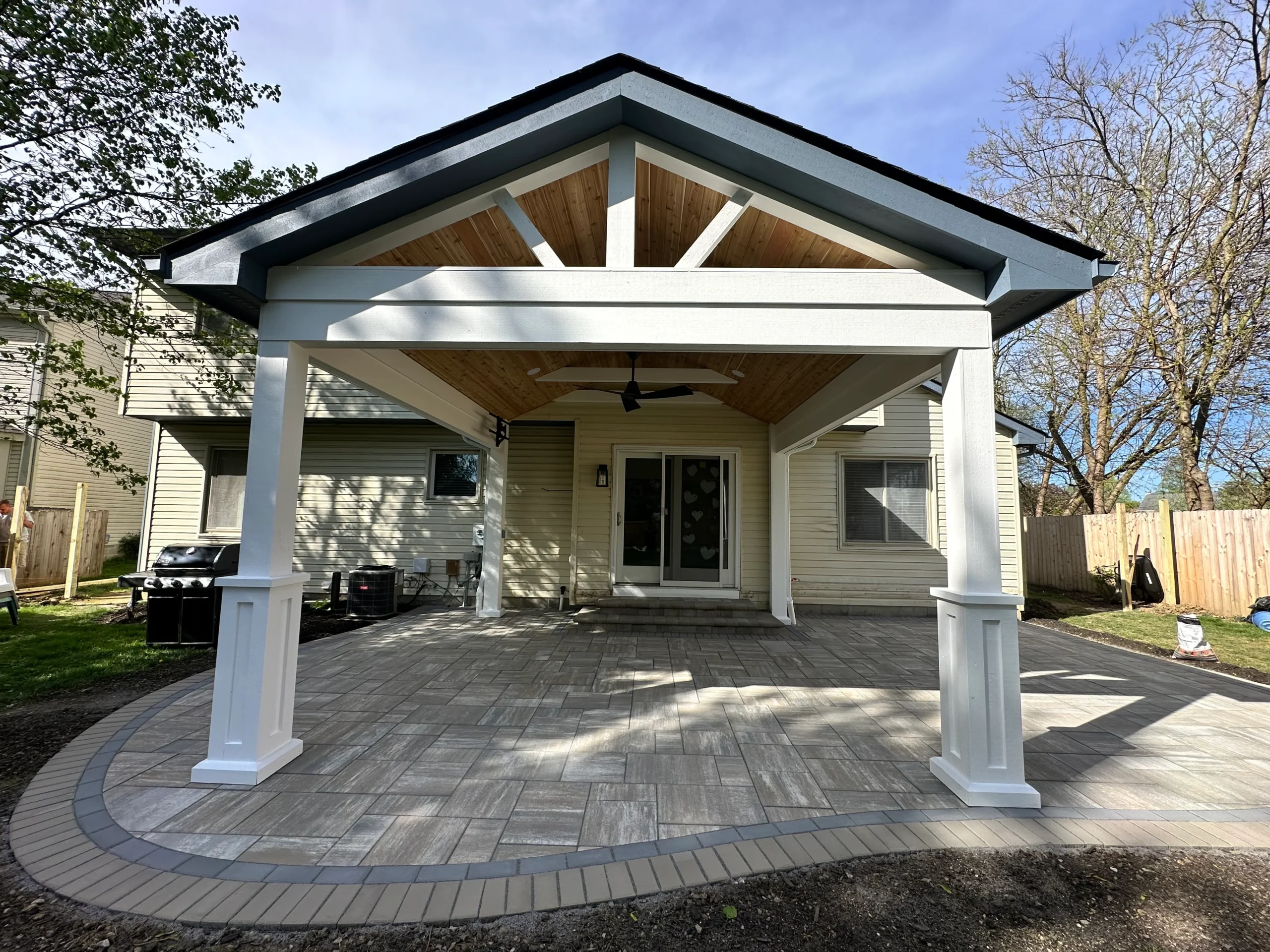
Excavation on Cecil-series Piedmont clay is its own discipline. The stuff digs well when dry, clods into basketball-sized chunks when wet, and sheds water sideways along horizontal fracture planes. The closer the lot sits to the Chattahoochee River floodplain — parts of Settles Bridge, some of the lower River Club terrain — the more sandy-loam relief shows up in the top three feet. Further from the river, in the upland Laurel Springs sections, it’s pure dense clay all the way down. Crew plans tonnage-removed around which it is.
A typical resort pool footprint in this market is 20×40 to 20×45 with an integrated spa or raised tanning ledge, plus a perimeter dig-out wide enough for a form-up and rebar tie. That’s roughly 180 to 240 cubic yards of clay leaving the property on dump trailers — 12 to 16 loads running Peachtree Industrial Blvd (Hwy 141) to the nearest approved fill site. Lot access matters. A River Club lot with a three-car drive and a side yard gate wide enough for the mini-ex is a three-day dig. A tighter Laurel Springs lot where the only access is through a 10-foot garden gate is five days and a crane over the house.
Week 2: Steel, Plumbing Rough-In, and the First Inspection
Monday of week two the rebar cage goes in. A resort-tier shell on Suwanee’s dense clay gets a minimum of #4 rebar on 12-inch centers, doubled at the bond beam, with additional steel at any cantilevered element (tanning ledge, raised spa, bench seat, sun shelf). Shotcrete shells do not need engineered steel per se, but a Laurel Springs ARB plan typically cites a structural engineer’s stamp for any raised wall over 36 inches — worth budgeting the $1,200 to $1,800 engineer fee up front rather than discovering you need a stamp mid-build.
Plumbing rough-in runs parallel to steel. Dual-main-drain suction lines, returns on 12 to 15-foot centers around the perimeter, a dedicated skimmer line (always two on a 20×40), heater bypass, spa jet lines, water features. On a full resort package you’re pressure-testing 10 to 14 separate lines at 25 psi and leaving them under pressure through the gunite pour — if the gauge drops during shoot, you find the break before it’s buried in concrete.
Gwinnett County’s first inspection happens end of week two: pre-gunite. Inspector checks steel placement, bond beam depth, bonding grid continuity per NEC §680.26, and plumbing pressure. A failed first inspection adds three to five days. Clean passes move straight to gunite scheduling.
The bonding grid detail Laurel Springs inspectors catch: A #8 copper equipotential bonding grid must tie all steel, all metal fixtures (ladders, handrails, niches), the pump motor, and any metal within 5 feet of the water. Missing a single tie to a stainless niche fails the inspection. The electrician ties it; verify it’s complete before calling for the inspection.
Week 3: Gunite, Plumbing Bury, and Structure Framing Begins
Gunite day is a six-hour event. Crew of five plus a pump truck and a hopper truck running from the nearest batch plant — usually the Buford or Duluth plant depending on scheduling — shooting 60 to 75 cubic yards of 4,500 psi mix into the cage. Finishers trowel the shell as the shot progresses, shaping the bond beam, the spa spillover, the tanning ledge, the bench seat, and any raised walls. By 3 PM the shell exists as a three-dimensional object. It’s also still soft; full cure runs 28 days but workable hardness hits in 72 hours.
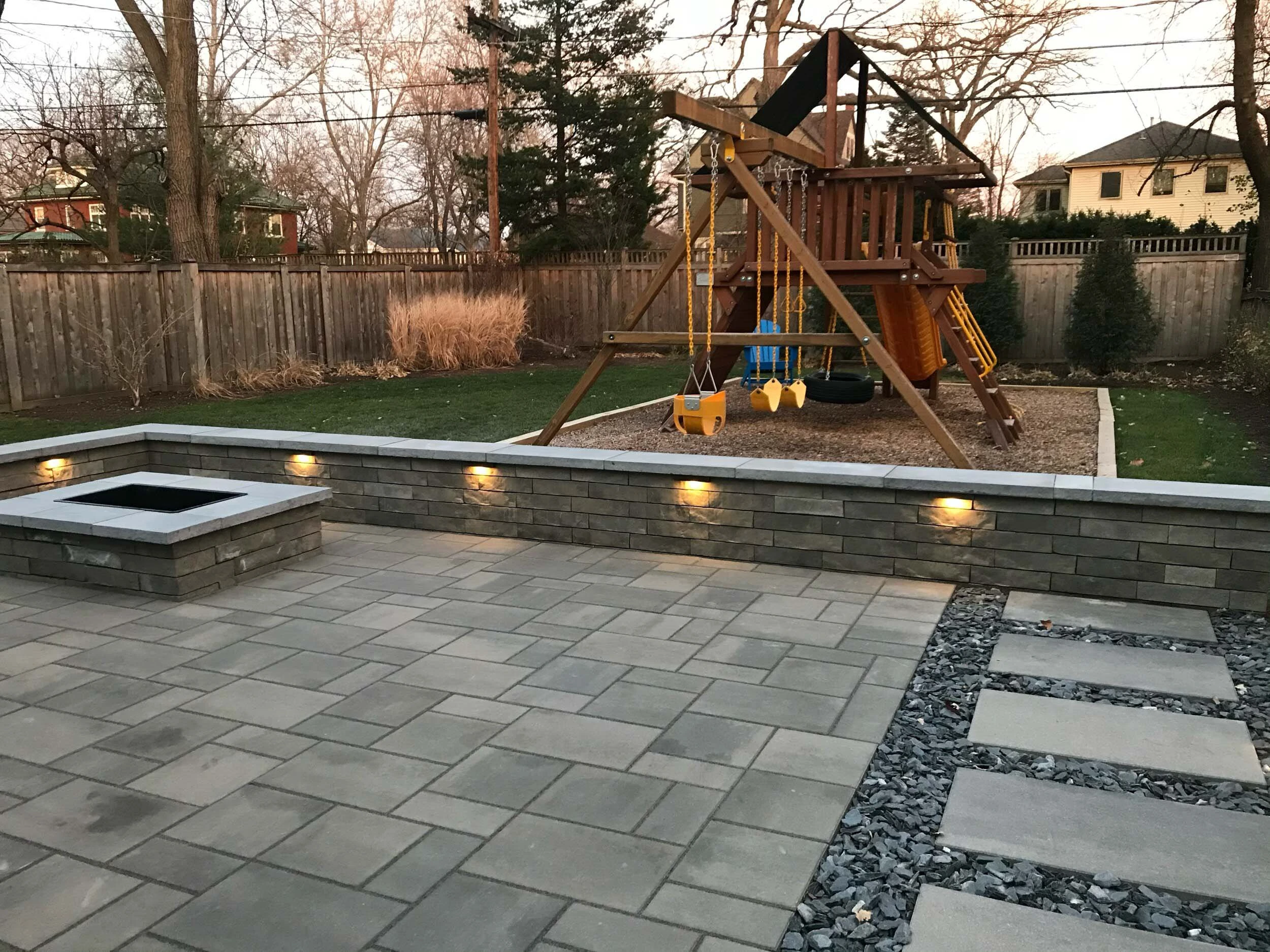
While the shell cures, the rest of the project accelerates. Plumbing trenches get backfilled in lifts and compacted. The equipment pad is formed and poured. Electrical conduit is trenched to the future pavilion and outdoor kitchen. And if the pavilion is part of the scope — and in Laurel Springs it almost always is — foundation work starts in parallel: piers down to undisturbed clay, typically 24″ below grade on helical or cast-in-place footings, tied with a matching steel grid to the patio-to-be.
Pavilion framing typically takes 4 to 6 days for a 16×20 roofed structure with exposed beam work. Cedar or cypress timber, stained on the ground before lift, tongue-and-groove decking underside, standing-seam metal or architectural shingle top per ARB preference. Laurel Springs specifically tends to require standing-seam in either Slate Gray or Musket Gray — check the latest design guidelines before ordering material.
Week 4: Tile, Coping Set, and the Travertine Decision
Week four is a tile-and-stone week. Waterline tile gets laid inside the shell — typically a 6×6 glass or a 3×12 stacked porcelain, set with thinset and the bond-beam already laser-leveled at gunite. Expect 380 to 460 linear feet of waterline on a full resort package with raised spa, tanning ledge, and bench seating. Two masons, three days.
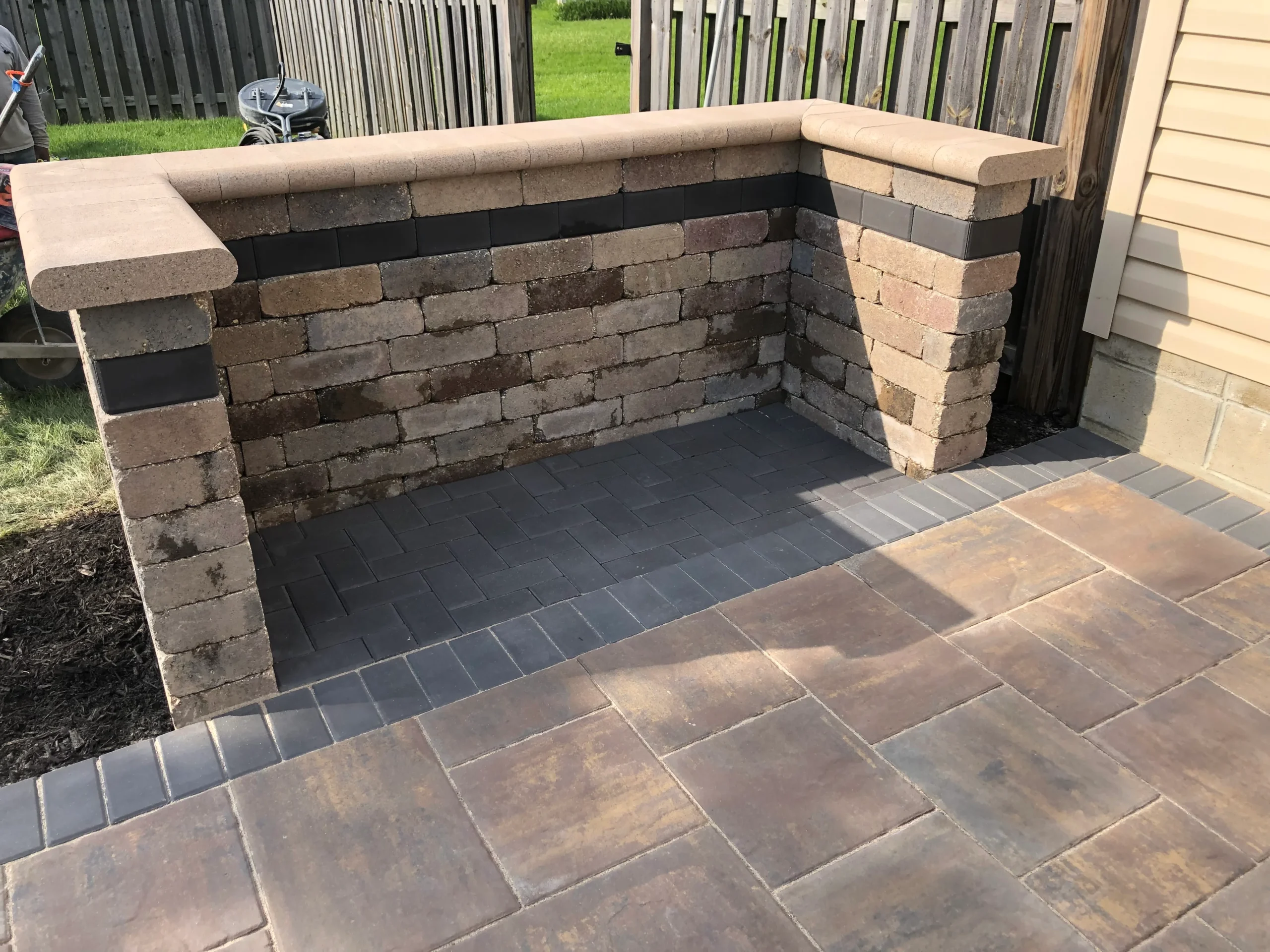
Coping sets after waterline tile. On a Suwanee resort-tier build the coping decision is almost always travertine — French-pattern 4cm travertine with a bullnose edge, set on a mortar bed with a 3/8″ overhang over the waterline. Budget here is real: full French pattern 4cm travertine runs $22 to $34 per square foot installed on this market, and a 1,400 sq ft deck with integrated pavilion and kitchen pad is a $30,000 to $48,000 stone line on a contract. Silver travertine is the dominant Laurel Springs color; Ivory shows up more on The Manor and Woodbury builds.
Why travertine on Cecil clay: Travertine breathes. Under Suwanee’s Zone 8a climate — ~20 freeze events/year and 52 inches of annual rainfall — a breathable stone over a properly sloped base sheds water and survives freeze-thaw dramatically better than sealed concrete or non-permeable porcelain. Sealed the right way (penetrating sealer, never topical), it lasts 30 years in this soil.
While the stone crew works, electrical rough-in catches up. LED color-change pool lights get their niches wired, perimeter low-voltage landscape conduit is pulled, and the Jackson EMC 240V service upgrade lands on-site. The pool equipment pad — by now dry from its week-three pour — gets the heater, pump, filter, salt cell, and automation panel set.
Week 5 to 6: Deck Set, Outdoor Kitchen, and the Fire Features
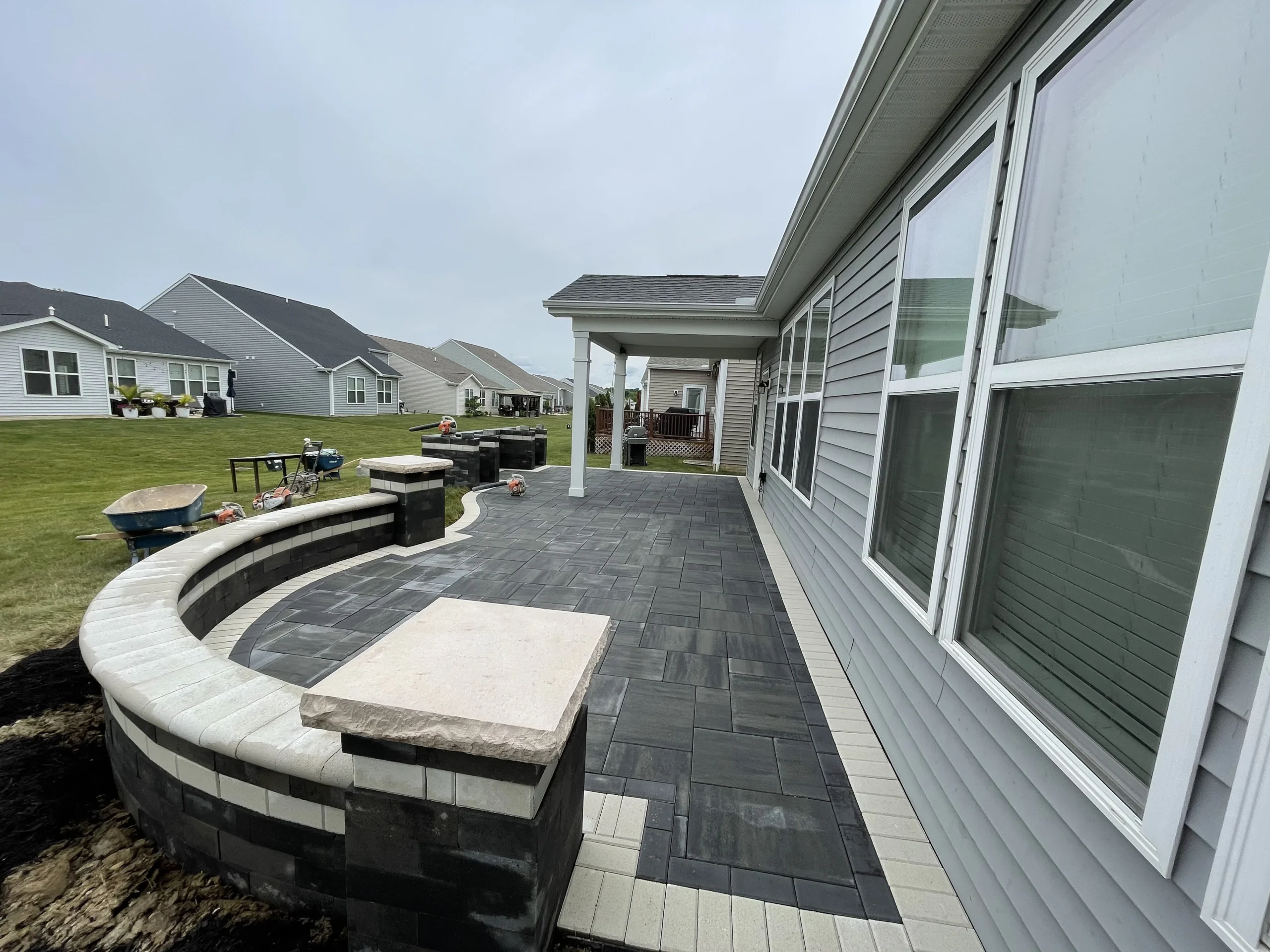
This is the stretch where a resort build actually starts looking like resort. Full travertine decking, 1,200 to 1,800 square feet of it, set in French pattern over a compacted open-graded base with mortared grout joints at the field and sand-swept joints at the perimeter. Base prep on Cecil clay runs a non-woven geotextile separator, 6 inches of compacted #57 stone, a 1-inch bedding layer, then the pavers — never pavers over raw clay, which will heave by year three.
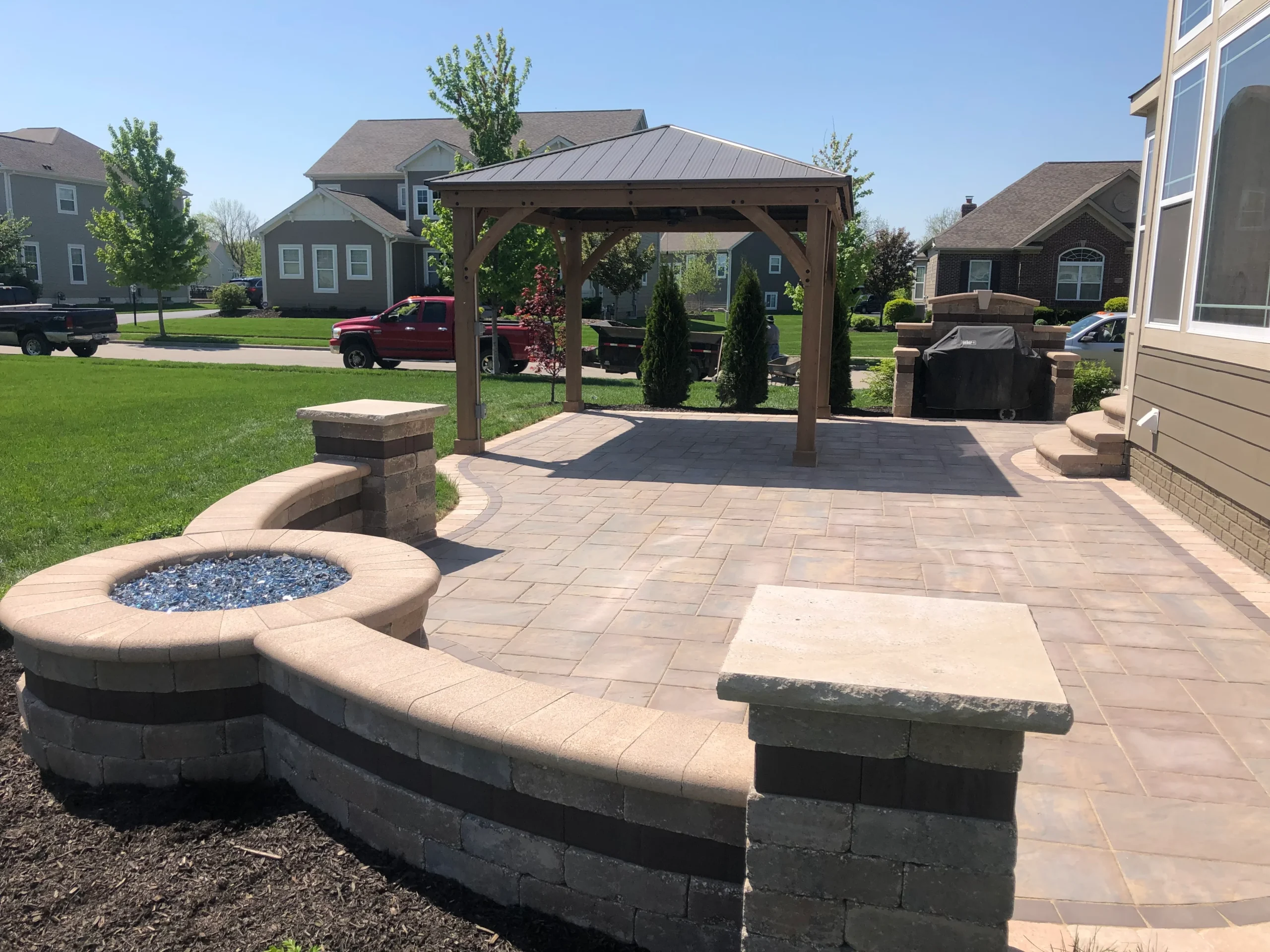
The outdoor kitchen goes in parallel. On a Laurel Springs budget, expect a framed-block or steel-framed kitchen structure, travertine or quartzite countertops, a built-in 36″ gas grill (Lynx, Fire Magic, or DCS are the three brands that keep showing up on these contracts), a refrigerator, a sink with hot-and-cold, and sometimes a pizza oven or a side burner. Gas line is extended from the house meter — 1″ CSST run for a full kitchen-plus-fire package, with Gwinnett’s gas inspection scheduled before the kitchen closes up.
Fire features arrive late week five. Gas fire bowls (Bobe, Grand Effects, HPC are the three common names), gas fire pits, sometimes a full masonry fireplace on the pavilion back wall. Each fire feature wants its own dedicated 1/2″ gas line with a ball valve at the fuel run, an electronic ignition module, and on an ARB-reviewed build, a flame-sensor safety cutoff that shuts gas if the flame blows out.
Week 7: Lighting, Plaster, and the First Water
Plaster week. Interior pool finish goes on — on Suwanee resort builds the choice has shifted overwhelmingly to pebble finishes (PebbleTec, PebbleSheen, or StoneScapes) over traditional white plaster. The pebble surface lasts 15 to 20 years against the 7 to 10 of a white plaster, handles salt-chlorinated water significantly better, and reads as a deeper, more resort-like water color. A 650 sq ft interior surface on a 20×40 pool with integrated spa takes a crew of four about six hours to trowel, and the pool fills the same day — city water, garden hoses, 36 to 48 hours of fill time on a municipal line.
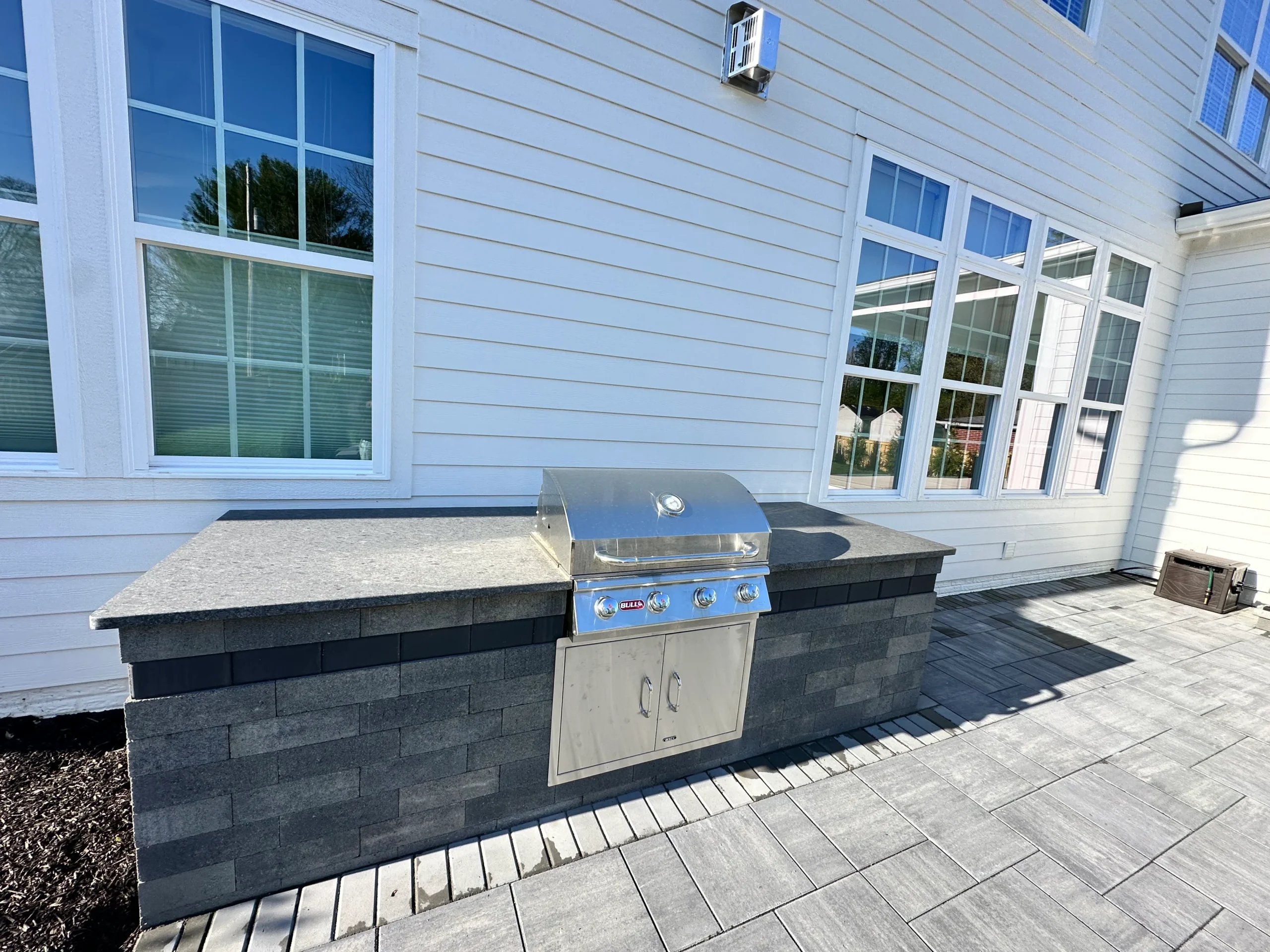
Landscape lighting installs in parallel with plaster — path lights along the deck perimeter, uplights on the pavilion columns and any specimen trees the ARB asked to be preserved, down-lights in the pavilion rafters, and accent lights on fire features and the outdoor kitchen backsplash. A resort-tier lighting package in this market sits at 42 to 68 fixtures on a 300W or 600W transformer, all on a dusk-to-dawn timer or smart controller tied to the pool automation.
Pool automation itself — Pentair IntelliCenter or Jandy AquaLink are the two systems that handle the whole envelope: pump speeds, heater on/off, salt chlorinator output, LED color programs, fire feature ignition, and landscape lighting scenes, all from a phone. Wire the house to it; don’t leave automation for “phase two.” The panel is cheaper to install during open-wall week than retrofit six months later.
Week 8: Startup, Commissioning, and Final Inspection
The pool is full. Water chemistry starts. Startup on a pebble finish is its own 28-day choreography — brush twice daily for the first two weeks to kick loose plaster dust off the pebble surface, balance alkalinity and calcium hardness to the National Plasterers’ Council startup card, hold the salt cell off for 21 days to let the finish cure before introducing chlorine generation. Skip this and the pebble surface stains along the waterline inside the first summer.
Equipment commissioning is a half-day. Pump priming, filter backwash cycle calibrated, heater light-off and temperature rise tested, salt cell calibrated, automation programmed, all pool light colors and programs stepped through, fire features cycled, outdoor kitchen appliances burn-tested. Any punch-list items — a coping stone that needs re-setting, a travertine joint that needs regrouting, a light fixture pointed the wrong direction — get walked and written.
Gwinnett County’s final inspection covers the fence (pool enclosure per state code, self-closing self-latching gate, 48-inch minimum height from exterior grade), the bonding grid completeness, the electrical disconnect within line-of-sight of the equipment pad, and the gas inspection on the kitchen and fire runs. A Certificate of Occupancy on the pavilion — if it’s a roofed, permitted structure — follows or runs alongside.
Week 9: ARB Walk-Through, Punch List, and Turnover
Laurel Springs ARB does a compliance walk-through roughly a week after final county inspection to confirm the build matches the approved drawings — same paver pattern, same stain color on the pavilion, same fixture types, same landscape buffer replanted where the dig removed it. A mismatch triggers a remedy letter and a second walk-through; a clean walk closes the file.
Punch-list items close over the course of week nine. Expect 6 to 14 items on a typical resort build: a lighting scene that needs re-programming, a grout joint that needs touch-up, a softscape plant relocation, a sealer coat on the travertine after 30 days of cure, a final waterline tile re-sealing. None are deal-breakers; all are normal. The final walk with the homeowner, the automation-app setup, the equipment-pad as-built photo, and the 10-year structural warranty paperwork all land in the same week.
A clean resort-tier build in Suwanee — full pool, travertine decking, pavilion, outdoor kitchen, fire features, landscape lighting, automation — lands at nine weeks from ground-break. The four-week front-end of ARB, Gwinnett permits, and Jackson EMC coordination means thirteen weeks from the day the contract is signed. Projects that try to skip the front-end or compress it — “we’ll pull the permit while we dig” — reliably run to fifteen or sixteen weeks as one paperwork miss stops the next trade from starting.
Why Resort-Tier Suwanee Builds Slip — And How to Avoid It
The three calendar-killers on Suwanee resort builds, in order: ARB revision requests, Jackson EMC service lead-time, and weather-driven concrete reschedules. The first two are solvable with front-end discipline. The third is the Chattahoochee River fog problem — fall mornings on a River Club or Settles Bridge lot routinely sit at 95% humidity past 10 AM, pushing gunite and concrete pours to afternoon windows that collide with the next rain cell. Build a week of weather float into any fall build and two weeks into a winter one.
The fourth, occasional killer: material back-orders on travertine or specialty pavers. Confirm stock at signing, not at week three. A “we’re waiting on stone” line added to a Laurel Springs project schedule becomes a three-week dead stop.
A six-week build is real — on a scope that skips the pavilion, skips the outdoor kitchen, and runs a simpler paver deck instead of full French-pattern travertine. A nine-week build is what the “full” Laurel Springs package actually takes. An eleven-week build is what happens when the front-end wasn’t taken seriously. Knowing which one you’re signing up for before you sign the contract is the single biggest variable between a happy summer and an extended game of phone-tag with the builder.
Resort-tier hardscape design and construction across 20+ cities within 30 miles of Winder, GA
From Laurel Springs ARB packages to Gwinnett County permit runs to Jackson EMC service upgrades — Primetime Pools runs the entire front-end and the 9-week build under one roof.