
The homeowners had lived with the pool for eleven years before they called us. It was a clean rectangle — 14 by 32 feet, white plaster, dark waterline tile — sitting between a blue-siding home and a round stone firepit off a Laurel Springs cul-de-sac. What they wanted added was not small: an 8-person spa with a 3-scupper spillover and a raised fire bowl accent, built flush against an existing shell that had never been designed to carry it.
This post walks that project start to finish. Not a generic remodel overview — the specific engineering, ARB submission, Jackson EMC coordination, and phase-by-phase build sequence for bolting a full spa-and-fire package onto an existing Suwanee pool without tearing the original out. If you’re in Laurel Springs, River Club, Bear’s Best, or anywhere along the Settles Bridge corridor and you’re weighing whether an integration remodel pencils out, this is the walkthrough.
Total project cost landed at $89,400, inside the $62K–$108K range we quote for this scope in Gwinnett County. Timeline ran 16 weeks from contract signature to final inspection. Four of those weeks were architectural review. The rest was dig, plumb, pour, pebble, and power.
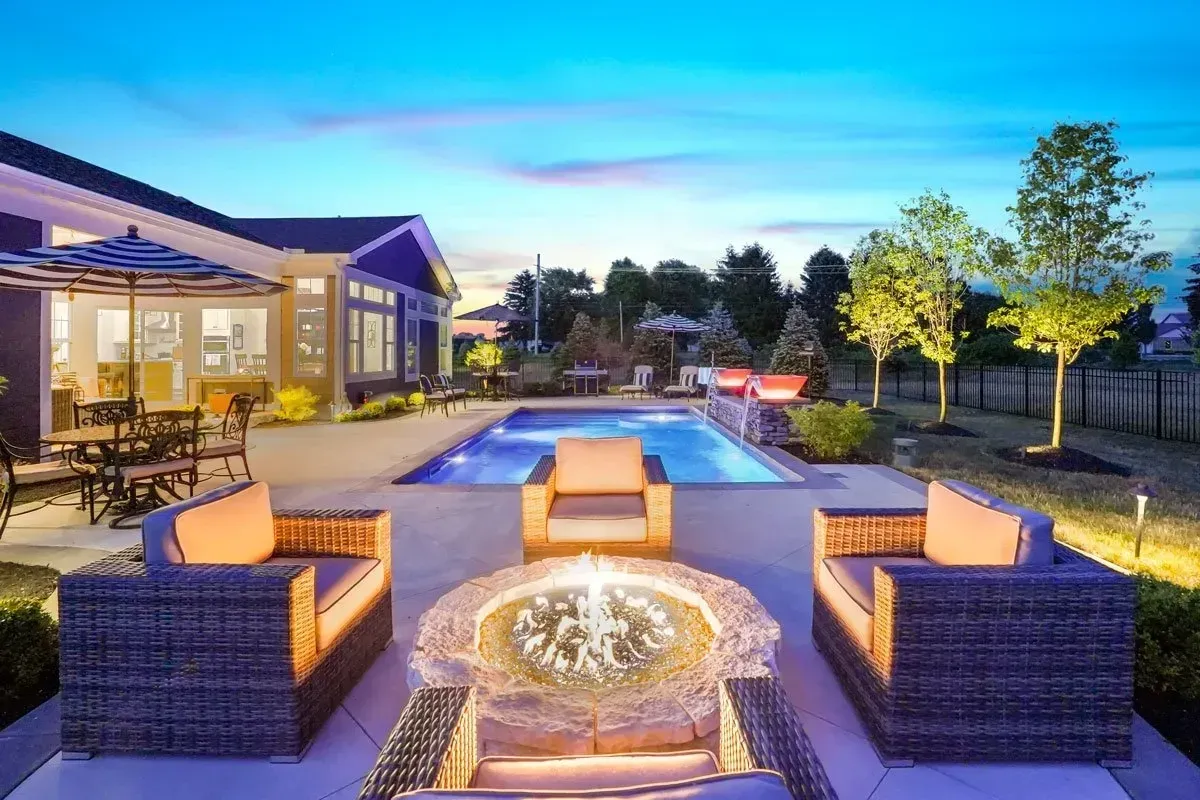
Why a Laurel Springs Remodel Is Not a Standard Remodel
Laurel Springs is the premier gated community in Gwinnett — a Jack Nicklaus signature course, roughly 700 homes, lot sizes typically 1 to 3 acres, and an architectural review board that has teeth. When a client calls us from inside the gates, we know before the first site visit that three things will shape the build: the ARB submission, the Jackson EMC service panel, and the Cecil series clay under the deck.
The ARB process alone can add four weeks to a timeline that in unincorporated Gwinnett would take one. Every exterior change — and a pool-and-spa integration is definitely exterior — requires a packet submitted to the Laurel Springs ARB before the permit application ever goes to the county. Packets include site plans, elevations, material samples, landscape screening details, and a 3D rendering that costs the homeowner $800 to $1,400 depending on how much of the rear yard is in the viewshed.
On this project the ARB came back with two notes on the first submission: move the fire bowl 18 inches closer to the pool coping (for sightline symmetry from the master bedroom), and substitute the stone veneer with a warmer tone to match the home’s existing chimney wrap. Both notes were reasonable. The revision went back in nine days later and was approved on the next monthly cycle. Typical Laurel Springs ARB turnaround is 3–4 weeks per submission.
Once the ARB stamped the packet, the county permit through the Gwinnett Department of Planning & Development at 446 W. Crogan St. in Lawrenceville took another 11 business days. That timeline is consistent with the rest of Gwinnett — the ARB is the delta.
The other piece nobody warns you about: ARB board members inside Laurel Springs rotate annually, and the aesthetic preferences rotate with them. One year the board is pushing warmer stone tones. The next year it’s cooler grays and crisp cast-stone caps. We keep notes from every submission we’ve made inside the gates for the last six years so that when a new homeowner calls us we can tell them which way the current board is leaning. On this project the prevailing taste was warm — hence the stone veneer swap. A 2024 project two streets over got the opposite note and we pulled cooler ledgestone for that one.
Your design fee should include the ARB coordination hours, not just the drawing deliverables. If a builder quotes you a flat $500 “design package” and doesn’t break out ARB hours, the odds they miss something on the first submission are high. A missed submission costs you a full review cycle — 3 to 4 weeks you will not get back.
ARB rendering budget: Laurel Springs requires a 3D rendering on every packet involving hardscape or water features. Budget $800–$1,400. We coordinate this with a local rendering studio; the cost lives in the design phase, not in construction.
Scope: What “Pool-and-Spa Integration” Actually Means on an Existing Shell
There are two paths when a homeowner wants a spa added to an existing pool. Path one is a freestanding spa on a separate pad with its own equipment, plumbed to share the pool’s heater. Path two — the one this Suwanee homeowner wanted — is a fully integrated raised spa that shares a wall with the pool, spills into the pool, and lights, heats, and filters through a unified equipment pad.
Path two is three to four times more expensive. It is also the only option that looks like it was always there. When you walk a rear yard and you can tell the spa was bolted on, you’re looking at path one. Nobody who spent six figures on the remodel wants that.
Here’s what the physical scope covered on this build:
- 8-person raised spa, roughly 8′ x 8′ interior, 40″ depth, seating on three sides, footwell at center, raised 18″ above the pool waterline.
- 3-scupper spillover along the shared wall — cast-stone caps flush-mounted into the coping line, tuned to a 3/8″ sheet flow per scupper.
- Stacked-stone raised back wall behind the spa to screen the wall mass and create the visual plinth the ARB wanted.
- Fire bowl accent — a single 30″ cast-stone bowl on a raised pedestal at the pool’s opposite corner, propane-fed from a buried line tied to the home’s dedicated service.
- Full re-plaster of the existing pool shell in Pebble Tec Blue Surf, because the original white plaster would have read as a different generation once the spa went in.
- New LED niche lights in both bodies — pool and spa — controlled from a single Pentair IntelliCenter panel with phone app.
- Equipment pad consolidation — original single-speed pump, cartridge filter, and 250k BTU heater all removed; replaced with a variable-speed pump, a larger cartridge, and a 400k BTU heater sized for the combined water volume.
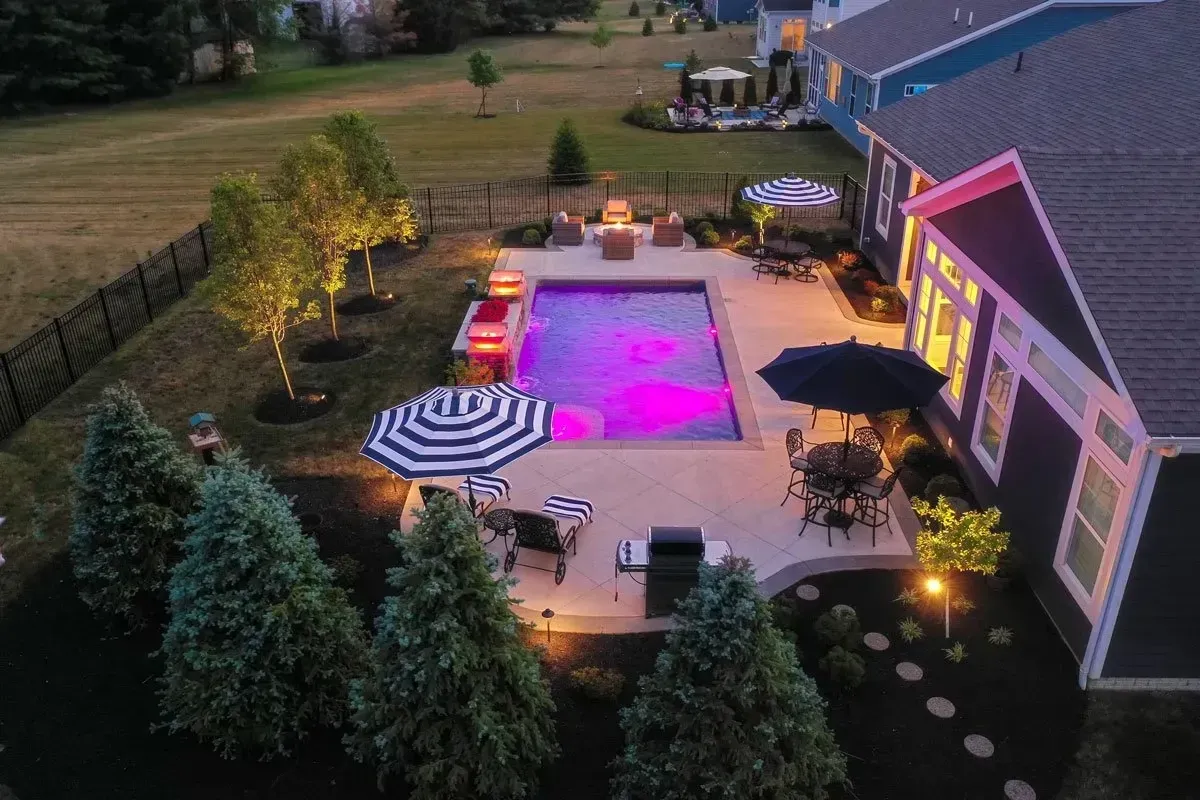
The Engineering Problem: A Raised Spa Wall Next to an 11-Year-Old Shell
This is where a Laurel Springs integration leaves the world of catalog pool building and enters structural engineering. You cannot simply pour a new spa wall against an existing gunite shell. The existing shell has already settled on its footing. It has its own load path. Adding a raised mass of plumbed, heated water against one face of it creates differential movement — and differential movement cracks tile, cracks coping, and eventually cracks shell.
We required a sealed structural engineer’s letter before we broke ground. The engineer we used for this project has done about forty integrations in Gwinnett. Her spec called for:
- A new footing for the spa wall poured 24 inches below existing pool shell grade, tied back to undisturbed Cecil clay subgrade.
- A bond-beam connection across the shared wall using #5 rebar at 12″ on center, epoxy-doweled into the existing shell after core drilling.
- A sliding expansion joint at the deck coping line — so any future differential settlement shows up in the joint, not the tile.
- A minimum 14-day cure on the new footing before the spa shell went up, regardless of weather or schedule pressure.
The engineer’s letter cost $2,100. It is not a line item we cut. A cracked integration two summers after completion is a call nobody wants to make or receive.
Why Cecil clay matters here: Cecil series soil is the Piedmont standard across Gwinnett and Forsyth — dense red clay with a plastic limit that swells on wet, shrinks on dry. Suwanee’s proximity to the Chattahoochee River gives some lots sandier loam in the top 24″, but the subgrade below pool depth is still Cecil. Your spa footing has to bear on that subgrade, not on the topsoil or any fill.
Jackson EMC and the Service Panel Upgrade
Suwanee is served by Jackson EMC, not Georgia Power. A large share of the metro Atlanta pool market sits on Georgia Power, so crews who work mostly south of the river sometimes get tripped up on the differences. We build into both utilities, but the permitting, meter inspection, and load-calculation language is different between them and it shows up in every Suwanee job.
The existing home had a 200-amp main panel with a 50-amp pool subpanel. Running the math on the new equipment — variable-speed pump at 2.4kW peak, 400k BTU gas heater (the heater itself is gas but its blower and controls draw), IntelliCenter brain, two new LED transformers, spa blower for the air jets, and a dedicated circuit for the fire bowl ignition — we needed the subpanel bumped to 100 amps and a new dedicated run from the main.
Jackson EMC required a meter-side inspection before they’d re-energize. That’s standard. What’s not as standard is their turnaround: on a typical integration we see Jackson EMC schedule the meter inspection within 3–5 business days of the county rough-electrical sign-off. On this project it was four days. Georgia Power in DeKalb can take seven to ten.
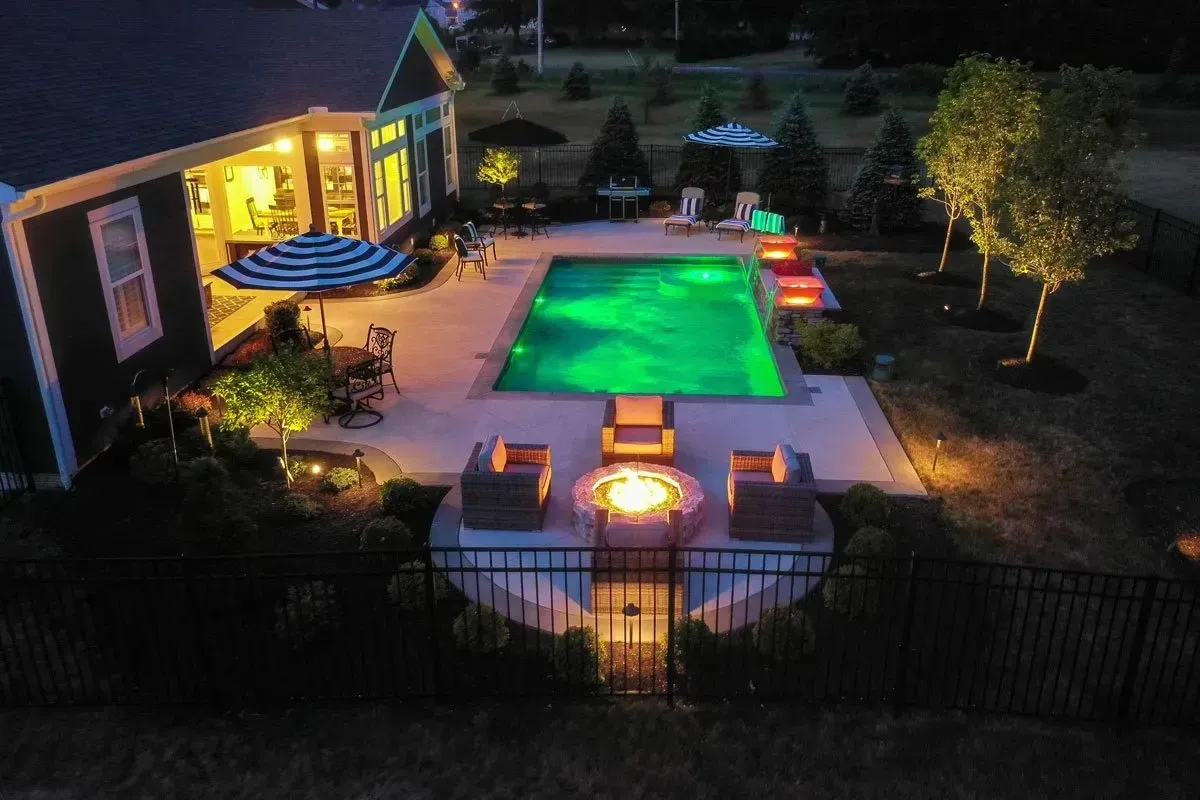
Budget Anatomy: Where $89,400 Actually Goes
Homeowners ask this constantly and the published numbers online are almost always wrong for this scope in Gwinnett. Here is the actual breakdown on this project, rounded to the nearest hundred:
- Design, engineering, ARB rendering: $4,200 (3D render $1,100, engineer $2,100, design hours $1,000)
- Permits and fees: $1,400 (Gwinnett permit, plan review, electrical, gas)
- Demo, excavation, footing: $8,800
- Spa shell gunite + plumbing + tile: $21,500
- Re-plaster existing pool (Pebble Tec Blue Surf): $9,600
- Stacked-stone raised wall + scupper caps + coping: $11,200
- Fire bowl + gas line + ignition: $4,800
- Equipment pad: VS pump, cartridge filter, 400k heater, IntelliCenter: $14,900
- Electrical (subpanel upgrade, LED circuits, bonding): $6,700
- Deck patch + expansion joint + final clean: $3,800
- Startup, chemical balance, owner training: $2,500
Total: $89,400. The range on a comparable integration across Suwanee runs $62,000 on the low end (simpler spa, no fire feature, keep existing equipment) to $108,000 on the high end (larger spa, multiple water features, full equipment upgrade plus a cover system). We’ve done both ends of that range in 30024 in the last 18 months.
Timeline: Week-by-Week Through 16 Weeks
The published figure most Gwinnett builders quote is “14 to 18 weeks for a remodel integration.” On this Suwanee project it was 16. Here’s how the weeks sorted out:
Weeks 1–4: Design and ARB
Site visit, measure-up, 3D rendering, first ARB packet submission. ARB returned with two revision notes. Revised packet resubmitted week 3, approved week 4.
Week 5: County Permit
Gwinnett permit filed the Monday after ARB approval. Issued 11 business days later. We used this window to stage materials on the Peachtree Industrial Blvd distribution route.
Weeks 6–7: Demo and Excavation
Existing deck at spa location removed, coping cut back, existing shell core-drilled for the rebar dowels. Excavation to the 24″ spa footing depth. Cecil clay subgrade inspected and proofed. Engineer visited mid-week 7 to sign off on footing subgrade.
Week 8: Footing Pour + Cure
Footing poured Tuesday of week 8. The 14-day cure ran through week 9 and into week 10. We used this window to run the electrical subpanel upgrade and the Jackson EMC coordination so there was no downstream waiting.
Weeks 10–11: Spa Shell Gunite + Bond Beam
Gunite shot on the new spa over two days. Bond beam tied into the existing shell. Plumbing rough-in for the three scuppers, the spillway, and the spa jets.
Week 12: Tile and Stone Veneer
Waterline tile (matching the original), cast-stone scupper caps, stacked-stone veneer on the raised back wall. This was the ARB-visible work — inspectors were welcome to drive by but none did.
Week 13: Re-Plaster
Existing pool drained, prepped, and re-plastered in Pebble Tec Blue Surf. New spa plastered same day. This is a 10-hour crew day and it has to be weather-clean — we pushed it to Thursday when the forecast held.
Week 14: Equipment Pad Build
Old pad demolished. New variable-speed pump, cartridge filter, 400k BTU heater, IntelliCenter control, and all the bonding wire installed. Jackson EMC meter inspection week 14 Friday.
Week 15: Fill, Startup, Balance
Pool and spa filled from a hydrant meter (the combined volume is too big for the house supply to handle efficiently). 72-hour brush-in on the plaster. Chemistry balanced. Heater fired. LEDs commissioned.
Week 16: Final Inspection + Owner Walkthrough
Gwinnett final electrical inspection Tuesday. Jackson EMC re-energized the upgraded subpanel Wednesday. Owner training session Thursday — IntelliCenter app, chemistry schedule, winterization plan. Project closed Friday.
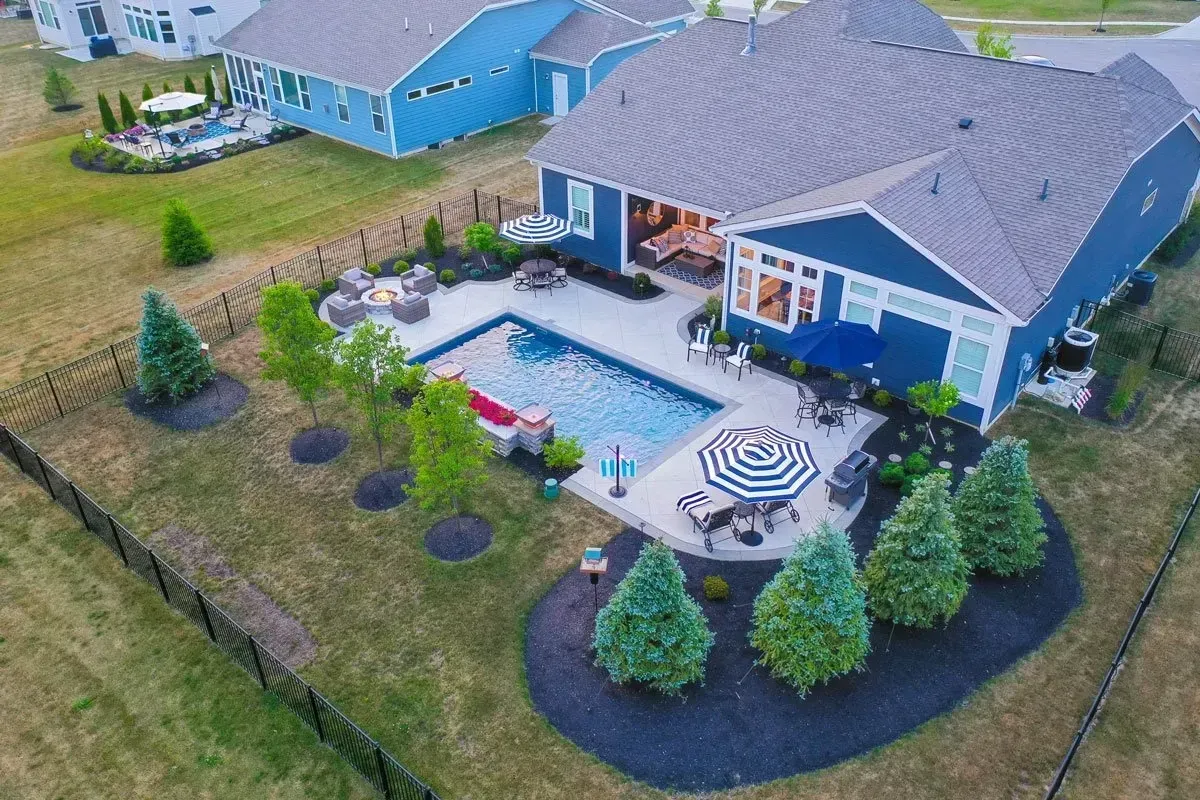
The Three Scuppers: Why It’s Not Just a Spillway
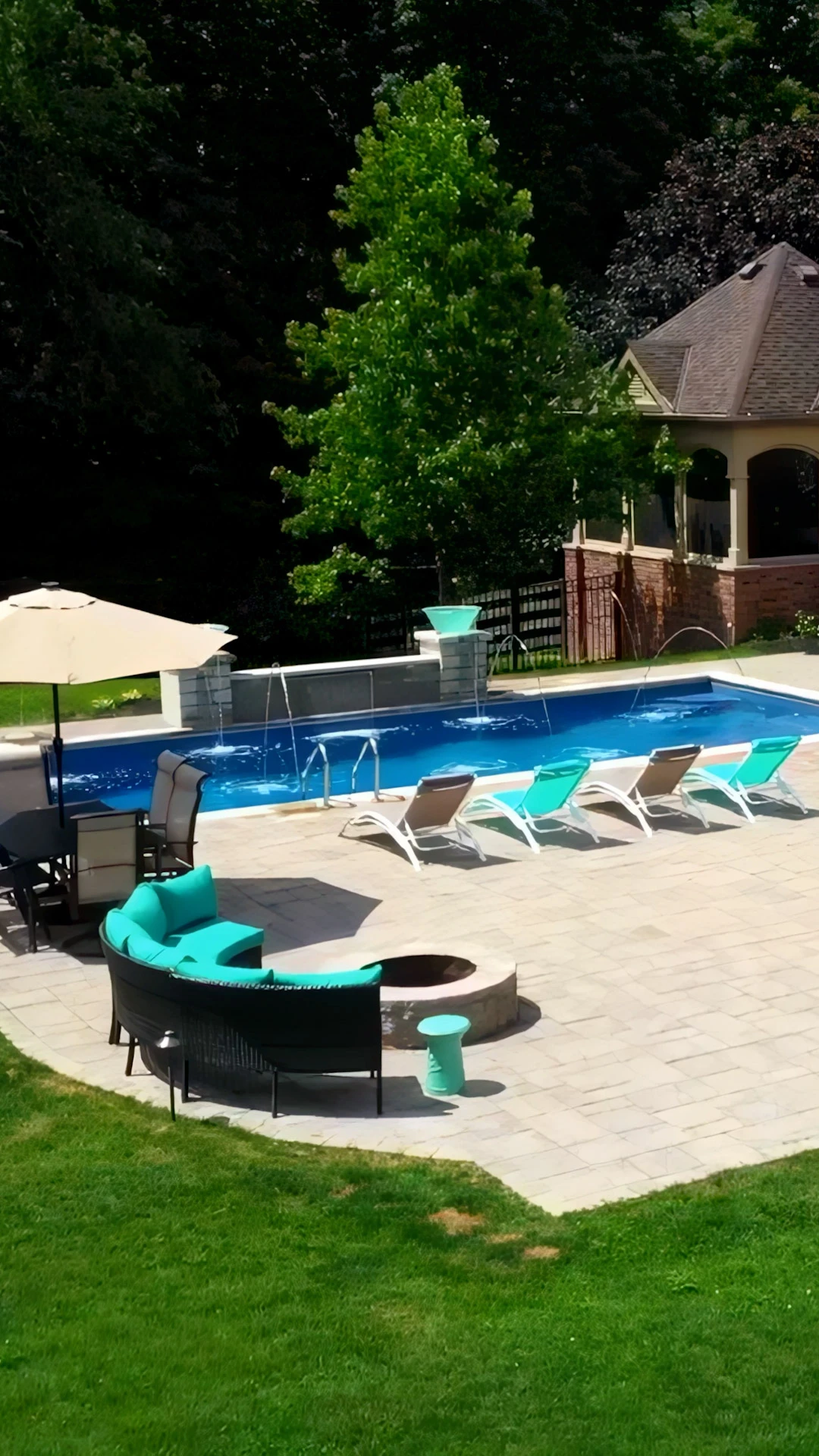
The owner could have had a single straight spillway from the spa into the pool. Many Gwinnett integrations use that. It is cheaper by about $3,800 and it works fine. What they wanted instead — and what the ARB rendering sold them on — was three individual cast-stone scupper caps set flush into the coping line, each delivering a measured sheet of water.
Three scuppers is not just a visual call. It’s a hydraulic design call. Water volume has to be split evenly across three outlets so each sheet reads the same thickness at the same moment. Too little flow and the outer two scuppers go dry while the center one sheets. Too much flow and all three overshoot the pool coping and wet the deck. We tune this with the variable-speed pump set point at commissioning — on this build we landed at 44 GPM through the spillover loop for a 3/8″ sheet per scupper.
The IntelliCenter lets the owner run the spa in “heated soak” mode with the scuppers off (quiet, no flow, 102°F), “waterfall” mode with scuppers on full (ambient music replacement), or the schedule we preset — scuppers on from sunset to 10 PM automatically, then off.
Lighting Design: Four Zones, One Controller
Eleven years ago when this pool was built, the lighting was a single 400-watt incandescent bulb in a niche at the deep end. It threw yellow light. It pulled 400 watts. It burned out on a 14-month cycle.
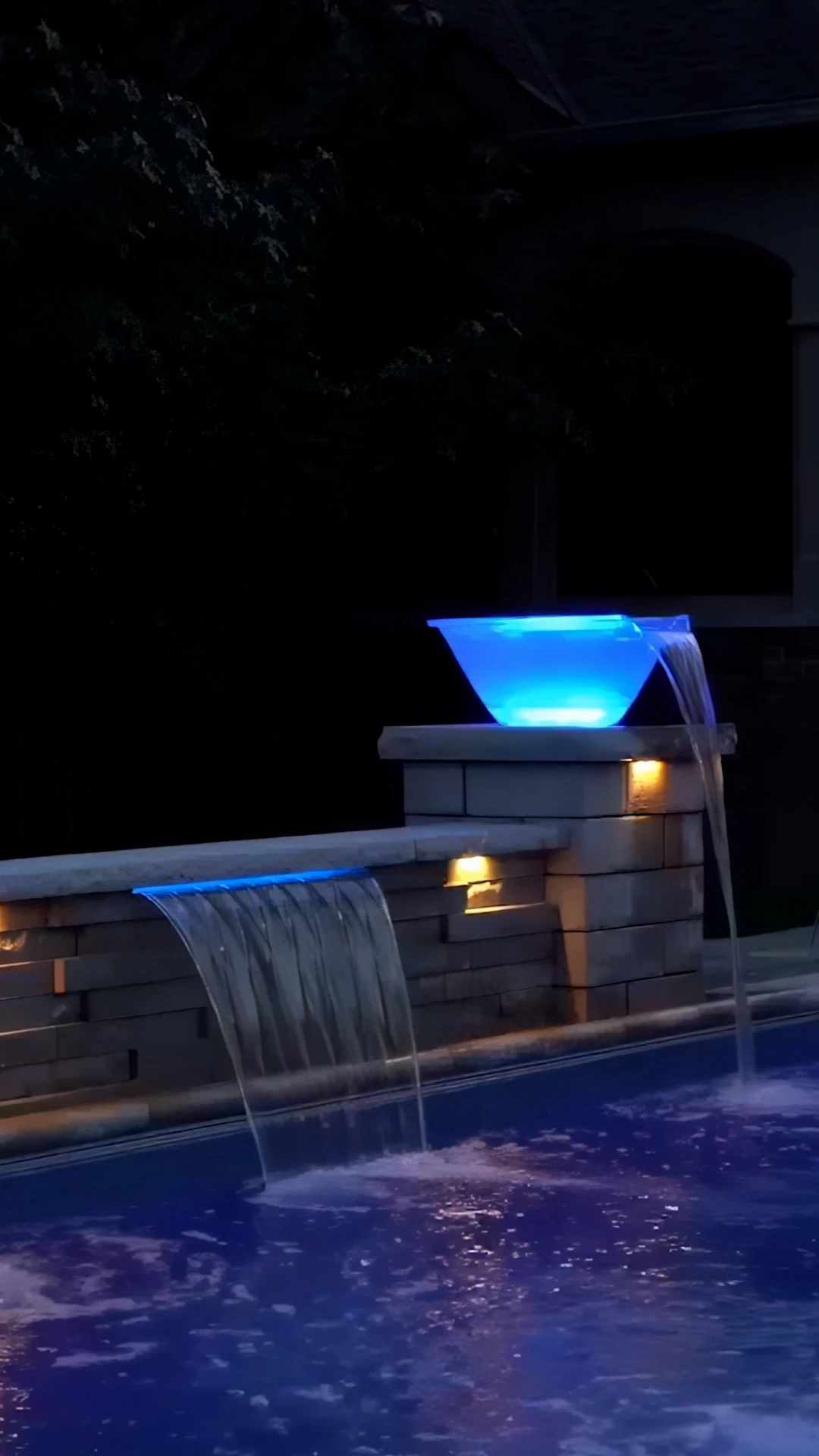
The new lighting is four zones: pool main body (two LED niches), spa interior (one LED niche), scupper cap uplight (three 2-watt puck lights cast into the stacked stone behind each cap), and a pair of color-cycling fire-feature uplights at the bowl base. All four zones run through the same IntelliCenter panel. Total draw across all four on full brightness is 92 watts. Less than a quarter of the original single-niche draw, and it can be tuned to any color from a phone.
The scupper uplight trick is worth calling out. It’s not a standard spec on an integration quote. What it does is backlight the falling water from behind the stone so you see the water’s thickness and the stone texture at the same time at night. It cost $340 in parts and 40 minutes of wiring. The owner says it’s the detail they notice most.
The Fire Bowl: Smaller Than Everyone Wants, Better Than Everyone Expects
Every integration client in Suwanee asks for the biggest fire bowl in the catalog. Every integration client who gets the biggest fire bowl in the catalog comes back and tells us it’s too much. The heat footprint at 4 feet is considerable. The visual weight competes with the pool itself. And on a windy Piedmont night — Suwanee sits around 1,063 ft of elevation with real fall wind — an oversized bowl can blow flame onto the deck.
We used a 30-inch cast-stone bowl on a 22″ pedestal at the opposite corner from the spa. Propane-fed through a buried line tied into the home’s existing dedicated tank. The ignition runs off a transformer stepped down from the pool subpanel, wired to the IntelliCenter’s auxiliary relay. You tap the IntelliCenter app, the pilot lights, the main ring opens, and you have a flame in 8 seconds. Tap again to close.
The bowl’s flame height tunes between 8″ and 20″. We set the commissioning default at 14″ — tall enough to read from the house, low enough to behave in Chattahoochee river-valley fall wind.
What We Got Wrong (and Fixed)
Two things did not go to plan. Honesty on this part matters more than any other section of this post.
First: the original ARB packet missed a screening requirement. The board wanted 36″ minimum plant screening along the spa’s visible face from the adjacent fairway-side lot. We had specified 24″ plant material because the rendering we worked from was a generated image, not a boots-on measurement. When the board flagged it, we re-specced to a Nellie Stevens holly hedge at 42″ at time of install, which exceeded the 36″ minimum and gave the neighbor immediate privacy. Cost delta: $680 in materials. Lesson: do the sightline measurement in person on every Laurel Springs submission.
Second: during week 13 plaster, we had a half-hour afternoon pop-up thunderstorm that caught us at the 4-hour mark on the new spa plaster. The rain drove uneven mineral streaking into the finish. We consulted with the plaster sub, pulled the sample, and made the call to re-plaster the spa the following Wednesday at no cost to the owner. Lost 5 days from the schedule. The finished result passed our commissioning check and the owner’s eye. Weather calls are the single most common reason a 16-week integration becomes an 18-week integration.
Is This Project Right for Your Laurel Springs, River Club, or Bear’s Best Home?
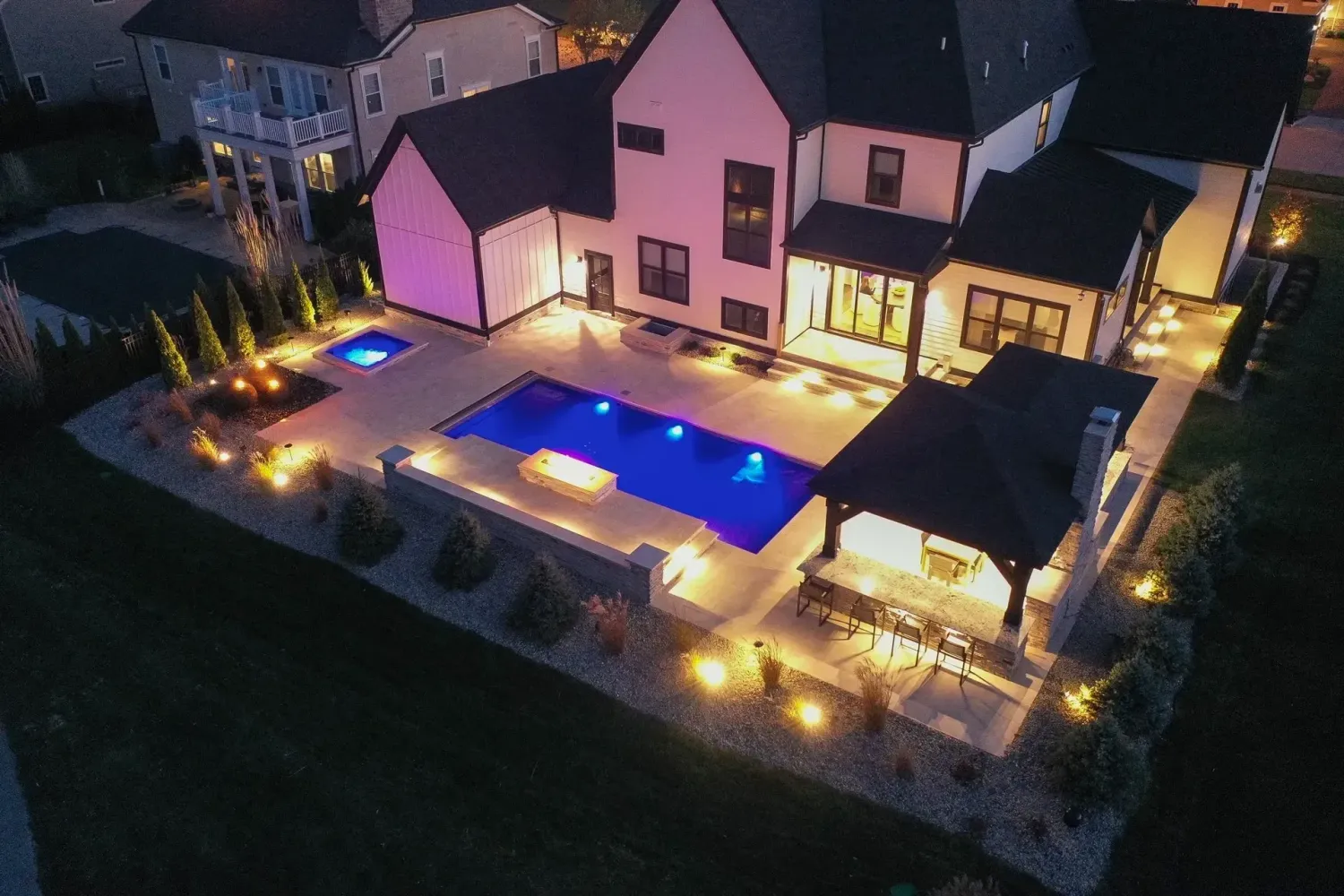
An integration remodel at this scope makes sense if you meet four conditions. If you don’t meet all four, we’ll tell you that at the first site visit and you won’t waste a design fee on a project that doesn’t pencil.
- Your existing shell is structurally sound. Hairline cracks are fine. Active leaks, broken bond beam, or shifted coping are not. We core-inspect on the first visit.
- Your property allows the raised mass without breaking sightlines the ARB has already approved from neighboring lots. This is the #1 reason Laurel Springs integrations get sent back for redesign.
- Your budget comfort range is $60K+. Below that, we’d recommend a freestanding spa on a separate pad (path one) or a phased approach where the fire feature is added in year two.
- You can live with 14–18 weeks of weekday construction behind the house. Noise is meaningful during the gunite and excavation phases. Weekends are quiet because our crews don’t work Saturdays in Laurel Springs by HOA rule.
Homes in The River Club, Bear’s Best Atlanta, Settles Bridge, Highgrove, Village Grove, The Preserve at Peachtree Corners, Woodbury, and The Manor all have similar or stricter architectural review processes. The cost and timeline structure in this post applies to all of them. If you’re in unincorporated Suwanee outside a named community — no HOA review — you can cut 3 to 4 weeks off the front end.
Flood zone note for Settles Bridge properties: Some lots along the Chattahoochee River border fall inside Zone AE per FEMA mapping. Pool construction is permitted but the equipment pad elevation and electrical tie-ins have to be set above base flood elevation. If you’re inside the Zone AE line, your remodel permit package will include an elevation certificate and your Jackson EMC meter may need to be set higher than standard.
Pool remodeling across 20+ cities within 30 miles of Winder, GA
Whether you’re adding a spa integration inside the Laurel Springs gates or starting a ground-up custom in unincorporated Suwanee, the engineering discipline behind every Primetime build is the same.