
The plaster on your 1990s Dacula pool has streaks, hollow rough spots, and grey shadows where the white finish used to be. The pool still holds water. It still swims. But the interior looks thirty years old because it is thirty years old — and you’re standing at the fork every Hamilton Mill-era homeowner eventually hits: which finish goes back in.
This is the honest tradeoff conversation. No product is perfect. No single finish wins every category. After resurfacing hundreds of pools across Dacula, Lawrenceville, and the rest of Gwinnett County, we’ve watched every material weather through Georgia summers, freeze cycles, and the hard water that comes out of the tap here. We’ll walk through the three interior finish families — standard plaster, quartz aggregate, and Pebble Tec (and its siblings) — then cover the resurfacing process itself and the 28-day water balance window that makes or breaks whatever finish you just paid for.
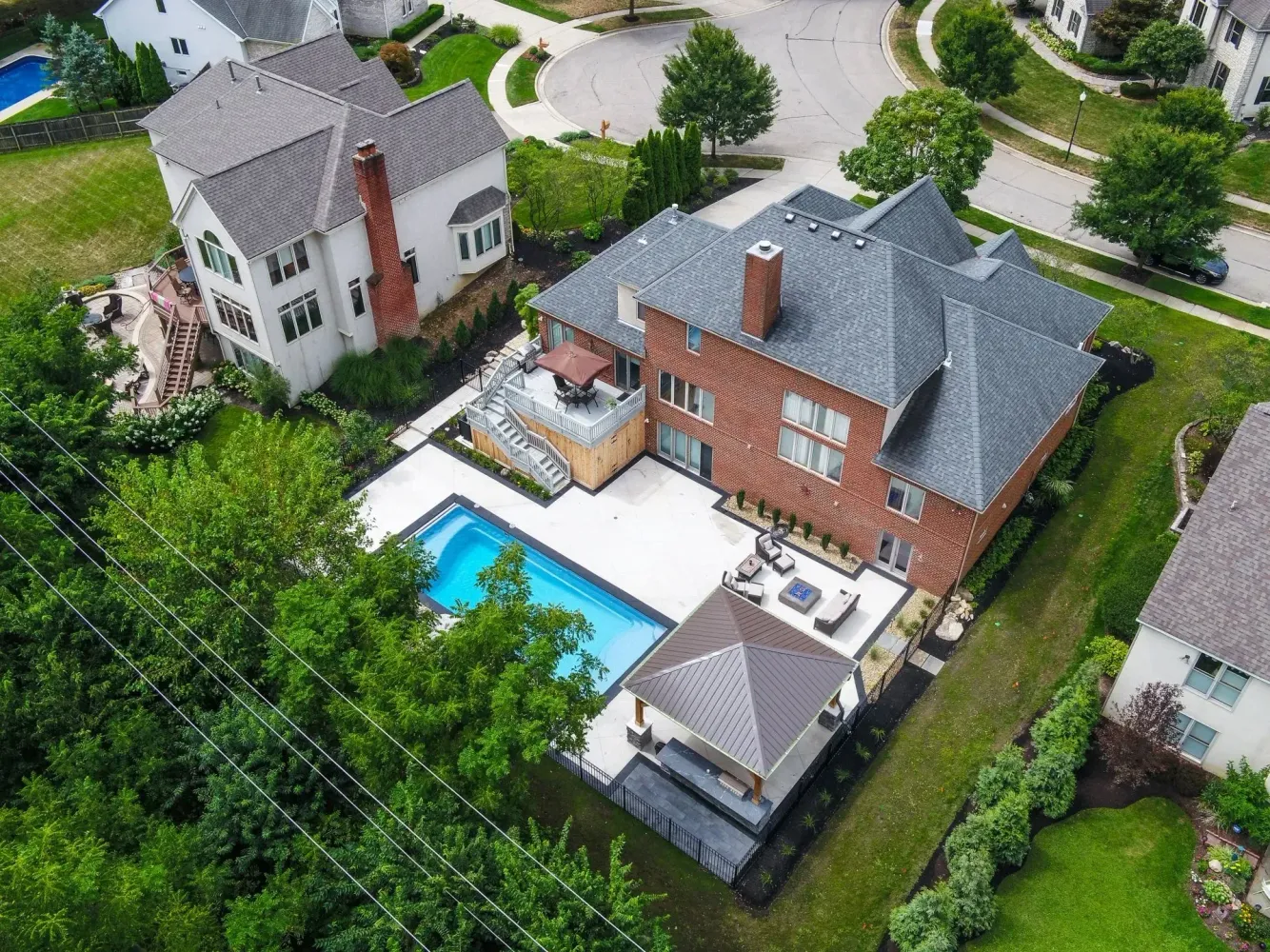
If your pool is a 1995-era build in Hamilton Mill, Sycamore Ridge, or Chandler Ridge, you are past the 25-year mark on your shell and near the end of your second plaster lifespan. That’s normal. Concrete and gunite pools are designed to be resurfaced every generation. The shell is usually fine. What fails is the thin interior finish coat — and Dacula’s Gwinnett County tap water, running 3 to 5 grains per gallon of hardness, wears plaster faster than softer-water zones like Cherokee County to the northwest.
Why Dacula Pools Wear Faster Than the Brochures Suggest
Product literature for standard white plaster quotes a 10 to 15 year lifespan. In practice, across the pools we service in the 30019 zip, white plaster shows meaningful wear at year 8 and clear failure — delamination, hollow spots, loss of the smooth top layer — between year 8 and year 10. Three reasons this number runs shorter here than the brochure suggests.
First, water chemistry. Gwinnett County water carries moderate hardness plus slightly elevated pH at the tap, pushing the saturation index to the aggressive side of neutral. Aggressive water etches plaster. Etched plaster gets rougher. Rougher plaster stains faster, holds more algae, drives more chlorine demand, and amplifies chemistry swings. The cycle compounds.
Second, seasonal swing. Zone 8a puts Dacula through 18 to 22 freeze events a year and summer highs in the mid-90s with heavy evaporation. That forces constant top-offs of fresh hard water and cycles the waterline through thermal stress. Plaster at the waterline fails first on almost every pool we touch.
Third, chemistry management. Homeowners are often over-chlorinating or running pH drift above 7.8 for weeks without realizing it. Across a decade these compound and shave years off the finish.
Realistic lifespans in Dacula conditions: Standard white plaster 8–10 years. Colored plaster 7–9 years (color fades before the plaster fails). Quartz aggregate 12–18 years. Pebble Tec and pebble-family finishes 15–25 years depending on the line and chemistry discipline.
Those numbers are field-observed, not brand-quoted. A chemistry fanatic gets the top of each range. A homeowner who checks the pool twice a summer gets the bottom or below.
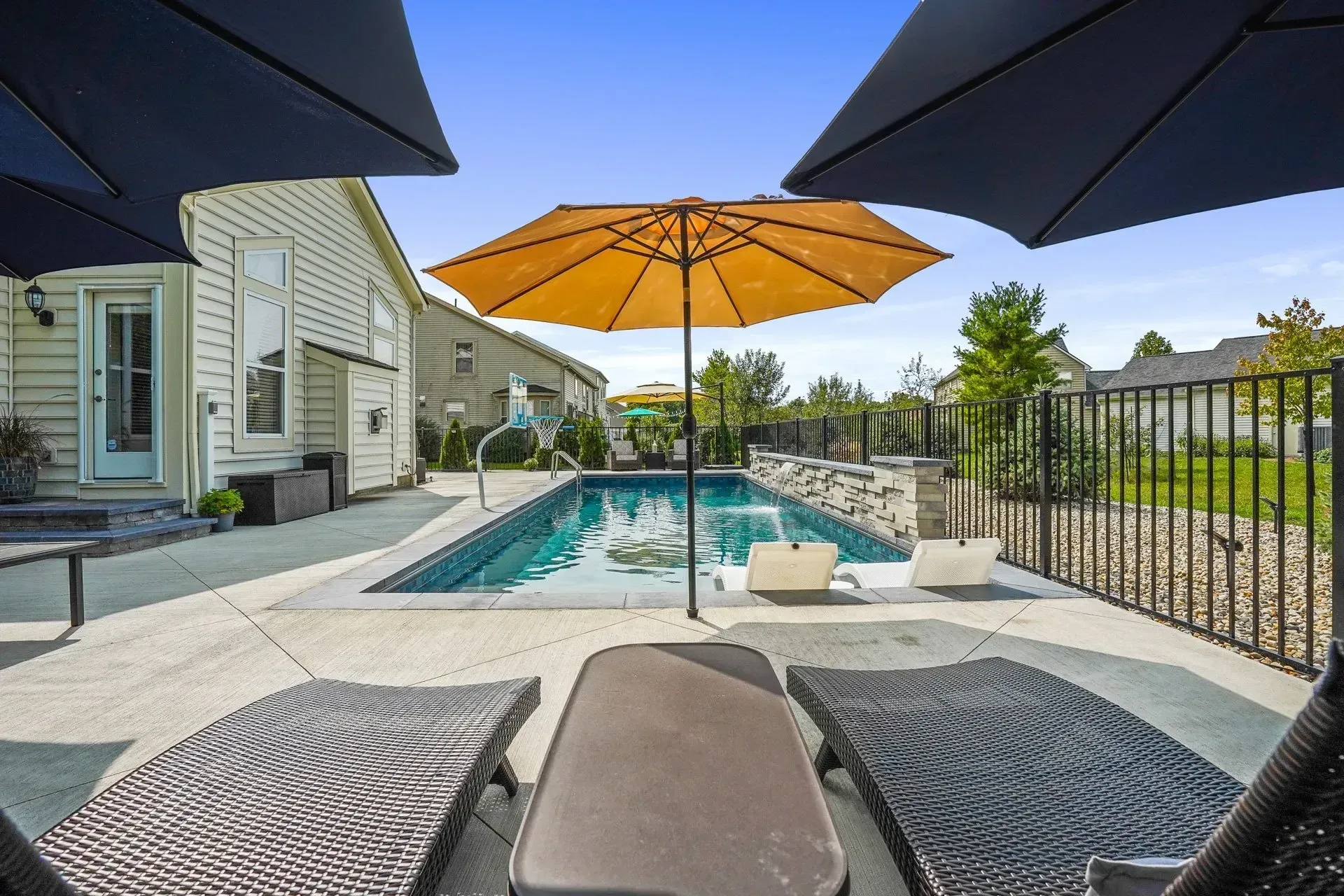
Standard Plaster — Still the Baseline, Still Has a Role
White plaster — white portland cement, marble dust aggregate, and water — is the oldest interior finish in the residential pool industry and still the cheapest on the board. Resurfacing a 30-year-old Hamilton Mill pool with white plaster in 2026 is essentially putting the original finish back in.
Per-square-foot installed, white plaster runs $4 to $6 in our market. Colored plaster — pigment added to produce grey, blue-grey, or tan — runs $6 to $8. On a typical 450 to 550 square foot Dacula interior, that puts white plaster at $2,000 to $3,300 and colored plaster at $2,700 to $4,400 — before acid wash, chip-out labor, bond coat, and startup chemistry.
Where plaster wins: Upfront cost. If you’re selling the house in two years, plaster is rational. If the pool is secondary to the property — a rental, an inherited house you aren’t keeping, a flip — plaster makes sense. It looks bright and clean for the first three to four years.
Where plaster loses: Everywhere else. It stains the fastest of the three material families. Iron, copper, and calcium spots show up against white faster than against darker aggregate finishes. Surface roughening — the etching that turns a smooth finish into something with a grip-tape feel — begins within the first couple of years in harder water. Colored plaster adds a second failure mode: pigment fade. The grey or blue you paid extra for streaks and mottles as it weathers. We’ve seen five-year-old colored plaster jobs that look blotchy in a way no one signed up for.
The math works against plaster on total cost of ownership. A 20-year hold means two resurfaces at roughly $3,000 to $5,000 each, plus the aesthetic hit during years 6 through 9. Quartz or pebble at twice the upfront cost often ends up cheaper across a 25-year hold.
Quartz Aggregate — The Middle Path That Usually Deserves a Real Look
Quartz finishes — sold under names like Diamond Brite, StoneScapes Mini-Pebble Touch, and SGM Crystalcrete — are essentially plaster with crushed quartz aggregate blended in. Quartz is harder than the portland cement binder and harder than marble dust, so the finish resists the acid etching that kills standard plaster. Color comes from tinted quartz plus pigmented cement, and holds better than plaster pigment alone because the aggregate itself carries the color.
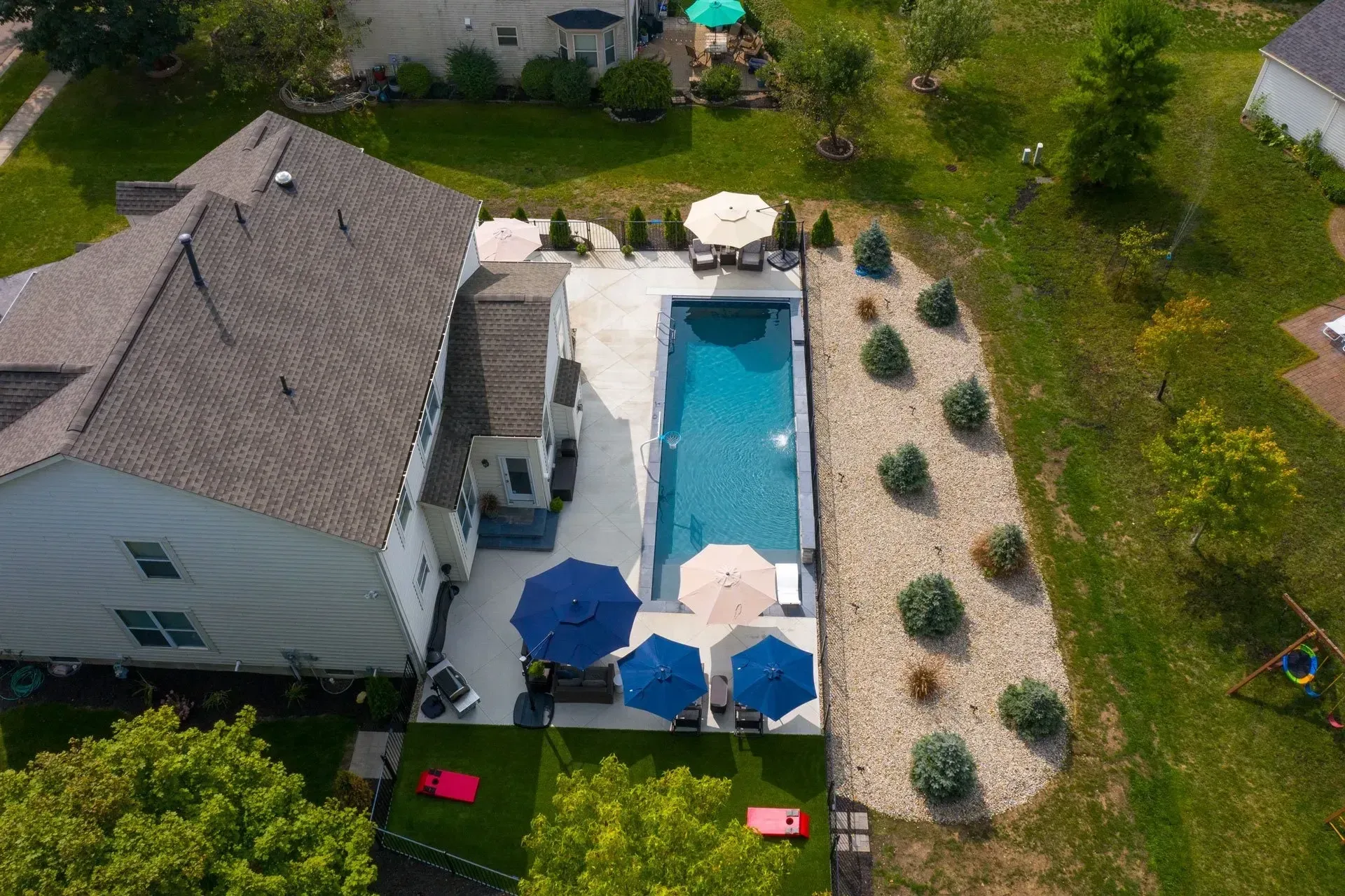
Per-square-foot installed, quartz runs $7 to $10 in Dacula. On a 500 square foot interior that’s $3,500 to $5,000 — a premium over colored plaster of roughly $1,000 to $2,500. Quartz isn’t competing against white plaster on price. It’s competing against colored plaster, and at that comparison it’s usually the right choice.
Where quartz wins: Durability per dollar. The 12-to-18-year lifespan in Dacula conditions puts quartz roughly 50-80% longer than colored plaster at 20-30% more money. It’s the best price-performance category in the interior finish world and the finish we install on the largest share of Dacula resurfaces. Color consistency also beats plaster — a 10-year-old quartz finish still looks intentional, where a 10-year-old colored plaster finish often looks like a stain.
Where quartz loses: Texture. Quartz is noticeably rougher underfoot than smooth plaster. On a pool where kids climb in and out of the shallow end repeatedly, or where the steps see heavy barefoot traffic, quartz can feel gritty. Homeowners usually acclimate within a week. Color selection is also more limited than pebble — the palette is good but doesn’t reach the mineral-tone depth pebble aggregates produce.
Our Dacula quartz default: For a homeowner planning to stay 10 to 20 more years, wanting a real upgrade over original plaster without paying pebble pricing, quartz in a mid-tone blue or soft blue-grey is the recommendation more often than not.
Diamond Brite and StoneScapes are the two lines we install most often across Gwinnett County. Both hold up similarly. Color matching between the original batch and repair patches five years later is easier on Diamond Brite — which matters if you ever need to patch a cracked section. SGM Crystalcrete performs equivalently.
Pebble Tec and the Pebble Family — The Long-Term Play
Pebble Tec is both a brand and a category. The category is pebble aggregate finishes — cement-based interior plasters with exposed river pebble, smooth pebble, or glass bead aggregate. Pebble Tec is the market-leader brand with sub-lines at different price points: Pebble Fina (smallest aggregate, smoothest finish), Pebble Sheen (medium aggregate), and Pebble Tec Signature Series (largest aggregate, most visible pebble texture). Competitors include StoneScapes Classic and Wet Edge Luna Quartz.
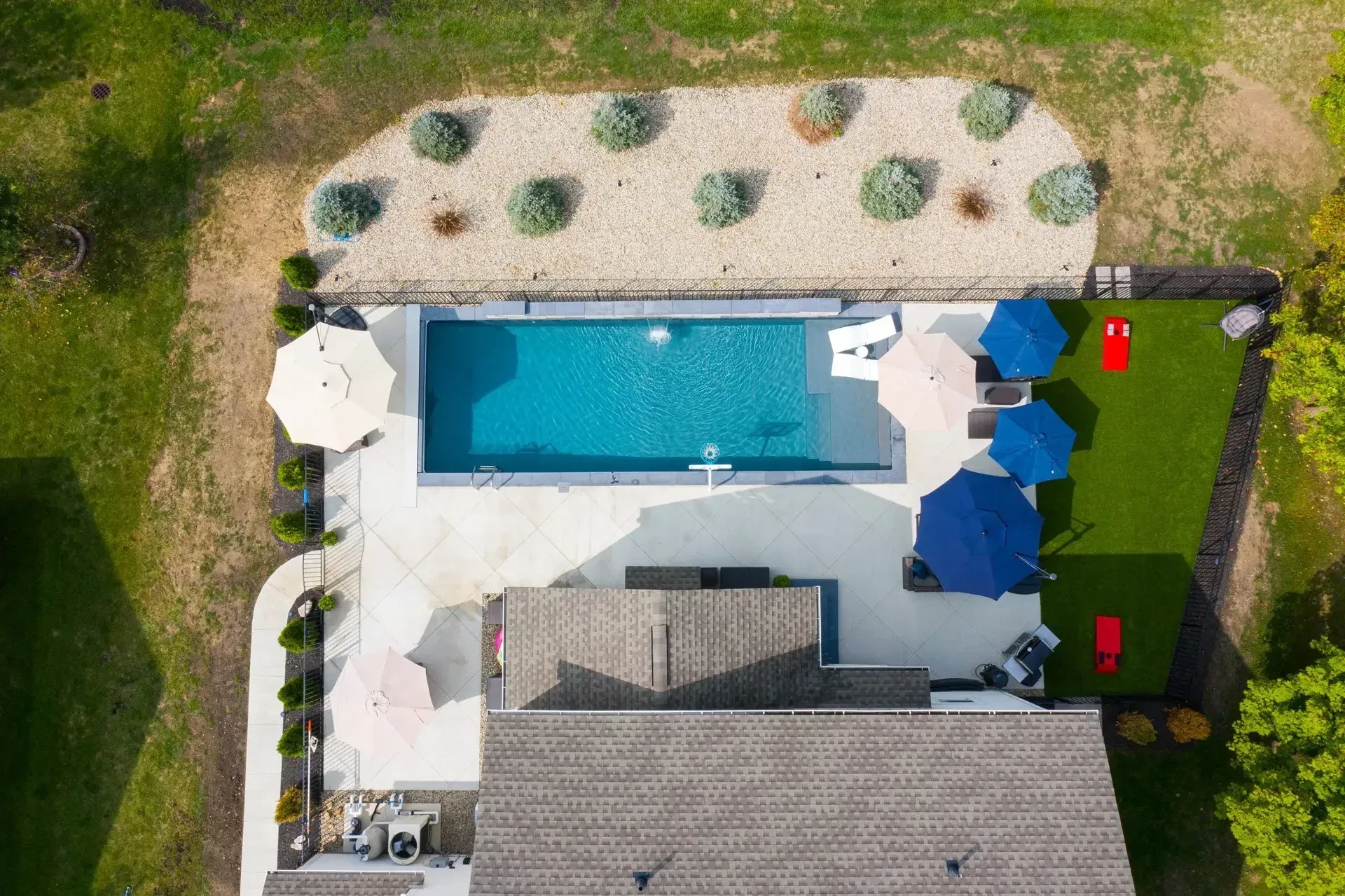
Per-square-foot across Dacula, Pebble Fina and Pebble Sheen run $12 to $18; Pebble Tec Signature Series runs $14 to $22. On a 500 square foot interior that’s $6,000 to $11,000. Real money compared to plaster. Also the finish that still looks good in year 20.
Where pebble wins: Lifespan and color depth. The 15-to-25-year range on Pebble Tec installations in Dacula is the longest of any residential interior finish. In chemistry-disciplined pools we’ve seen pebble still performing at year 22 with no meaningful aesthetic degradation. Color depth is fundamentally different — because the aggregate is a significant percentage of the visible surface, you get the look of a natural stone spring or lagoon, not painted water. Pebble also tolerates chemistry swings better than plaster or quartz; hard water scaling is less visible because the background texture absorbs the visual chaos.
Where pebble loses: Three things. Texture first — Signature-series pebble with exposed 3/16-inch aggregate is genuinely rough on the feet. Pebble Fina feels close to quartz; Pebble Sheen sits in the middle. Second, installation quality variance. Pebble is harder to finish-trowel evenly than plaster or quartz. A mediocre crew leaves visible roller marks, uneven aggregate exposure, and color-batch mismatches at the waterline. We turn down pebble projects that want the lowest bid because we know what the finish will look like at year two. Third, cost — if you can’t afford to keep the pool 15+ years, you won’t recoup the investment over plaster or quartz.
The three Pebble Tec sub-lines, ranked for Dacula pools
Pebble Sheen is the version we install most often. The aggregate is small enough that bare feet stop complaining after the first week, color depth is substantial, and the price delta over Fina is small. For 80% of Dacula pebble jobs, Sheen is the right call.
Pebble Fina is right if you have a spa, a tanning ledge, or a shallow kid-play zone where texture matters above everything else. Small enough to feel almost quartz-smooth while keeping color depth and durability. We frequently spec Fina on spa interiors and ledges with Sheen on the main pool body, as a hybrid.
Pebble Tec Signature Series is the boldest look — large exposed aggregate that reads as river stone under water. The most dramatic finish on the market and the one that gets the most gasps at reveal. Also the most uncomfortable underfoot. If the pool is primarily a visual centerpiece, Signature is spectacular. If it’s the primary family swim pool, think twice.
The Resurfacing Process and the 28-Day Water Balance Protocol
Most finish-decision conversations focus on product selection. They should also focus on installation process, because a good finish installed badly will underperform a mediocre finish installed well. Here’s what a resurface on a 1990s Dacula pool actually looks like, start to finish.
Day 1 — Drain and surface prep. The pool is fully drained. If it’s empty for the first time since installation, you’ll see things you won’t love — mineral staining at the old waterline, cracked tile, corrosion at skimmer throats. Scope sometimes expands here. If the existing plaster has delaminated in sheets — sounding hollow across 25% or more of the interior — a chip-out is coming. If it’s thin but still bonded, we can overlay. Surface prep also includes pressure washing the shell at 3,000 to 4,000 PSI.
Days 2–3 — Acid wash and neutralization. Acid wash is a muriatic acid etch of the old plaster to give the new finish something to bond to. The acid dissolves the outer layer and creates a micro-rough surface at the chemical level. After the acid pass, everything gets neutralized with soda ash to a pH target around 7.2 to 7.4 so residual acidity doesn’t attack the new bond coat. On pools where the old finish is too thin for acid etching — pools on their second plaster lifespan — we skip acid and go straight to mechanical chip-out with rotary hammers. Takes longer, costs more, gets a clean bond.
Neutralization pH target: 7.2 to 7.4 after soda ash rinse. A surface left too acidic will start eating at the bond coat before the new finish cures.
Days 3–4 — Bond Kote. Bond Kote is a cement-based bonding primer — a thin pigmented slurry that goes over the prepared old shell and creates a mechanical and chemical bridge between old gunite or shotcrete and the new finish. On any resurface over a pool more than 10 years old, bond kote is required. We don’t consider it optional. Skipping it is how you end up with a new finish delaminating in sheets within three years. Bond kote is troweled on in a thin uniform layer and allowed to set for 12 to 24 hours before the finish coat goes on.
Days 4–5 — Interior finish application. The finish — plaster, quartz, or pebble — goes on wet and is hand-troweled by a crew of two to four. This step separates a great resurface from a mediocre one. Finish application is pure craft: timing the set, blending batches so color stays consistent wall-to-wall, troweling pressure consistent across the interior, exposing aggregate uniformly on pebble finishes with proper acid-open after the initial set. The full process runs 3 to 5 working days on a typical residential resurface. We don’t apply in rain or below 50°F, which in Dacula means late-fall jobs can slip a week if a front moves through.
Final day — refill and startup. The pool is filled as soon as the finish sets enough to hold water without surface damage — usually 4 to 6 hours after troweling. The fill needs to be continuous; stopping mid-fill leaves a permanent visible water line on the new finish. A typical 25,000-gallon Dacula pool takes 18 to 24 hours from the tap.
The first 28 days — pool school protocol
This is the section almost no one explains well, and it’s the one that determines whether your new finish makes it to year 15 or year 9. The first 28 days post-resurface are the “pool school” window, and there’s a specific chemistry protocol that protects the curing finish.
Fresh cementitious finishes — plaster, quartz, pebble — are curing for their first month underwater, leaching calcium hydroxide into the water. If the water is chemistry-aggressive (low alkalinity, low calcium hardness, pH below 7.2) the curing finish dissolves faster than it sets. That creates permanent surface etching that sets the finish up for accelerated failure. Not visible in week one — invisible damage that shows up in years 4 through 6 as early surface roughening.
The protocol we hand every Dacula resurface client:
- Days 1–3: Pump running continuously. No chlorine. Brush the interior 2 to 3 times per day — yes, with the pool full — to dislodge the calcium dust that sloughs off the curing finish. This is “plaster dust,” and if you don’t brush it off, it settles and stains.
- Day 4: First water test. Target alkalinity 80–120 ppm, calcium hardness 200–275 ppm, pH 7.4–7.6. Adjust with sodium bicarbonate for alkalinity and calcium chloride for hardness. Do NOT add chlorine until alkalinity is stabilized.
- Day 5: Add chlorine to reach 1.5 to 2 ppm free chlorine. Continue brushing daily.
- Days 6–14: Test and balance every 48 hours. Brush daily. Watch pH drift — fresh finishes push pH up, and you’ll be adding muriatic acid small-dose every few days to hold 7.4–7.6.
- Days 15–28: Test twice a week. Reduce brushing to every other day. Normal chlorine, normal filter cycles. By day 28 the finish is essentially cured and you can return to a standard maintenance cadence.
28-day water targets: Alkalinity 80–120 ppm. Calcium hardness 200–275 ppm. pH 7.4–7.6. Free chlorine 1.5–3 ppm after day 5. Langelier Saturation Index at or slightly positive (+0.0 to +0.3).
We include the first service visit on every resurface — we come back on day 4, test, adjust, and teach the homeowner how to read their own test strips for the rest of the window. Clients who follow the protocol get the top of the lifespan range. Clients who ignore it get the middle or bottom.
Picking Honestly — Which Finish Wins Which Criterion
Here’s the part no marketing brochure gives you straight. Each finish ranked across the criteria that actually matter for a Dacula pool — no bias toward one product across the board.
Lowest upfront cost: Standard white plaster. Not close.
Best total cost of ownership over 20 years: Pebble Sheen. The 15-to-25-year lifespan vs. 8-to-10 for plaster means you install once instead of twice or three times.
Best 10-year sweet spot: Quartz aggregate. Best price-to-performance ratio on the board if you’re planning another 10 to 15 years in the house.
Softest underfoot: Standard plaster is smoothest when new. After etching sets in at year 3 to 5, Pebble Fina is the long-term softest finish.
Best visual drama: Pebble Tec Signature Series. Nothing comes close to the look of exposed river pebble under water.
Best stain resistance in hard water: Pebble finishes. The aggregate visually absorbs mineral deposit patterns that would show as stains on smooth plaster.
Best color longevity: Pebble. Color is in the aggregate itself, not just in a pigment layer — fade is minimal across the full lifespan.
Easiest color-match for future repairs: Standard white plaster. (Colored plaster is the worst — we’ve never seen a patch perfectly match a 5-year-old colored plaster batch.) Quartz is second best.
Best for a sale-within-3-years scenario: Colored plaster in a neutral blue-grey. Looks brand-new at closing; a short-term buyer doesn’t care about year-8 performance.
Best for a forever-home: Pebble Sheen. The answer for Hamilton Mill, Sycamore Ridge, and Chandler Ridge homeowners planning to stay through retirement.
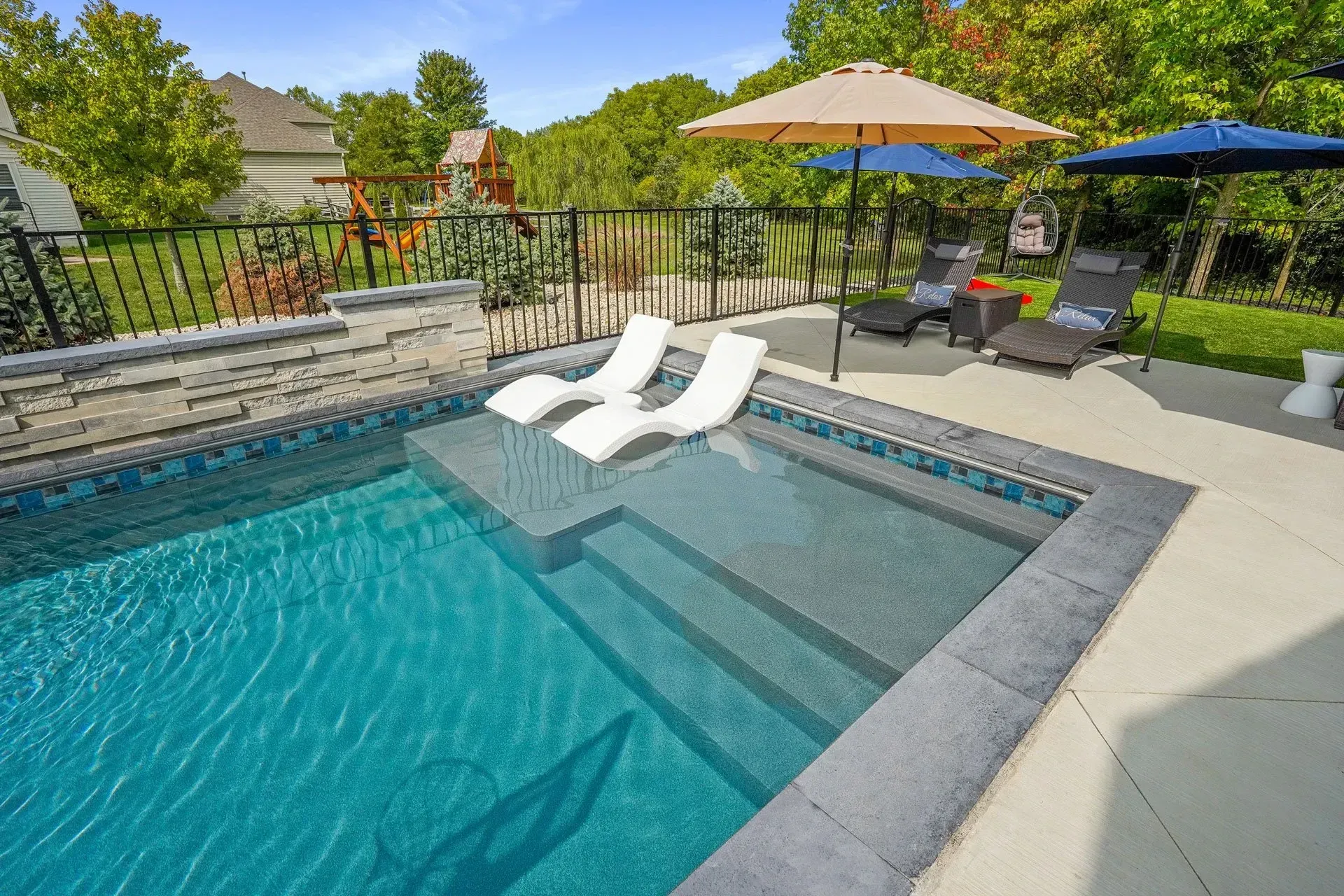
If you want one recommendation that’s right for the largest share of Dacula homeowners we talk to, it’s Pebble Sheen in a mid-tone blue-grey, installed over a proper bond kote with acid-neutralization at prep and a disciplined 28-day water balance protocol. That combination gets you to year 20 without another interior-finish conversation. If the budget can’t support pebble, quartz aggregate from Diamond Brite or StoneScapes is the right default. If it can’t support quartz and you’re in the house under five more years, colored plaster is rational.
Whatever you pick, the process matters as much as the product. A pebble finish over skipped bond kote with aggressive startup chemistry will fail at year 8 just like plaster does. A colored plaster finish installed by a careful crew with proper prep and pool school protocol can hit the top of its range. Choose the crew before you choose the finish.
Pool remodeling and resurfacing across 20+ cities within 30 miles of Winder, GA
From Hamilton Mill-era Dacula pools hitting their second resurface to fresh renovations across Gwinnett and Forsyth, we spec the interior finish that actually fits the home, the water chemistry, and the years you plan to stay.