
Every plaster-finish pool contractor in North Georgia quotes you the same price and hands you the same ten-year warranty. Here’s the part they don’t print on the contract: at Dawsonville’s 1,270 ft elevation and 30 freeze events per year, smooth white plaster is fighting a losing war the sheet-rock under your spa coping already knows about.
The pool you see in those gorgeous Foxcreek and Etowah River Club listings doesn’t stay that way because of the plaster. It stays that way because someone either replaced it at year six, or spent more up front for a finish that was engineered for the freeze-thaw cycle this ridge sits inside of. Dawsonville is the highest-elevation zip in the Primetime service area. That is not a marketing line — it’s a physics problem. Water freezes at 32°F whether you paid $7 or $22 per square foot for the interior.
This post is the straight math on why standard white plaster cracks faster up here than it does in Lilburn or Lawrenceville, why Pebble Tec’s aggregate matrix absorbs the same freeze expansion that telegraphs through smooth plaster, and — most important — when the cheaper finish is actually the right call. Not every Dawsonville homeowner needs the premium interior. Some of you are moving in five years and should spend the delta on something else. We’ll name the exact scenarios.
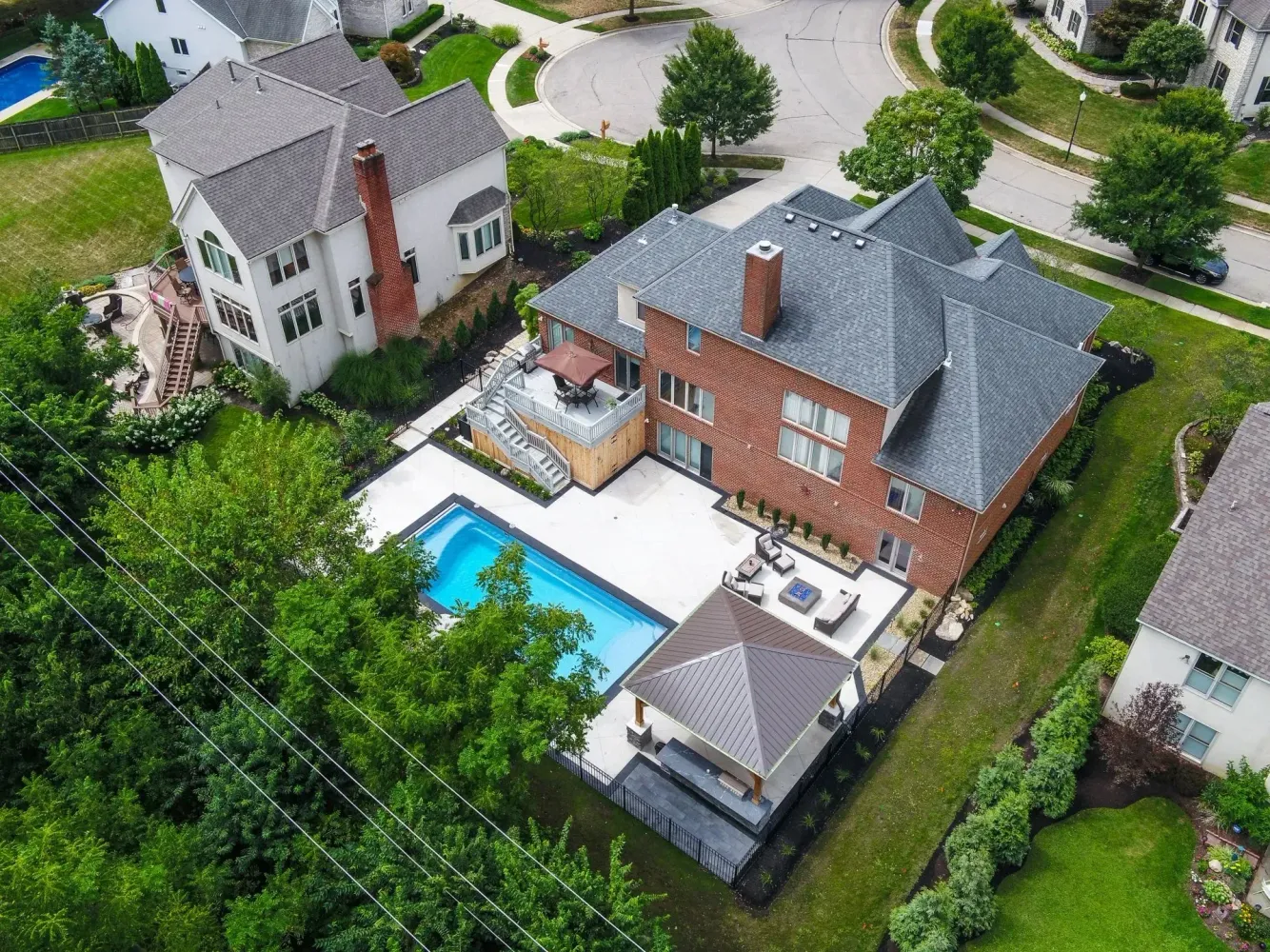
The 1,270 ft Problem: Why Freeze Events Matter More Here Than in Metro Atlanta
Drive south 40 minutes from the Dawsonville Pool Room down GA-400 and you’re in Alpharetta at roughly 1,050 ft. Go another 25 minutes to Snellville and you’re at 1,040 ft. Dawsonville sits 230 feet higher than most of the Primetime service area. That elevation difference doesn’t sound like much until you cross the freeze threshold an extra ten nights a year.
National Weather Service data from the Gainesville station (closest long-run record to Dawsonville) shows Dawson County averaging 30 freeze events per year. Dacula, 40 miles south, averages roughly 20. That’s a 50% higher freeze-thaw cycle count hitting the same interior plaster. Every freeze event drives a tiny amount of expansion into every hairline crack, every grout line, every spot where the plaster film meets the waterline tile. Water expanding 9% as it freezes is the single most destructive force in residential pool construction north of I-285.
The other Dawsonville factor nobody mentions: mountain-origin residuum. The subsoil under your pool shell on Mountain Laurel Drive or Kensington Ridge is not the Piedmont clay the rest of Atlanta sits on. It’s weathered granite and saprolite — stony, well-draining, but mechanically different. When a pool shell is carrying a load on top of saprolite instead of Cecil-series clay, the micro-movements the shell experiences during temperature swings are different too. A plaster interior that would survive 40 years on a Norcross clay pad is under measurably more stress here.
Dawsonville excavation reality: Rock blast charges on Dawson County pool digs run $8 to $14 per cubic yard over standard clay excavation. That’s a premium of roughly $2,400 to $4,200 on a typical residential dig. If you already paid it once, pouring another $4K into a premium interior is a proportional decision — not a premium upgrade.
What Actually Fails in White Plaster at This Elevation
Plaster is a portland-cement, marble-dust, and water mix applied at roughly 3/8″ to 1/2″ thickness over the gunite shell. When it cures, you get a smooth, chalky, slightly porous surface that looks like high-end stucco. It’s been the default pool interior in Georgia since the 1960s. It’s cheap — $6 to $8 per square foot installed — and when installed over stable ground at warm elevations, it runs 12 to 15 years before it needs attention.
The failure modes at Dawsonville elevation look like this, in order of how early they show up:
- Year 2 to 3: Hairline spider-cracks in the shallow-end transitions and at the waterline. These are thermal, not structural. Almost invisible unless you’re looking for them.
- Year 4 to 5: Etching. The surface starts to chalk into the water column. Pool feels rougher on bare feet. Water chemistry gets harder to hold because the plaster itself is shedding alkalinity.
- Year 6 to 7: Visible staining — grey, black, or mustard patches where the plaster has become porous enough to absorb dissolved metals and organics.
- Year 8 to 10: Delamination spots. Quarter-sized plaster plates separating from the gunite shell. You’ll see them as white “chips” on the pool floor on Monday mornings.
Every one of those milestones runs 1.5x to 2.5x faster at Dawsonville elevation than it does in Lawrenceville. A plaster interior on a Foxcreek pool that a homeowner expected to last 12 years is structurally done at year 7. The delamination doesn’t care about your warranty — most plaster warranties cover workmanship, not freeze-thaw exposure. Read the language.
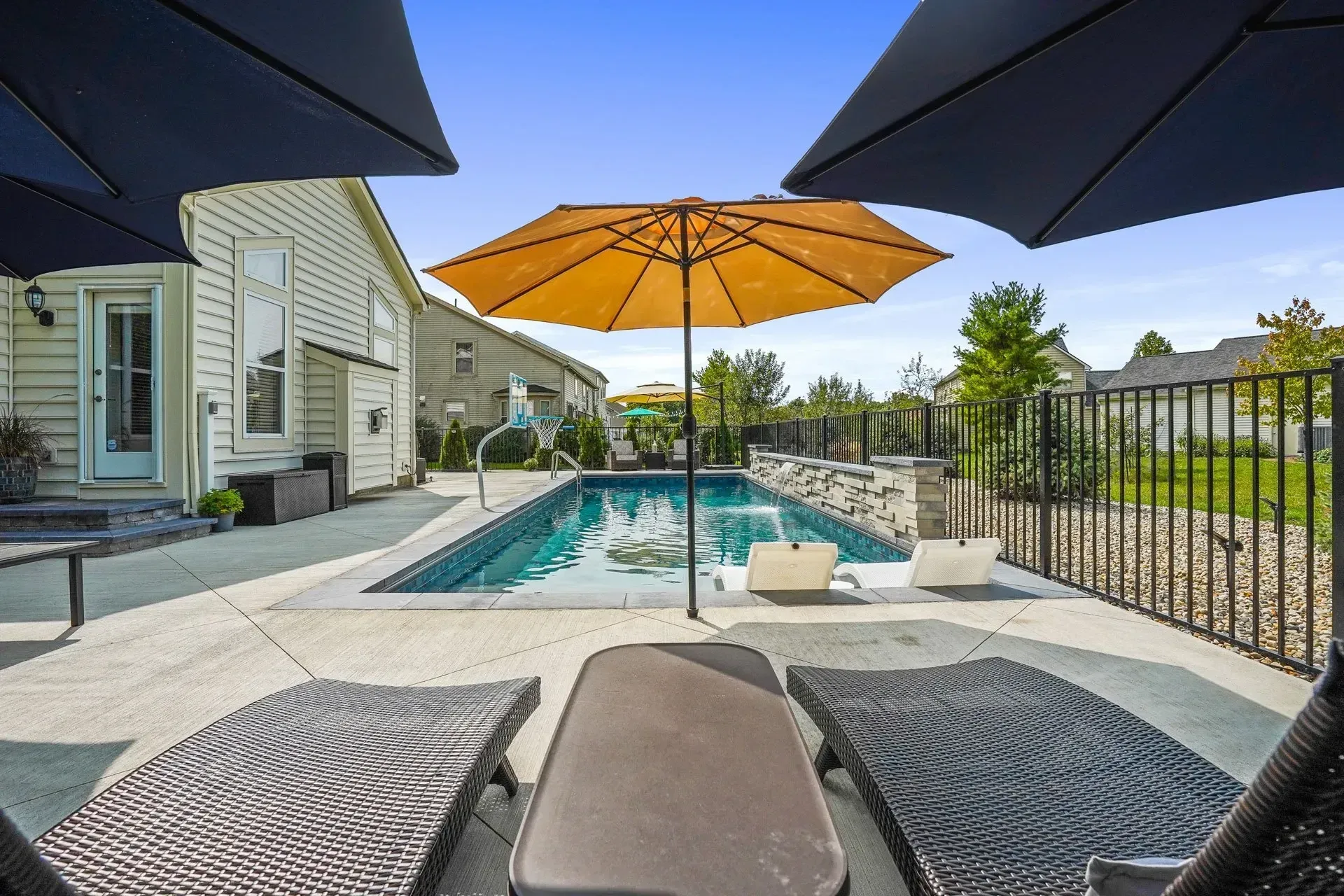
How Pebble Tec’s Aggregate Matrix Solves the Physics Problem
Pebble Tec (the original brand; there are clones) is a polished-aggregate interior finish. River-stone pebbles the size of a pencil eraser are suspended in a modified-cement matrix and applied at 3/8″ to 5/8″ thick. After cure, the surface is pressure-washed and acid-rinsed to expose the aggregate, leaving a rough, highly textured interior that looks like the bed of a clean mountain stream.
The physics advantage is simple. When water freezes and expands in a surface fissure, the aggregate matrix has thousands of micro-paths for that expansion to dissipate along. The pebbles act like a structural lattice — freeze expansion at one point is absorbed laterally across dozens of adjacent aggregate points instead of traveling along a continuous plane of smooth plaster, which is how plaster cracks propagate. You’re replacing a 2D failure surface with a 3D absorption matrix.
Pebble Tec’s published lifespan on the Signature series is 20 to 25 years in temperate climates, 15 to 20 years in hard freeze-thaw zones. Our field experience across 40+ Dawson and Forsyth County resurfaces: we have pools from 2006 installs up at Big Canoe that are at year 19 and still holding. Plaster in the same installation window is on its second or third replacement.
The Real Cost Delta: Plaster vs. Pebble Tec on a Dawsonville Pool
For a typical 700 sqft interior — a 16×34 rectangle with attached spa, which is the most common shape we resurface from Foxcreek through Chestatee — here’s the actual installed-cost math for April 2026 in the Dawson County market:
$4,200 to $5,600 on a 700 sqft interior
$12,600 to $15,400 on a 700 sqft interior
The spread that matters is not the day-one invoice. It’s the 20-year cost curve. If you’re going to own the property that long, Pebble Tec equalizes in total dollars around year 14 and is net-cheaper by year 20. If you’re selling in five years, the economics flip — hard.
When Standard Plaster Is Actually the Right Call in Dawsonville
Every pool contractor I know has this conversation wrong. They treat plaster as the “cheap out” and Pebble Tec as the premium upgrade, which pressures every homeowner into the high-margin finish. That’s not right. Plaster has a legitimate place in this market, and here are the exact scenarios where we recommend it:
Scenario 1: 5-Year Ownership Horizon
You bought the Kensington Ridge house in 2024 and the job transfers you in 2029. You don’t have a 15-year payback window. Spend the $6 per square foot, take the crisp white interior that photographs beautifully for the eventual sale, and let the next owner decide if they want to upgrade. The math says plaster outperforms Pebble Tec in every five-year-or-less scenario.
Scenario 2: Vinyl-Liner Conversion
A handful of the older Riverbend homes have vinyl-lined pools being converted to gunite. If the shell was not originally engineered for a premium interior (thinner gunite, lighter rebar schedule), you don’t necessarily want to load a heavier Pebble Tec finish onto an under-built shell. Plaster is lighter and more forgiving on those older structures.
Scenario 3: Budget Is Better Spent on the Coping
If your $12K resurface budget can only cover one thing — Pebble Tec interior OR a full travertine coping replacement where the existing concrete coping has already started spalling from freeze cycles — take the coping every time. Coping failure drives water intrusion behind the tile line, which is what actually kills pool shells. A good plaster interior with sound coping outlasts a bad coping situation with premium plaster.
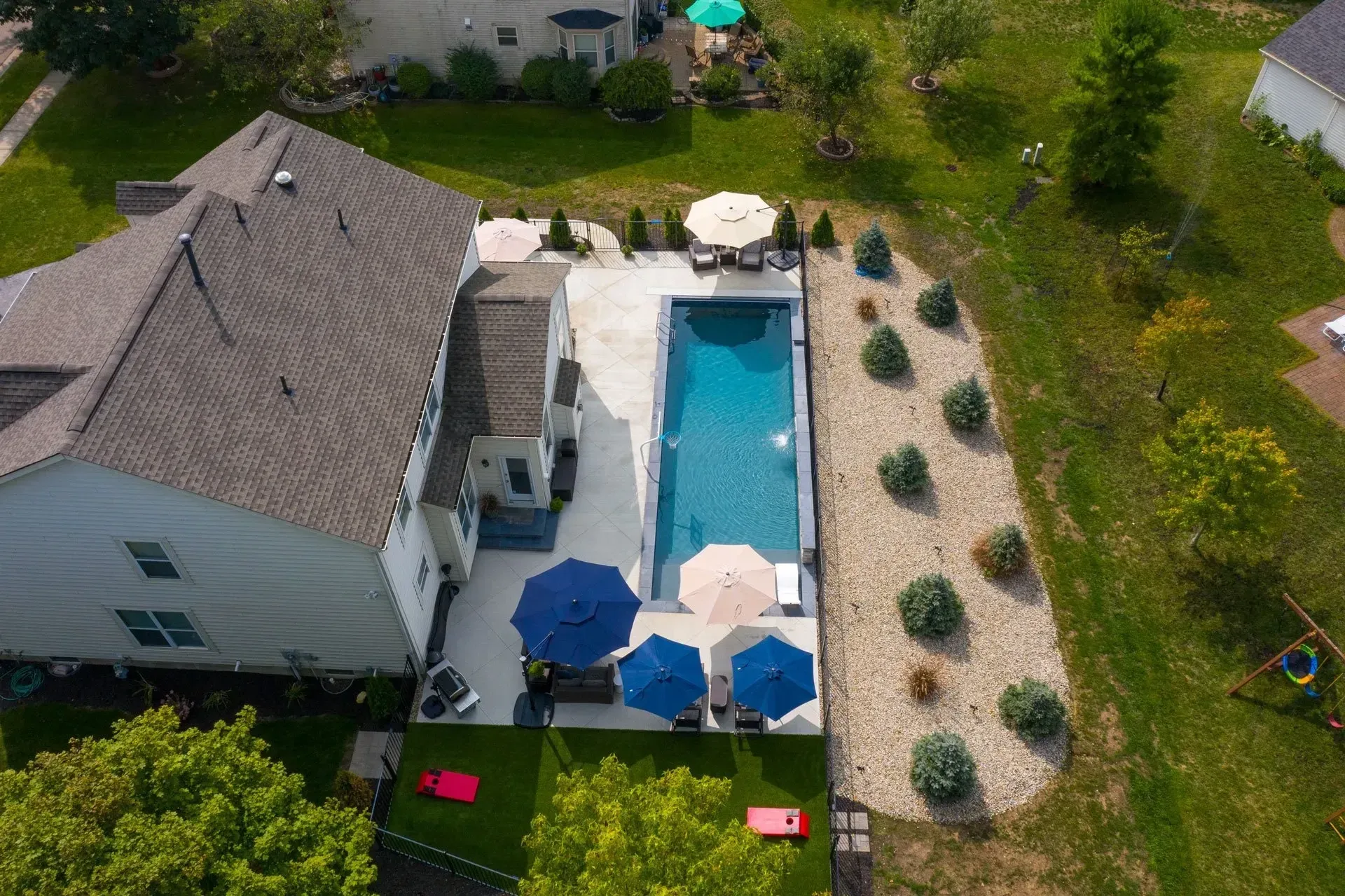
Waterline Tile, Permits, and What the Resurface Actually Looks Like
Waterline Tile: The Detail That Decides Whether the Resurface Lasts
Here’s where most Dawsonville resurfaces go sideways. Homeowners budget for the interior, forget about the waterline tile band, and end up with a gorgeous $14K Pebble Tec interior butting up against cracked, grout-failed 4×4 ceramic tile that the previous owner installed in 2009. Within two winters, freeze-expansion behind that tile band drives water into the bond beam and kills the new finish from above.
The tile band is the waterproofing seam between the coping and the pool interior. At Dawsonville’s freeze rate, compromised waterline tile is not cosmetic — it’s the single fastest path to bond-beam damage, which turns a $15K resurface into a $40K rebuild. Our standing recommendation: if the existing tile is over 12 years old and you’re doing a Pebble Tec resurface, replace the tile band at the same time. Incremental cost of roughly $1,800 to $2,600 on a 60-foot perimeter. Skipping it is the single biggest mistake we see on Dawsonville resurface jobs.
Tile-replacement timing rule: Tile and interior should always be re-done together, not in separate years. Doing tile first and plaster second creates a cold joint at the waterline that fails within 3 freeze cycles. Doing interior first and tile later means cutting into your new finish to set tile. Both cost you more than doing them together.
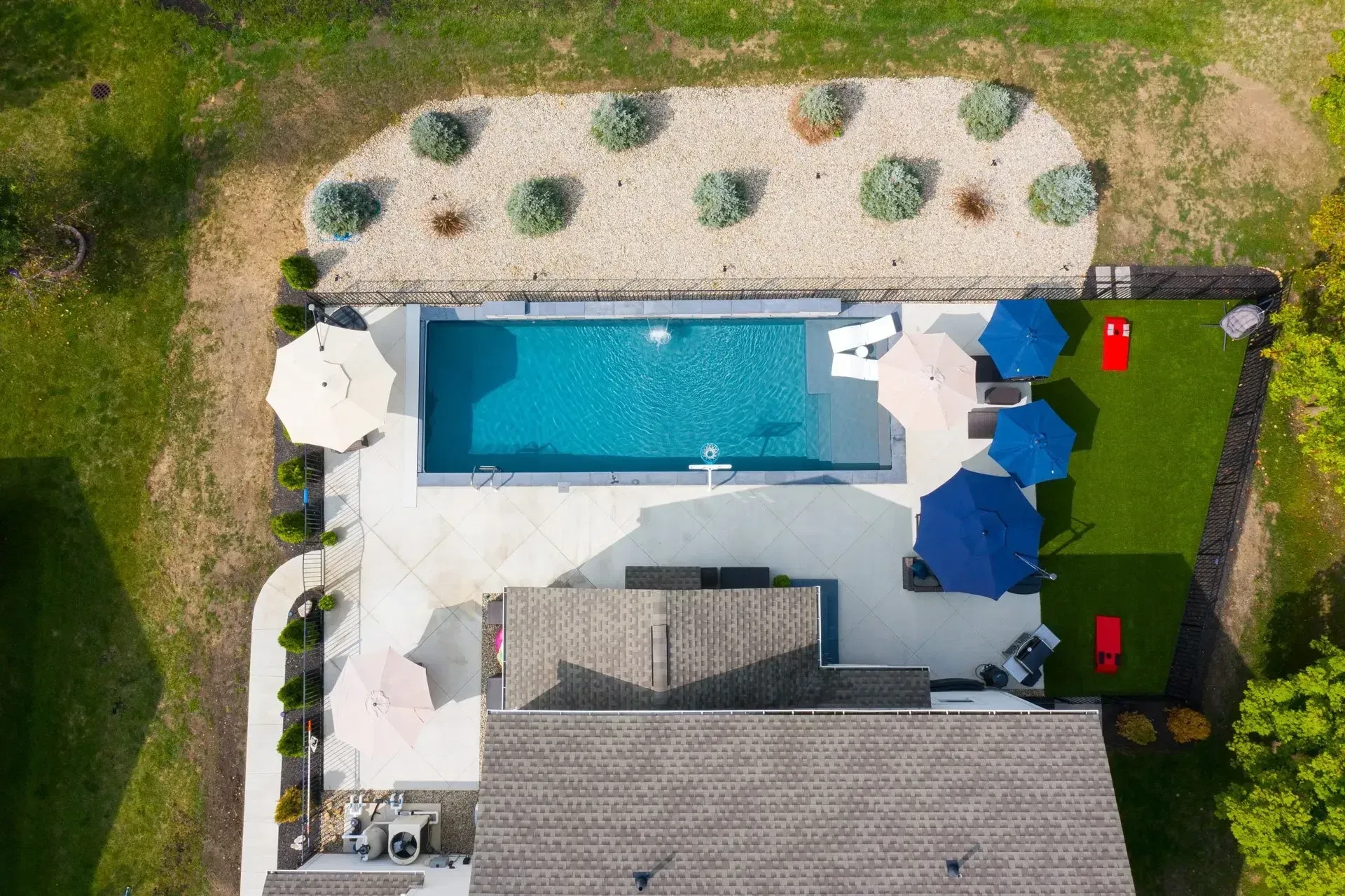
Timeline, Permits, and Crew Days
Dawson County permits go through the Dept. of Planning & Development at 25 Justice Way, Dawsonville. A resurface by itself does not typically require a county permit — you’re not altering the structure or plumbing. If you’re combining resurface with any of the following, a permit is required: new or relocated equipment pad, any bonding work under NEC §680, new or relocated pool light, any electrical drop change from Amicalola EMC.
Timeline from signed contract to full water:
- Day 1: Drain. 8 to 12 hours to pump a 22,000-gallon pool to the curb via discharge hose. Dawson County allows chlorinated pool water discharge to stormwater drains with dechlorination — we always add sodium thiosulfate 48 hours before drain to be safe.
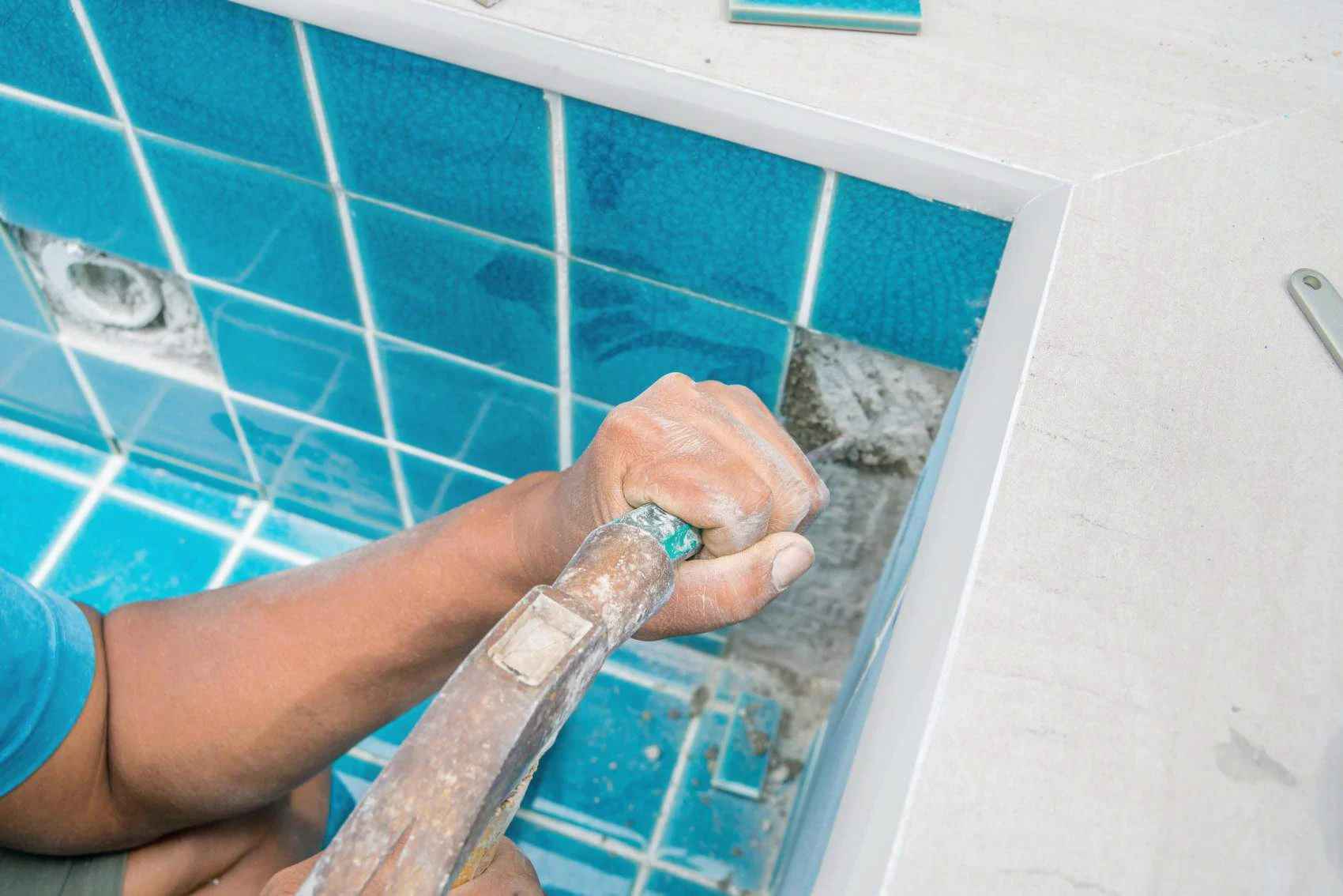
- Days 2 to 4: Prep. Chip old plaster back to sound gunite, cut and remove existing waterline tile, pressure-wash the shell. This is the dirty, loud phase — expect fine white dust across a 30-foot perimeter around the pool.
- Day 5: New waterline tile install + any coping repair. Tile cures overnight.
- Day 6: Bond-coat + Pebble Tec application. This is a single-day application — a full crew of 4-5 guys, starts at 7am, finishes by 3pm.
- Day 7: Acid wash / exposure. Pebble Tec gets pressure-washed with muriatic acid wash to expose the aggregate. The rinse is critical — skipped or shortened acid wash is why some Pebble Tec jobs look dull.
- Days 8 to 14: Fill + start-up. Fill rate roughly 48 hours for 22,000 gallons at Dawsonville well/municipal pressure. Then a 10-day water-brushing regimen to polish the interior as it cures. Homeowner does the brushing 2x per day. It matters — brushed Pebble Tec at year 15 looks twice as good as unbrushed.
Total calendar: 10 to 14 days from the first chipping hammer to the first swim. Add 3 to 5 days if you’re combining with coping or deck work.
Finish Choice and the 20-Year Ownership Framework
Pebble Tec Finish Choices: Which Color Actually Looks Best at 1,270 ft
The Pebble Tec family has roughly 25 named finishes across three product tiers (Signature, PebbleSheen, and PebbleBrilliance). Color is where homeowners tend to over-think and under-research. The factor almost nobody considers: sky color at elevation.
At Dawsonville’s elevation, the sky runs bluer and the ambient reflection off your pool surface is cooler-toned than it is down in Snellville. A pool interior that looks “just right” in a Suwanee display yard photo can read grey-green and muddy when the same finish is installed under Dawsonville sky. Three finishes hold up consistently up here:
- Tropics Blue — Medium blue aggregate, reads bright Caribbean-blue in water. Best at the $20 per sqft tier. This is our default recommendation for aerial-photo-friendly Dawsonville estates.
- Blue Granite — Darker charcoal-blue. Water reads deep navy. Looks incredible on rectangles with dark coping. Shows leaves and debris more than lighter finishes.
- Caribbean — Lighter, more aqua. Excellent for shallower pools and tanning ledges. Reads chlorine-bright under the higher sun exposure you get at Foxcreek ridge lots.
Finishes we’ve seen disappoint at this elevation: White Pearl (reads too stark against Dawsonville clay and mountain backdrop), and any of the greenish or Mediterranean-tinted finishes (read swamp-green under cloudy mountain sky, which is roughly 40% of any given year up here).
The 20-Year Ownership Decision Framework
If you’re deciding right now between plaster and Pebble Tec for a Dawsonville resurface, here’s the decision tree that actually matters:
- How long will you own the property? If under 7 years, plaster wins on pure math. If 15+ years, Pebble Tec wins comfortably. Years 7 to 15 is the gray zone — decision depends on the next questions.
- What’s your pool usage rate? Heavy-use pools (40+ swim days per year) benefit disproportionately from Pebble Tec because the foot-texture survives the abrasion cycle much better than plaster. Light-use pools (20 or fewer swim days) won’t see the texture advantage and plaster economics tighten.
- Will you do the water-brushing regimen during Pebble Tec cure? If yes, the finish will look remarkable at year 15. If no, you’ll have a $14K interior that looks like a $7K interior by year 5. Be honest with yourself on this one.
- Is your coping and tile sound? If you need a major coping overhaul, your resurface budget is probably better split across coping + plaster than concentrated on Pebble Tec + aging coping.
- Are you within 12 miles of GA-400? If yes, equipment trucking for a Pebble Tec crew is identical to metro Atlanta pricing. If you’re further north toward Amicalola Falls Rd, we add $400 to $800 for the additional trucking and crew-day cost. Still worth it for the right ownership horizon.
The honest call we give most Dawsonville homeowners: If you’re staying 15+ years, Pebble Tec Signature in Tropics Blue at $14,000 to $15,400 installed on a typical 700 sqft interior is the right decision, full stop. If you’re under 7 years, premium plaster at $5,600 is the right decision, full stop. The middle ground is narrower than the industry wants you to think.
Red Flags in Dawsonville Resurface Bids
Three bid patterns to walk away from:
Bid pattern 1: “Pebble Tec” at plaster pricing. If a contractor bids Pebble Tec Signature at under $14 per square foot installed in Dawson County, they are either (a) using a clone aggregate finish and calling it Pebble Tec, (b) skipping the acid-wash exposure step, or (c) using reclaimed aggregate. None of those will last the advertised 20 years. Pebble Tec Signature pricing under $18 per sqft is not economically real in 2026.
Bid pattern 2: Resurface only, skip tile and coping inspection. A professional Dawsonville resurface bid starts with a drained-pool walk-through where the contractor assesses tile, coping, bond-beam condition, and light niches. If a bid arrives with no site-visit inspection, they’re guessing on scope — which means change orders mid-project.
Bid pattern 3: Unusual start-up language. Look at what your contractor says about water-brushing during cure. If the contract doesn’t specify the brushing regimen, or if it hands that off entirely to the homeowner without a specific schedule, you’re going to get a finish that looks great on day one and dull by year four. Brushing schedule belongs in the contract.
The Dawsonville Decision, in One Sentence
At 1,270 feet with 30 freeze events a year, smooth plaster is fighting physics it can’t win past year 7, and Pebble Tec’s aggregate matrix is the only finish engineered to absorb the expansion cycle this elevation produces — but none of that math matters if you’re selling in 5 years, and all of it matters if you’re staying 15+. Know which homeowner you are before you sign the contract.
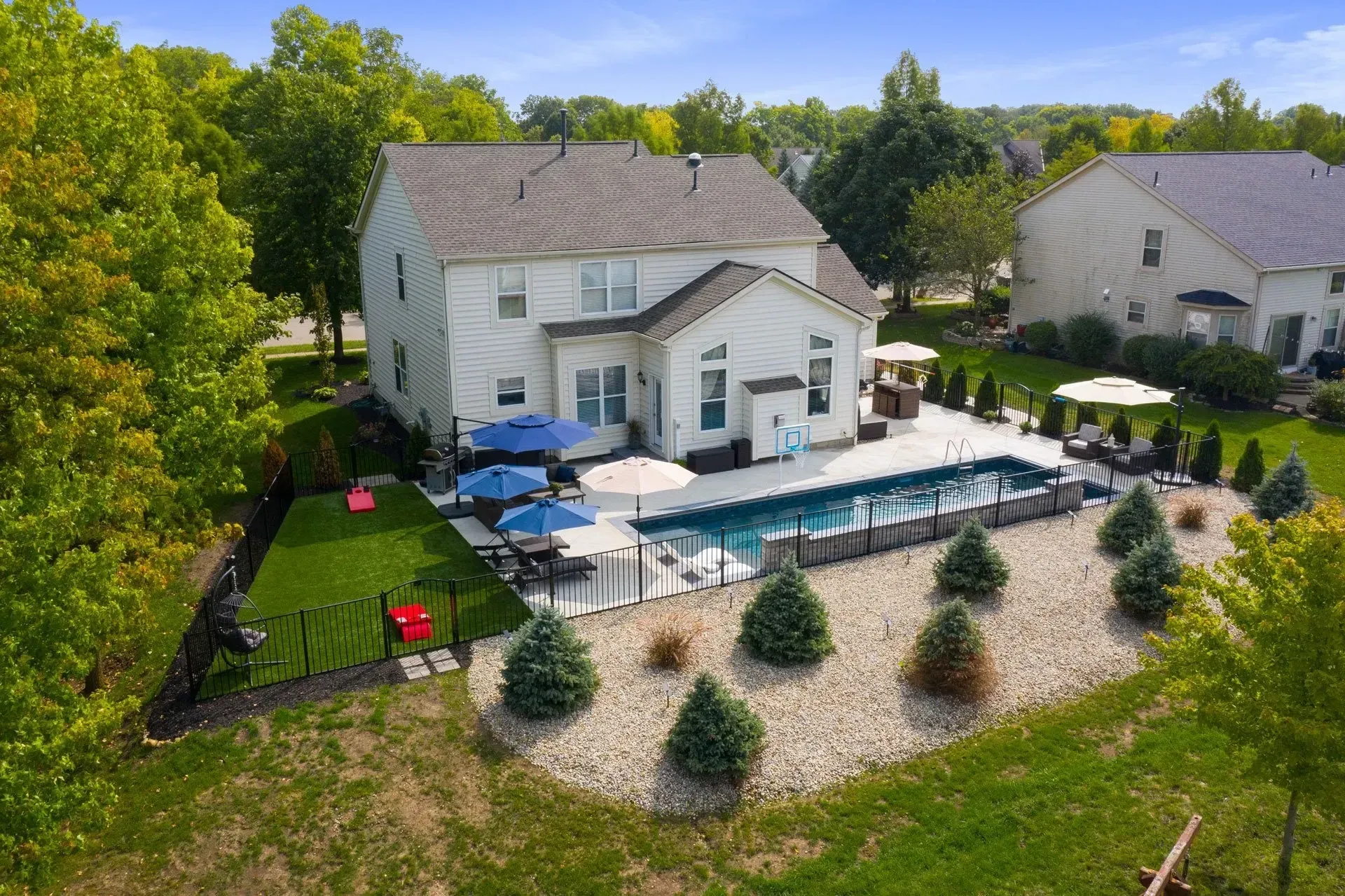
The Dawsonville pools that still look photograph-ready at year 15 — the ones you see in the Etowah River Club listings, the estates along the Dawson Forest Road corridor, the big-lot installs near Atlanta Motorsports Park — are not the ones where the homeowner bought the cheapest interior finish and hoped. They’re the ones where the homeowner understood what the elevation actually does to plaster, ran the 20-year cost math, and paid once for the finish engineered for this altitude’s freeze-thaw reality.
Pool remodeling and resurfacing across 20+ cities within 30 miles of Winder, GA
Dawsonville’s freeze-thaw rate is real. So is the 20-year cost math on Pebble Tec versus plaster. We’ll walk your pool, measure what you’ve got, and give you the honest call on which finish belongs at your elevation and ownership horizon.