
Eight-foot deep ends are a hangover from a sport nobody plays in their backyard anymore. Across 200+ pool permits Forsyth County approves each year, the modern spec has shifted — and the families still asking for 8 feet are almost always paying $4,400–$6,800 extra for depth their kids will never use.
Here is the contrarian read that most builders will not say out loud in a consult: the 8-foot deep end is a legacy spec. It was drawn up for diving boards, and diving boards are disappearing from residential construction in Forsyth County faster than almost any other feature. Walk through Vickery, Habersham at Lanier, or the newer Coal Mountain estate builds and count diving boards. You will find a handful. Walk the same streets and count pools — hundreds. The spec followed the feature out the door, but a lot of homeowners are still asking for 8 feet because nobody told them the rule changed.
This is not a generic depth primer. This is a specific argument for a specific county with specific buyers: Forsyth County, GA has roughly 260,000 residents across 247 square miles, is the fastest-growing county in Georgia over the last decade, and its HOA density is unusual — almost every neighborhood between GA-400 exits 13 and 18 has a homeowners association with opinions about deep water and insurance. The math below reflects that reality.
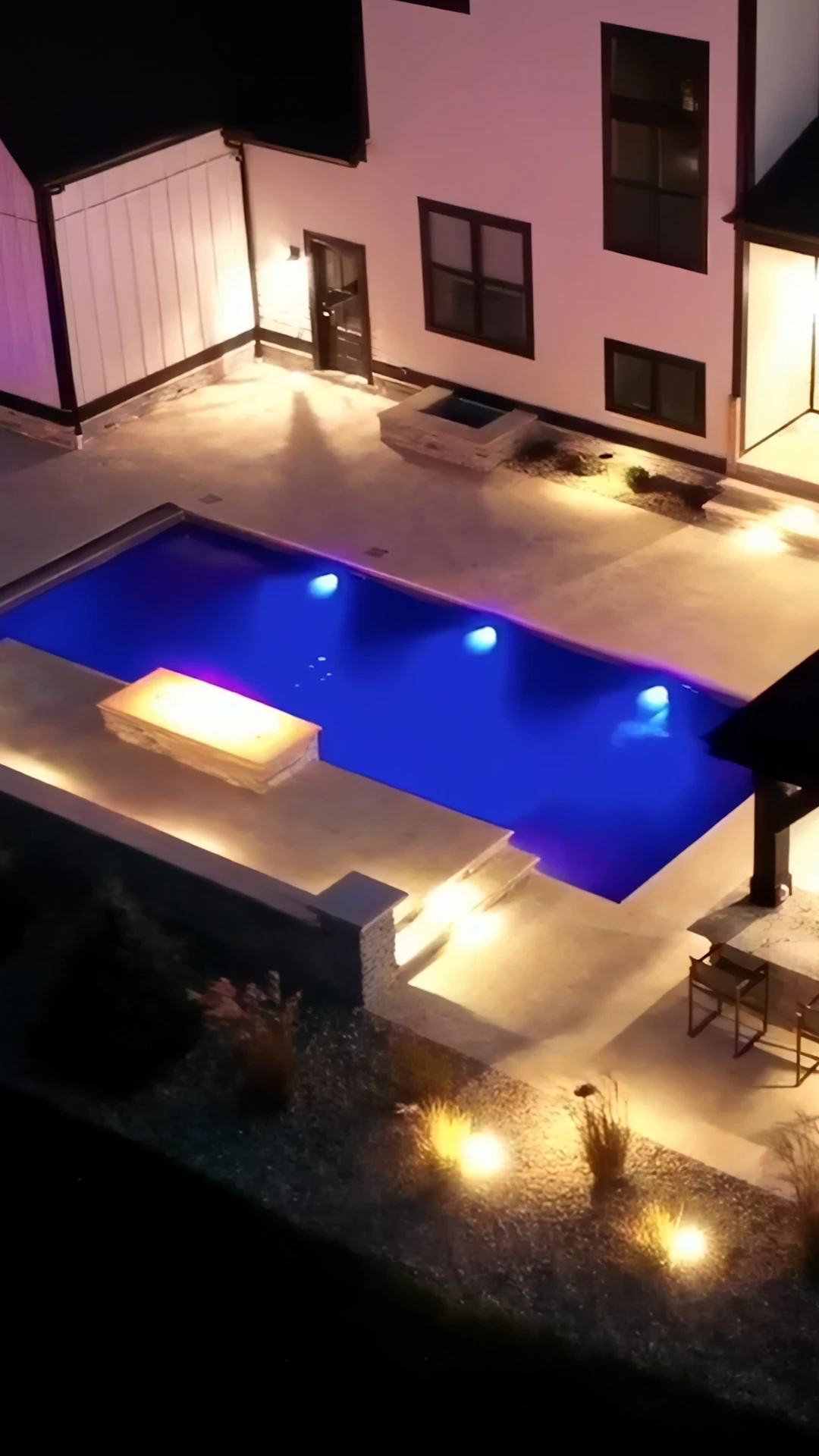
Mistake #1 — Asking for 8 Feet Because the House You Grew Up With Had It
This is the most common mistake we see in kickoff meetings, and it is almost always emotional, not functional. Someone remembers a diving board from childhood, remembers the deep end where the bigger kids gathered, remembers their dad doing a cannonball. They associate 8 feet with a “real” pool.
Here is what that extra two feet of depth actually buys you in 2026 Forsyth County construction:
- About 25 additional cubic yards of excavation spoil — which has to be hauled off your lot because Cecil-series Piedmont clay does not compact well enough to spread around the yard as fill without engineering oversight.
- Roughly $4,400 to $6,800 in added cost across the excavation, steel, gunite or concrete volume, plaster square footage, and water fill. On rockier north-end lots toward Coal Mountain, the number goes higher because rock removal isn’t a flat line item.
- Longer heat-up times, because your heater is now trying to warm a deeper, colder thermal mass. A Pentair MasterTemp 400K BTU heater that cycles a 6-foot pool up to 88°F in 12 hours takes 14–16 hours on the 8-foot version.
- Higher chemical cost over 20 years, because you are treating more gallons — not a huge line item annually, but the compound math matters on a pool you will own for 15-20 years.
- Insurance scrutiny, which we’ll come back to.
What it does NOT buy you: diving. Unless your pool is both 8 feet deep AND has the specific hydraulic shape required by ANSI/APSP-5 residential diving standards — minimum basin width, minimum diving envelope, minimum slope transition — that 8 feet is not a safe diving depth. It is just expensive water. And if you install a diving board over a basin that doesn’t meet the spec, your insurance carrier will likely hear about it the first time they re-inspect.
Worth a pause on that ANSI/APSP-5 point because it’s the single most misunderstood spec in residential pool design. Homeowners assume depth is the variable that makes diving safe. It isn’t — diving envelope geometry is. The standard requires the pool to hold a specific teardrop-shaped clear volume of water extending from the diving board tip forward and downward for a set distance and angle. Most 16×32 Forsyth County backyard pools physically cannot hold that envelope regardless of how deep the basin goes, because their floor-slope geometry is wrong for it. You could dig a 10-foot deep end and still not meet the spec. Conversely, a correctly shaped competition pool at a community club needs only 10-11 feet because the envelope geometry is right. Residential 8-foot diving pools were always a compromise — one the industry has been quietly walking back for a decade.
The dollar number that matters: Going from a 6-foot to 8-foot deep end on a typical 16×32 Forsyth County build adds roughly $4,400–$6,800 to the final invoice — excavation, haul-off, added structural volume, additional plaster, added fill water. We price this separately in every proposal so homeowners see the line item.
Mistake #2 — Ignoring What Your Forsyth County HOA Actually Says About Diving Boards
If you live in a platted subdivision in Forsyth County — and most residents in zip codes 30040, 30041, and the newer builds in 30028 do — your HOA covenants almost certainly have language about diving boards. We have reviewed covenants for communities across Bethelview, Shiloh, Brookwood, Shady Grove, and Big Creek, and the pattern is consistent: the vast majority of Forsyth HOAs either explicitly ban diving boards or require architectural review board approval with liability language that most boards won’t sign off on.
Why? Because HOA insurance underwriters started pricing diving boards aggressively after the mid-2000s liability reset. Associations with diving boards across multiple homes saw premium hikes. The easy fix was to ban new installations, and that language is now in most post-2005 covenants in Forsyth. Which describes the overwhelming majority of housing stock in this county — the 85% of homes built 1995 to present that make up the modern Forsyth footprint.
So the chain of logic for most homeowners here is: you want 8 feet to support a diving board, but your HOA won’t let you install one, so you’re paying for depth you can’t feature. It’s a hangover spec. Read your covenants before the consult. If the HOA allows diving boards, that’s an interesting data point worth discussing. If it doesn’t — and it probably doesn’t — move on and spend the depth budget somewhere better.
The second-order effect that nobody mentions: even if your HOA is silent on diving boards, your personal homeowner insurance carrier almost certainly is not. The attractive nuisance language in most standard Georgia homeowner policies treats a residential diving board as a rated risk. Carriers will either decline the policy, exclude diving board liability, or raise premiums on a liability rider. We’ve seen $350 to $900 in annual premium increases attributable to a single diving board installation, and homeowners rarely hear that number until the policy renewal arrives. That’s another ten to twenty thousand dollars over the pool’s lifetime spent on insuring a feature that rarely gets used after the novelty wears off.
The counter-argument some clients raise: “We’ll skip the diving board but still want the 8-foot depth for the look.” That’s a legitimate preference. But here’s the honest read on “the look” — from pool deck eye level, a 6-foot zone and an 8-foot zone are visually indistinguishable. The water reads as “deep” once you cross the 5-foot threshold. The extra three feet of basin height below that point only shows in plan drawings and excavation invoices, never from a chaise on the deck.
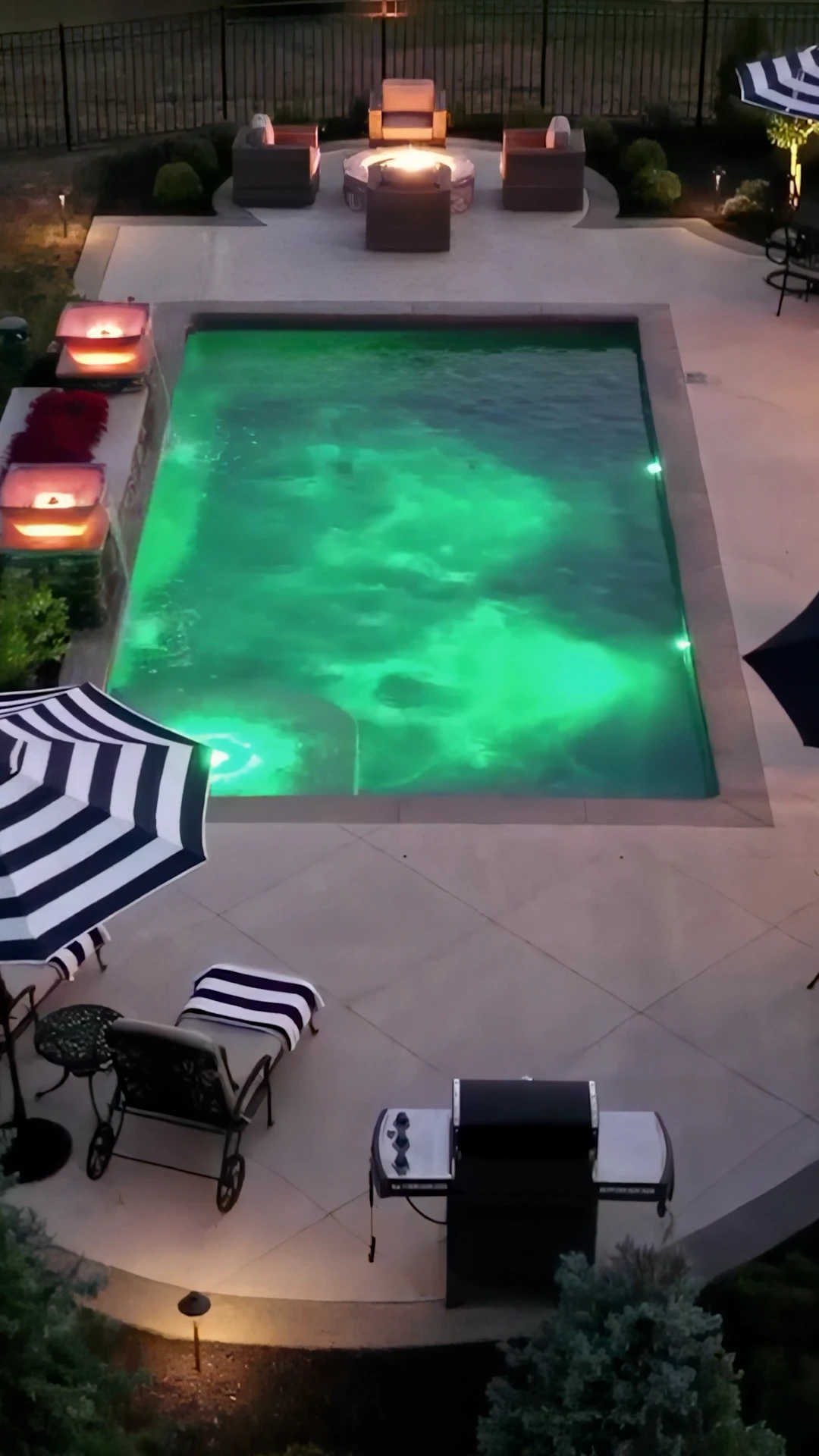
Mistake #3 — Thinking Depth Is How Kids Learn to Swim
This one comes up in almost every family consult. A parent says, “We need a deep end so the kids can learn to dive and swim properly.” The opposite is true. Children learn to swim in the transition zone between 3’6″ and 4’6″ — deep enough that they can’t touch for extended moments, shallow enough that a parent can stand next to them without treading water. An 8-foot deep end is where kids aren’t yet. It is where they go eventually, for maybe ten minutes a visit.
Our most popular Forsyth family build is what we call the play-heavy layout: roughly 70% of the pool surface sits between 3’6″ and 4’6″, with a 6-foot max depth in the last third. Parents can stand across most of the pool. Kids can stand or tread depending on zone. Adults can swim full laps without hitting bottom in the deeper section. The 6-foot zone still feels like “the deep end” for a kid — but it costs far less and uses the yard better.
Mistake #4 — Overlooking the Play Depth That Actually Matters
Here is the spec that almost no homeowner asks about but every builder should volunteer: play depth. This is the band between 4 feet and 5 feet where almost all active pool use happens for families — volleyball, basketball, floating games, pool parties, adults hanging around chest-deep.
The 8-foot-deep-end design philosophy compresses play depth into a narrow transition zone. You’ve got a long shallow end, a short slope, and a big deep well that only gets used when somebody wants to touch bottom to say they did. The 6-foot design philosophy — paired with a smart floor profile — turns the play depth zone into the hero of the pool.
A good Forsyth build at the 6-foot max spec typically reads like this from shallow to deep:
- Sun shelf / tanning ledge at 9-12 inches, 6-8 feet deep, often with bubblers or a fountain.
- Shallow play zone at 3’6″ to 4’0″, occupying 35-45% of total surface.
- Core play zone at 4’6″ to 5’0″, occupying another 30-35%.
- Slope transition into the 6-foot zone — the part of the pool that reads as “deep” without actually being deep enough to overengineer.
- Swim-out benches on the deep end walls, usually at 18 inches from bottom, for resting or climbing out.
The math on surface-area allocation matters because your pool in Forsyth County is almost certainly going to be between 420 and 560 square feet of water, given typical lot sizes, setbacks, and HOA footprint caps. You don’t have infinite surface to play with. Spending 60% of it on play depth and shallow entertaining beats spending 20% of it on an unusable deep well.
Mistake #5 — Forgetting That Excavation Cost Compounds on Forsyth Soil
Forsyth County sits on Cecil-series Piedmont clay across most of its 247 square miles. It’s workable clay — not the nightmare soil some Georgia counties deal with — but it does two things that matter to depth pricing.
First, it does not drain well. A deep basin cut into Cecil clay collects groundwater during the shoulder seasons. Every extra foot of depth means more hydrostatic pressure on your shell, which means a more robust gunite schedule, more rebar, and a more serious hydrostatic relief valve at the main drain. That’s not optional — it’s code-driven, and it adds real dollars per foot of additional depth.
Second, north Forsyth gets rockier. By the time you’re up near Coal Mountain off Hwy 9, or along the ridgelines on Post Road, saprolite and granite float become part of the dig. That means the last two feet of an 8-foot excavation can run you significantly more than the first six, because you’re no longer digging — you’re breaking. We’ve seen rock-impact change orders add $1,800 to $3,200 to an otherwise smooth job, and that change-order pressure almost always shows up in the last two feet of excavation.
The 6-foot spec keeps most Forsyth digs above the worst of the rock layer. The 8-foot spec pushes you into it on a meaningful percentage of lots. That’s a real-money difference, and it’s specific to this county in a way it wouldn’t be down in Gwinnett or over in DeKalb.
There’s a third factor that doesn’t get enough airtime: shoring. When you dig past 6 feet on a typical Forsyth backyard with adjacent structures, HOA-mandated privacy fencing, or a neighbor’s driveway within 20 feet of the pool footprint, OSHA-compliant shoring becomes a line item. Trench boxes, sheet piling, or engineered soldier piles depending on depth and adjacency. A 6-foot dig usually slopes back safely at the 1:1 angle Cecil clay holds reliably. A 9-foot dig (6 feet of pool plus 3 feet of overdig for shell and plumbing) often doesn’t. That’s the difference between a clean excavation week and a week that includes rental equipment, engineering sign-off, and potentially a trenching-competent-person on site for multiple days.
None of this is theoretical. Across the past two build seasons in Forsyth County, the margin between a smooth 6-foot excavation and a “we hit rock at 7 feet” 8-foot excavation has been the single most common driver of change orders on our custom pool builds. Clients who default to 6 feet rarely see those change orders. Clients who insist on 8 feet see them with some regularity.
Spoil haul-off — the line item nobody sees coming: The extra 25 cubic yards from an 8-foot dig instead of 6-foot costs roughly $550–$900 just to haul off in Forsyth, because most residential lots here don’t have the grade flexibility to absorb the spoil as fill. That number is on top of the excavation labor.
Mistake #6 — Skipping the Bench-to-Swim-Out Configuration
Here is the spec that replaces the deep-end diving board on modern Forsyth residential pools: the bench-to-swim-out configuration. It’s the single most underrated feature in residential pool design, and almost every family we build for ends up loving it more than they expected.
A swim-out is a built-in bench or step cluster in the corner of the deep end, usually 18 inches below waterline, that serves three functions at once. It gives adults a place to sit chest-deep during a party. It gives kids a climbing-out exit without having to swim all the way to the shallow end. And it gives the deep end a functional reason to exist even without a diving board.
Pair that with a tanning ledge on the shallow end and an integrated spa spillover, and the pool has three “zones where people actually sit” — none of which require an 8-foot depth. Homeowners who had never seen this configuration in their childhood pools are the ones most likely to reset their depth expectations once they see it. It’s the single biggest “aha” moment in our design consultations.
The swim-out also solves a real safety problem on modern pools: the exit path from the deep end. On an old-school 8-foot basin with no swim-out, a tired swimmer has to either climb a pool ladder or swim the length of the pool to the shallow end. For older kids tired after an hour of play, for adults after a long swim, for anyone whose legs are spent — that swim back is the moment where incidents happen. A swim-out bench puts a halfway-house exit in the spot where fatigue actually shows up. That’s not a minor engineering upgrade; it’s a fundamentally better way to treat the deep end.
The bench also doubles as a training stage for kids transitioning out of the shallow end. A child who’s comfortable in 4 feet of water but not yet ready to tread 6 feet can sit on the swim-out at chest depth in 6-foot water and learn the transition with their feet still grounded. Parents who’ve watched this progression unfold in their own pools universally say it was the feature that accelerated their kids’ swimming faster than anything else.
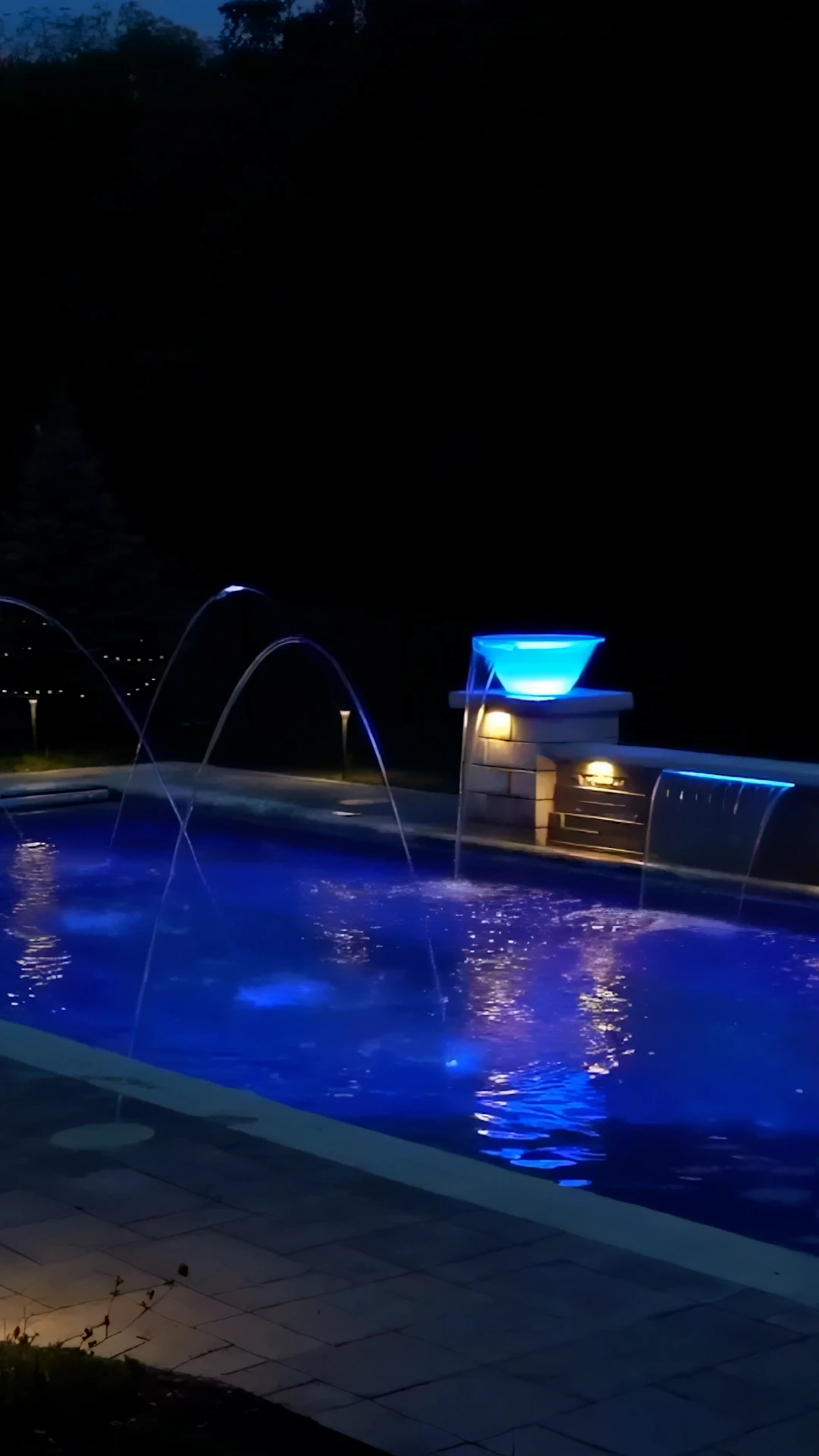
When 8 Feet Still Makes Sense — a Short List. To be fair: there are scenarios where the 8-foot deep end is the right call. We’d be bad contractors if we didn’t say so. Here’s the short list where we’ll actively support the taller spec:
- Dedicated swim-training households. Competitive swimmers, water polo players, serious divers with coaches. Rare in our client base — maybe 1 in 80 Forsyth families — but when it’s real, 8 feet makes sense.
- Estate builds on the north-end Lake Lanier and Sawnee Mountain-adjacent lots where the footprint is 700+ square feet and there’s legitimate architectural room for a dedicated deep-diving zone separated from the family play zone.
- Lap-pool configurations with a specific end-wall flip-turn requirement, though even here 6 feet is usually adequate depending on stroke.
- Rare HOA-free estate lots — particularly the 3 to 5-acre parcels in the far north county around Shady Grove and Ducktown — where the homeowner wants a diving board and the insurance math still pencils out. This is a small population.
If you’re in one of those categories, we’ll build you an 8-foot deep end and engineer it properly. The point of this post is not that 8 feet is wrong — the point is that 8 feet is a deliberate choice for the ~5% of homeowners it actually serves, not a default for everybody else.
What the Shift Looks Like in Permit Data. Forsyth County Building Inspections issues pool permits through the county’s Community Development office, and the pattern we’ve watched over the last five years is consistent. Of the 200+ pool permits approved annually, the percentage designed to 8-foot-plus maximum depth has dropped steadily. Builders in this market — ourselves included — now default to a 6-foot max depth on plan submission unless the homeowner specifically requests otherwise and explains the use case.
The Chattahoochee River watershed setback rules on the east edge of the county, along with the lakefront setback overlays on the Lake Lanier south-shore communities, also push the pool footprint toward surface-area efficiency rather than depth. Smaller footprints mean every square foot of water matters more — you can’t afford to “spend” 20% of the pool on an unused deep well.
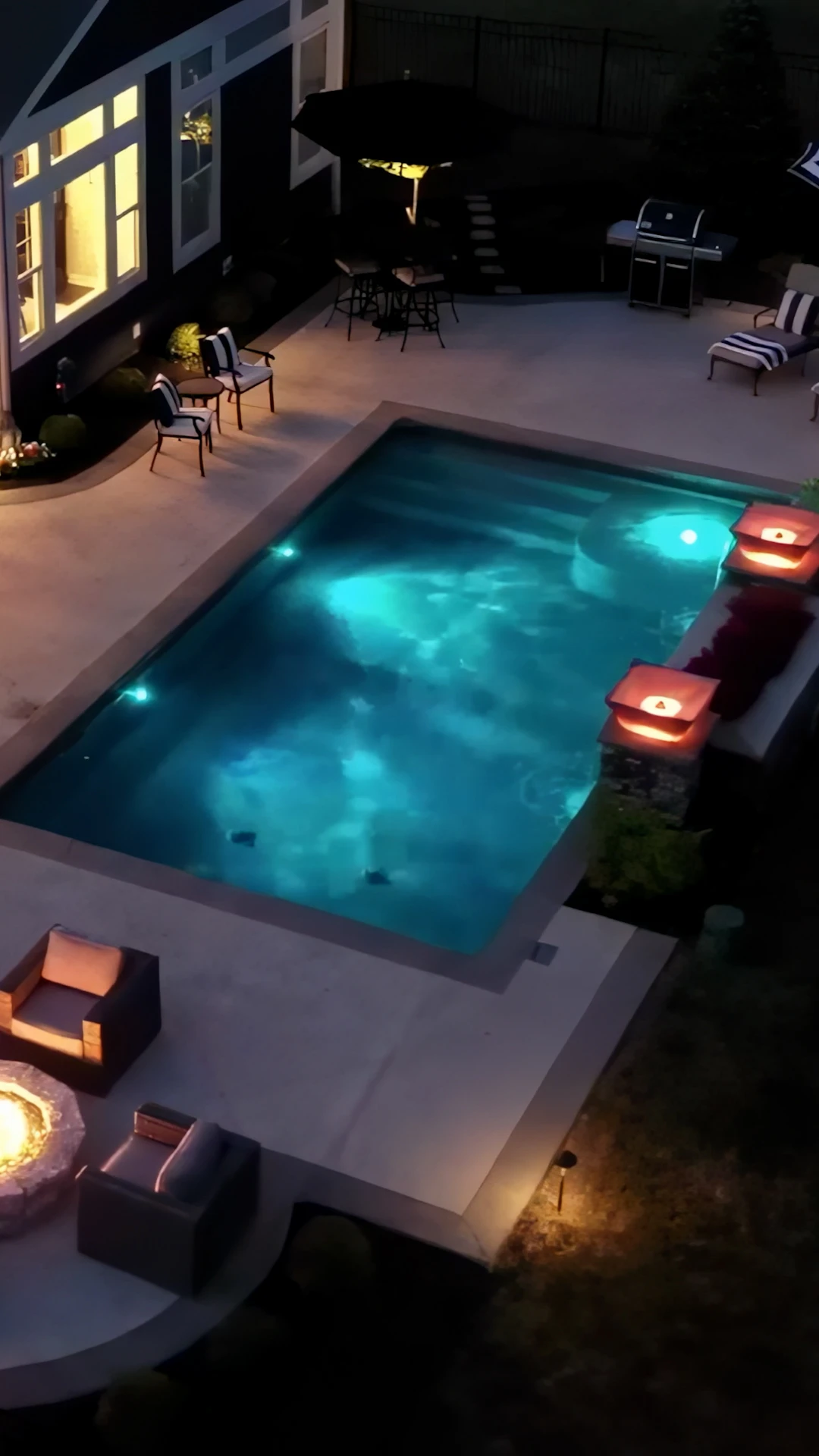
Sawnee EMC-served properties across the county also benefit from the depth reduction on the operational side: smaller water volume means the variable-speed pump runs fewer cycles to turn the water over, and the heater hits setpoint faster. Annual energy cost drops a few hundred dollars over the pool’s life. It’s not the headline savings — excavation is — but it stacks.
The Honest Conversation to Have in Your Design Consult. If you’re planning a pool in Forsyth County right now, the most productive thing you can do in your first design meeting is ask your builder this question: “What is my depth budget actually buying me, and where could I spend it better?”
A good builder will walk you through the surface-area allocation of the pool — shallow play, core play, deep well, sun shelf, swim-out, spa — and show you where dollars translate into daily enjoyment versus where they translate into cold water nobody swims in. In our experience across Forsyth, Hall, and north Gwinnett builds, the families who ask that question early end up with pools they love more, not less, than the families who locked in an 8-foot deep end because it was the number they remembered.
Between GA-400 exit 13 and exit 18, on the Browns Bridge Road corridor, through the Kelly Mill and Post Road neighborhoods, and up into the northern reaches past Coal Mountain, the modern Forsyth pool has moved on. It is shallower overall, smarter in its shallow-end configuration, wider in its play-depth band, and much more honest about what people actually do in water. Six feet is the new eight.
Custom Pool Construction across 20+ cities within 30 miles of Winder, GA
Whether your build is in south Forsyth off Bethelview Rd or up toward Coal Mountain, we design pool depth around how your family actually uses the water — not a legacy spec from the diving-board era.