
Four profiles cover 95% of every pool we build in Dacula: bullnose, square-edge, drop-face, and eased-edge. A fifth approach — cantilever deck with no coping at all — shows up on maybe one project in twelve, almost always on contemporary homes around Hamilton Mill. Below is that short list, with installed prices, installation specs, and the case for when each one belongs on your pool.
Coping is the lip that sits on top of the bond beam — the concrete ring that caps the pool shell and ties the deck to the water’s edge. It does four jobs at once: weatherproofs the top of the bond beam so freeze-thaw can’t get inside the shell, gives you something to grab when you’re hauling yourself out of the water, defines the visual line between deck and pool, and in Gwinnett County, GA it has code implications because the top edge is part of the pool barrier a child could theoretically climb.
There’s no universal “best” profile. Every choice trades grip against look against price against how hard it is to grab in an emergency. What follows is how we talk it through with homeowners at the design table — same language, same numbers, same tradeoffs. Prices are Dacula-area installed rates on a typical 78-to-110 foot residential perimeter.
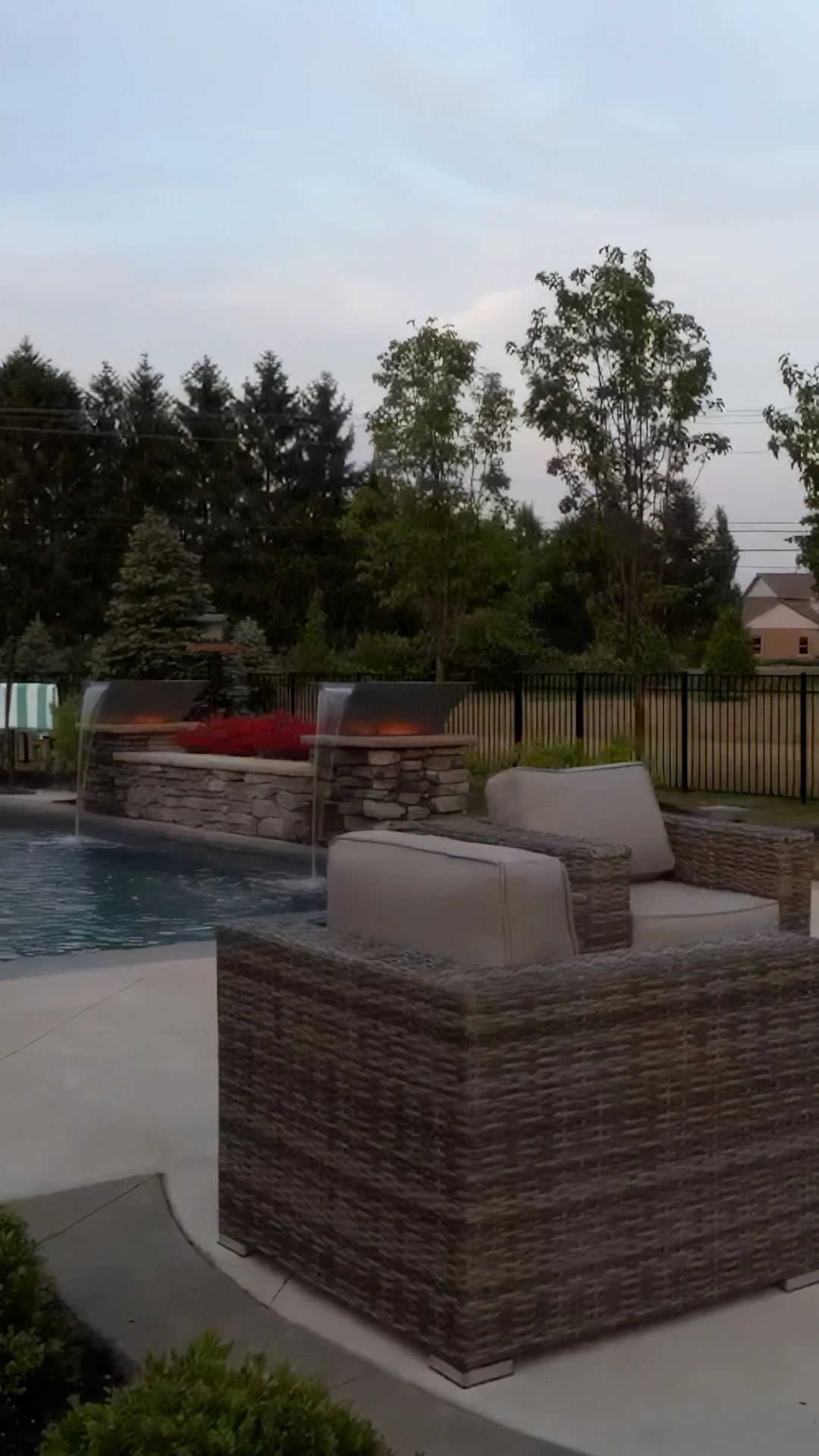
Bullnose Coping — The Default, and Why It’s the Default
Bullnose is the profile with the fully rounded nose. The top surface rolls over a tight radius on the water side and drops into a 1.5″ overhang that hangs slightly past the face of the bond beam. Run your hand off the deck toward the water and you feel a continuous curve — no hard edge, no corner catching your palm.
On our project list, bullnose is the specified profile on roughly seven of every ten pools we build inside Gwinnett County. The reasons aren’t really about looks.
Grip in an emergency. A swimmer who’s tired, cramping, or panicked reaches for the nearest edge. A bullnose lets a hand wrap fully over the top without fingertips hitting a sharp corner. Square-edge coping does the opposite — the top corner catches the fingernail first and a wet grip slips off. On a pool used by kids or older swimmers, bullnose is the safer profile by a measurable margin.
Freeze-thaw durability. Dacula sits in USDA Zone 8a with about twenty freeze events per year. Square corners on travertine or limestone chip along the arris whenever water gets trapped in the top edge and freezes overnight. A bullnose distributes that stress over a curved face instead of concentrating it at a 90-degree corner. Five winters in, the chip rate on bullnose is visibly lower.
Bullnose — Dacula installed price: $22–$34 per linear foot, material and labor combined.
On a typical 95-foot residential perimeter, that’s roughly $2,090 to $3,230 installed. Travertine bullnose sits at the low end; honed limestone and select marble run the upper half.
Thickness and mortar bed. Travertine bullnose typically runs 1-1/4″ to 2″ thick. The thinner 1-1/4″ stock works fine on a new bond beam that’s flat and plumb. On renovations — common in Hamilton Mill’s 1995-to-2005 pools where the bond beam has already moved once — we spec 2″ stock because it gives us margin to shim and level. Mortar bed stays at a 1/2″ minimum across the full bearing surface, but on an older bond beam we build it to 3/4″ or slightly more. That extra quarter-inch lets us true the coping to a string line instead of following every wave in the beam. Miss this step and five years later you can sight down the top and see it rise and fall.
Where bullnose is the wrong call: strict modernist houses where the curve fights the rectilinear lines of the architecture, and projects where the owner wants water and deck to read as one continuous plane — that’s a cantilever call, covered below.
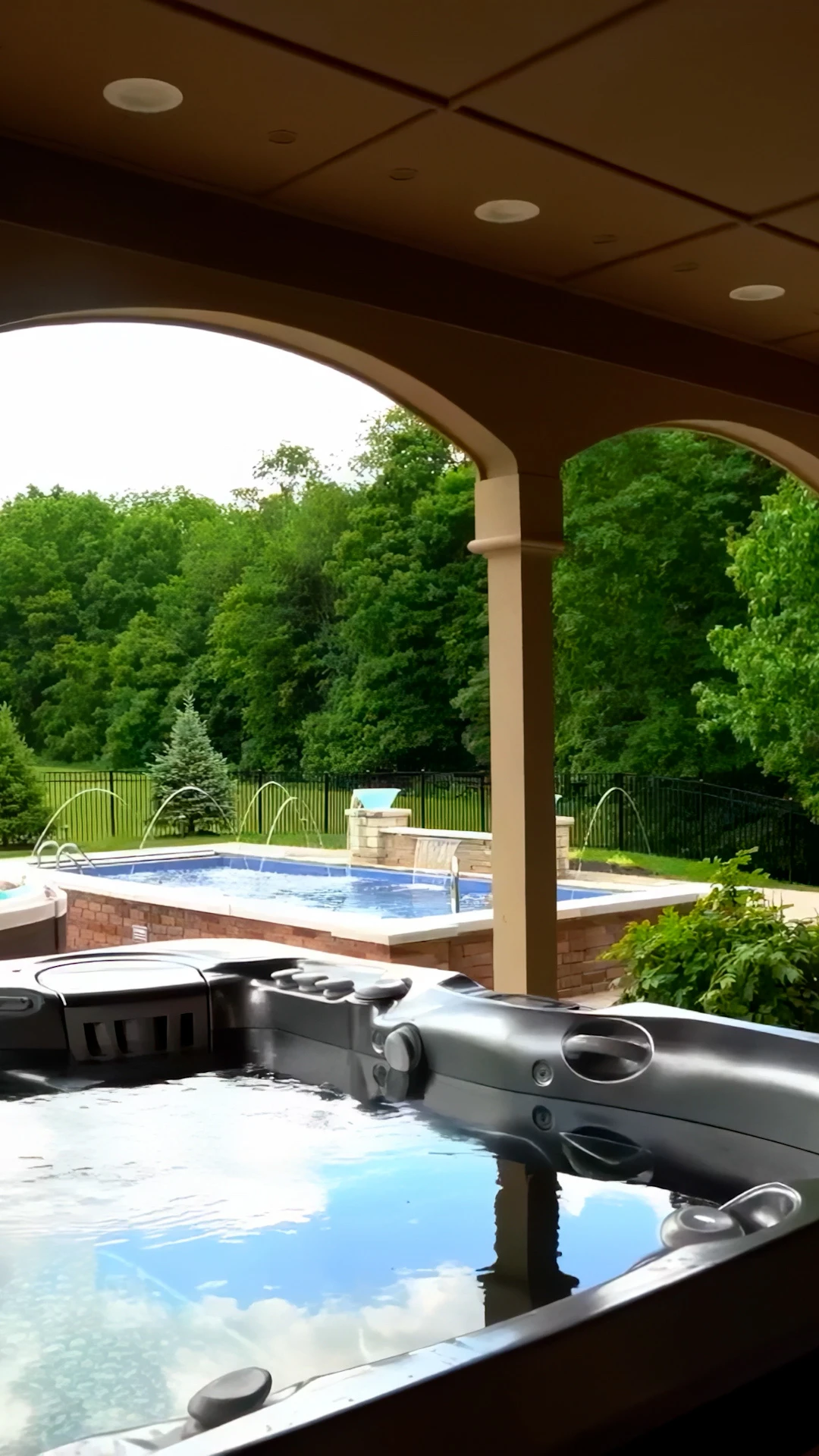
Square-Edge Coping — Modern, Minimal, and Deliberately Unforgiving
Square-edge coping meets the water-side face at a 90-degree corner. No overhang, or a very short overhang under 3/8″. The edge reads as a clean line when you look down the length of the pool.
This is the second-most-specified profile we install in Dacula, and its share grows every year as more contemporary houses go up between Hamilton Mill Parkway and Hog Mountain Rd. On a house where every line is intentional — steel-framed windows, cantilevered soffits, flat-roof cabana — a bullnose reads as wrong. Square-edge matches the language of the architecture.
Two things worth stating plainly, because we’ve watched homeowners specify square-edge on look alone and regret it by year two.
The corner will chip. Not might, will. Every falling pool toy, dropped umbrella stand, and patio chair scraped across it over a decade eventually produces a small chip at the arris. On honed limestone the chips are white against grey and show. On travertine they blend a little better. If you’re installing square-edge, use a dense material — granite, high-grade limestone, porcelain — and budget mentally for the fact that the top corner is the sacrificial surface.
Grip is reduced. A square corner doesn’t hurt a strong adult swimmer. It matters for a kid who’s tired, a guest who’s had too many margaritas, or anyone who needs to haul up fast. On pools where small children swim frequently, we push homeowners toward bullnose or eased-edge even if the house is modern.
Square-edge — Dacula installed price: $18–$28 per linear foot.
Lower than bullnose because the fabrication is simpler — a straight cut with an eased top arris instead of a radiused bullnose grind. On a 95-foot perimeter: $1,710 to $2,660 installed, roughly $300–$500 less than bullnose in most material grades.
Gwinnett County barrier implication. Gwinnett’s residential pool barrier rule — a 48″ tall enclosure around the pool unless alternate-barrier provisions are met — treats coping as a potential foothold. Square-edge is easier to grip from above and technically easier to climb than bullnose, because a small hand can hook fingers over the corner. This doesn’t disqualify square-edge; the fence, gate, and alarm requirements remain the primary barrier controls. But if your enclosure strategy relies on making the pool itself harder to enter, bullnose is the better partner profile.
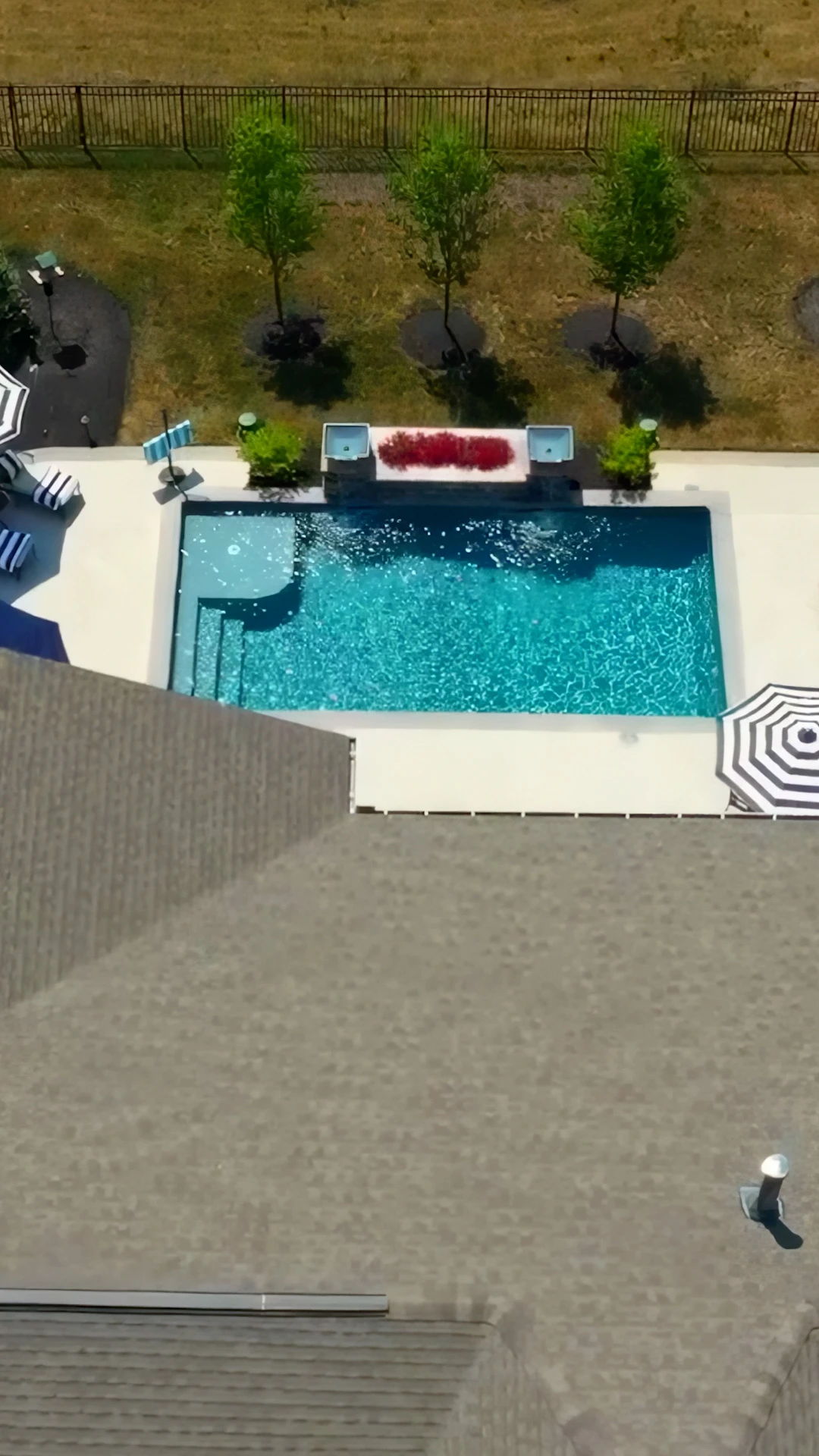
Drop-Face Coping — The Premium Profile and Why It Costs What It Costs
Drop-face coping extends the top surface past the bond beam and then wraps a vertical face downward by approximately 3/4″. Look at it in cross-section and it’s an L: a horizontal top and a short vertical return. That return is what makes the profile expensive — and what makes it worth the money on the right project.
Where bullnose and square-edge both show the vertical face of the bond beam (tile, waterline exposed mortar, or painted concrete), drop-face hides it. You see stone on the deck, and stone wrapping downward into the water line. The bond beam disappears behind a continuous stone face. On a high-end build this reads as a solidity and craft that neither bullnose nor square-edge can match.
Why it’s expensive. Every linear foot of drop-face requires a separate fabrication step. The L-profile isn’t quarried that way — it’s cut and bonded from two pieces or milled from a single thicker slab at significant material waste. Either approach eats labor hours. Travertine drop-face also has to be book-matched piece to piece or the color variation at the corner reads as sloppy.
Installation is harder. A standard installer trues the top face to a string line and calls it done. Drop-face requires truing the top face and the vertical return simultaneously. Any inconsistency in the return depth — say 3/4″ on one piece and 7/8″ on the next — is visible to the naked eye. On a 95-foot perimeter that’s nearly a hundred joints where the tolerance has to hold.
Drop-face — Dacula installed price: $28–$44 per linear foot.
Roughly 40 to 60 percent more than bullnose, driven entirely by cut complexity and extra labor hours. On a 95-foot perimeter: $2,660 to $4,180 installed.
When drop-face is the right call: pools with exposed bond beams on the non-deck sides — shells that step down a slope, where one face is visible from below. Drop-face continues the stone around that exposed face and makes the pool read as an integrated object rather than a concrete basin with a stone lid. Plenty of Dacula lots slope toward Mulberry River tributaries, and those slope-side bond beams are exactly where drop-face pays off. Also: negative-edge and vanishing-edge pools where the drop-face becomes the visual spill surface.
Where it’s overkill: a standard rectangular pool on a flat lot where no one sees the bond beam face from any angle. You’re paying for stone you won’t see. On those projects we talk homeowners toward bullnose and spend the saved money on a better deck material or better stone grade.
Eased-Edge (Chamfered) Coping — Budget-Friendly Without Looking Budget
Eased-edge coping is square-edge’s more forgiving cousin. The top face meets the water-side vertical face at a chamfered corner — usually a 3/8″ to 1/2″ bevel. Not a full radius, not a hard 90-degree corner. A compromise profile that solves square-edge’s problems without adding bullnose’s visual softness.
This is what we spec when the budget matters but the homeowner doesn’t want the safety compromises of pure square-edge. It’s also the profile we spec on a lot of remodel projects in Dacula’s established subdivisions — pools from 1998 to 2004 that need new coping but where the owner isn’t willing to spend drop-face money on a 20-year-old pool.
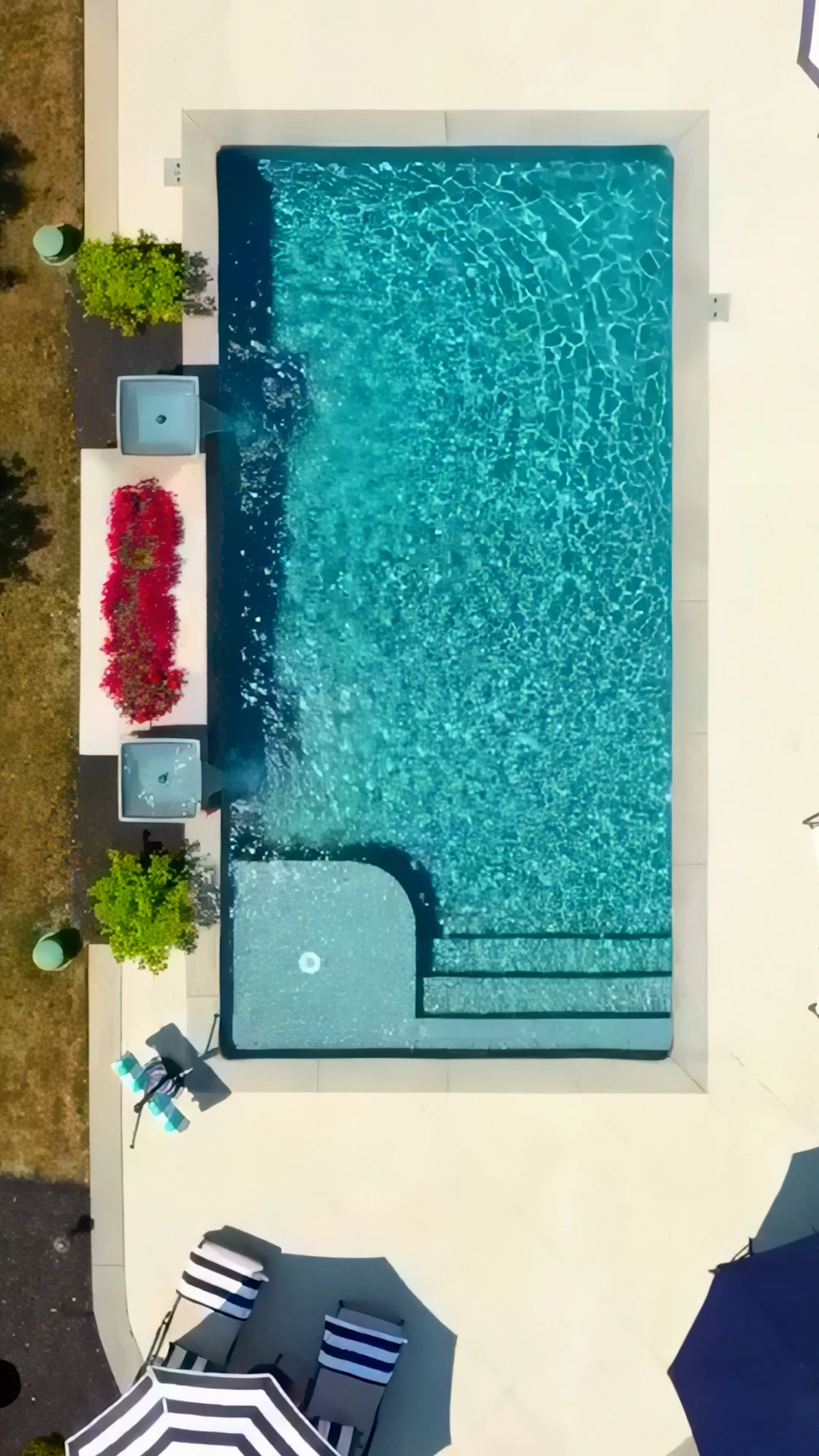
Grip performance. The chamfer gives a hand-over grip something to seat against. Not as secure as bullnose, but notably better than square-edge. A kid panicking in the shallow end can get fingers onto an eased-edge corner and hold; square-edge takes some strength and intent.
Chipping resistance. The chamfer breaks up the stress concentration at the corner. Travertine and limestone chip far less at an eased edge than at a true square. After five freeze-thaw winters the difference is visible — eased-edge reads as “aged normally,” square-edge reads as “beat up.”
Visual language. The chamfered line is subtle. From three feet away the edge looks like a sharp square; from eight feet it looks softer. That mid-range reading makes eased-edge at home on both traditional and contemporary architecture — it doesn’t commit to either vocabulary the way bullnose and square-edge do.
Eased-edge — Dacula installed price: $16–$24 per linear foot.
The lowest-cost profile we install in premium stone. Simpler fabrication than bullnose (one beveled cut versus a full radius grind), same travertine or limestone material. On a 95-foot perimeter: $1,520 to $2,280 installed. Roughly $400–$600 less than bullnose.
Where eased-edge wins: remodels on 1990s-era Dacula pools where replacing failed coping is necessary but the full cost of bullnose travertine would push past the homeowner’s line; rental properties where good-enough beats best-in-class; pools where the owner genuinely prefers the cleaner line of square-edge but has young kids — eased-edge splits that difference honestly. Where it’s a weaker pick: high-end custom builds where the coping is a signature design element. Saving $400 on coping inside a $90,000+ pool project is not the win the savings look like on paper.
Cantilever Deck and Matching Material to Profile
The fifth option isn’t really a coping at all. On a cantilever deck, the poured concrete or tile deck itself extends past the bond beam and forms the pool’s top edge. There’s no separate stone piece; the deck is the edge. Done well, the result reads as a single plane of deck material interrupted only by the water.
This stays the rarest approach on our Dacula project list — maybe one pool in twelve, almost all of them modern designs in Hamilton Mill, Sycamore Ridge infills, or an occasional custom Ivey Chase project. The reasons it stays uncommon are practical rather than aesthetic.
It costs more than it looks like it should. Deck forming is more complex because the pour has to extend precisely past the bond beam while maintaining a clean vertical face on the water side. That means proprietary cantilever forms, extra rebar detailing, and a mason who’s done it before and knows how to strike the face cleanly. Add roughly $8–$12 per linear foot of pool perimeter on top of the standard deck cost — call it $760 to $1,140 on a 95-foot perimeter.
The edge is vulnerable. Concrete at the cantilever lip is exposed to freeze-thaw, pool chemistry, and every impact that would have hit a stone coping. Over 15 years the edge will spall, discolor, or crack. Repair is hard — you can’t swap out one piece the way you’d swap one damaged bullnose. The whole cantilever edge has to be ground, patched, and refinished, and the repair never matches the original.
Before we spec cantilever, the homeowner has to understand three things: the upfront premium, the 15-year edge refinishing reality, and the fact that this is a commitment to a modernist pool language. After that conversation, many Dacula homeowners choose drop-face coping instead — it gives them most of the minimalism with a maintainable stone edge.
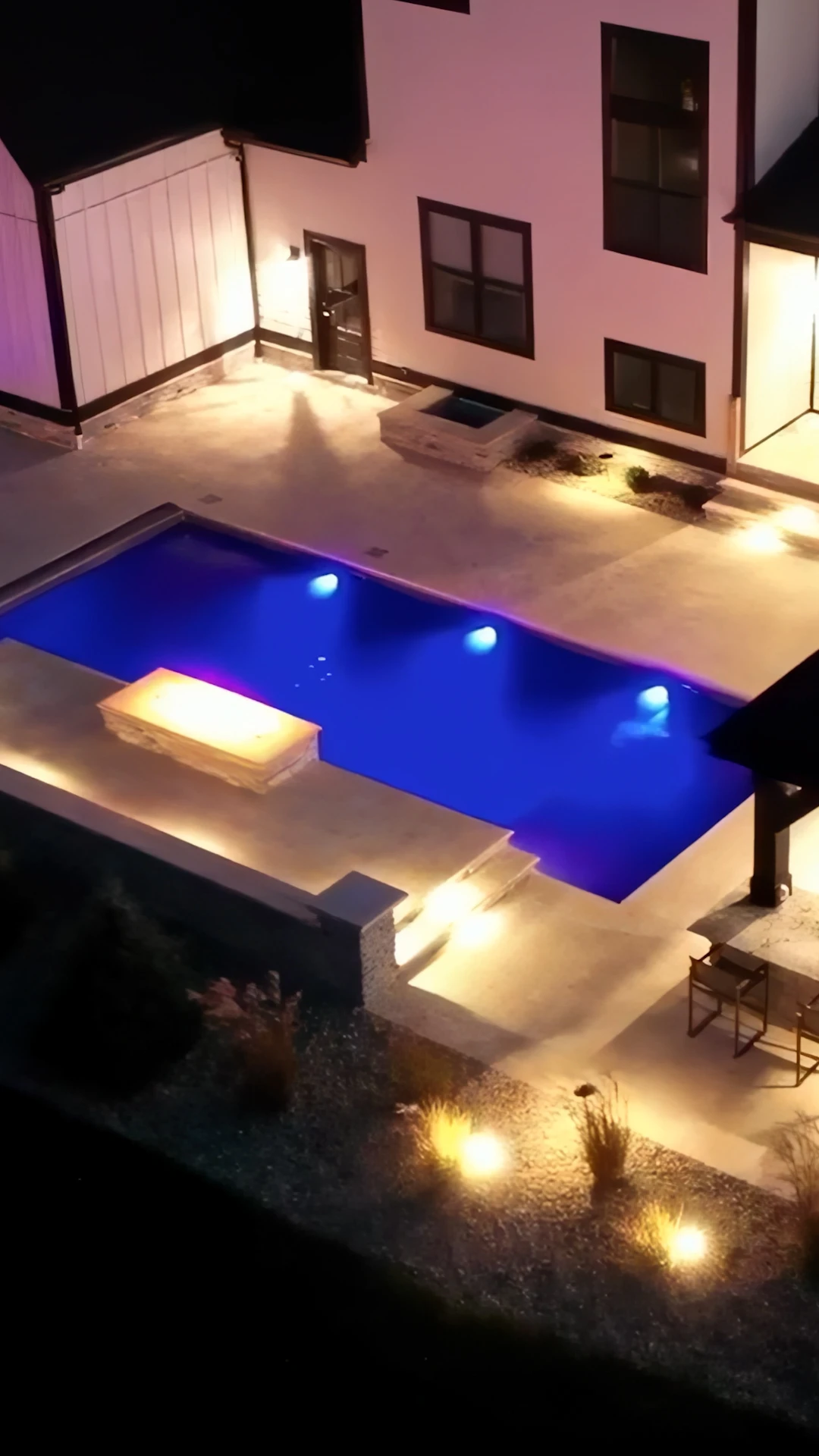
Material choices across all five profiles
Any of the five profiles above can be executed in several different materials. The four we install most in Dacula:
Travertine. The most-specified material on our project list. Low thermal conductivity — stays cool underfoot on 95-degree Dacula afternoons. Natural variation hides stains and chips. Works well with traditional Gwinnett architecture and modern alike. Coping thickness runs 1-1/4″ to 2″; we default to 2″ on renovations and 1-1/4″ on new builds.
Honed limestone. Denser than travertine, more uniform in color, more formal. Chips less readily at square and eased edges. Hotter underfoot than travertine in direct summer sun on dark grades. Best match for formal traditional houses and monochromatic contemporary designs. Premium over travertine: roughly $4–$6 per linear foot installed.
Granite. Hardest of the stone options. Virtually chip-proof at any profile. Runs very hot in sun and can be uncomfortable barefoot in July and August. Best used on shaded sides of the pool. Premium of $8–$12 per linear foot above travertine keeps granite on higher-end builds.
Porcelain paver coping. Newest option in our spec catalog. Engineered porcelain in 2cm thickness with bullnose, square, or drop-face profiles pre-fabricated. Highly chip-resistant, lowest thermal gain of any material, consistent color lot-to-lot. Pricing sits roughly at par with mid-grade travertine, but tightens quality control on difficult profiles like drop-face where natural-stone fabrication varies.
On a 95-foot perimeter pool in Dacula with travertine bullnose:
Coping stone delivered: ~$1,700. Mortar, tile work, and installation labor: ~$1,200. Total installed: roughly $2,900. Timeline: three days of install work after the bond beam cures.
Coping stone gets ordered the same week we pour the bond beam. Lead times from Atlanta-area distributors run two to four weeks for travertine and three to six weeks for honed limestone or granite specialty orders. We order 12 to 15 percent overage on linear quantity to cover miter cuts at corners, short pieces, and the occasional broken tile at unload. Unused stone goes on the shelf as repair inventory — five years later if one piece chips, we have matching stock. Our standard consult is a single page with profile options, material premiums, and recommended combinations for the architecture of the house. Homeowners pick a row and sign off. That signed sheet goes into the build binder so there’s no ambiguity when stone shows up on site.
Pool deck coping across 20+ cities within 30 miles of Winder, GA
Bullnose, square-edge, drop-face, eased-edge, or cantilever — we spec and install every profile in travertine, limestone, granite, and porcelain. Every Dacula build gets the same sample-board consult and the same transparent linear-foot pricing.