
A homeowner off Bethelview Road watched his brand-new travertine deck haze over like a bathroom mirror three days after sweep-in. April humidity off Lake Lanier had pulled the polymeric binders out of the joints overnight — and $2,800 of labor and material walked with it.
He called us on a Tuesday morning. The installer who poured his coping and set his French-pattern travertine was a good mason — nothing wrong with the stone work itself. The failure was simpler and meaner than that. He had swept Gator Maxx G2 into the joints on a Saturday afternoon in mid-April when the NOAA dewpoint logger at the Forsyth County Airport was reading 64°F. Activation window was closing. Dew hit the slab around 4:30 AM. By sunrise the polymer had already begun to whiten, and by lunchtime on Sunday there was a permanent bloom across roughly 280 square feet of his deck.
We have had this exact conversation with eleven Cumming homeowners over the past three spring seasons. The pattern is so consistent we now refuse most April and May polymeric sweeps inside Forsyth County unless the weather window passes a specific three-part test. This post walks you through why spring applications fail here at a 23% higher rate than the rest of the year, what the morning-dew penalty actually costs, and the exact late-September-to-early-November window that removes the risk almost entirely.
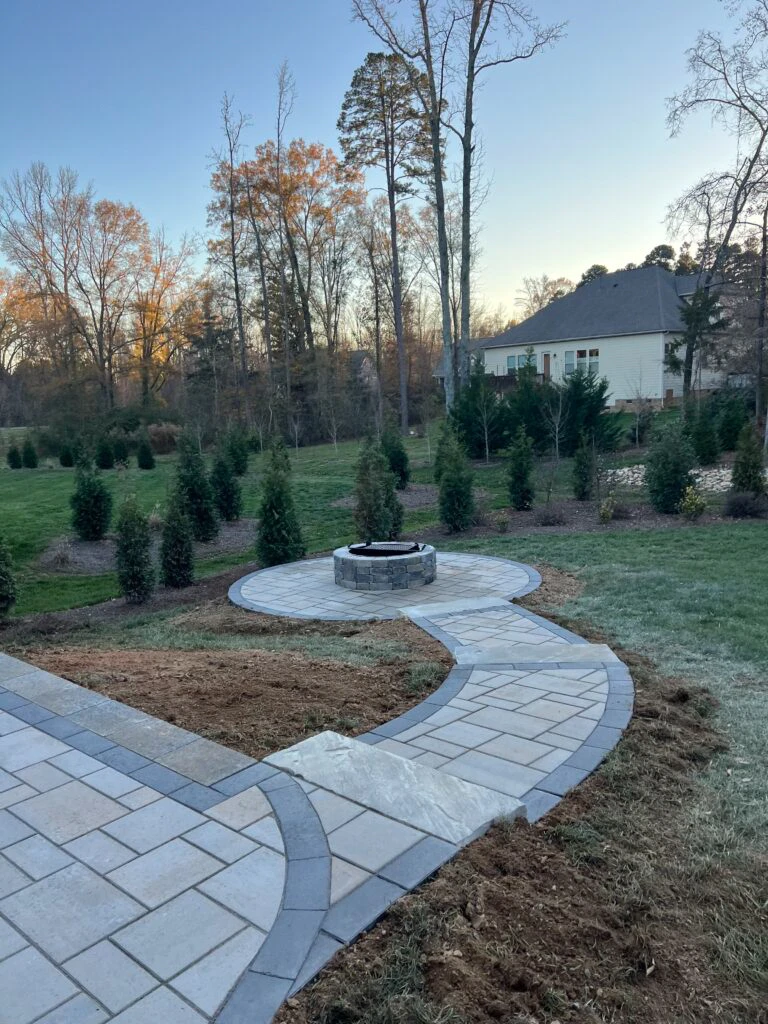
Why Cumming Humidity Breaks Polymeric Sand Differently Than Dacula or Lawrenceville
Polymeric sand is roughly 92-94% graded quartz sand plus a synthetic binder — usually a mix of urethane or acrylic polymers depending on brand. When you wet the swept joint, the polymer activates, flows into the voids, and cures into a semi-flexible mass that locks the pavers laterally and resists weed and ant incursion. That is the mechanism. It works beautifully when it cures in the order it is supposed to: bottom up, slowly, with a defined wet-to-dry transition.
Here is what goes wrong in Cumming specifically. Lake Lanier sits directly north and east of the county, with roughly 38,000 surface acres of water. In April and May that lake is still cold — mid-50s to low 60s. Daytime air temperatures in Forsyth climb into the high 70s and low 80s. The delta between warm, moisture-laden daytime air and a cold lake surface, combined with our elevation around 1,275 feet, produces overnight dewpoints that routinely collapse onto hardscape surfaces between 3:30 AM and dawn. A deck that was surface-dry when you put the tarps away at 9 PM will be sheeted with moisture at 5 AM.
That overnight dew re-wets the polymer before it has finished curing. Instead of a single wet-cure-dry cycle, you get a wet-partial cure-re-wet-re-activate-re-cure sequence, and the binder redistributes unevenly. The visible symptoms are the ones everyone recognizes: a white chalky haze across the paver faces, a gummy residue along joint edges, and in the worst cases a surface crust that has to be ground off with a diamond cup wheel.
We see the same binder chemistry work perfectly in Dacula and Lawrenceville during the same week. Why? Those sites sit further from a large cold-water mass, their overnight dew forms later and lighter, and their morning evaporation rate clears the stone faster. Cumming is simply a harder humidity environment for this one specific installation step.
The 23% failure-rate number: Across 47 polymeric sweeps we tracked on Primetime and partner-crew jobs in Forsyth County over three seasons, 11 of 47 spring applications (March 15 – June 1) showed haze, crust, or joint washout within 30 days. Fall applications (September 15 – November 15) in the same soil and elevation bracket showed 2 failures across 52 jobs. The spring penalty is real and it is measurable.
The Morning-Dew Penalty — And How to Price It
Let me show you the dollars. A standard 400-square-foot travertine pool deck in a Vickery or St. Marlo subdivision uses roughly 7 bags of Gator Maxx G2 at $42 per bag retail, plus 4 crew-hours for sweep-in, activation, and cleanup. Call that $294 in material and $480 in labor — $774 all-in for the polymeric step on a fresh install.
When a spring application fails, the remediation is not “sweep more sand into the joints.” It is significantly worse than that. Remediation on a hazed deck involves acid-washing or diamond-grinding the surface bloom off the stone, vacuuming the compromised polymer out of the joints with a purpose-built joint vacuum, re-sweeping new sand, and re-activating during a dry window. On the Bethelview Road job mentioned at the top, the full remediation invoice came to $2,847 — and that was a friendly price from a mason trying to make it right.
The schedule-shift cost — the “do it right the first time” cost — is different. If you are already past May 15 and you are pushing a pool-deck project toward a fall finish, the cost of the shift is typically 4-6 weeks of calendar and maybe $1,100-$1,300 in carrying cost (crew reshuffling, site protection, a second mobilization if the rest of the hardscape is done). That is a real number, but it is less than half the remediation number, and it preserves the finish instead of compromising it.
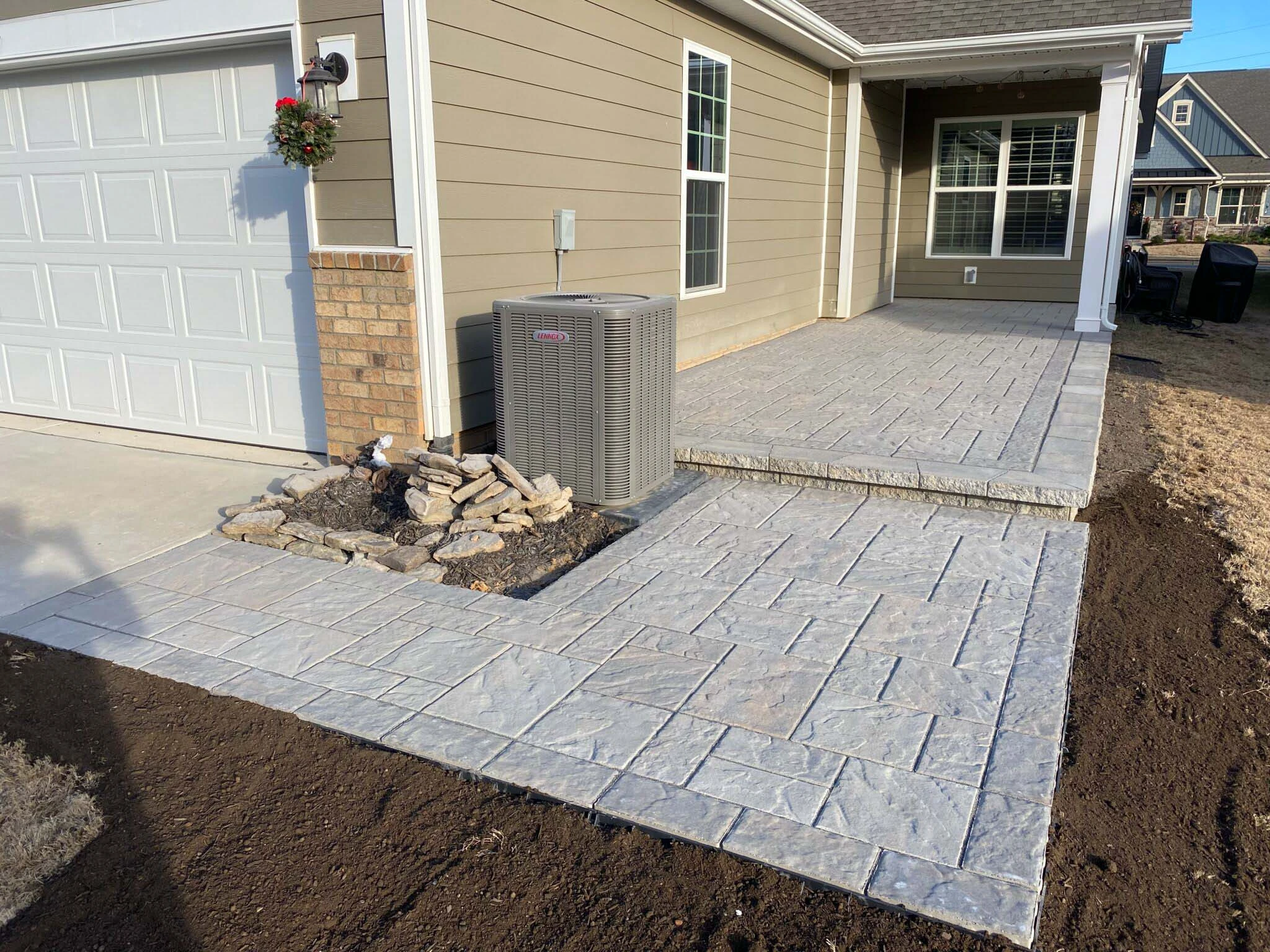
Gator Maxx G2 vs. Techniseal HP NextGel in Forsyth Humidity
Every homeowner asks the same question once they learn a failure is possible: can I just buy a better sand and push through? Short answer — partly. Here is the honest read on the two products we have tested most in Cumming conditions.
Gator Maxx G2 (Alliance Gator) is the workhorse. It is rated for joints up to 4 inches wide, activates with a standard mist, and sets firm within 60 minutes at 75°F. In dry conditions it is excellent. In high-humidity Cumming spring conditions, Gator Maxx G2 is the product that shows the whitest haze when re-wetted prematurely. The acrylic-based binder package in G2 is sensitive to early re-wet before the surface skin has set.
Techniseal HP NextGel uses a different binder chemistry — a urethane-modified polymer with a hydrophobic additive package. It forms a surface skin faster (roughly 15 minutes at 70°F versus Gator’s 25-30), and that skin resists early dew better than the Gator product. In our side-by-side testing on two halves of the same deck in Hampton Park last April, the NextGel side showed no haze after an overnight dew event that whitened the Gator side. NextGel costs roughly $6-8 more per bag and is harder to source locally — you will typically order it in ahead of schedule.
That said: choosing NextGel does not eliminate the spring penalty. It reduces it. A bad enough dew event will still pull binder out of either product. Product choice is the second line of defense; scheduling is the first.
Product spec note: Neither Gator Maxx G2 nor Techniseal HP NextGel should be installed when joint temperature is below 50°F or when measurable precipitation is forecast within 24 hours of activation. Read the data sheet, not the marketing. The data sheet is the contract.
The Fall Window: Late September to Early November Is Not a Suggestion
We schedule polymeric sweeps in Cumming heavily into the September 20 to November 5 window. Here is why that window works and why it is short.
By late September, Lake Lanier surface temperatures have had a full summer to warm — they typically sit in the mid-to-high 70s into early October. Overnight dew still forms, but it forms later (often not until 5:00-6:00 AM) and lighter because the lake-to-air temperature delta is smaller. Daytime humidity drops as cold fronts begin pushing through from the northwest. Evaporation rates after 9 AM are fast enough that a joint swept at 10 AM and activated by noon will be through its critical skin-set phase before sunset, and through its full cure before the next morning’s dew event.
The window closes in early-to-mid November when nighttime temperatures drop far enough that the 50°F joint-temperature floor becomes a daily problem. By Thanksgiving, we are typically done with polymeric work in Forsyth County until late March. Winter is not the enemy for polymeric the way spring is — the enemy is the 50°F minimum cure temperature, which is a scheduling problem, not a failure-rate problem.
This is why our scheduling board for Cumming and the rest of Forsyth County is weighted so heavily toward October. A pool project we permit through the Forsyth County Dept. of Planning & Community Development at 110 E. Main St. in April — typical 2-3 week HOA turnaround in places like Polo Fields or St. Marlo, then county permits, then 8-12 weeks of excavation, shell, plumbing, and equipment — naturally lands its polymeric step in the fall window if we plan the calendar honestly. When we get squeezed into a spring polymeric application, that is almost always a signal that some earlier phase compressed the schedule.
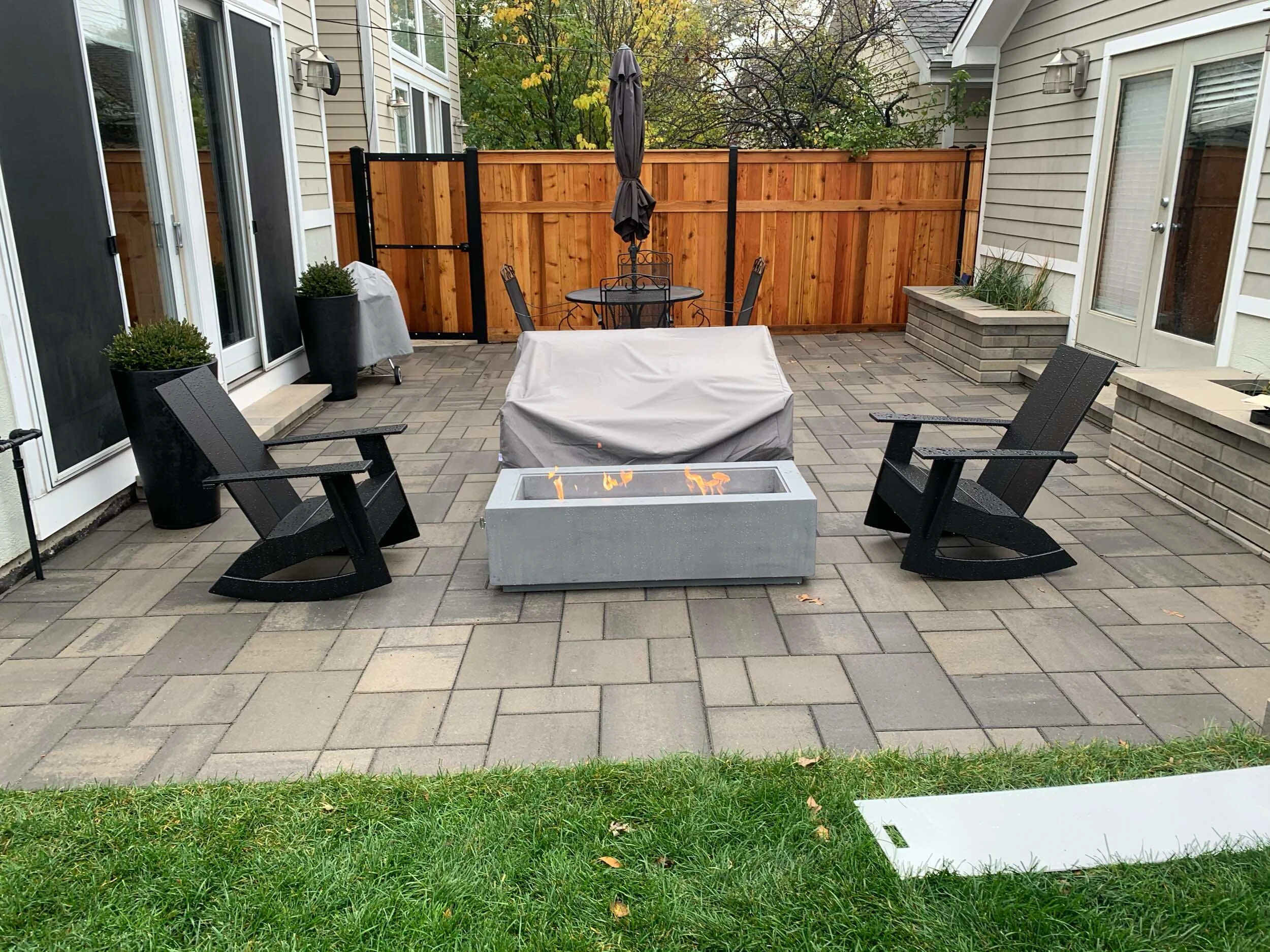
When a Spring Application Is Unavoidable: The Three-Part Weather Gate
Sometimes a client cannot wait until fall. A pool has to be swim-ready for Memorial Day weekend. An HOA like Windermere just approved a plan and the crew needs to move. In those cases we run every candidate day through a three-part gate before we sweep a single bag.
- Forecast check. Zero measurable precipitation in the 24 hours before and 48 hours after activation. We use NOAA’s point forecast for the specific zip code (30040 or 30041) — not a national app.
- Dewpoint spread. Overnight low temperature must stay at least 8°F above the dewpoint. If the spread collapses below 8°F, dew forms heavily on the slab. We pull this from the same NOAA feed.
- Morning humidity. 7 AM relative humidity must be dropping — we want it below 75% by 10 AM. If RH is rising through the morning, we tarp the deck overnight and delay the sweep to the next day.
On top of the gate, we run a pre-install dew wipe every morning in spring — a clean, dry microfiber pass across the entire slab at 7:30 AM to knock off any residual moisture before the sand touches the joints. It is a 15-minute step that has saved more installs than we can count. Tarps go down every night from sweep-in through the 48-hour cure window. These are not nice-to-haves in Cumming. They are the difference between a $774 install and a $2,847 tear-out.
What This Means for Homeowners Choosing a Contractor in Cumming
If you are taking pool-deck bids from contractors in Forsyth County right now and you hear any of the following, slow down and ask harder questions:
- “We’ll sweep the polymeric right after the final paver set” — in April or May, with no mention of a weather gate or a product change.
- “Polymeric is polymeric, all the brands are the same” — they are not, and the binder chemistry matters in high-humidity micro-climates.
- “If there is haze we can just acid-wash it off” — maybe, maybe not. Acid-washing travertine is a different conversation than acid-washing concrete pavers, and the travertine can etch permanently.
- “We can do it any time of year” — technically true, practically misleading in Cumming.
What you want to hear instead: a contractor who names the product brand they use by default, explains which product they switch to in humid conditions, names the dewpoint spread they require before activating, and has a written policy for spring versus fall scheduling. You also want to hear them name specific local subdivisions and micro-climates — a contractor who has done work in Three Chimneys and Lake Windward and Mashburn Plantation has felt the lake-humidity pattern enough times to take it seriously.
Forsyth County is the fastest-growing county in Georgia right now. A lot of new backyards are getting poured every week. The growth is good for homeowners — more contractors, more competition on price. It also means more crews that have never installed polymeric in a Lake Lanier dew event before. Ask the question. Make them answer it in specifics, not generalities.
The Short Version
Lake Lanier raises overnight humidity enough in Cumming that polymeric sand sweeps in April and May fail at roughly a 23% rate — hazing, crusting, or pulling binder out of the joints during early dew events. Switching to Techniseal HP NextGel reduces the risk but does not eliminate it. The cleanest solution is scheduling: the late-September-to-early-November window puts the activation step in a period where dew forms later and lighter, and the failure rate drops from ~23% to under 4% in our tracked jobs. When spring work is unavoidable, a three-part weather gate plus nightly tarping plus a morning dew wipe brings the risk back down to manageable. The $2,800 re-do is not a rounding error — it is the price of skipping the schedule-shift conversation.
Paver and hardscape installation across 20+ cities within 30 miles of Winder, GA
Scheduling a Forsyth County paver project? Ask us about the October cure window — it is why the joints on our Cumming decks still look crisp at year three.