
There are four things that make a pergola attachment fail on a 1990s Dawsonville split-level, and all four of them are hidden behind vinyl siding you can’t see from the ground. Read to the end — the fix is not what the big-box install kits say it is.
Here’s the short list up front, in order of how often we find them on tear-offs in Foxcreek, Riverbend, and Applewood:
- One. A 2×6 band board — not the 2×10 or engineered rim joist the pergola manufacturer assumed.
- Two. Vinyl siding and OSB sheathing with no flashing detail behind it, quietly wicking water into that band for 25 years.
- Three. Lag screws tied into wall studs at random spacing instead of through-bolts into solid framing.
- Four. Saprolite and weathered granite right under the topsoil, which means the pier footing you drilled last Saturday isn’t actually engaged with anything structural yet.
Each one of those is survivable on its own. Stack them — which is what a typical attached pergola on a 1990s-era Dawson County split-level does — and you’ve built a structure that passes its first two summers beautifully, and then starts pulling nail heads through vinyl in year four. We’ve replaced enough of them to know the pattern by the zip code. Everything in 30534 that went up before about 2002 is a candidate for the ledger board problem. This post walks the whole failure, the fix, and the real cost delta so you can look at your own back wall and know what you’re working with before the first screw goes in.
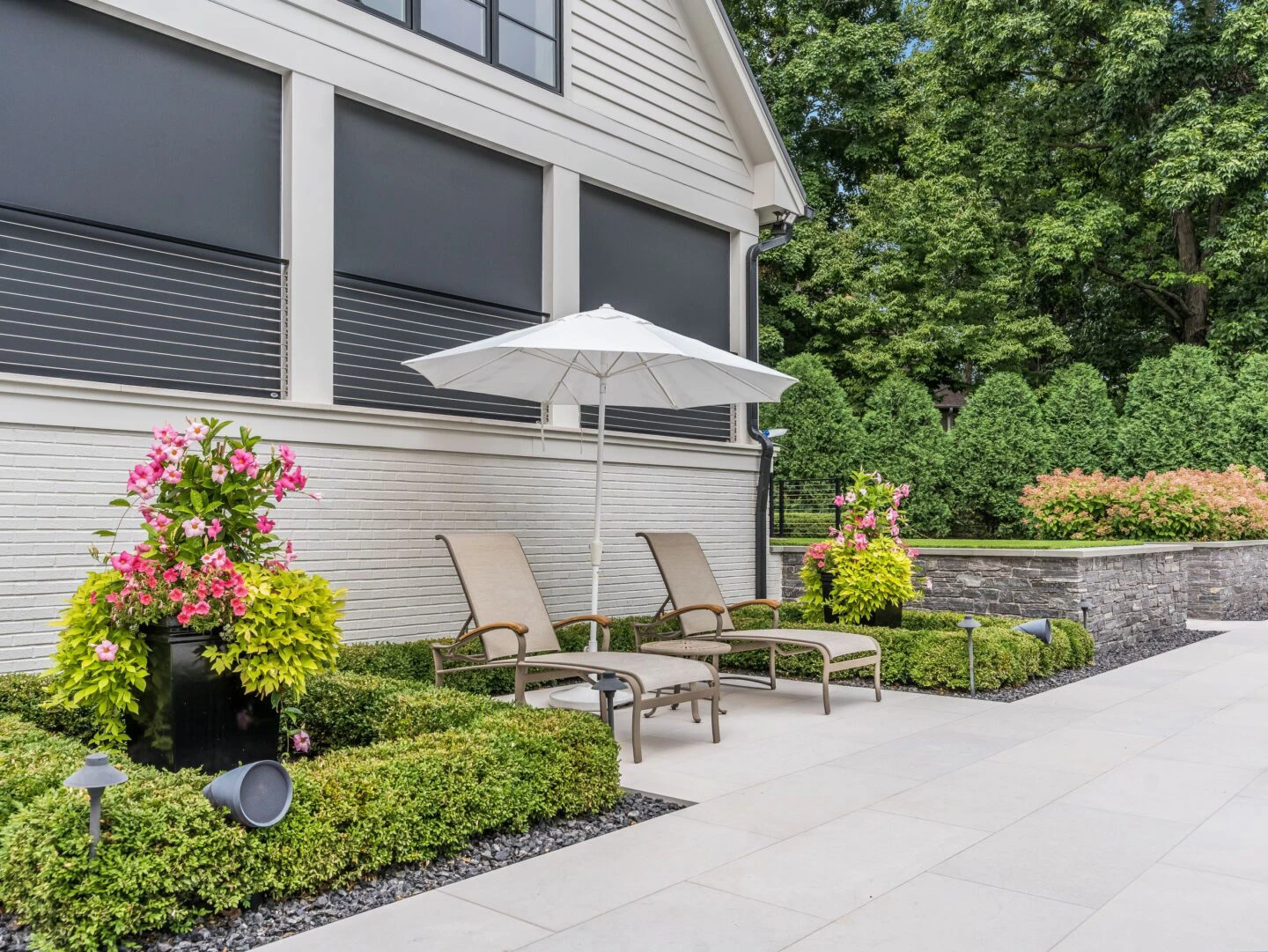
Why 1990s Split-Level Framing Fails the Pergola Load Test
A residential pergola looks light. A 12×16 cedar structure with 2×8 rafters and a lattice top weighs around 900 to 1,200 pounds dry. Add a summer thunderstorm off the Amicalola ridge and that dead load becomes a live load — wind uplift on the canopy, water weight sheeting through the slats, and lateral shear wanting to peel the ledger away from the house. Builders who size attached pergolas for Zone 7b/8a wind exposure typically design for 600 to 900 pounds of tension per linear foot of ledger connection during a storm event.
That number is fine against a 2×10 rim joist tied into a concrete foundation. It is not fine against the 2×6 band board that tract builders used across a lot of Etowah River Club and Mountain Laurel subdivisions built between 1992 and 2001. A 2×6 is 5.5 inches of actual wood depth. You get one through-bolt row, maybe — and that row has to miss any plumbing, HVAC chase, or electrical feed running parallel to the top plate. On split-levels the upper bay often sits directly on that band with no double rim, so the fastener path goes: lag screw, through OSB sheathing, through band, into whatever air is behind it. That’s not a connection. That’s a hope.
Pile on the second problem and things get worse. Vinyl siding installed in the 1990s rarely has proper Z-flashing behind it at the band board transition. Water that drives down the siding in a horizontal rain finds the seam, soaks the OSB, and migrates into the band. Twenty-five years of that and you can put your thumbnail through the wood. The contractor who shows up to attach a pergola drills his lag pilot, feels the bit catch a little softer than expected, shrugs, and sends it anyway. Two winters later — and Dawsonville sees roughly 30 freeze events a year, ten more than Dacula — that soft-wood connection expands and contracts with every thaw. The hole opens. Water pools. The lag backs out a quarter turn.
What Dawson County inspectors actually look at: Permits for attached pergolas over 120 sq ft file through Dawson County Department of Planning & Development at 25 Justice Way. Inspectors want a structural letter for ledger connections on any home over 20 years old where the rim joist species and dimension cannot be confirmed by original plans. Plan on that letter running $350 to $600 from a licensed engineer.
The third failure point — random lag spacing into studs — deserves its own sentence. Studs in a 1990s split-level are 16 inches on center, but builders ran them wherever the window bucks and HVAC chases demanded. A stud finder tells you where the wood is; it does not tell you whether that wood is a king stud, a cripple, or a jack that terminates six inches above your pergola ledger. We have pulled attached pergolas where four of the seven lag screws were anchored into studs that died above a patio-door header. Those lags were holding nothing but sheathing. The structure didn’t fall — the remaining three lags held — but the ledger had rotated a full half-inch off the wall by the time the homeowner called.
The Soil Half of the Problem: Saprolite, Rock, and Why Your Footing Isn’t a Footing
If the wall-side connection is one half of the failure pattern, the post-side footings are the other. Dawsonville sits at about 1,270 feet elevation — the highest point in the Primetime service area — and the residual soil here is not the Piedmont clay that shows up south of GA-400. It’s a stony residuum of weathered granite and saprolite, with the Cecil series present but far thinner than it is in Gwinnett or DeKalb.
What that means in practice: when you auger a standard 12-inch post footing to 24 inches, you’re usually through topsoil at 10 inches, into saprolite at 14, and hitting competent rock somewhere between 28 and 40 inches depending on the lot. An auger bit that was cutting through Dacula clay at two feet a minute will stall out against saprolite, and the installer — on a fixed-price job — makes a decision. He pours the 24-inch footing short. He puts in 60 pounds of Quikrete. He moves on.
That footing is not a footing. It’s a concrete plug sitting on partially weathered rock with no mechanical interlock. When the attached-side ledger starts to fail (see above) and the load redistributes to the outboard posts, those short footings rotate. The posts lean. The pergola racks. Cedar beams that were square on day one have visible twist by year five.
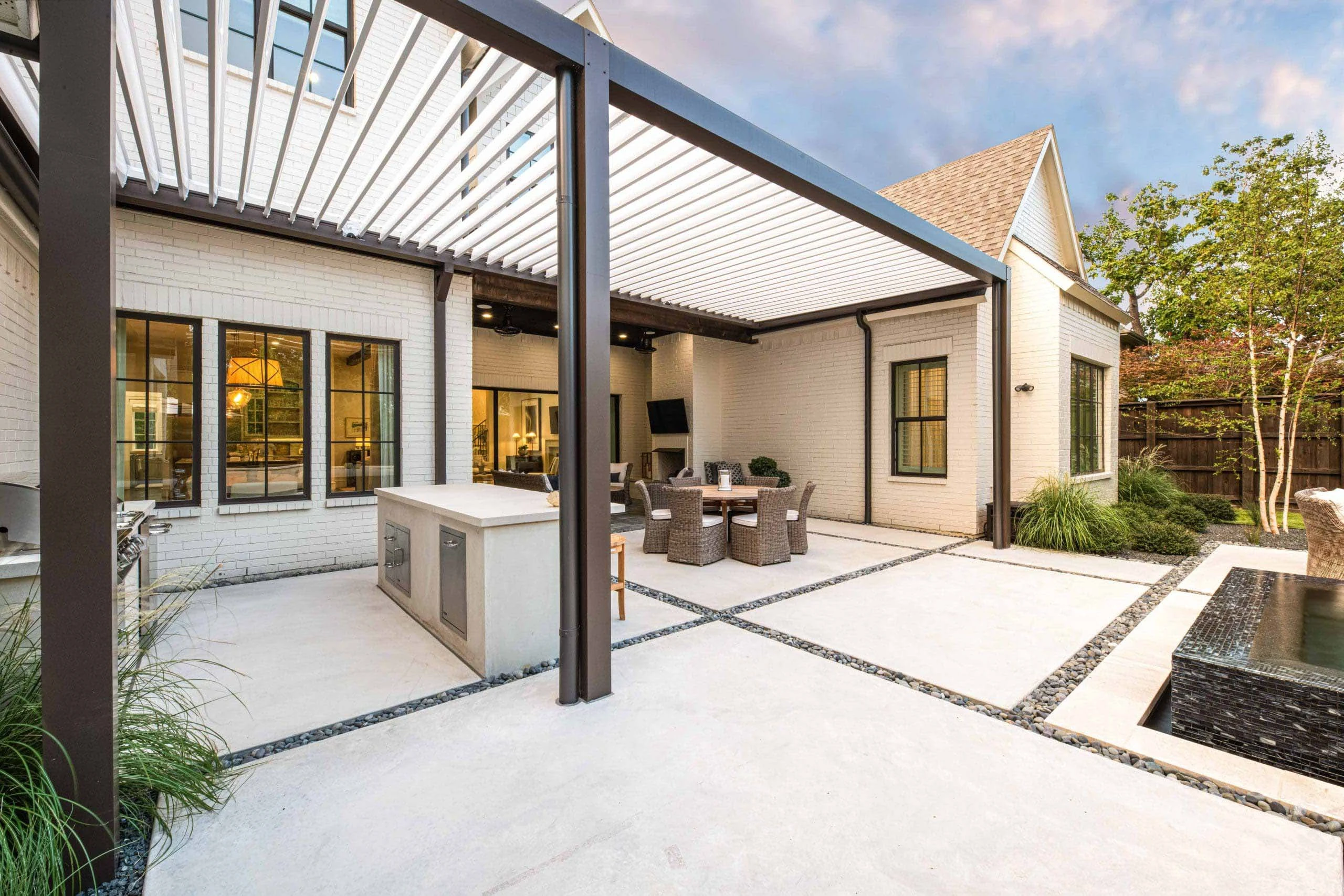
The right spec for a Dawsonville pergola footing is 36-inch minimum depth for a 6×6 post, stepped to 42 inches on corner posts that take additional wind load. Where rock refuses at less than 36 inches, we use a rock-anchor epoxy system — a #6 rebar epoxied into a cored hole in the competent granite, then tied into a widened pad footing above it. That’s mechanical engagement with the rock instead of just sitting on it.
The premium for that approach is real. Standard auger-and-pour runs around $180 to $240 per pier. Rock-engagement footings with epoxy anchors run $420 to $560 per pier, and if the lot requires shallow blast charges — which happens occasionally in Kensington Ridge and the higher sections of Chestatee — you’re adding $8 to $14 per cubic yard to the excavation cost. For a standard six-post pergola, that’s a total footing package somewhere between $2,520 and $3,360 done right, versus $1,080 to $1,440 done to big-box-kit minimums. The done-right number sounds like a lot until you price out the tear-off and re-pour in year six, which runs three to four times the original cost.
The Two Fixes That Actually Work on 1990s Split-Levels
Given everything above, there are exactly two ways to put a pergola on the back of a 1990s Dawsonville split-level and have it still be square in the year 2040. We use both, depending on the house and the budget.
Fix one: Freestanding with a 6-inch offset
The cleanest answer is to not attach at all. Build the pergola as a fully independent structure, offset six inches from the house wall, with its own four-corner post grid and a shallow continuous header beam that replaces what would have been the ledger.
The six-inch gap matters. It lets water sheet off the siding without running onto the pergola top. It lets the siding flex — vinyl on a 1990s house moves more than people think — without loading the structure. And it eliminates every single failure mode in the previous two sections: no ledger, no lag screws, no dependence on a 2×6 band board that nobody can inspect without cutting open the wall.
The tradeoff is two extra posts on the house side and a slightly larger footprint. For a 12×16 pergola, the freestanding version has six posts instead of four. That’s another $840 to $2,240 in footings depending on soil, and a cleaner look most homeowners prefer anyway. We build a lot of these in the newer 2015-plus homes in the Etowah River Club side of town, and the older split-levels in Applewood where the band board is a known 2×6.
Fix two: Deep-anchor through-bolt with aluminum flashing
If the lot or the homeowner’s layout forces an attached pergola — usually because there’s a slider or French door line that wants shade directly against the wall — there is one way to do it correctly. We call it the deep-anchor through-bolt system, and it involves four specific steps no big-box install kit will tell you about.
- Open the siding. Cut and remove a horizontal band of vinyl three inches taller than the ledger itself. This is non-negotiable. You cannot flash a ledger that’s already been installed over existing siding.
- Verify and sister the band. Drill a small inspection hole, identify the actual band dimension, and if it’s a 2×6, sister a 2×10 LVL to the inside face of the rim — usually from inside the crawl space or basement. This is the step most contractors skip because it requires coordination with the framing under the floor.
- Through-bolt with epoxied anchors. The ledger attaches with 1/2-inch galvanized through-bolts on 16-inch centers, not lag screws. Each bolt gets a structural epoxy in the pilot hole to seal the wood and prevent water migration along the threads.
- Flash with formed aluminum. A formed-aluminum Z-flashing tucks under the siding above, over the ledger top, and drip-edges past the ledger face. Not house wrap. Not peel-and-stick. Formed metal, because it will outlast everything else in the wall.
Done this way, an attached pergola on a 1990s split-level runs a cost premium of $2,400 to $4,800 over the improper attach method you’ll see quoted at $800 to $1,400. That delta is the difference between a structure that fails in year four to six and one that passes its 25-year inspection.
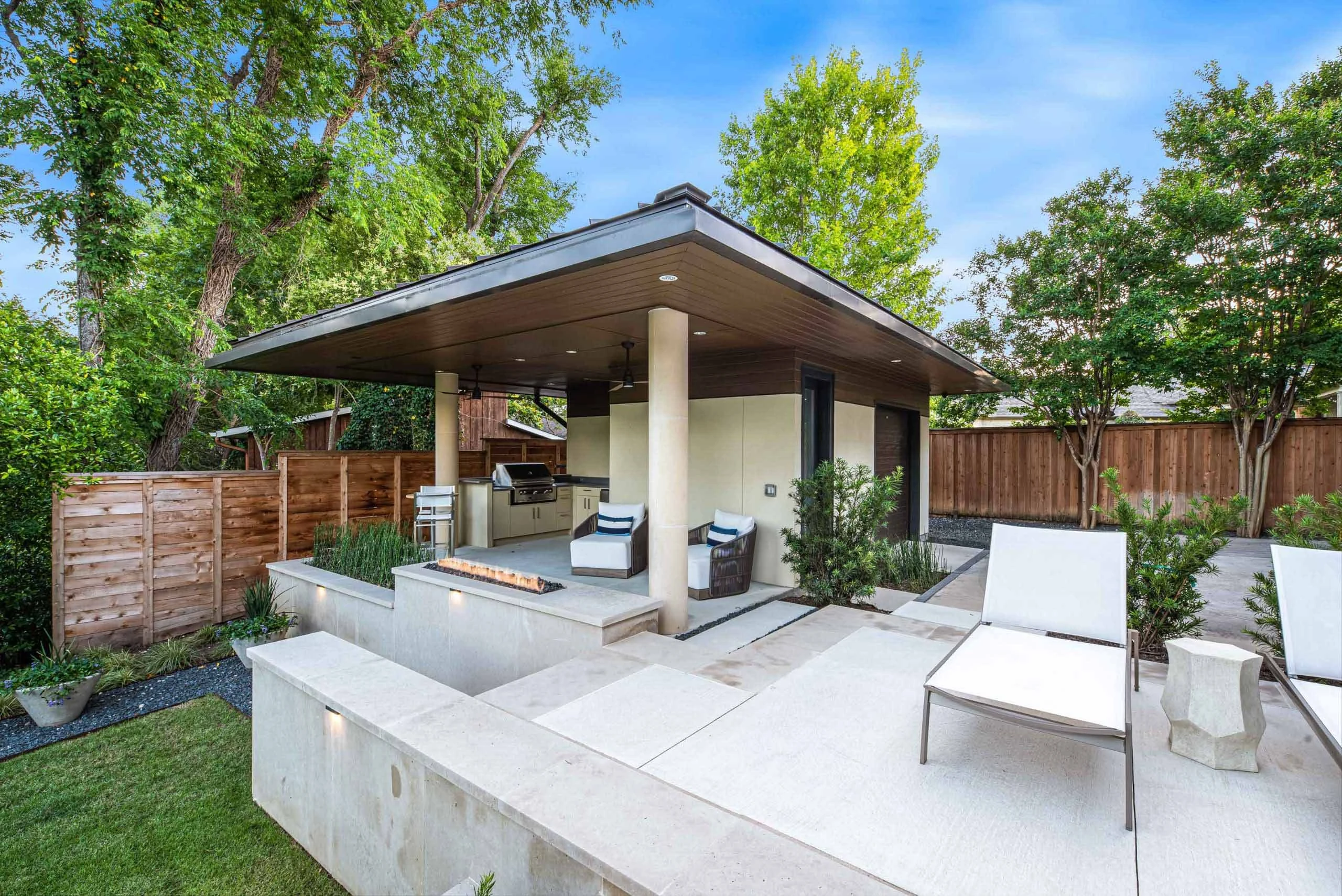
Trenching Around Amicalola EMC Service Drops and GA-400 Equipment Access
Two logistical details separate a Dawsonville pergola build from the same build 20 miles south. Both of them will cost you time if your installer doesn’t plan for them.
First, utility service. Dawsonville homes run on Amicalola EMC electric, not Georgia Power, and the meter-to-panel runs on older split-levels often drop down the back wall — exactly where you want to put a pergola. Amicalola EMC will come locate and, if needed, relocate the service drop before excavation begins, but the scheduling window is typically two to three weeks out in peak season. Call 811 for gas and communications locate, then call the EMC directly for the electric drop. Don’t assume the 811 ticket covers the EMC service entry. It doesn’t.
Second, equipment access. Most neighborhoods in Dawsonville off Hwy 53 and the Dawson Forest Road corridor have half-acre to two-acre lots with long driveways and tight gate entries. A mini-skid is fine for post augering and material staging, but anything larger — the kind of tracked excavator you’d want if the lot required blasting or deep rock engagement — needs approach planning. We’ve had jobs where the delivery truck had to stage at the North Georgia Premium Outlets lot two miles away and shuttle materials in on a trailer. That’s not unusual; it’s just something you price into the bid instead of discovering on install day.
Third and related: concrete delivery. Ready-mix trucks from the Cumming and Dawsonville yards can hit most lots off GA-400 without trouble, but the further east you get toward Amicalola Falls and the river, the more likely you are to need short-barrel deliveries or a mini-mixer on site. A six-post pergola uses about 2.5 cubic yards of concrete when poured to the 36-inch spec. Budget a $120 to $180 short-load fee on any lot more than eight miles off GA-400.
Dawsonville permit reality check: For attached pergolas, Dawson County planning staff will ask about the ledger-to-band connection detail during plan review. Come prepared with the engineer letter, the through-bolt spec, and a flashing detail. Verbal description is not enough. Budget two to three weeks for plan review plus inspection windows.
What to Ask Any Contractor Quoting an Attached Pergola in Dawsonville
If you’re collecting bids right now, there are four questions that separate contractors who’ve built on 1990s Dawsonville framing from contractors who are about to learn. Ask them in this order and write down the answers.
- What will you do if the band board turns out to be a 2×6? The correct answer names the sister-LVL step. If the contractor says “we’ll use longer lags” or “we’ll hit studs instead,” hang up. That’s a year-four failure quoted for you in real time.
- What flashing are you installing behind the ledger, and will you remove siding to install it? The correct answer is formed aluminum Z-flashing with siding removal. Peel-and-stick alone is not an answer. “We’ll caulk the top” is actively a red flag.
- How deep are the post footings and what’s your plan when rock refuses shallow? Correct answer: 36-inch minimum with rock-anchor epoxy backup on refusal, 42-inch on corner posts. If the contractor quotes 24 inches and has no refusal plan, the footings are wrong before the concrete arrives.
- Who’s pulling the permit and who’s commissioning the structural letter? The correct answer is the contractor, not you. If the contractor wants the homeowner to pull the permit, they’re planning to cut corners with plausible deniability.
Those four questions filter out roughly 70% of the contractors quoting pergolas in the Dawson County market. The 30% who answer all four correctly will also be the ones whose bids come in $2,000 to $5,000 higher than the bottom quote. That’s the cost of a pergola that’s still square in 2040.
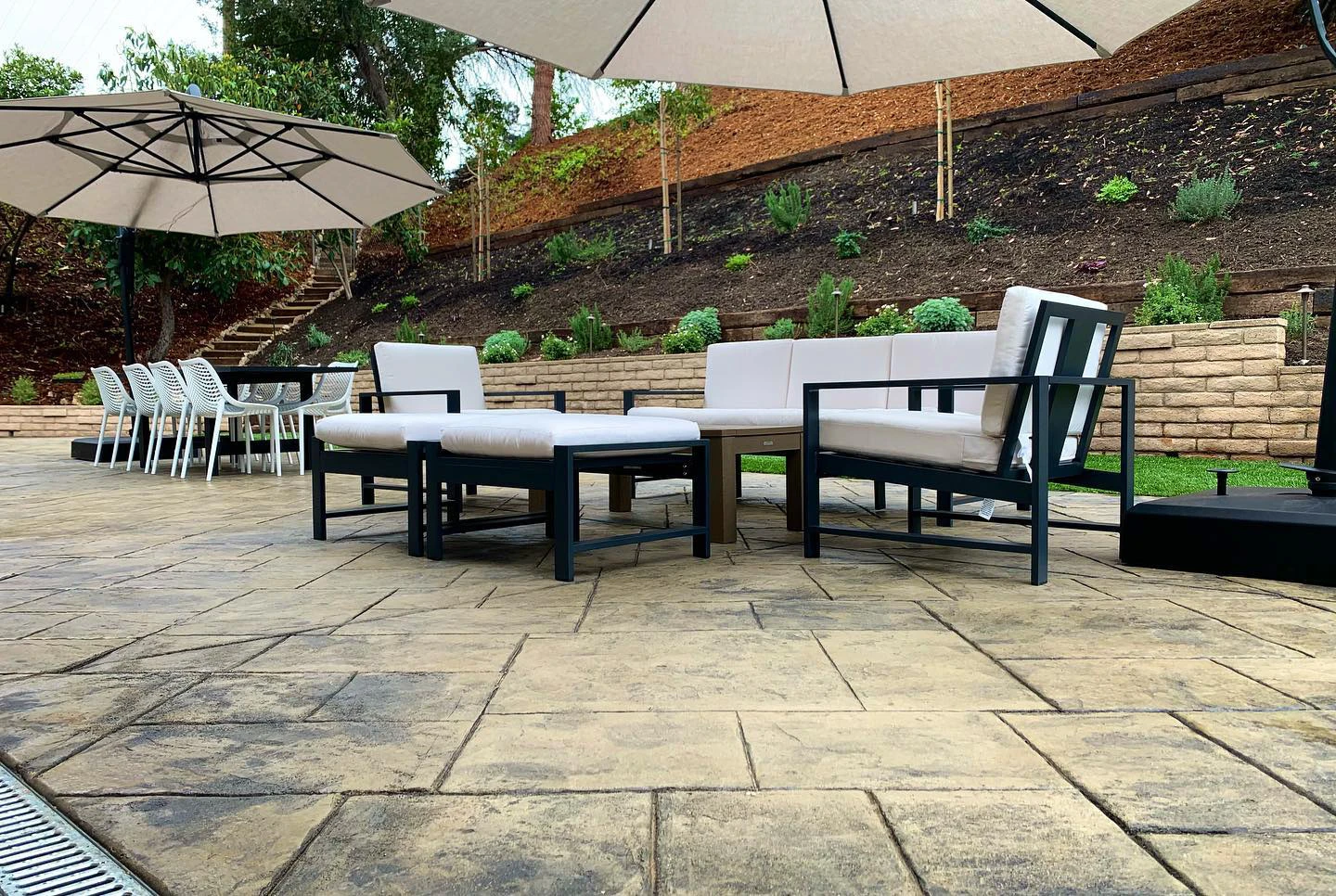
A last note on wood selection, because it comes up on every Dawsonville bid. Western red cedar is what most people think of, and it’s fine for overhead structure, but the posts — the ones sitting in or near concrete at the footing line — should be pressure-treated southern yellow pine with a standoff base plate, not cedar tight to concrete. Cedar at grade in a freeze-thaw climate with 55 inches of annual rainfall is a rot clock. The standoff plate moves the wood up two inches, lets it dry between storms, and adds 15 years to the post life. Small detail. Big difference.
Do all of that — the 2×10 sister, the formed flashing, the 36-inch epoxy-anchored footings, the pressure-treated posts on standoff plates — and the pergola over your back patio in Dawsonville will outlast the roof on the house. Do any three of the four and it’ll probably outlast you too. Skip one, and you’ve built a beautiful problem.
Engineered pergola attachments and freestanding builds across 20+ cities within 30 miles of Snellville, GA
Whether your backyard is a 1990s split-level in Dawsonville or a newer build in Foxcreek, the ledger detail and footing spec decide whether the pergola is still square in fifteen years. We build both kinds — attached the right way, or freestanding with a 6-inch offset.