
It’s the second Friday of October in Crooked Creek. The sun sets at 6:58. By 7:30 the patio is down to 54°F, the pool cover is on, and the guests who were supposed to stay until 10 are pulling jackets from the back of the car and edging toward the door. A pavilion fireplace changes that exact moment — and in Milton, that moment repeats roughly 160 evenings a year.
This is not a post about fire features in general. It’s a post about the one specific build that turns a Milton backyard from a 5-month venue into an 11-month venue: a covered pavilion with a stacked-stone fireplace, a raised hearth, and a chimney engineered to clear the roof line per NFPA 211. Every decision in this piece — insert size, hearth height, chimney termination, permit path, TV placement — flows from how Milton actually lives outdoors between October and March.
We build these in The Manor Golf Club, Cogburn Estates, White Columns, and along Freemanville and Hopewell. They are not the same as a $4K firepit. They are not the same as a living-room fireplace. They are a specific answer to a specific question Milton homeowners ask us every fall: how do we make the backyard we spent six figures on actually usable when the oak leaves start turning?
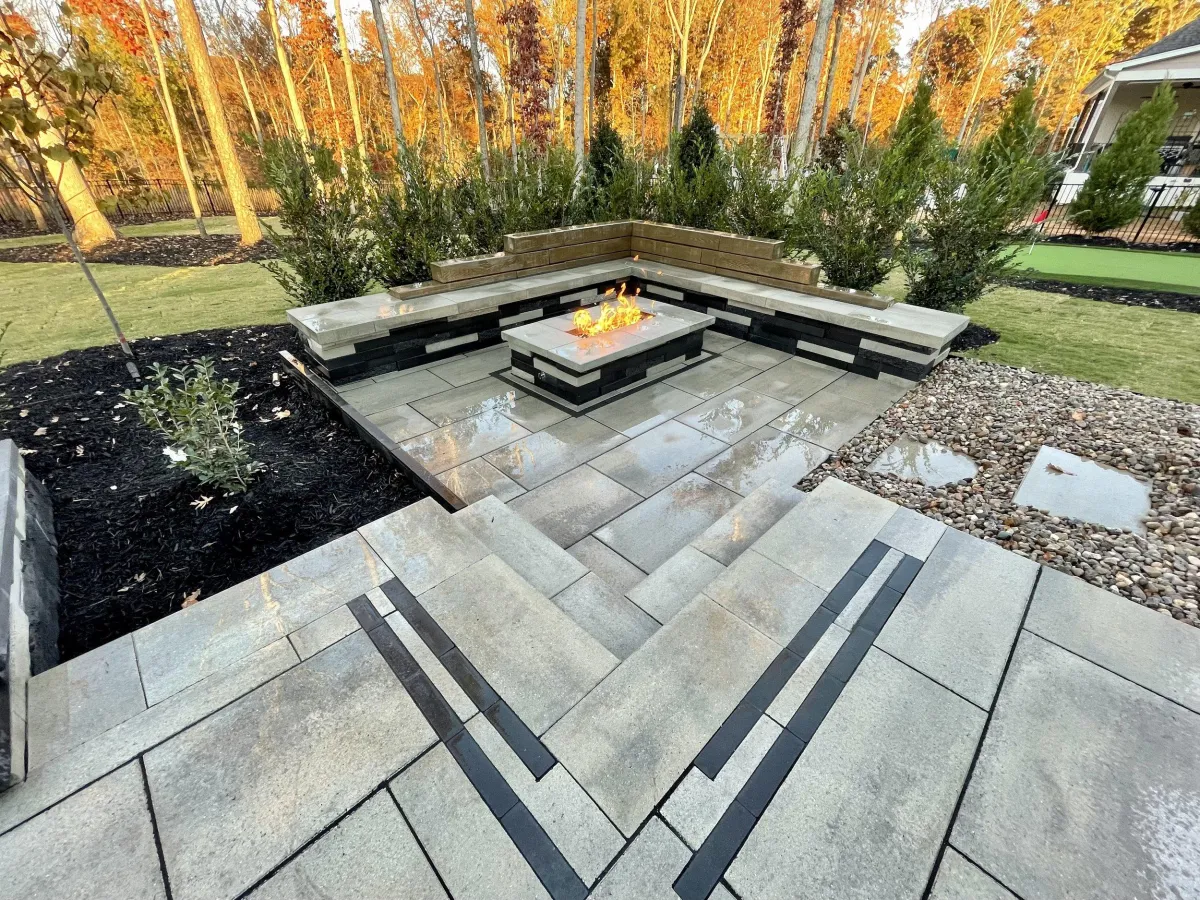
Why Milton’s Rural Dark-Sky Evenings Create This Demand
Milton incorporated as a separate city in 2006, carving itself out of northernmost Fulton County to protect what its residents call “rural character.” The practical result: 1-to-5-acre minimum lots in AG-1 zoning, equestrian preservation overlays, and almost no streetlights outside Crabapple and Birmingham Crossroads. At 1,150 ft elevation, Milton sits high enough to drop 4-6°F below intown Atlanta on a clear October night, and its tree canopy blocks the sky glow that keeps Buckhead warm after sunset.
That combination — rural darkness, elevation, acreage, and trees — is exactly what makes a pavilion fireplace feel different here than it would in a subdivision off GA-400. The fireplace isn’t competing with ambient light. It becomes the room. A Milton client in Atlanta National described it this way: “When the fire is on, the pavilion is the brightest thing on three acres. Everything else disappears.” That’s the product you’re buying.
The season math also favors Milton. USDA Zone 8a gives us roughly 22 freeze events per year, clustered between late November and mid-March. Summer highs of 88-93°F mean the pool and patio do the heavy lifting from May through September. The shoulder seasons — early October through mid-May, minus the deep January freeze — are where a pavilion fireplace adds 160-plus evenings the backyard otherwise loses.
Usable evenings per year: Without any heat source: ~110 evenings above 65°F after sunset. With a pavilion fireplace + two overhead heat lamps: ~270 evenings above an effective 65°F — a gain of roughly 160 nights.
October Through December: What the First Shoulder Stretch Actually Looks Like
The first cold front typically arrives in Milton the last week of September. By October 10, overnight lows dip into the low 50s. This is when pavilion fireplaces start earning back their cost — and when we get the most calls from homeowners whose pool decks built that spring are already “too cold to sit on.”
A properly engineered pavilion fireplace holds a usable 72°F inside a 14-by-20-foot covered pavilion at an outside temperature of 42°F, assuming three sides open and one side wind-protected. That’s with a 48-inch gas insert running on the medium setting, producing roughly 45,000 BTU. The same pavilion with no heat source drops to ambient within 20 minutes of sunset. The difference between those two rooms is the difference between a November dinner party and a November abandoned patio.
Through November, the use pattern shifts from post-dinner drinks to the fire being the event itself. Clients tell us the pavilion becomes the Thanksgiving overflow room — kids and cousins migrate out after the meal, the football game goes on the TV above the mantel, and the adults inside get their house back for an hour. That specific use case drives two design decisions: the hearth must be sittable (18 inches), and the TV must be mounted at 64-68 inches on-center for a seated viewing angle, not standing.
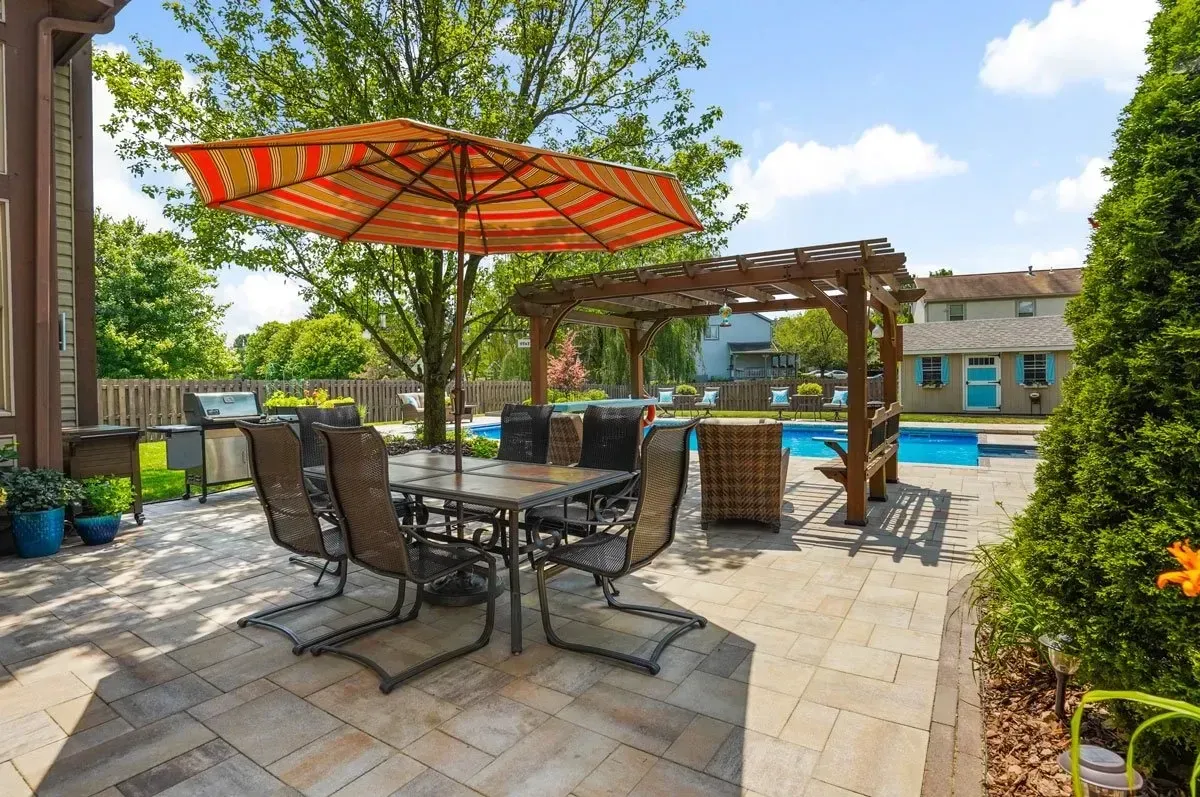
January and February: The Deep-Freeze Engineering Decisions
Milton sees roughly six to nine nights per year below 25°F, concentrated in mid-January. This is the stress test for every pavilion fireplace decision you made in the design phase. Three specific failures we see on builds we didn’t do:
- Chimney termination too low. NFPA 211 requires the chimney to extend at least 3 feet above the highest point where it passes through the roof, and at least 2 feet higher than any portion of the pavilion within 10 feet horizontally. Builds that cheat this number downdraft in wind and smoke the pavilion. On a 10-foot eave pavilion, the chimney cap should sit at roughly 13-14 feet.
- Gas line undersized for cold-weather flow. A Napoleon Riverside 36 draws 30,000-55,000 BTU. On a 3/4-inch black iron line at 50 feet from the meter, that’s fine. At 120 feet with elbows, you need a 1-inch line or the flame drops to nothing on a 22°F night when the main house furnace is also running.
- Hearth stone cracked from thermal shock. Bluestone hearths under 2 inches thick will crack in the first hard freeze if the fire is run wet-to-hot. The spec is 3-inch thermaled bluestone or 2-inch honed granite — not the 1-inch veneer a patio contractor will happily install.
We learned the hearth-thickness rule the expensive way on an early Milton build off New Providence Rd. The homeowner ran the first fire of December on a rain-damp bluestone slab. The crack ran corner to corner by January 4. The replacement and re-grout took nine days. The spec tightened permanently after that.
March and April: Coming Out the Other Side
The second shoulder stretch is shorter than the first — Milton warms fast once March hits. But it’s also when the fireplace shifts from “primary heat” back to “ambiance layer.” By late April, you’re not running the fire for warmth. You’re running it because the pavilion looks better with it on than with it off.
This is where the design choice between gas and wood reveals itself. Gas wins on the first shoulder (Oct-Dec) because you want it on, off, and on again without the 20-minute wood-fire ramp. Wood wins on a January Saturday when you have three hours and want the smell, the sound, and the smoke-and-ash ritual. Most of our Milton builds run gas because the use pattern skews short-duration and multi-session — 45 minutes, off, 30 more minutes, off again. Very few people light a two-hour wood fire three times a week.
The Build Timeline: What 14 Weeks Actually Looks Like in Milton
A pavilion-plus-fireplace build in Milton runs 12-16 weeks from signed contract to first fire, assuming the pavilion structure is part of the same scope. Here’s the chronological breakdown we walk every client through at the first design meeting:
Weeks 1-2: Site survey, creek-buffer check, and preliminary design. Milton enforces 25-75 ft creek-buffer setbacks from named tributaries — Cooper Sandy Creek, Chicken Creek, Lake Creek — and the pavilion footprint has to clear those. On wooded Milton lots, we also lay out tree-protection zones per the city’s tree ordinance before we touch the site. If the property is inside The Manor or Crooked Creek, architectural review drops in here too.
Weeks 3-5: Engineered drawings and permit submission. Pavilions over 200 sq ft in Milton require structural-engineered drawings sealed by a Georgia-licensed PE. The fireplace itself needs a separate mechanical and fuel-gas permit. Permit submission goes to Milton Community Development at 2006 Heritage Walk — not Fulton County. Turnaround runs 10-14 business days for routine builds, longer if the structural review committee flags anything.
Weeks 6-7: Excavation, footings, and gas line rough-in. Milton’s Cecil clay over weathered granite means footings typically hit firm bearing at 18-24 inches. Saprolite shelves occasionally show up during excavation on west Milton lots near the Cherokee County line — when they do, we either rock-hammer through or shift the footing. Gas line is trenched from the meter to the fireplace location, usually 1-inch poly with a 1-inch black iron stub-up inside the hearth cavity.
Weeks 8-10: Pavilion framing and roof deck. Timber-frame pavilions use 8×8 or 10×10 posts with 6×12 beams; conventional framing uses LVL or glulam headers. The chimney chase gets framed concurrently, wrapped in Hardie, and flashed with step flashing plus a cricket on the uphill side if the pavilion is shed-roofed.
Weeks 11-12: Firebox install, chimney flue, and stone veneer. The gas insert goes in first, leveled and secured to the masonry surround. The Class A chimney pipe stacks up through the chase. Stone veneer — whether full-bed Tennessee fieldstone, stacked ledgestone, or a drystack look — goes on the firebox face and up the chimney chase simultaneously.
Weeks 13-14: Hearth set, mantel install, TV wiring, final inspection, first fire. The hearth slab is set last to protect it during stonework. Mantel is either a sawn 8×10 reclaimed timber or a floating steel plate with hidden anchors. TV pre-wire (HDMI, power, cat-6) runs inside the chase before stone. Final mechanical inspection happens 7-10 days after the gas hookup; we light the first fire with the homeowner the same day.
Permit cost, Milton Community Development: Pavilion structural permit ~$320-$480 depending on square footage. Fuel-gas permit $85. Mechanical permit for fireplace $110. Total permit load on an estate-scope build: ~$550-$720.
Cost, Specs, and What You’re Actually Buying
A pavilion fireplace in Milton installs in the $28,000-$58,000 range depending on four variables: insert choice, stone selection, chimney complexity, and whether the pavilion itself is part of the scope. We’ll break those out.
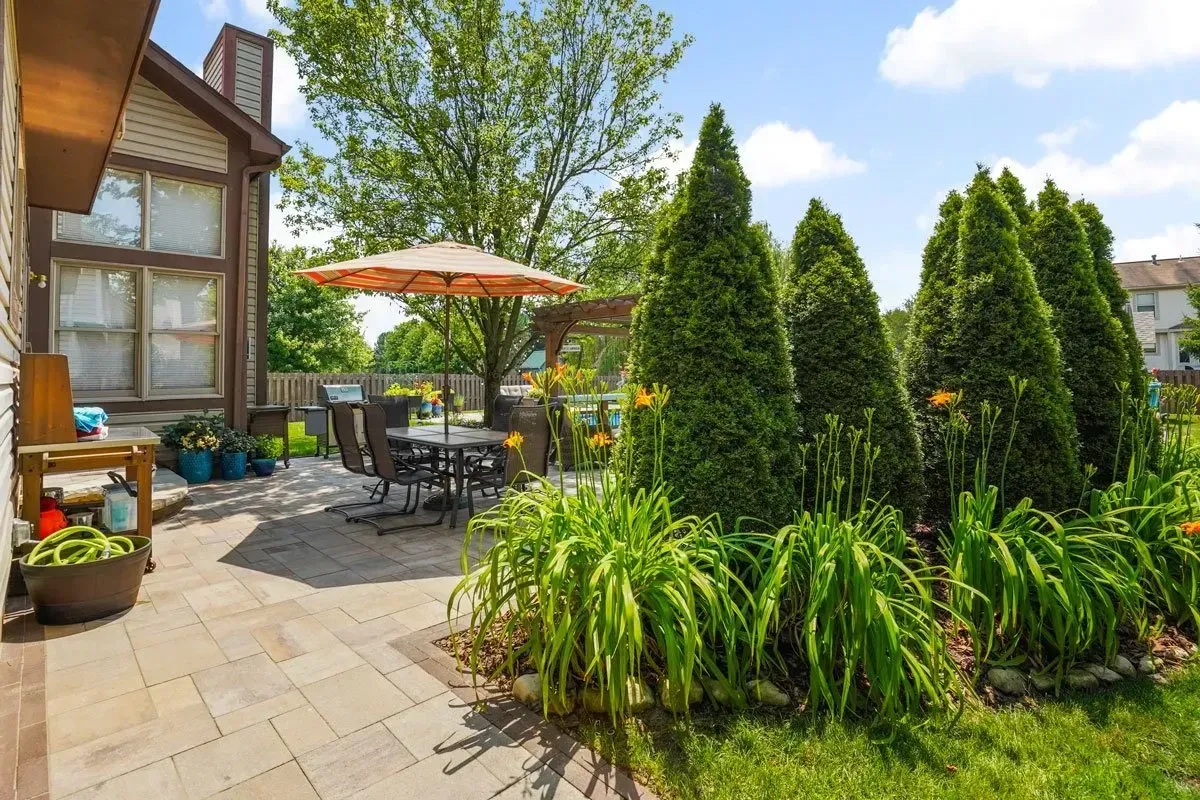
Insert: $4,800-$9,200 for gas, $3,400-$6,800 for wood. Our go-to gas units for Milton pavilions are the Napoleon Riverside 36 for mid-scale installs and the Town & Country 42DV for larger pavilions where the fireplace needs scale to match a 12-foot ceiling. Both carry ANSI Z21.50 certification for outdoor use. Wood inserts from Majestic or Superior come in cheaper, but they pull mechanical-permit complexity upward.
Stone: $6,800-$18,000. Full-bed Tennessee fieldstone on the high end, manufactured stacked stone on the low end, drystack ledgestone in the middle. The chimney chase itself adds 180-280 sq ft of stone surface that has to be clad — a detail homeowners miss when they budget from a photo.
Chimney system: $3,200-$6,500. Class A double-wall insulated pipe, storm collar, chimney cap, and a painted or powder-coated chase top. The number jumps when the pavilion roof is steep-pitched or metal, which makes flashing and cricket work harder.
Hearth, mantel, TV prep, and finish: $2,400-$5,800. 3-inch thermaled bluestone hearth at 18 inches tall, reclaimed timber mantel at 60-66 inches, TV pre-wire, switchable LED uplighting on either side of the chimney chase, and a remote-start wall switch for the gas valve.
Layered on top: pavilion framing and roof if that’s part of the scope. A freestanding 14×20 timber pavilion with standing-seam metal roof runs $42,000-$68,000 separately. A code-built conventional pavilion with shingle roof starts around $28,000. Many Milton clients bundle the pavilion, fireplace, outdoor kitchen, and pool deck into one phased project — which is how the $85K-$140K “outdoor room” budgets come together.
Pulling It All Together: The 11-Month Backyard
The homeowners who get this build right in Milton tend to share a pattern. They started with a pool. The pool came in around $140K-$220K. They used it heavily from Memorial Day through Labor Day and then watched the backyard go quiet for eight months. A year or two later, they added a pavilion — at first just a roof, maybe a ceiling fan and a TV. It helped. But it wasn’t enough to pull people out in October.
Then they added the fireplace. And everything changed. The phrase we hear most often at the one-year walk-through: “We live out here now.” That’s the return on the $28K-$58K. It’s not a square-footage gain — it’s a calendar gain. The backyard goes from 150 usable evenings a year to 300-plus.
The last variable worth naming is ambient heat. Two overhead infrared heat lamps — Bromic Platinum 500 Smart-Heat units mounted to the pavilion’s tie beams — add 5,000W each of directional heat on the seating area, so the fireplace can stay at medium output and the room still reads 72°F at the couch on a 38°F night. The lamps are wired to a wall dimmer. Total additional cost: ~$3,400 for two units plus electrical rough-in.
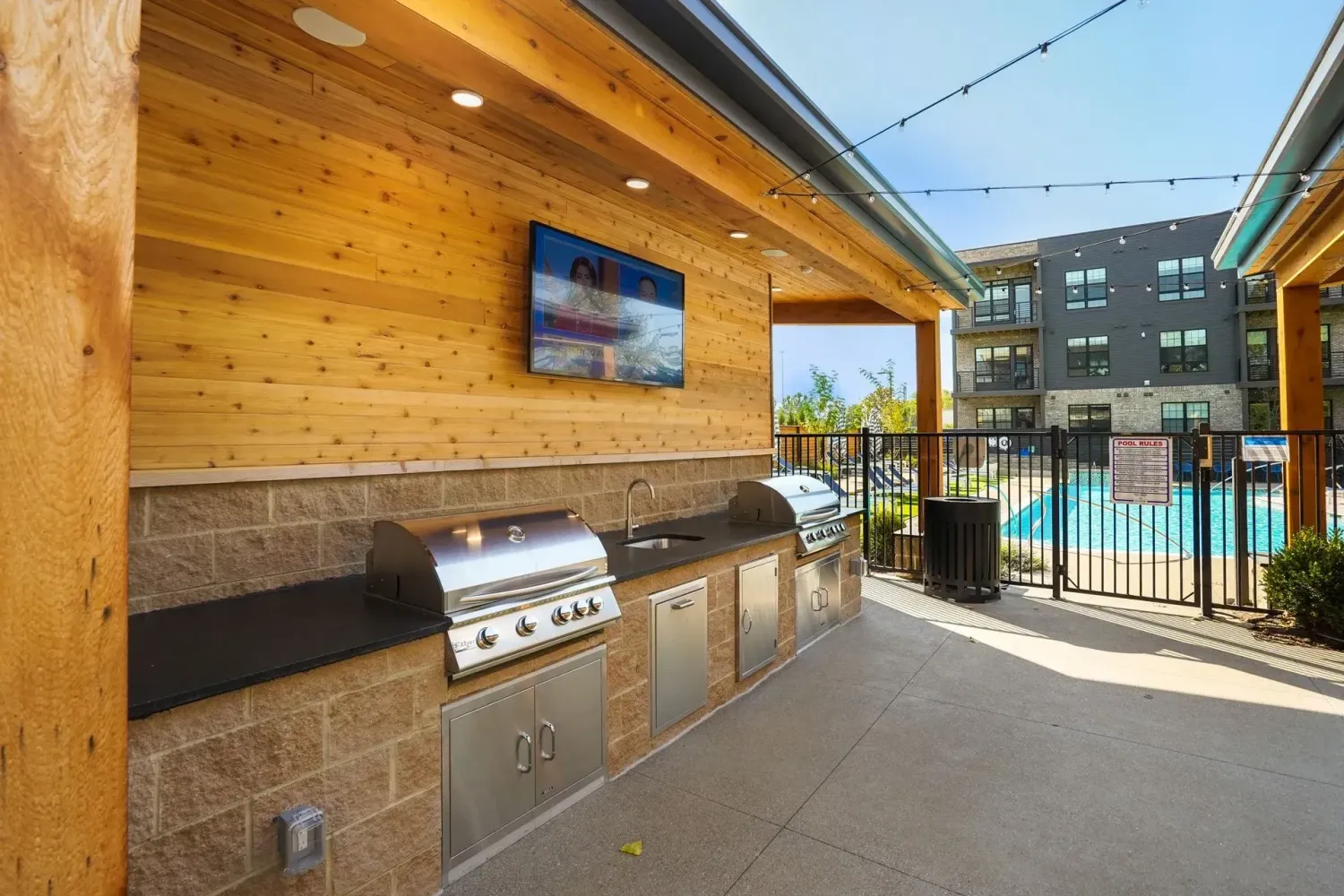
The whole room — fireplace, pavilion, lamps, TV, outdoor kitchen tying in next door — becomes a single piece of architecture, not a collection of features. And it makes Milton backyards work the way Milton homeowners actually wanted them to work when they bought the house.
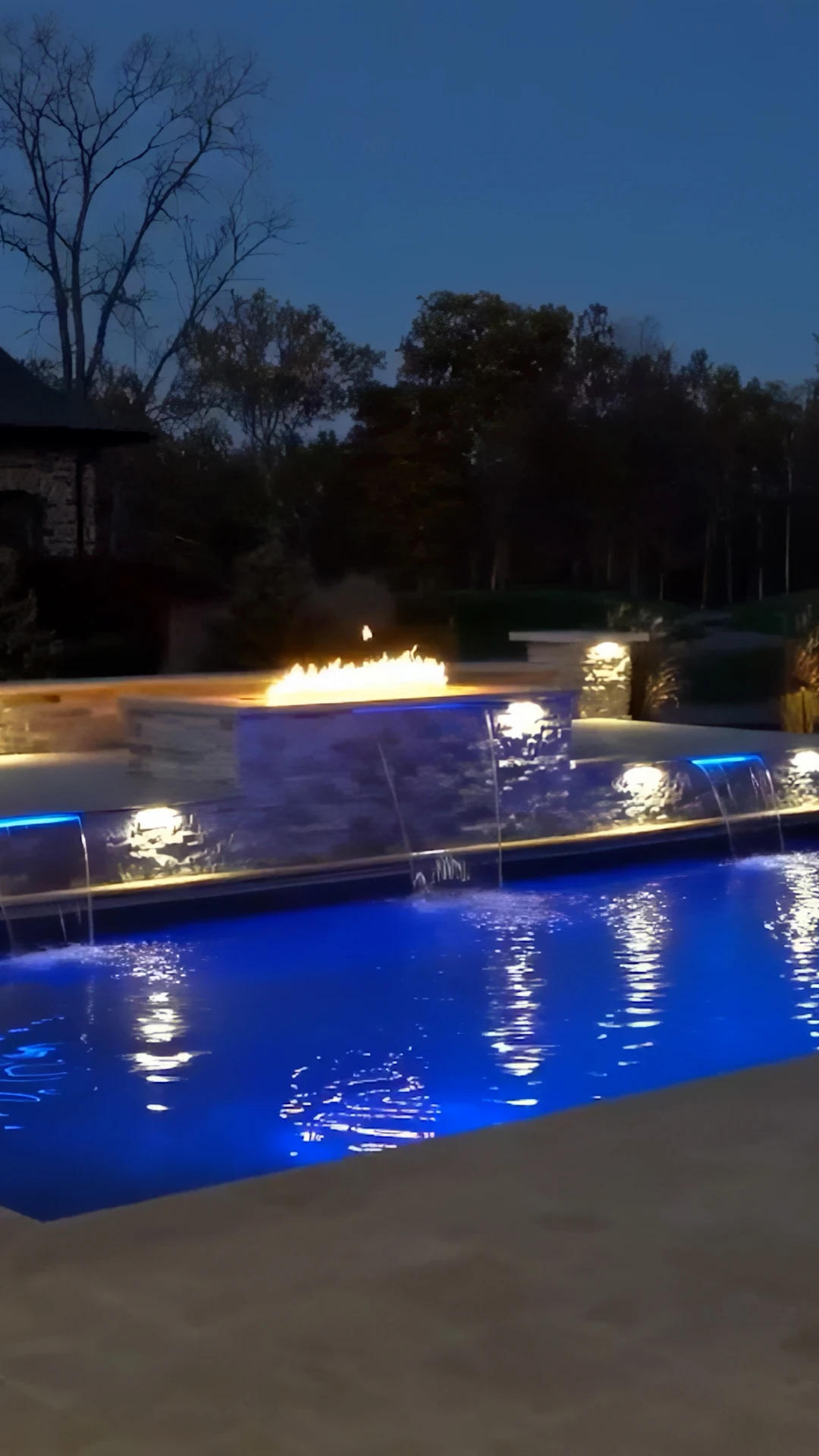
Return on the build: A $42,000 pavilion fireplace that converts 160 additional evenings from unusable to usable is $262 per added evening across the first year — and effectively $0 per evening after year two, assuming 15-year service life on the insert and stone.
Pavilion fireplaces and outdoor fire features across 20+ cities within 30 miles of Winder, GA
From Milton estates on Freemanville to compact Gwinnett lots, we engineer pavilion fireplaces to NFPA 211, with permit-path clarity, chimney termination right the first time, and hearth stone that survives the January freeze.