
The homeowner in Country Club of the South wanted a fire pit under the new pavilion. The first contractor quoted it as a drop-in box. The second said it couldn’t be done. Both were wrong — and both missed the same three numbers that decide whether a covered fire feature works or gets red-tagged on final inspection.
Covered fire features are the single most misunderstood build on an Alpharetta pool deck. On an open patio, a fire pit is an appliance — you set it, you light it, you’re done. Put a solid roof over it and the entire physics of the build changes. Heat has nowhere to go. Combustion byproducts collect. Rafters sit inside a plume of 600°F exhaust that wants to rise for twelve feet but only has eight. The installation doesn’t just need to look right. It needs to breathe.
This piece walks through the actual math — the UL listings, the clearance numbers, the venting ratios, and the fuel-type rules that govern a pavilion fire feature anywhere inside the 30004, 30005, 30009, or 30022 zip codes. These are the specs we hand to the City of Alpharetta Community Development office at 2 Park Plaza during permit review, and they are the reason our covered-fire builds pass on the first walkthrough instead of the third.
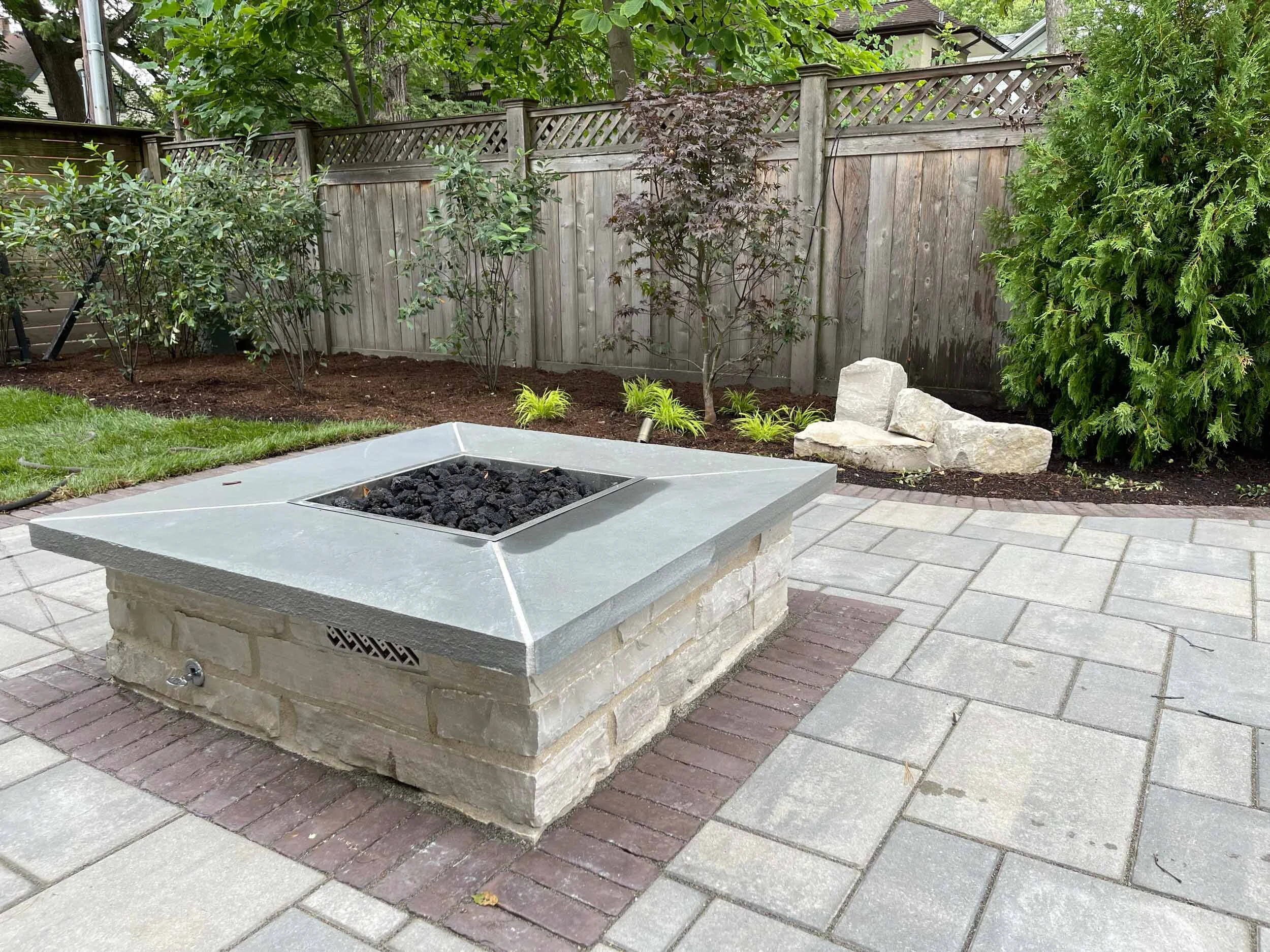
Why Wood-Burning Is Off the Table Under a Pavilion
This is the answer clients don’t want to hear, and it’s the first thing that gets said at every site meeting. A wood-burning fire pit cannot go under a solid pavilion roof on a residential Alpharetta build. Not in Windward. Not in Hutchinson Farm. Not in Ashebrooke. Not on a lot where you’d think nobody would ever check.
Three things stack against it. First, 2018 IRC Section R1003 — adopted with amendments by Fulton County and referenced in the City of Alpharetta residential code — treats any permanent wood-burning feature under a structure as a chimney appliance. That means a UL-103 HT-rated listed chimney assembly, a minimum flue run above the roofline, spark arrestor, and an engineered hearth. On a pavilion built for ambiance, retrofitting a code-compliant Class A chimney is an eight-thousand-dollar afterthought that ruins the rafter plan.
Second, every major HOA review board in northern Fulton — Country Club of the South, Windward, White Columns, Cambridge Parks — flags wood-burning covered features during their 3 to 4 week ARB review. Soot on soffit, ember drift toward cedar shake roofing on adjacent homes, and the smoke complaint the first neighbor files after the first use. They kill the plan before it reaches city review.
Third, even if the HOA said yes and the code gave you a path, the insurance carrier on a $1.8M Windward home will not underwrite it. We have had two builds where the homeowner pushed for wood, got HOA approval, and the carrier added an exclusion endorsement that pulled coverage from the entire rear outdoor living area. The math stops being about heat and starts being about liability.
So the conversation becomes gas or ethanol. Everything downstream — the venting ratio, the ceiling protection, the clearance number, the burner spec — assumes one of those two fuels.
The Three Numbers That Govern Ceiling Clearance
Clearance on an open patio is a single number — two feet to anything combustible, measured horizontally from the burner rim. Under a solid roof, clearance becomes a triangle. You need a vertical number, a horizontal number, and a ceiling-protection number, and the three have to agree.
Start with vertical. The baseline is eight feet of ceiling clearance from the top of the burner pan to the underside of the nearest rafter or ceiling panel. Eight feet comes from the thermal plume math — a natural-gas flame in a 150,000 BTU burner throws a 600°F plume that cools to a safe 180°F somewhere between six and seven feet above the burner. Eight feet gives you a safety margin. Go under eight and you have to add active protection. Go over ten and you start losing radiant heat value for the conversation area below.
Horizontal clearance is two feet from the outside edge of the burner pan to any combustible wall or post. In practice, that means a pavilion post set twenty-six inches from the rim of a forty-two-inch round burner — so on a ten-foot-square pavilion, your maximum usable fire pit diameter is about fifty inches without moving posts. This is the number that most often forces a redesign. Clients want a sixty-inch feature under a ten-by-ten roof and the post spacing won’t allow it.
The third number is ceiling protection. The tongue-and-groove cedar most Alpharetta builders use for pavilion ceilings is combustible and will darken under sustained flame use. Code allows two protection paths: 12-gauge steel panel or fire-rated cement board (Durock, HardieBacker, or equivalent UL-rated 1-hour assembly) across the plume footprint. The protected area has to extend at least one foot beyond the vertical plume cylinder in every direction — so a forty-two-inch burner needs a sixty-six-inch minimum protected panel overhead.
Clearance math baseline: 8-foot vertical burner-to-ceiling, 2-foot horizontal burner-to-combustible, 12-gauge steel or equivalent fire-rated ceiling panel extending 12 inches past the plume footprint. Undersize any one number and the other two have to compensate.
Why the Warming Trends CFB150K Is the Alpharetta Baseline
Not every gas burner is rated for covered installation. This is where the UL listing matters and where most box-store fire pit inserts fail. The burner has to carry a UL-listed rating for both outdoor use and enclosed-overhead installation, and it has to hold an AGA or CSA gas-train certification for the fuel you’re running (natural gas from Georgia Power’s network, or propane from a buried tank).
The baseline we spec on every pavilion build inside the Alpharetta city limits is the Warming Trends Crossfire CFB150K. It’s a brass, high-heat, UL-listed gas burner rated at 150,000 BTU on natural gas — enough output to feel in a forty-degree January evening without overdriving the clearance math above. The brass construction means it won’t corrode in the humidity that Alpharetta sees May through September. The CFB series is one of the short list of burners certified for operation under a solid pavilion ceiling when the clearance numbers above are met.
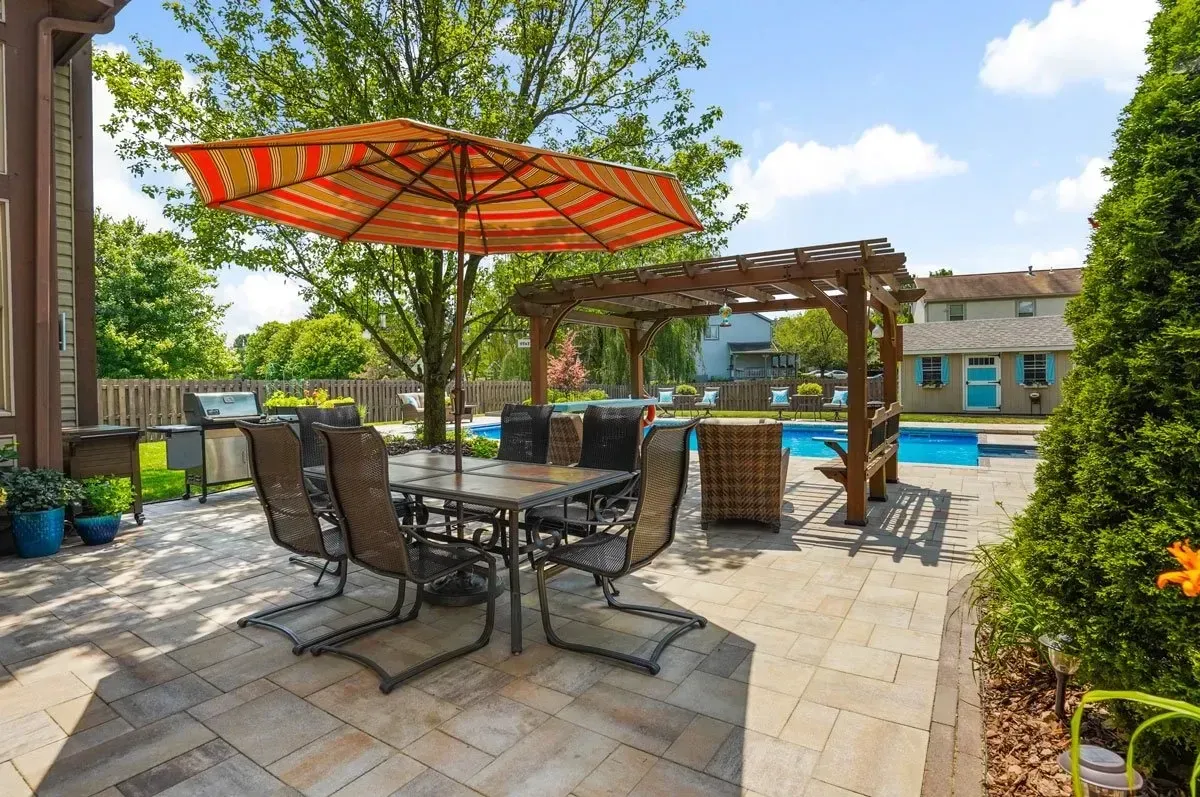
A 150K burner also matches the gas supply that most Alpharetta homes already have running to the house. The builder-spec half-inch flex running from the meter handles roughly 200,000 BTU at standard manifold pressure once you account for the run length from the house to the rear yard. Spec a bigger burner and the gas line needs to come up to three-quarter inch, which means opening the trench back to the meter and adding a second $1,800 to $2,400 trenching line item to the estimate.
We’ve used smaller burners on three or four builds where clearance was tight — the Warming Trends CFB125 at 125K BTU on a ten-foot ceiling where the homeowner wanted the eye comfort of slightly less plume reach. But the CFB150K remains the default. It’s the burner that lands on the permit drawings for Country Club of the South and Windward almost every time.
The 1:150 Ventilation Ratio — The Math Nobody Runs
Here is the number that separates a pavilion fire feature that works from one that slowly cooks the rafters. Ventilation ratio. The rule is 1:150 — one square foot of permanent vent opening for every 150 square feet of ceiling area above the fire feature.
Run the math on a typical Alpharetta pavilion. A twelve-by-fourteen-foot pavilion roof covers 168 square feet. Divide by 150. You need 1.12 square feet of net free vent area — not gross opening, net — somewhere in that ceiling envelope. That’s roughly 161 square inches of actual open vent, accounting for the screen mesh and louver blade loss that every vent manufacturer rates at about 60% net free area on a nominal opening.
The cleanest way to get there on a cedar-clad pavilion ceiling is two 14-by-20-inch soffit-style vents on the gable ends, back-to-back, screened with a 16-mesh bronze fly screen. That gives you convective airflow — cold air in the leeward gable, warm air out the windward. On a hip-roof pavilion without gables, the vents go on the long sides of the underside of the rafters, spaced at least six feet apart to create a cross-draft.
Skip this step and the plume has nowhere to exit. Warm exhaust pools at the ceiling apex, temperature climbs, the cedar darkens within a year, and by year three you have charred rafter tails and a homeowner who doesn’t understand why the fire pit they paid $14,500 for is ruining their pavilion. The 1:150 ratio isn’t a suggestion. It’s the difference between a twenty-year install and a five-year install.
Alpharetta vent spec (typical pavilion, 12×14): 168 sqft ceiling ÷ 150 = 1.12 sqft net free area required. Two 14″×20″ louvered soffit vents with 16-mesh bronze screen, gable-to-gable placement, yields ~1.16 sqft net free area. Permit-ready.
Permit Path — City of Alpharetta vs. Unincorporated Fulton
Alpharetta is one of the cities in North Fulton that runs its own Community Development office and pulls its own building permits, which matters if you live inside the city limits versus on an unincorporated Fulton parcel just outside them. City permits come out of 2 Park Plaza and typically clear plan review in 8 to 12 business days. Unincorporated Fulton goes through the county office in downtown Atlanta and runs 15 to 22 business days in a normal month, longer in summer when the pool-build queue peaks.
Either path, the covered fire feature triggers two permit line items: a building permit for the pavilion and a gas permit for the burner tie-in. The gas permit has to name a licensed Georgia gas contractor and include a pressure-test drawing. We submit both together, which matters — separating them adds two weeks of back-and-forth between offices that don’t coordinate well.
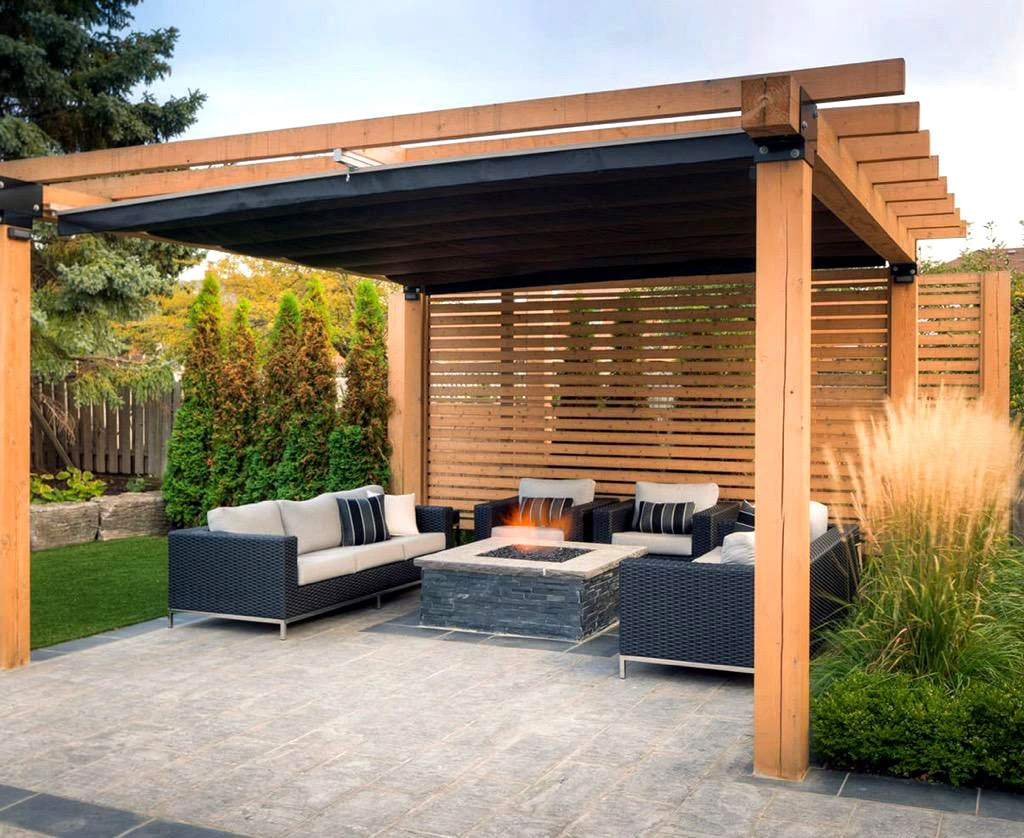
Windward and Country Club of the South both require ARB architectural review on top of city permit. The ARB turnaround is 3 to 4 weeks and typically wants to see the pavilion elevation, the burner cut sheet, and the HOA-approved roof material called out. On a recent Hutchinson Farm build we put Avalon-grade architectural grade cedar on the pavilion because the ARB required a species-match to the adjacent primary structure. That detail pushed material cost up $2,100 but cleared review in one submission instead of two.
One utility wrinkle specific to Alpharetta. Most of the city sits inside Georgia Power service territory, but the northern slice of city limits near the Milton border falls into the Sawnee EMC footprint. The two utilities run different service-drop inspection calendars — Georgia Power typically inspects within 10 business days, Sawnee EMC runs 12 to 15. If the fire feature install needs a dedicated circuit for ignition control or lighting, that utility inspection becomes the critical path item, not the gas permit. Scope the utility early.
Stone, Surround, and Why Piedmont Clay Changes the Slab
The last specification layer is the thing underneath — the slab and the surround that holds the burner and carries the stone veneer. Alpharetta sits on Cecil-series Piedmont clay with moderately high shrink-swell behavior, and on older farm-conversion tracts near Wills Park and Rucker Road you hit pockets of Appling sandy loam where the grade changes three to six feet across a residential lot.
A covered fire feature loads the slab three different ways. There’s the dead load of the stone surround — typically 800 to 1,400 pounds on a four-foot round feature. There’s the thermal cycling of the burner itself, which heats the inner core to 400°F and cools back to ambient every cycle. And there’s the soil movement underneath from seasonal moisture swings in the clay.
Our slab spec for a covered fire feature on Piedmont soil is a six-inch reinforced pad with #4 rebar on 12-inch centers, poured over a compacted four-inch crushed-stone base, with a perimeter grade beam that ties the fire feature slab to the main pavilion footing. Anything thinner cracks within three winters. Anything thicker is money spent past the point of return.
Stone surround choice matters because of heat transfer and freeze-thaw behavior. Alpharetta sees about 20 freeze events per year at 1,100 feet of elevation, so you want stone with a water absorption rate under 3% — Tennessee fieldstone, Pennsylvania bluestone, and full-body porcelain tile all qualify. Travertine and limestone absorb more water and show thermal spalling after two or three winter cycles when the burner is used frequently. On a build for a Deerfield client last year we spec’d a Pennsylvania bluestone cap over a honed basalt surround — both stones with a sub-2% absorption — and the thermal performance through the first winter is already cleaner than a travertine install from the prior summer eighty feet away.
Covered fire feature material rules for Alpharetta: Stone absorption under 3%. Slab spec 6″ reinforced with #4 rebar on 12″ centers. Grade beam tying feature slab to pavilion footing. Burner brass, not steel, on UL-listed covered-rated model.
What a Complete Pavilion Fire Build Actually Costs
Pricing on a covered fire feature in Alpharetta breaks into four line items. The burner assembly — CFB150K with pan, control valve, key valve, and gas manifold — runs $3,800 to $4,600 on most builds, depending on whether the client wants electronic ignition or a manual flex-flame key start. Stone surround and cap varies wildly: a simple split-face CMU core with a Tennessee fieldstone veneer comes in around $4,200, while a full-body porcelain or honed basalt build with a mitered bluestone cap lands closer to $8,500.
The slab, grade beam, and crushed-stone base add $2,400 to $3,100 — more if the pavilion footing needs to be cut and tied after the fact instead of poured monolithically. Gas line from the meter, pressure test, and permit paperwork runs $1,600 to $2,800 depending on run length and whether the house service needs an upgrade.
The total range on a permit-complete, code-compliant pavilion fire feature for an Alpharetta backyard lands between $12,000 and $19,000. The clients who push for cheaper end up rebuilding inside five years. The clients who pay for the spec end up with a feature that’s still performing when the pavilion itself needs its first re-stain in year eight.
Two ongoing costs get left out of almost every quote a homeowner receives. Annual gas-train inspection and burner maintenance runs $180 to $240 per visit, and the thermocouple on an electronic ignition model usually needs replacement every four to six years at $320 installed. Neither is expensive, but both need to be line items in the homeowner’s maintenance calendar, not afterthoughts the first time the pilot won’t hold on a cold December night.
Time on the calendar runs four to six weeks from permit approval to final inspection on a standalone covered fire feature. That’s separate from the pavilion itself, which adds another three to four weeks if it’s built concurrently. On a combined pavilion + fire feature + pool-deck integration build — which is how we see most Avalon-adjacent luxury townhome infill projects scoped — expect the full sequence to run twelve to sixteen weeks once the gas, building, and utility permits all align.
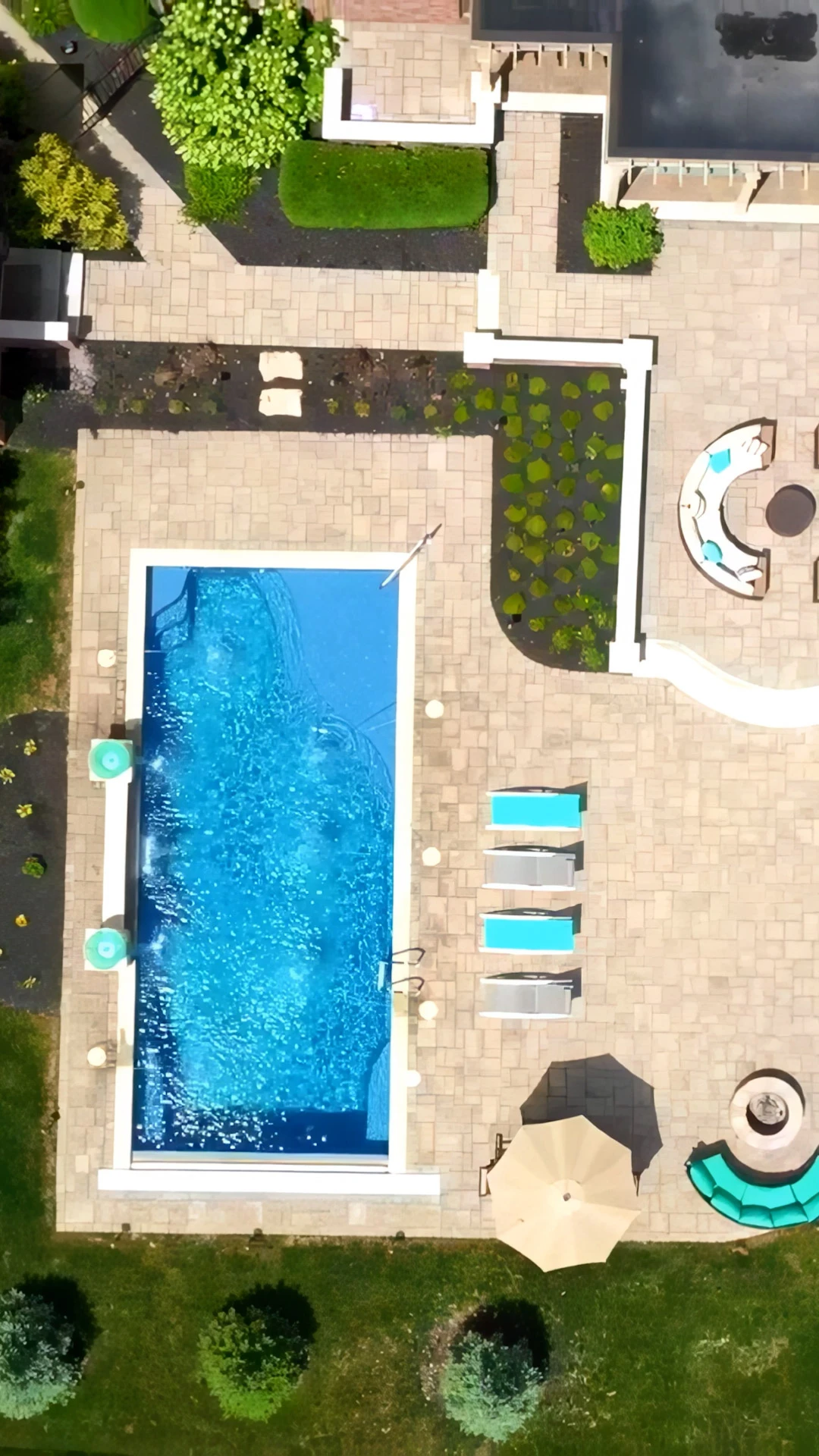
None of this is guesswork. The eight-foot ceiling number comes out of the burner manufacturer’s UL test certificate. The 1:150 vent ratio comes straight out of the building code chapter the Alpharetta inspector references at final walkthrough. The stone absorption threshold comes from the ASTM C97 lab data sheet for the specific quarry. The only judgment call is the design — how the feature sits visually in the pavilion, what height the seat wall runs, and where the sight lines cut across the pool coping and back into the conversation zone. The numbers underneath are fixed, and they are the difference between a feature that passes inspection and one that ends in a four-year rebuild.
Country Club of the South, Windward, Hutchinson Farm, White Columns, Cambridge Parks, Deerfield, Ashebrooke, Haynes Manor — every one of these neighborhoods has a covered fire feature that was built before the clearance math was run, and every one of them has a homeowner who can tell you exactly how much the rebuild cost. We would rather design to the numbers on the front end, file the permit clean through 2 Park Plaza, and hand the client a pavilion that outlives the warranty on the burner underneath it.
Fire pits, fireplaces, and pavilion-covered fire features across 20+ cities within 30 miles of Winder, GA
From Alpharetta’s Windward and Country Club of the South down through Gwinnett and back out to the Forsyth line — we engineer covered fire features to the actual clearance, venting, and permit specs that keep them standing for the next twenty years.