
Paver patios in Dacula start failing around year 4 to 5 — not because pavers are a bad product, but because the crew who laid them treated Piedmont clay like it was sand. A 30-year patio is a different animal. It starts eight inches below finished grade and it is built one lift at a time, not one afternoon at a time.
We build patios in Hamilton Mill, Sycamore Ridge, Chandler Ridge, Providence Club, Ivey Chase, and the infill lots north of Dacula Rd and Hog Mountain Rd. Every one of those neighborhoods sits on the same Cecil-series topsoil over saprolite — weathered granite that turns to slurry when wet and brick when dry. That soil behavior is what kills paver patios across Gwinnett County. An eight-inch patio that ignores it fails at the edges first, then the field, then all at once during the first serious freeze-thaw cycle of its fourth winter.
This post walks through the exact eight-step install we run on a typical Dacula backyard patio — the specs we write on the job plan, the tolerances we hold, the materials we specify by brand-agnostic grade, and the reasons each step exists. None of it is invented. It is ICPI best practice adapted for USDA Zone 8a Piedmont clay, which is what we have been pouring onto for two decades.
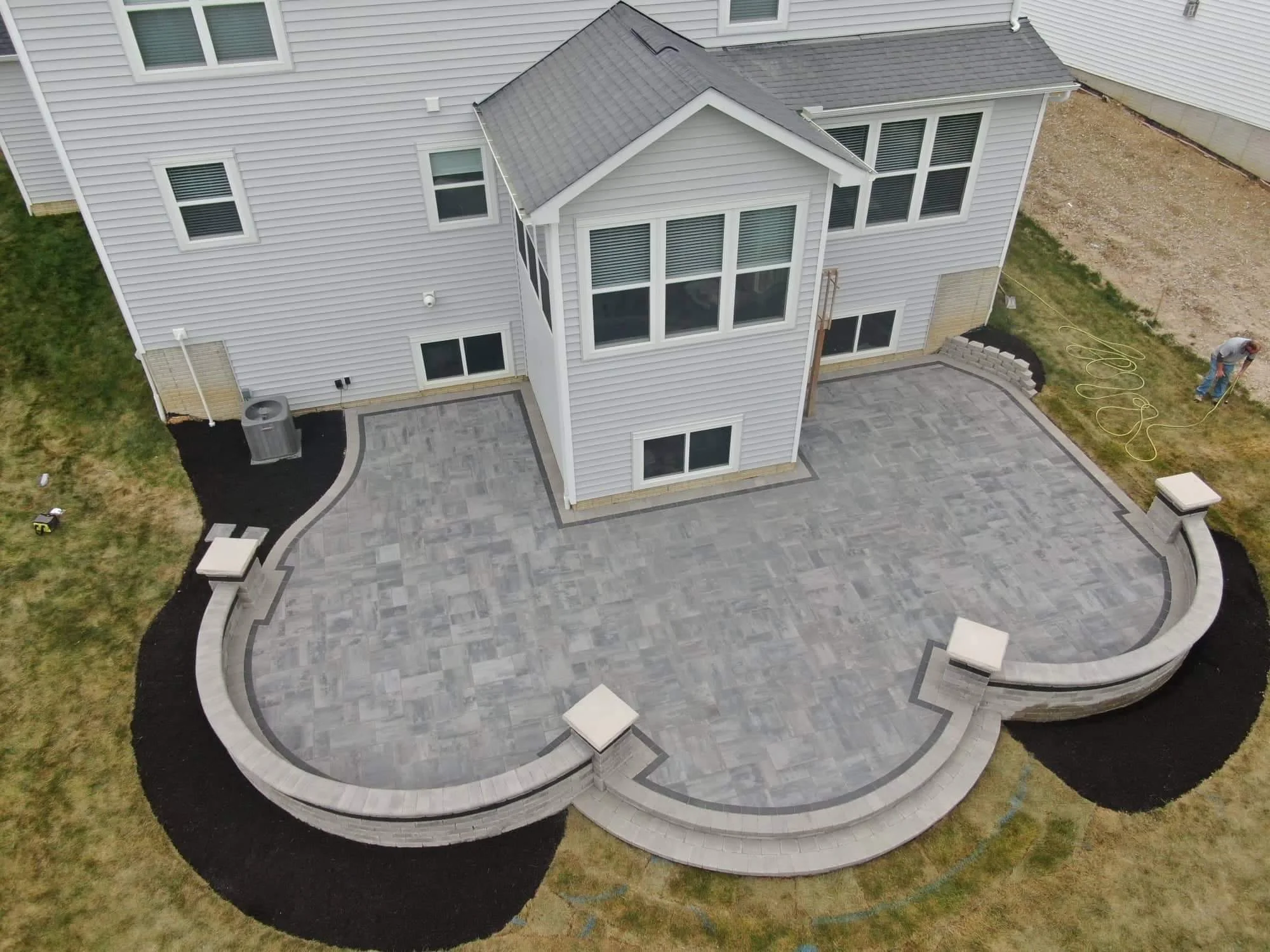
1. Excavation to Eight Inches Below Finished Grade — Not Four, Not Six
The first decision on a Dacula patio job is how deep to dig. A budget crew working Gwinnett will pull out four inches of topsoil, drop in crusher run, and call it a base. That works in Phoenix. It does not work on Cecil-series clay that shrinks and swells every season. We go eight inches below the finished paver surface on every patio we build inside the 30019 zip code. That number is not arbitrary. It is the minimum depth that keeps the bottom of our base material below the seasonal moisture zone where clay actively moves.
Clay in Dacula does not move uniformly. The top three to four inches of soil expand and contract visibly with every rain event. Below that, movement slows. Below six inches it is almost entirely driven by frost and prolonged drought. Getting our base footprint to eight inches puts the working surface of our compacted aggregate into soil that stays within a much tighter moisture band. That is the foundation under the foundation.
Excavation is done with a skid steer on a typical 400-square-foot patio, and we over-excavate the perimeter by 12 inches on all sides. Pavers fail at edges, not in the middle of a field. Giving the soldier course a wider compacted base than the pavers it will support means the edge restraint has something stable to bite into for its entire 30-year life.
Why eight inches in Dacula specifically: Cecil series topsoil over saprolite has an active shrink-swell zone roughly six inches deep in our climate. An eight-inch base footprint puts the working face of our aggregate below that zone. A four-inch base rides directly on the zone that moves most, which is why so many Gwinnett patios develop a visible dip by year four.
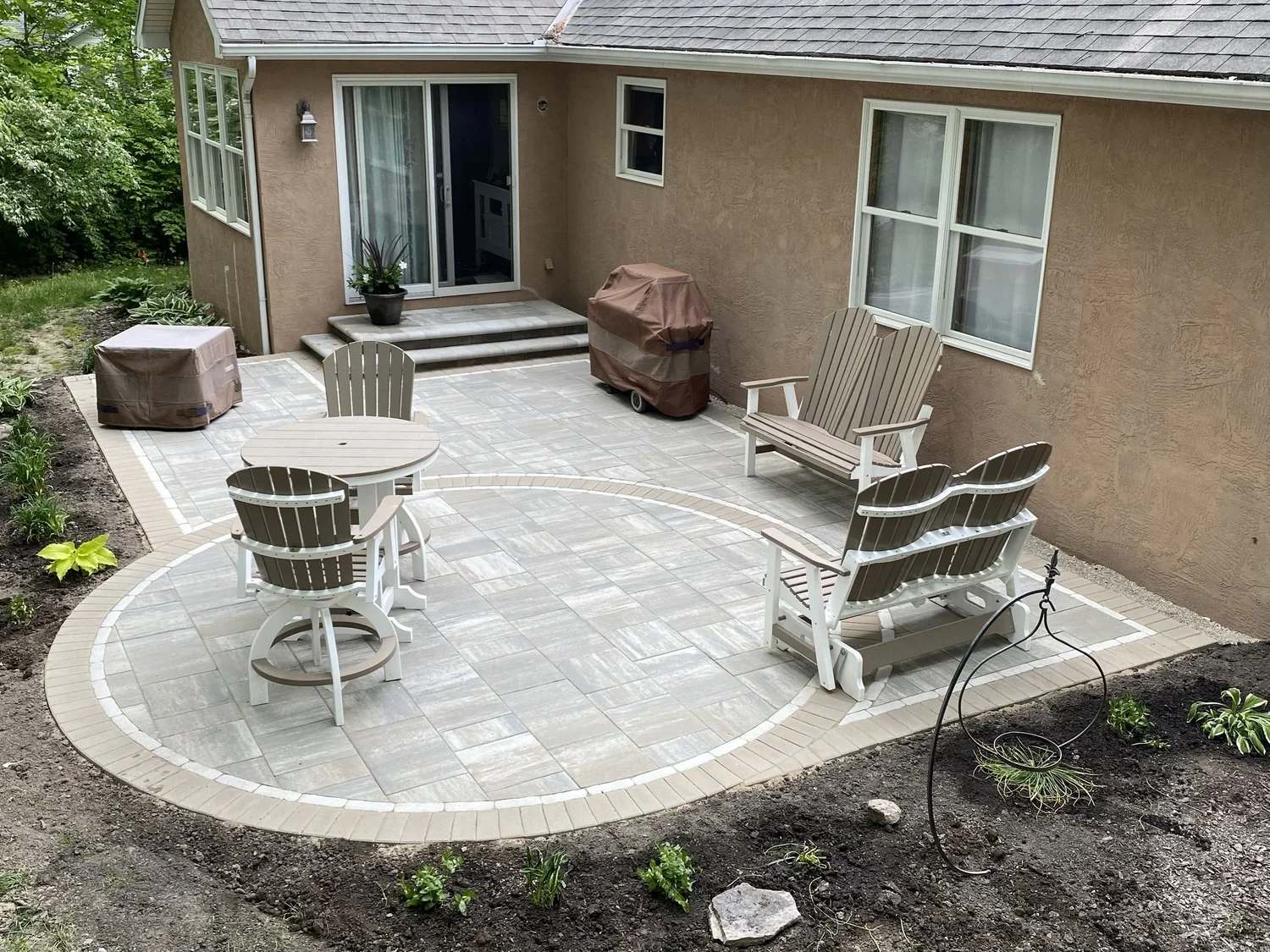
2. Non-Woven Geotextile Separator — The Layer Budget Crews Skip
With the excavation squared off, the next layer we place is a non-woven geotextile fabric laid flat across the entire sub-grade, lapped 12 inches at every seam and running a full 12 inches up the perimeter sidewalls before it gets trimmed. This is not a weed barrier. It is a separator. Its job is to prevent fine clay particles from migrating upward into the aggregate base as that base cycles through wet and dry seasons.
Here is what happens without one. Aggregate is placed directly on Dacula clay. The first serious rain saturates the soil. Clay particles, which are microscopic, get pushed upward into the voids between the stones in the base course by capillary action and by traffic loading from above. Over two or three years, those voids fill with clay slurry. Once that happens, the base loses its drainage capacity. Water that should drain down through the stone and out the perimeter instead sits in the base. That saturated base freezes. The freeze heaves the surface. Pavers lift. Joints open. Sand escapes. Then the whole thing slumps.
The geotextile is a four-ounce minimum, eight-ounce preferred, non-woven fabric. Non-woven matters — woven fabric has too much open area and fine clay will still migrate through it. Non-woven fabric works because its random fiber orientation creates a tortuous path that clay cannot climb while still allowing water to pass downward. It is the single cheapest insurance policy on the entire build and the one layer almost every budget crew omits.
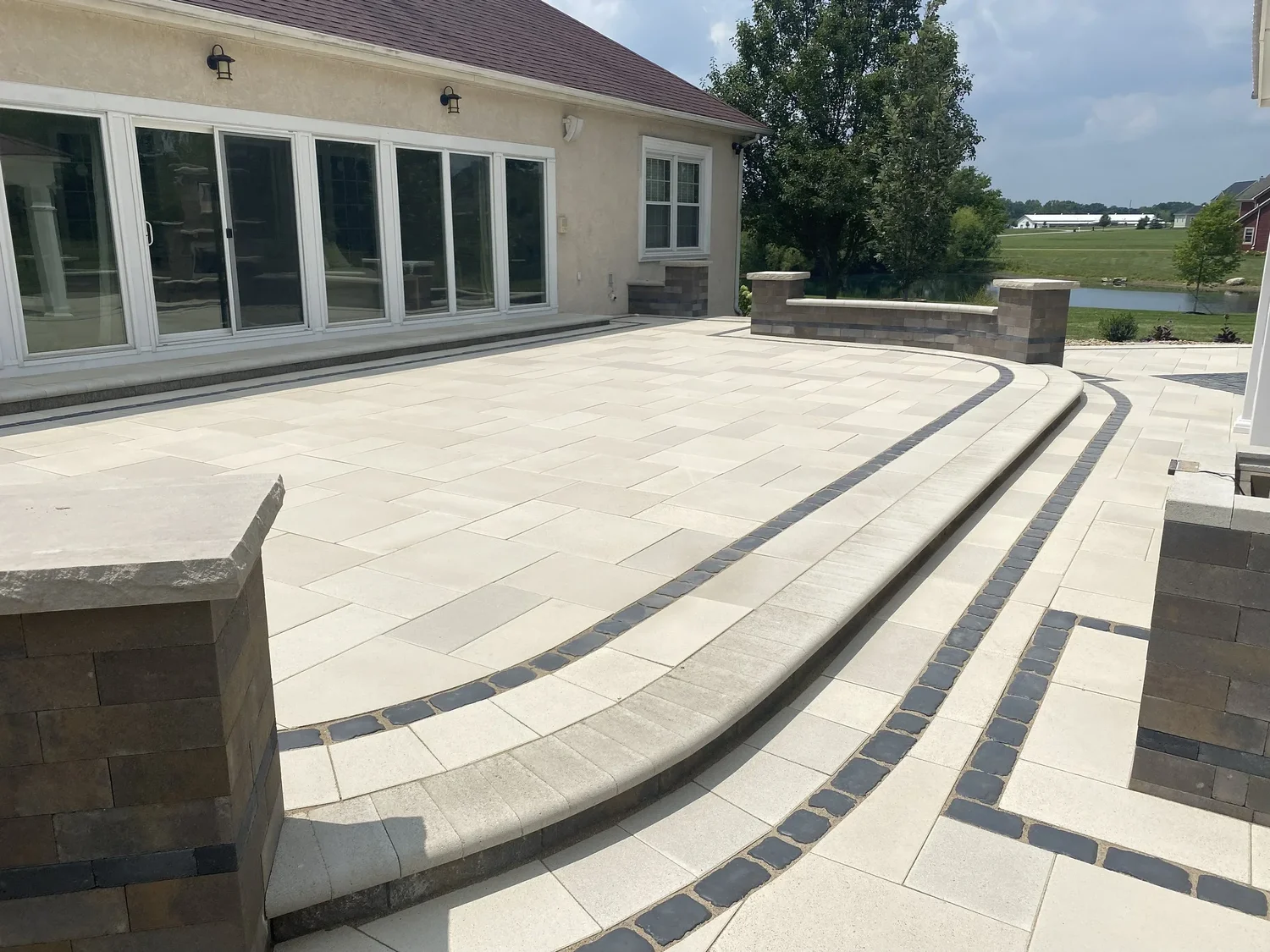
3. Open-Graded Base in Two-Inch Lifts, Compacted to 95% Modified Proctor
Now the base. We specify an open-graded aggregate — ASTM No. 57 at the bottom and No. 8 as we work up toward the bedding course. Open-graded means the stones are uniformly sized with no fines mixed in. That matters because open-graded bases drain. Dense-graded crusher run, which is what most contractors use, has fines mixed in and does not drain. In Dacula’s rainfall pattern — 50-plus inches a year with concentrated late-summer thunderstorm events — drainage in the base is not optional.
We place the aggregate in two-inch lifts. That phrase matters. A lift is a discrete layer that gets compacted on its own before the next layer is placed on top of it. Two inches is the maximum lift thickness at which a plate compactor can achieve full density through the entire thickness. Crews that dump six inches of stone and run a compactor over the top are compacting the top two inches and leaving the bottom four undercompacted. That is why those bases settle under load within 18 months.
We compact each lift to 95 percent of Modified Proctor density. On a patio job we verify that with a nuclear density gauge on the first lift as a spot check, then confirm compaction on subsequent lifts by the feel of the plate and the behavior of the stone — a fully compacted open-graded base stops accepting further compaction and the plate rings rather than thuds. At six inches total base depth, we have three lifts in and three rounds of compaction. That is the foundation the finished patio rides on for the next three decades.
95% Modified Proctor target: this is the density at which the aggregate has locked into its densest possible interlock without crushing. Typical residential patios in Gwinnett get compacted to roughly 85 percent — enough to feel firm underfoot but not enough to resist long-term settlement under repeated loading and freeze cycles.
4. One-Inch Washed Concrete Sand Bedding — Not Stone Dust, Not Mason’s Sand
With the base at target density, we screed a one-inch bedding course of washed concrete sand across the top. One inch. Not a half inch. Not two inches. The ICPI specification is one inch for a reason — thinner and the pavers do not have enough bedding to seat evenly, thicker and the bedding course itself becomes a compressible layer that settles unevenly under load.
The material matters as much as the thickness. We specify washed concrete sand, ASTM C33. Not stone dust — stone dust has fines that hold water and turn to mud in our clay-adjacent environment. Not mason’s sand — mason’s sand is too fine, lacks angular particles, and will migrate over time, particularly under the edge courses where it can wash out entirely. Washed concrete sand is coarse, angular, and free-draining. It also has enough structure that a paver set into it and vibrated down will stay exactly where we placed it.
The sand is screeded flat using twin screed rails set at precisely one inch above the compacted base. We pull the screed bar across in one continuous motion, fill any low spots, and screed again. Once screeded, the sand is not walked on. Period. A footprint in the bedding course becomes a low spot in the finished patio. On a 400-square-foot install we screed the sand in sections sized to what we can lay pavers on the same afternoon so that no screeded sand sits exposed overnight.
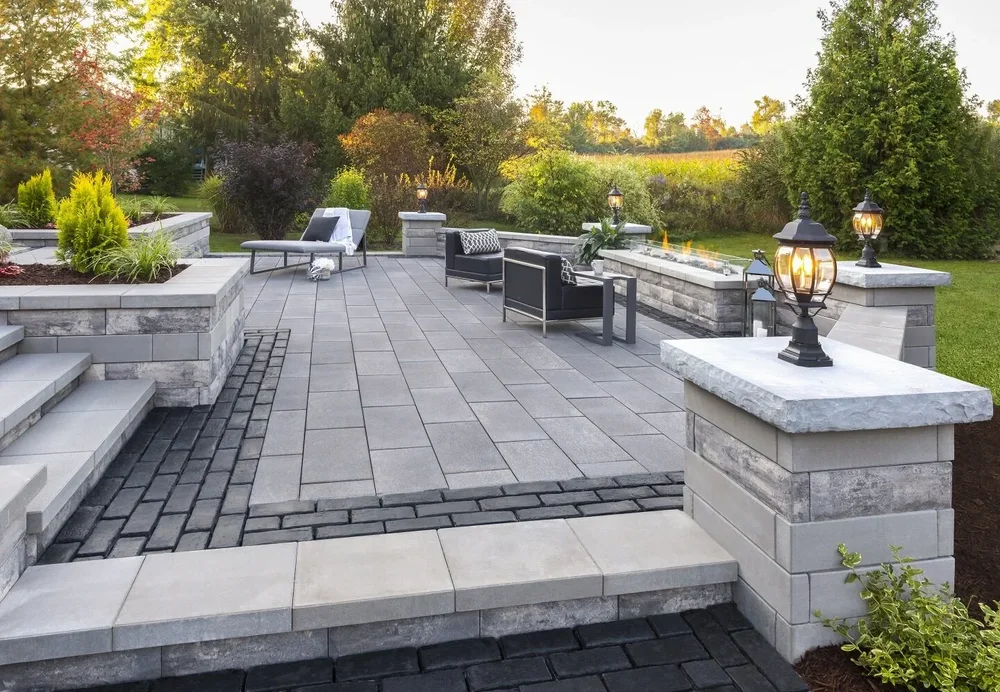
5. Soldier Course Laid First, Bonded With Flexible Polymer Edge
The soldier course — the perimeter row of pavers set on their long edge — goes down before a single field paver is placed. This is backward from a conventional install, and it is deliberate. The soldier course defines the patio’s final geometry. It is the line every field paver will reference. Setting it first forces us to commit to the shape before we are 200 square feet into a herringbone pattern and discover the long edge is out of square by three-quarters of an inch.
The soldier course is bedded directly into a haunch of polymer-modified mortar along the outside edge of the course, then the joints between soldier pavers are filled with flexible polymer edge bond. We do not use spiked plastic edge restraint on any patio we build in Dacula. Spiked edging works on pool decks and walkways where the edge will never see lateral load. On a patio, where furniture legs drag, grills get rolled, and people step on and off the edge, spiked plastic moves. When it moves, the edge opens up, polymeric sand escapes, and the failure cascade starts at the perimeter and works inward.
Flexible polymer edge — essentially a high-strength, slightly elastic adhesive specifically formulated for paver edges — bonds the soldier course into a monolithic ring around the patio. It flexes with small thermal movement, survives freeze cycles without cracking, and holds the edge in place for the life of the patio. It costs more. It adds an install step. It is worth every dollar.
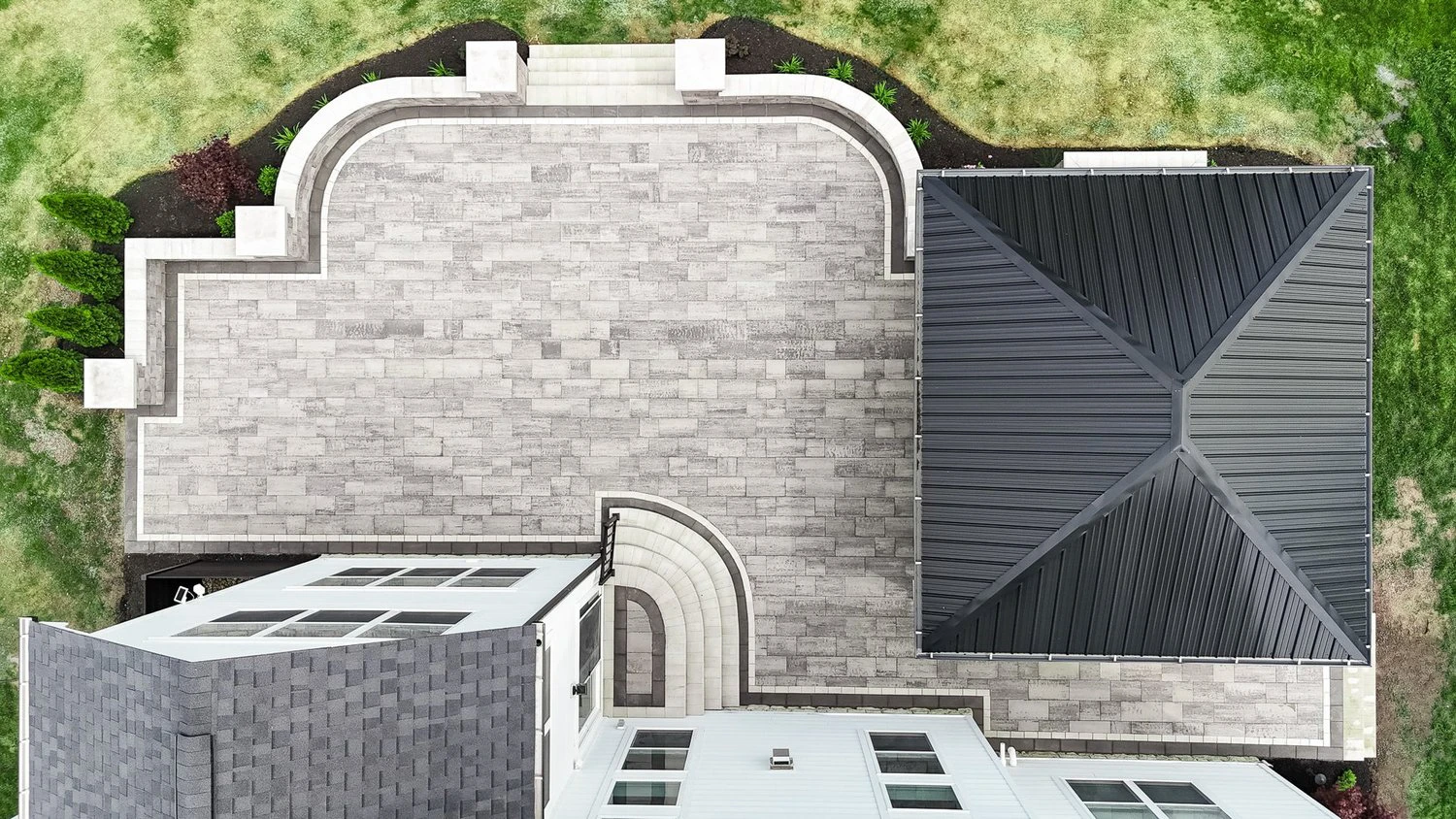
6. Field Pavers Laid From a 90-Degree Reference Corner Outward
With the soldier course in place, we establish a 90-degree reference corner — typically the corner of the patio closest to the house foundation — and start laying field pavers outward from that point. The first five or six rows off the reference corner are the most important on the entire patio. Any drift in the pattern, any cumulative error in alignment, will compound as we work toward the far edges. Getting the first rows dead straight, spaced on the manufacturer’s joint tolerance, and seated flat means the rest of the patio falls into place.
We use chalk lines snapped directly on the sand bedding, reset every 10 rows as a check against cumulative drift. Field pavers are placed dry, not pressed into the sand — the paver’s own weight plus the final compaction at the end will seat them. Pressing pavers into the bedding sand creates uneven bedding thickness and an uneven finished surface.
Cuts happen as we approach the far soldier course. We cut pavers on a wet saw with a diamond blade, rinse them immediately so no cut dust sets into the face, and drop them into position with a quarter-inch joint to the soldier. That quarter-inch gap is the expansion allowance. Pavers expand in Dacula’s summer heat — 95-degree days with direct sun can push surface temperature over 140 degrees — and without that allowance, the field can bow or the joints can spall. A quarter inch is enough. An eighth inch is not.
7. Polymeric Sand — Two Applications, 48 Hours Apart
Polymeric sand is the joint filler between pavers. It is regular sand mixed with a polymer binder that activates when wet, then cures to a semi-flexible fill that locks pavers together while still allowing micro-movement. Applied correctly, it lasts 10 to 12 years before it needs a top-up. Applied incorrectly, it fails in the first season — either it never cures, or it cures stuck to the paver faces, or it washes out of the joints during the first heavy rain.
We apply polymeric sand in two passes with a 48-hour gap between them. The first pass fills the joints, we sweep off the excess, we compact the field with a paver-protected plate compactor so the sand settles into the joints by 15 to 20 percent of their depth, we sweep and fill again, and then we activate with water. The specific gun and spray pattern matters — too much water and the polymer binder washes out of the top of the joint and hazes the paver face, too little and the polymer cures incompletely and the top of the joint never locks.
Then we wait 48 hours and do it again. The first application is always going to settle. Polymeric sand shrinks as it cures, joints compact under the first few days of foot traffic, and the original joint height that looked perfect on day one will drop two to three millimeters by day three. The second application tops off those settled joints, is activated the same way, and produces the joint-height consistency that still looks clean five years in. A budget crew will do one application, charge for a second, and skip it. We do both.
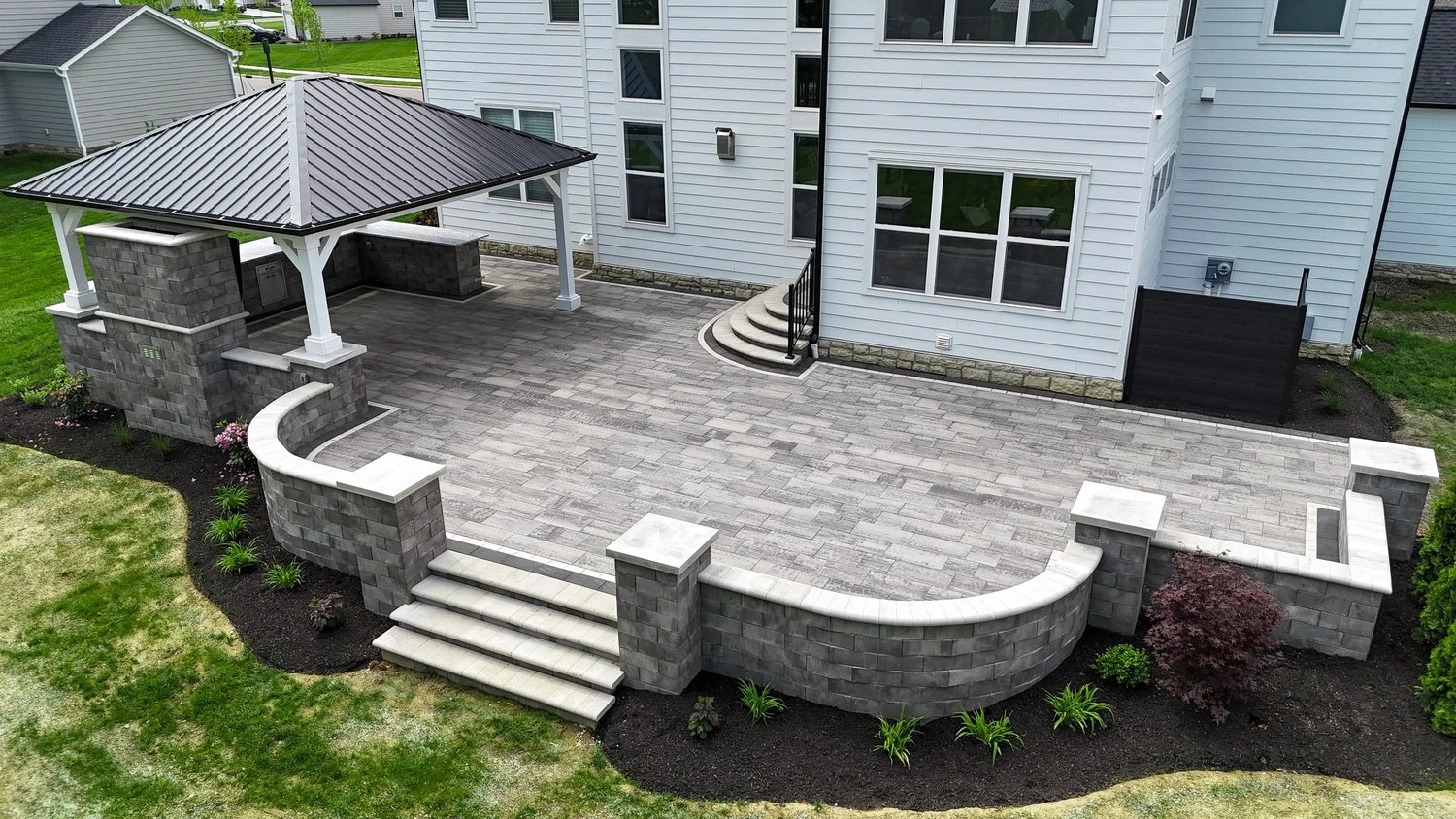
The 48-hour gap: polymeric sand shrinks 15 to 20 percent during initial cure. A single application always results in joints that sit low by the end of the first week. Two applications with the gap in between give the final joint height its 10-year consistency.
8. Thirty-Day Seal Coat After Efflorescence Clears
The last step happens 30 days after the patio is signed off. Pavers — concrete pavers in particular, but also some travertine and limestone — release efflorescence during their first cure cycle under sun and rain. Efflorescence is the white powdery mineral residue that blooms on the surface as water migrates out of the paver body carrying dissolved calcium compounds with it. It is cosmetic, not structural, and it clears on its own within two to four weeks on most installs.
We do not seal a patio while efflorescence is still active. Sealing on day one traps those minerals under the sealer and creates a permanent white haze that cannot be removed without stripping the sealer. Instead, we wait 30 days, walk the patio, confirm the efflorescence has cleared, and then apply a penetrating joint-stabilizing sealer across the whole field.
The sealer we specify is a water-based, solvent-free, joint-stabilizing siloxane. It penetrates the paver face, locks the polymeric sand at the top of the joint, enhances the natural color of the paver slightly, and rejects water and stains. It is not a glossy film sealer — gloss film sealers look great for six months and then flake off in patches, usually starting wherever water pools. A penetrating sealer is invisible, lasts three to five years before it needs a refresh, and does not trap efflorescence if a new bloom appears later in the paver’s life.
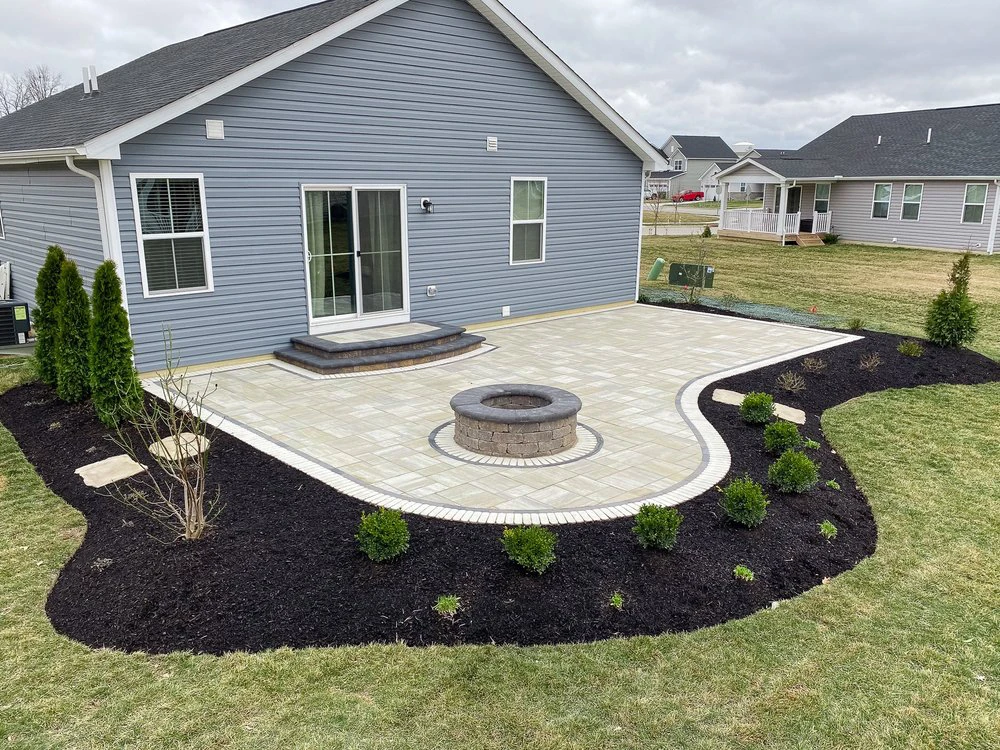
A typical Dacula backyard paver patio at 400 square feet, built to these eight specifications, is four to six working days of crew time — excavation and fabric on day one, base in lifts on day two, bedding and soldier course on day three, field laying and cuts on day four, the first polymeric sand application on day five, and the second application later in the week after the 48-hour gap. That is three to four times the build time a budget bid will quote. It is also the reason a patio we pour in 2026 is still sitting flush, tight-jointed, and crack-free in 2056.
Every patio we pour in Dacula gets the same eight-step install. Whether it is 200 square feet tucked behind a Sycamore Ridge ranch or 1,200 square feet wrapping a Hamilton Mill pool, the base goes eight inches deep, the fabric goes down first, the aggregate lifts are two inches and compacted to target density, the bedding is washed concrete sand at exactly one inch, the soldier course is set and polymer-bonded before any field paver is laid, field pavers come out of a 90-degree reference corner, polymeric sand is applied twice with the 48-hour gap, and the sealer goes on at day 30. Skip any of it and the clock starts ticking.
If you are comparing bids, ask each contractor to write into their contract the base depth in inches, whether they use geotextile fabric, what aggregate they specify by ASTM grade, the thickness and material of their bedding course, how they bond the soldier course, how many polymeric sand applications they include, and when they will seal. A contractor who cannot answer all of those questions on the spot is quoting a build that will not see year 10, let alone year 30.
For Dacula homeowners in Hamilton Mill, Sycamore Ridge, Chandler Ridge, Providence Club, Ivey Chase, Auburn Park, or the infill lots along Dacula Rd, Winder Hwy, Hog Mountain Rd, and Hamilton Mill Pkwy — we run the same install on every project. Same depth, same fabric, same ASTM-specified stone, same sand, same soldier bond, same two applications, same 30-day seal. A patio is only as good as the eight inches of dirt it sits on, and those eight inches are where we put our money.
Paver patios built to the eight-step spec across 20+ cities within 30 miles of Winder, GA
Every patio we install rides on an eight-inch compacted open-graded base over non-woven geotextile — because that is what a 30-year patio actually takes in Piedmont clay.