
Can I put a paver driveway in Windward without the ARB sending it back twice? Short answer: yes — but only if you hand them the exact brand, color, pattern, and base spec they already pre-approved, and only if you budget $32 to $68 per square foot depending on which side of Alpharetta you live on.
That question lands in our inbox about twice a month from homeowners between Windward Parkway and Avalon. Usually it comes from a tech-corridor relocation buyer — someone three months into a Microsoft or CDW move, sitting in a 1998 Country Club of the South home with a stamped concrete drive that is cracking at the control joints, or a 2022 Avalon-adjacent townhome where the builder poured plain broom-finish and the HOA has since tightened its standard.
Both buyers ask the same thing. Both get different answers. This post is the playbook we hand them.
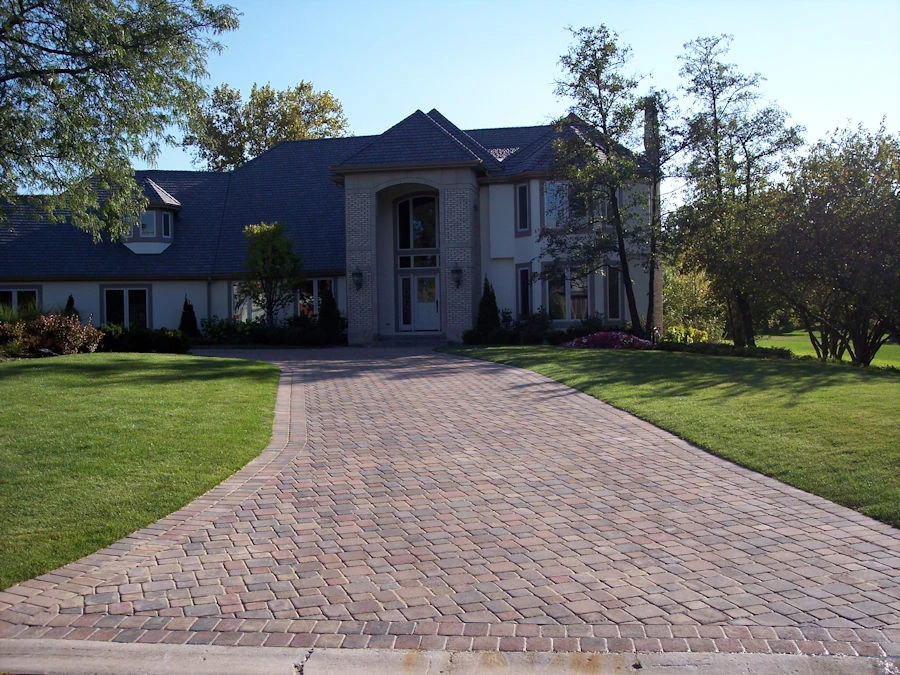
The Windward and Avalon ARB Questions Homeowners Actually Ask
Q: Will the Windward ARB let me install any paver brand I want?
No. The Windward Architectural Review Board keeps a short written list. Techo-Bloc Industria, Belgard Cambridge Cobble, and Unilock Brussels Block are approved. Anything else requires a variance submittal with product cut sheets and color chips, and variance approvals in Windward run roughly 50% denial on first pass. If you want the 3-4 week ARB timeline instead of a 10-week fight, stay on the list.
Q: What colors are actually approved?
Three gray families: Greyed Nickel, Shale Grey, and Champlain Grey. That is not a suggestion. Submit a Sandlewood or Chestnut blend and you will get a polite rejection letter citing “color palette consistency with adjacent properties.” The three greys exist because they read neutral against the cream and buff stucco, brick, and stone facades that dominate the Windward housing stock from the 1990s through the mid-2000s.
Q: What about Avalon-adjacent luxury townhomes?
Completely different rulebook. Since 2022, new driveway installs in Avalon-area HOAs have required Belgard Aquaroc permeable pavers. This is a stormwater code requirement tied to the dense infill around the lifestyle center, not a style preference. You cannot install a solid paver surface on those lots — the HOA will reject the submittal before it reaches the City of Alpharetta permit desk at 2 Park Plaza.
Q: Pattern?
Running-bond is the approval baseline in Windward. Herringbone requires a specific ARB submittal with a bid set pattern drawing at 1:20 scale. Circular fan and European fan patterns are essentially unavailable in the big HOAs — the variance path takes most buyers longer than the driveway install itself.
The three-list Windward reality: Techo-Bloc Industria in Greyed Nickel. Belgard Cambridge Cobble in Shale Grey. Unilock Brussels Block in Champlain Grey. Running-bond pattern. Minimum 8-inch open-graded base. Hand that to the ARB and submittal sails through on the first review.
Material #1: Techo-Bloc Industria — The Windward Default
Techo-Bloc Industria is the driveway paver that most Windward installations run on, and it is our default recommendation when the homeowner wants a clean ARB path. Installed pricing on a typical 600 to 900 square foot driveway runs $32 to $48 per square foot, which puts a standard two-car Country Club of the South drive in the $22,000 to $38,000 window before any apron or border upgrades.
Industria is a three-piece modular blend — a 6×9, a 6×6, and a 9×9 — that produces a genuinely random-looking field when installed correctly. The unit thickness on the driveway-rated stock is 80mm (roughly 3.1 inches), which matters when you are loading a Suburban or a Tesla X on it twice a day. The 60mm patio stock is not driveway-rated and should never appear on an Alpharetta residential driveway submittal. Installers who try to save per-square-foot cost by running 60mm on a driveway produce rutting and polymeric-sand washout inside 18 months.
Color-wise, Greyed Nickel is the lean. It is a cool gray with subtle black flecking that reads modern against both traditional stone and contemporary stucco facades. Champlain Grey runs slightly warmer and suits brick elevations. Shale Grey sits between them and is the safest bet when the architectural review board hasn’t given you a steer.
Soldier course matters. Industria ships with a matched 6×9 edge unit and an Onyx Black accent. Most Windward installations use the matched edge — a contrasting black soldier reads too bold for the conservative ARB palette. The exception is Hutchinson Farm, which will approve Onyx Black soldiers if the field is Greyed Nickel, because the Hutchinson elevations tend toward the darker Craftsman aesthetic.
Material #2: Belgard Cambridge Cobble — The Traditional-Home Choice
Belgard Cambridge Cobble is the older, more traditional cousin of Industria. It ships in a slightly tumbled finish with chamfered edges that mimic century-old cobble work. On White Columns, Haynes Manor, and the older Windward courts where the homes are stone-faced European manor style, Cambridge Cobble reads more correct than Industria’s modern three-piece blend.
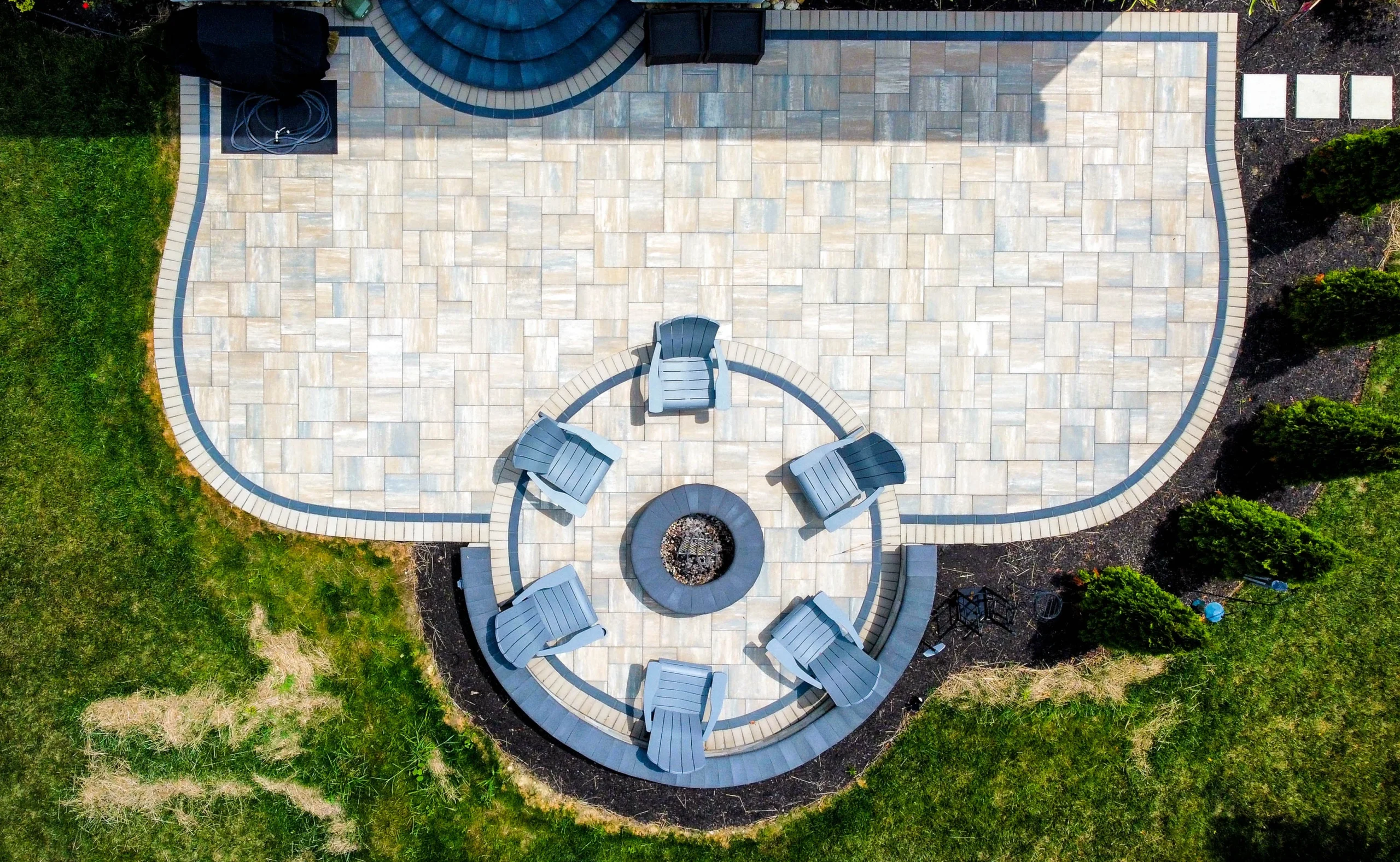
Installed pricing on Cambridge Cobble runs slightly lower than Industria: $28 to $42 per square foot. The savings come from a simpler two-piece unit set and a more forgiving install pattern. The tradeoff is that Cambridge Cobble can look dated on contemporary 2020+ homes — it is unmistakably traditional. A Deerfield modern transitional build should stay on Industria.
Shale Grey is the color that moves through Windward. It is a warm-cool gray blend that softens the jointing and hides polymeric sand haze for the first 30 to 60 days after install, which helps with curb appeal during the post-install settling period. Champlain Grey in Cambridge Cobble skews slightly mauve under cloudy Alpharetta sky conditions, so if the ARB submittal samples were pulled on a sunny day, the installed driveway can read differently than the approval board remembers. We keep loose sample chips in the truck and walk the homeowner through cloud-cover color shift before the order goes in.
One detail that matters on Cambridge Cobble: the chamfered edges mean slightly wider joint lines, which means slightly more polymeric sand per square foot and a marginally higher maintenance replenishment cycle. Plan on a polymeric sand top-off at year 4 or 5, versus year 6 or 7 for Industria.
Material #3: Unilock Brussels Block — The Stealth Approval Winner
Unilock Brussels Block is the third approved brand and the one most installers push hardest, for one reason: it holds its color the best over a decade of Fulton County sun exposure. Brussels Block uses Unilock’s EnduraColor technology, which concentrates the color pigments in the top wearing surface instead of running them through the full paver body. That sounds like a downside until you watch a ten-year-old driveway and see that the top surface has not faded the way the cheaper through-color products do.
Installed pricing runs $34 to $46 per square foot. Brussels Block ships in a tumbled cobble shape with randomized three-size coursing that reads very similar to Cambridge Cobble to the untrained eye. The ARB will not penalize you for picking Unilock over Belgard — the three brands are treated as interchangeable on the approved list.
Where Brussels Block separates from the pack is in the repair window. When a Georgia Power transformer replacement or a Sawnee EMC service drop rework requires cutting the driveway (and in north Alpharetta along the Sawnee EMC footprint, this happens more than buyers expect), Brussels Block’s randomized blend hides a replacement patch better than the other two. Industria’s three-piece geometry is too regular — a patch reads visibly for the first six months. Brussels Block’s cobble randomization absorbs new units without the eye catching the transition.
Utility cut reality: Georgia Power is primary across most of Alpharetta proper. Sawnee EMC holds a smaller footprint along the northern Alpharetta/Milton border. The two utilities run different inspection calendars, different service-drop coordination protocols, and different restoration responsibilities if your drive gets cut during a meter or transformer job. Ask the installer to confirm which utility your parcel sits under before ordering pavers — it affects the patch-stock quantity we add to the order.
Material #4: Belgard Aquaroc Permeable — The Avalon Code Requirement
This is where Alpharetta splits into two markets. Everything above is for established subdivisions. Belgard Aquaroc permeable pavers is the answer for the luxury townhome infill around Avalon and downtown Alpharetta.
Since 2022, the Avalon-area HOAs have mandated permeable paver surfaces on all new driveway installs as a stormwater compliance mechanism. The lifestyle-center density means cumulative impervious surface on the infill parcels was approaching the City of Alpharetta’s stormwater threshold. The HOAs, advised by their civil engineers, moved the code requirement one step ahead of the municipality. If you buy a 2020+ Avalon-adjacent townhome and the original builder drive is failing, the HOA will not approve a solid replacement — it has to be permeable.
Aquaroc installed pricing is $48 to $68 per square foot. The 40% to 50% cost premium over Industria comes from two places: the Aquaroc units themselves run about 30% more per square foot at the distributor, and the sub-base changes completely. A permeable install requires an open-graded aggregate reservoir — typically a 12 to 18-inch deep #57 stone bed — sized to the parcel’s stormwater calculation. On a 700 square foot driveway that is 26 to 40 additional tons of aggregate over a standard driveway base.
The upside is that Aquaroc driveways handle the 51-inch annual Alpharetta rainfall without producing any surface runoff at all. Water infiltrates through the 10mm joint openings and returns to groundwater via the aggregate reservoir. In a dense Avalon townhome cluster where every impervious drop compounds, that matters.
Aquaroc color options are narrower. The Alpharetta Avalon HOAs have approved the Onyx and the Ash Grey colorways. We spec Ash Grey by default — it reads closer to the adjacent Windward palette and photographs cleaner on resale listings, which matters given the 3-5 year average hold on an Avalon townhome for a relocation buyer.
Material #5: The Base — 8 Inches of Open-Graded Stone That Nobody Sees
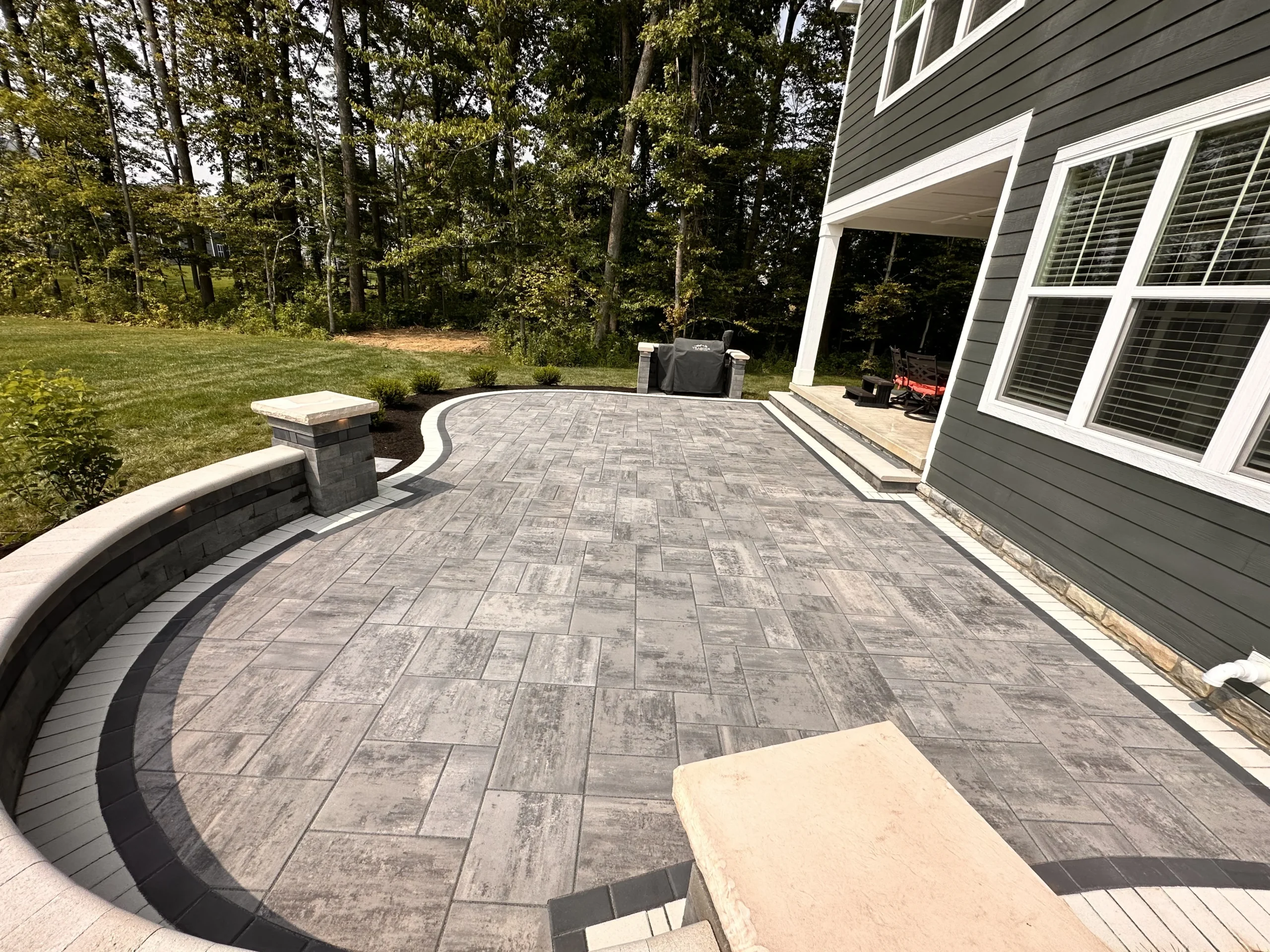
The material the ARB never asks about is the one that determines whether your driveway is still flat in year 15 or heaving at every panel joint by year 6. Alpharetta sits on Cecil-series Piedmont red clay with pockets of Appling sandy loam in the older farm-conversion tracts, and Cecil clay has moderately high shrink-swell behavior. When it wets in a winter rain event and then freeze-thaws across the 20 annual freeze events in USDA Zone 8a, anything above it that was set on a compromised base is going to move.
Our spec on every Alpharetta driveway is a minimum 8-inch compacted open-graded base with a geotextile separator between the native clay subgrade and the stone. The open-graded base — typically #57 stone over a #2 drainage layer — allows vertical water movement without trapping moisture at the subgrade, which is what lifts a solid-base installation during freeze-thaw. The geotextile prevents the clay from pumping up into the stone over time, which is what destroys the base on cheaper installs that skipped the fabric.
The 8-inch figure is a floor, not a ceiling. On clay-heavy lots with a measurable grade change — and along the GA-400 corridor most residential parcels run 3 to 6 feet across the backyard before the modest ridge-and-valley topography flattens — we routinely run 10 inches. That adds roughly $2 to $4 per square foot to the installed price. It also means your driveway is still flat when the house sells.
A contractor who is quoting you Industria at $26 a square foot installed is either skipping the base, skipping the fabric, skipping the compaction, or running 60mm patio stock on a driveway application. Get the base spec in writing on the contract. Every ARB-approved contractor in Alpharetta documents it the same way.
Material #6: The ARB Submittal Package and the 10-Year Curve
The submittal is a material in its own right because it determines whether your driveway gets built this spring or next fall. Windward and Country Club of the South both run 3 to 4 week architectural review windows when the package is complete on arrival. The delays come from incomplete submittals that force a resubmit cycle.
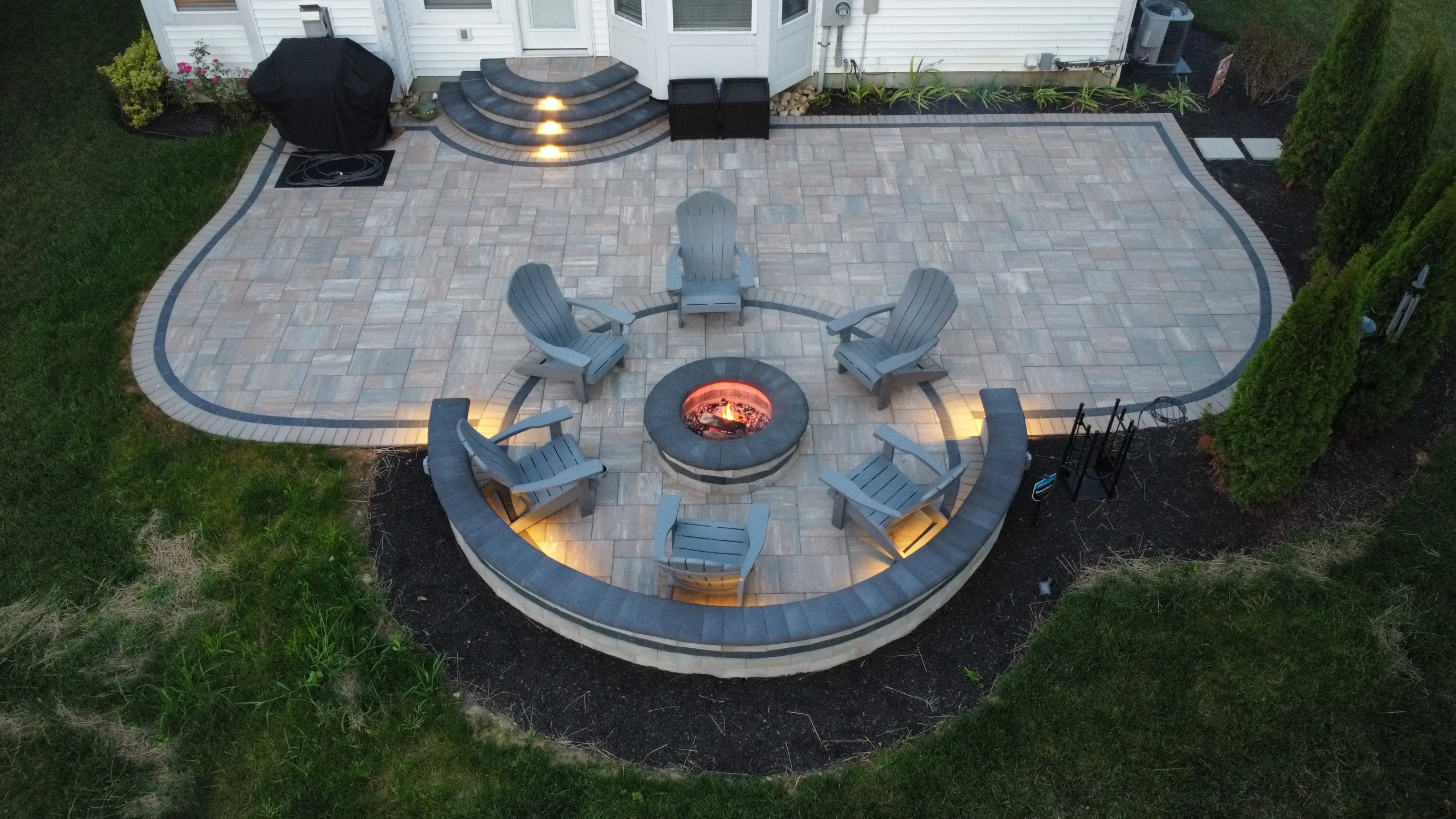
A clean Windward ARB package contains: (1) a site plan at 1:20 with the existing driveway footprint and the proposed footprint overlaid, (2) product cut sheets for the chosen Techo-Bloc, Belgard, or Unilock unit, (3) a physical color chip of Greyed Nickel, Shale Grey, or Champlain Grey, (4) the pattern drawing (running-bond unless you are pursuing a herringbone variance), (5) the base spec — 8-inch compacted open-graded with geotextile separator, (6) a drainage narrative if the driveway exceeds 800 square feet, and (7) the installer’s certificate of insurance.
The City of Alpharetta Community Development office at 2 Park Plaza handles permits separately. For driveways entirely inside the existing footprint, permits are often not required — check the parcel zoning and the existing lot coverage calculation first. For any footprint expansion or any grading that changes site drainage, a permit is required, and the City of Alpharetta in-city review runs faster than Fulton County unincorporated review. Plan for a 7 to 10 business day permit window once the ARB clears.
Avalon-area HOA submittals add one document: the civil engineer’s stormwater calculation for the Aquaroc reservoir depth. This typically adds $800 to $1,400 to the project soft costs and one additional week to the submittal timeline. Budget for it — the HOA will not review without it.
What the 10-Year Curve Looks Like
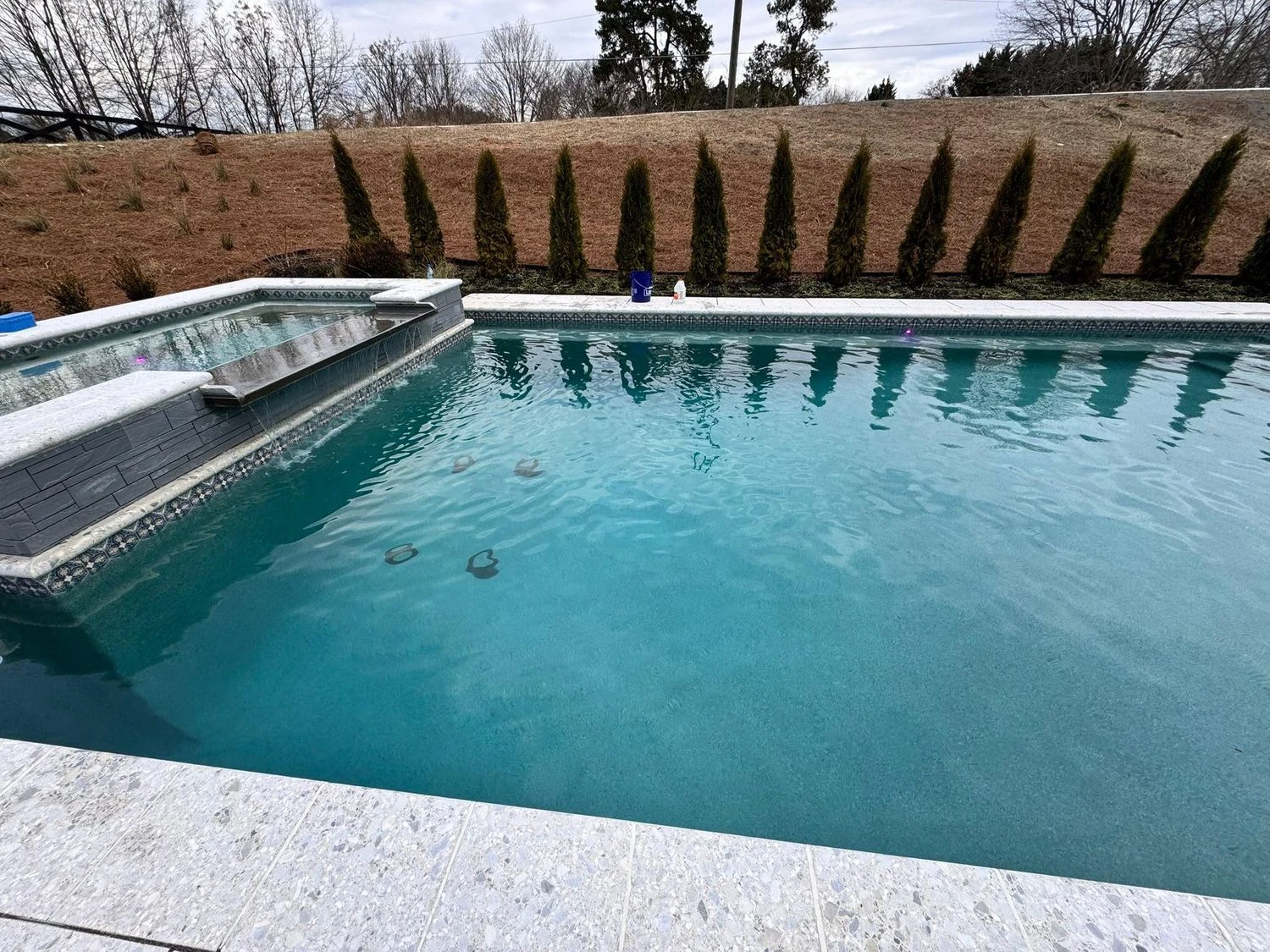
A Windward homeowner installing a Techo-Bloc Industria driveway in Greyed Nickel on an 8-inch open-graded base in 2026 should expect: no visible settling through year 3; a single polymeric sand top-off around year 6 running $400 to $700 on a 700-square-foot drive; color consistency through year 10 with standard pressure-washing every other spring; and a full surface lifespan approaching 30 years before any serious rework is required. The units are rated for that. The base is rated for that. The only variable is installer craftsmanship and whether the homeowner keeps up with a ten-minute annual polymeric sand inspection.
An Avalon Aquaroc install follows a slightly different curve. Permeable pavers require annual joint-vacuum maintenance to prevent fines from clogging the aggregate reservoir — a $300 to $500 service call most owners add to their spring landscape contract. Done correctly, the Aquaroc system delivers the same 30-year surface life and the same resale appearance, but the annual maintenance discipline is non-negotiable. Skip it, lose infiltration capacity, eventually fail a stormwater compliance audit.
Neither curve is mysterious. Both are documented by the manufacturer. Both are discoverable inside a 15-minute conversation with a crew that has installed 40-plus driveways inside the Windward, Country Club of the South, and Avalon HOA boundaries. This is what a homeowner moving in from the Microsoft campus or a CDW relocation should be hearing the first time they get a bid.
Where Alpharetta Installs Go Wrong
The failures we see on Alpharetta driveways split into four buckets, and all four are avoidable at the bid stage. First, brand substitution after ARB approval. A homeowner approves Techo-Bloc Industria on the submittal, the installer’s distributor has a shortage, and a substitute brand arrives on the trailer. If the ARB did not approve that brand, the homeowner owns the re-tear-out cost, not the installer. Get the approved brand in writing on the purchase order, not just on the contract.
Second, 60mm patio stock running on a driveway. This is still the most common shortcut we find on re-bid jobs where a previous installer came in low and the owner is now looking at rutting inside the first winter. The 80mm driveway-rated stock is non-negotiable on any residential driveway with vehicle traffic. Homeowners can verify by asking for the Techo-Bloc, Belgard, or Unilock product SKU on the invoice and looking up the unit thickness on the manufacturer’s data sheet.
Third, compaction shortcuts on the base. The 8-inch open-graded base only performs if it is compacted in 2 to 3-inch lifts with a reversible plate compactor or a walk-behind roller. A crew dumping 8 inches of stone, raking it flat, and running a compactor once across the surface is producing a base that will settle non-uniformly through the first two Alpharetta winters. Ask the installer how many compaction passes they run per lift. The answer should be “three minimum.”
Fourth, polymeric sand applied wet or applied in the wrong temperature window. Polymeric sand sets with moisture activation but hazes permanently if overwatered during install or if ambient humidity is above 85% at application. Alpharetta’s summer humidity window from late June through early September is hostile to polymeric sand work. Installers who schedule the sand application for a dry October or April window are producing cleaner joint finishes that hold up for the full product life.
Paver driveways and hardscape across 20+ cities within 30 miles of Winder, GA
From Windward and Country Club of the South ARB submittals to Avalon-area Aquaroc permeable installs, we build driveways that clear review on the first pass and stay flat past year 15.