
The problem on a Dawsonville property sitting at 1,270 ft of elevation is that manufactured cultured stone — the kind priced at $32–$48/sqft in every catalog from Alpharetta to Buford — looks plastic against a backdrop of weathered granite ridgelines and saprolite cuts. The material is wrong for the setting, and every homeowner on the GA-400 corridor north of the outlets can feel it the moment the pavilion is finished.
Local North Georgia granite is the answer, and it is sitting in quarries within a 25-mile radius of the Dawson County Dept. of Planning & Development at 25 Justice Way. It is cheaper on material than any imported cultured stone in the Atlanta catalog, and it is the only outdoor-kitchen base that visually belongs on a Foxcreek, Etowah River Club, or Kensington Ridge lot. This post is about how the math works, why most contractors skip it, and what Dawsonville homeowners should demand when they see a bid with cultured stone printed on line 14.
The Material Math: Why Dawson County Granite Beats Cultured Stone at $18–$28/sqft
Cultured stone is Portland cement, iron-oxide pigment, and a rubber mold. It is manufactured at industrial plants — mostly Eldorado Stone out of California and Coronado Stone out of Texas — shipped via freight to a distributor in Lithia Springs or Acworth, then re-trucked up GA-400 to the job site. The landed cost to a Dawsonville contractor at the 30534 zip is $32–$48/sqft before a mason touches it. Every catalog color is a simulation of something that existed naturally somewhere else.
Dawson County granite is cut out of the ground in a 15-mile radius of Dawsonville. Small operators — not Rock of Ages, not the big dimensional-stone players, but the thin-veneer splitters that have been running since the GA-400 extension opened in the mid-90s — sell irregular stacked ledgestone for $18–$28/sqft palletized. A single pallet covers roughly 35 square feet. The stone is already acclimated to 30 freeze events per year, so nothing on the pallet is going to spall when it hits a Zone 7b/8a winter that a catalog product from California has never seen.
That is a 40% cut on materials before any other variable moves. The catch — and we get to it in the next section — is labor. But the material delta is the reason the conversation starts.
The palletized price spread: Imported cultured-stone veneer runs $32–$48/sqft delivered. Locally-quarried Dawson County granite ledgestone runs $18–$28/sqft palletized at the yard. On a 90-sqft U-shape kitchen base, that is $1,260–$1,800 in material savings before labor is priced.
Why Most Atlanta-Metro Contractors Won’t Price It (And Why Dawsonville Is the Exception)
Irregular stacked ledgestone does not install like cultured stone. Manufactured veneer is sized, shaped, and labeled — the corners are color-matched, the flats are pre-cut to fit a standard mortar joint, and a reasonably skilled mason can run 25–30 square feet per hour. Local granite is raw. Every piece has to be hand-selected off the pallet, rotated, chipped to fit, and stacked with variable bed depth. The mason is doing geometry instead of assembly.
That skill level is scarce in most of the Atlanta metro. The masons who can run irregular ledgestone to a clean face are pulling $58–$78/hr versus $38–$52/hr for cultured-stone installers. They also move slower — 12–18 square feet per hour is a realistic pace — so the labor line on a Dawsonville kitchen base runs roughly 30% higher than the cultured equivalent. A contractor who has never priced this material sees that labor line, panics, and assumes the whole job costs more. That is the assumption that keeps cultured stone on 80% of outdoor-kitchen bids in the Dawson, Forsyth, and Hall county markets even though the math does not support it.
The reason Dawsonville is the exception: mountain-trade masonry culture never left the county. The older mason network that built chimneys out of field-gathered granite in the 1970s split-level boom is still present, their apprentices still here. A Primetime crew working a Riverbend or Applewood lot can source a mason out of Lumpkin or Pickens County who has been stacking local granite his entire career. Try that in Decatur and the quote comes back triple — if you can find the crew at all. The commute premium alone on a skilled mountain mason driving to a DeKalb County job site pushes hourly rates to $95 plus truck time, which is where the anti-granite bias in the Atlanta metro originated.
There is also a scheduling benefit that nobody talks about. Cultured-stone crews are booked 6–10 weeks out in peak pool season because every tract-home builder on the GA-400 corridor is using the same subs. Local granite masons run smaller books — often 3–4 projects ahead — so a Dawsonville homeowner committing in March can get the veneer installed inside the same season rather than pushed to the following year. On a pool-plus-kitchen-plus-pavilion package where the stone phase is the last major trade, that timing difference is the difference between swimming this Memorial Day and swimming next one.
The Head-to-Head: Cultured Stone vs. Local Granite on a Real Dawsonville Kitchen Base
Here is the math on a typical build — a U-shape outdoor kitchen with roughly 90 square feet of exposed base veneer, standard 42-inch counter height, on a lot in the Mountain Laurel subdivision off Hwy 53:
Cultured stone path:
- Material: 90 sqft × $40/sqft average = $3,600
- Labor: 90 sqft ÷ 28 sqft/hr × $45/hr = $145 labor
- Mortar, ties, prep: $340
- Total veneer line: roughly $4,085
Local granite path:
- Material: 90 sqft × $23/sqft average = $2,070
- Labor: 90 sqft ÷ 15 sqft/hr × $68/hr = $408 labor
- Mortar, ties, prep, selection waste: $475
- Total veneer line: roughly $2,953
Net difference: ~$1,132 in the homeowner’s pocket on a single kitchen base. On a full outdoor room package with a stacked-stone firepit wall, bar wainscot, and pavilion columns — call it 260 square feet of veneer — the swing moves to roughly $3,250. And the finished wall belongs to the mountain instead of imitating it.
Worth naming the hidden variables most comparison charts skip. Cultured-stone jobs need a mortar scratch coat over metal lath plus corrosion-resistant fasteners on every framed wall — the system is designed assuming the veneer will try to peel off a substrate it does not naturally belong on. Local granite, laid in a proper deep bed, sits in mortar the way a retaining wall sits in gravel — the weight of the stone does most of the work holding the wall plane. Fewer fasteners, less scratch coat, fewer failure points a decade in. The installed product also repairs differently. Cultured-stone replacement pieces stick out like a color-matched tooth filling; local granite gets swapped for any similar irregular piece off a spare pallet and disappears. On a 15-year time horizon, that matters more than the day-one invoice.
One more variable: resale. Buyer agents working the Foxcreek and Etowah River Club markets have been tagging “locally quarried stone” as a differentiator on MLS listings for about the last four years. It reads as regional craftsmanship, not builder-grade. A Kensington Ridge listing with cultured-stone veneer on the outdoor kitchen is indistinguishable from the same upgrade on a Cumming tract home; a stacked-granite version is a story the agent can tell. That is not a line item you can put on a bid, but on a $45,000–$85,000 outdoor living package it is worth more than the $1,132 savings just on its own.
The labor is where the myth comes from: Contractors who have never priced local granite assume the higher mason rate wipes out the material savings. On paper it does not. The 40% material cut beats the 30% labor add by a wide margin at every realistic square-footage point.
Sourcing the Stone: Which Quarries, Which Pallets, Which Colors Belong in a Dawsonville Backyard
Dawson County and the adjacent counties of Lumpkin and Pickens sit on the southern edge of the Blue Ridge belt. The granite coming out of the ground here is not Elberton Blue from the old downstate quarries — it is a weathered, iron-stained biotite granite with browns, buffs, pink undertones, and occasional quartz veining. It matches the saprolite that is sitting under the homeowner’s lawn at a 2–6 ft excavation depth.
There are three practical sourcing paths:
- Pickens County ledgestone yards: Roughly 22 miles west via Hwy 53. Price range $21–$26/sqft. Best color match for newer 2015+ builds with a cleaner palette.
- Lumpkin County fieldstone operations: 18 miles north near Dahlonega. Price range $18–$24/sqft. More irregular, heavier iron staining — a better fit for 1970s-2000s split-levels where the existing exterior leans warmer.
- On-site glean (rare): If the pool excavation turns up 30+ cubic yards of usable granite chunks (which happens more often than Atlanta contractors expect on Dawsonville lots), the mason can split it on site. Material cost drops to effectively zero; labor premium goes up 15%. The authenticity premium is unbeatable.
The pallet economics matter too. A standard pallet is roughly 2,500 lbs of stone covering 35 sqft at 4-inch bed depth. Amicalola EMC service territory includes every delivery yard on this list, so nothing moves on a different utility’s equipment. A 90-sqft kitchen base takes three pallets with selection waste factored. Freight from any of the three sources runs $85–$140 — trivial next to Eldorado Stone’s multi-state shipping charges.
A homeowner should visit the yard before the pallets are selected. This is not optional. Cultured stone is bought from a catalog chip because the product is identical across batches — stack 50 pallets and every piece looks the same. Local granite does not work that way. Pallet-to-pallet color variation at a Pickens yard can swing from near-buff to iron-red, and the mason needs to know which look the homeowner is after before the forklift moves. The yard visit takes maybe 45 minutes, it is 22 miles from downtown Dawsonville, and it is the single highest-leverage decision in the entire outdoor-kitchen build. We schedule it inside the pre-construction phase on every Dawson County job and we have never had a homeowner regret the drive.
On the rare on-site glean path — when the pool excavation surfaces 30+ cubic yards of usable granite — the sequencing changes. The stone is pulled off the dig, stockpiled on a lay-down area away from the construction path, and kept dry under tarps. A stone splitter comes in for a half-day visit once the pool gunite cures and the kitchen rough-in is set. The homeowner sees a mason sitting in a lawn chair next to a small pile of rock making chips fall into a bed — an oddly quiet operation for something that looks like geology happening in real time. The result is a kitchen base that cost nothing in material and came out of the property itself. On a high-elevation Big Canoe lot where the homeowner has already emotionally invested in the mountain, that is a story without a competitor.
Integrating the Kitchen Base With Firepits, Pool Coping, and the Rest of the Hardscape
The kitchen base is not a standalone decision. The moment the homeowner commits to local granite on the outdoor kitchen, the rest of the hardscape package has to follow — otherwise the one beautiful wall looks orphaned next to a cultured-stone firepit and a travertine pool coping that does not speak the same language. We see this mistake on maybe 15% of inherited-design jobs in the Etowah River Club area, and the fix is almost always more expensive than doing it right up front.
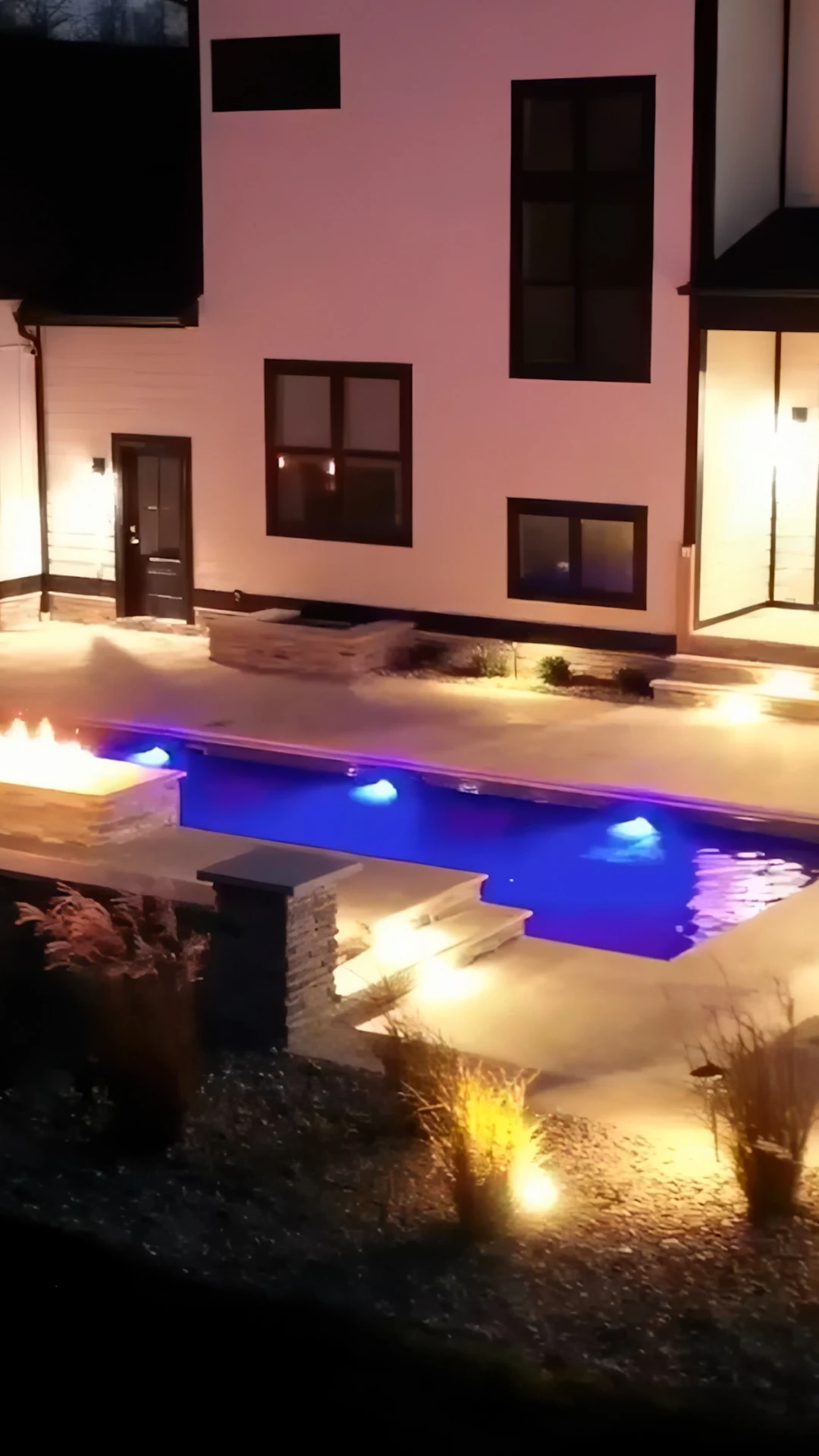
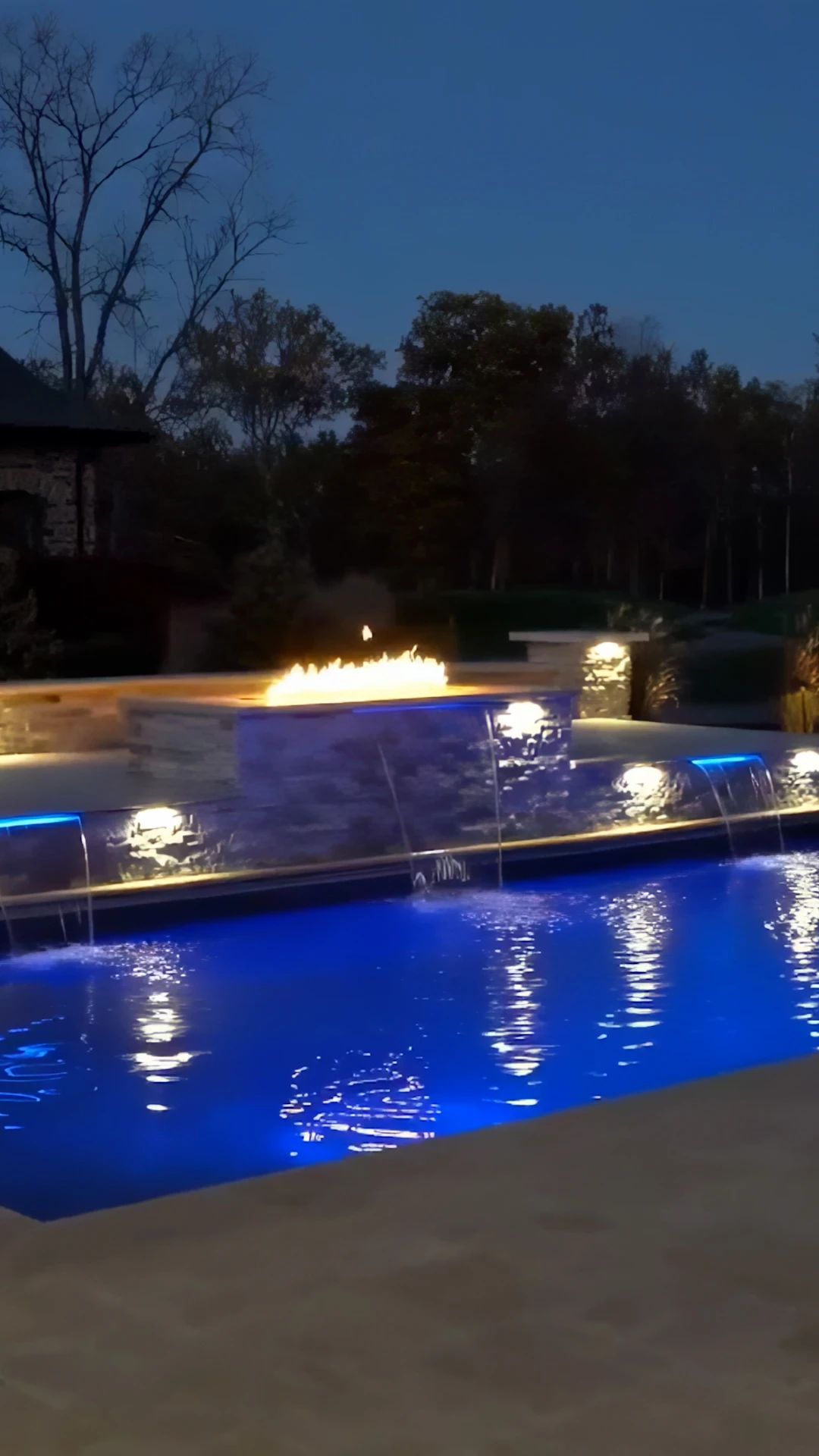
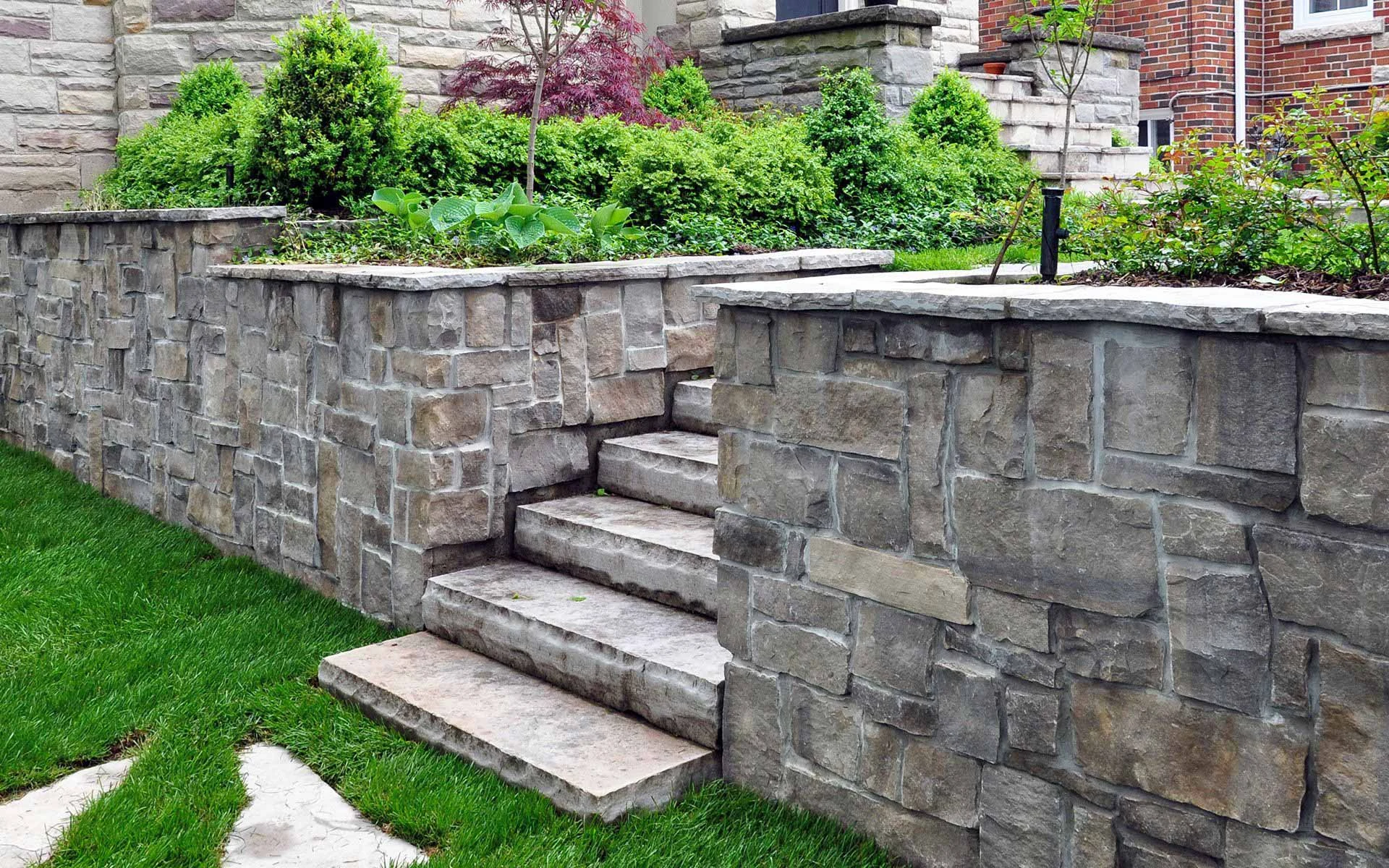
The rule on a Dawsonville lot: the stacked granite should appear in at least three places. Kitchen base, firepit wall, and either pool retaining wall or pavilion column wrap. That repetition is what makes the yard feel designed instead of assembled. On steeper grades — and 60% of lots in Foxcreek, Chestatee, and Kensington Ridge have significant grade change — the retaining walls are where the stone earns its money. A 24-inch stacked-ledgestone retaining wall at the low side of a pool deck absorbs the grade transition and disappears into the wooded backdrop. A cultured-stone wall in the same position looks, frankly, suburban.
On fire features the economics get even better. A four-sided stacked-granite gas firepit wall at 36 inches high on a 48-inch outside diameter uses roughly 38 sqft of veneer. Material: $780 local granite vs. $1,520 cultured. Labor differential: $180. Net savings on that single feature: $560, and the firepit actually reads as part of the Blue Ridge foothills rather than something dropped in from a showroom.
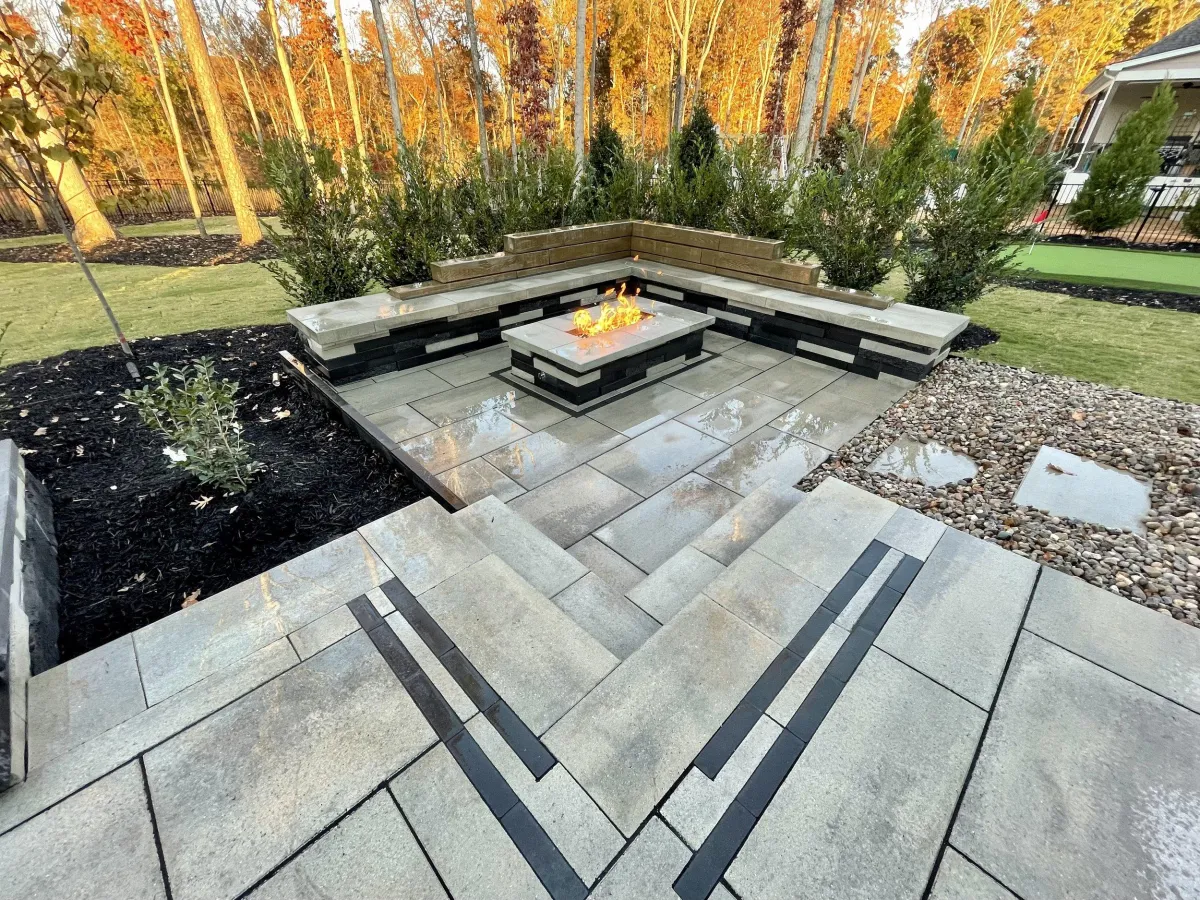
Pool coping is the one place we push back on full granite. Ledgestone is rough; pool coping needs to be foot-friendly. The integration move is a thermal-finish granite or flamed-granite coping (same quarry sources, different finish process) at $38–$52/linear ft, which ties the color story together without sacrificing the edge comfort. The coping and the kitchen base come from the same 15-mile radius, and that is the detail most homeowners never notice consciously but always feel.
The last integration note is code. Dawson County Dept. of Planning & Development at 25 Justice Way treats veneer over 24 inches as structural when it is on a retaining wall, which triggers an engineered plan stamp for walls exceeding 4 ft in exposed height. On elevated lots in Riverbend or Big Canoe this gets hit fast. The permit fee runs $285–$420 and the engineered drawing is another $650–$1,100. We build that number into every hardscape quote so there are no surprises at the pre-construction meeting.
The rock-blast premium on Dawsonville excavations: On roughly 1 in 5 Dawsonville pool digs, the crew hits solid granite at 3–5 ft that cannot be removed with standard excavator teeth. Blast charges run $8–$14/cubic yard premium over standard dig. It is the only line item a Dawsonville homeowner should expect that a Duluth or Suwanee homeowner will never see — and it is a sign that the same granite is sitting under the house that should be facing the kitchen.
The broader pattern here is simple. Mountain-origin residuum is the signature of North Georgia, and Dawsonville sits squarely in it. Every other decision in an outdoor-living package — stone, wood species, metal finish, roof pitch — should answer to that fact. The kitchen base is just the loudest opportunity to get it right. At ~15% lower total cost than the cultured-stone alternative with a material that was pulled out of the ground 15 miles away, there is no serious argument for doing anything else.
Outdoor kitchens across 20+ cities within 30 miles of Winder, GA
From North Georgia granite ledgestone bases in Dawsonville to travertine veneer builds south of I-285, Primetime Pools sources material to the region — not against it.