
A Dawsonville homeowner calls in mid-October. The heat pump the builder sold them two years ago is running around the clock and the pool is still sitting at 71°F. They paid for a 140,000 BTU unit, they’ve got the gas line stubbed ten feet from the equipment pad, and the water refuses to climb. This is not a broken heater. This is a heater selected for the wrong climate — and at 1,270 feet of elevation, it’s the most common pool mistake we see north of GA-400.
Dawson County sits higher than any other city in the Primetime Pools GA service area. That single fact — elevation — changes the heater math more than brand, more than efficiency rating, more than installer preference. Pools in Snellville, Lilburn, and Decatur live at 900 to 1,050 feet. Pools in Foxcreek, Riverbend, and the Etowah River Club live at 1,240 to 1,320 feet. That 300-foot difference sounds trivial. It’s not. It’s the difference between a heat pump that performs and a heat pump that becomes a $6,200 paperweight every November.
This post is a material-by-material breakdown of the three heater types we install on Dawson County builds — gas (propane and natural), heat pump, and solar — with the numbers we actually quote, the failure modes we actually see, and the hybrid configurations that pay for themselves inside a standard 15-year pool lifespan. If you live off Hwy 53 or anywhere near Applewood, Mountain Laurel, or Kensington Ridge, this is the conversation we’d rather have before your slab is poured, not after.
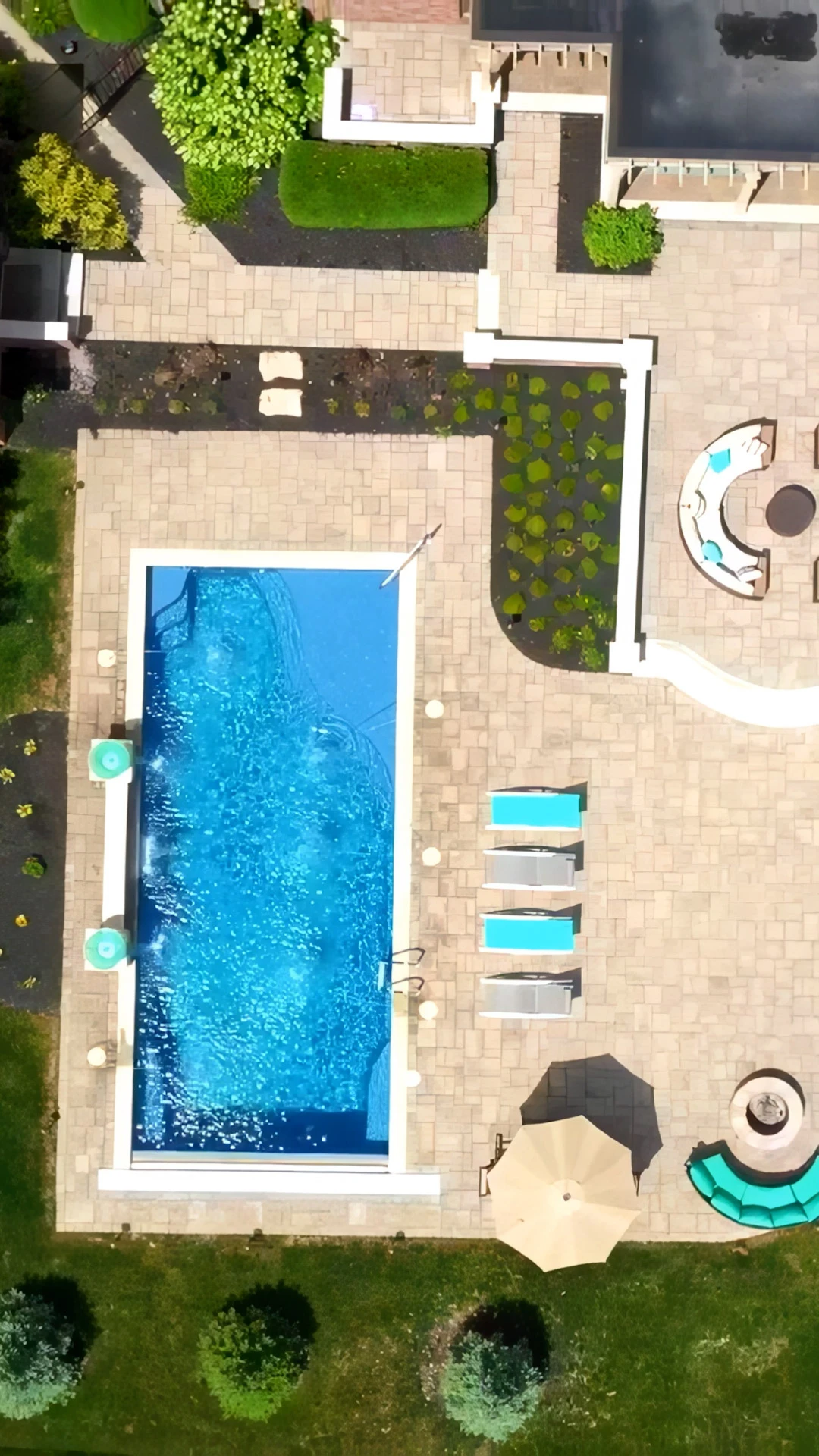
Why Dawson County Elevation Breaks the Standard Atlanta Heater Playbook
Every major pool heater manufacturer — Pentair, Raypak, Hayward, Jandy — publishes performance curves based on ambient air temperature and pool water temperature. What almost no one reading the brochure notices is that heat pumps lose approximately 40% of their rated output once water temperature drops below 55°F. They don’t fail. They just can’t pull enough latent heat from 48-degree mountain air to matter. The manufacturer’s 140,000 BTU sticker is a lab number at 80°F ambient and 80°F water. On November 12 in Applewood, ambient is 44°F and water is 58°F. That heat pump is delivering maybe 55,000 effective BTU. You paid for a locomotive and you’re getting a lawn tractor.
Dawsonville sits at roughly 1,270 feet. Summer highs run 88 to 93°F — cooler than Atlanta proper by 3 to 5 degrees on average. Winter is where the math gets brutal. The Dawson County climate averages around 30 hard freeze events per year versus 20 for Dacula and 14 for Decatur. Water temperature follows ambient with roughly a 10-day lag in unheated pools. That means from early November through late April — a twenty-week window — water sits below 60°F in any pool that isn’t actively being heated. Across those twenty weeks, a heat pump is losing efficiency every single night.
The secondary issue is the shoulder season. Atlanta metro pool owners get a real March-to-October season. Dawson County pool owners get a legitimate pool season of five months without heat (late May through early October), plus an extended shoulder of another twelve to fifteen weeks where a properly sized gas heater can keep water at 84°F for weekend use. A heat pump cannot. Not here. Not at this elevation. That’s the engineering reality that runs underneath every decision in this post.
The Elevation Rule: Above 1,200 feet in Georgia, the number of nights per year where ambient drops below 55°F exceeds 90. Heat pumps lose efficiency progressively below that threshold. Pure heat pump systems in Dawson County underperform their Snellville or Decatur equivalents by roughly 38% in shoulder-season kilowatt-hours delivered to the water.
Gas Heaters — The Default Choice at Mountain Elevation
Gas heaters don’t care about air temperature. They burn fuel, they generate BTUs, they deliver those BTUs to water through a copper heat exchanger. A 400,000 BTU Pentair MasterTemp 400 in Foxcreek performs identically to a 400,000 BTU MasterTemp 400 in Miami. That’s the core reason gas stays the default recommendation for any Dawson County pool that will be used between October and May.
The fuel question splits along geography. Natural gas is available along the Hwy 53 (Dawson Forest Road) corridor, the Hwy 9 corridor, and into select newer subdivisions close to the GA-400 exit. Natural gas service means a $3,800 installed price for a 400,000 BTU MasterTemp, tied into your existing meter with a proper pressure regulator and sediment trap. Operating cost runs roughly $4.20 per hour at full fire — call it $32 per heating day in shoulder season if you’re bringing water from 68 to 84°F and holding it.
Propane is the answer everywhere else — Big Canoe, the Etowah River Club, the larger acreage lots in Riverbend and Mountain Laurel, anything off a rural feeder road without gas mains. Installed price with a 500-gallon buried tank runs closer to $4,800 for the same heater. Propane burns at roughly 1.3 times the cost per BTU of natural gas in Dawson County’s current delivery market. Over a five-month season with moderate use, that’s $400 to $550 in additional fuel cost. Not trivial, but not the deal-breaker many homeowners fear.
Sizing matters more than most installers admit. The shortcut formula — 125 BTU per gallon of pool water for a 24-hour recovery from 60 to 80°F — works fine in Decatur. It undersizes in Dawsonville. We spec one step up from calculated minimum on every Dawson County build. A 20,000-gallon rectangle that would get a 300k BTU heater in Tucker gets a 400k BTU heater north of GA-400. The difference in equipment cost is about $700. The difference in real-world heat-up time on a 42°F November morning is three hours versus eight.
Heat Pumps — Where They Work and Where They Fail in Dawson County
Heat pumps are not wrong for every Dawson County pool. They’re wrong for about 80% of them. The 20% they fit are specific: lots with no access to natural gas, rural propane delivery that pushes operating costs uncomfortably high, and homeowners who will only swim from late May through early September. For that swimmer profile, a 140,000 BTU heat pump running on Amicalola EMC service at roughly $0.13 per kWh delivers warm water for an operating cost of around $1.80 per hour — cheaper than any gas option.
The failure mode isn’t the heat pump itself. It’s the salesperson who sold a heat pump for a year-round Dawson County pool without disclosing the efficiency cliff. Below 55°F water temperature, you’re running the compressor twice as long for half the output. Below 48°F ambient air, some units enter defrost cycles that pause heating entirely. By the second week of November at 1,270 feet, a homeowner expecting the pool to be warm by Thanksgiving is watching the temperature gauge sit at 63°F for days.
If a heat pump is the right answer for your site, size it at the absolute top of the manufacturer’s residential range. That means 140,000 to 150,000 BTU for a 16×32 rectangle, not the 110,000 BTU unit the wholesale distributor pushes. Budget $6,200 to $7,400 installed. Plan on running it fifteen to twenty hours per day in May and September. And accept that if you want October swimming, you’re going to be disappointed.
The Honest Heat Pump Window in Dawsonville: Late May through late September — roughly 125 days per year. Outside that window, heat pump economics and performance deteriorate rapidly. For any build where the homeowner expects April or October use, gas is the right answer.
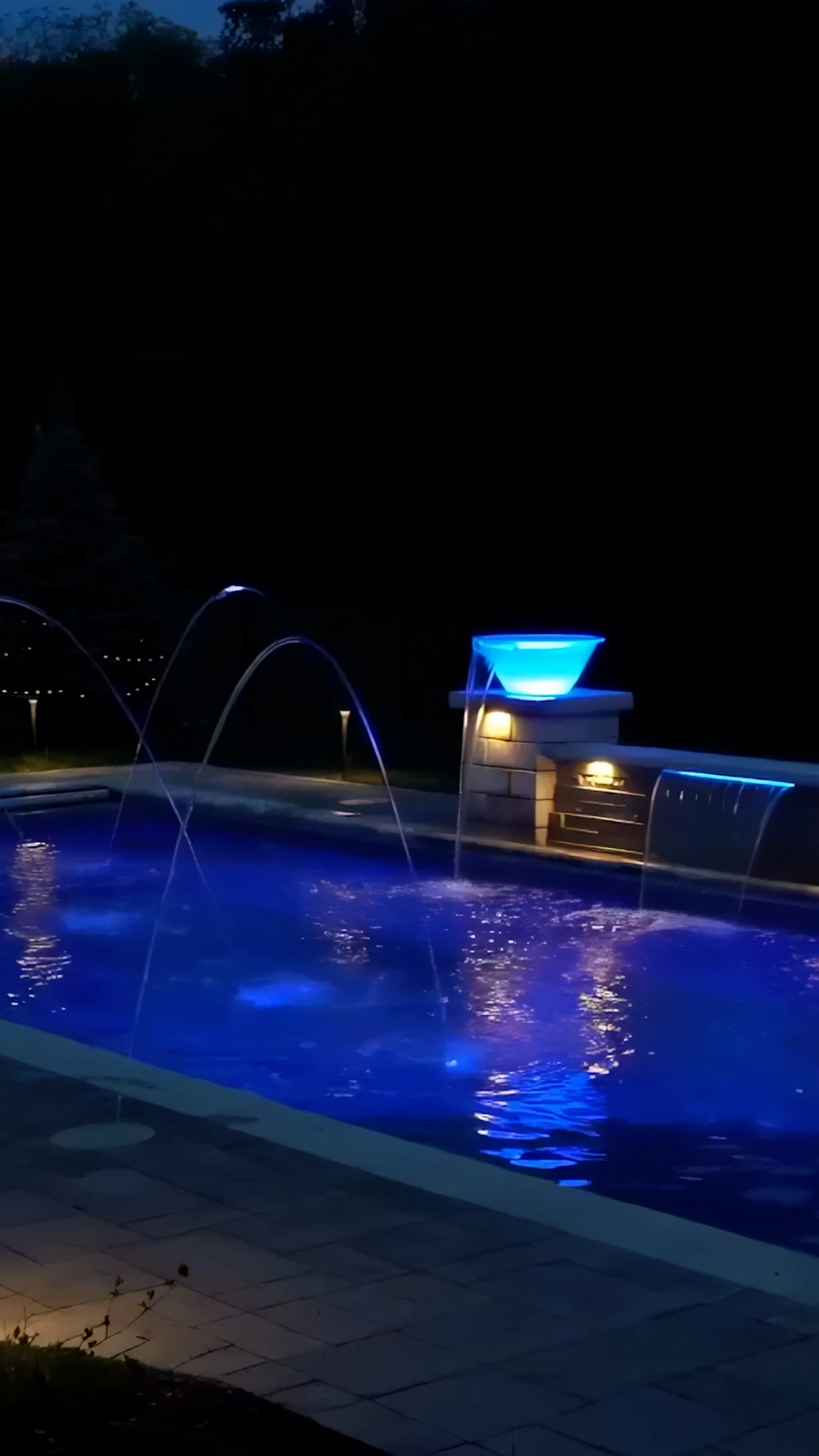
Solar Thermal Panels — The Shoulder-Season Assist That Makes Sense
Solar as a standalone heat source in Dawson County is a narrow solution. The panels work well from mid-May through early October when the sun angle, day length, and ambient temperatures combine to deliver usable thermal gain. Outside that window, solar output drops to a level where you’re essentially looking at a roof full of hoses that isn’t contributing enough to notice.
The install runs 8 to 12 panels on a south-facing roof with an unobstructed solar window from 10 a.m. to 4 p.m. Each panel measures roughly 4×10 feet. Installed price lands between $6,400 and $9,800 depending on roof complexity, pumping distance, and whether you need a dedicated solar booster pump or can run off the existing main pump. Payback on a pure solar-to-gas-offset calculation runs nine to fourteen years in Dawson County — slower than the seven to ten years you’d see in Middle Georgia because of the shorter peak-sun season at this latitude and elevation.
The better way to think about solar in Dawsonville is as a gas-reduction layer, not a gas replacement. That changes the math entirely. If you’re running a 400k BTU Pentair natural gas heater for 20 weeks of shoulder season and solar can offset 30 to 40% of the fuel burn during the daylight hours of the peak five months, you’re saving roughly $380 per year in gas cost. On an $8,000 solar install, that’s a twenty-year simple payback — but layered onto a build that already has the gas heater installed, the incremental cost of adding solar is closer to $5,200, which changes the payback to thirteen years.
The caveat: solar panels require a suitable roof. Many of the 1970s and 1980s homes in Applewood and Kensington Ridge have east-west ridge orientations and complex dormer geometry that make a clean solar install difficult. Newer 2015+ builds near the Hwy 53 corridor often have better roof planes but less mature tree cover — worth checking that a twenty-year oak canopy isn’t about to overtake your south-facing slope.
The Hybrid Configuration We Recommend for Most Dawson County Builds
The build sheet we deliver on most new Dawson County pools specifies a gas heater as primary and a solar thermal loop as secondary, with the pool controller prioritizing solar during daylight hours and falling back to gas whenever the solar output drops below setpoint. This is not an exotic configuration. It’s two pieces of equipment sharing a plumbing loop and a Pentair IntelliCenter or equivalent automation system making the switch-over decisions.
The cost structure on a hybrid build: $3,800 natural gas Pentair MasterTemp 400 or $4,800 propane equivalent, plus $5,200 to $6,400 for 10 solar thermal panels installed with a dedicated booster pump and three-way valve control. Total equipment cost lands between $9,000 and $11,200. Annual operating savings versus gas-only run $340 to $420. The pool swims reliably from early May through October with minimal gas burn. Shoulder-season warm-ups in April and October fire the gas heater as needed. Winter pool use, if desired, runs entirely on gas.
This is not the cheapest configuration at point of sale. A homeowner comparing a bare 300k BTU gas heater install at $3,200 against a full hybrid package at $10,500 will see the hybrid as excessive. The math changes over a 15-year pool lifespan. Fuel savings accumulate. Component lifespans favor hybrid operation — gas heaters running at 40% duty cycle last noticeably longer than gas heaters running at 90% duty cycle. The copper heat exchanger that fails at year nine on a single-source gas system often makes it to year fourteen on a hybrid with solar offsetting summer fuel burn.
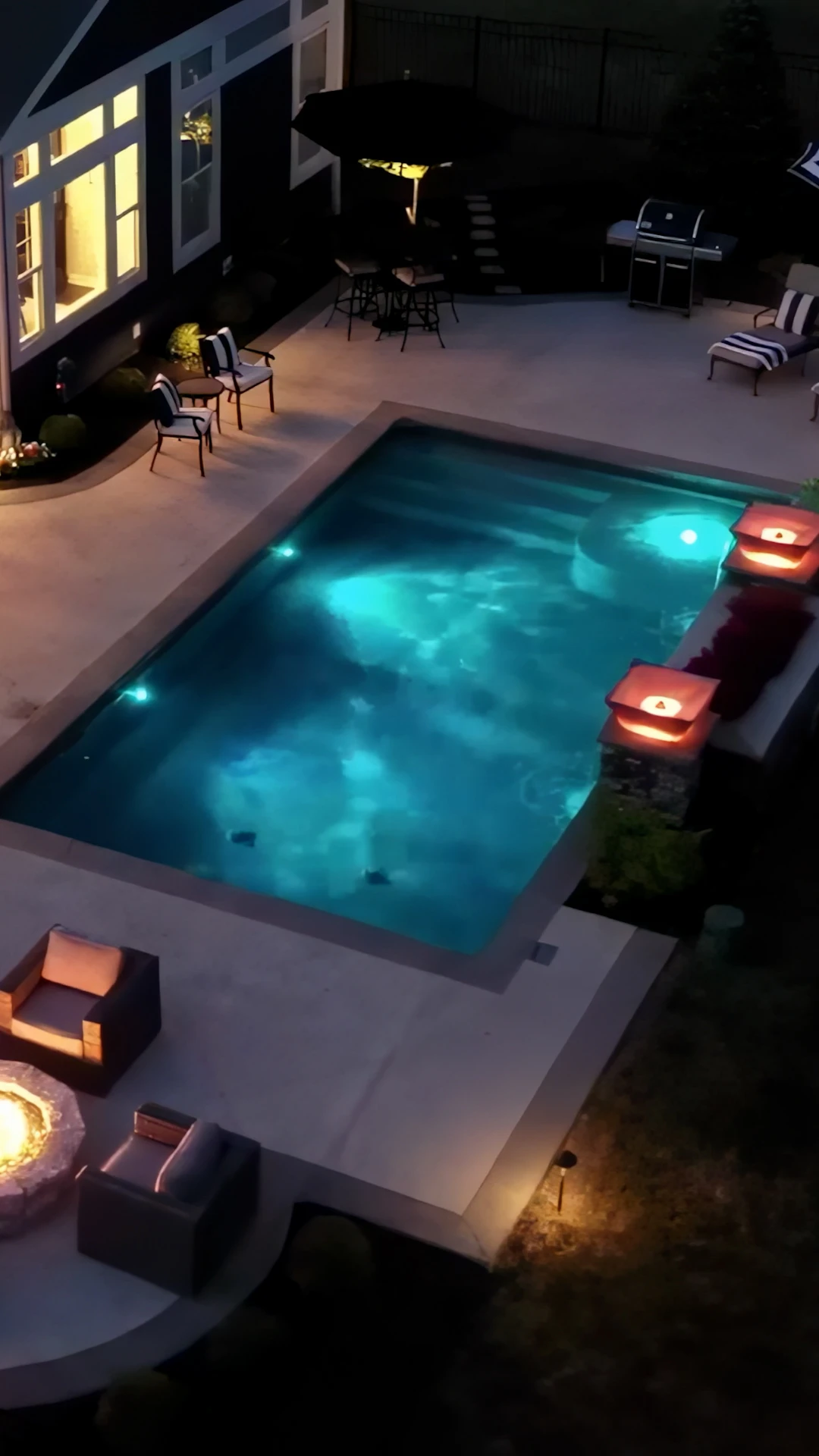
Permits, Service Drops, and the Mountain-Origin Excavation Surprise
Every pool in Dawsonville pulls a permit through the Dawson County Department of Planning & Development at 25 Justice Way. The process itself is straightforward — pool plan, engineered plot survey, setback verification, electrical permit, gas permit if applicable. Standard turnaround is two to three weeks. The fees are reasonable by Metro Atlanta standards. That’s the easy part.
The surprise sits in the ground. Dawson County subsoil is not Piedmont clay. It’s stony residuum — weathered granite and saprolite over thin topsoil. On most residential lots, the first 18 to 30 inches of excavation moves with a standard track excavator. Below that, particularly on the eastern half of the county closer to the Etowah River, excavators start hitting competent rock. Rock blast charges in Dawson County currently run $8 to $14 per cubic yard above standard dig pricing. On a typical 16×36 rectangle excavation at 48,000 cubic feet of removal, blasting 30% of the volume adds roughly $4,200 to $7,300 to the pool budget.
This ties directly to heater selection in a way that isn’t obvious. A homeowner who didn’t budget for rock excavation and then hits granite at three feet often looks to cut equipment costs to save the build budget. The heater is the first thing they try to downsize. We’ve watched this play out enough times to know the outcome — a 300k BTU gas heater gets substituted for the spec’d 400k, or a heat pump replaces the gas install because the upfront cost is lower. Two seasons in, the homeowner calls us about cold water.
If you’re building in a neighborhood with known rock — Chestatee, parts of Mountain Laurel, the Etowah River Club acreage lots — have a soil test cut in at the pool location before signing the build contract. A $600 geotechnical probe at the proposed excavation footprint gives you a defensible number to add into the original quote. Rock surprises kill pool projects. Rock budgeted from day one doesn’t.
The third utility consideration is electrical service. Heat pumps pull 50 to 70 amps of dedicated 240V service. If you’re on Amicalola EMC with a 200-amp panel that’s already feeding an all-electric home, your panel may need an upgrade or a subpanel install to carry the heat pump load. Budget $1,400 to $2,800 for the electrical work. Gas heaters pull minimal electrical load — 15 amps on a 120V circuit — and avoid the panel question entirely.
What the Build Sheet Looks Like for Three Real Dawsonville Configurations
To move this from theory to numbers, here are three build specs we’ve written and installed in Dawson County over the past eighteen months, with the heater decision explained in context.
Configuration 1 — Applewood, 16×34 Rectangle, Natural Gas Available
Lot sits off Hwy 53 with natural gas service. Homeowner wanted April-through-October reliable use, no commitment to winter swimming. We specified a Pentair MasterTemp 400k natural gas as the primary and only heater. Installed cost $3,800. No solar layer. No heat pump. Simple, bulletproof, shoulder-season-capable. Twelve-year expected heater life on Dawsonville water chemistry with proper cyanuric acid management. Total equipment budget as a percentage of total pool build came in at 6.2%.
Configuration 2 — Foxcreek, 18×40 Rectangle with Attached Spa, Propane Only
Rural lot, no natural gas for half a mile. Homeowner wanted spa year-round at 102°F and pool use from May through October. We specified a Pentair MasterTemp 460k propane with a 500-gallon buried tank, plus ten solar thermal panels on the south-facing garage roof to offset summer fuel burn on the pool side. Installed heater cost $5,100. Solar addition $6,800. Total $11,900. Propane burn in year one ran 620 gallons, down from an estimated 880 gallons without solar — a real-world savings of $520 at current propane pricing.
Configuration 3 — Kensington Ridge, 14×28 Rectangle, Summer-Only Use
Young family, budget-conscious build, explicit decision that the pool closes October 1 each year and opens April 15. No spa. Natural gas not available. We specified a 140,000 BTU heat pump running on upgraded Amicalola EMC service. Installed cost including 60-amp subpanel and wire run $7,200. Operating cost in the 125-day active season roughly $340 total. This is the narrow case where heat pump actually wins — and it only wins because the homeowner made a hard commitment to not chasing October weekends.
The Maintenance and Lifespan Math Nobody Puts in the Proposal
Every heater type has a predictable failure curve in Dawson County water. Gas heater copper heat exchangers in this area run a 10 to 14-year service life assuming proper water chemistry. The primary killers are low pH (below 7.2) and high calcium hardness — both of which are common on well-fed Dawsonville pools where the fill water chemistry hasn’t been fully tested. Budget $1,800 to $2,400 for heat exchanger replacement when it comes, or $4,200 for a full heater swap if the burner tray and controls have aged out simultaneously.
Heat pump compressors in Dawson County run shorter lifespans than their Piedmont counterparts because of the extended cold-weather duty cycles. Expect 9 to 12 years on a Rheem or Hayward residential unit, 11 to 14 on the better AquaCal models. Replacement cost on a compressor swap runs $1,400 to $2,200. Full unit replacement at end of life runs $5,800 to $7,200 installed.
Solar thermal panels themselves last 18 to 25 years. The bonded rubber or polypropylene panel material is durable. What fails first is the header plumbing, the booster pump, and the three-way valve controls — all of which are consumable service parts at five to ten-year intervals. Budget $400 to $800 in parts and labor every seven to eight years on a solar install.
The hybrid argument gets stronger when you layer lifespan numbers on top of fuel-burn numbers. A gas heater running at 40% duty cycle in a hybrid install sees the copper exchanger last closer to fourteen years than ten. Combined with solar panel life of twenty-plus years and the reduced fuel burn, the total cost of ownership on a hybrid pulls below that of a gas-only system by roughly $2,400 across a fifteen-year window at current fuel prices. That’s not a huge number, but it flips the conclusion — hybrid isn’t just equivalent on lifetime cost. It’s cheaper.
Getting the Heater Decision Right Before the Slab Is Poured
Every call we take from a frustrated Dawsonville homeowner who got the wrong heater ends the same way — with an equipment swap that costs more than doing it right the first time would have cost. Heat pump to gas conversion on a finished install runs $4,800 to $6,200 in new equipment plus $800 to $1,400 in plumbing rework. That’s $5,600 to $7,600 of rework against a heater spec’d correctly from day one.
Three questions settle the decision on most builds. First, what’s your realistic pool use window? If the honest answer is May through September, a heat pump is viable. If the honest answer includes any April or October weekends, gas is required. Second, do you have natural gas service or will you be running propane? Natural gas tilts the math toward gas-primary; propane leaves the door open for hybrid solar-plus-gas to trim operating cost. Third, do you have a south-facing roof plane with a clean solar window? If yes, solar assist pencils out. If no, single-source gas is the answer.
The Dawsonville pool market is different from the Snellville pool market. It’s different from the Cumming pool market thirty miles south. The heater decision that works in Lilburn doesn’t port to Mountain Laurel. Elevation, climate, subsoil, and utility access all shift the math at 1,270 feet. Getting it right on paper before the excavator arrives saves real money — and more importantly, delivers a pool that actually swims in the shoulder seasons the homeowner is paying to access.
If you’re building in Foxcreek, Riverbend, Applewood, the Etowah River Club, Mountain Laurel, Chestatee, Kensington Ridge, or anywhere else in Dawson County, the heater conversation should happen before pool shape, before tile selection, before coping material. It’s the single decision that determines how long the pool season actually runs. We’d rather have it with you in the quoting phase than at the end of a cold October weekend.
Custom Pool Construction across 20+ cities within 30 miles of Winder, GA
Elevation-specific heater engineering for Dawson County builds, with the same build discipline carried across every metro-Atlanta ZIP code we serve.