
“Is there any way to actually swim in my pool in late March without freezing or paying a gas bill that looks like a mortgage payment?” That question — asked almost word-for-word by a homeowner off Lower Roswell Road last spring — is the whole reason this post exists. The short answer is yes, and the math favors a Pentair UltraTemp heat pump over the gas heater already sitting on your pad.
Marietta sits right on the USDA Zone 7b/8a climate border. That single fact is why pool heating here is a negotiation, not a settled question. You get about 22 freeze events per year, summer highs in the low 90s, and shoulder seasons that feel swimmable at lunchtime and bone-cold at 7 a.m. A pool built without supplemental heat will reliably hold 80°F water for about nine weeks — roughly mid-June to mid-August. Nine weeks. That is the “2-season” pool problem, and it is the problem this post is about.
A gas heater extends that window, sort of. It heats fast, which is great for spa use or a weekend guest scramble. But run a Lennox-grade or Raypak 406k BTU propane unit on a rectangle pool from April through October and you will see bills that make you stop using the heater by Memorial Day. That is not a theoretical — that is what happens in nearly every Cobb County backyard that tries it. The heat-pump conversion is the answer most homeowners don’t hear about because gas installers don’t sell them.
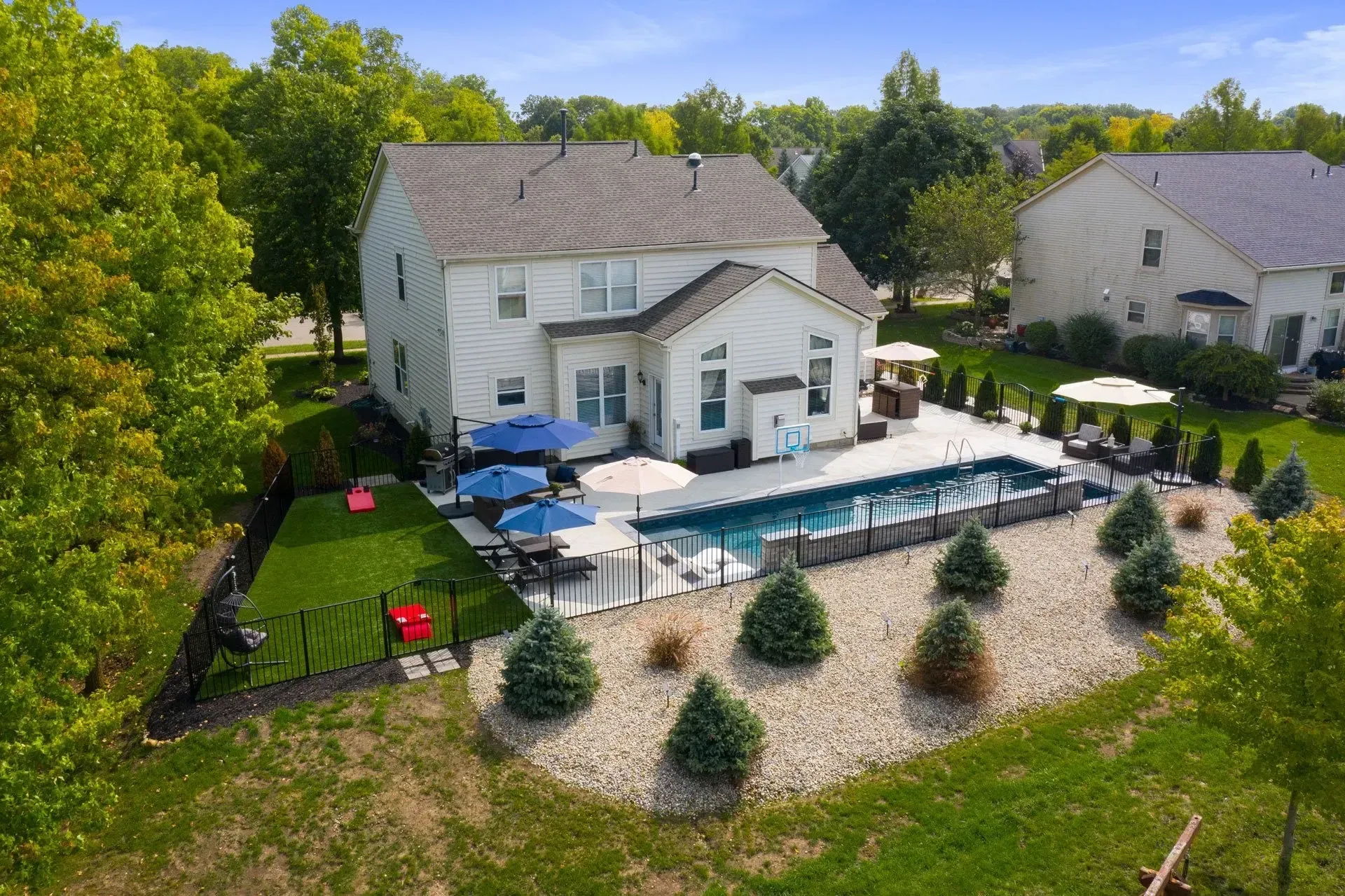
What exactly changes when you swap a gas heater for a Pentair UltraTemp?
Understand what “heat pump” actually means in a pool context, because the term is muddied by HVAC marketing. A pool heat pump is an air-source electric heat exchanger. It pulls latent heat out of ambient air and transfers it to pool water through a titanium coil. It doesn’t combust anything. It doesn’t need propane or natural gas service. It runs on 240V single-phase electric — the same circuit class your air conditioner uses.
The tradeoff is physical. Heat pumps work efficiently down to about 50°F ambient air. Below that, their coefficient of performance (COP) drops sharply. So in Marietta — where shoulder-season daytime highs sit between 58°F and 78°F from mid-March through early November — the heat pump operates in its sweet spot for the exact weeks when gas heaters become financially unreasonable.
In hard numbers: a Pentair UltraTemp 140 running in 65°F air pulls roughly 5.5 kWh per hour of runtime and moves about 140,000 BTUs into the water. That same 140,000 BTUs from a natural gas heater burns approximately 1.4 therms per hour. At Cobb EMC residential rates (~$0.11/kWh) vs. Atlanta Gas Light (~$1.35/therm), the heat pump costs about $0.61 per hour to run. The gas heater costs about $1.89 per hour. Three times the operating cost, every hour, every day of shoulder season.
Operating cost at a glance: 140,000 BTU output in 65°F shoulder air. Pentair UltraTemp 140 heat pump ≈ $0.61/hr. Equivalent gas heater ≈ $1.89/hr. Over a 6-hour daily run across 42 shoulder-season days, that’s a real-world savings of about $322 per season, repeating annually.
Why don’t more Marietta pool owners already have one?
Three reasons, and none of them are “heat pumps are worse.” The first is that almost every pool builder in Cobb County installs gas heaters by default at new construction. The heater is usually sized and plumbed before the homeowner has any meaningful conversation about heating strategy. It is part of the builder’s standard package because gas heaters are $700 to $1,400 cheaper to drop in, and the builder is optimizing for their margin on a single transaction — not your ten-year operating cost.
The second reason is that heat pumps require adequate 240V service and a dedicated breaker. In older East Cobb neighborhoods like Indian Hills and the Sope Creek corridor, many 1960s-1970s homes were built with 100-amp or 150-amp main panels. By the time the homeowner has added a tankless water heater, a finished basement, and an EV charger, there is no headroom left for a 40-amp pool heat pump circuit. A panel upgrade from 150A to 200A service runs $2,100 to $3,400 in Marietta, and it needs a Cobb County Community Development permit filed at 1150 Powder Springs Street. That adds a week to the timeline and a line item to the quote that a homeowner didn’t expect.
The third reason is reputational lag. Early-generation pool heat pumps (pre-2012) had real problems. Noisy compressors, undersized titanium coils, short service life. That reputation stuck even though the current generation — Pentair UltraTemp, Hayward HeatPro, Raypak Crosswind — are quiet, efficient, and backed by 5-to-10-year warranties. Plenty of Marietta homeowners asking about them today are still working from a mental model built in 2008. The product has moved on. The word-of-mouth hasn’t caught up.
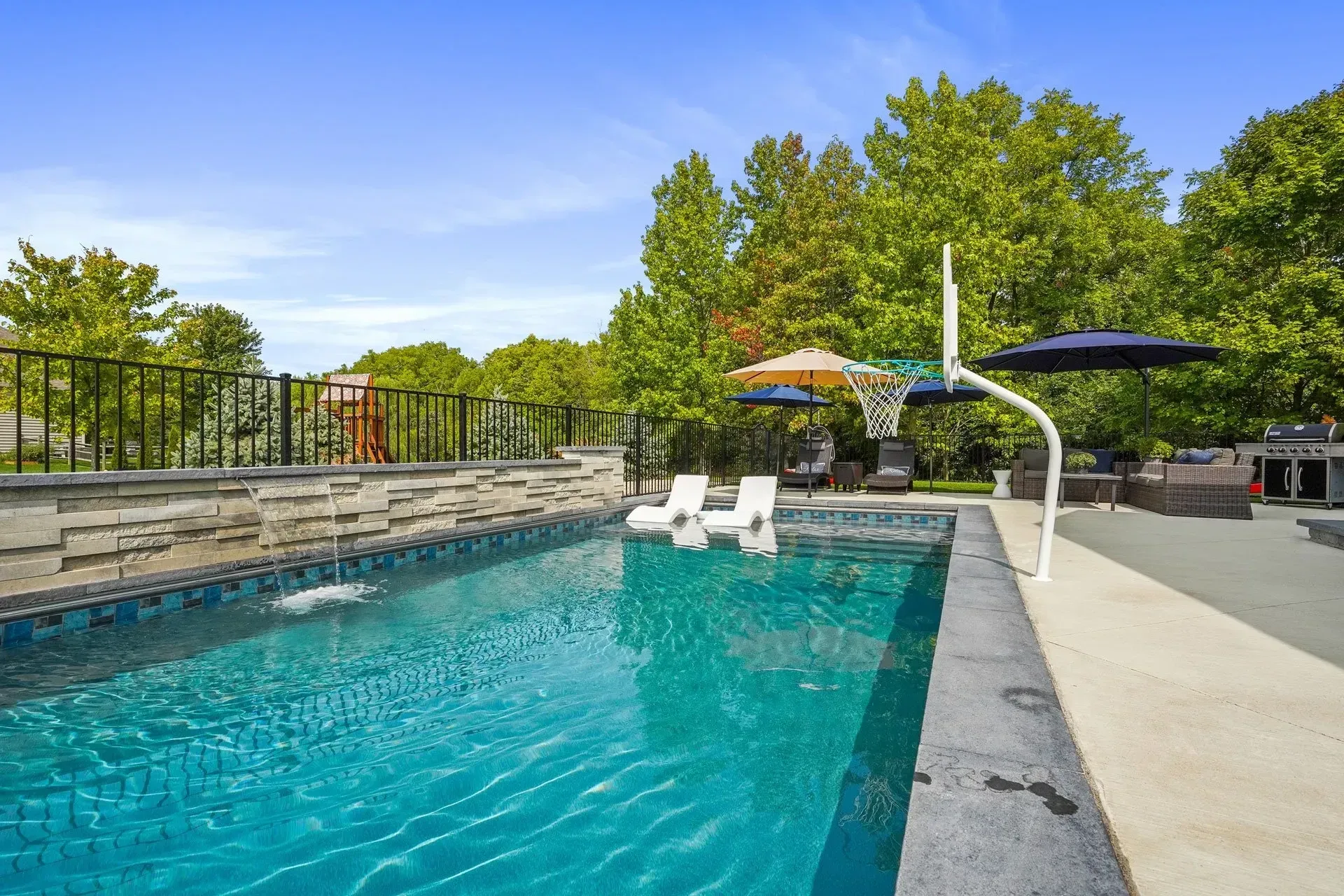
The shoulder-season math — how we get 5 to 6 extra swim weeks
This is the part most homeowners want to see on a napkin. Here is the napkin.
A standard 20,000-gallon rectangle pool in Marietta, with no heating system, reaches 80°F water temperature reliably from June 14 to August 18. That is 65 days. Add a 400k BTU gas heater and run it economically (morning startup, solar cover overnight, heat only to 82°F), and you can push the window out to May 20 – September 20. That is 123 days. The trade: about $1,700 in gas over that four-month span, or roughly $14 per swim day in heating cost alone.
Now swap in a Pentair UltraTemp 140 heat pump, keep the same operating assumptions (solar cover overnight, 82°F target), and the window extends to March 18 – November 6. That is 233 days. Heating cost: about $890 across the full shoulder-season calendar, or roughly $3.80 per swim day.
Five to six additional swim weeks per year, for less than half the operating cost of the gas heater you’re already tolerating.
Gas heater vs. heat pump — a side-by-side comparison for Marietta
If you are weighing this decision with a contractor who is pushing back on the heat pump option, here is the comparison laid out cleanly. Read it once, bring it to the quote conversation.
Startup speed
Gas heater: Wins. A 400k BTU gas unit can raise 20,000 gallons by 1°F every 40 minutes. If you want to swim in six hours starting from 68°F, gas is your answer.
Heat pump: Slower. A Pentair UltraTemp 140 raises the same pool by 1°F every 90 to 110 minutes in 65°F air. This is the heat pump’s only weakness. It is not a “flip it on before the party” appliance. It is a “run it on a timer, maintain temperature” appliance.
Operating cost (shoulder season)
Gas heater: ~$1.89/hour of runtime in 65°F ambient. Expensive.
Heat pump: ~$0.61/hour of runtime in 65°F ambient. One-third the operating cost.
Install cost
Gas heater: $3,800 to $5,200 for a Raypak 406k or Pentair MasterTemp 400k, including propane stub or natural gas line.
Heat pump: $4,800 to $7,400 installed for a Pentair UltraTemp 140, including dedicated 40-amp breaker, aluminum concrete pad, and pipe plumbing to existing equipment pad.
Service life
Gas heater: 7 to 12 years in Marietta’s humidity. Copper heat exchangers corrode in Piedmont air, especially near the Chattahoochee River humidity belt.
Heat pump: 10 to 15 years. Titanium coil does not corrode. Compressor is the primary failure point, and modern scroll compressors last 12-plus years.
Backup for cold snaps
Gas heater: Works at any ambient temperature.
Heat pump: Efficiency drops below 50°F ambient. In a January cold snap where you genuinely need to heat a spa to 102°F, gas wins. This is why some homeowners run both — heat pump for the pool, small gas heater for the attached spa.
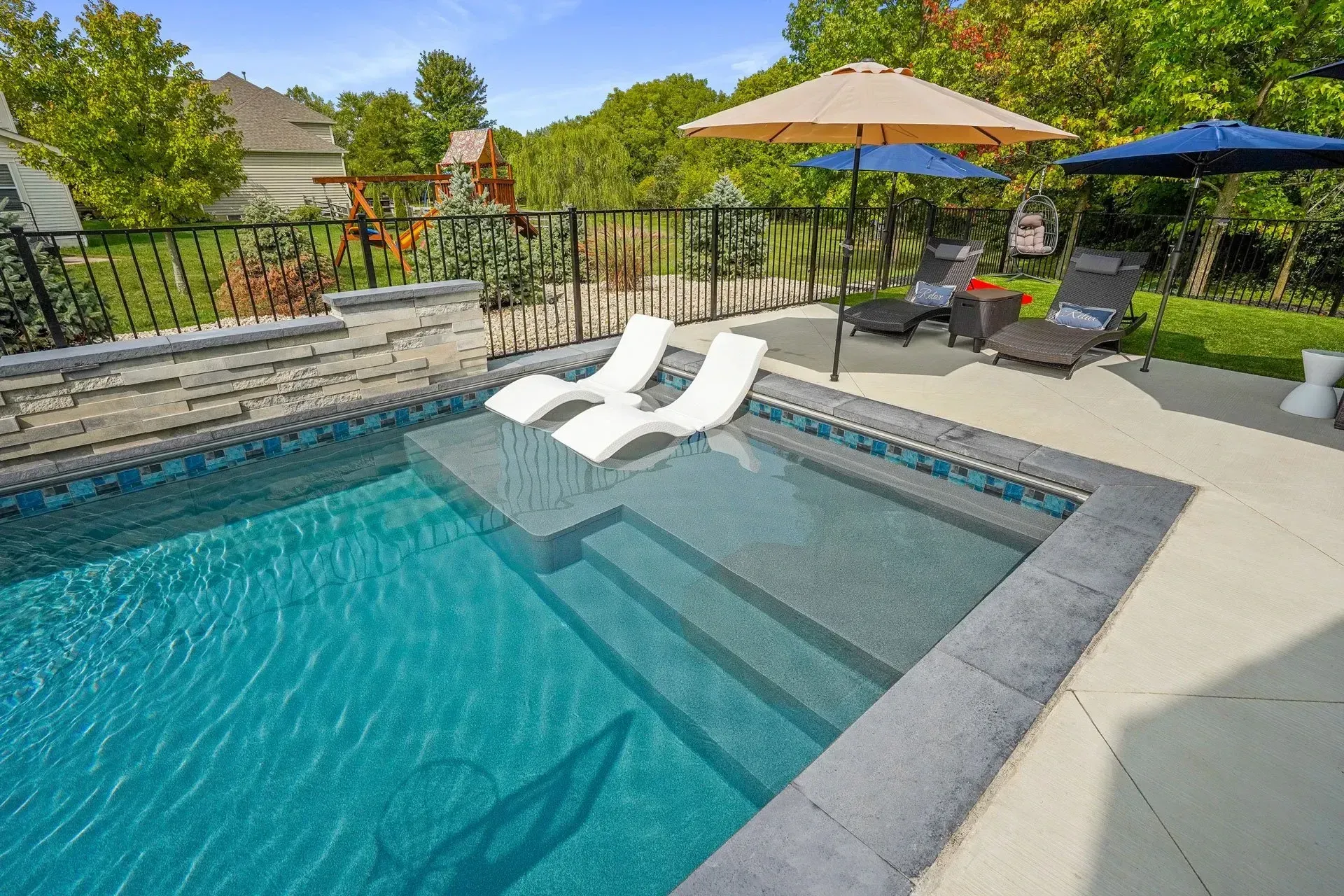
The Cobb EMC electric rate advantage most Marietta homeowners miss
Marietta is unusual inside Metro Atlanta because much of the city and broader Cobb County is served by Cobb EMC — not Georgia Power. This matters for heat-pump math in a way that doesn’t show up on any manufacturer spec sheet. Cobb EMC’s residential rate structure has historically been 8 to 14 percent lower than Georgia Power’s per-kWh charge, and their demand-response and time-of-use programs are more forgiving for pool equipment. The city-incorporated areas of Marietta are served by Marietta Power, a municipal utility with its own rate structure that is often even lower still.
This means the “~$0.61/hour” operating cost cited above is actually a conservative figure for most Marietta addresses. Neighborhoods fully inside Cobb EMC territory — Brookstone, much of Burnt Hickory, the western edge of East Cobb — routinely see effective pool heat-pump operating costs closer to $0.52 per hour. Neighborhoods inside incorporated Marietta on Marietta Power can run even lower during off-peak windows.
The practical move: before you commission the install, pull your last 12 months of electric bills, confirm which utility serves you, and model the operating cost at your actual rate. Your payoff timeline is a function of your specific rate class — not a Georgia-wide average.
Quick utility check: Look at the logo on your electric bill. Cobb EMC = member-owned co-op, typically 30060, 30064, 30066, parts of 30068. Marietta Power = municipal, serves incorporated city limits. Georgia Power covers the outer edges. The break-even math shifts depending on which one you have.
Break-even — when does the conversion pay for itself?
A Pentair UltraTemp 140 installed in Marietta runs $4,800 to $7,400 depending on panel availability, equipment pad distance, and whether a permit-requiring panel upgrade is involved. Compared against a new gas heater at $3,800 to $5,200, the heat pump is roughly $1,000 to $2,200 more upfront.
The operating-cost delta of $1.28 per hour in favor of the heat pump, multiplied by typical shoulder-season runtime (250 hours/year of heated operation across April, May, September, October), generates about $320 per year in savings compared to running the gas unit for the same effect. For a homeowner already running a gas heater aggressively, annual savings can hit $500 to $700.
At those numbers, the heat pump break-even sits at year 2 or year 3 for most Marietta pools with regular-use households. After break-even, every shoulder-season day of swimming is pure delta — you get the extended pool calendar for less money than running your old gas heater.
The homeowners for whom the math doesn’t work are the ones who use their pool only in peak summer (June, July, August) and never touch it in April or October. For them, the gas heater’s faster startup for occasional weekend use justifies keeping it. If that’s you, keep the gas heater — the conversion is not universally right.
Who the conversion is right for
- You swim or want to swim regularly in shoulder season — April, May, September, October.
- Your pool is between 12,000 and 35,000 gallons. (Larger than 35k requires a 150+ or twin-unit configuration.)
- You have or can get 240V service with 40 amps of headroom on your main panel.
- You use a solar or automatic pool cover overnight. (Without a cover, evaporative loss eats the heat-pump’s efficiency advantage.)
- You’re served by Cobb EMC or Marietta Power — the rate structure amplifies the savings.
Who should stick with gas
- Your pool use is almost entirely June-August, and you want occasional spa-temperature water on winter nights.
- Your main panel is maxed out and a service upgrade isn’t in the budget.
- You have an attached spa that you run to 102°F year-round — gas heats spas to that set point in minutes; heat pumps take hours.
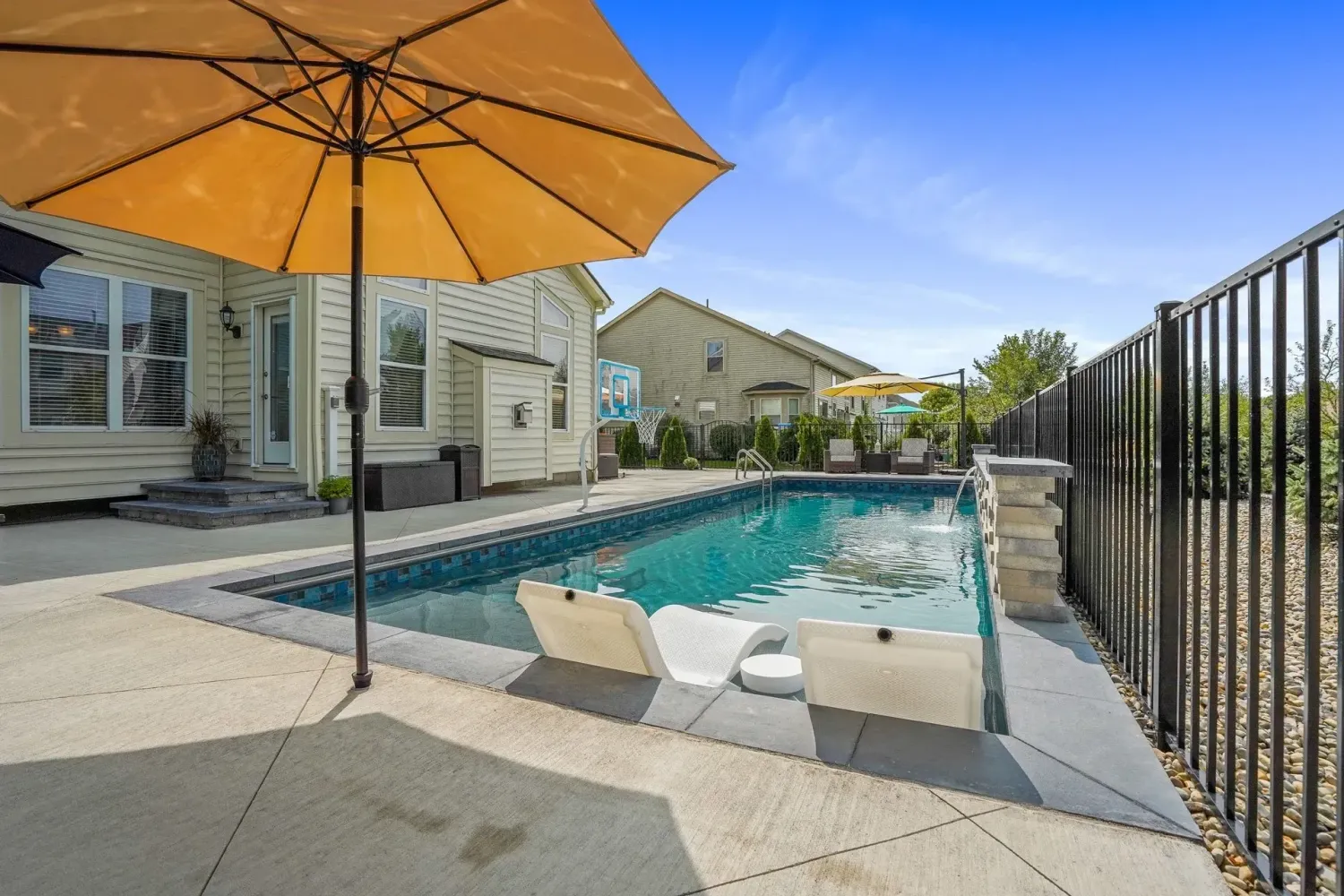
The Marietta-specific install gotchas to budget for
A heat-pump conversion in Cobb County is not identical to the same install in a flat, slab-on-grade subdivision. Three local conditions routinely change the scope and cost.
Tree canopy and airflow. Marietta’s East Cobb neighborhoods — especially mature subdivisions like Walton Woods, Chestnut Hill, and the areas around Atlanta Country Club — have dense oak and poplar canopy that restricts airflow around equipment pads. A heat pump needs 24 inches of clear space on all sides and 60 inches overhead for adequate air circulation into its top-mounted fan. On a pad tucked against the house under mature trees, we often have to relocate the pad or trim canopy to meet those clearances. Add $400-$800 for pad relocation if it’s needed.
Kennesaw Mountain wind exposure. Properties on the mountainside (the northern rim of Marietta, near Kennesaw Mountain National Battlefield Park) see wind patterns that are materially different from the valley floor. Exposed equipment pads lose efficiency to windchill on the coil during shoulder season. The fix is a three-sided fence enclosure around the pad — open on the top and the access side, but blocking prevailing wind. Cost: about $650 in cedar, built onsite.
Panel upgrades in older East Cobb homes. As discussed above, homes from the 1960s-1980s often need a 150A-to-200A service upgrade to handle the new 40-amp circuit. This is the single biggest swing factor in install cost. In newer Marietta Country Club or Seven Oaks construction, 200A service is standard and this line item disappears. In older Indian Hills or Sope Creek homes, budget $2,100 to $3,400 extra, plus a Cobb County Community Development permit filed at 1150 Powder Springs Street — typically a 5-to-9 business-day approval window.
Permit fact: Electrical panel upgrades in unincorporated Cobb County are permitted through Cobb County Community Development at 1150 Powder Springs Street, Marietta. Homes inside incorporated Marietta file through the City of Marietta building department. Both require a licensed Georgia master electrician’s signature. Neither issues retroactive permits — pull it before the work.
How a Primetime Pools heat-pump conversion runs, start to finish
The conversion itself is a 2-to-4 day project when no panel upgrade is needed, 5-to-8 days when it is. Here is what actually happens in a real Marietta backyard.
Day 1 — Site audit and load calc. We confirm main panel amperage, existing breaker load, equipment-pad distance to panel, and pool volume. We verify utility (Cobb EMC, Marietta Power, or Georgia Power) and pull your last 12 months of bills to confirm rate class. We photograph the existing gas heater footprint for the new pad layout.
Day 2 (same or next) — Permit and order. If a panel upgrade is needed, we file at 1150 Powder Springs Street the same day as the audit. We order the Pentair UltraTemp 140 (or sized alternative) from regional distribution — typically 7-to-12 business day lead time.
Day 3 — Electrical and pad prep. Licensed electrician runs the 240V 40-amp circuit from the main panel to the equipment pad, installs the dedicated breaker, and preps the connection box. If a panel upgrade is in scope, the county inspector comes out the same week.
Day 4 — Install day. The gas heater stays in place as backup (or gets removed if the homeowner prefers). The heat pump is set on a new aluminum or concrete pad, plumbed inline between the filter and the return manifold with PVC schedule 40, and wired to the dedicated circuit. Pressure test, leak check, commissioning run.
Day 5 — Automation integration. Pentair UltraTemp ties into Pentair IntelliCenter or ScreenLogic automation — same app you already use for the pump and light. We set the shoulder-season schedule (usually 6 a.m.–10 a.m. daily run to maintain 82°F) and walk the homeowner through the app.
One more note worth writing down: the gas heater doesn’t have to leave. Plenty of Marietta homeowners run the heat pump as the primary, daily-driver heating system and keep the gas heater on standby for two scenarios — an unexpected February weekend when the air temperature is below 45°F and the kids are home, or to bring the attached spa up to 102°F in 40 minutes rather than four hours. This dual setup is how we handle most Atlanta Country Club and Indian Hills conversions, where the homeowner has year-round entertaining expectations.
The heat pump does the daily work. The gas heater does the sprint.
Pool remodeling and heat-pump conversions across 20+ cities within 30 miles of Winder, GA
If you want to turn your 2-season Marietta pool into a 3-season pool without tripling your heating bill, we’ll model the Pentair UltraTemp math on your exact address, utility, and panel — then put it in writing.