
Across 42 estate hardscape projects we’ve priced in Milton over the last three seasons, the build window swings from 56 calendar days to 98 — the same pool, the same 2,000-square-foot deck, the same pavilion and outdoor kitchen. The difference isn’t the crew. It’s five specific line items on the permit packet.
That’s the statistic worth opening with, because the typical Milton homeowner shopping an integrated pool-and-hardscape package hears “ten to twelve weeks” from every contractor in Fulton County and assumes the number is a rounded guess. It isn’t. Eight weeks is a real floor and fourteen weeks is a real ceiling, and the gap is entirely predictable once you know which parcel features push a project into the slower lane.
This post walks the two timelines side by side — week by week — so you can look at your own lot, your own HOA, and your own creek-buffer map and know before the first shovel hits the ground which number you’re working with. We’ll cover The Manor Golf Club review cadence, Milton Community Development’s 10–14 business day turnaround, PE-stamped retaining wall engineering, cold-weather gunite windows, and the single scheduling trick that saves two weeks on almost every estate build in 30004.
Scope of a Milton Estate Hardscape: What Actually Goes in the Ground
Before the timelines make sense, the scope has to be locked. When we say “estate hardscape” in Milton we’re describing a specific build package that repeats across Crooked Creek, Cogburn Estates, King Estates, and the Potters Road corridor. The math doesn’t hold for a quarter-acre Crabapple infill lot or a subdivision pool in Bethany Creek — those are different animals on a different clock.
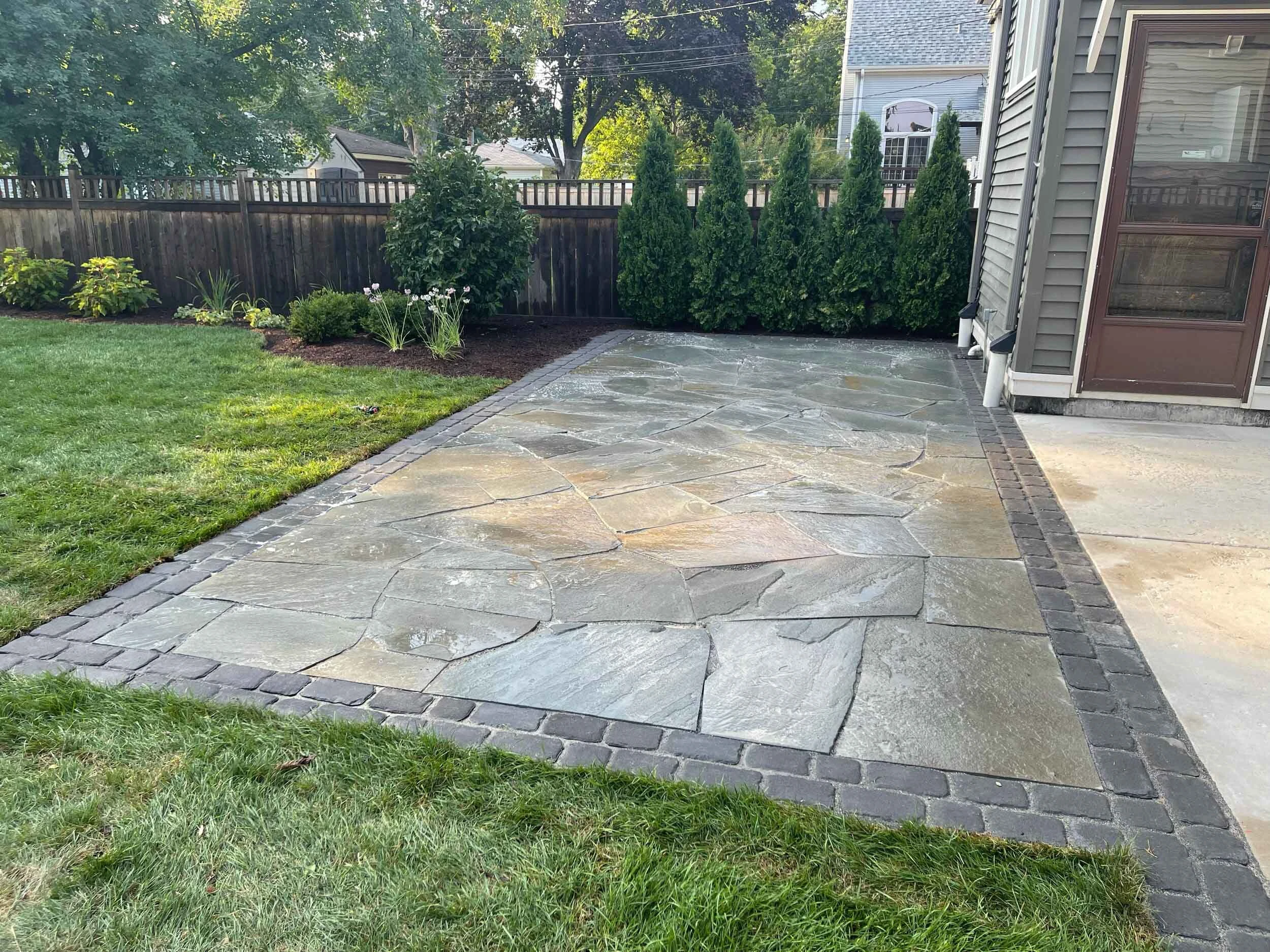
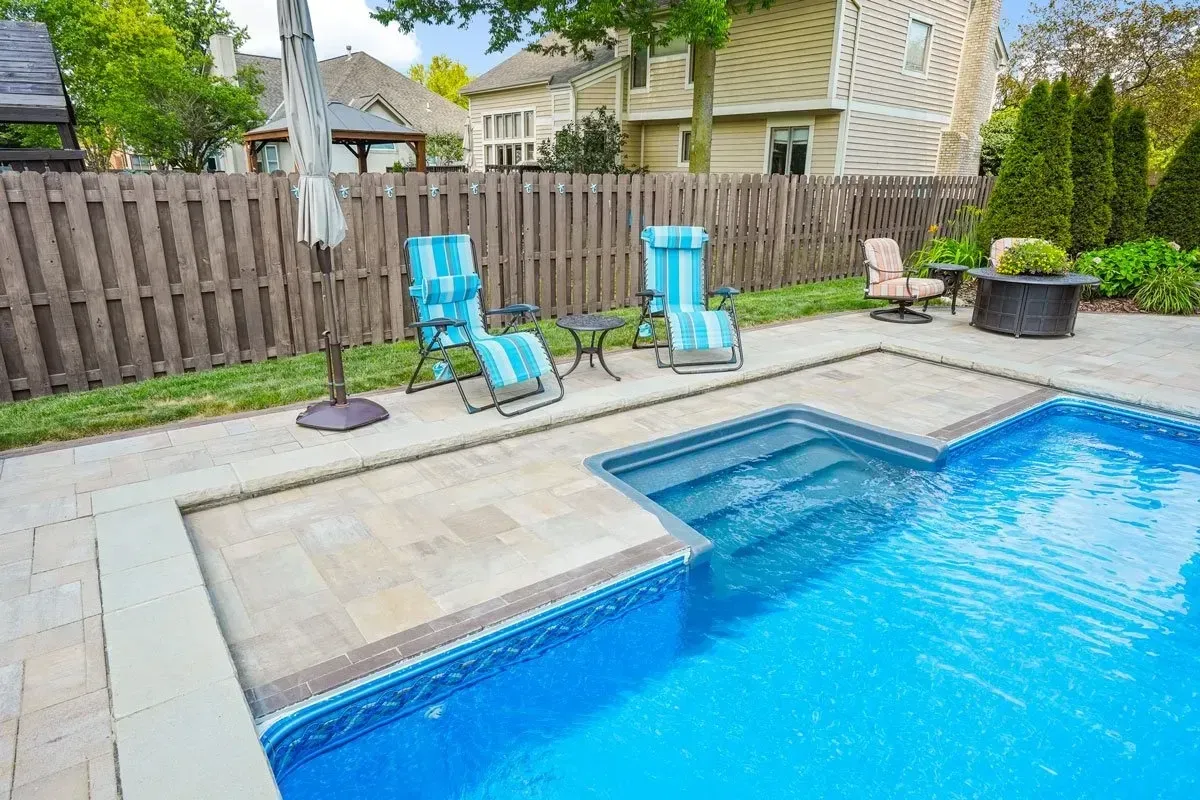
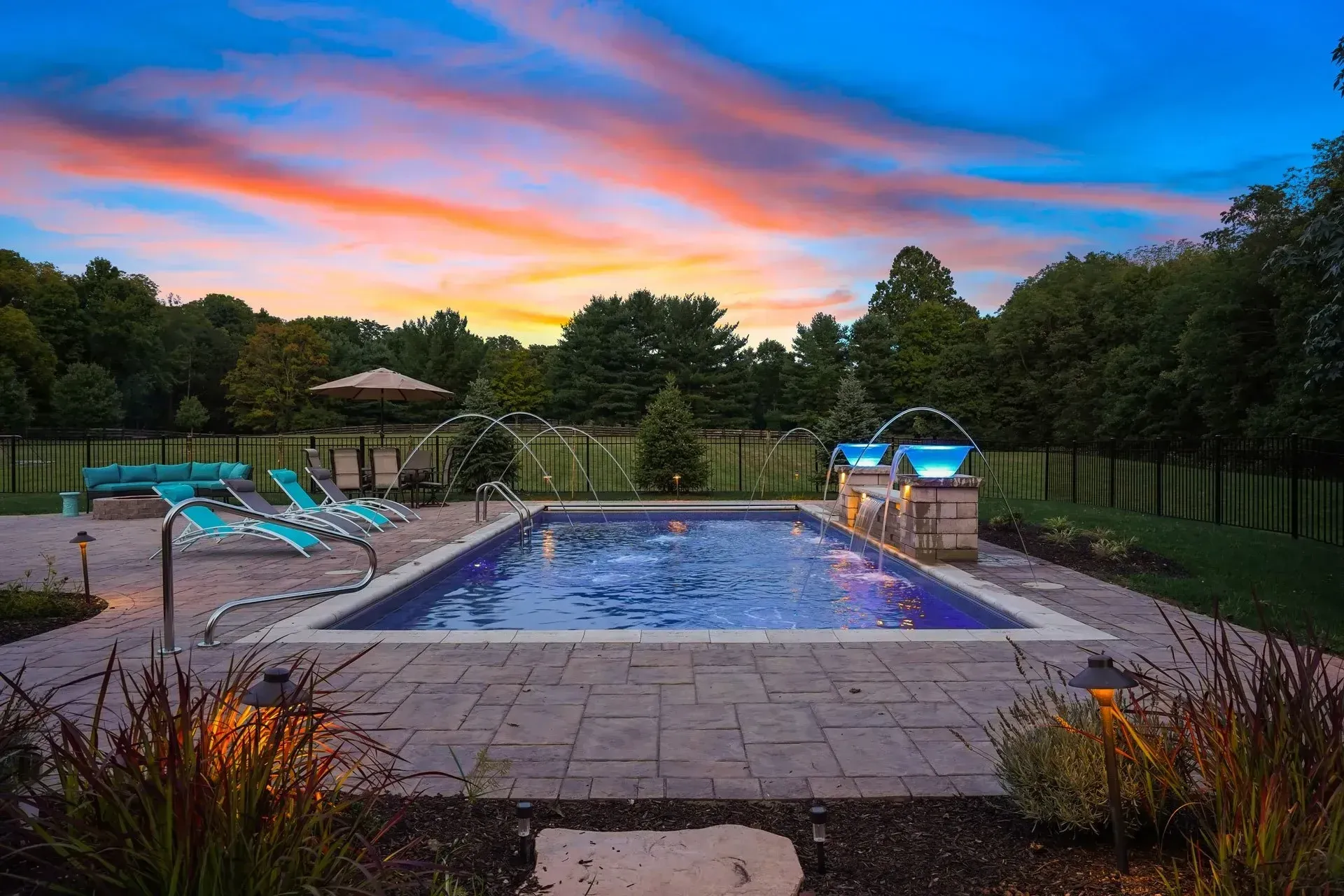
The package we’re timelining includes a gunite pool in the 16×38 to 20×44 range with a spa spillover, 1,800–2,200 square feet of pool deck, two dry-stacked or mortar-set retaining walls averaging 4–6 feet tall across the grade drop, a 20×24 timber-frame pavilion on concrete piers, and an outdoor kitchen run of roughly 14 linear feet with a gas drop, a 36-inch grill, a side burner, and a sink on a pulled water line. Budget ranges $285,000 to $460,000 depending on stone selection and equipment spec, though that’s a separate conversation from schedule.
Milton’s rolling topography matters here. Unlike Alpharetta’s gentler subdivision grades, the typical Milton estate lot drops 6 to 14 feet across the back yard. Every vertical foot of grade change is a hardscape decision — terrace, retain, or cut-and-fill — and every retaining wall over four feet triggers an engineering requirement that adds calendar days. This is why two neighbors in AG-1 zoning can sign identical contracts and land six weeks apart on completion.
The five scope variables that drive the 8-to-14-week swing: (1) HOA architectural review — typically The Manor at 5 weeks, (2) creek-buffer survey — 2 weeks when required, (3) engineered retaining walls over 4 ft — 1 week for PE drawings, (4) build season — cold-weather gunite adds 2–3 weeks, (5) whether trades can overlap or must sequence behind each other.
The 8-Week Build: No HOA, No Creek, No Cold Snap
The fastest Milton estate hardscape we’ve closed ran 56 calendar days from permit issuance to final punch. It was a 4.1-acre parcel off Hopewell Rd, outside any HOA jurisdiction, at least 400 feet from the nearest named tributary, and the build started the first week of May. Every condition that could compress time did.
Weeks 1–2 were layout and excavation. Milton Community Development issued the pool permit eight business days after submittal — on the faster end of their 10–14 business day window, which is still meaningfully quicker than the old Fulton County queue that Milton parcels used before the 2006 incorporation. The dig finished in four working days because the saprolite shelf didn’t appear until 11 feet down, below slab depth.
Weeks 3–4 were steel, plumbing, electrical rough-in, and gunite. The shell cured for 28 days in warm weather with no freeze-protection tarping needed — that matters, because Zone 8a winters force us to stage gunite around frost windows, and a surprise cold snap in March or November can idle a shell for a week waiting on a 48-hour stretch above 40°F.
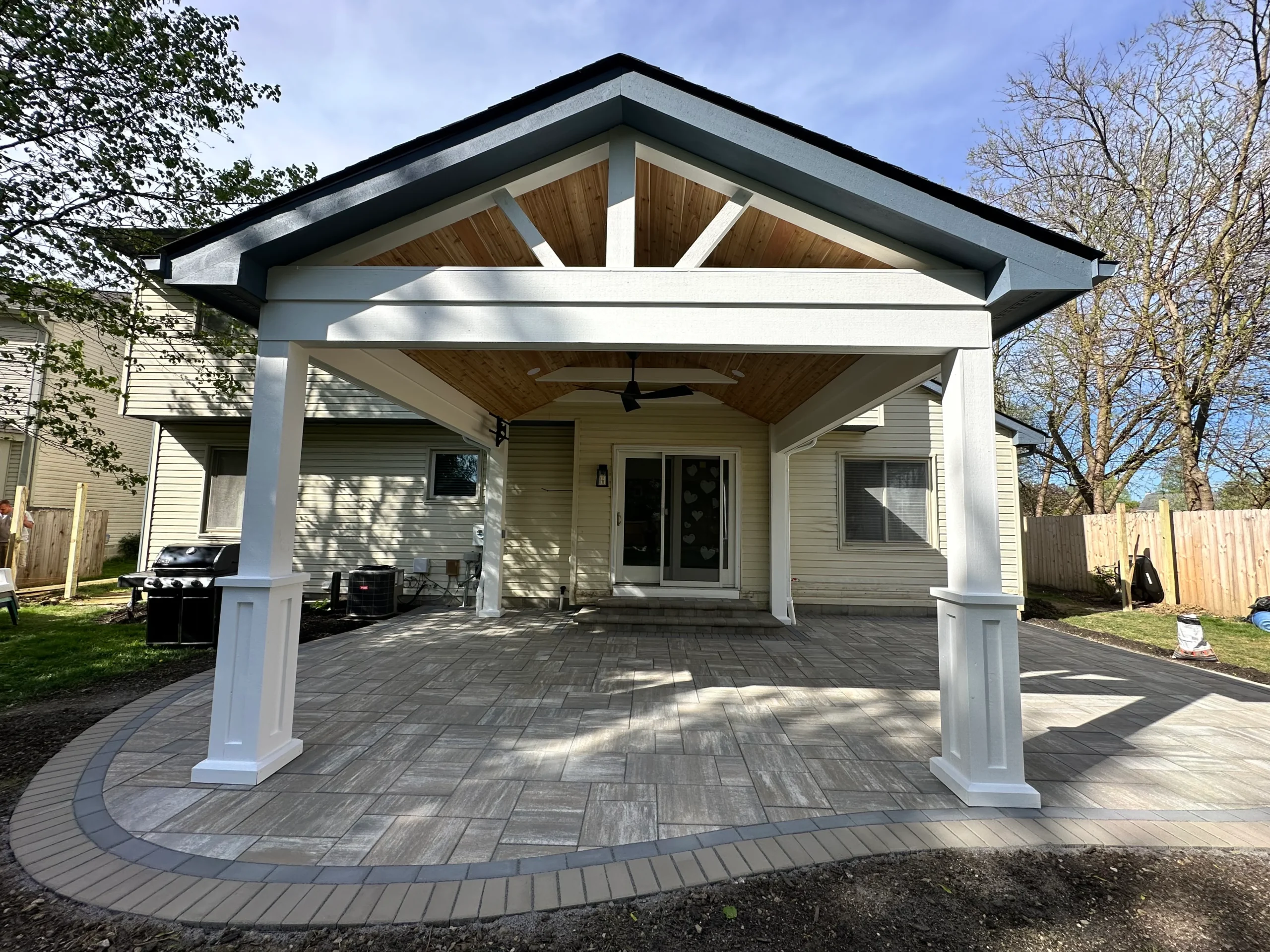
Weeks 5–6 saw retaining walls, pavilion footings, and deck sub-base. Both walls came in at exactly 3.9 feet at the tallest point — intentionally under the four-foot threshold — so no PE stamp was required. That decision alone saved roughly seven calendar days of drawing, submittal, and inspection scheduling. The pavilion was a pre-engineered timber kit from a regional supplier, which means the framing package arrived with its own stamped drawings and bypassed the residential structural review queue.
Weeks 7–8 were finish. Stone veneer on the walls, travertine coping, flagstone deck set in mortar, outdoor kitchen cabinetry dropped in as a pre-built module, gas and water connections, and tile. Startup and the homeowner punch walk happened on day 56. Eight weeks flat.
Why the Hopewell Rd Build Was Faster Than It Looks
A common misread is that the 8-week project was lucky. It wasn’t — it was engineered. The design team sat with the homeowner in week zero and specifically reshaped the grading plan so both retaining walls stayed under the PE threshold, selected a pre-engineered pavilion kit to skip custom structural drawings, and timed the permit submittal to land the dig in the first week of May instead of April. None of those were accidents, and all three are repeatable on the right parcel.
The corollary: if your lot can’t accommodate a under-4-ft retaining wall because your grade drop is too aggressive, you can’t copy this timeline. And that’s most of The Manor Golf Club.
The 14-Week Build: The Manor, a Creek Corridor, and a Mid-Build Cold Snap
The long end of the Milton estate range — 98 calendar days — came out of a Manor Golf Club build off Freemanville Rd. Same base scope: 18×40 pool, 2,100 sqft deck, pavilion, outdoor kitchen, two retaining walls. The permit, survey, and review stack looked nothing like the Hopewell project.
Week 1 was survey and engineering only. The parcel bordered a named tributary feeding into Cooper Sandy Creek, which triggered Milton’s creek-buffer ordinance — a 50-foot impervious setback from the top of bank, and a 75-foot construction-disturbance limit on the downhill side. A licensed surveyor walked and flagged the buffer, which took seven working days including the CAD turnaround. Without that survey, the permit application wouldn’t have been accepted.
Weeks 2–6 were The Manor Architectural Review Committee cycle. The Manor’s ARC meets monthly and requires a full landscape plan, pool plan, elevation drawings for every vertical structure, stone and finish sample board, and an exterior lighting plan. The committee returned one round of revisions on week four — they pushed back on the pavilion roofline pitch — and granted final approval on week six. Five weeks is the median ARC cycle for Manor estate builds; we’ve seen as fast as three and as slow as seven.
Week 7, Milton Community Development issued the pool and grading permit — 11 business days after submittal, comfortably inside the standard window. Both retaining walls on this lot were specced at 5.6 ft and 6.2 ft to handle the grade drop, which meant PE-stamped drawings and a structural engineer’s visit for sub-grade inspection before the walls got backfilled. Another 6 days added.
Milton creek-buffer rule at a glance: 25-foot undisturbed buffer from any state-waters stream, plus a 25-foot additional setback for impervious surface. For parcels touching Cooper Sandy Creek, Chicken Creek, Lake Creek, or any mapped Etowah tributary, this is a hard setback — no variance without a Watershed Protection Committee hearing, which adds 4–6 weeks on its own.
Weeks 8–10 were the dig, steel, plumbing, electrical, and gunite. The shoot landed in mid-December. Nighttime lows hit 28°F twice in the first week of cure, which meant insulated blankets on the shell, a 24-hour tent with propane heaters, and a 36-day cure instead of 28. Another 8 days added versus a warm-weather build.
Weeks 11–12 were retaining walls, pavilion, and deck sub-base — all running with PE inspection holds at each lift of the wall. The outdoor kitchen on this project was custom-framed masonry rather than a module drop-in, which added roughly 5 days of masonry work compared to a prefab unit.
Weeks 13–14 were finish, startup, and punch. The homeowner walked the project on day 98.
Where the Six-Week Gap Actually Lives
Stacking the two timelines shows exactly where the delta comes from. It’s not in the pool work. The gunite-to-finish sequence on both builds ran roughly the same number of working days. The gap lives almost entirely upstream of the dig and in the cold-weather cure.
- HOA/ARC review: 0 days vs 35 days = 5-week delta
- Creek-buffer survey: 0 days vs 7 days = 1-week delta
- PE-stamped retaining walls: 0 days vs 6 days = ~1-week delta
- Cold-weather gunite cure: 0 extra days vs 8 extra days = ~1-week delta
- Custom vs modular outdoor kitchen: 0 vs 5 days = ~1 week
That adds to roughly 9 weeks of swing on paper, compressed to 6 weeks in practice because some of these items run in parallel — the ARC review overlapped with the creek-buffer survey on the Manor build, and the PE drawings overlapped with permit review. Parallel scheduling is where an experienced hardscape contractor earns back time; sequential scheduling is where inexperienced ones lose it.
What Your Parcel Tells You Before the First Meeting
You can pre-estimate which timeline your property is on without a contractor walking the lot. Four questions cover 90% of the variance.
One: is your lot inside an HOA with architectural review? The Manor, Crooked Creek, and Atlanta National all have active review committees. If the answer is yes, add 4–6 weeks to any contractor’s quoted timeline. If you’re on a stand-alone estate parcel off Hopewell, Freemanville north of the Manor, Potters Rd, or Arnold Mill, review time is zero.
Two: is any part of your back yard within 100 feet of a mapped stream? Pull the Milton Zoning Map (the city publishes it through Community Development at 2006 Heritage Walk) and cross-reference with the Georgia Department of Natural Resources stream layer. If you’re inside 100 feet, a creek-buffer survey is almost always required. Add 2 weeks.
Three: what’s your grade drop across the pool footprint? Walk it with a laser level or ask for a topo from your builder’s pre-design visit. Anything over a 4-foot drop at the wall locations means PE-stamped retaining walls. Add 1 week for engineering and inspection holds.
Four: when do you want to start? April through August dig starts run on the 8-week side of the range. November through February dig starts run on the 14-week side because of cold-weather gunite cure windows and winter rain delays on retaining-wall backfill. Spring is worth paying attention to in your contract scheduling.
Milton Community Development contact: permits and plan review run out of 2006 Heritage Walk, Milton, GA 30004. Typical pool-and-hardscape permit review is 10–14 business days from a clean submittal. Resubmittals — usually for grading plan corrections — add another 5–7 business days.
Sequencing Tricks That Save Two Weeks on Almost Every Build
A few scheduling moves compress the Milton timeline reliably. None of them are exotic — they’re just discipline.
Submit the permit packet and the HOA packet the same week. The most common amateur mistake is submitting to Milton Community Development and waiting for permit issuance before sending drawings to The Manor ARC. That sequential approach costs 4–5 weeks. Both submittals carry nearly identical document requirements, and both reviews run in parallel without friction. A sharp design-build firm will hand the client two submittal packets at the same meeting.
Order the pavilion package at contract signing, not at excavation. Timber-frame pavilion lead times out of regional fabricators run 6–10 weeks right now. If the kit isn’t ordered until the dig is underway, the pavilion raise becomes the longest pole in the tent and idles the rest of the crew. We order at contract, set the delivery date for week seven or eight, and the piers are ready when the truck arrives.
Spec the outdoor kitchen as a pre-built module when possible. Drop-in masonry modules from brands like RTA Outdoor Living or Danver save 4–6 working days over site-built framed kitchens. The finish quality difference is marginal; the schedule difference isn’t.
Keep retaining walls under 4 feet if your grade allows it. Reshape the terrace plan. Add a step. The moment a wall crosses 4 feet in exposed height, Georgia residential code requires engineering. Sometimes the grade forces a taller wall — fine, engineer it — but if you can split a 5-foot drop into two 2.5-foot walls at a landing, you skip the PE review entirely.
Front-load the utility locate. Georgia 811 locates expire on a clock. Calling them at excavation week rather than survey week can mean a 72-hour hold if the initial locate expired. We pull locates twice on Milton estate builds — once at survey, once three days before the dig — so there’s never a stall.
What to Hold Your Contractor Accountable To
If you’re signing a contract with any hardscape builder in Milton, the schedule line in that contract should not say “approximately 10–12 weeks.” It should read as a date range tied to specific contingencies. Ask for these five items in writing:
- A calendar-dated milestone list: permit submittal, permit issuance, HOA approval, excavation start, gunite shoot, retaining wall inspection, deck set, finish, startup.
- The specific HOA review window that applies to your subdivision and the average cycle length over the contractor’s last five builds in that HOA.
- Cold-weather contingency language — what happens to the cure schedule if nighttime lows drop below 40°F during the cure window, and whether there’s a weather credit or just a schedule slip.
- Whether retaining walls on your plan require PE stamps, who draws them, and how many business days that adds.
- The pavilion and outdoor kitchen lead times, dated from contract signing, and penalty language if either supplier misses the delivery window.
A contractor who can produce those five items in writing is running a calendar. A contractor who can’t is running on hope. That’s the difference between an 8-week build and a 16-week build — and yes, the ceiling is higher than 14 weeks when the schedule isn’t being actively managed. We’ve cleaned up two Milton jobs this season where the original builder ran past 20 weeks because nobody was watching the critical path.
Milton homeowners tend to be time-sensitive in a way that subdivision buyers elsewhere aren’t — estate lots here often host summer events, equestrian gatherings at Chukkar Farm adjacent neighbors, or private family functions tied to a specific date. We’ve built around a daughter’s August wedding at Atlanta National and a Memorial Day open-house at a Manor property. Both required the 8-week schedule, and both hit it because the planning started in January, not April.
If you’re reading this in early spring and you want to swim by July 4, you’re already inside the window — but you need permits in and HOA packets submitted inside the next two weeks. If you’re reading this in July and you want to swim by Memorial Day next year, you have time to run the 14-week scenario twice over. Neither is a crisis. Both are calendar math.
Hardscape Design and Construction across 20+ cities within 30 miles of Winder, GA
From Manor estate reviews to creek-buffer surveys, we build to the real calendar — not an optimistic quote. If your Milton parcel is on the 8-week track, we’ll tell you. If it’s on the 14, we’ll show you why.