
Three Milton addresses. Same 1,200 sqft deck package on paper. Three wildly different checks. Here are the numbers — $78K on Freemanville Road, $142K off Crabapple, $295K inside The Manor — and exactly what drives the spread.
Milton doesn’t price like Alpharetta. It doesn’t price like Cumming either. When a client calls us from a 3-acre lot off Hopewell Road and another calls from a half-acre inside the Crabapple historic overlay, and a third from behind the gate at The Manor Golf Club, we’re quoting three different universes of hardscape — even when the written scope looks identical.
This post breaks down those three cost tiers the way we actually build them: rural residential in the AG-1 zones, the preservation-overlay lots in the Crabapple crossroads district, and the estate-tier builds inside The Manor and Cogburn Estates. Same scope in every tier — 1,200 sqft of deck, coping around the pool, a retaining wall, a fire feature, and a pavilion foundation — and three cost bands that don’t overlap.
- Tier 1 — Rural Residential (off-Manor, AG-1): $78K–$118K
- Tier 2 — Crabapple District (historic overlay, tighter lots): $95K–$142K
- Tier 3 — The Manor & Cogburn Estates (ARB-governed): $165K–$295K
Before you scroll past those numbers, understand this: the spread isn’t markup. It’s material palette, architectural review, grade change, and scope creep — all four, stacked differently per tier. We’ll walk each one.
Why Milton Prices Differently Than Any Other Fulton Address
Milton incorporated as its own city in 2006, pulling itself out of unincorporated north Fulton. That’s not a history note — it’s a permitting reality. Every hardscape and pool permit in Milton routes through City of Milton Community Development at 2006 Heritage Walk, not through Fulton County’s Maxwell Road office. Turnaround is generally faster (10–14 business days for a clean submittal) but the preservation review on estate parcels is stricter, and the equestrian preservation ordinance reaches into hardscape scope in ways most homeowners don’t anticipate until we flag it at the site walk.
Layer on the grade. Milton’s topography is rolling — elevation hovers around 1,150 feet, and the named creek corridors (Cooper Sandy Creek, Chicken Creek, Lake Creek, Etowah tributaries) cut through estate lots with drops of 6 to 14 feet across the yard. Alpharetta lots are gentler. Milton lots regularly need structural retaining walls where a Duluth or Johns Creek lot would need a decorative seat wall.
Then the soil. Cecil clay over weathered granite — standard north Georgia profile — but on ridgelines the topsoil layer thins to almost nothing and we hit saprolite shelves during pool excavation. Saprolite isn’t rock you can hammer through; it’s weathered rock that still eats excavator bucket teeth. On a Cogburn Estates build last fall we hit a saprolite shelf at 4 feet and added $9,400 in rock-handling to the original quote before we ever set a paver.
None of this shows up in a national cost calculator. It all shows up on a Milton invoice.
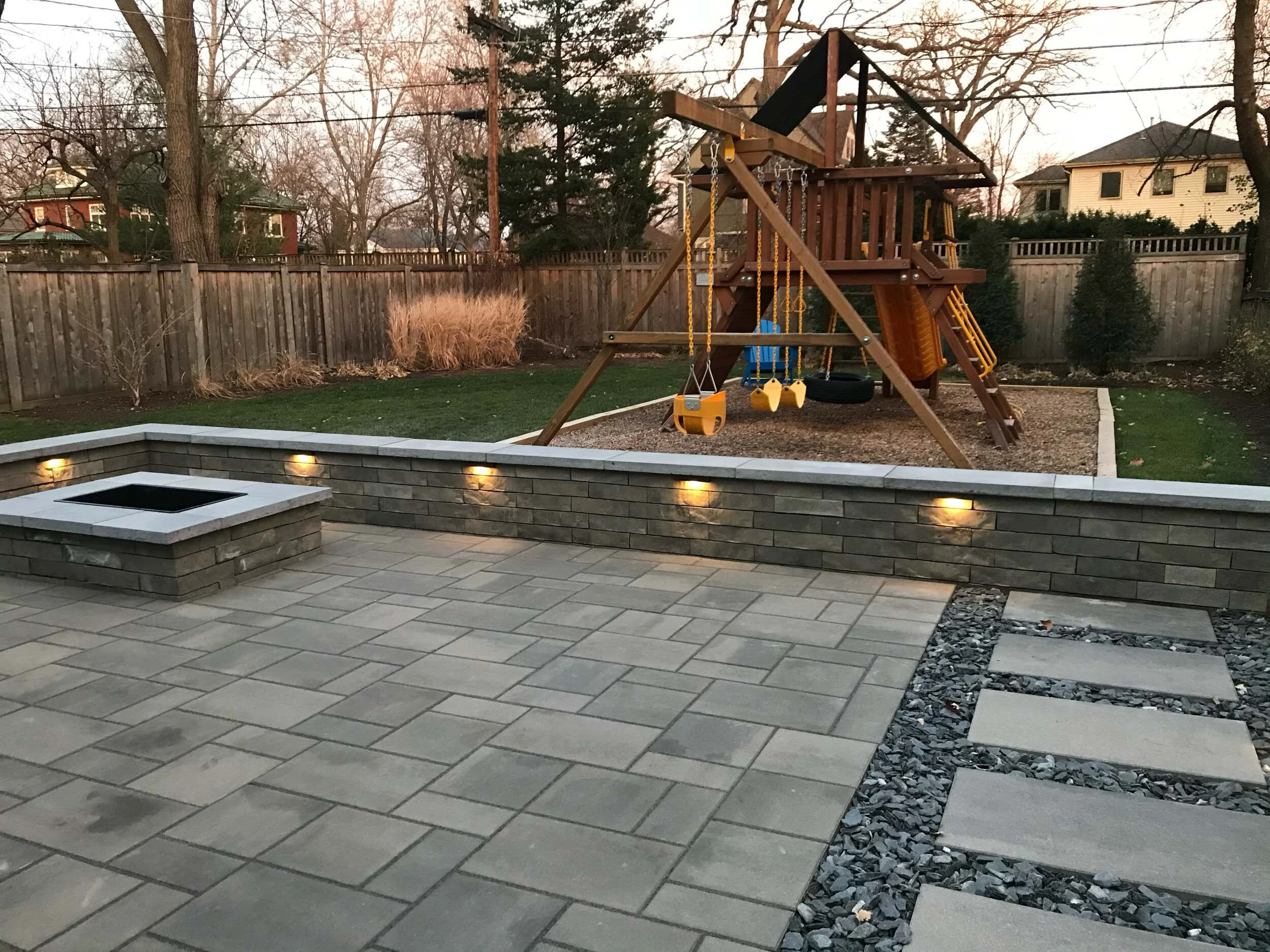
Tier 1 — Rural Residential: $78K to $118K
This is the off-Manor homeowner. AG-1 zoning, 1 to 5 acres, typically off Freemanville, Hopewell, Mayfield, Birmingham Hwy, Arnold Mill, or the Potters Road corridor. No HOA architectural review committee standing over the plan. No historic preservation overlay. The City of Milton still enforces creek-buffer setbacks (25–75 feet from named tributaries) and the equestrian ordinance, but design review on hardscape material is largely up to the homeowner.
At this tier, the 1,200 sqft deck is usually a large-format concrete paver — Techo-Bloc Blu 80, Belgard Dimensions, or a poured concrete with sawcut jointing. Coping runs cast concrete bullnose or a mid-tier travertine. The retaining wall is a segmental block system (Techo-Bloc Mini-Creta or similar) under 4 feet, so no stamped engineering is required. The fire feature is a prefabricated gas insert in a matching block surround. The pavilion foundation is a monolithic slab with anchor bolts set for the framer.
Labor and material at this tier, assuming reasonable site access and no saprolite surprises:
- Deck (1,200 sqft paver on compacted base): $42,000–$58,000
- Coping (linear foot around a 16×32 pool): $6,800–$9,400
- Retaining wall (40 lf, 3–4 ft exposed): $9,200–$14,500
- Fire feature (gas, prefab surround): $4,800–$8,200
- Pavilion foundation (16×20 slab): $6,400–$9,800
- Grading, drainage, fines, permit: $8,800–$18,100
That lands the rural-residential Milton build in the $78K to $118K range. The spread is driven almost entirely by grade change and drainage scope. A flat ridge-top lot off Potters Road comes in near the bottom. A sloped lot dropping to a Cooper Sandy Creek tributary with French drains, yard drains, and a pop-up emitter run lands near the top.
Tier 1 permit timeline: City of Milton Community Development typically returns hardscape plan review in 10–14 business days for AG-1 lots with no creek-buffer or wetland encroachment. Add 2–3 weeks if any portion of the work falls within a 75 ft named-tributary buffer — that triggers a separate environmental sign-off.
Tier 2 — Crabapple District: $95K to $142K
Crabapple is its own animal. The historic crossroads — where Crabapple Road, Mayfield, Birmingham, and Mid-Broadwell converge — sits inside a preservation overlay that reaches into hardscape material selection even when the house is a new-construction infill. Lots are tighter here (often under an acre), architectural review is real, and the material palette narrows sharply.
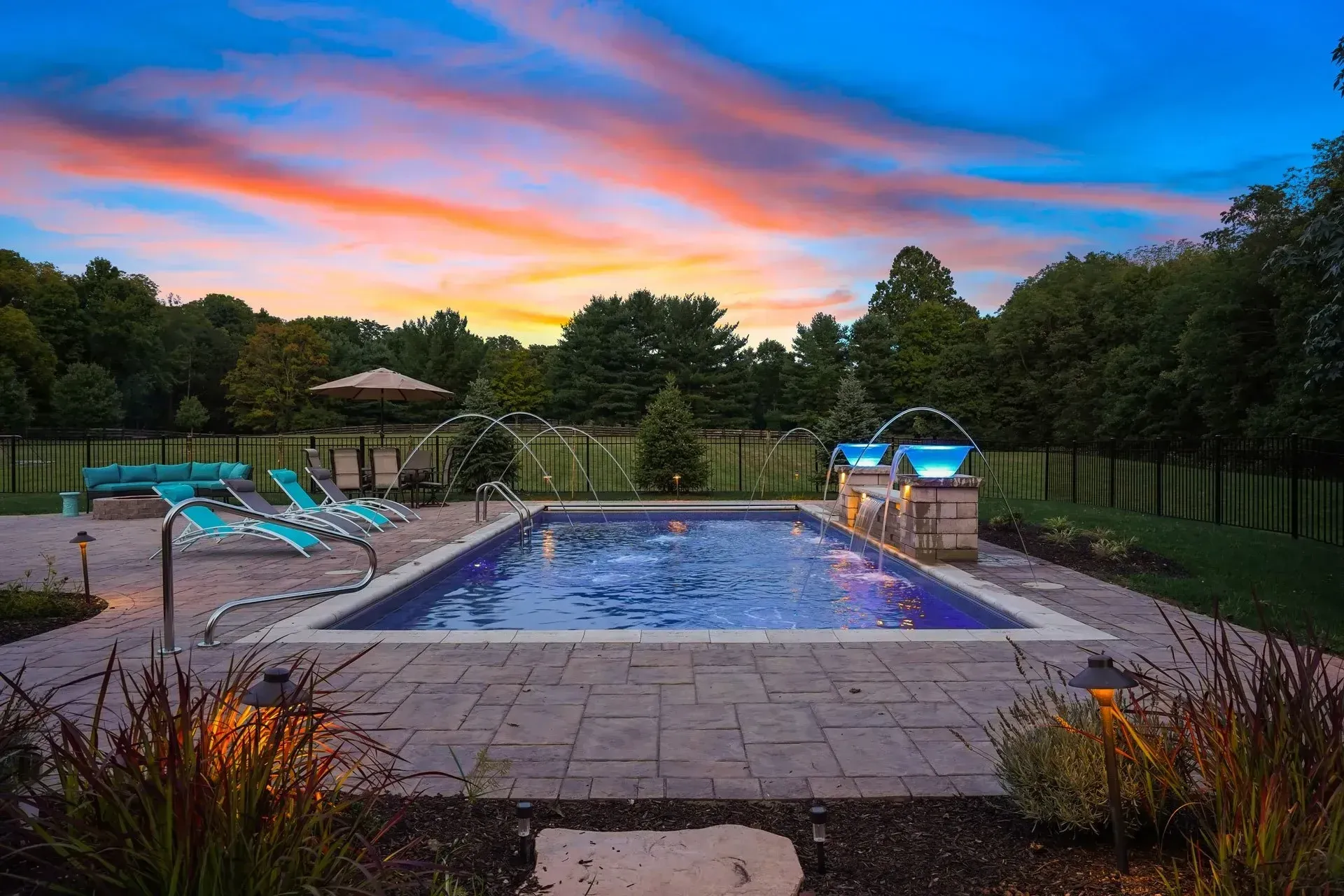
At Tier 2, the 1,200 sqft deck needs to be preservation-compatible. That knocks out the big-format modern concrete pavers most Tier 1 builds default to. What works in Crabapple: tumbled fieldstone, flagstone on mortar, reclaimed clay brick, dimensioned bluestone, or honed travertine in a tight running-bond pattern. Coping shifts to full-thickness bluestone or hand-chiseled Tennessee fieldstone. Retaining walls move from segmental block to dry-stacked or mortared natural stone — often Dixie Stone veneer over a poured structural core.
The fire feature stops being a prefab insert. In Crabapple we’re typically building a wood-burning or hybrid gas/wood stacked-stone fireplace that reads as period-compatible — that alone runs $14K to $22K built into the landscape versus the $4,800 gas prefab in Tier 1. The pavilion foundation often shifts from a modern monolithic slab to a pier-and-beam or a slab with stone veneer wrap to match the architecture.
- Deck (1,200 sqft natural stone or brick): $58,000–$78,000
- Coping (bluestone or fieldstone, full thickness): $9,800–$14,200
- Retaining wall (natural stone veneer, 40 lf): $14,500–$22,000
- Fire feature (stacked-stone fireplace): $14,000–$22,000
- Pavilion foundation (with stone wrap): $9,400–$14,800
- Grading, drainage, preservation review, permit: $11,000–$19,400
Crabapple lands in the $95K to $142K band. What’s driving the step-up isn’t labor hours — it’s material. Natural stone runs 2.2 to 3.1x the square-foot cost of a mid-tier concrete paver, and the installation labor is 40–60% higher because every piece is hand-cut to fit. You also lose the speed of a modular block retaining wall; a mortared fieldstone wall is mason work, day in, day out.
And then there’s the preservation review itself. The overlay committee can ask for mockups — a 4×4 sample panel of the stone, a coping sample, a mortar joint sample — before issuing the go-ahead. We build that review into every Crabapple quote. Ignoring it is how a $120K quote becomes a $138K quote mid-build when someone has to tear out the first 200 sqft because it read “too modern” to the committee.
Tier 3 — The Manor & Cogburn Estates: $165K to $295K
This is where Milton gets expensive in ways that surprise even people who’ve built in Sandy Springs or Buckhead. The Manor Golf Club — Paul Tesori’s routing, private gates, Architectural Review Board with a structural review committee — controls material, massing, color, and setbacks on every exterior change to a property. Cogburn Estates operates similarly, with a separate ARB that reads every hardscape plan before permit submittal.
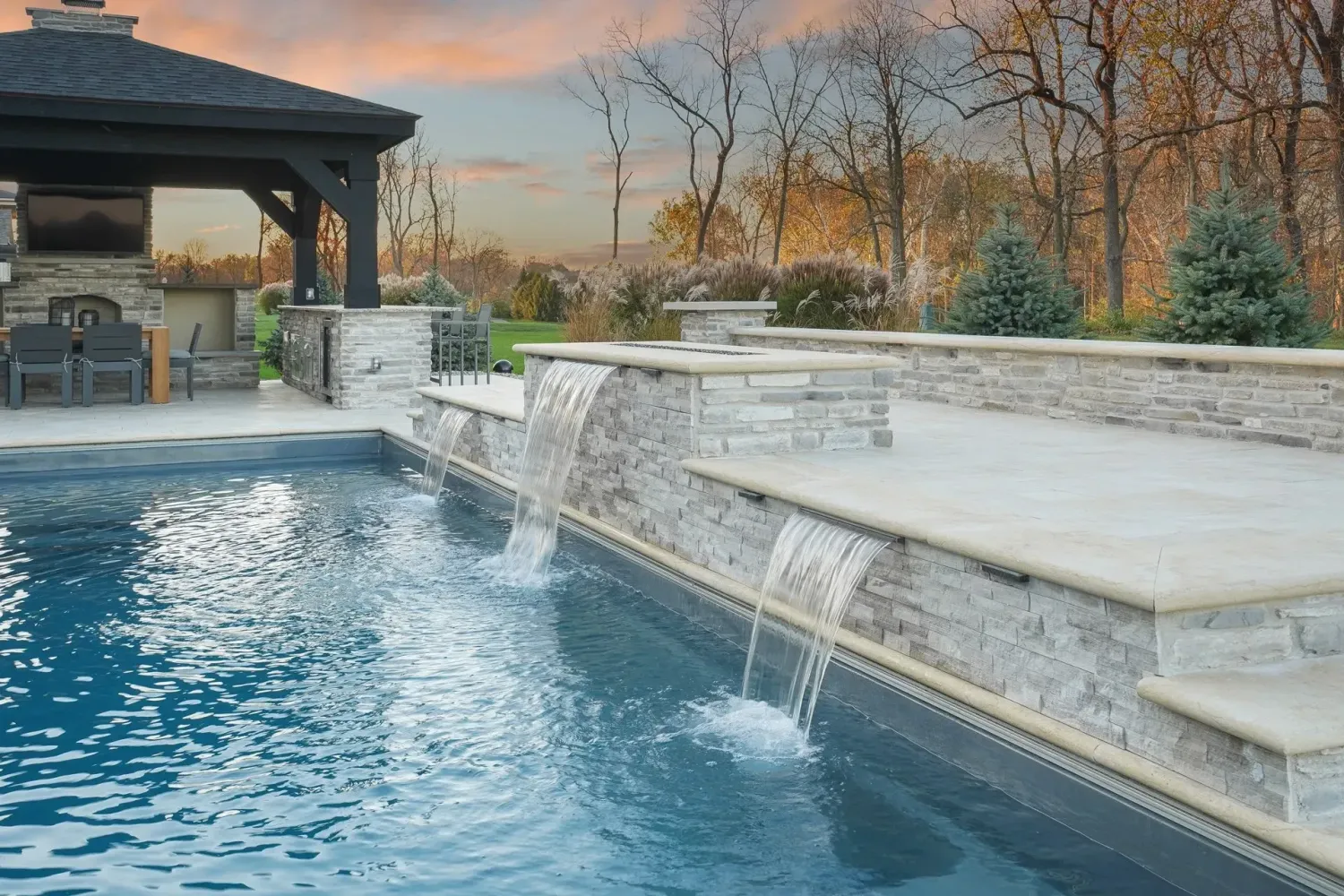
At Tier 3, the 1,200 sqft deck is always natural stone. No pavers. No poured concrete except as a structural slab hidden under stone. The approved palette is narrow: split-face Tennessee fieldstone, full-thickness bluestone, French-pattern travertine (select-grade only, not commercial), honed limestone, or hand-set cobblestone for driveway transitions. Coping is always full-thickness natural stone with a drip-edge detail. The retaining wall isn’t a wall — it’s a structural retaining system engineered and stamped, wrapped in Dixie Stone veneer or ledgestone.
The fire feature alone moves into the $28K–$48K range: a full masonry fireplace with a true flue, integrated woodbox, and veneer matched to the house. The pavilion foundation becomes an engineered slab tied into a structural post-and-beam system, often with a stone-wrapped column detail that ties back to the home’s architectural vocabulary. Cedar and copper details get specified in the ARB submittal.
- Deck (1,200 sqft full-thickness natural stone): $98,000–$152,000
- Coping (full-thickness bluestone or limestone): $14,500–$24,000
- Retaining wall (engineered, stone veneer): $28,000–$58,000
- Fire feature (full masonry fireplace): $28,000–$48,000
- Pavilion foundation (engineered, stone wrap): $18,000–$34,000
- ARB review, engineering, drainage, permit: $22,000–$38,000
That puts a Tier 3 build at $165K to $295K — and that’s before the scope creep we’re about to cover. The range inside the tier is driven by whether the ARB pushes the palette toward the high end (French travertine + limestone + copper accents) or lets it sit in the mid-palette (Tennessee fieldstone + Dixie Stone veneer).
The Manor ARB timeline: Expect 4–5 weeks from complete submittal to approval when the structural review committee is engaged — which is required for any retaining wall over 4 ft exposed, any pavilion over 160 sqft, or any fire feature with a chimney. Submittals that miss the ARB calendar (first Thursday of each month) slide to the next cycle. We build 6 weeks of ARB float into every Manor schedule.
Scope Creep at Tier 3: The 18–28% That Isn’t in the Quote
Here is the number that blindsides estate-tier buyers: on Manor and Cogburn builds, final cost lands 18% to 28% above the original approved quote, almost every time. Not because of contractor overruns. Because of ARB-mandated upgrades issued mid-build.
A typical sequence looks like this. Quote approved at $198K. ARB comes back with revisions: replace the concrete paver driveway band with hand-set cobble ($14K add). Upsize the fireplace stone from thin-veneer to full-bed ($9K add). Add a cedar fascia detail to the pavilion ($6K add). Replace the specified spec-grade travertine with select-grade only ($11K add). You’ve just added $40K — 20% — and none of it was in the contractor’s control.
The only way to handle it cleanly is to build the scope-creep allowance into the conversation from day one. On every Manor build we quote, we attach an ARB contingency line — typically 15–20% — and explain exactly what triggers it. The homeowners who understand that line up front handle the final invoice calmly. The ones who don’t end up angry at a contractor for something the ARB decided.
Scope creep at Tier 1 and Tier 2 is different in character. At Tier 1 it’s site-condition creep — saprolite, a drainage condition that shows up on excavation, a buried irrigation line nobody knew about. Budget 5–8% contingency. At Tier 2 it’s material-fit creep — the preservation committee asks for a different mortar color, a different coping profile, a tighter joint. Budget 8–12% contingency. At Tier 3 it’s ARB-mandated upgrade creep, and 18–28% is the honest number.
Material Palette: What’s Allowed in Each Tier
Here’s the palette reality, stripped to the studs. In Tier 1 rural residential, the palette is flexible. We’ve built beautiful rural Milton hardscapes in Techo-Bloc Blu 80, in Belgard Dimensions, in poured concrete with sawcut jointing, in travertine, in bluestone, in Tennessee fieldstone. If the homeowner loves it and the budget supports it, we can usually build it.
In Tier 2 Crabapple, the palette narrows to preservation-compatible natural stone. That means: honed or tumbled travertine, bluestone, Tennessee fieldstone, dimensioned flagstone, and reclaimed or new-period clay brick. Smooth-face modern concrete pavers read wrong for the overlay and will get flagged. Large-format anything (24×24 or larger) reads wrong for the overlay and will get flagged. The look the committee wants is “this could have been here in 1910” — and the material has to sell that.
In Tier 3 The Manor and Cogburn Estates, the palette is defined by the ARB submittal packet. The approved list typically includes: full-thickness split-face fieldstone, full-thickness bluestone, French-pattern natural travertine (select-grade), honed limestone, cedar (rough-sawn or S4S depending on sub-neighborhood), copper accents, and Dixie Stone veneer for wall wrap. Everything else requires a variance submittal, and variance approvals in The Manor run 50/50 at best.
A material note most homeowners miss: Dixie Stone veneer is not thin-veneer stucco product. It’s a specific full-bed natural stone veneer product with a limited distribution in the Southeast. Lead time on a matched lot of Dixie Stone for a Tier 3 Manor build regularly runs 8–12 weeks. We order it the day the ARB stamps approval, not the day framing starts.
Grade, Drainage, and the Milton Topography Tax
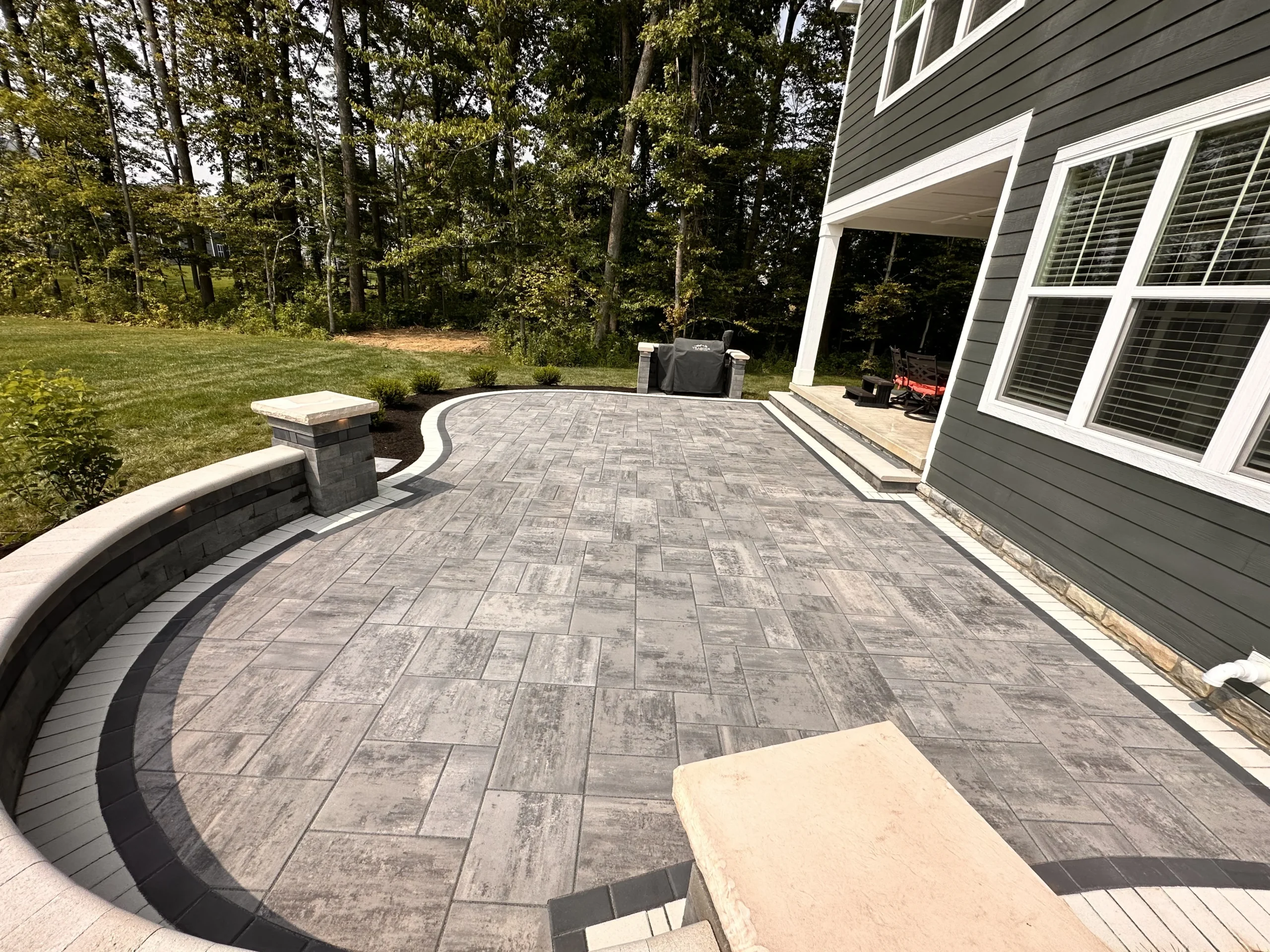
Every tier pays the Milton topography tax. It’s just biggest at Tier 3 because the estate lots have the most dramatic grade change — 10 to 14 foot drops across a back yard are common in Cogburn Estates and the back holes of The Manor. A 14-foot drop across the usable portion of the yard doesn’t just mean a big retaining wall. It means multiple terraced walls, engineered drainage behind each, a stepped pool deck, and often a dedicated storm-water management plan.
On a recent Manor build with an 11-foot total drop across the pool-deck-to-pavilion zone, the wall and drainage scope alone came in at $86,000 — more than the entire deck package at the Tier 1 rural price point. That’s not an outlier; that’s the Manor topography tax.
Drainage behind a retaining wall in Milton clay is not optional. Cecil clay doesn’t drain — it holds water, expands, and pushes on the wall face until the wall fails. We run either a gravel chimney drain with filter fabric and a perforated collection pipe, or a geosynthetic drainage composite, depending on wall height and soil conditions. On walls over 6 feet exposed we also add a geogrid reinforcement zone extending back into the retained earth at 60–70% of the wall height. None of that is visible in the finished photo. All of it is in the invoice.
On creek-corridor lots — anywhere within 75 feet of Cooper Sandy Creek, Chicken Creek, Lake Creek, or any named Etowah tributary — add a stormwater review. The City of Milton will require either infiltration bioswales, a detention volume calculation, or both before signing off on hardscape that exceeds a certain impervious threshold. For a 1,200 sqft deck plus a pavilion slab, you’re often just under the trigger. For a 1,800 sqft deck plus a pool plus a driveway addition, you’re over it — and that’s another $12K–$24K of stormwater scope.
How to Read a Milton Hardscape Quote (And What to Ask For)
If you’re getting quotes from multiple builders in Milton, here’s what a complete quote should show — and what missing items tell you about the contractor.
- Tier identification. The quote should name the tier it’s pricing (rural residential / Crabapple / Manor-Cogburn) and the material palette appropriate to that tier. A quote that specifies Techo-Bloc Blu 80 for a Manor build is going to fail ARB. A quote that specifies a full-bed fieldstone wall on a rural lot is over-engineered.
- Permit and review budget. Milton permit fees are separate from Fulton County. ARB review fees are separate from city permit fees. Both should appear as line items, not folded into “permits.”
- Drainage scope. If the quote doesn’t specify how water moves behind every retaining wall and away from every deck, the contractor hasn’t engineered the job. Ask what’s behind the wall — gravel chimney, drainage composite, perforated pipe, geogrid — and you’ll know immediately who’s building a wall that lasts and who’s building one that fails.
- Excavation allowance and saprolite contingency. In Milton, every quote should have an explicit saprolite-handling line. A quote that pretends this isn’t a risk is a quote that’s going to hit you with a change order at 30% complete.
- ARB contingency (Tier 3 only). If you’re building inside The Manor or Cogburn Estates and the quote doesn’t include a 15–20% ARB contingency line with a plain-English explanation, you’re looking at a contractor who is going to be surprised mid-build — or one who is going to surprise you mid-build.
- Natural stone lead times (Tier 2 and Tier 3). Any quote that assumes stone is on-site and ready to go is a quote you should verify. Dixie Stone, select-grade travertine, matched Tennessee fieldstone — these move on 6–12 week lead times, and the quote should reflect the procurement calendar.
And what you shouldn’t ask for: the cheapest bid. The gap between a Tier 1 and a Tier 3 build on the same property isn’t margin. It’s engineering. The gap between two Tier 3 bids is sometimes margin, sometimes missing scope. Get two complete bids from builders who have actually built inside The Manor or through the Crabapple overlay, and compare line by line. The cheap bid is almost always the one that’s missing the scope that ARB will require later.

Hardscape design and construction across 20+ cities within 30 miles of Winder, GA
Milton estate hardscape is its own discipline — ARB submittals, creek-buffer setbacks, saprolite shelves, natural stone lead times. We’ve built through all of it, and we quote it honestly, tier by tier.