
Everyone assumes a wood-burning fire pit is the “authentic” choice and gas is the compromise. In Alpharetta, the covenant stack flips that assumption: wood is technically legal and almost universally banned by the neighborhood you actually live in, while gas fire pits sail through every review board in the city without a second look.
Walk into any backyard consult in Windward, Country Club of the South, or Hutchinson Farm and the first question a homeowner asks is always some version of “which one burns better.” It’s the wrong question for this zip code. The right question is, “which one will actually get built given my HOA, my insurance carrier, and the City of Alpharetta Fire Department setback rule?” Once you line those three layers up, the answer is not close.
This post is not a national-average fire pit explainer. It is a zip-code-specific decision framework for 30004, 30005, 30009, and 30022 — the four Alpharetta ZIPs where we build — plus the small unincorporated Fulton County pocket south of Mansell Rd where the rules shift slightly in wood’s favor. We will name the covenants, the permit desks, the dollar figures, and the insurance language, because those are the four things that actually determine what gets built.
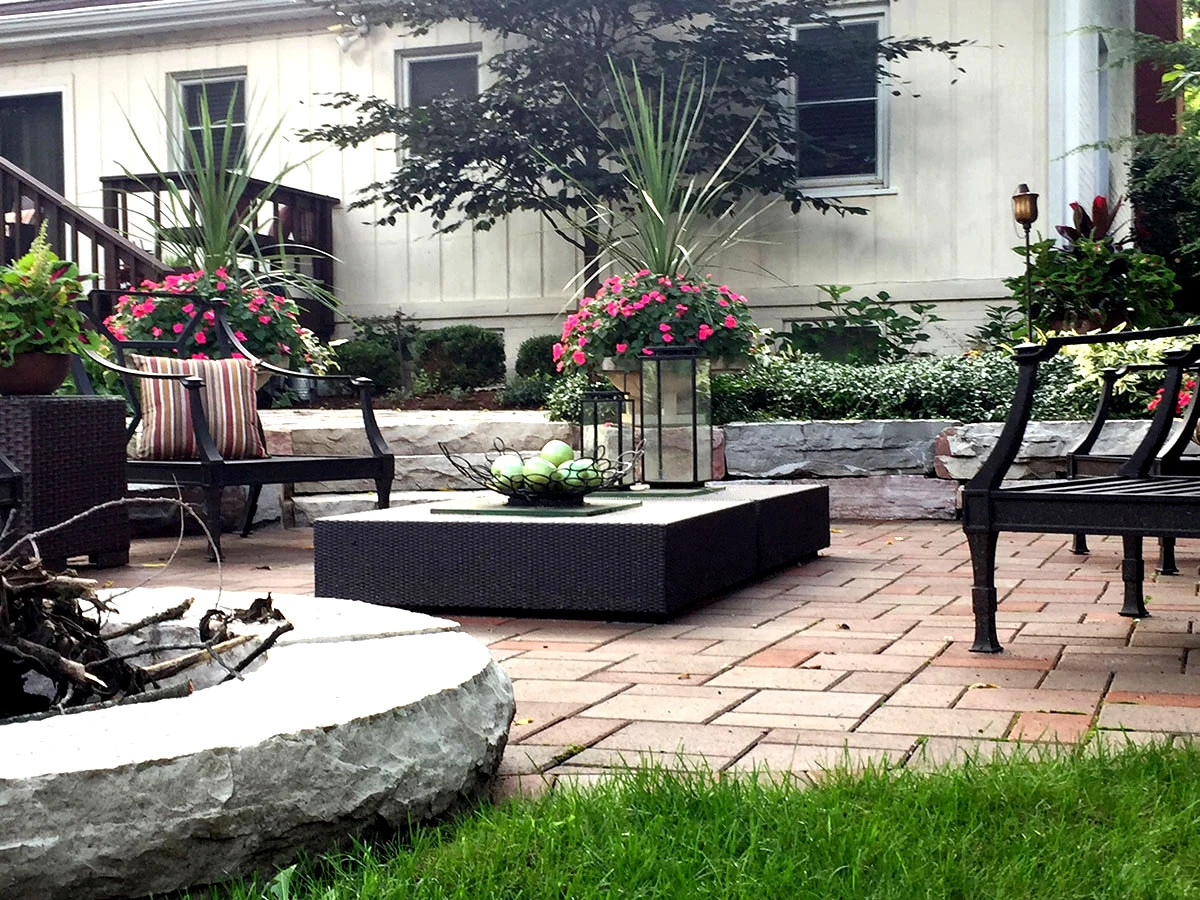
What City of Alpharetta Code Actually Says About Wood-Burning Fire Pits
Let’s start with the regulation that most homeowners get wrong. The City of Alpharetta, working through Community Development at 2 Park Plaza and the Alpharetta Fire Department, does permit open wood-burning fire features on residential property. There is no blanket ban. The binding constraints are a 10-ft property line setback, a clear overhead area free of combustible structure and tree canopy, an approved spark arrestor or equivalent screen during burn, and compliance with any active burn ban from Georgia EPD on ozone action days.
That sounds reasonable on paper. Then you layer in the second set of rules: the covenants recorded against your lot. Alpharetta’s residential fabric is dominated by 1990s-to-2005 established HOA subdivisions plus a wave of 2015-forward luxury infill. Virtually every ARB-governed neighborhood in that mix has amended its covenants to restrict or outright ban open wood-burning fire pits. The reason is not aesthetic — it is a decade of neighbor complaint logs about smoke drift, ember concern on cedar-shake and composite decks, and late-night burn noise. Boards responded with blanket prohibitions rather than case-by-case mediation.
So the practical reality for an Alpharetta homeowner in 30004, 30005, 30009, or 30022 is this: the city says yes, the subdivision says no, and the subdivision wins. A city permit cannot override a recorded covenant. Build anyway and you are looking at a cease-and-desist letter, a fine schedule that compounds weekly, and a pull-and-replace cost that typically runs $3,200 to $6,800 on top of the original install.
The code/covenant split that catches most Alpharetta homeowners: City of Alpharetta issues the permit, but your HOA’s Architectural Review Board holds veto power over whether you can actually use it. Always submit to the ARB first. A city permit without ARB approval is worthless paper in Windward, Country Club of the South, White Columns, Hutchinson Farm, Deerfield, Ashebrooke, Haynes Manor, and every other governed subdivision we have pulled records on.
The Comparison That Actually Matters in Alpharetta
Here is the side-by-side built around the three layers that determine buildability in this city — code compliance, HOA approvability, and insurance posture — not around ambient flame theater or marshmallow nostalgia.
Gas Fire Pit
- City of Alpharetta permit: over-the-counter, 2–3 business days
- ARB approval rate: effectively 100% across Windward, CCOS, Hutchinson Farm, White Columns, Deerfield
- Installed cost: $4,800–$9,400 typical
- Fuel source: natural gas tap or dedicated 100 lb propane sleeve
- Setback: covenant-driven; 6–8 ft typical, less than wood
- Insurance impact: none — classified as permanent gas appliance
- Smoke: none
- Ongoing cost: ~$0.85/hr at Georgia Power-adjacent Atlanta Gas Light rates
- Ignition: key valve or spark ignition; kids/guests can run it
- Burn ban exposure: unaffected by EPD ozone action days
Wood-Burning Fire Pit
- City of Alpharetta permit: allowed with 10-ft setback + screen
- ARB approval rate: near zero inside governed subdivisions
- Installed cost: $3,200–$6,800 typical
- Fuel source: seasoned hardwood, stored dry
- Setback: 10 ft minimum, enforced
- Insurance impact: many Georgia carriers add a rider or surcharge
- Smoke: meaningful; drift flagged in most covenant complaints
- Ongoing cost: $280–$420/cord for delivered seasoned hardwood
- Ignition: manual with tinder and kindling
- Burn ban exposure: shut down during EPD action days, Oct–Apr
Notice that wood wins on two narrow dimensions — pure material cost and the sensory argument for real flame. Gas wins on every one of the structural constraints that actually gate a project in this city. For buyers relocating into the tech corridor on 2–3 year assignments, gas also wins on the resale calculus: a gas pit is a plumbed appliance that stays with the home and reads as a luxury feature on the MLS, while a wood pit often appears as a disclosure line item the next owner’s inspector will flag.
Where the Unincorporated Fulton Pocket South of Mansell Rd Changes the Calculus
There is a narrow band of residential property inside our service area that sits on unincorporated Fulton County land rather than inside the City of Alpharetta proper. Most of it runs south of Mansell Rd near the Roswell line, with a secondary pocket east of North Point Pkwy. If your property tax bill shows Fulton County with no city line item, you are in it.
Three things change when you are unincorporated. First, the permit path is different — you file with Fulton County Environment and Community Development rather than the Alpharetta desk at 2 Park Plaza, and the calendar runs longer (we budget 3–4 weeks vs. 2–3 business days for an Alpharetta in-city wood or gas pit permit). Second, the covenant density is lower. Many of these parcels are older estate-size lots that predate the strict 1990s ARB era, so the covenant language is lighter or nonexistent. Third, the typical lot geometry — often an acre or more with mature hardwood setback — makes the 10-ft property line rule trivial to satisfy.
Inside that pocket, wood-burning becomes a real option again. Not the default, but a real option. We have built stacked-stone wood pits on three-quarter-acre lots off Rucker Rd where the nearest property line was 80 ft away and the HOA was nonexistent. The math works there. It does not work a half-mile north in Windward, where the lot is half the size and the ARB has a wood-burning restriction recorded into the 1995 covenant amendment.
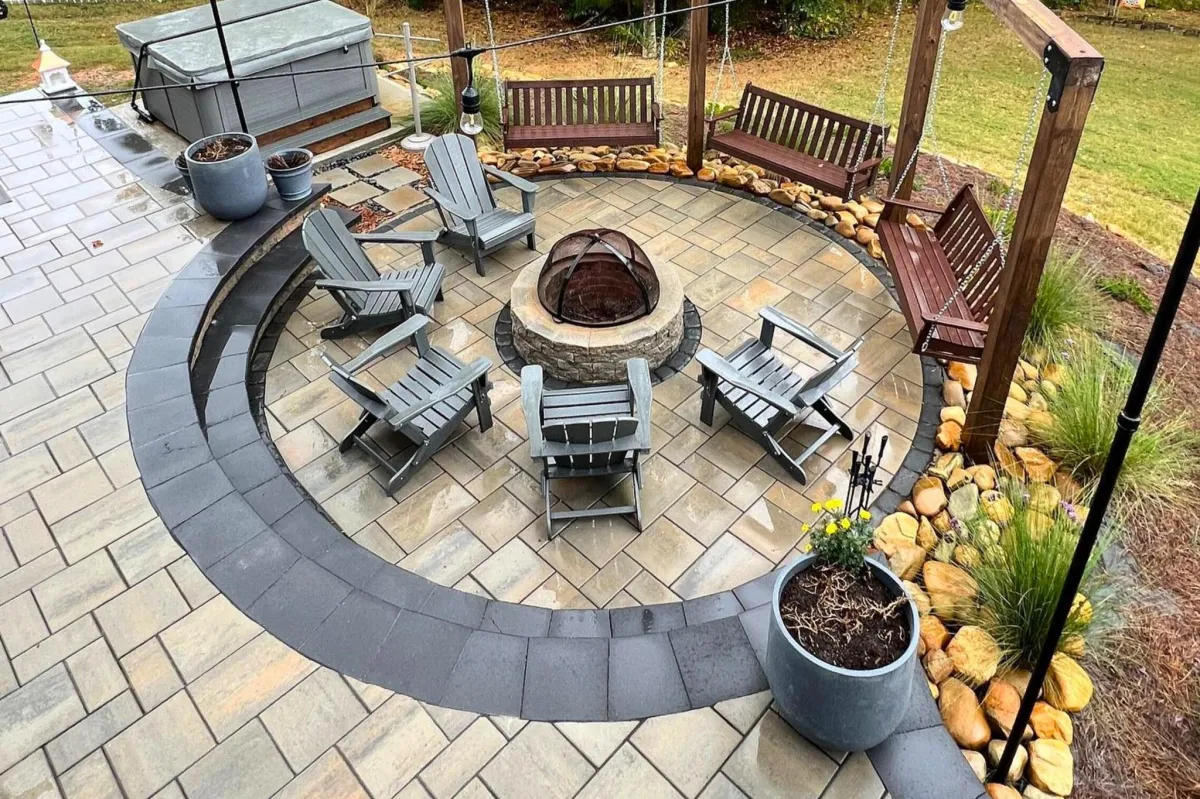
HOA-by-HOA Reality Check: The Six Subdivisions We Build In Most
Generalizations about “Alpharetta HOAs” are useless because the covenants vary lot-to-lot. Here is what we have actually encountered submitting ARB applications into the six subdivisions where we pull the most fire-feature permits.
Windward
Windward’s ARB runs one of the tighter review cycles in North Fulton — a full 3–4 week architectural review with in-person meeting cadence. Wood-burning fire pits were restricted in a mid-1990s covenant amendment after several smoke-drift complaints logged against lakefront lots. Gas pits are approved with a simple material spec and setback drawing. Submit drawings, gas line plan, and a photo reference of the proposed finish stone. Expect one revision round before stamp.
Country Club of the South
CCOS operates the strictest ARB in the market. Home values run $750K to $3.5M+ and the board protects that value aggressively. Wood fire pits are categorically prohibited. Gas pits are approved when specified with natural stone veneer or full-dimension cast concrete — no thin composite. Budget for premium finish: gas pit installs inside CCOS tend to land in the upper third of the cost band, often $8,200–$9,400.
Hutchinson Farm
Equestrian-adjacent covenant structure with fire-safety language written specifically because of proximity to wood barns on several lots. Wood prohibited. Gas approved with a 6 ft minimum setback from any wood-frame structure. Natural gas is available throughout the subdivision via the main Atlanta Gas Light feeder.
White Columns
Golf-course community with a mature ARB. Wood-burning pits restricted. Gas pits approved. Board occasionally pushes back on over-scaled fire tables — keep the feature proportional to the patio footprint and you will clear review in two weeks.
Deerfield
Deerfield’s covenants are less restrictive than the north-Alpharetta luxury subdivisions, but wood-burning features still typically require a variance. Gas is the path of least resistance. Many Deerfield lots have existing natural gas service, which simplifies the trenching scope.
Ashebrooke, Haynes Manor, Brookhollow
Smaller ARBs with narrower scope documents. All three follow the same pattern: wood discouraged or prohibited, gas approved with standard material spec submissions. The review window is shorter — typically 10–14 days — which makes these subdivisions the fastest path from contract signing to dig on a fire-feature-only project.
Avalon-adjacent luxury townhomes: The 2015-forward infill around Avalon and downtown Alpharetta introduces a different question entirely — most of these lots are too small to site any open-flame feature inside the property boundary with a compliant setback. For those buyers, we typically pivot to a built-in gas fire table integrated into a roof terrace or courtyard, which reads as architectural furniture rather than a pit and clears the compressed setback math.
Cost, Insurance, and the Math Nobody Runs Before Signing
The sticker-price gap between wood and gas looks wider than it is once you run the 10-year total cost of ownership and factor in the insurance line. A $4,800 gas pit versus a $3,200 wood pit is a $1,600 delta on day one. Here is what the next decade looks like in Alpharetta.
On the gas side, ongoing cost is natural gas consumption at roughly $0.85 per burn hour at current Atlanta Gas Light residential rates. A household that runs the pit 80 hours a year — a realistic number for a backyard that sees regular use from April through November — spends about $68 per year. Over ten years that is $680, with essentially zero maintenance beyond a seasonal burner check and an occasional lava rock refresh ($40–$60). Total decade cost: around $1,400 on top of the install.
On the wood side, seasoned hardwood in the Alpharetta market runs $280–$420 per cord delivered, and a household that burns 80 hours a year will consume roughly two-thirds of a cord annually — call it $220 per year in fuel. Add a one-time $180 ember-safe screen, occasional firebrick replacement at $90 per event, and an insurance rider that several Georgia carriers add to homeowner policies for active wood-burning features ($65–$140 per year in our client audits). The decade wood number lands at $2,900–$4,100 in carrying cost on top of install.
Run the full math and the gas pit’s lifetime cost in Alpharetta is actually lower than the wood pit’s, despite the higher install price. That is before you price the covenant risk — which is the real financial exposure nobody models on the way in.
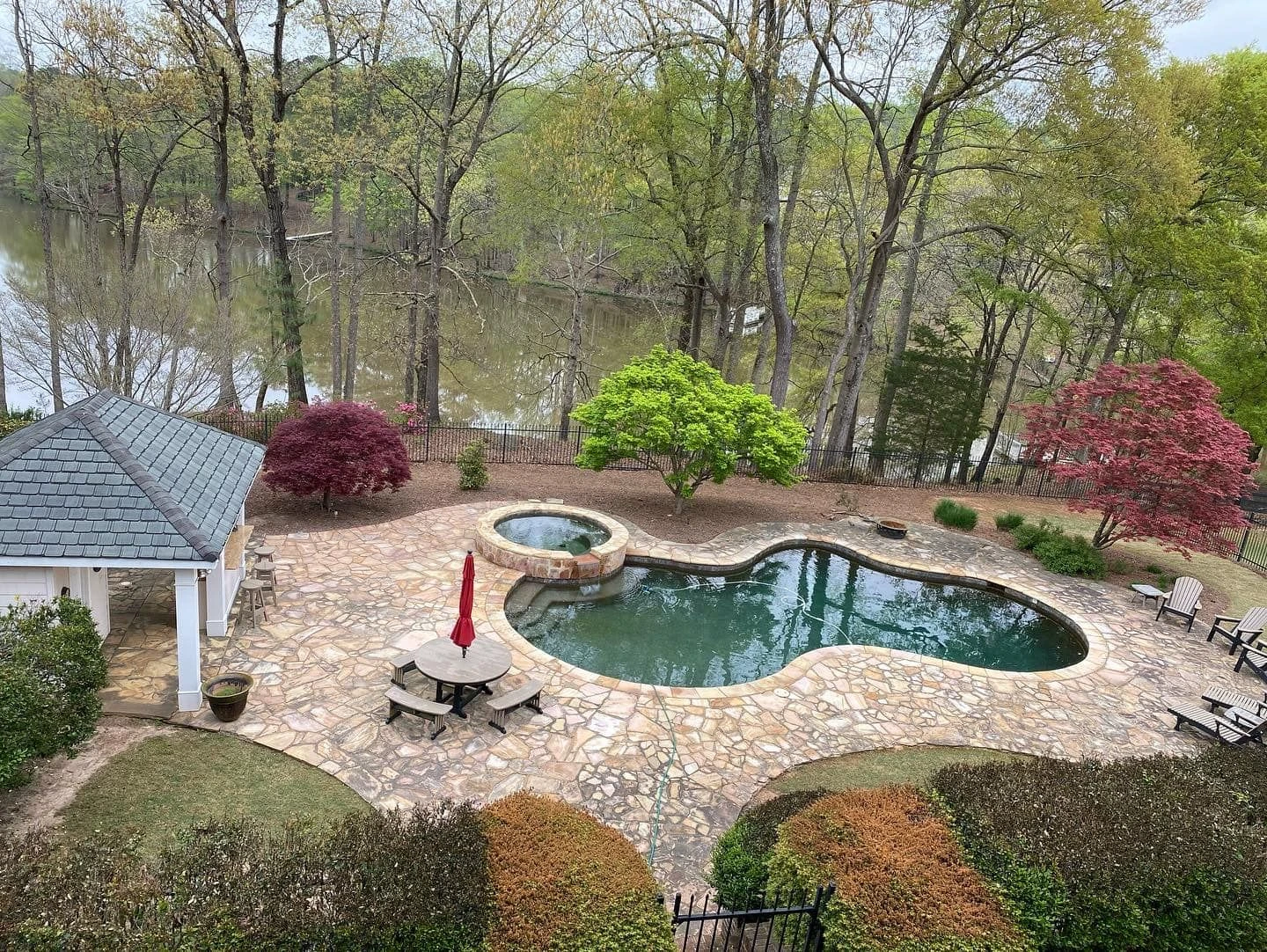
What We Recommend Based on Where You Live in Alpharetta
A straight recommendation, sorted by zip code and HOA status, based on the hundred-plus fire feature projects we have specified across North Fulton.
30004 (north Alpharetta, Milton border): Gas. The subdivision density here — Crabapple-adjacent communities, Windward, White Columns — means almost every parcel is ARB-governed. If you are on a rare unincorporated Fulton acre parcel north of Windward Pkwy with no HOA, wood becomes available; otherwise, default to gas.
30005 (southeast Alpharetta, Avalon area): Gas, and often a gas fire table rather than a traditional pit because lot sizes are tight around Avalon and the Deerfield / Haynes Bridge Rd corridor. Setback math favors built-in features integrated into the patio structure.
30009 (downtown Alpharetta, City Center): Gas. The historic district adds a layer of aesthetic review, and wood smoke is a non-starter on lots that abut Academy St and the walking district.
30022 (south Alpharetta, Johns Creek-adjacent): Mostly gas, but the highest concentration of unincorporated Fulton parcels sits here, particularly south of Mansell Rd. If the parcel checks the unincorporated-and-unrestricted boxes, wood is viable and we will build it.
Tech-corridor relocation buyers: Gas, every time. If you are moving into Alpharetta on a Microsoft or CDW corporate relocation and plan to be in the house 2–4 years before the next rotation, you want the feature that closes fast, installs during the summer construction window, and reads as a permanent luxury appliance on resale. That is a gas fire pit with a stone surround that matches the pool deck or patio, pulled under a City of Alpharetta permit in under a week.
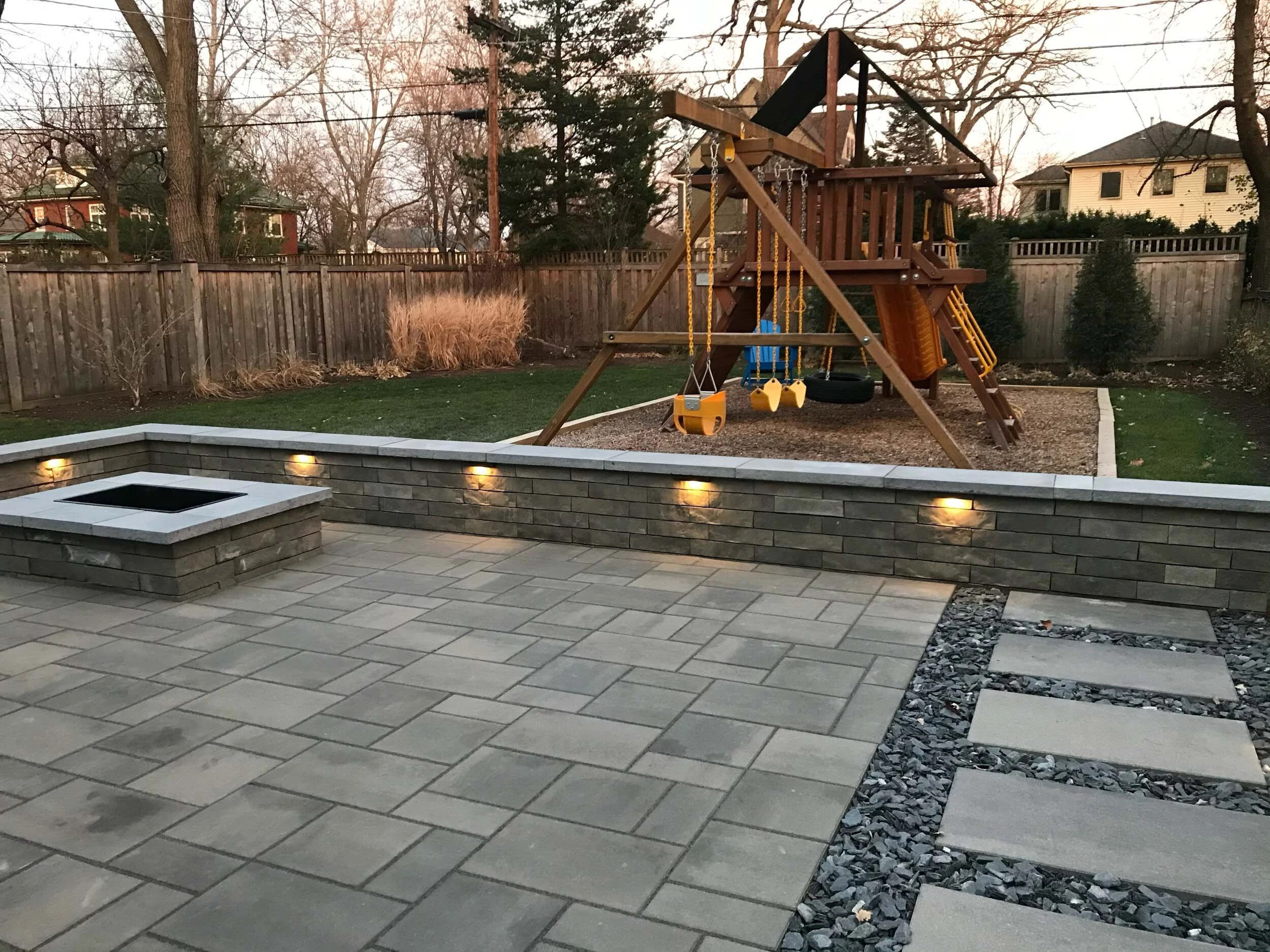
A final note on sequencing. If you are planning a pool, a patio, and a fire feature together, submit them as one ARB application. Alpharetta’s review boards — especially CCOS and Windward — look more favorably on a unified design package than on piecemeal applications stacked across six months. Cost-wise, bundling the fire pit into a larger hardscape scope typically saves 12–18% on the fire element because the trenching, electrical, and finish stone are already mobilized.
Fire pits, fireplaces, and integrated hardscape across 20+ cities within 30 miles of Winder, GA
Whether you are submitting a gas fire pit through the Windward ARB, pulling a wood pit permit on an unincorporated Fulton acre, or bundling a fire feature into a full custom pool build, we design for the covenant, code, and insurance reality of your specific Alpharetta zip code.