
Can I burn wood in my Marietta backyard, and will my homeowner’s insurance still cover me if I do? That is the question that lands on our desk nearly every week from East Cobb and Atlanta Country Club homeowners — and the honest answer is longer than a yes or a no.
Here is the short version before we go deep. Cobb County unincorporated code permits both gas and wood-burning fire features on residential property, subject to setback and combustible-clearance rules. The City of Marietta — specifically addresses inside 30060 and parts of 30064 — restricts wood-burning installations in certain zoning districts because of air-quality provisions attached to the historic downtown core. Your HOA may override both of those. And your insurance carrier will have the final word, because they are the ones writing the check when something goes wrong.
We build fire features across all six Marietta zip codes — 30060, 30062, 30064, 30066, 30067, and 30068 — and the gas-versus-wood decision is rarely about taste. It is about code, HOA paperwork, insurance endorsements, and in a lot of cases, the mature oak canopy hanging over your patio. This guide walks through every layer so you can make the call before you sign a contract.
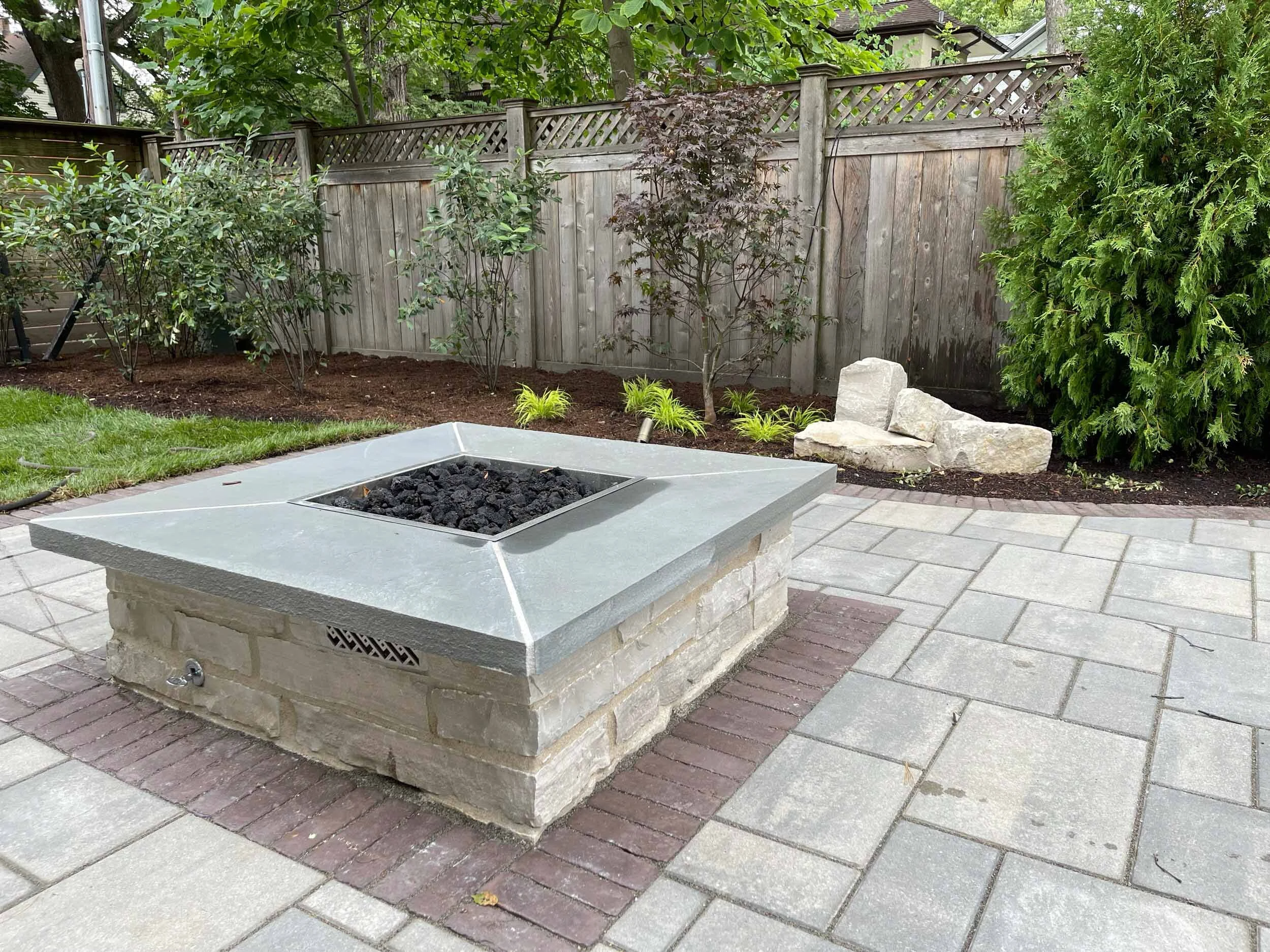
Cobb County Code: What Unincorporated Marietta Actually Allows
If your property address shows unincorporated Cobb County (most of 30062, 30066, 30068, and chunks of 30067), permits run through Cobb County Community Development at 1150 Powder Springs Street. For residential fire features, the county pulls code language from the International Residential Code with local amendments. Both gas and wood-burning installations are allowed.
Gas fire pits connected to a home’s natural-gas line require a permit when the line is tapped or extended. A self-contained propane fire pit — tank under the unit, no plumbing — generally does not trigger a permit unless it sits on a permitted structure. Wood-burning fireplaces and fire pits do not require a county permit for the fire feature itself on residential property, but any attached masonry structure over 30 inches tall, any chimney, or any roofed pavilion around it absolutely does.
The setback rule most people miss: combustible material clearance. Cobb requires a minimum of 10 feet from any structure for open wood burning and 15 feet from property lines in most residential zones. A wood fire pit tucked 6 feet from the house — the way it looks good in a magazine — is not legal in Cobb. It is also a fire-marshal complaint waiting for the first neighbor who does not love the smell of hickory smoke at 9 p.m.
Cobb County clearance spec: Open wood-burning fire features require 10 ft from any combustible structure (including wood decks and fences) and 15 ft from property lines. Gas fire features with UL-listed burners drop to 5 ft from structures per most manufacturer specs.
City of Marietta: The 30060 and 30064 Air-Quality Catch
Here is where the map gets weird. The incorporated City of Marietta — roughly the area inside the Loop around Marietta Square, bounded by Marietta Parkway and pieces of Powder Springs Street — operates under its own municipal code on top of Cobb County’s. Within the historic downtown overlay and certain residential districts in 30060 and the west side of 30064, outdoor wood-burning installations require additional review and, in a few zoning categories, are prohibited outright.
The reason is not aesthetic. The overlay incorporates air-quality provisions because Marietta Square and the surrounding dense-residential streets sit in a small valley pocket where smoke settles on still nights. If you own a 1920s bungalow three blocks off the Square and your neighbor is 18 feet from your property line, a wood-burning fire pit is not going to clear the city’s review. A sealed gas fire feature almost always will.
If your property is in the City of Marietta limits (not unincorporated Cobb), call the Marietta Development Services office before you pick a style. A 90-second phone call saves a $3,000 rebuild.
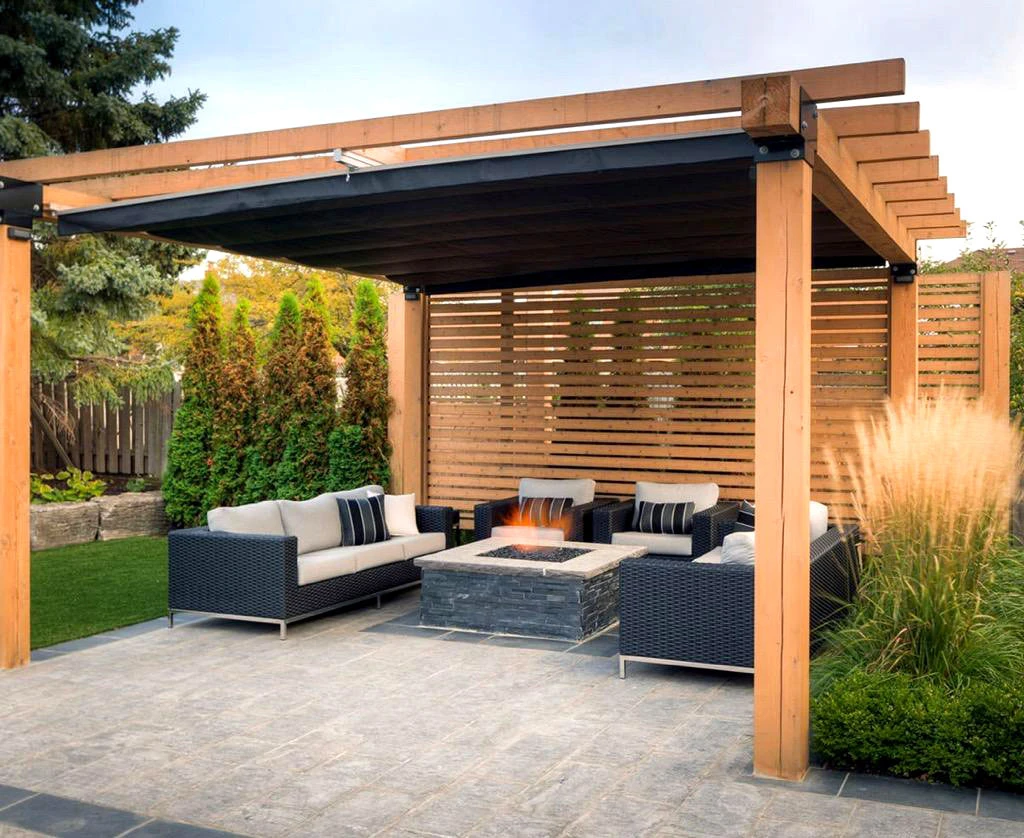
HOA Reality: Atlanta Country Club, Indian Hills, and the Covenants That Actually Run This Town
Cobb code and Marietta code are the floor. Your HOA is usually the ceiling. Marietta has one of the strongest HOA cultures in Metro Atlanta, and fire-feature covenants are one of the most common sticking points we hit on a design review.
Atlanta Country Club (30067) — gas only. The architectural review committee does not approve wood-burning installations. Full stop. The stated reason in their current guidelines is fire safety combined with chimney-height aesthetic restrictions; the practical reason is the tree canopy and lot density. A gas fire pit or gas-log fireplace runs through their process cleanly.
Indian Hills (parts of 30068) — either is allowed, but wood-burning fireplaces require a chimney spec sheet and a spark-arrestor verification. Gas fire pits require only the plumbing layout and a setback drawing. The process takes 3-4 weeks on average.
Marietta Country Club, Brookstone, Burnt Hickory, Walton Woods — rules vary by phase and year built. Most allow both, with Brookstone and Walton Woods requiring a combustible-material clearance statement. Chestnut Hill and Seven Oaks typically approve either with standard setback documentation.
Pull your covenants. Read them before you pull a color swatch. We have had clients waste two months on a wood-burning design because nobody flagged the HOA language on page 47.
The Insurance Math: Wood Adds $220-$420 a Year, and Some Carriers Just Say No
This is the conversation most contractors will not have with you. We will, because the downstream cost of getting it wrong lands on the homeowner, not the builder.
On a standard HO-3 policy in Cobb County, adding a wood-burning fire feature as a permanent backyard structure typically increases the annual premium by $220 to $420, depending on the carrier, the proximity to structures, and the tree canopy on the lot. State Farm, Allstate, and Travelers quote in that range consistently. A freestanding gas fire pit — UL-listed burner, sealed propane or natural gas — generally adds $0 to $60, because the carriers treat it the same as a gas grill.
The bigger issue is the decline. We have seen four separate homeowners in East Cobb (primarily 30068 and 30066) get their wood-burning fire feature flagged on a renewal inspection, with the carrier requiring either removal or a policy cancellation. The trigger is almost always the same: a wood-burning installation on a lot with heavy mature canopy — the signature East Cobb oak and tulip poplar cover that makes those neighborhoods beautiful — combined with a setback shorter than the carrier’s internal spec.
Ask your agent before you build. Get the endorsement in writing. We have had clients save the quote from their agent and drop it in a folder with the permit — it is the cheapest insurance document you will ever generate.
Insurance quick-check: Before signing a fire-feature contract, email your agent three things — the fuel type (gas/wood), the distance from the nearest structure, and whether the feature will be covered by a pavilion or pergola. Get their premium impact in writing. Takes 48 hours; saves years of headache.
Cobb EMC, Marietta Power, and the Gas-Line Question
One detail specific to Marietta that gets missed in most fire-feature guides: your utility service. Marietta residents inside the city limits pull electric service from Marietta Power. Most unincorporated Cobb residents pull from Cobb EMC, which runs a distinct 240V service standard from Georgia Power. Natural gas runs through Atlanta Gas Light across the board, but the tap-in coordination differs.
For a gas fire pit or outdoor fireplace, we coordinate the gas tap either at the meter or at an existing line run to the home. On a house built before 1990 — which covers most of East Cobb’s classic ranch inventory — the gas line was sized for the original appliances plus a 20% buffer. Adding a 65,000 BTU gas fire pit or a 90,000 BTU fireplace gas-log set can push some older service sizes past their spec, requiring a meter upgrade. That is a $400-$900 conversation with Atlanta Gas Light before the fire feature gets installed.
On the electric side, igniters and fan-assisted vents for outdoor fireplaces typically run on a dedicated 120V circuit. We pull that circuit from the main panel with the homeowner’s electrician — Cobb EMC’s inspection standard wants the circuit labeled and within reach of the service disconnect.
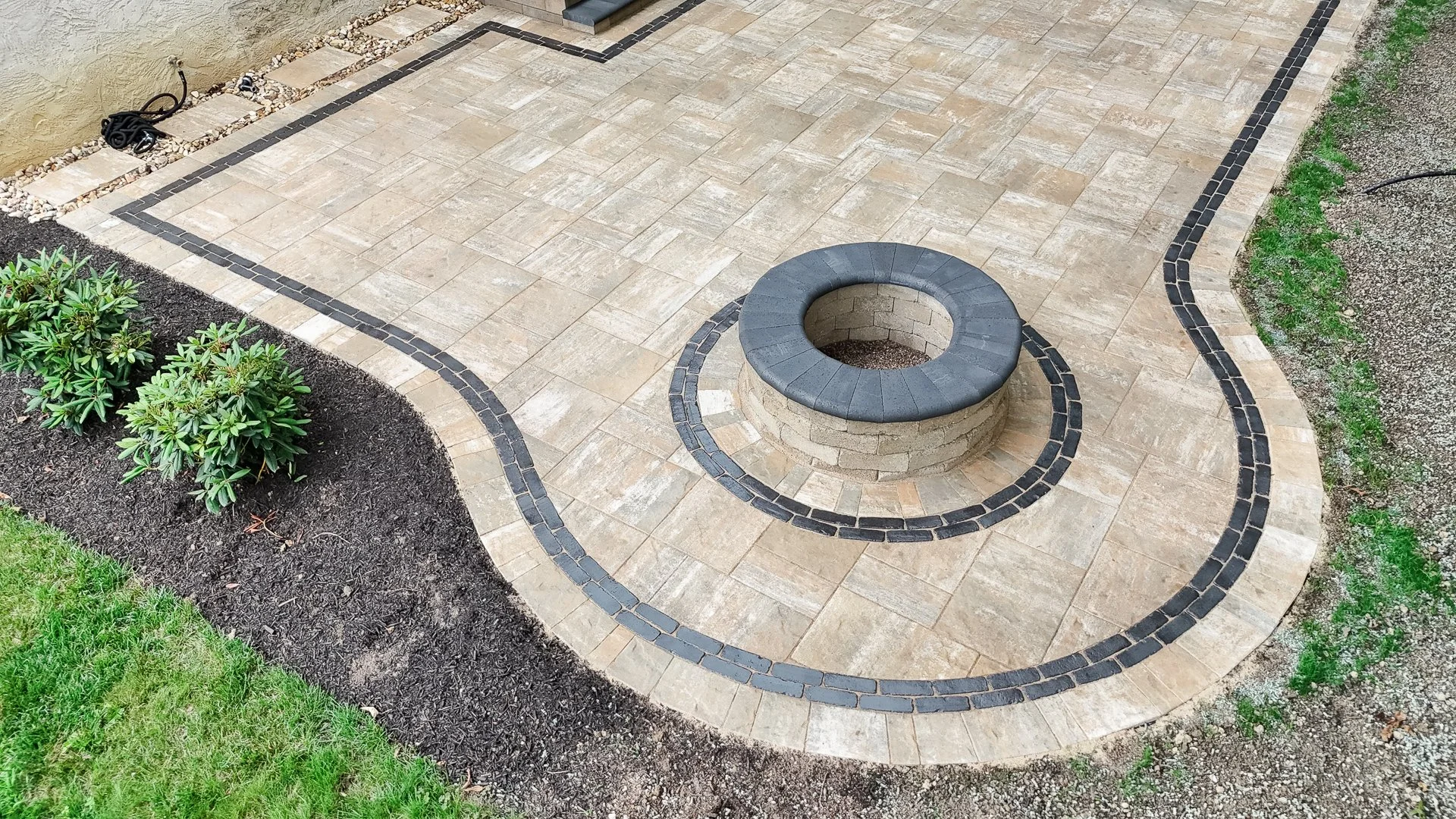
Gas vs Wood: The Honest Comparison Grid
Here is how the two fuel types actually compare when you hold up code, HOA, insurance, cost, and experience side by side for a Marietta lot.
Upfront cost
Gas: $3,800-$8,500 for a built-in fire pit with stone surround and 65,000 BTU burner. $9,500-$22,000 for a full outdoor fireplace with gas log set. Wood: $4,200-$9,000 for a stone fire pit with a spark-arrestor screen. $12,000-$28,000 for a full masonry wood-burning fireplace with a 15-foot chimney meeting the 2-foot-above-roofline rule.
Operating cost
Gas runs about $0.90 to $1.40 per hour on natural gas at current Atlanta Gas Light rates for a 65,000 BTU burner. Wood costs $0 if you have a wooded lot and a chainsaw, or $8-$14 per bundle of seasoned hardwood at local retailers. Wood wins on pure fuel cost. Gas wins on everything else about running it.
Time to flame
Gas: 15 seconds, click the switch. Wood: 20-35 minutes to build, light, and get past the smoke-heavy opening phase. For a Tuesday-night glass of wine, that difference is the entire decision.
Code and HOA clearance
Gas clears almost every Marietta HOA and every Cobb setback rule with room to spare. Wood clears unincorporated Cobb on a generous lot, clears about half of Marietta HOAs, and does not clear Atlanta Country Club or the City of Marietta air-quality overlay.
Insurance impact
Gas: near-zero premium change, near-zero decline risk. Wood: $220-$420 a year premium increase, meaningful decline risk in mature-canopy East Cobb neighborhoods.
Experience
Wood delivers what gas cannot: the crackle, the real flame shape, the smell of a real fire. For some homeowners that is the entire point. For others it is the reason they never sit out there — the 30-minute ignition, the smoke in the hair, the neighbor complaint. Pick the one that matches how you actually use a backyard, not the one that photographs better.
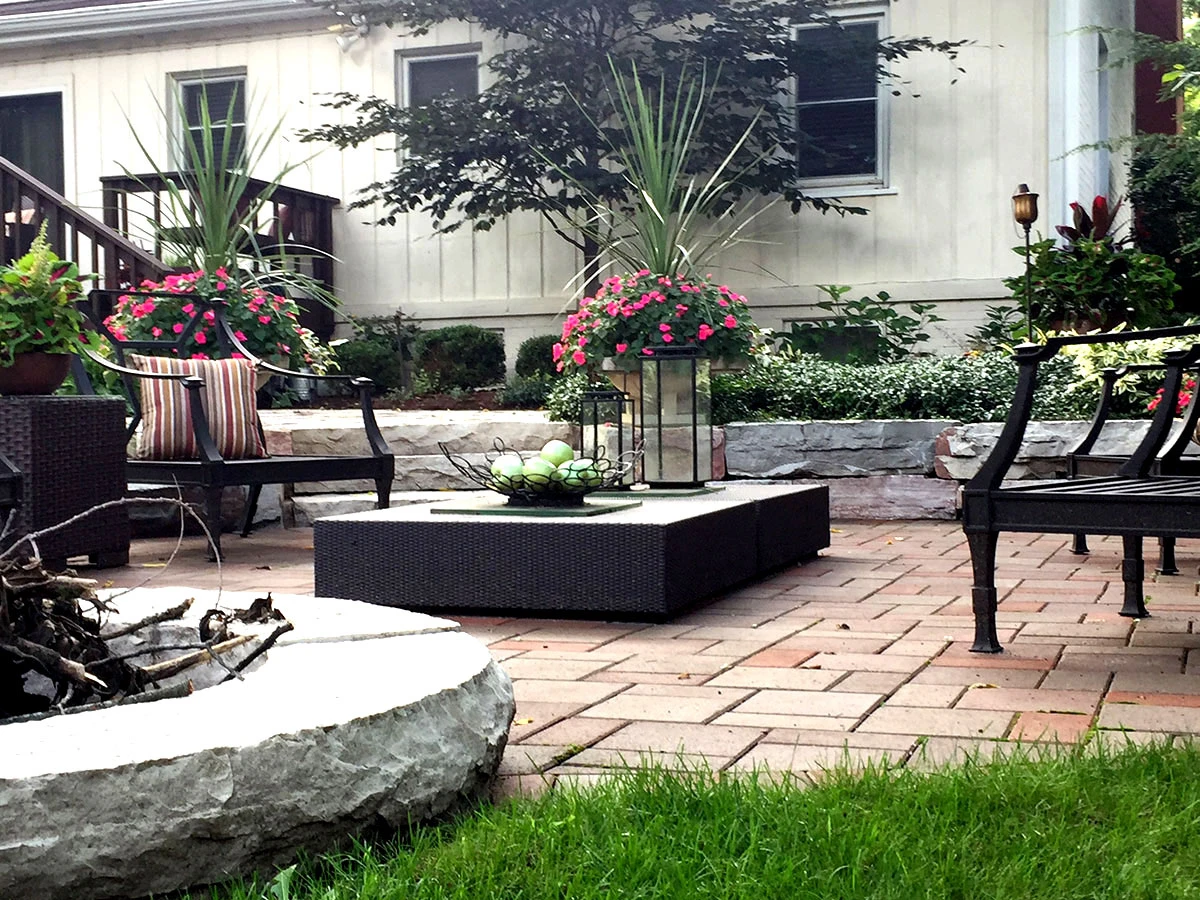
Kennesaw Mountain, Wind, and the Mountainside-Lot Problem
If your lot sits on the north side of Marietta — anywhere in the 30064 stretch running toward Kennesaw Mountain National Battlefield Park — there is a wind-pattern variable that gas-versus-wood nobody talks about. The mountain rises to 1,808 feet against Marietta’s general 1,118-foot elevation. The grade change creates persistent afternoon downdrafts on the southern and eastern slopes.
A wood fire pit on a mountainside lot in 30064 can flare and throw embers farther than the same unit would on a flat East Cobb lot. We have measured wind-driven ember travel in client backyards during installs, and on a gusty October afternoon, embers move. Spark-arrestor screens handle most of that. Downdraft on a masonry chimney is a different animal — an open flue on a wood-burning fireplace can pull smoke backward into a seating area when the pressure flips.
On those specific lots, we push homeowners toward gas unless they have both a large setback and a chimney design with a proper draft calculation. A 120,000 BTU gas burner gives you the heat output of a wood fire without any of the downdraft or ember physics.
Putting It Together: Which Feature Wins on Your Marietta Lot
After several hundred Marietta fire-feature builds, here is the pattern that holds up.
Go gas if: you live in the City of Marietta limits; your HOA is Atlanta Country Club or any comparable high-covenant neighborhood; your insurance carrier has already flagged mature canopy on your lot; your setback to the house is under 12 feet; you want to use the feature more than 10 times a year without treating each session like a project; you are on a mountainside lot in 30064 or the Kennesaw Mountain corridor.
Go wood if: you are on a larger unincorporated Cobb lot with generous setbacks and no canopy issue; your HOA permits it and you have the covenant language in hand; your insurance agent has already confirmed the endorsement; you value the actual experience of a wood fire and use the backyard seasonally rather than nightly; you have storage for seasoned hardwood and do not mind the ash-management routine.
For a lot of Marietta homeowners, the right answer is a hybrid build — a gas fire pit as the primary entertainment zone close to the house for Tuesday nights, plus a smaller wood-burning fire ring at the back of the property for the occasional weekend fire. Different setbacks, different use patterns, both covered cleanly by code and HOA when the design shows them as distinct features.
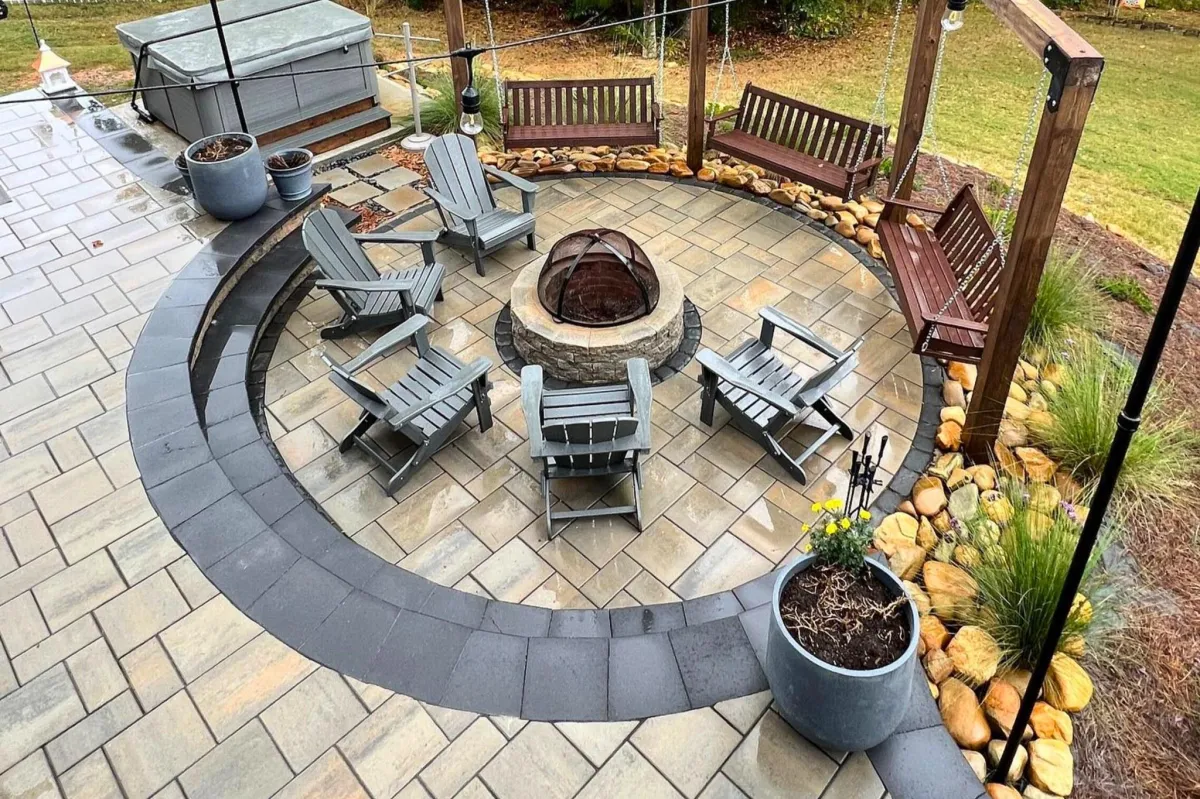
The worst fire-feature projects we see are the ones where the design came first and the code check came last. The best ones — and the ones that still look good five years later — start with three phone calls. Cobb County Community Development or the City of Marietta office, your HOA architectural review contact, and your insurance agent. Those three calls take a combined 45 minutes. They shape the entire design.
Once you have those three answers in hand, the gas-versus-wood question usually answers itself. On a 30068 East Cobb lot with heavy canopy and a conservative carrier, gas. On a two-acre unincorporated Cobb lot with a clear sky and a flexible HOA, wood is still beautiful. On a City of Marietta address anywhere near the Square, gas is the only clean path.
We build both. We build them to code. And we build them with the paper trail your insurance carrier will want to see if a claim ever lands on their desk. The goal is a fire feature you actually use — on a Tuesday, in October, without a permit problem, an HOA letter, or a premium surprise.
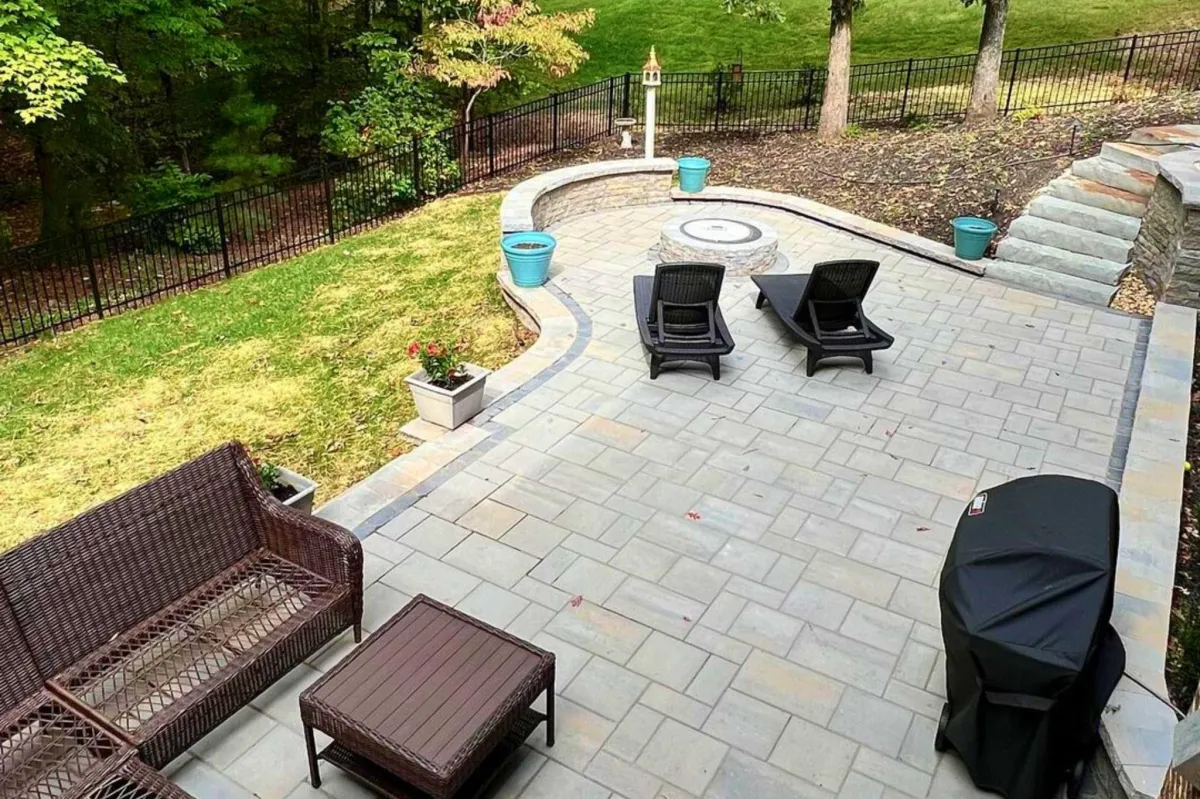
Fire pits and fireplaces across 20+ cities within 30 miles of Winder, GA
Every Marietta fire-feature build starts with the three calls — Cobb code, HOA review, insurance carrier. We run that playbook on every project, so you get a fire feature that is legal, covered, and built to sit in your backyard for the next 30 years.