
Over a ten-year ownership window, a Cumming homeowner running a 5-burner built-in grill, a side burner, and a patio heater will burn through roughly $3,800 in natural gas or $8,400 in propane — a $4,600 spread that almost nobody runs the numbers on before the concrete is poured.
That single decision — utility line vs buried tank — drives more long-term cost than your grill brand, your countertop slab, or your pavilion framing combined. And yet Forsyth County homeowners often make it in the last ten minutes of a design meeting, usually by defaulting to whichever option their neighbor used.
This post is the full cost-and-feasibility breakdown specifically for Cumming, GA. Sawnee EMC delivers the electricity here — but Sawnee doesn’t touch gas. Natural gas in Forsyth County runs through Atlanta Gas Light mains, and whether a line reaches your cul-de-sac is a lot less certain than it is inside I-285. We’ll walk the connection costs, the buried-tank economics, the code points that matter, the neighborhood-by-neighborhood reality check, and the decision tree you can actually use.
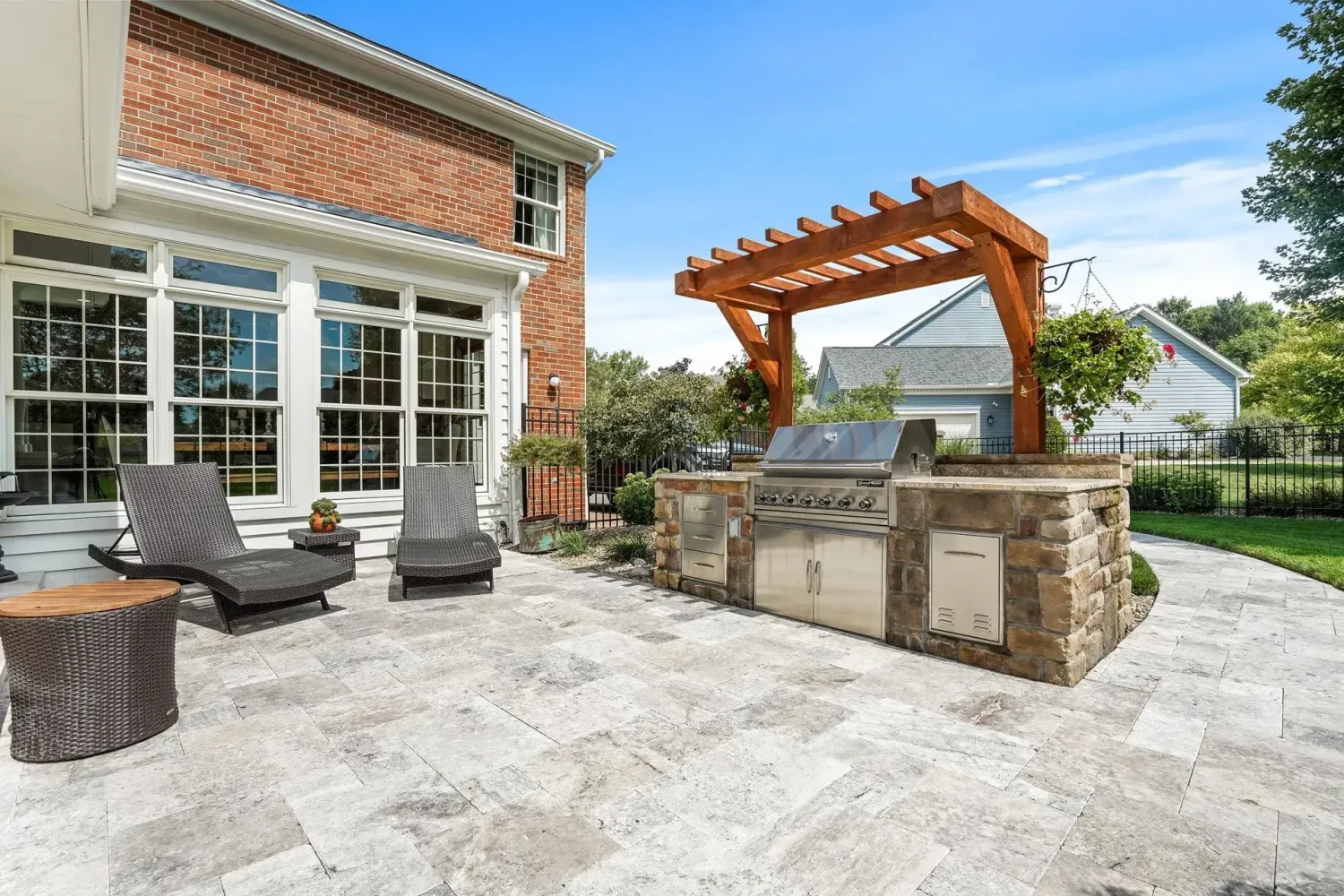
Step 1 — Confirm Whether Natural Gas Even Reaches Your Street
Before any cost comparison matters, you need to know if natural gas is physically available at your property line. In Forsyth County, the answer is “sometimes.” The county is the fastest-growing in Georgia at roughly 260,000 residents, and utility build-out has not kept pace with subdivision rollouts. Large tracts are still entirely propane-fed.
Natural gas service in Cumming comes from Atlanta Gas Light (the pipeline operator) with billing handled by a marketer of your choice — Gas South, SCANA, Infinite Energy, and others. Sawnee EMC, despite being one of the largest electric membership cooperatives in Georgia, does not sell or deliver gas. That trips up homeowners who assume “the utility” will just run whatever they need.
Here is the process we walk every Cumming client through before the design is finalized:
- Pull up the AGL availability map. Atlanta Gas Light publishes a service-territory lookup by address. Enter your property and it will show whether a main line runs on your street.
- Call AGL New Construction at the number on the map result. A field rep will confirm the nearest main, the distance from the main to your meter set, and whether your street has easement access.
- Ask for a written cost estimate. This is the single most important step — AGL will give you a dollar figure for the connection before you commit.
- Check your subdivision covenants. Some HOAs (notably St. Marlo and Polo Fields) have gas-line easement rules that require architectural review board sign-off on the trench route.
If AGL comes back with “no main within 500 feet,” the conversation shifts instantly. You are a propane household. Skip to Step 4.
Sawnee EMC vs Atlanta Gas Light: Sawnee handles your 240V electric service for the grill ignition, the side-burner spark, the refrigerator, and the pavilion lights — but the fuel itself comes from AGL (natural gas) or a propane supplier. Never assume one utility covers both.
Step 2 — Price the Natural Gas Connection (The AGL Number)
If a main runs on your street, the connection cost breaks into two pieces:
Piece A — AGL tap and meter set. Atlanta Gas Light runs service from the main to a meter on the side of your house. For a standard residential tap within 60 feet of the main, current Cumming-area pricing lands between $380 and $680. Longer runs — common in Vickery and Hampton Park where lots push 0.5 acres — add roughly $22 per linear foot beyond the base footage.
Piece B — line from meter to outdoor kitchen. This is the part AGL does NOT do. It is your project. A licensed plumber trenches a dedicated black-iron or CSST line from the meter set to the grill island. For most Cumming lots that run lands between $1,400 and $2,200 including:
- Permit through the Forsyth County Dept. of Planning & Community Development at 110 E. Main St., Cumming
- Trenching (typically 18-inch depth minimum, 24 inches where it crosses vehicle paths)
- 3/4-inch CSST or black iron with tracer wire
- Shutoff valve at the island plus a second shutoff at the meter
- Pressure test and county inspection before backfill
Add it up and a full natural-gas install in Cumming runs $1,780 to $2,880 all-in. That is the number that goes in your comparison column — not just the AGL tap fee.
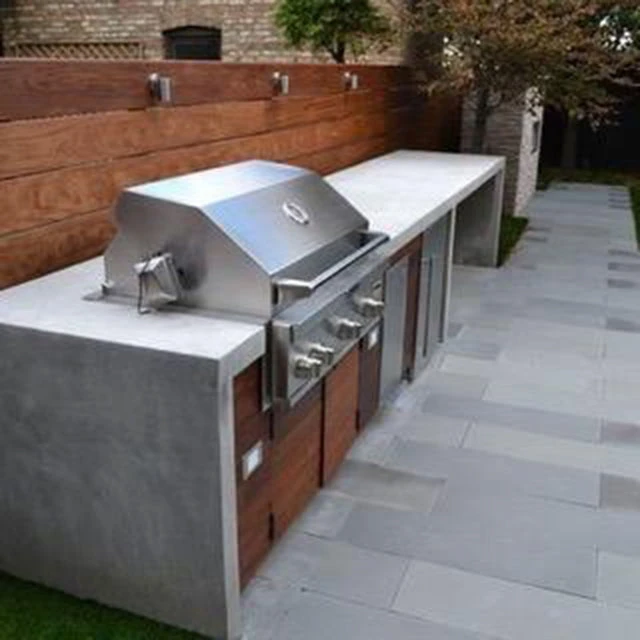
Step 3 — Price the Propane Alternative (The Buried Tank Math)
Propane in Forsyth County is dominated by three suppliers: AmeriGas, Suburban Propane, and regional operator Blossman Gas. Any of the three will sell or lease you a tank. The structure you pick matters as much as the fuel price.
Option A — buy the tank outright. A 500-gallon ASME-rated buried tank installed with anode bag, riser, and regulator runs $1,800 to $2,800 in Cumming. You own it, you can buy fuel from anyone, and resale is yours to keep. The upfront is higher but you avoid the lease trap.
Option B — lease the tank. Most suppliers will lease you a 500-gallon tank for $60 to $180 per year. Upfront cost drops to near zero. The catch: you can only buy fuel from the leasing company, and they set the per-gallon rate. Over ten years, lease customers almost always pay more total than owners, because the per-gallon markup exceeds the tank amortization.
Fuel price. Propane spot pricing in Forsyth County has run between $3.20 and $4.40 per gallon over the past three years, averaging around $3.80. Heavy winter demand (Cumming averages 22 freeze events per year) pushes the price up November through February.
A 500-gallon tank is actually filled to 400 gallons (80% fill rule — propane expands with heat). A typical outdoor-kitchen-only household uses 180-240 gallons per year. A household with a grill plus a patio heater plus a pool heater quickly jumps to 400-600 gallons per year and starts burning through a full tank per heating season.
Step 4 — Run the Ten-Year Comparison
Here is the apples-to-apples calculation we run for every Cumming client. Assumptions: one 5-burner built-in grill, one side burner, one 40,000-BTU patio heater, used year-round at typical north-Georgia rates (summer grilling 3x per week, winter grilling 1x per week, heater used 20 nights per year).
Annual fuel consumption: approximately 155 therms or ~168 gallons of propane equivalent.
- Natural gas (AGL rate): roughly $1.40 per therm all-in including delivery and taxes. Annual fuel cost: $217. Ten-year fuel cost: $2,170. Add 3% annual inflation: ~$2,490. Upfront: $2,200 average. Total 10-year cost: approximately $4,690.
- Propane (owned tank): 168 gallons at $3.80 average = $638 annually. Ten-year fuel cost: $6,380 at flat pricing or ~$7,330 with 3% inflation. Upfront: $2,300 average. Total 10-year cost: approximately $9,630.
The spread: about $4,940 over ten years in favor of natural gas, assuming the gas line is available to begin with. Heavier users — a full outdoor kitchen plus a pool heater plus a fire feature — see the spread widen to $8,000+.
When propane actually wins: Low-use households (grilling once a week, no heater, no pool heat) see annual fuel draw drop to 60-80 gallons. At that rate, propane’s 10-year premium shrinks to about $1,400 — which is less than the extra plumbing and permit cost of a long AGL run to a remote lot. If you are on a 1-acre lot 200 feet from the main and you grill occasionally, propane can come out even.
Step 5 — The Neighborhood-by-Neighborhood Reality Check
Availability in Cumming is hyperlocal. Two subdivisions on opposite sides of GA-400 can have completely different answers. Below is the pattern we see across the neighborhoods we work in most:
Natural gas generally available
- Vickery — AGL mains run through most of the development; expect standard $380-$680 tap fees. Longer meter-to-kitchen runs on larger lots.
- The Collection at Forsyth / adjacent tracts — newer development with gas infrastructure in the master plan.
- Windermere — gas runs on most primary streets; confirm on cul-de-sacs.
- Haw Creek corridor — older established area with reliable AGL service.
- Downtown Cumming City Center and the 30040 core — full service.
Mixed or often unavailable (propane territory)
- St. Marlo — varies by phase; earlier phases are propane, some newer sections have AGL. Call AGL specifically before assuming.
- Polo Fields — largely propane historically, with gas extensions pending in a few streets.
- Mashburn Plantation and Sadie Farms — rural-feel lots with propane dominant.
- Three Chimneys — mixed; street-by-street check required.
- Lake Lanier-adjacent properties off Hwy 20 and Post Rd — almost entirely propane.
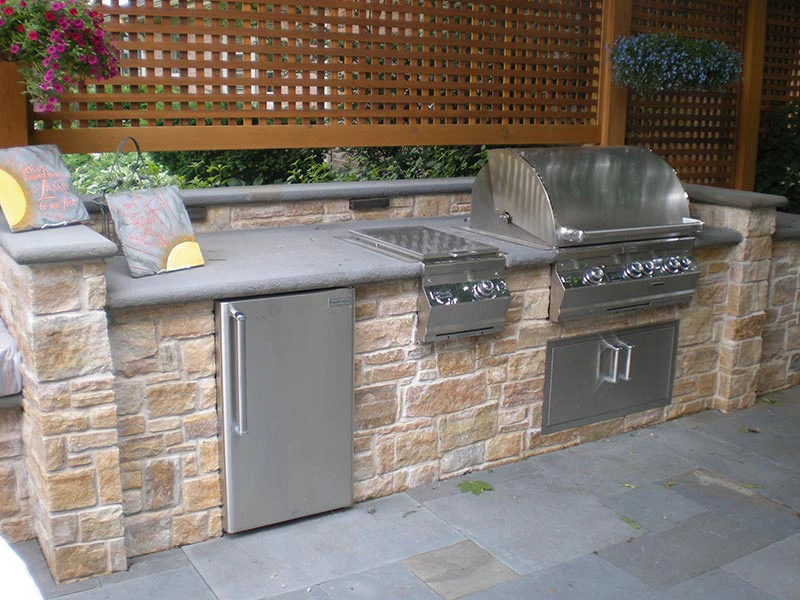
None of this is static. Atlanta Gas Light extends mains every year, usually when a developer pays for the infrastructure in a new section. If your subdivision is “almost available,” ask AGL when the nearest main is planned for extension — sometimes waiting 12 months saves you the propane conversion.
Step 6 — Code, Permits, and the Forsyth County Inspection Reality
Whichever fuel you land on, Cumming outdoor kitchens live under Forsyth County Dept. of Planning & Community Development at 110 E. Main St.. Pull your permits here. Skipping the permit is the single most expensive mistake homeowners make — selling the house later triggers a disclosure obligation, and unpermitted gas work will kill a closing or force a $4,000-$7,000 retrofit.
The code points that matter for both fuels:
- IFGC 2021 adopted locally. The International Fuel Gas Code governs line sizing, pressure testing, and appliance connections. Your installer must be a licensed master plumber or gas fitter with Forsyth County approval.
- Shutoff valves. Two required: one at the source (meter or tank), one within 6 feet of the grill island, both accessible without tools.
- Distance from combustibles. Built-in grills must be installed per manufacturer clearance specs from the island cutout. This is where Kamado Joe, Big Green Egg, and Weber Summit installations differ — read the manual, not Pinterest.
- Ventilation under solid roofs. If your outdoor kitchen sits under a pavilion with a solid shingle or metal roof (as opposed to a louvered slat roof or open pergola), you need a listed exhaust hood or a properly ventilated vent chimney. This adds $1,800-$3,400 to the build. Louvered or open-slat roofs typically avoid the hood requirement.
- Propane tank setbacks. A 500-gallon above-ground tank requires 10 feet from any structure and 10 feet from a property line. Buried tanks can sit closer — one reason most Cumming installs go underground.
- HOA architectural review. St. Marlo, Polo Fields, and Windermere each require a review-board submittal. Turnaround is typically 2 to 3 weeks. Bake that into your schedule.
Forsyth inspection fail list — the five repeats we see:
1. CSST not bonded to the grounding system (NEC 250.104). Immediate fail.
2. Shutoff valve buried under the paver stack so the inspector can’t see it.
3. Tracer wire missing or not terminated at both ends.
4. Pressure test gauge removed before inspector arrives — you cannot demonstrate the test.
5. Propane tank placed inside the 10-foot structure setback.
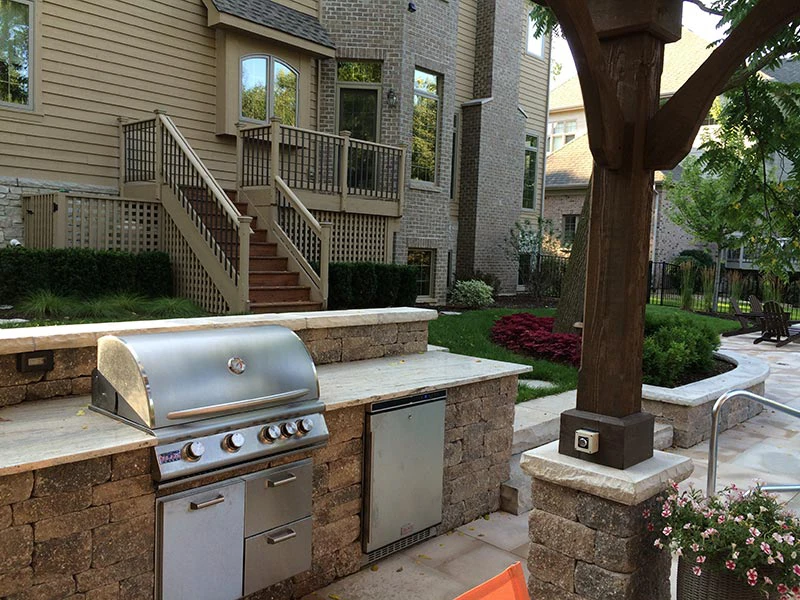
The Lake Lanier Factor, Elevation, and What Your Decision Should Really Ride On
Cumming sits at roughly 1,275 feet of elevation, with Sawnee Mountain rising to 1,963 feet just north of town. The county’s backyards often have 3-to-8-foot grade drops toward South Forsyth drainage tributaries, and Lake Lanier’s influence extends 10-15 miles inland. Two practical implications:
Propane tank drainage. If your lot grades hard toward Big Creek or a Lanier tributary, a buried propane tank needs a sump-pit arrangement or a surface-mount installation to avoid anode corrosion. Cumming’s Cecil-series Piedmont clay is hard-packed and high-density — water moves through it slowly, so the clay pocket around the tank stays wet longer than sandy soils would allow. AmeriGas and Blossman both price this differently; ask.
Humidity and appliance life. Lake Lanier proximity bumps average humidity 3-6 points above west metro readings. That is tough on stainless exteriors and on gas regulators sitting outdoors. A regulator cover (about $40) extends life from 6-8 years to 10-12.
Now the decision framework. Pick the path that matches your situation:
- You live in Vickery, the Collection, Windermere, or Haw Creek AND you’ll use the kitchen 2+ times per week. → Natural gas. The 10-year savings alone ($4,600-$8,000) covers the connection cost and most of the grill. Pull the AGL estimate on day one of design.
- You’re in St. Marlo, Polo Fields, Mashburn Plantation, or Lanier-adjacent AND AGL confirms no main within 300 feet. → Propane, owned tank. The lease trap costs more over time than the tank amortization.
- You’re on a large lot with light use (under 80 gallons per year) and AGL would charge for 200+ feet of extension. → Propane, lease tank. The low upfront matches your usage.
- You’re planning to add a pool heater, a fire pit, and a patio heater. → Natural gas, always, even if it costs $4,000 to run the line. Heavy-BTU appliances make propane financially brutal.
The Part Nobody Tells You About Conversion Kits
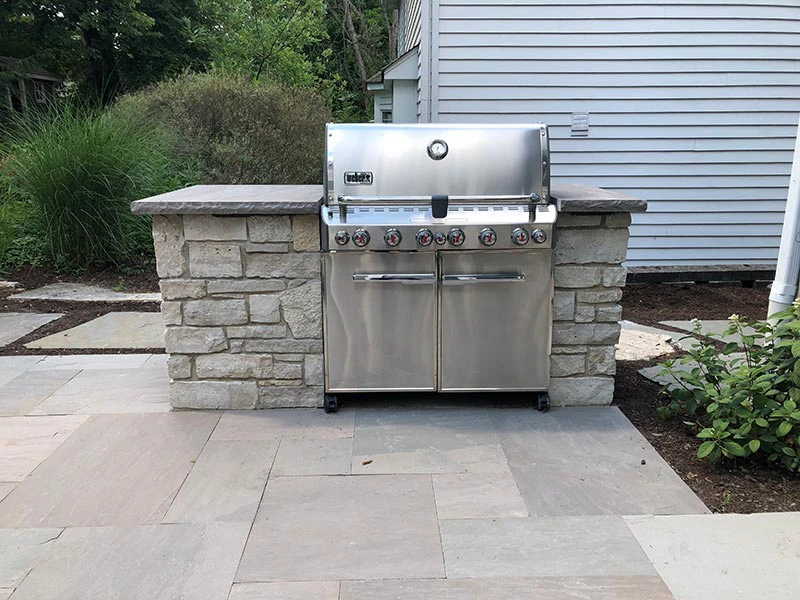
Every major built-in brand — Weber Summit, Lynx, DCS, Bull, Lion, Blaze, Kamado Joe accessory burners — ships factory-configured for either natural gas or propane. Not both. The orifices are different sizes. If you install a natural-gas grill on a propane line (or vice versa), you will either starve the burners or create a dangerous over-flow condition. Conversion kits run $90 to $240 depending on the brand. Order the correct configuration at purchase. If you’re buying a display model or floor demo, verify the fuel type written on the rating plate before you sign.
Why Owner-Tank Beats Lease-Tank for Most Cumming Households
Lease-tank customers are locked to the leasing company’s fuel pricing. In Forsyth County we have watched leased-tank customers pay $4.20 to $4.80 per gallon during winter peaks when the owned-tank market rate was $3.40. Over 10 years, that 80-cent-per-gallon delta on 168 gallons annually adds up to roughly $1,344 — which is almost the full cost of buying the tank outright. Own the tank. Shop the fuel. Your wallet will notice by year three.
The Bottom Line for Cumming Homeowners
Pick the fuel before you pick the grill. Not after. The decision cascades through your pavilion ventilation, your counter layout, your meter placement, your HOA submittal, and your 10-year operating cost — and reversing it after the concrete is poured costs between $2,400 and $6,000 depending on how far along you are.
Run the AGL availability check in the first design meeting. Get the written connection estimate in the second. Lock the fuel type before your plumber pulls the permit at 110 E. Main St. The Cumming homes that end up with the best outdoor kitchens aren’t the ones with the fanciest grills — they’re the ones where somebody did the math on day one, picked the right fuel for the lot and the usage pattern, and built around that choice instead of fighting it later.
Outdoor kitchens across 20+ cities within 30 miles of Winder, GA
We design and build outdoor kitchens around the right fuel source for your lot — AGL natural gas where it’s available, owned-tank propane where it isn’t, and the permit, inspection, and ventilation plan to match.