
Sand-set is the industry default. We won’t install it on a Dacula patio, a Dacula pool deck, or a Dacula walkway — the soil does not cooperate, and the failure pattern over an eight-to-twelve-year window is predictable enough that we stopped pretending it was a cost question. It is a physics question.
Drive through Hamilton Mill on a Saturday morning in October and you can read the ages of the hardscape by how level the pavers still are. The 2014 builds look fine. The 2010 builds are starting to dish toward the downhill corner. The 2007 builds are being torn out. All of them were installed over compacted aggregate base with a one-inch sand bedding layer — industry standard, code-compliant, warrantied by the paver manufacturer, and almost universally the cheaper bid on the table when the homeowner was choosing between crews.
This post lays out why our crew in Dacula — working in Gwinnett County soil about as hospitable to sand-set hardscape as a trampoline is to a billiard table — stopped bidding sand-set installations in 2019. We’ll put the two methods side by side, walk through the freeze-thaw math in USDA Zone 8a, and show the cost arithmetic that flips full-bedding from “premium option” to “only reasonable option” past year ten.
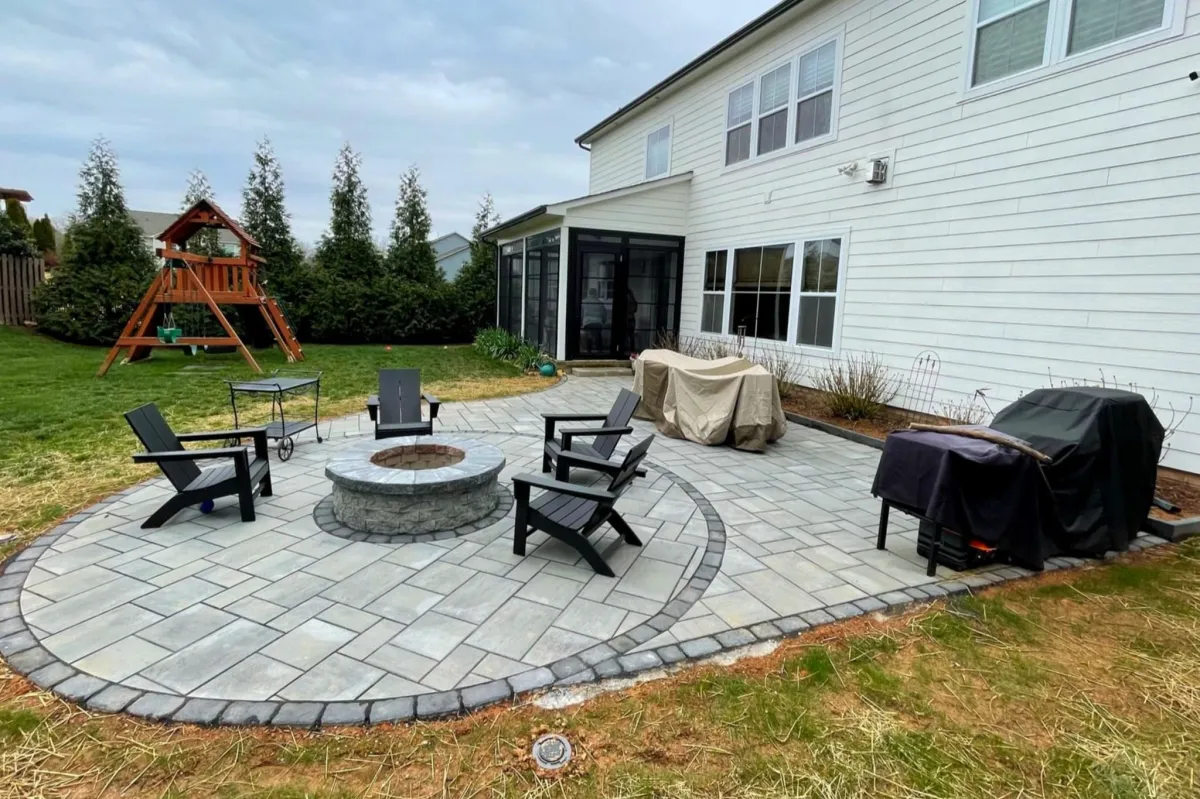
The Two Methods, Described Honestly
Before we compare them, we have to be fair about what each one actually is — including what sand-set gets right. Most of the “full-bedding is better” marketing copy on the internet compares the best version of full-bedding to the worst version of sand-set, and that is not useful for a Dacula homeowner who is trying to evaluate two real bids on a real kitchen table.
Sand-set, done correctly
A properly executed sand-set install starts with subgrade excavation roughly ten to twelve inches below finished grade, compacted with a plate compactor, often with geotextile fabric separating native clay from base. Six to eight inches of aggregate — crusher run or ASTM #57 stone — goes down in two or three compacted lifts. On top, a one-inch screed layer of washed concrete sand is drawn flat with screed pipes and a long straightedge. Pavers are laid dry, compacted, edge-restrained, and joints are swept with polymeric sand and activated with water.
Done this way, it is a beautifully engineered system. Water drains through the joints and aggregate. Individual pavers can be lifted and reset. The system is flexible — it absorbs ground movement without cracking, because it isn’t monolithic.
It’s also roughly $2 to $3 per square foot cheaper to install than the alternative. On a 600-square-foot Dacula patio, that’s $1,200 to $1,800 of savings on the initial bid.
Full-bedding, done correctly
Full-bedding starts with the same excavation. But instead of ending with compacted aggregate and sand, we pour a four-inch reinforced concrete slab — fiber-mesh or #3 rebar at sixteen-inch centers — over the compacted base. That slab cures. Then our setter troweles out a half-inch mortar bed across the slab, working in sections small enough that the mortar stays workable, and the pavers are set directly into the wet mortar. Joints are swept with polymeric sand and activated the same way.
The finished assembly is effectively a monolithic hardscape: concrete substrate, mortar bond layer, paver wear surface, polymeric joint fill. When ground moves, the whole thing moves as a single structure. When water freezes in the joints, it cannot widen the joints because the mortar bed below is rigid. Individual pavers are not replaceable without breaking them out of the mortar — but they also do not need to be replaced, because they are not settling independently.
This method costs roughly $6 to $8 per square foot more than sand-set at the install stage. On the same 600-square-foot Dacula patio, that is a $3,600 to $4,800 premium on the initial bid.
The core trade-off in one sentence: sand-set is flexible and cheaper, full-bedding is monolithic and longer-lived. Every argument in this post is really an argument about which of those two qualities matters more in Gwinnett County soil.
Why Dacula’s Soil and Climate Punish Sand-Set
The sand-set system is not flawed in the abstract. It is flawed in this specific place. Three local conditions — the Cecil series clay under most Dacula lots, the freeze-thaw cycle frequency in USDA Zone 8a, and the rainfall pattern coming off the Mulberry River watershed — combine to hit sand-set exactly where it is weakest.
Cecil clay is expansive
Piedmont Cecil topsoil over saprolite is what most of Dacula sits on, and the clay fraction in that profile swells when it gets wet and shrinks when it dries. The swell isn’t dramatic compared to what homes on Vertisol clays in Texas see, but it is consistent and directional. The top eighteen inches of soil moves vertically about three-eighths to five-eighths of an inch seasonally. A four-inch concrete slab resists that movement as a unit. A six-inch aggregate base plus one-inch sand bed does not — the base shifts, the sand redistributes into voids, and over time the wear surface follows.
The freeze-thaw arithmetic is the real killer
Dacula averages roughly 20 freeze events per year. Over a 20-year design lifespan, that is around 400 freeze-thaw cycles acting on whatever hardscape you installed. Every one of those cycles does the same thing to sand-set pavers: water in the polymeric joint filler expands by nine percent as it freezes, forcing the joints very slightly wider. We have measured joint width migration on aging Hamilton Mill patios at roughly 1/32″ per cycle in the first few years, slowing down to about 1/64″ per cycle as the joint gets wider and the polymeric sand becomes progressively less effective at sealing.
Multiply even the slower rate across a few hundred cycles and you get joints that have opened by half an inch or more. At that point the system is no longer a system — it is a loose field of pavers sitting on displaced sand, and every rainstorm is eroding the bed beneath them.
Rainfall concentrates at the wrong places
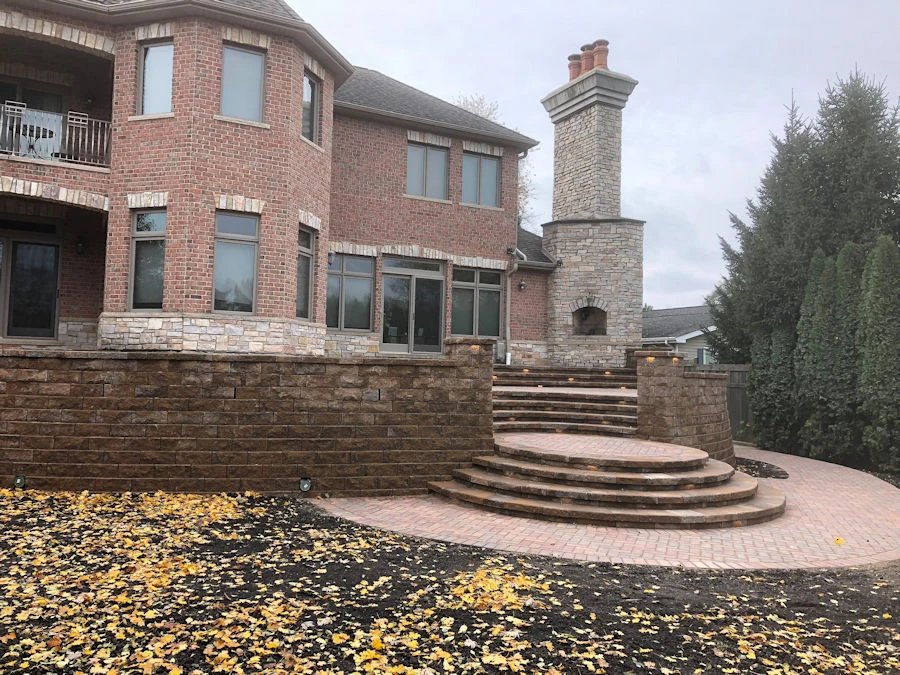
Dacula gets about 52 inches of rain per year, and most of it arrives in concentrated bursts — thunderstorm cells in summer, multi-day frontal systems in late winter. A lot of Dacula lots in Sycamore Ridge and Chandler Ridge grade downhill toward tributary streams feeding the Mulberry River, which means hardscape built near the back of a lot is sitting at the bottom of a small watershed. Sand-set installations are designed to drain — that is one of their virtues — but “drain” and “survive six inches of runoff in 40 minutes” are not the same claim. Velocity at the patio edge scours the aggregate base. Once the base starts moving, the sand follows, and once the sand is moving the pavers are no longer bedded on anything.
Full-bedding shrugs all of this off because the substrate is a continuous, reinforced piece of concrete. Water can pool on it, run across it, drain off it — none of that changes its structural behavior.
The Direct Comparison: 11 Criteria That Matter in Gwinnett County
This is the table we hand clients who are evaluating two bids side by side. Nothing here is meant to be a gotcha — sand-set wins on several legitimate criteria, and those wins are real. The question is whether the criteria it wins on matter more than the criteria it loses on, for a specific property on specific soil in a specific climate.
The last row is the one that surprises clients. Sand-set looks cheaper at signing. Full-bedding is cheaper by the time the kids are applying to college — because sand-set patios in Dacula typically need a full rebuild somewhere in years ten through twelve, and that rebuild cannot reuse the original pavers. The pavers come out chipped from polymeric sand, edges abraded from compactor settlement, and replacement stock from the original Techo-Bloc, Belgard, or Cambridge line is usually discontinued or color-shifted. The “rebuild” is really a second install at roughly 60–70% of new-build cost.
The 20-year math, walked through
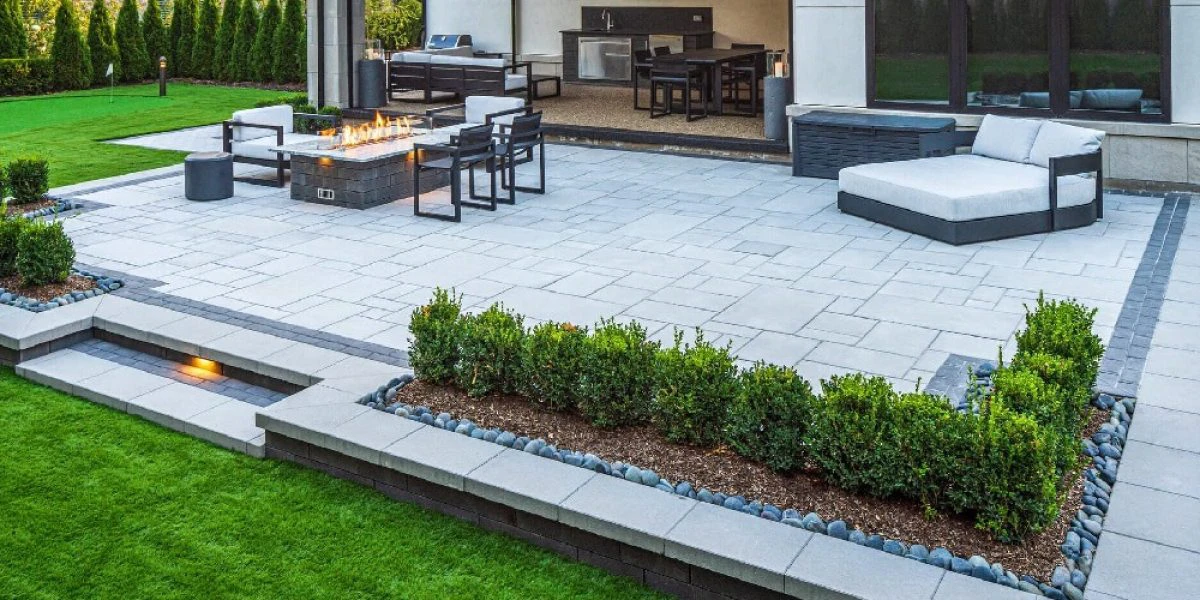
On a standard 600-square-foot backyard patio — a size we install regularly in Ivey Chase and Auburn Park — here is what the arithmetic actually looks like. Year 0: sand-set bid lands around $8,400 midpoint; full-bedding around $12,600. Delta at signing is roughly $4,200.
Years 1 through 9: both systems look great. Sand-set ages gracefully through year six or seven. Hairline joint migration isn’t visible to a homeowner who isn’t measuring with calipers. Full-bedding patios look identical to the day they cured.
Years 10 through 12: the sand-set reckoning. Noticeable dishing at the downhill corner, joint widths varying from 1/8″ to 7/16″ across the field, weed growth in the wider joints, and — if the patio abuts the house — early signs of water pooling against the foundation because surface grade has drifted. The fix is not resurfacing. It is demolition and rebuild. Total year-10 spend: approximately $9,600 to $12,000.
Year 20 totals: sand-set lands at roughly $19,800 to $24,000 once you include the mid-life rebuild and periodic polymeric sand re-applications. Full-bedding lands at roughly $13,200 to $18,600 with no structural intervention required. Full-bedding wins by $5,000 to $7,000 over the two-decade horizon — before accounting for the two or three years you live with a failing patio between “we should probably do something” and “we scheduled the rebuild.”
The honest case against full-bedding: if you’re installing a small decorative walkway, a pedestrian-only courtyard at a rental property, or a hardscape element you genuinely expect to tear out within five to seven years, sand-set is the right call. The flexibility is a feature. The method itself isn’t broken — it’s just wrong for primary hardscape in Cecil clay.
Where We Draw the Line on Sand-Set
We still specify sand-set in very specific scenarios. Transparency is useful here — not every hardscape decision is an argument for the most expensive option. The places sand-set genuinely works on our Dacula projects:
Permeable paver drainage features. When a client is installing hardscape specifically to meet a Gwinnett County impervious-surface variance — and the whole point is for water to infiltrate through the joints into a stone reservoir below — sand-set with open-graded aggregate is the only method that works. Full-bedding defeats the purpose. We’ve done this on a few lots in Hamilton Mill where the setback geometry required a permeable solution.
Temporary or staged installations. If a client is phasing a larger backyard project and the paver field is likely to be cut into for a future pool or outdoor kitchen install within three to five years, sand-set makes sense. You don’t want to demolish a $12,000 full-bedded patio to run a gas line.
Pedestrian-only secondary walkways. A 4-foot-wide path from the driveway to a side gate, under 150 square feet, not carrying pool equipment or frequent foot traffic from kids — sand-set is fine. The load case is low, the expected life is shorter anyway, and the cost delta on small jobs is proportionally larger.
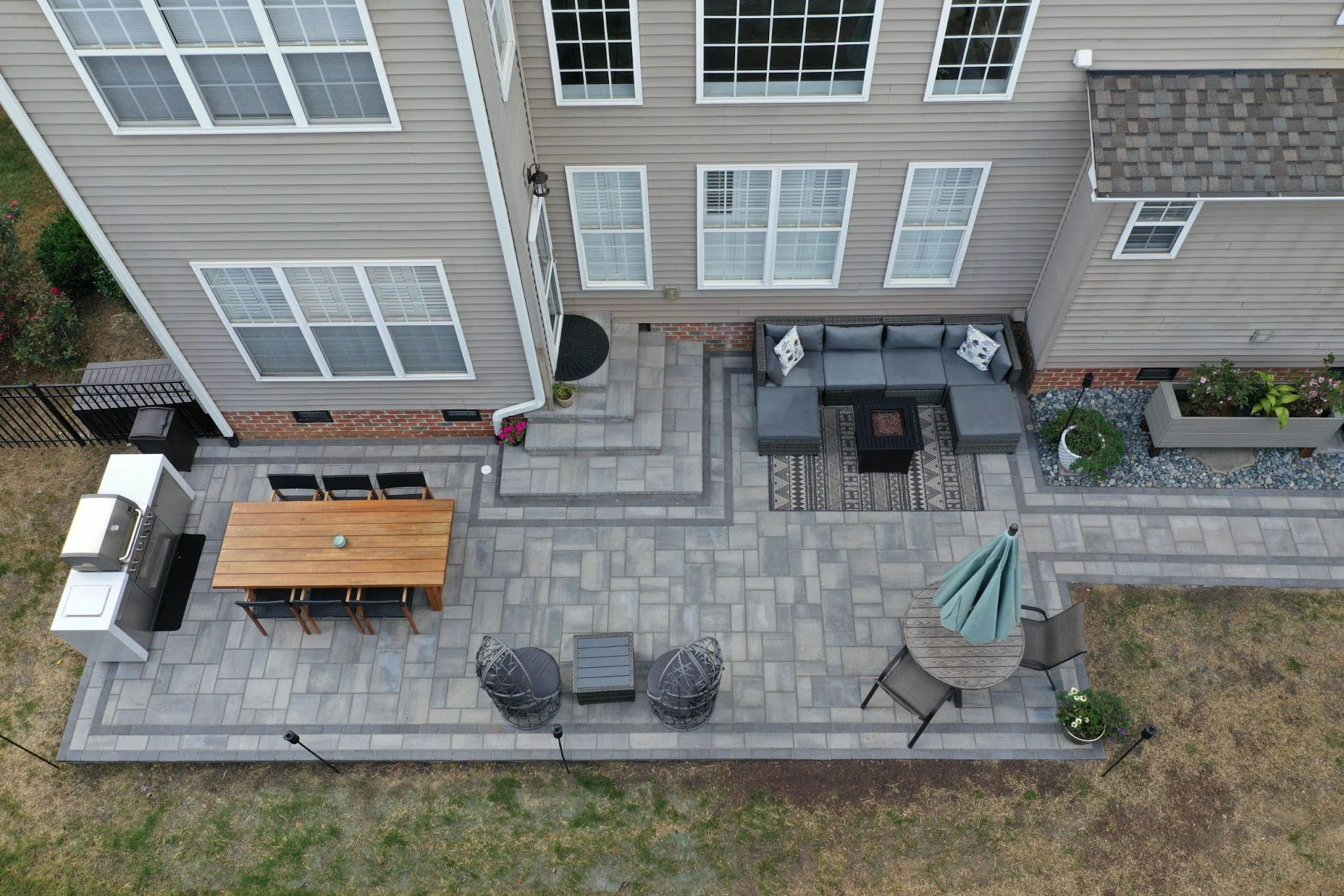
Everywhere else in Dacula — pool decks, primary patios, entertainment hardscape, outdoor kitchen surrounds, driveway aprons, anything that is part of a permanent backyard investment — we quote full-bedding. The $4,000–$5,000 premium at install is small compared to the $9,000–$12,000 year-ten rebuild the homeowner avoids.
What to Ask When You’re Comparing Bids
If you’re collecting three bids for a Dacula paver project right now, here are the questions that separate a crew that knows what they’re building from a crew that’s quoting the line item without thinking about the soil:
“What’s underneath the pavers?” The answer should include a specific substrate — “6 inches of compacted crusher run, 1 inch of washed concrete sand” for a sand-set bid, or “4 inches of reinforced concrete with fiber mesh, half-inch mortar bed” for a full-bedding bid. If the contractor can’t name their substrate, they don’t know what they’re installing.
“What do you expect this to look like in year ten?” A good contractor will give you an honest answer. Sand-set installers should acknowledge that joint migration is likely in expansive clay. Full-bedding installers should acknowledge that individual paver replacement is expensive. If anyone tells you their system is going to look identical forever, they’re selling you something other than a patio.
“What’s your warranty structure, and what triggers it?” Most manufacturer warranties cover the paver itself — color, structural integrity of the unit — for 25 years or more. They do not cover installation failure. Crew warranties in Gwinnett County typically run 2 to 5 years on workmanship. A longer workmanship warranty is a signal the crew trusts their own substrate work.
“What’s the base thickness, and how many lifts did you compact it in?” On a sand-set bid, the answer should be at least 6 inches compacted in 2 lifts for a patio, 8 inches in 3 lifts for a driveway. A single lift of uncompacted crusher run under sand bedding is the fastest path to failure, and it’s common on low-end bids.
“Where does the water go?” Every paver field needs a drainage plan. On a full-bedded install the grading has to be deliberate — typically 1.5% fall toward a catch basin or away from the house. If the contractor hasn’t walked your site and shown you where runoff goes, the plan doesn’t exist yet.
We’ve been building pools, patios, pool decks, and hardscape in Dacula and the surrounding Gwinnett County communities long enough to have watched a meaningful fraction of the sand-set installations from the early 2010s come to the end of their service life. The pattern is consistent enough that we made it a policy, not a recommendation. Every primary hardscape surface we install in Dacula — from a small paver patio in Auburn Park to an integrated pool, patio, and outdoor kitchen in Hamilton Mill — goes over a reinforced concrete substrate with a mortar bed. Full-bedding, every time.
That doesn’t make us the cheapest bid. On a typical 600-square-foot Dacula patio we’ll quote $3,600 to $4,800 higher than a sand-set competitor at the install stage. What we tell clients is simple: if your horizon on this property is less than ten years, the sand-set bid may genuinely serve you. If you’re planning to own the home through the next decade and beyond — which most Dacula buyers in Hamilton Mill, Sycamore Ridge, and Providence Club are — full-bedding is the only math that works.
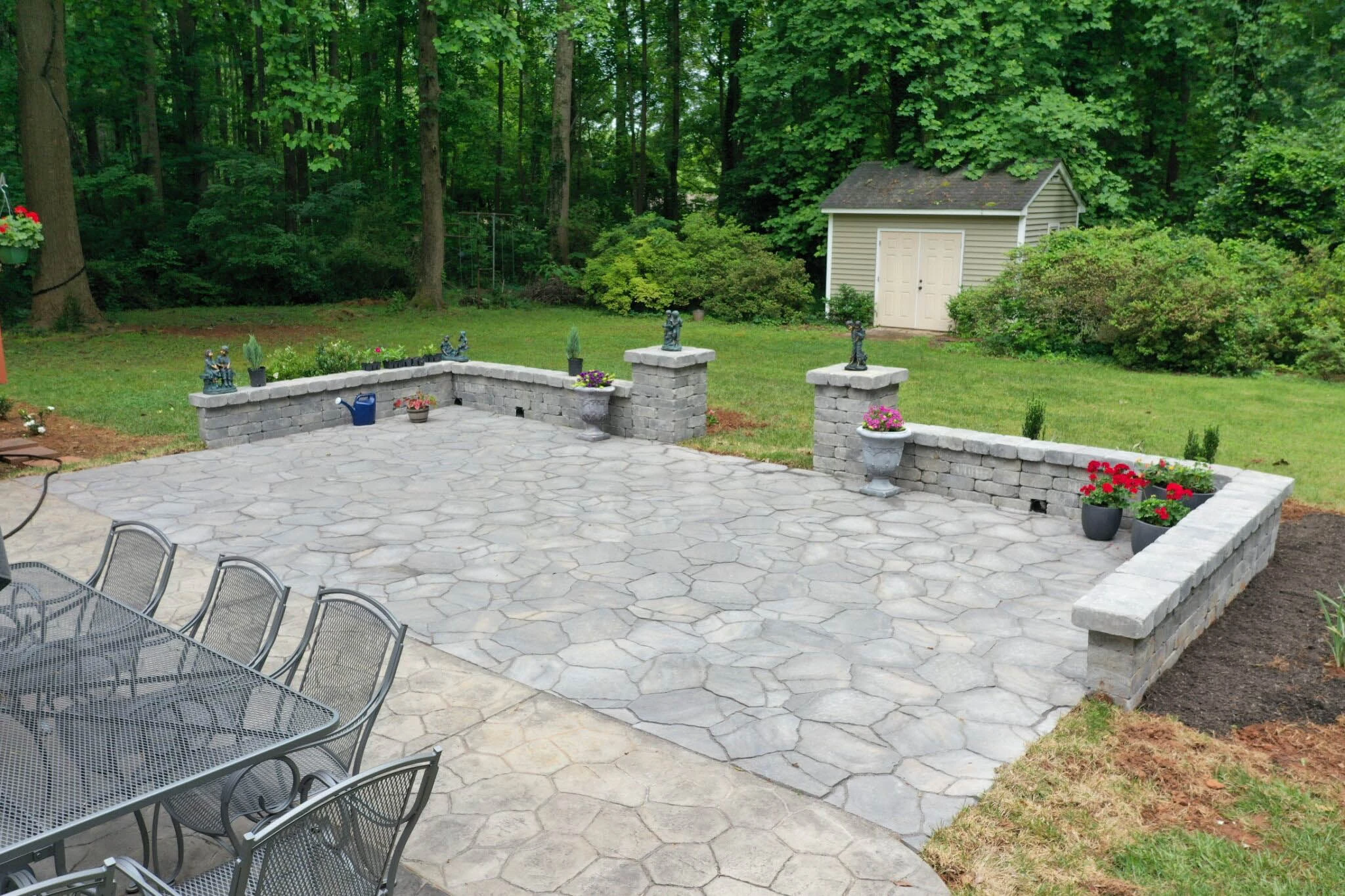
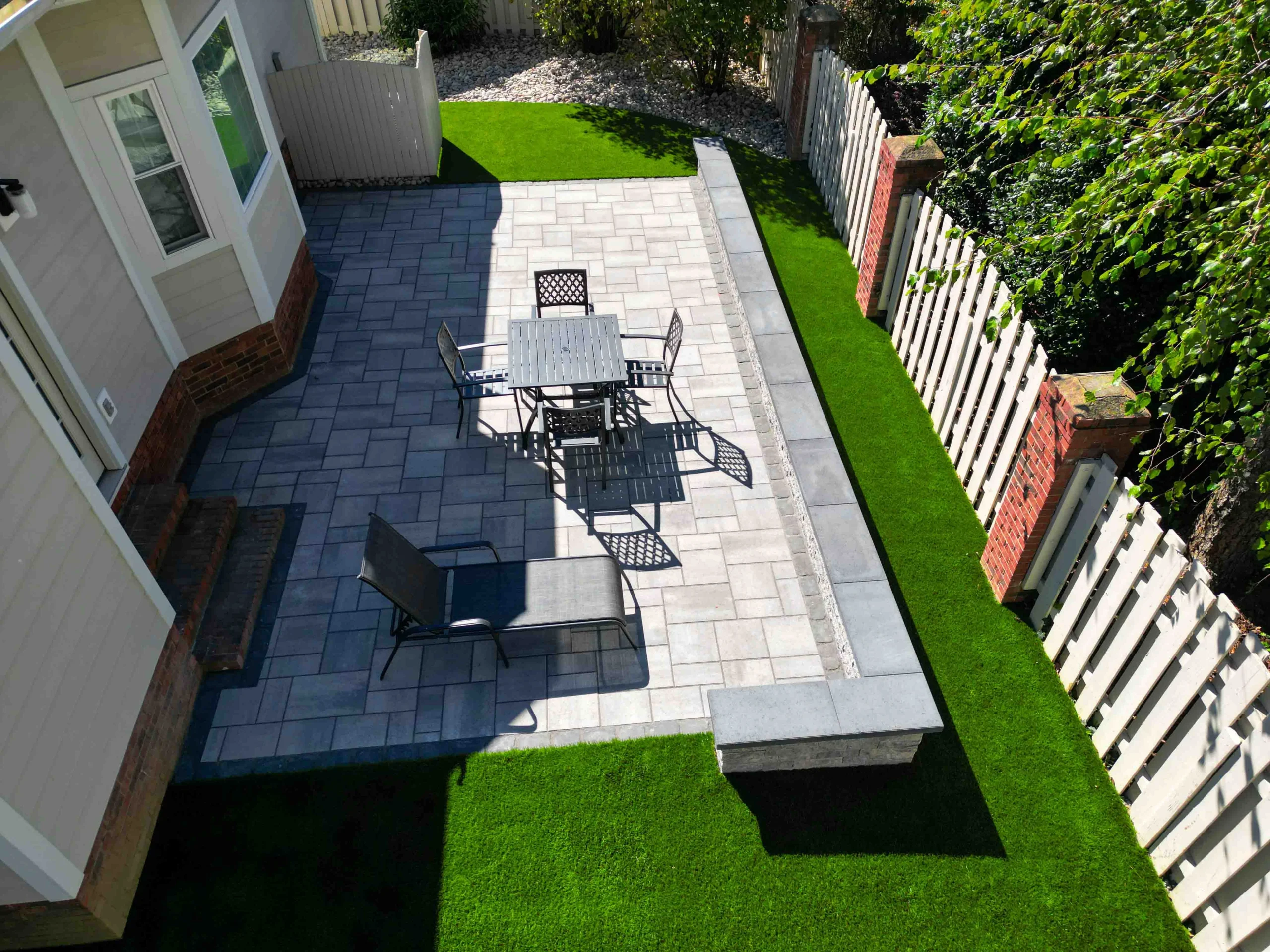
Full-bedded paver installations across 20+ cities within 30 miles of Winder, GA
From Hamilton Mill pool decks to Sycamore Ridge patios, we install pavers the way Gwinnett County clay actually demands — over reinforced concrete, with mortar bedding, built to hold joint geometry for 25+ years.