
Sand-set is the way pavers are taught, the way they are bid, and the way a large share of the patios behind Clarkston's ranch houses were built. It is also the reason so many of those patios move. We quit installing it years ago, and we will tell you exactly why — including the part where our method costs $7 to $9 more per square foot.
Here is the contrarian position, stated plainly: the industry default is not the industry's best work. Sand-set became the standard because it is fast, it needs a small crew, it needs no concrete truck, and it looks identical to a better install on the day the crew drives away. The difference shows up later, and by then the contractor who laid it is not the one getting the call.
We build around pools. A pool deck or a backyard patio in Clarkston is not an isolated slab of pretty stone — it sits next to a bond beam, a skimmer, a downspout, a mature water oak, and a lot that drains toward a creek tributary. When the paver field shifts, it shifts into things that cost real money to fix. This post is a direct, technical comparison of the two ways to set them, what each one costs, and what each one looks like when you step out the back door eight years after the check cleared.
We will be fair to sand-set. Done by a disciplined crew, it is a legitimate engineered system, and there are places where we would still call it acceptable. But on the lots we work in Lake Capri, Idlewood, Brockett, and the older subdivisions off Rockbridge Road, the conditions stack up against it, and we would rather explain the reasoning than ask you to take our word for it.
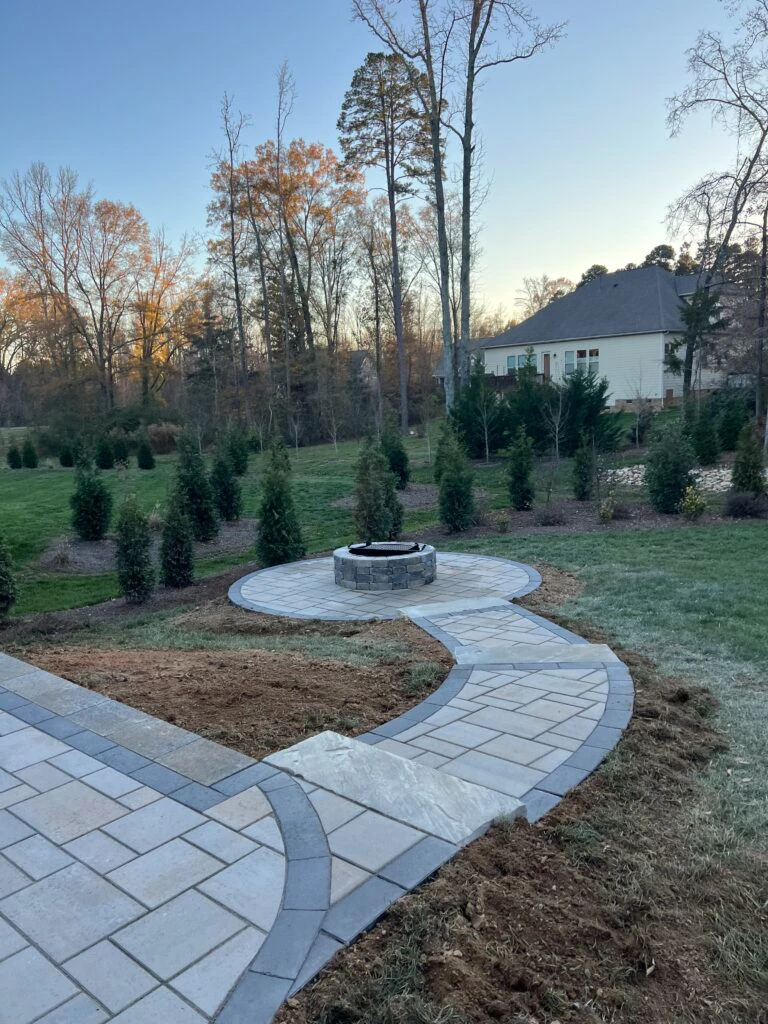
What Sand-Set Actually Is — and Why Nearly Every Clarkston Bid Defaults to It
A sand-set paver installation is a flexible pavement. Nothing is bonded. The pavers float on loose sand over a compacted stone base, held together by three things: friction between the pavers, the joint sand packed between them, and the edge restraint pinned around the perimeter.
The sand-set assembly, layer by layer
The crew excavates roughly nine to twelve inches below finished grade. They compact the subgrade, sometimes lay a woven geotextile, then install six to eight inches of graded aggregate base — in metro Atlanta that is usually GAB or crusher run — compacted in lifts with a plate compactor. On top of that goes a 1-inch screeded layer of ASTM C33 concrete sand, pulled flat between screed rails. The pavers are laid dry onto that sand, plate-compacted to seat them, and the joints are filled with polymeric sand and misted to activate the binder. A plastic or aluminum edge restraint gets spiked in along every open side.
That is the method the Concrete Masonry & Hardscapes Association (the group formerly known as ICPI) documents, and it is the method most installer certification courses teach. When it is executed with full compaction on every lift, correct base depth, and a real edge restraint, it performs. We are not disputing the engineering on paper.
Why the default wins the bid
Sand-set wins because of labor and logistics, not because of performance. A three-person crew can excavate, base, screed, and lay a 400-square-foot patio in three or four days. No slab, no concrete truck, no cure time, no mortar. That speed shows up as a lower number, and the lower number usually wins the kitchen-table comparison.
Sand-set tolerates movement by letting individual pavers move. That flexibility is the selling point. It is also the failure mode. Given enough water, freeze events, and roots, a system designed to let pavers shift will let them shift.
What Full-Bedding Is, Layer by Layer — and Where the Extra Money Goes
Full-bedding replaces the loose sand layer with a rigid one. The pavers are set into a continuous mortar bed over a reinforced concrete slab, so the finished patio behaves like one structure rather than several thousand individual units resting on sand. The wear surface is the same paver you would have picked for a sand-set job. Everything underneath it is different.
The full-bed assembly we build
We excavate to the same depth, cut out any soft pockets, and compact the subgrade until it stops moving under the plate. A non-woven geotextile separates native soil from the stone. We place and compact a 4-inch GAB base, then form and pour a 4-inch, 3,000 psi slab with #3 rebar at 16 inches on center. The slab is poured with a built-in fall of a quarter inch per foot away from the house or pool, and it gets tooled control joints so any cracking happens where we choose.
Once the slab cures, the setter trowels a half-inch to three-quarter-inch bed of polymer-modified mortar across a section small enough to stay workable, back-butters each paver, and beats it into the bed with a rubber mallet until it sits flat against a string line. The soldier course along the edges goes in the same way. Joints are filled once the bed has set. There is no spiked edge restraint, because the border cannot migrate off a slab it is bonded to.
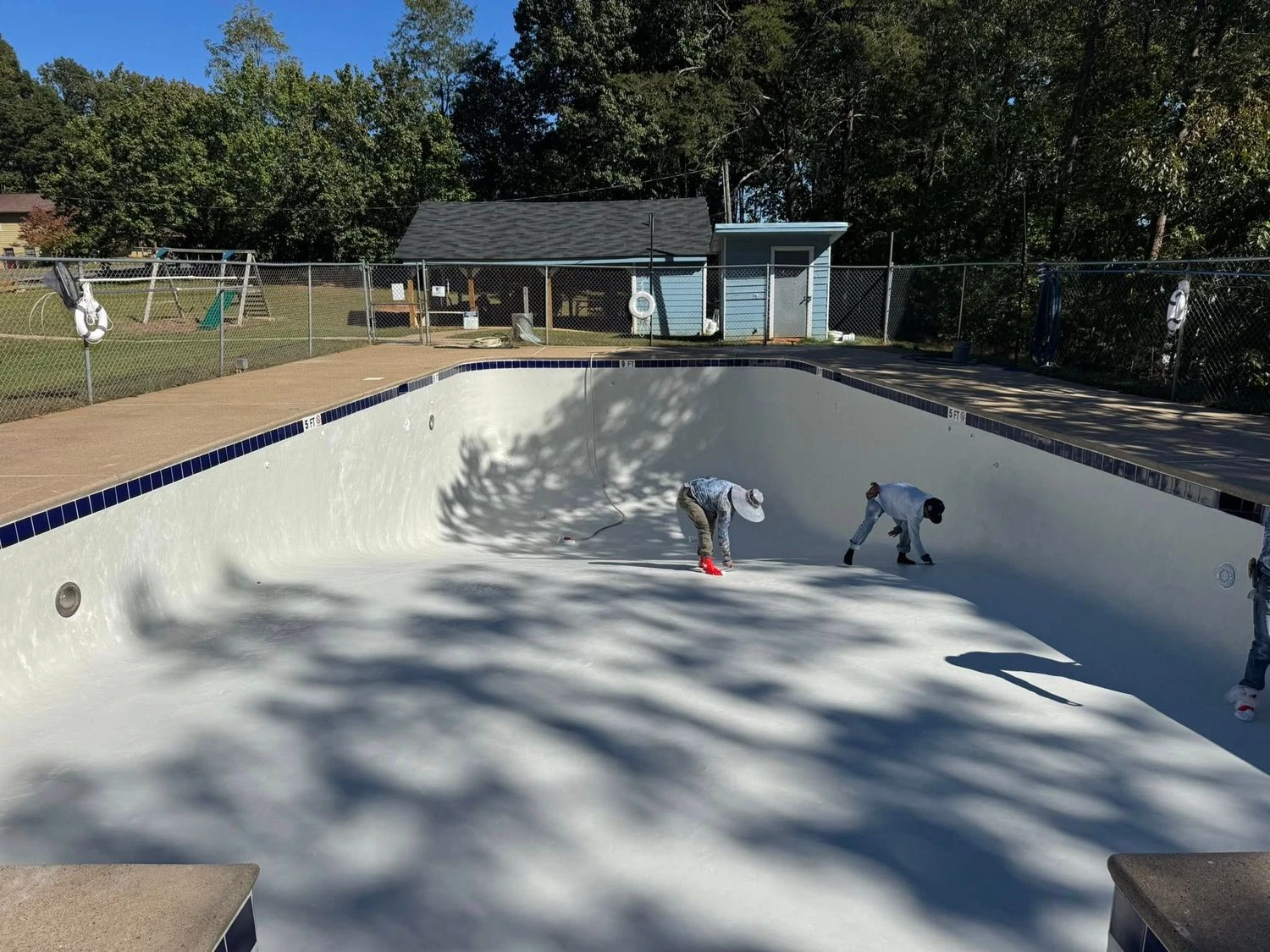
Why it costs more per square foot
The premium comes from four real line items: concrete, rebar, and mortar a sand-set job never buys; the pour itself, which on a tight Clarkston lot often means a pump because a ready-mix truck cannot reach the backyard; cure days between pour and first paver; and, largest, labor — setting pavers into mortar one at a time is slower, and keeping a mortar bed flat across a 20-foot run takes an experienced hand.
What the premium looks like on a real proposal: On our Clarkston work, a well-built sand-set patio typically lands in the $18 to $24 per square foot range installed. Our full-bed assembly lands around $25 to $33. On a 500-square-foot patio, that is a difference of roughly $3,500 to $4,500 on day one.
Paver selection moves both numbers equally. A premium slab-format paver costs the same whether it sits on sand or mortar, so the gap between methods stays about the same no matter which product you choose.
That gap is not small. In a renovation market, where homeowners are usually resurfacing a 40-year-old pool rather than digging a new one, four thousand dollars is a real decision. The rest of this post is about what it buys.
Side by Side: The Two Assemblies Compared Point for Point
Here is the grid we walk homeowners through before they sign: seven conditions on a typical Clarkston lot, and how each method responds.
1. Water at the downspouts
Sand-set: Clarkston gets about 52 inches of rain a year, and the older ranch houses along Church Street and Indian Creek Drive often have downspouts that dump straight onto the patio edge. Water that gets through the joints saturates the bedding sand and carries fines down into the base. Over a few seasons, the sand under that corner thins out, and the pavers above it drop.
Full-bedding: Water that gets through a joint hits mortar and a sloped slab, then sheets toward the low edge. There is no loose layer for it to carry away. The corner under the downspout sits at the same elevation as the rest of the field.
2. Freeze and thaw
Sand-set: Clarkston sees roughly 8 to 14 freeze events a winter — milder than the north suburbs, but not zero. Wet bedding sand expands when it freezes, lifting individual pavers a fraction of an inch. When it thaws, they do not all settle back to the same place. Spiked edge restraints get jacked upward a little each cycle, too.
Full-bedding: The slab sheds water instead of holding it, and the mortar bed is not a loose, saturated layer, so there is very little in the assembly to heave. The edge course is bonded, so it cannot creep upward and outward.
3. Tree roots
Sand-set: The 1960s and 1970s lots around Lake Capri and Toney Valley came with mature water oaks, sweetgums, and pines that are now 60-plus years older. Surface roots follow moisture, and the damp sand layer under a patio is exactly what they look for. A root thickening under a sand-set field lifts a ridge of pavers you can catch a toe on.
Full-bedding: A reinforced slab spans small root growth rather than riding over it. It is not immune — a large root under a small slab can still crack it — which is why we cut and barrier roots at excavation on any lot with a big canopy.
4. Edge migration
Sand-set: The border is held by plastic edging and 10-inch steel spikes driven into the base. In soft soil, on a slope, or next to a lawn that gets mowed and edged every week, those spikes loosen. The soldier course starts to rotate outward, joints open along the edge, and the field behind it follows.
Full-bedding: The border is mortared to the same slab as the field. A bonded course has no spikes to loosen, so border rotation is not part of its failure pattern.
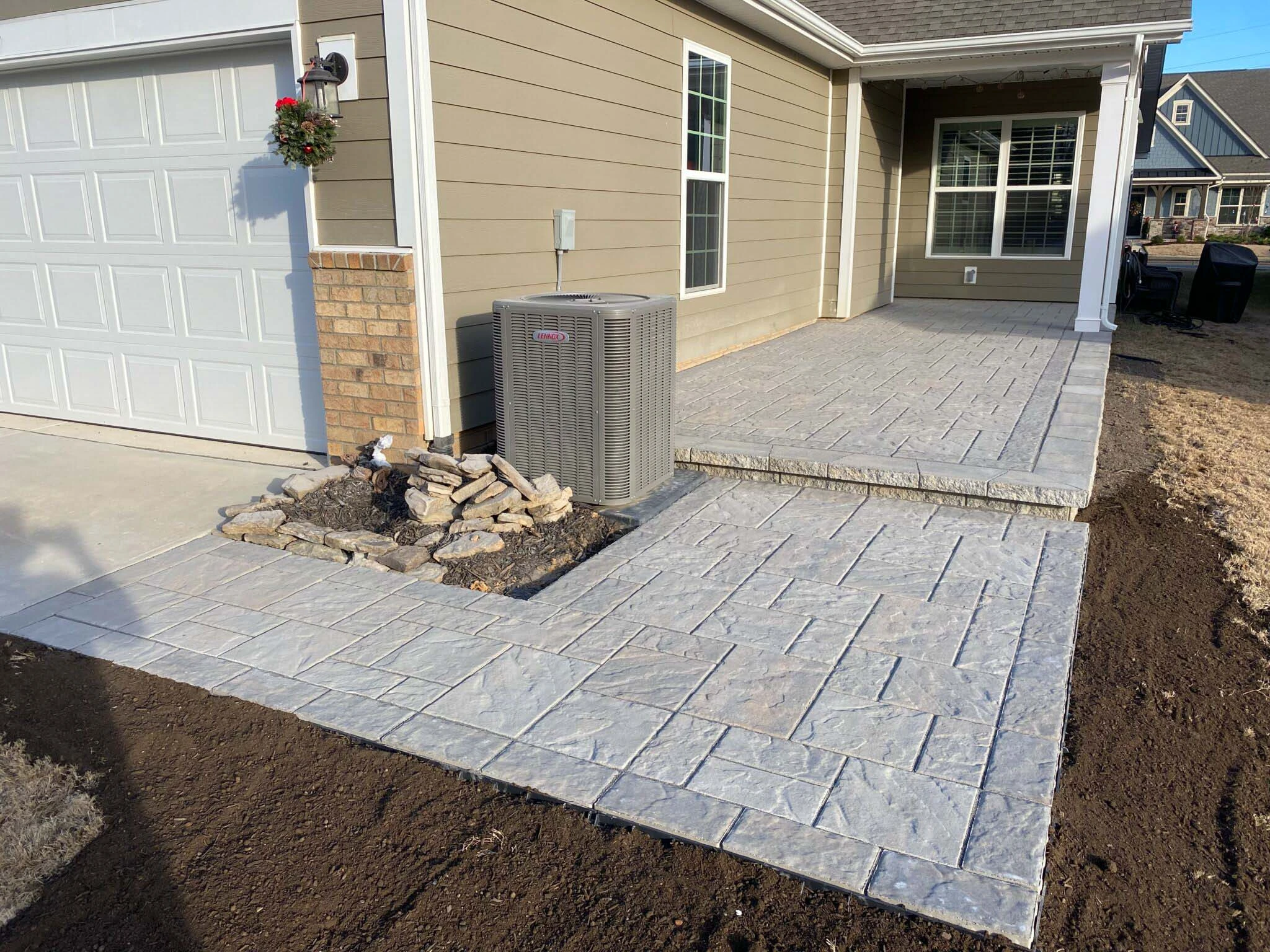
5. Fire ants and weeds
Sand-set: Loose bedding sand is ideal ant-mound material. Fire ants tunnel under the pavers, mine the sand out through the joints, and leave hollows that collapse. Once joint sand is gone, weeds follow.
Full-bedding: There is nothing under the pavers to excavate. Weeds can still take root in joint sand at the surface, but they cannot undermine the field.
6. Heavy point loads
Sand-set: A gas fire table, a filled planter, or a built-in grill island concentrates weight on a small footprint. Over time, sand under those spots compresses and the pavers dish.
Full-bedding: The slab spreads the load. A 400-pound fire table sits on the same plane in year eight that it sat on in year one.
7. Drainage and repairs — where sand-set wins
Sand-set: Water drains through the whole assembly, and a broken paver can be swapped in ten minutes. That is a genuine advantage.
Full-bedding: The slab has to be sloped correctly, or water ponds on it and pushes efflorescence up through the joints. A damaged paver has to be chiseled out and reset. We build in the fall and keep spares from every job, but the trade-off is real.
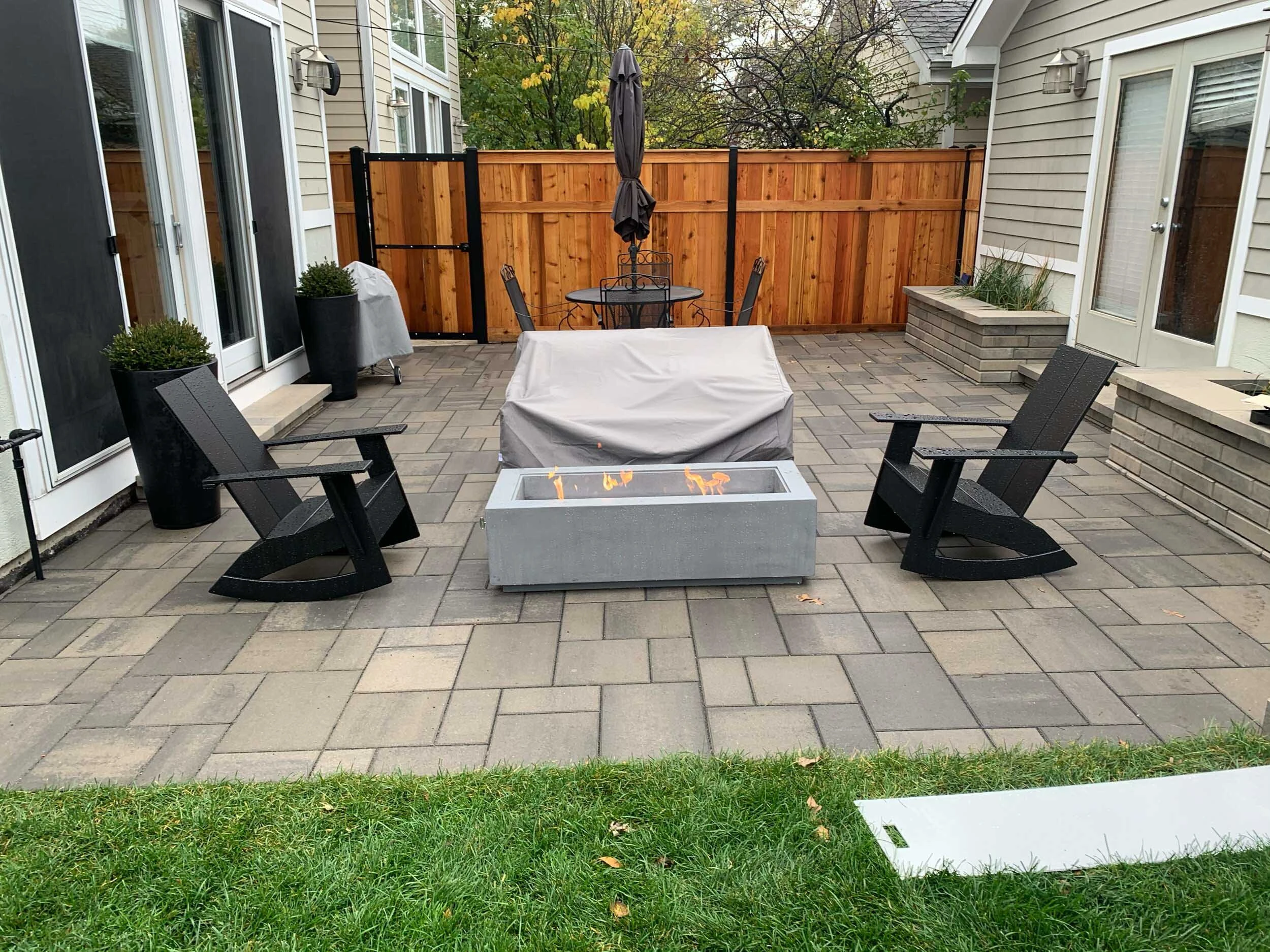
Year Eight in Clarkston: What Each Patio Looks Like From the Back Door
Picture two patios built the same summer with the same paver, one on sand and one on mortar. We have walked that comparison in DeKalb County more than once. Here is what year eight tends to look like.
The sand-set patio at year eight
From the kitchen window, it still looks good. Walk out onto it. There is a shallow bowl, maybe half an inch to an inch deep, under the downspout corner, and after a storm it holds a puddle for a day. The soldier course along the lawn side has rolled outward, so the joints along that edge are a quarter inch wide instead of an eighth. Two or three pavers near the steps rock when you step on them. The polymeric sand has broken down in the low spots, and there is a line of grass and clover growing through the joints along the fence. Near a tree there is a gentle ridge.
None of that is catastrophic. The fix is to pull the failed zones, re-screed, reset, and re-sand. On our pricing, that runs about $6 to $10 per square foot of affected area, and on a typical eight-year-old sand-set patio, the affected area is a quarter to a third of the field. Then the clock restarts, because the water, freeze events, and roots are still there.
The full-bed patio at year eight
It looks like it did at the walkthrough, minus some color fade and weathering on the paver face — which, to be clear, happens identically on both patios, because it is the same paver in the same sun. The plane is flat. The border is straight. Joints are uniform. You may find a hairline crack in a mortar joint over one of the slab's control joints, which is where we told the slab to crack. Maintenance at year eight is a cleaning, a joint touch-up where needed, and an optional seal.
The year-eight test we give homeowners: Lay a 6-foot aluminum straightedge across the patio in three directions. On a healthy install, you should not be able to slide a quarter under it anywhere. On most eight-year-old sand-set patios we are asked to look at in Clarkston, we can slide one under it at the downspout and along the lawn edge.
Sand-set patios rarely collapse. They drift, toward the coping, the steps, and the door threshold, where a half-inch drop becomes a trip hazard or water aimed at the house.
Why Clarkston specifically accelerates the drift
Several local conditions stack up. The older lots east of I-285 have thin topsoil over dense Piedmont red clay, which sheds surface water sideways and toward the nearest hardscape instead of absorbing it. Many backyards slope toward Pole Bridge Creek, South Fork Peachtree Creek, or a DeKalb greenway corridor, so patios on those lots sit in a drainage path. Heavy tree canopy keeps surfaces damp and humidity high, which means bedding sand stays wetter longer after every rain. And in a renovation market, the patio is usually fitted to a pool and grade the 1960s builder never planned for pavers.
On lots near Stone Mountain with a 4-to-10-foot grade change, decomposed granite from the pluton can surface in the cut, and fill placed over it settles under any method unless it is compacted with care.
When Sand-Set Is Still Acceptable — and the Questions That Expose a Bid
We are contrarian, not dogmatic. A well-built sand-set installation is sometimes a reasonable choice.
Where we would still accept sand-set
- A low-traffic garden walkway set away from downspouts, trees, and pool equipment.
- A stepping area or firepit apron on flat, well-drained ground where resetting a few pavers every few years is an accepted trade.
- A permeable paver system specifically engineered for stormwater, with open-graded stone and a designed outlet — a different product with a different goal.
Where we will not install it: pool decks, anything touching coping or a bond beam, patios against the house, driveway aprons, and any hardscape on a slope or in a drainage path. That covers the majority of what Clarkston homeowners ask us to build.
Five questions to ask any paver contractor
- What is under the paver — sand or mortar over a slab? If the proposal does not say, assume sand.
- How deep is the base, and how many lifts is it compacted in? "Six inches" with no lift count is a guess, not a spec.
- What holds the border in place? Plastic edging and spikes, or a bonded soldier course?
- How does water leave the patio? You want a stated slope, a stated direction, and a plan for every downspout.
- What happens at year five if a section settles? Get the warranty language in writing, including whether settlement is covered.
Two practical notes for DeKalb County homeowners. First, pool-adjacent work in Clarkston is permitted through DeKalb County Planning & Sustainability at 178 Sams St. in Decatur, not the city, and turnaround currently runs three to four weeks, so build that into your schedule if the patio is part of a pool renovation. Second, we check lot coverage before we quote, because a new slab or paver field adds hardscape to a lot that may already carry a driveway, a pool, and an old deck.
Here is the bottom line. Sand-set is cheaper on the day you sign and more expensive every year after. Full-bedding costs more because it has more in it — concrete, steel, mortar, and skilled hours — and it buys a patio that stays where we put it. In a renovation market, where the pool beside it was just rebuilt to last another few decades, we think the deck should hold up just as long. That is why we full-bed every paver we set.
Full-bedded paver patios and pool decks across 20+ cities from our Winder, GA home base
Every paver we set goes into a mortar bed over a reinforced, sloped slab — so the patio beside your pool stays flat, straight, and tight long after a sand-set job starts to drift.