
By the second week of March, your Suwanee pool looks nothing like what you closed in October. The water is flat green, the plaster has a gray film, and a standard shock dose does almost nothing. That’s not a bad winter cover — that’s five months of Chattahoochee River fog quietly loading your pool with organic debris and phosphates, and the fix is not more chlorine.
We get the same call every spring from Laurel Springs, The River Club, Settles Bridge, and Bear’s Best Atlanta. Homeowner opens the pool, runs the pump 48 hours, pours in two bags of shock, and the water still looks like watered-down sweet tea. By the time they call us, they’ve already burned through $140 in chemicals that were never going to work.
The reason is specific to Suwanee’s microclimate. The Chattahoochee River forms the southwest border of the city, and from roughly mid-October through mid-February, river fog rolls through the neighborhoods hugging that corridor — Settles Bridge, parts of The River Club, and the lower elevations of Laurel Springs. Fog is not just suspended water. It carries organic aerosols, decomposing leaf particulate, pollen residue, and dissolved nutrients that settle onto every horizontal surface — including the surface of a covered pool. Over 120+ days of exposure, that load builds into a chemistry problem that no amount of cyanuric acid-buffered chlorine will solve.
This post explains exactly what happens, why a standard spring open is the wrong protocol for Suwanee waterfront-adjacent lots, and what a professional reset actually costs — including the $280 to $480 service window we quote for it.
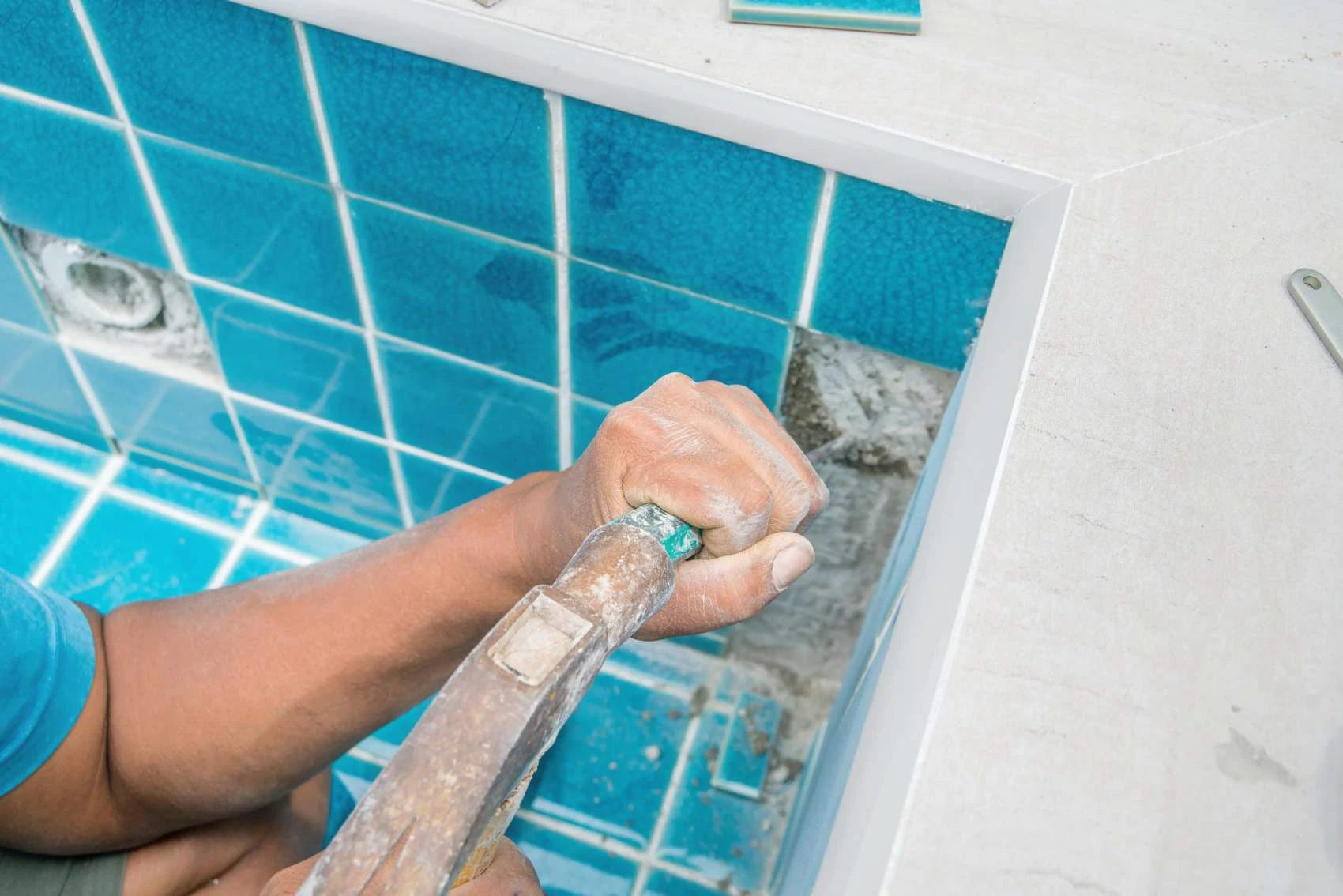
What Chattahoochee Fog Actually Deposits Into a Covered Pool
A solid safety cover or mesh cover is not airtight. Mesh covers allow water (and anything dissolved in that water) to pass through directly. Solid covers shed water, but the cover surface itself becomes a collection plate — and every time rain or snow melt pulls debris off the cover’s edges, some portion of that load ends up in the pool.
Across a Suwanee winter at roughly 1,063 ft elevation, the river corridor produces fog on 40 to 70 mornings between October and February. That fog is measurably enriched with three things that matter to pool chemistry:
- Phosphates — from decomposing oak, maple, and sweetgum leaf matter. Gwinnett’s deciduous canopy drops from late October through mid-December, and the organic breakdown continues under wet conditions all winter. Phosphate levels in pools close to the river regularly test at 1,500 to 3,500 ppb by March, versus the 100 ppb threshold where algae growth accelerates.
- Dissolved organics — tannins and humic acids that tint the water a faint yellow-brown and bind chlorine before it can oxidize anything else. This is why your first shock “disappears” with no visible effect.
- Nitrogen compounds — ammonia and amine residues from biological activity. These convert to chloramines the instant chlorine hits them, producing that “strong chlorine smell” that actually means your sanitizer is being consumed faster than it can work.
Pools more than a quarter-mile from the river corridor see a softer version of this. Pools in neighborhoods like Woodbury, Village Grove, and the interior of Laurel Springs get the phosphate and organic load from the canopy alone, without the fog multiplier. They still need a reset — just a lighter one.
The phosphate test most homeowners skip: A standard spring open tests for chlorine, pH, alkalinity, and calcium hardness. It does not test phosphates. If you don’t ask for a PhosFlock or Pool RX phosphate reading in March, you are guessing. A $12 test strip answers this question in 90 seconds.
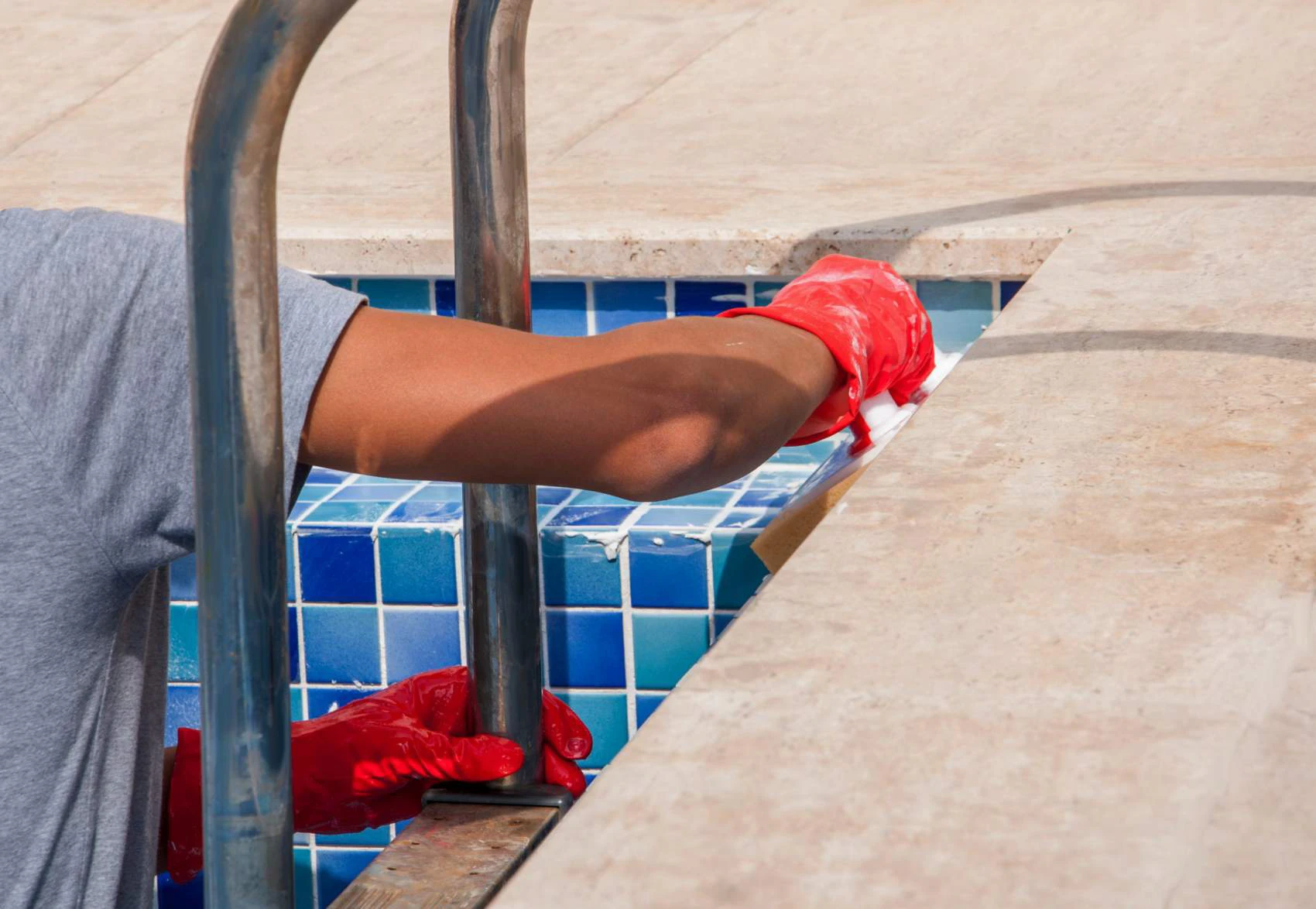
Why Your Standard Spring Open Protocol Doesn’t Work Here
The default spring opening sequence — pull the cover, brush, vacuum, shock, run the pump — works fine for a pool in Peachtree Corners or Norcross that didn’t spend 120 days under a fog line. It does not work on a Suwanee pool on or near the Chattahoochee corridor for a specific chemistry reason.
Chlorine is a reactive oxidizer. When you drop a 1-pound bag of calcium hypochlorite into a 20,000-gallon pool with heavy phosphate and organic load, here’s what happens in order: first the chlorine binds to the dissolved organics (tannins, humic acids) and is neutralized within hours. Then whatever is left reacts with ammonia and amines to form chloramines, which smell sharp but sanitize poorly. Only after both of those reactions are satisfied does free chlorine start building — and in a badly loaded pool, you may never get there with two bags.
The result is a homeowner who has dumped $80 to $160 in shock over a weekend, sees no improvement, and assumes the pool has algae that needs algaecide. They then add algaecide, which interacts with the remaining chlorine, which creates more problems. By Monday morning they have cloudy green water, a stressed filter, and a sanitizer bill that’s climbing past $200 with nothing to show for it.
The fix is sequence. Phosphate removal first, then filter clean, then shock. Do those in the wrong order and you are burning chemicals.
The Professional Reset Protocol — What $280 to $480 Actually Buys
When Primetime handles a spring chemistry reset in Suwanee, the service runs between $280 and $480 depending on pool size, proximity to the river corridor, and whether the filter media needs replacement. Here is the exact sequence, so you can evaluate any quote you receive against a known benchmark.
Step 1 — Full water panel (day 1)
We pull a water sample and run a full panel: free chlorine, combined chlorine, pH, total alkalinity, calcium hardness, cyanuric acid, phosphates, nitrates, and total dissolved solids. The phosphate and nitrate readings drive the rest of the protocol. A pool testing above 1,000 ppb phosphates gets the full reset. Below 500 ppb, we may skip the phosphate remover and go straight to filter clean and shock.
Step 2 — Phosphate removal (day 1)
We dose with a lanthanum-based phosphate remover (Orenda PR-10000 or PhosFree) calculated against the actual ppb reading. Phosphate remover binds dissolved phosphates into a particulate that the filter can catch. This is not optional on a high-load pool — if you skip this step, every subsequent shock treatment is half as effective.
Step 3 — 24-hour circulation and filter capture
The pump runs continuously for 24 hours while the bound phosphate particles accumulate in the filter. This is why the filter clean has to come after phosphate removal, not before — you want all that material in the cartridge or DE grid, then removed in one pass.
Step 4 — Filter clean or media replacement (day 2)
Cartridge filters get a full chemical soak in a dedicated filter cleaner (not just a hose rinse — a hose rinse pulls off loose debris but leaves oils, organics, and bound phosphate in the pleats). DE filters get a full tear-down, grid rinse, and fresh DE charge. Sand filters get a full backwash and a DE or cellulose fiber additive dose to tighten the filtration.
Step 5 — Shock and oxidize (day 2)
With phosphates below 200 ppb and the filter clean, a standard shock dose now works. We typically use 2 to 4 pounds of calcium hypochlorite at 73% on a 20,000-gallon pool, run the pump continuously for 24 to 48 hours, and hold chlorine above 5 ppm until the water clears.
Step 6 — Balance and stabilize (day 3)
Final adjustments to pH (7.4 to 7.6), total alkalinity (80 to 120 ppm), calcium hardness (200 to 400 ppm), and cyanuric acid (30 to 50 ppm). On Suwanee pools using Jackson EMC fill water, calcium hardness typically comes in around 120 to 180 ppm at fill — lower than Gwinnett County utility water — so expect to add calcium chloride to bring hardness into range.
What a reset does NOT include: cover removal, vacuuming, skimming, or tile cleaning. Those are part of a full pool opening service, which runs $350 to $600 depending on pool size. A chemistry reset is specifically the phosphate-strip-filter-shock sequence, typically done on a pool that has already been physically opened but isn’t clearing.
Jackson EMC Fill Water vs Sawnee — Why Source Water Chemistry Matters
Suwanee’s fill water profile is slightly different from neighboring markets, and that matters for the reset. Most of Suwanee is served by Gwinnett County Department of Water Resources for potable water, but Jackson EMC handles the electrical service for much of the area — a setup that trips up homeowners who assume utility parity with their old neighborhood.
Gwinnett County fill water typically runs:
- pH 7.8 to 8.2 (moderately high)
- Total alkalinity 60 to 90 ppm
- Calcium hardness 120 to 180 ppm (on the low side for pool water)
- Total dissolved solids 180 to 280 ppm
Compare that to Sawnee EMC territory water in Cumming and north Forsyth, which typically comes in with calcium hardness of 200 to 280 ppm and lower pH around 7.4 to 7.6. A reset protocol that works in Cumming will leave a Suwanee pool soft — meaning the water becomes aggressive toward plaster and grout, pulling calcium out of the interior surface over time. Etching, staining, and premature plaster failure follow.
When we reset a Suwanee pool in March, we almost always add calcium chloride to bring hardness into the 250 to 350 ppm range before chlorinating. Skip that step and you’ve traded a short-term algae problem for a long-term plaster erosion problem — much more expensive to fix later.
When DIY Works and When It Doesn’t
If your Suwanee pool is in one of the inland neighborhoods — Village Grove, Highgrove, Woodbury, or the upper sections of Laurel Springs — and you closed the pool properly in October with a winterization dose, DIY may still work. You’ll deal with a phosphate load from canopy leaf debris alone, typically 400 to 900 ppb by March, and a 16-ounce bottle of phosphate remover plus a careful filter clean plus a standard double shock will get you there for under $75 in materials.
Here is where DIY breaks down:
- Proximity to the river corridor. Settles Bridge, the lower sections of The River Club, and any Suwanee pool within a quarter mile of the Chattahoochee will carry phosphate loads above 1,500 ppb. At that level, a consumer-grade phosphate remover bottle isn’t enough — you need the commercial Orenda PR-10000 or equivalent, and you need to dose against an actual test reading, not a generic label recommendation.
- Filter condition. A three-year-old cartridge set that has never been chemically soaked has lost 30 to 50% of its capture capacity. If you phosphate-treat and then ask a loaded filter to catch the precipitate, half of it cycles back into the pool. New cartridges or a full chemical soak are not optional.
- Time window. A professional reset takes 72 hours. A DIY reset with trial-and-error chemistry adjustments often stretches to 10 to 14 days, and during that window you are pumping electricity and burning chemicals. Jackson EMC rates at roughly $0.13 per kWh mean a variable-speed pump running continuously for two weeks costs $40 to $70 just in electricity.
- Laurel Springs HOA architectural review. If your reset fails and you end up calling for a partial drain and refill (which some homeowners do as a last resort), you are looking at a 4,000 to 8,000-gallon discharge that has to be permitted through the Laurel Springs HOA architectural review process, typical 3 to 4 week turnaround. Avoid the whole path by handling the reset correctly the first time.
The practical test: if your phosphate reading is above 1,200 ppb or your filter is more than two years old with no chemical soaks in its history, call a professional. The math doesn’t work on DIY.
What to Ask Any Suwanee Pool Service Before You Book a Reset
Most Suwanee homeowners calling around for a spring service get pitched a “spring open” at a flat rate. That’s fine for the physical work, but it does not address the chemistry problem we’ve described. Before you book anyone, ask these five questions:
- “Do you test phosphates and nitrates as part of your opening panel, or just the standard six?” If the answer is the standard six (chlorine, pH, alk, hardness, CYA, TDS), they are not set up to diagnose a Chattahoochee-load pool.
- “What’s your protocol if phosphates come back above 1,000 ppb?” The right answer names a specific product — Orenda PR-10000, PhosFree, or Pool RX — and a specific sequence. A vague “we’d add some phosphate remover” answer tells you they are guessing.
- “How do you handle the filter between the phosphate treatment and the shock?” If they say “we don’t touch the filter,” walk away. The filter has to be cleaned or replaced in between, or the whole protocol is compromised.
- “Is filter cleaning included in your quote or is it extra?” A cartridge chemical soak adds $40 to $90. A DE filter tear-down and re-charge adds $80 to $140. A sand filter backwash is typically included. Know which one applies to your setup.
- “Do you adjust calcium hardness for the Gwinnett County fill water profile?” If they don’t mention Gwinnett water’s low hardness or Sawnee territory differences, they are running a generic protocol that will leave your plaster vulnerable.
A Suwanee pool service that answers these five questions cleanly is worth the service fee. One that fumbles them will cost you more in redo work by June.
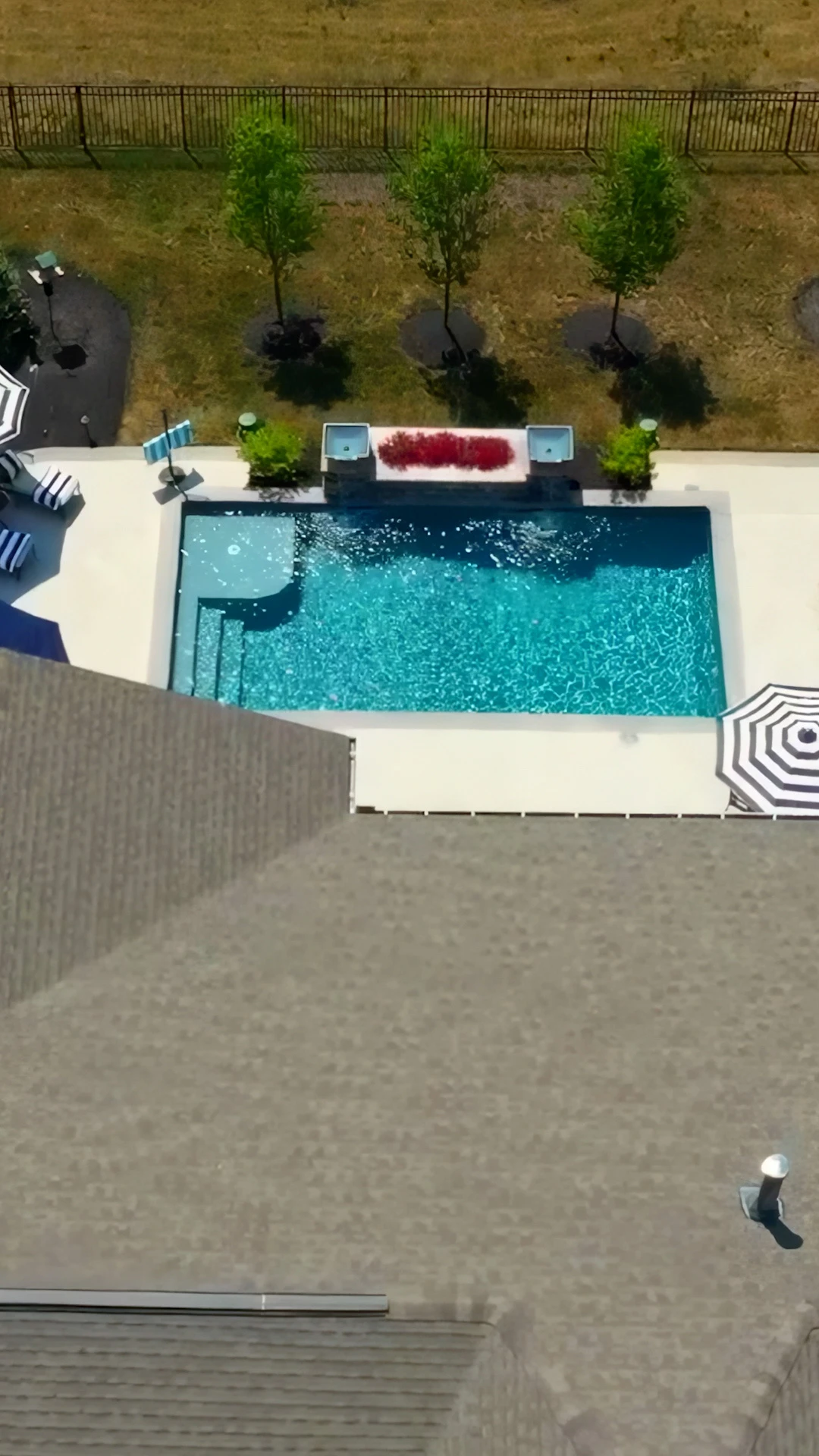
What Proper Spring Resets Look Like Over a Five-Year Span
Homeowners who commit to an annual chemistry reset in March — not a generic spring open, but the full phosphate-strip-filter-shock sequence — see a measurable difference by year 3.
The plaster holds its finish longer. Pebble Tec surfaces that are maintained with correct calcium hardness and low phosphate loads typically run 15 to 18 years before resurfacing. Pebble finishes that spend three or four summers fighting organic load and high phosphates can need attention at year 11 or 12. A resurface on a Laurel Springs or River Club pool runs $8,500 to $14,000 — a stack of five annual $380 resets is cheaper than one early resurface by a factor of four.
The equipment lasts longer too. Salt cells, in particular, hate high TDS and high phosphates. A Pentair IC40 cell that runs in a clean-chemistry pool will typically hit its 10,000-hour lifespan (about five seasons) before needing replacement. The same cell in a neglected fog-corridor pool dies in three. At $700 to $1,100 per cell, that’s real money.
Equipment, finish, and water quality all compound over time. A reset every March is not an expense — it’s a hedge against the larger repair bills that follow a pool kept chronically out of balance.
If your pool is on or near the Chattahoochee corridor, opened cloudy this spring, or has burned through more shock than normal without clearing, the reset is what you need — and waiting until May makes it harder. The phosphate load doesn’t strip itself. Handle it in March, and the rest of the season works the way it’s supposed to.
Pool Repairs & Spring Chemistry Resets Across 20+ Cities Within 30 Miles of Winder, GA
If your Suwanee pool is fighting a phosphate load you can’t shock your way out of, the reset sequence is what clears it. We handle the full protocol — phosphate strip, filter clean, shock, balance — on a 72-hour window.