
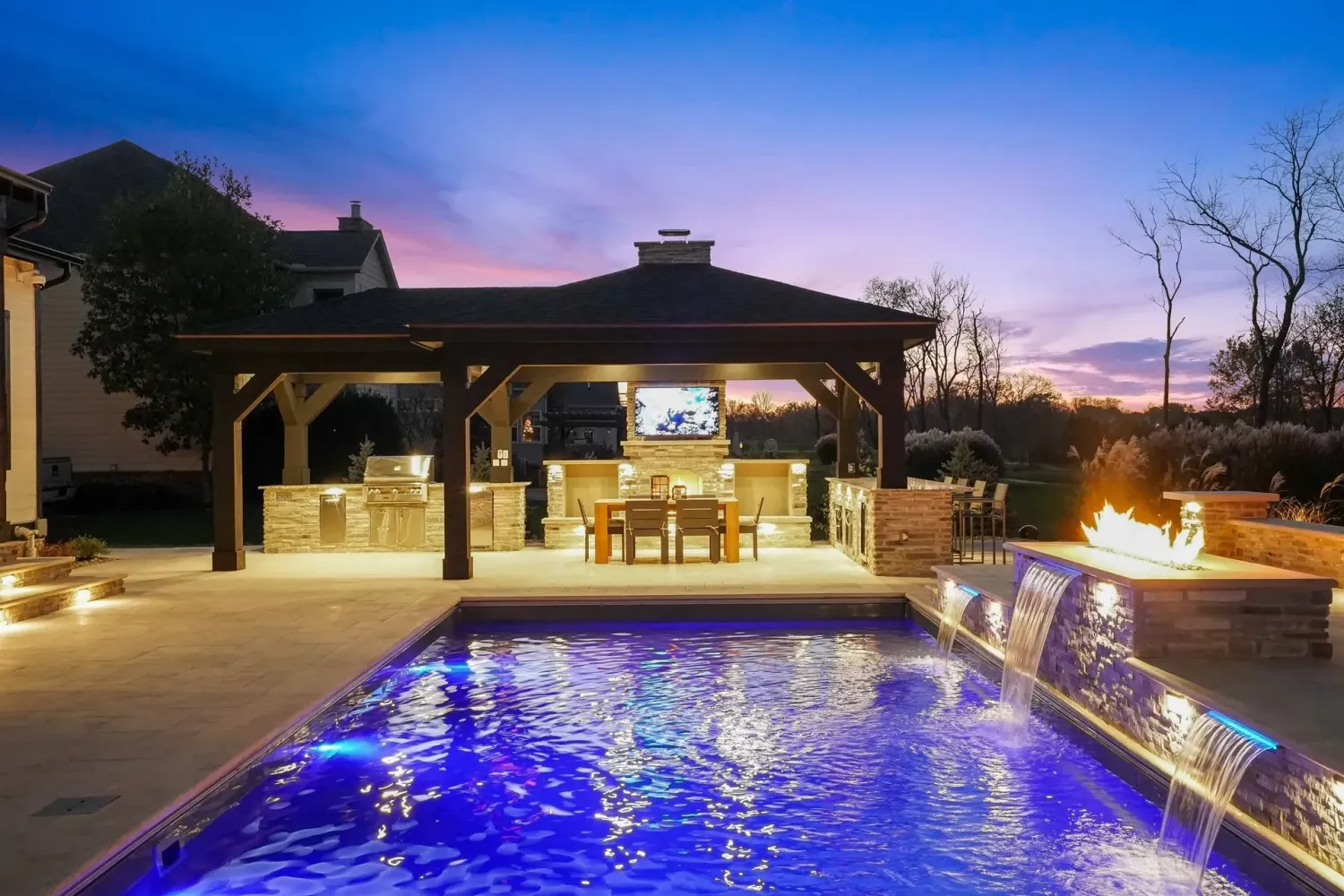
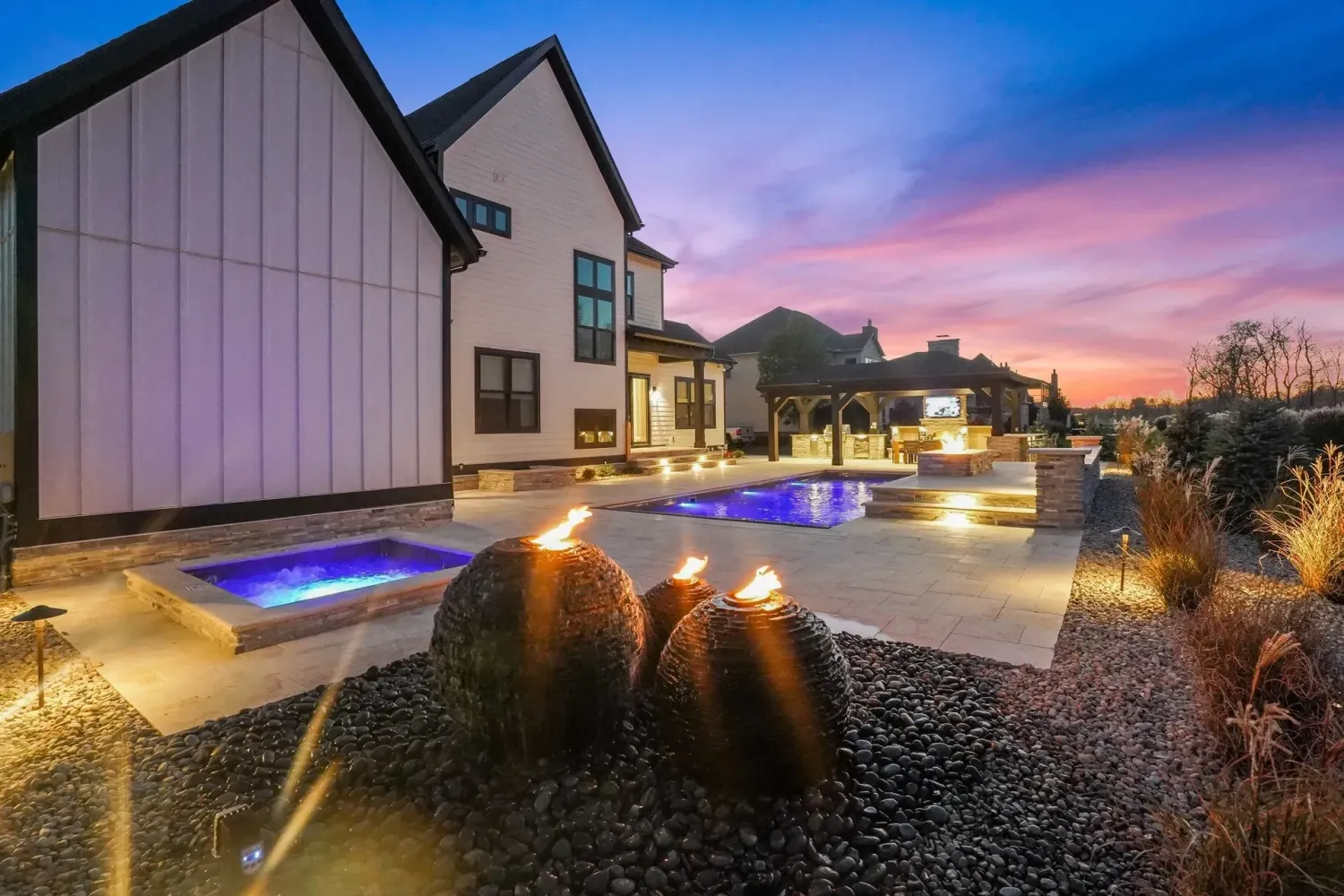
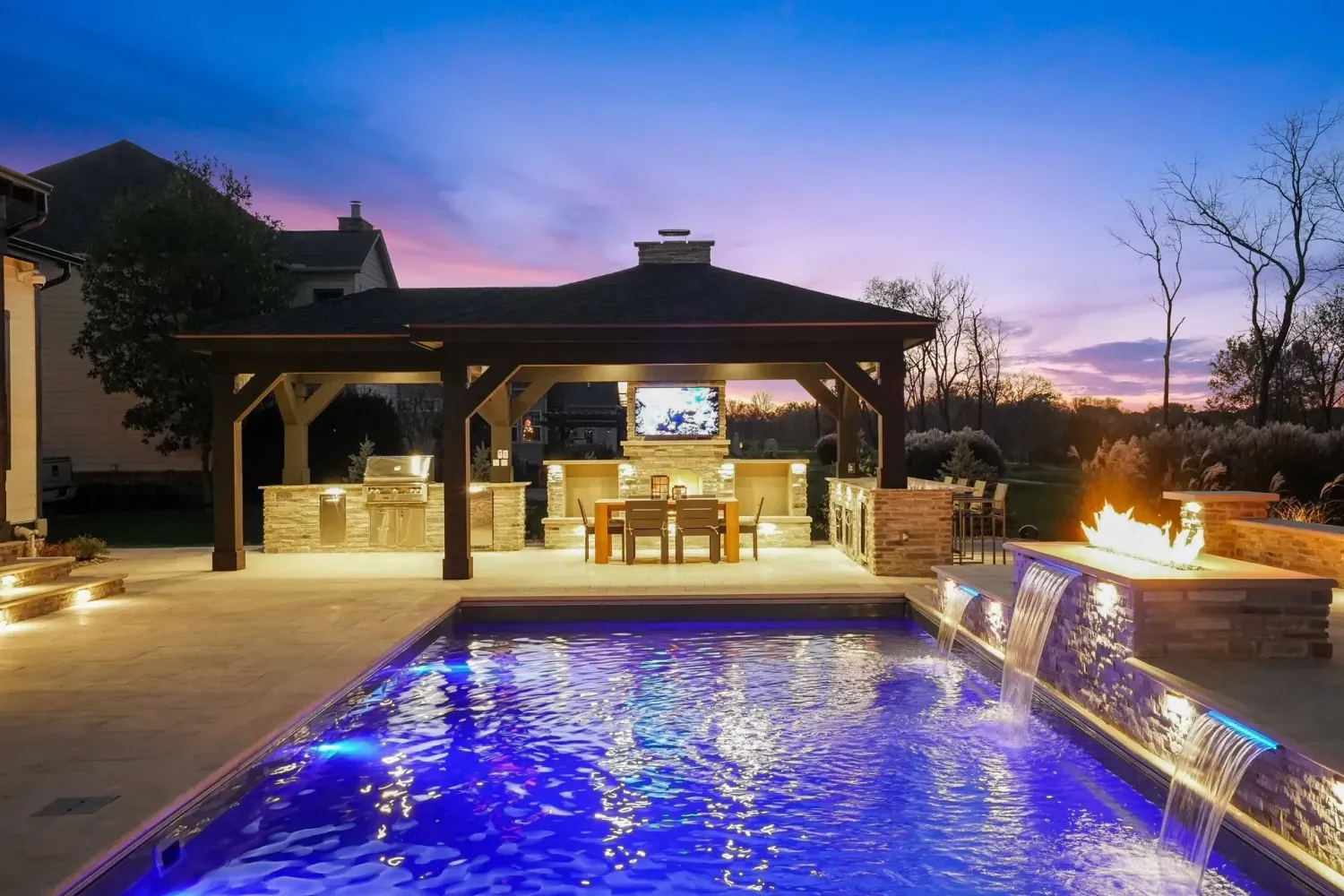
Picture a November Friday in Indian Hills. The thermometer reads 46°F at 6:40pm. A homeowner slides the door open to a lit pool, two bronze gas fire bowls throwing heat at shoulder height, and a trio of sheer descents filling the raised spa wall with white noise. That is not a stock photo. That is a specific build spec — and it is the reason we are writing this post.
For the last six years, the single most-requested Cobb County upgrade on our design sheet has been the same line item: a raised spa wall with integrated fire. It shows up on budgets for Atlanta Country Club, Marietta Country Club, Brookstone, and every custom build east of Johnson Ferry Road. The reason is not vanity. Piedmont fall nights arrive early in Marietta — at 1,118 ft elevation, the pool deck is already cold by dinner. If a pool can only be used from Memorial Day to Labor Day, the homeowner is paying for a sculpture. Fire + water integration is the specific engineering that turns a 90-day pool into a 260-day backyard.
This post is a project case study. We will walk through a real East Cobb build spec — the one we run at least a dozen times a year — and tell you exactly what it costs, exactly how the gas and electrical are trenched, and what the $18K “simpler” alternative looks like in practice. If you are planning a custom pool in Marietta and the budget conversation has stalled around “do we add the fire feature or skip it,” this is the post we wrote for you.
The Classic East Cobb Spec: What It Actually Is
The build we keep getting hired to replicate is so specific it has its own internal shorthand on our crew sheets: “3-and-2.” Three scupper sheer descents in a raised spa wall, two gas fire bowls on flanking stone pillars. Every detail has been tuned over dozens of Cobb County installations.
The raised wall sits 18 inches above the pool waterline, stacked-stone clad on the pool face, capped with a travertine overhang. The wall is the bond-beam wall of the spa — we pour it monolithically with the spa shell so there is no cold joint to chase a leak through in year seven. Three 6-inch stainless sheer descent nozzles are plumbed through the wall, each fed by its own valved line off the pump-pad manifold so the homeowner can run one, two, or all three. At the ends of the wall, the stone cladding continues up and out to form two pillars, each 22 inches square and 32 inches tall. On top of each pillar sits a 30-inch bronze gas fire bowl — usually Grand Effects, Bobe, or HPC Fire, depending on finish match.
The fire bowls run on natural gas where the street feed is available (most of Marietta proper inside I-285-to-I-575) or on buried propane where the lot is septic and gas-less (some of the Lower Roswell corridor). Each bowl pulls roughly 90,000 BTU at full burn. At a 10-foot standoff, that is enough radiant heat to keep a 46°F deck comfortable in a long-sleeve shirt.
The 3-and-2 spec at a glance: Raised spa wall 18″ above waterline · 3x stainless sheer descents at 6″ wide · 2x stacked-stone pillars 22″ sq x 32″ tall · 2x 30″ bronze gas fire bowls at ~90K BTU each · shared trench for gas + 12V LED accent wiring.
The Price Tag: $32K–$58K Above Base Pool
Let’s name numbers. In 2026 dollars, inside a 30-mile radius of Winder, the 3-and-2 package adds $32,000 to $58,000 on top of the base pool construction number. That range is not marketing fuzz — it reflects real decisions the homeowner will make in the first design meeting.
The $32K end is the builder-grade version of the same concept: raised wall with three sheer descents, two pillars, two fire bowls, but with mid-tier stone cladding (Echelon Masonry or a comparable thin veneer), standard bronze bowl finish, shared gas trench with a single 1-inch CSST line stubbed to both pillars, and LED accent lighting tied into the existing pool transformer. This package is what lands in most of Brookstone, Walton Woods, and the 1990s subdivisions on Sandtown Road.
The $58K end is the estate spec. Real stacked stone (not thin veneer — actual 4-inch-deep full-bed ledgestone), imported travertine coping from a single lot so the tone matches across the pool, both pillars plumbed for 1.25-inch dedicated gas lines so the burners can be upgraded to 120K BTU later, and a dedicated 240V Cobb EMC service subpanel at the pump pad for independent LED control. This is what gets specified in Atlanta Country Club, the new luxury infill off Indian Hills Parkway, and the Sope Creek custom builds backing to the Chattahoochee River.
Where the number lives inside that range is decided by three things: which stone, how many feet the gas line has to run from the meter, and whether the homeowner wants remote-control fire (add $2,400 for the two Warming Trends Crossfire electronic ignition modules plus a Honeywell transmitter).
The Single-Trench Decision: Gas + 12V in One Cut
The reason the 3-and-2 is a bargain instead of a tax is a single trenching decision we make on day one of the build. Every fire feature in this spec needs two utility lines: a gas line (CSST or black iron depending on local inspector preference — Cobb County Community Development at 1150 Powder Springs St. will pass either as long as the black iron is coated), and a low-voltage line for the LED accent strip that lights the stone pillar up-wash at night.
We cut one trench from the pump pad to the raised wall. Gas goes in first at 24 inches deep per International Fuel Gas Code 404.12 (Cobb County adopts IFGC 2018 with local amendments). Above it, separated by 12 inches of backfill and a green tracer tape, runs a 2-inch PVC conduit carrying 12V DMX-controlled LED wire for the pillar uplighting. One trench. One day of work. About $2,800 in avoided labor and restoration versus two separate trenches.
The 24-inch depth minimum matters in Marietta specifically because Piedmont red clay at that depth in most of East Cobb is still workable in a hand-dig around tree roots. Deeper than that and you are into granite bedrock — the Cecil series soil column that dominates Cobb typically hits rock at 3–15 feet, and in mature oak-canopy areas like Indian Hills and Sope Creek, root systems force the trench line off the ideal route. That is where a builder who has never trenched a Cobb yard will quote you $2K for rock work and then hand you a change order for $7K when the bedrock appears at 42 inches.
Cobb County permit note: Fire features connected to gas require a separate mechanical permit from the pool/structural permit. Apply same-day to avoid the two-visit inspection cascade. Permits are pulled at Cobb County Community Development, 1150 Powder Springs St.
The $18K “Simpler” Version — And What It Actually Costs You
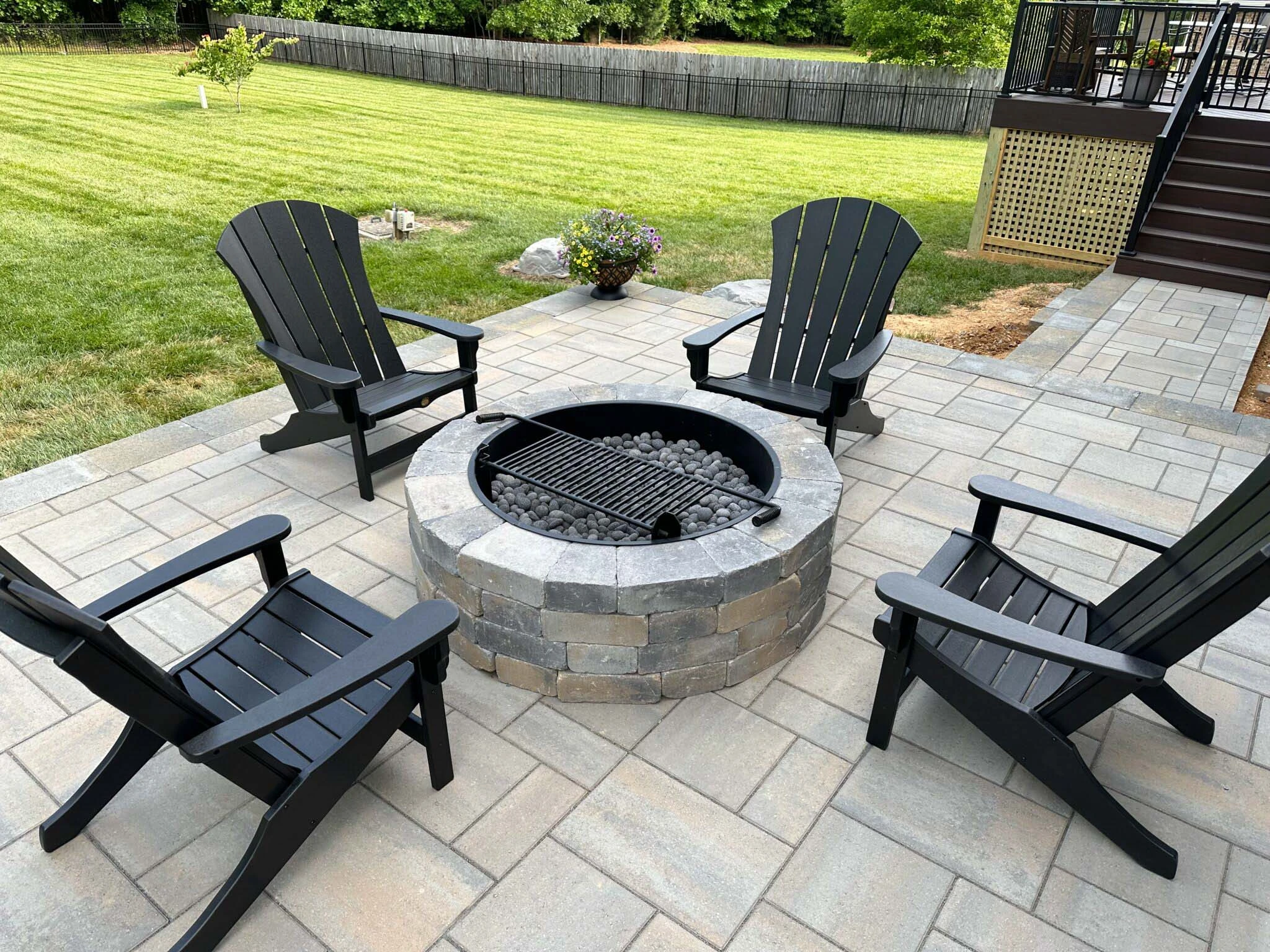
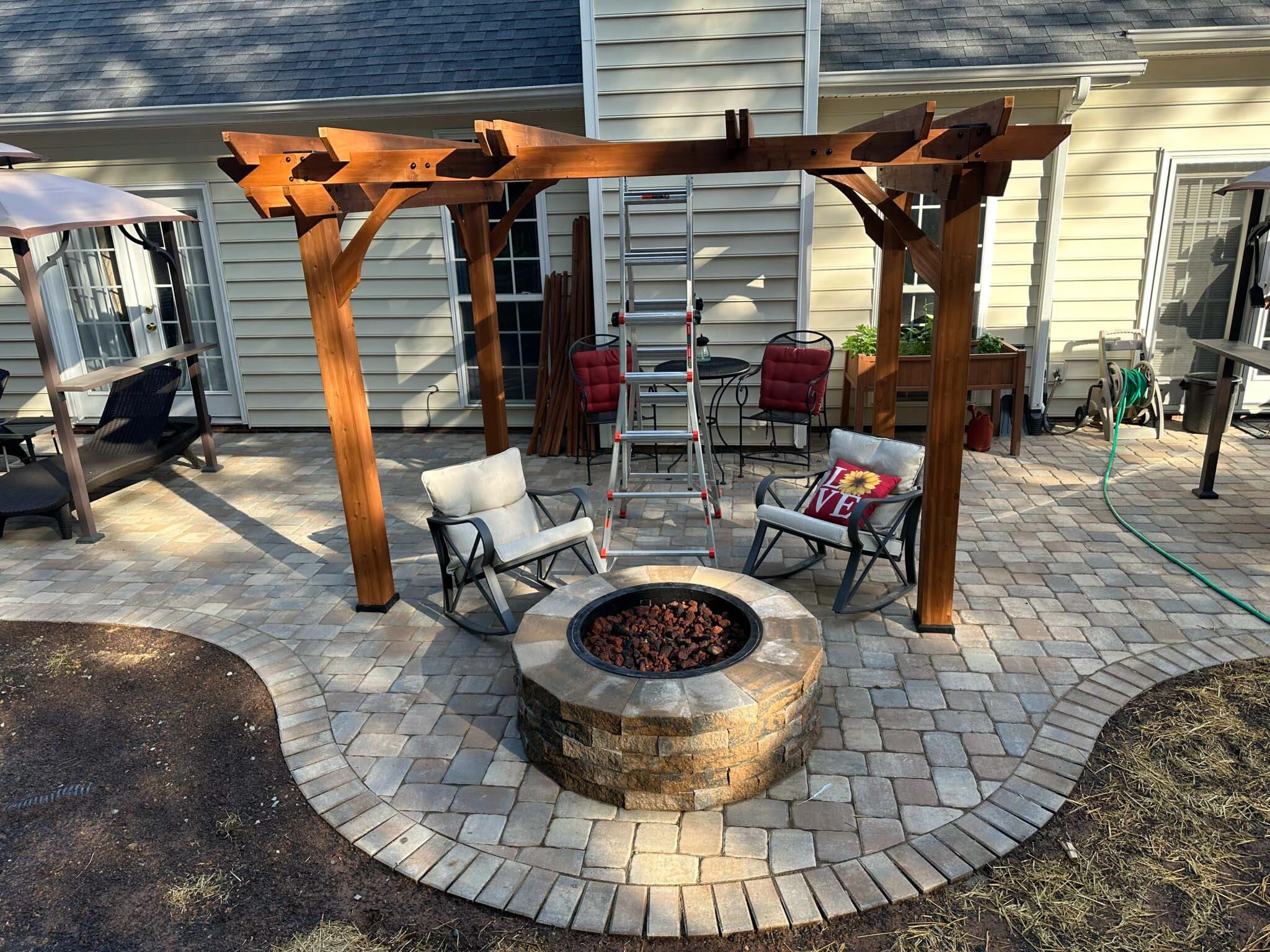
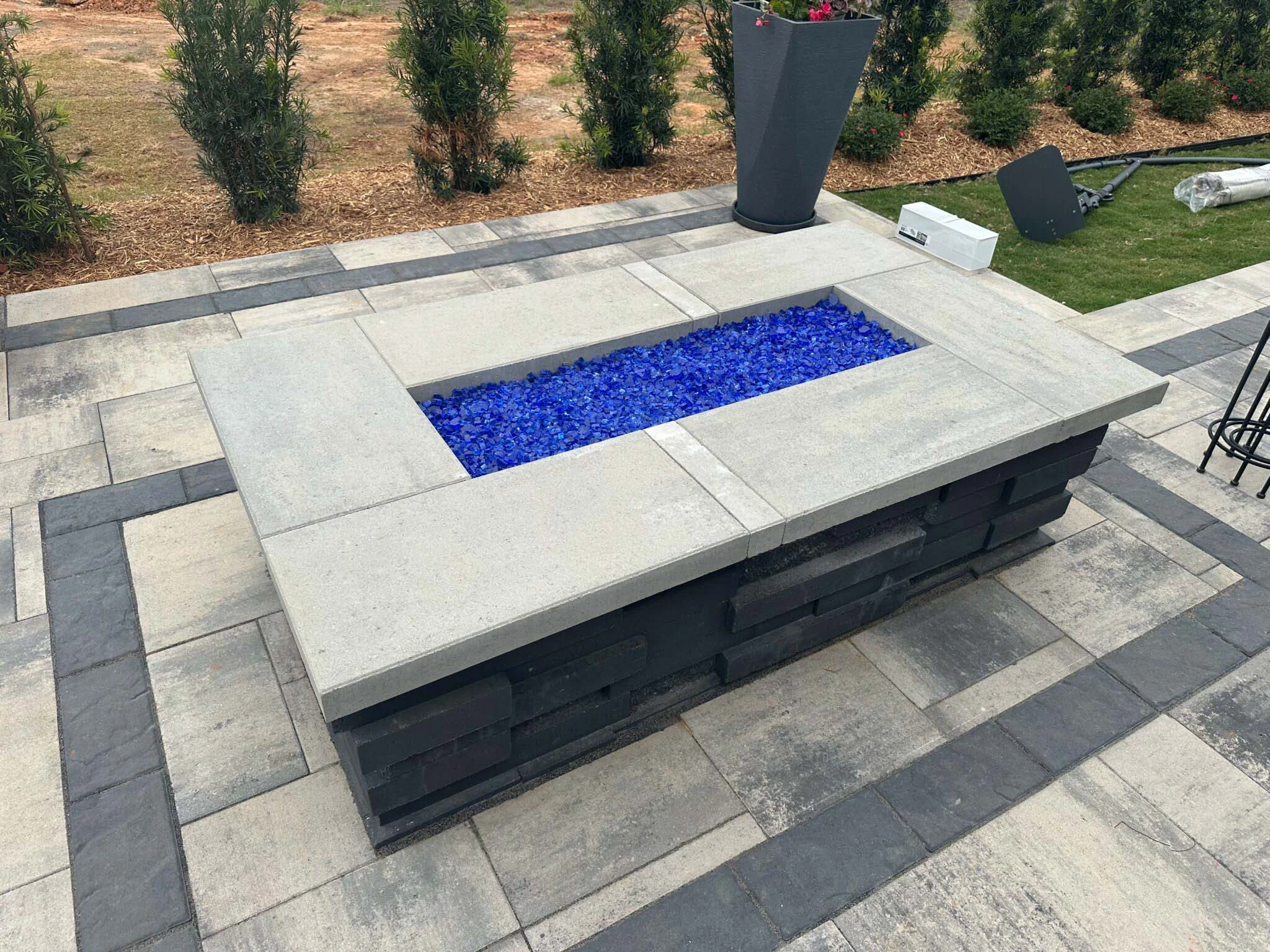
There is a real alternative, and we do build it when the budget demands it. The $18K simpler version skips the raised wall entirely. You get a detached gas firepit — typically a 48-inch round stacked-stone ring — placed 14 to 18 feet off the pool deck, fed by a single buried gas line, no water feature, no fire pillars flanking anything. The pool coping is flat, the pool perimeter is clean, and the firepit lives like a conversation piece at the edge of the turf.
That build works. It looks good. We have put it into dozens of Burnt Hickory, Chestnut Hill, and Seven Oaks yards where the homeowner correctly identified that they are not going to use a fire feature enough to justify the integrated version. If you host 4 cookouts a year and the kids swim 50 days, the $18K firepit is the correct answer.
Here is what the $18K version does not give you — and this is the honest pitch we make to clients who are on the fence:
- Heat at the pool edge. The detached firepit is 14+ feet away. Radiant heat drops with the square of distance. By the time it reaches the pool coping, it is unusable. You are in the pool or at the firepit — not both.
- The raised-wall acoustic. The three sheer descents aren’t decoration. They mask HVAC hum from neighboring houses (in dense East Cobb subdivisions this is a real quality-of-life issue), and they create the resort-quality sound bed that makes a backyard feel like it is somewhere else.
- Night-use aesthetics. LED pool lighting alone looks like a swimming pool. LED pool lighting plus two bronze flames reflecting off three moving water curtains looks like the cover of a landscape architecture magazine. The $40,000 gap is the aesthetic gap.
- Resale anchor. In Atlanta Country Club and the Indian Hills tear-down market, the 3-and-2 spec consistently appears in the listing photo that sells the house. The detached firepit rarely makes the MLS hero image.
None of that is sales theater. Those are the four trade-offs the $18K version is actually making. If they do not matter to the household, skip the wall. If they do matter, the 3-and-2 is worth the line item.
Year-Round Usability: The Math That Justifies the Number
This is the math we walk clients through when the $40,000 decision is on the table. Marietta sits on the USDA Zone 7b/8a border with roughly 22 freeze events a year. Summer highs hit 90–94°F. Annual rainfall averages ~52 inches. What those numbers mean for a pool homeowner:
- May through September: Pool is the star. Fire feature is cosmetic. ~150 days.
- Late September through early November: Pool is heated or closed. Fire feature is the reason the backyard is used at all. ~45 days.
- Mid-November through mid-March: Pool is closed. Fire feature pulls 2–4 use nights per week (weather permitting) and every major holiday gathering. ~65 days.
- Mid-March through April: Shoulder season — pool opening, firepit anchoring weekend cookouts. ~20 days.
That is 130 use nights beyond pool season — nights the backyard would otherwise be dark. At a $40K delta between the $18K alternative and the $58K full spec, the cost per incremental use night over a 15-year build lifecycle is roughly $20. A dinner delivery for a family of four costs more than that. That is not a justification argument; it is a usage argument. The spec pays itself back in nights used, not in resale dollars.
The detail homeowners underestimate is wind. Marietta’s northern edge butts against Kennesaw Mountain (1,808 ft), and mountainside-facing lots in Burnt Hickory and parts of Brookstone catch prevailing winds that can blow a small gas bowl flame sideways and dim the experience. On those lots, we specify a wind-shielded burner pan — typically the HPC Penta 30-inch with a low-profile glass wind guard. Adds $380 per bowl. Worth every dollar on the exposed lots.
Inspection, Permits, and the Cobb-Specific Details
Three Cobb-specific things trip up out-of-county builders who take a Marietta job without knowing the territory. We handle all three without a second thought, but they are the reason a pool that should cost $32K extra ends up at $48K when the wrong crew pulls the permit.
1. Cobb EMC is not Georgia Power. Most of Marietta outside the incorporated city limit is served by Cobb EMC. Their 240V service drop for a pool-equipment pad is wired differently than a Georgia Power service, and the inspection card sequencing is different. We coordinate the rough-in with Cobb EMC’s new-service desk before the concrete pour so the subpanel location lines up with their transformer. Miss this and you are paying for a 90-foot trench run across a finished backyard to correct it.
2. Marietta Power serves incorporated city addresses. Homes inside the City of Marietta limit (generally the 30060 and parts of 30064 zip codes) are served by Marietta Power, not Cobb EMC and not Georgia Power. Small municipal utility, responsive, but they require a separate load-calculation submittal for any new 240V service. Skip that and the electrical inspection fails.
3. HOA reviews are not optional in the high-end subdivisions. Atlanta Country Club, Indian Hills, Marietta Country Club, and several of the gated sections of Brookstone all require an Architectural Review Committee (ARC) approval before a pool permit is even pulled at the county. ARC packages typically need site plan, elevation renderings showing the fire feature massing from the street-side neighbor’s perspective, and material samples. Budget 3–6 weeks for ARC review before the clock even starts on the Cobb County permit.
Utility & HOA sequencing: Cobb EMC rough-in coordination → ARC approval (if applicable) → Cobb County mechanical permit for gas → structural pool permit → inspection cascade. Skip a step and the build stalls 4–8 weeks.
Material choices that age well in Marietta
The last thing that separates a 3-and-2 spec that looks great for 20 years from one that looks tired at year 7 is material selection. Marietta’s climate is harder on pool-adjacent materials than people realize — 52 inches of rain, 22 freeze cycles, UV load of a southern exposure, and East Cobb’s dense oak/poplar canopy that drops 8–10 weeks of leaf load into every skimmer.
For the raised wall stone cladding, we specify either Tennessee fieldstone (full-bed, not thin veneer) or Echelon Masonry ledgestone for the budget tier. Both age gracefully. What we avoid is manufactured concrete stone — it holds moisture, delaminates at the freeze-thaw line in year 6 to 8, and looks chalky after repeated pressure-washing.
For the coping and pillar caps, travertine is the default. We specify unfilled/tumbled cream travertine from a single-lot order so the tone is consistent. Travertine is porous — that is a feature, not a bug, because it stays cool underfoot in full Marietta summer sun. It does require sealing every 3–4 years with a penetrating sealer (not a surface sealer, which turns glossy and looks wrong on a natural stone).
For the fire bowl finish, we specify patinated bronze over chemically-aged copper. Bronze holds its tone through the Zone 7b/8a freeze cycles. Raw copper turns verdigris within 24 months in Marietta’s humidity — beautiful on an old colonial roof in Virginia, ugly and streaked on a 30-inch fire bowl pedestal in East Cobb.
For the paver deck surround, we have been specifying Techo-Bloc Blu 80 Smooth in gray blend or Belgard Dimensions in a similar large-format. Large-format pavers have fewer joints, which means fewer failure points when the East Cobb leaf canopy is working against you every fall. Smaller-format pavers (the 4×8 Holland style) look dated and collect leaf debris in the joints.
When to say no — the honest recommendation
We do not put the 3-and-2 into every Marietta pool we build. Three situations where we actively talk clients out of it:
- Small lots where the pool is already tight to the house. If the pool-to-house setback is under 14 feet, a raised wall with fire pillars will feel crowded. The proportions are wrong and no amount of good stonework fixes that. On tight lots we specify a simpler raised spa wall with spillover only, or move the fire feature to a detached pad in the turf area — the $18K version, which on a small lot actually reads better than the full spec.
- Households that will genuinely not use the pool past October. The math only works if the fire feature is used. If the honest answer is “we travel in the fall and winter,” the $40K delta is better spent on a larger pool, a better heater, or an extra bathroom. We have had that conversation with plenty of Marietta Country Club and Sope Creek clients and they were grateful for the redirection.
- Wind-exposed mountainside lots without wind-shield burner specs. A standard gas bowl on an exposed Burnt Hickory ridge lot is a frustrating appliance. Either spec the Penta 30 with the glass wind guard or move the fire feature to a sheltered corner of the deck. Do not install an unshielded bowl on an exposed lot and hope — it will be used six times a year.
The 3-and-2 is the right answer for about 60% of the Marietta custom pools we build. The other 40% gets a different answer, tuned to the lot, the household, and the real usage pattern. What we do not do is sell the same spec into every project and call it a day.
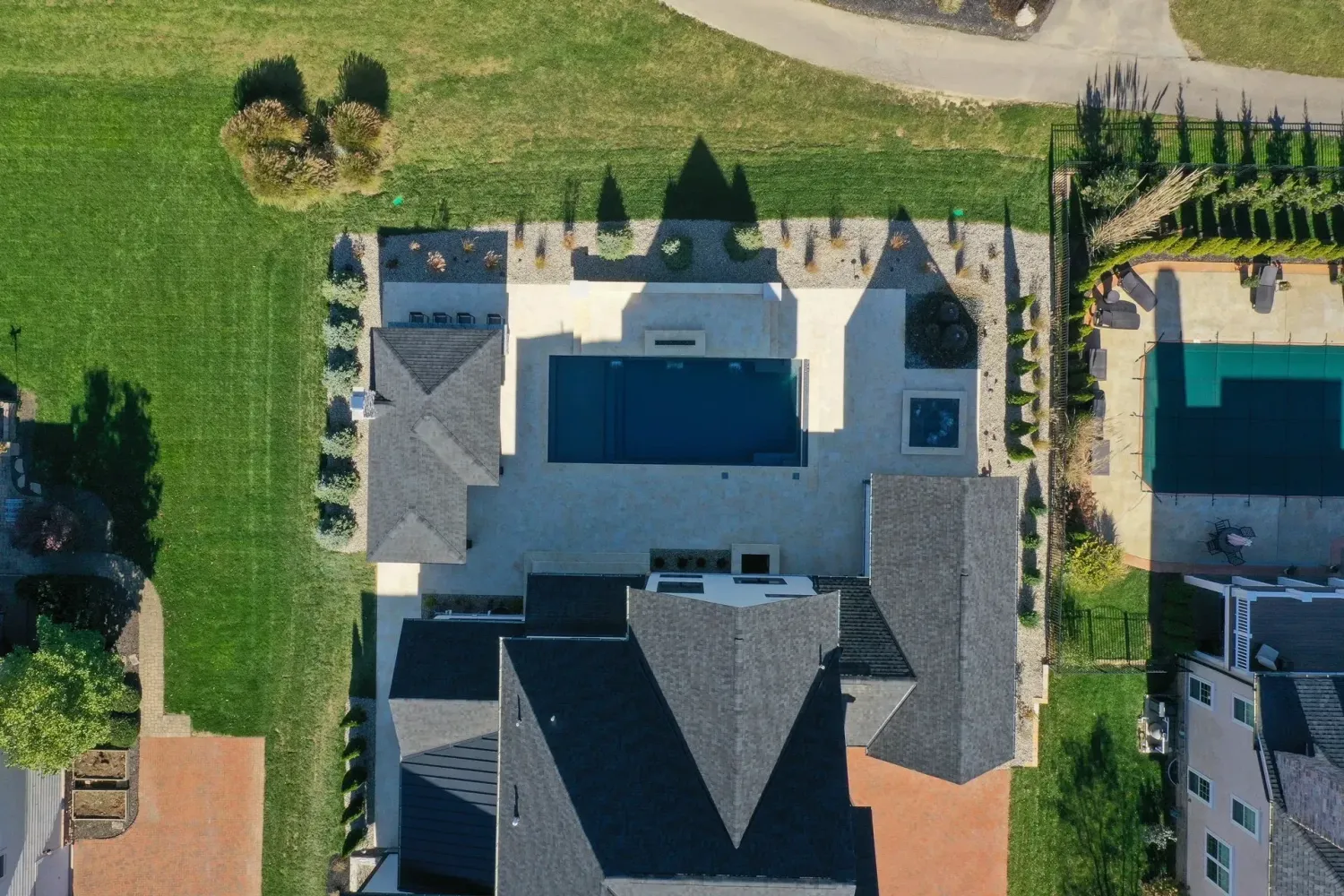
Integrated fire + water pool builds across 20+ cities within 30 miles of Winder, GA
If you’re planning a custom pool in Marietta and weighing the 3-and-2 spec against a simpler firepit, we can walk you through the numbers on your specific lot — including Cobb EMC coordination, HOA submittal, and trench routing.