
The homeowner on Foxcreek had already priced it out three times and come back with three different numbers. A pool permit in February. A pavilion addition six months later. A gas firepit the following spring. Each pull added fees, rescheduled inspections, and another week of trucks on a sloping Dawson County driveway. We sat at the kitchen table, pulled up the Dawson County Department of Planning & Development checklist, and showed him the option that almost nobody uses: one combined permit, one set of drawings, one inspection calendar — filed together at 25 Justice Way in a single afternoon.
The combined submittal saved him $320 to $540 in duplicate application fees alone. More importantly, it let us engineer the whole backyard as a single structure — pavilion footings placed with the pool shell in mind, gas trench sized once for both the firepit and a future outdoor kitchen, electrical run under the deck before the pavers went down. This post is a walkthrough of exactly how that project came together, starting with the permit strategy and ending with the final stone veneer on the fireplace. If you are thinking about a pool-plus-pavilion-plus-fire project anywhere in Dawson County, the sequence below is how you keep the budget honest and the timeline under control.
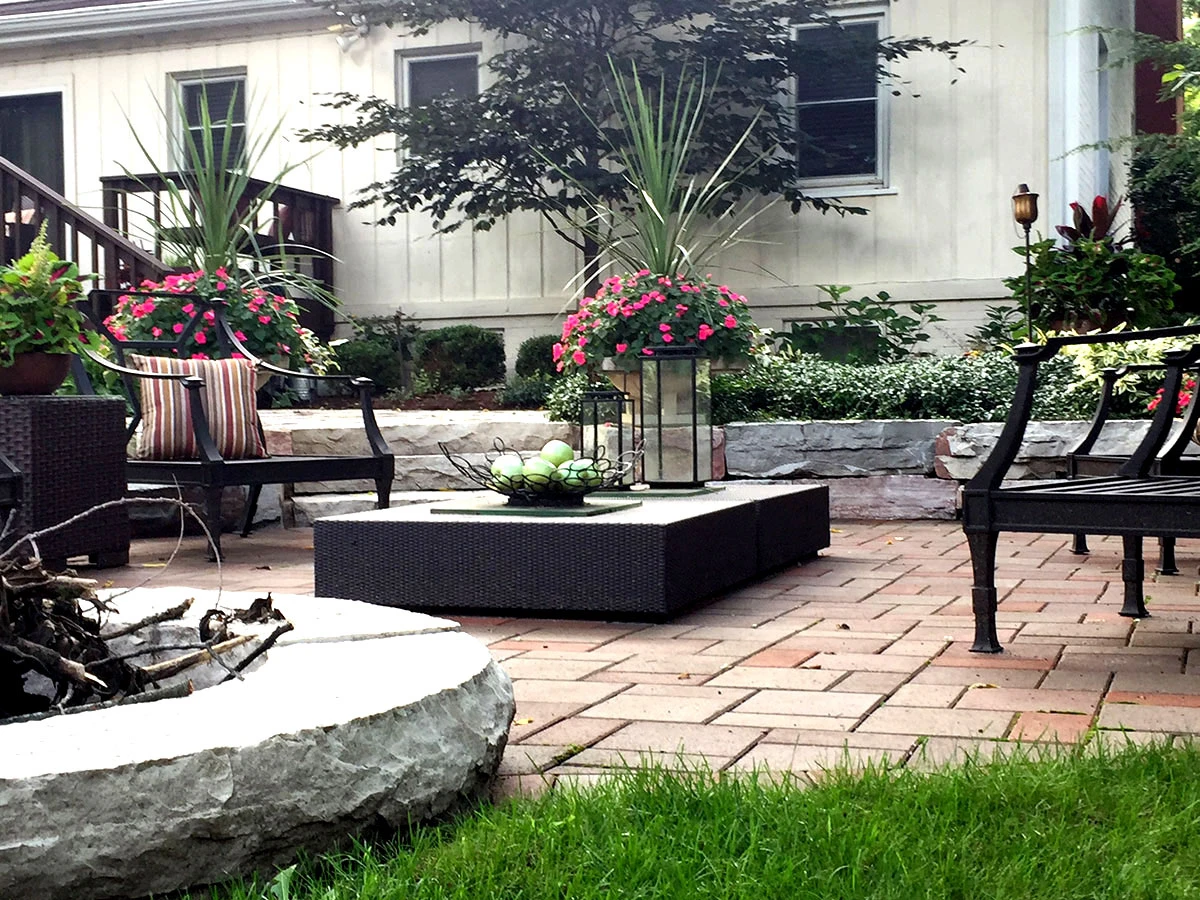
Why Dawson County Allows Combined Permits (and Why Almost No One Files That Way)
Dawson County’s planning office sits on 25 Justice Way, a short drive off GA-400. Unlike some Metro Atlanta counties that insist on separate permit files for pool, pavilion, and gas lines, Dawson’s plan reviewers will accept a combined residential accessory-structure submittal when the drawings show the pool shell, the pavilion footings, the gas trench, and the electrical service all on one site plan. The trick is that the contractor has to actually draw it that way — most don’t, because the three trades usually enter the project on three separate phone calls.
Here is what the fee math looks like on a typical Foxcreek or Kensington Ridge lot. A standalone pool permit on a residential build with a fiberglass or gunite shell runs in the mid-three figures. A detached pavilion with footings and a roof runs another chunk. A gas line permit for a firepit or outdoor kitchen is smaller but still requires its own application, its own plan review, and its own inspection. Filed separately, those three pulls — plus the re-inspection fees that almost always show up when the pavilion goes in over disturbed soil from the pool dig — come out $320 to $540 higher than a single coordinated submittal.
The reason nobody files combined is logistics. To submit one permit you have to have one site plan, one structural engineer stamp covering all three elements, and one set of load calcs showing how the pavilion footings interact with the pool shell. That means the designer and the builder both have to know what is going on the lot before the first hole gets dug — which, if you are doing this one trade at a time, is exactly what never happens.
The Dawson County combined-permit checklist: Site plan showing pool shell, pavilion footprint, gas trench run, and electrical service on one sheet. Structural engineer stamp covering pool shell, pavilion post footings, and any attached fireplace. One soil/geotech note addressing saprolite or weathered granite if applicable. Filed at 25 Justice Way, Dawsonville.
The Structural Cross-Dependency Nobody Mentions: Pavilion Footings Near a Pool Shell
The single biggest reason homeowners regret building a pool first and a pavilion second is that the pavilion footings almost never land where you want them. Dawsonville’s typical residential lot has 1,270 feet of elevation to work with, and the backyard usually drops 3 to 8 feet from the house pad to the rear property line. That grade change means the pavilion posts end up carrying more load than a flat-ground structure because they are often anchored in fill or in the zone of influence around the pool excavation.
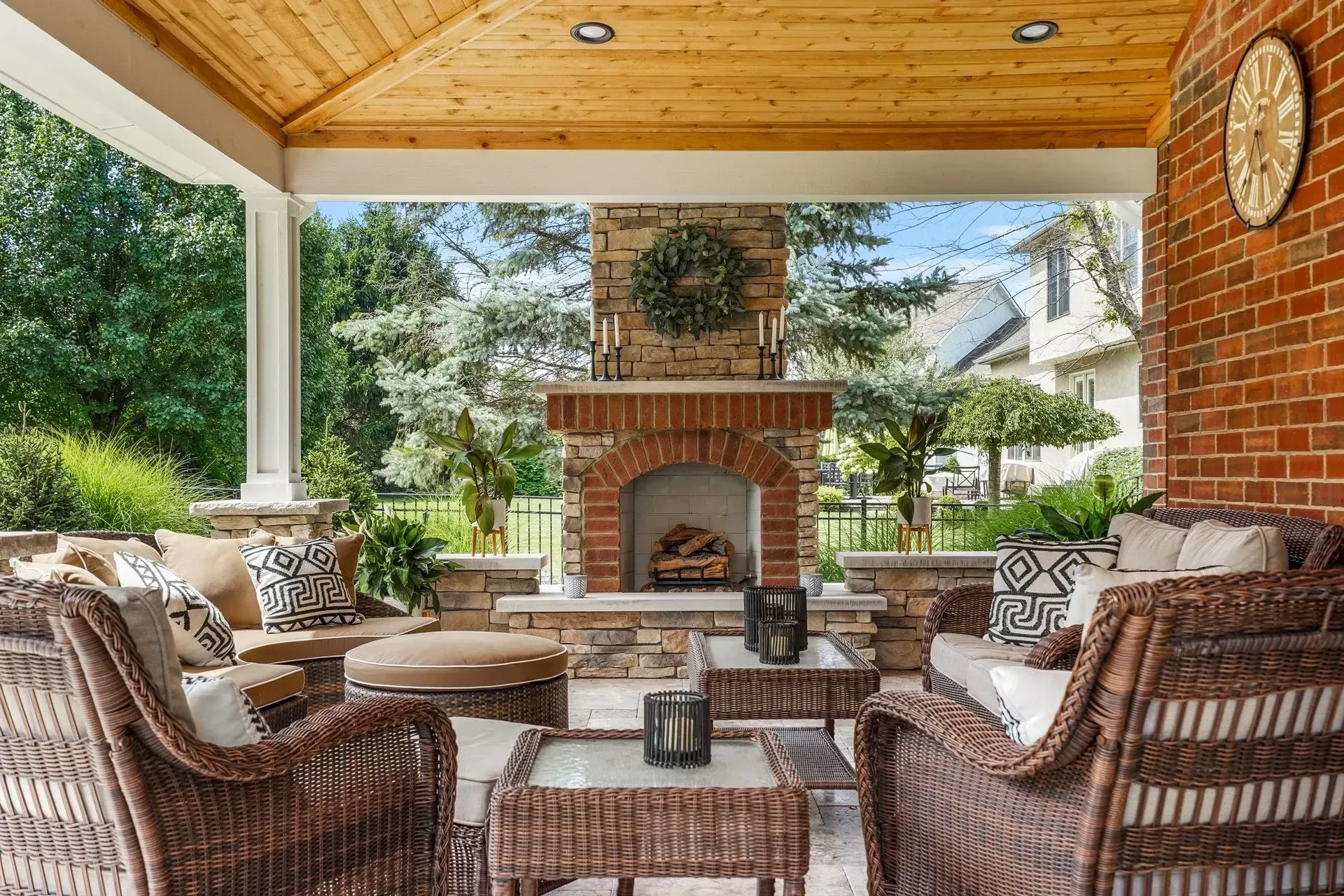
The rule we follow on every pool-plus-pavilion build is a minimum 36-inch separation between the outside face of any pavilion footing and the outside face of the pool shell. That is measured at the base of the footing, not at the surface. If the pool shell is gunite and the pavilion post footing is a drilled pier, the 36 inches is about keeping the piers’ bearing cone of influence out of the soil that is actively supporting the pool wall. Set the footing closer and you are asking one structure to rely on soil that is simultaneously being relied on by the other — which works until the first really wet spring, and then it does not.
On the Foxcreek project, the pavilion sat on four 24-inch drilled piers at a depth of 42 inches into weathered granite. The engineer specified helical piers as a backup in case the excavator hit continuous rock and could not reach depth — which, as we will get into, is a real risk in this part of the county.
Gas Trench Strategy: Roughing In the Future Outdoor Kitchen Now
The firepit is rarely the most expensive gas fixture a homeowner will want in the backyard. It is the first. Three or four years in, the same homeowner is almost always asking about a built-in grill, a side burner, a gas heater for the pavilion, or all three. If the gas trench was sized for a single firepit, adding any of that later means pulling a new permit, re-trenching a live backyard, and often cutting through paver deck that is now three years into its bedding.
The move we make on every combined-permit job is to pull a trench sized for the whole future layout while the excavator is already on site. A single 3/4″ CSST line with an appropriately sized regulator can feed a firepit, a grill, and a heater from the same run — as long as the line is sized at the planning stage. Roughing in that extra capacity during the pool excavation adds about $1,400 to $2,200 in material and labor. Doing it four years later, after the deck is laid and the landscape is planted, runs three to five times that and takes the backyard offline for two weeks.
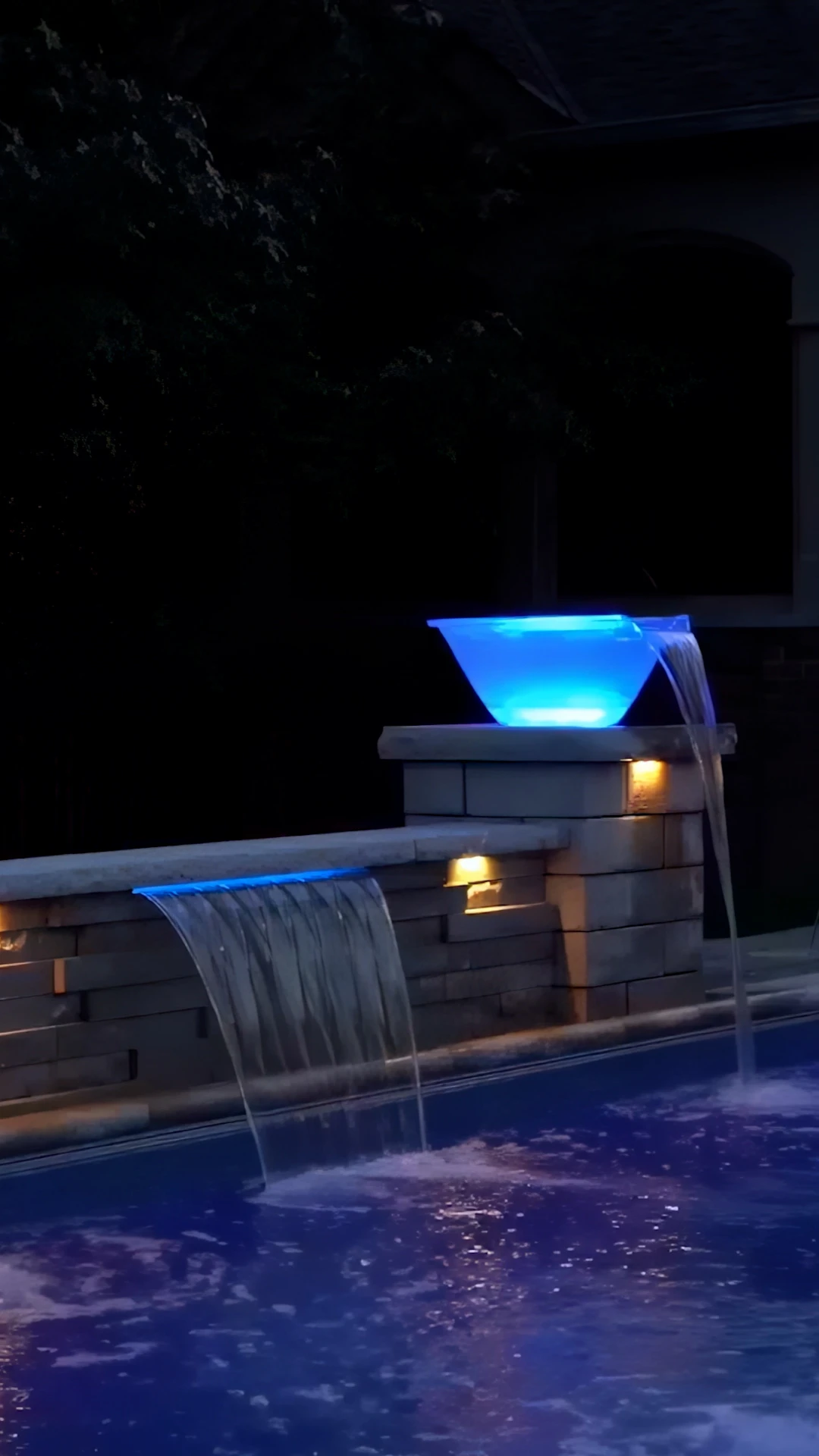
The permitting piece on the gas trench is where Dawson County’s combined-permit route pays off twice. If the firepit is on the original permit, the gas trench is part of the original inspection. If you add the grill island two summers later on a separate permit, you are in front of a plan reviewer explaining why an existing gas line has capacity you never declared — which is a conversation that can go sideways quickly. Declare the total load up front, size the line for it, and the inspector signs it off once.
Gas trench sizing rule of thumb: A single 3/4″ CSST line with a 2-psi regulator and appropriate step-down at each appliance will typically carry a firepit (65,000 BTU), a grill (80,000 BTU), and a pavilion heater (40,000 BTU) within a 60-foot run. Beyond 80 feet or higher BTU loads, step up to 1″ line. Always confirm with a licensed gas installer running a load calc against the actual fixture list.
The Rock Problem: What Excavating in Dawsonville Actually Looks Like
Dawsonville sits at the southern edge of the North Georgia foothills, and the subsoil here is not the Piedmont red clay that most Atlanta-metro pool builders grew up digging in. Below the first 18 to 30 inches of topsoil and residuum, you hit weathered granite and saprolite — partially decomposed bedrock that can be dug with a teeth-and-bucket on a good day and requires hydraulic breakers or rock blast charges on a bad one.
On about one in four Dawsonville pool excavations we run, the excavator hits continuous rock somewhere in the dig and has to switch tools. On roughly one in ten, we end up bringing in a licensed blasting subcontractor for controlled charges. That blast work runs a premium of $8 to $14 per cubic yard over the standard excavation rate, and on a 40,000-gallon gunite pool you are often looking at 80 to 120 cubic yards of rock that needs to move.
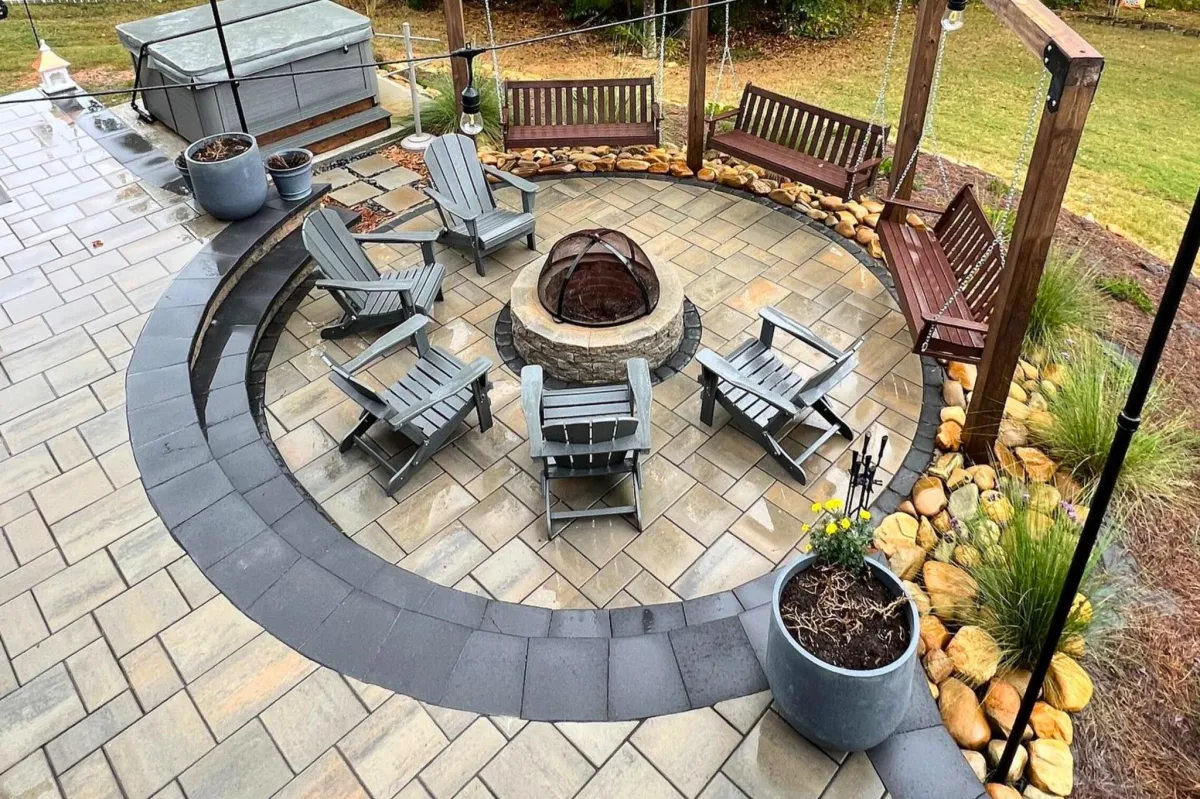
The reason this matters for a combined-permit project is that the pavilion footings and the gas trench both have to live inside that same excavation plan. If the pool dig hits rock on the east side of the shell, the pavilion pier in that quadrant is going to hit rock too — and the gas line is going to have to detour. A good contract for Dawsonville work builds an explicit rock clause: a unit rate per cubic yard of rock removal above a stated baseline (we typically set it at 5 cubic yards — anything under that, we absorb; anything over, the unit rate kicks in).
That clause is not a way to inflate the project — it is the single most honest way to handle a condition nobody can see until the bucket is in the ground. Homeowners who refuse to sign a rock clause end up with contractors who load that unknown into the base price, which is why Dawsonville pool bids almost always come in higher than the same pool in Snellville or Lawrenceville.
HOA 3D Rendering Requirement — and Why It Works in Your Favor
Many of the newer Dawsonville neighborhoods — Mountain Laurel, Applewood, the newer sections of Etowah River Club, and parts of Kensington Ridge — have HOA covenants that require a 3D rendering of any pool, pavilion, or accessory structure before the architectural review committee will sign off. Older homeowners sometimes groan at this requirement. We have come around to treating it as a feature, not a bug.
The reason: a 3D render forces every design decision to the surface before the first shovel goes in. Pavilion roof pitch, stone veneer selection on the fireplace, paver color run, coping profile, landscape screening on the north property line — all of it has to be resolved in a model that the HOA can look at. That same model is what the structural engineer is going to use for the combined-permit submittal. That same model is what the site supervisor is going to print and take to the jobsite.
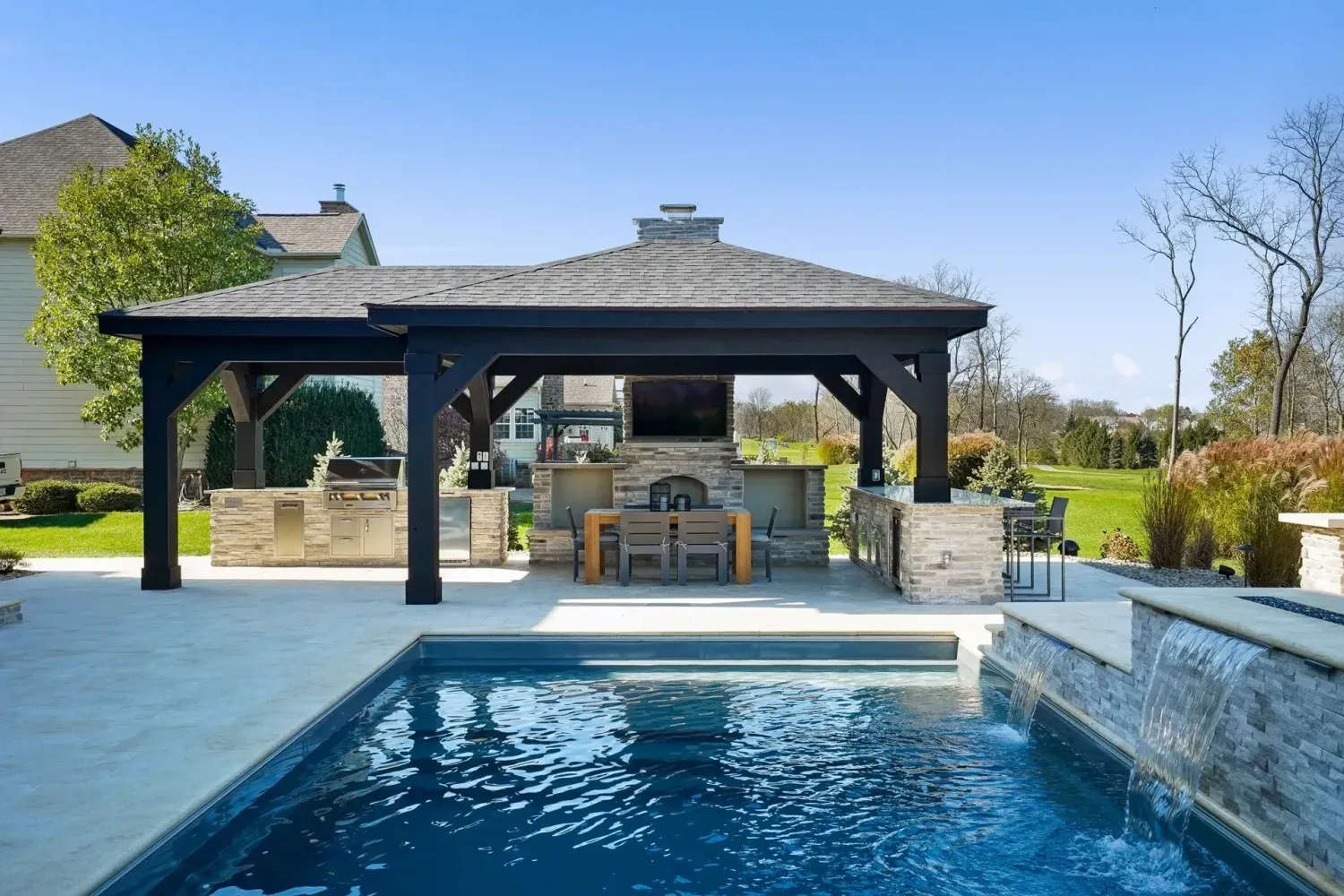
On the Foxcreek project we ran the initial rendering cycle in two weeks and went through three revision rounds with the HOA before approval. The render cost ran inside the design fee. What it bought us was an HOA-approved, engineer-stamped, owner-signed design that we did not have to renegotiate in the field — which is where most pool-pavilion-fire projects bleed time and money.
Electrical Coordination: Amicalola EMC Service Drops and Bonding
Most Dawsonville homes north of Hwy 53 are on Amicalola EMC for electrical service. The service drop — the overhead or underground line from the transformer to the meter — is almost always sized for the original house load, and a pool, pavilion, and outdoor kitchen combined will add between 60 to 100 amps of additional demand once you factor in pool pumps, pavilion lighting, fireplace accessories, and any future appliances.
On a combined-permit submittal, the electrical load calc has to show all of that on one sheet. We have had projects where the existing service was a 200-amp panel running at 85% capacity — which means a new 60-amp subpanel for the pool equipment alone would push the service into overload. In those cases the homeowner has to plan for an Amicalola EMC service upgrade, which typically adds 3 to 6 weeks to the timeline if the transformer has to be swapped, and a dollar figure that varies by distance from the nearest primary line.
The bonding requirement is non-negotiable. Any metallic structure within 5 feet of the pool waterline — which can include pavilion posts, pergola columns, fireplace reinforcement steel, and grill island frames — has to be bonded to the pool’s equipotential bonding grid per NEC §680. Running that bond after the fact means tearing up deck. Running it during the combined excavation means one bond wire, one inspection, one number on the load calc.
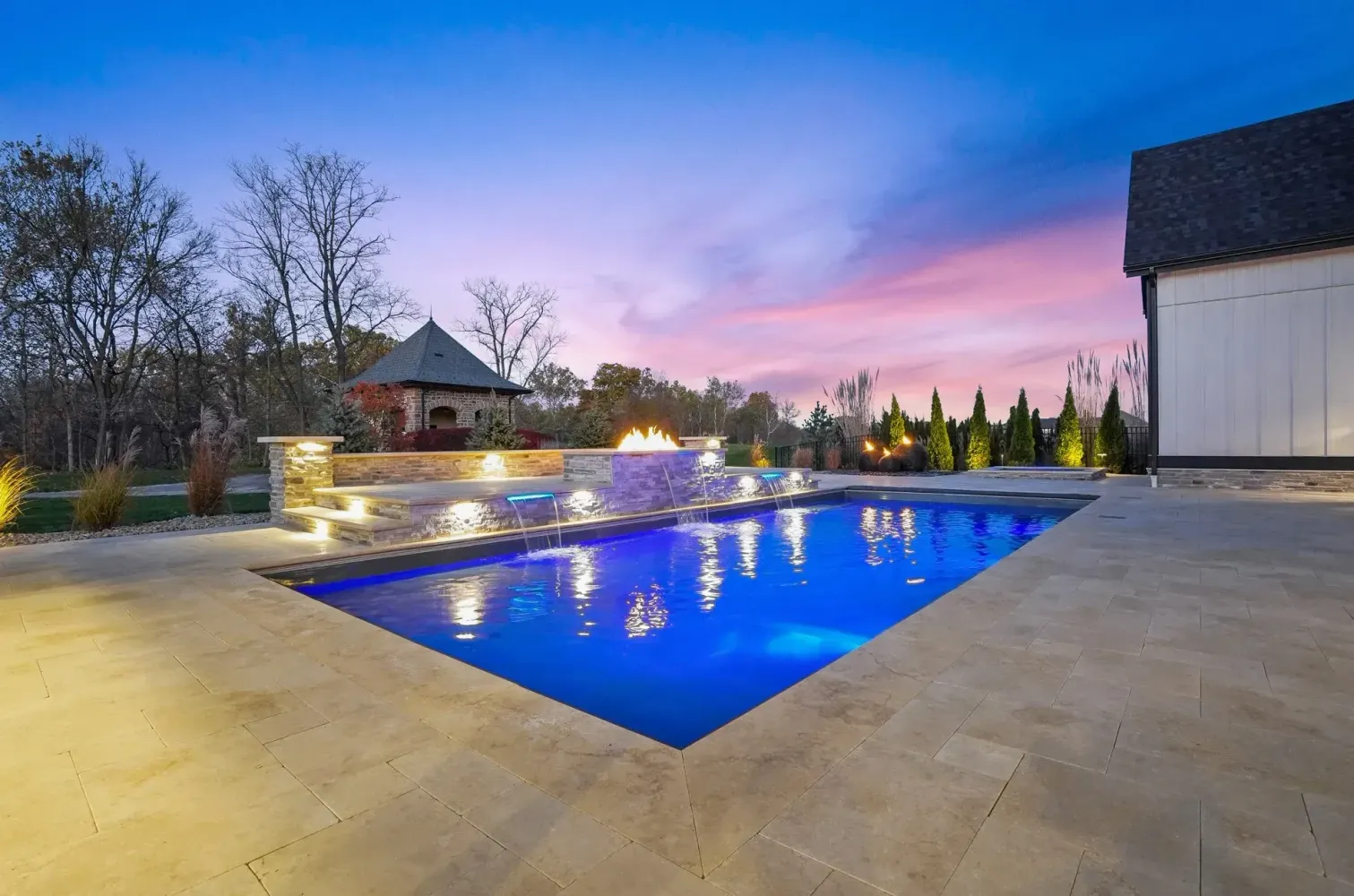
Sequencing the Build: Twelve Weeks from First Dig to Final Fire
Here is the actual sequence we run on a combined-permit Dawsonville project, with approximate week markers for context. This assumes the permit is already pulled and the HOA rendering is approved — both of which typically take 4 to 6 weeks on their own before the excavator shows up.
Weeks 1–2: Excavation and shell. Pool dig, pavilion pier drilling, gas trench pulled, main electrical conduit run. Any rock breaking happens here. Gunite shell shot end of week 2.
Weeks 3–4: Shell cure, pavilion framing. Pool shell cures while pavilion posts and roof framing go up. This is the fastest visible progress phase on the project — the pavilion goes from piers to roof deck in about nine working days.
Weeks 5–6: Plumbing rough and tile. Pool plumbing tied to equipment pad, gas lines pressure tested, electrical rough-in complete. Waterline tile and coping installed. This is typically when the first rough inspection runs at the county.
Weeks 7–8: Deck and fireplace. Paver or travertine deck laid on a compacted base, fireplace CMU block built and parged. Stone veneer follows the parging. Landscape lighting fixtures set into the deck before final paver passes.
Weeks 9–10: Plaster and finish. Pool interior plaster applied, fireplace stone veneer completed, pavilion stained or sealed, landscape lighting commissioned. Final gas appliance connections and pressure test.
Weeks 11–12: Fill, startup, inspection. Pool filled, water chemistry balanced, equipment started up, landscape plantings installed. Final Dawson County inspections run in sequence — pool, gas, electrical. Final HOA walkthrough for architectural approval on the built condition.
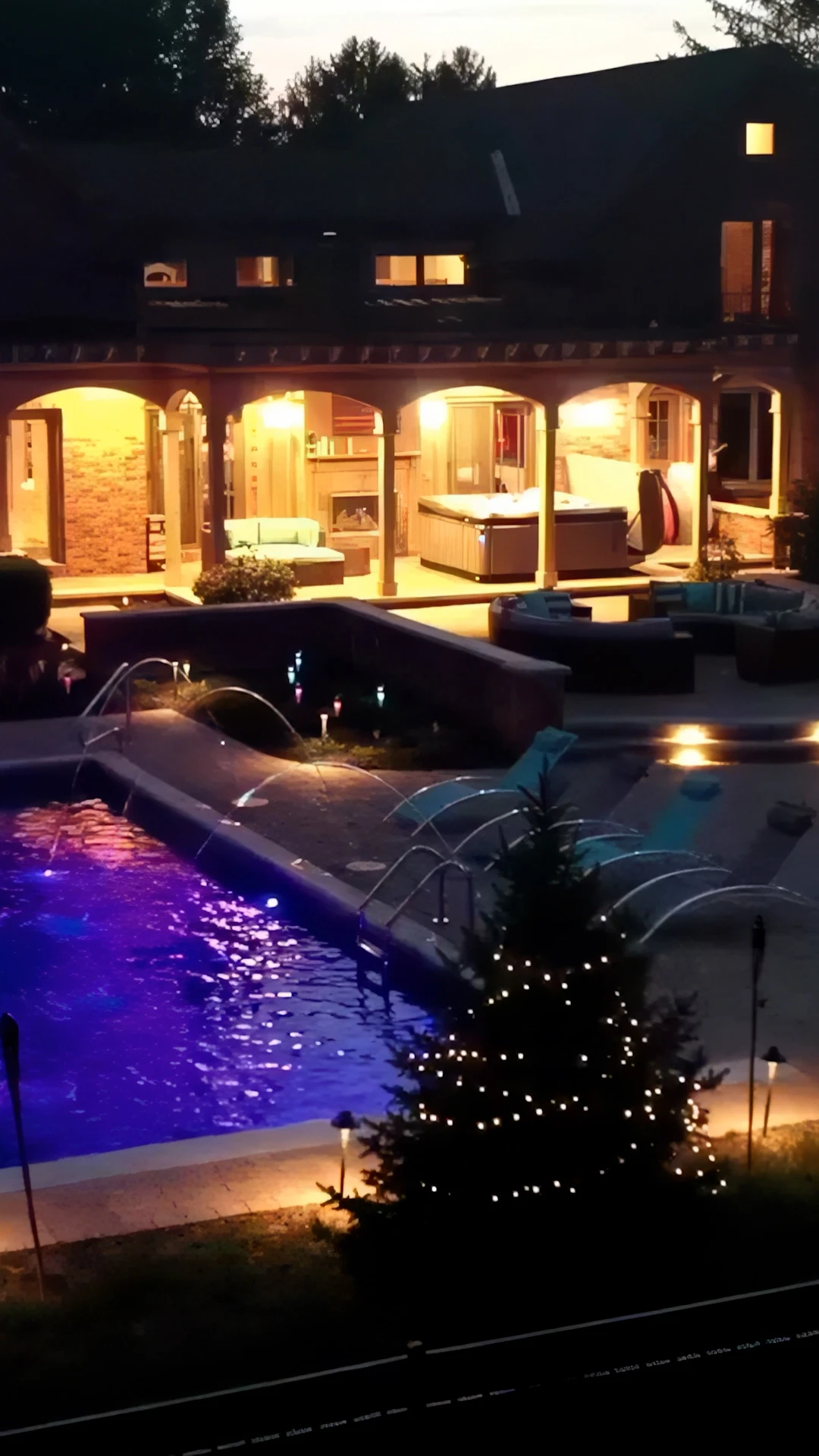
Running the same scope as three separate projects — pool this year, pavilion next summer, firepit the year after — typically stretches to 28 to 36 total weeks of active construction, not counting the gap time between projects. It also means three separate mobilization fees, three separate site-protection setups, three separate stretches of trucks rutting the same driveway, and three separate lawn-repair cycles. The combined route is not just cheaper on permits. It is cheaper on everything the homeowner tends to forget to add up.
What the Combined-Permit Route Actually Costs — and When It Does Not Make Sense
We have been selling the combined approach hard through this whole post, so it is worth naming the condition where it does not pencil out. If the homeowner genuinely does not yet know whether they want a pavilion, and they have real budget uncertainty year-over-year, the forced-sequence approach (pool first, wait and see) can make sense — as long as the pool design leaves structural room for a pavilion pier placement that will not conflict with the shell later.
What does not work is deciding on all three elements and then sequencing them anyway. That is the scenario where homeowners pay three times for mobilization, three times for permit fees, three times for yard repair, and end up with three-trade coordination problems that the original single-engineer drawing would have eliminated.
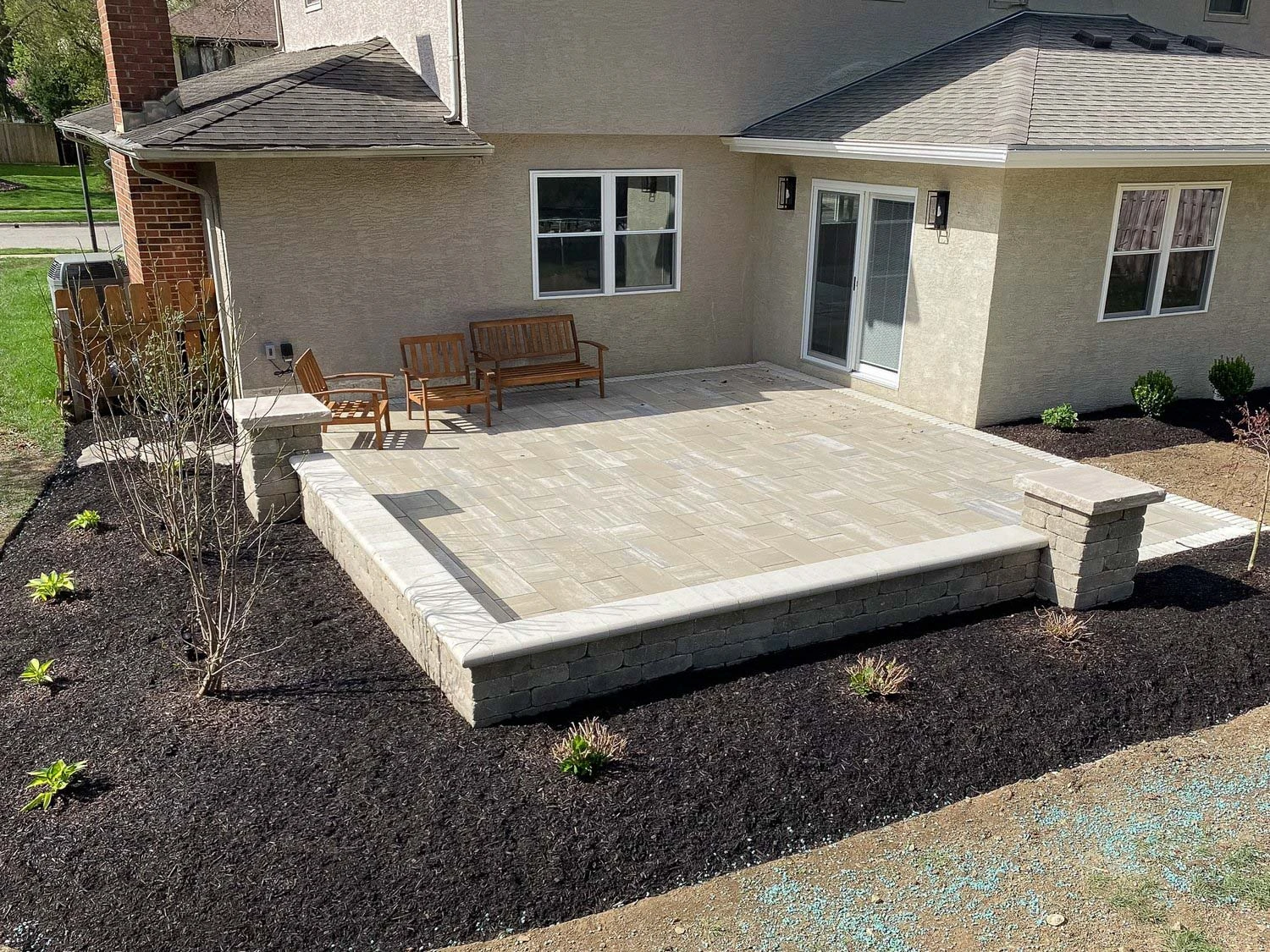
For a straightforward Foxcreek or Riverbend lot with 1/2 to 2 acres, a mid-sized gunite pool, a 16-by-20 cedar pavilion, and a gas firepit with stone veneer, the all-in combined-permit budget typically lands in a range that varies by stone selection, pavilion framing material, pool finish grade, and — most variable of all — how much rock the excavator has to break through. The permit savings alone are modest. The sequencing, engineering, and coordination savings are where the real money is.
If you are reading this from a Dawsonville, Chestatee, Big Canoe, or Etowah River Club address and you are weighing the pool-first-pavilion-later choice, the question to put in front of your builder is simple: can you file one combined permit at 25 Justice Way, produce one engineer-stamped drawing, and give us a single sequence through final inspection? If the answer is no or a hedge, you are paying for three projects. If the answer is yes, you are getting one backyard.
Hardscape Design & Construction across 20+ cities within 30 miles of Winder, GA
From Dawson County’s rocky foothills to the clay soils of Gwinnett, we engineer pool, pavilion, and fire-feature projects as one coordinated build — one permit, one drawing, one sequence.