
The Crooked Creek homeowners called us in February with one sentence that tells you everything about this chapter of a Milton family’s life: “The kids are gone. We want the pool back.” Over the next six to eight weeks, we took a kid-focused 2011 build and rebuilt it as an entertaining-centric asset for an empty-nest couple who now host twenty guests a weekend instead of nine-year-olds with pool noodles.
This is a case study, not a generic remodel overview. The homeowners’ original pool — a 20×40 freeform with a shallow-end play shelf and a diving board — had served its purpose. The play shelf was cracked from a decade of kids launching off it. The diving board’s mounting plate had corroded through. And the three steps into the shallow end were the only “seating” in the water, which is fine when you’re supervising children but useless when you’re pouring wine for six couples at 7 p.m. on a Saturday in June.
The conversion scope landed at $128,000 and rebuilt the pool around five specific additions: a raised spa with spillover, a submerged bar shelf with umbrella sleeves, a poolside outdoor kitchen tied into the coping line, an evening-scene LED and landscape-lighting package, and a cedar pergola over the kitchen. Every element was chosen for how two empty-nesters actually use a pool at this stage of life — not how the builder’s catalog says an entertainment pool should look.
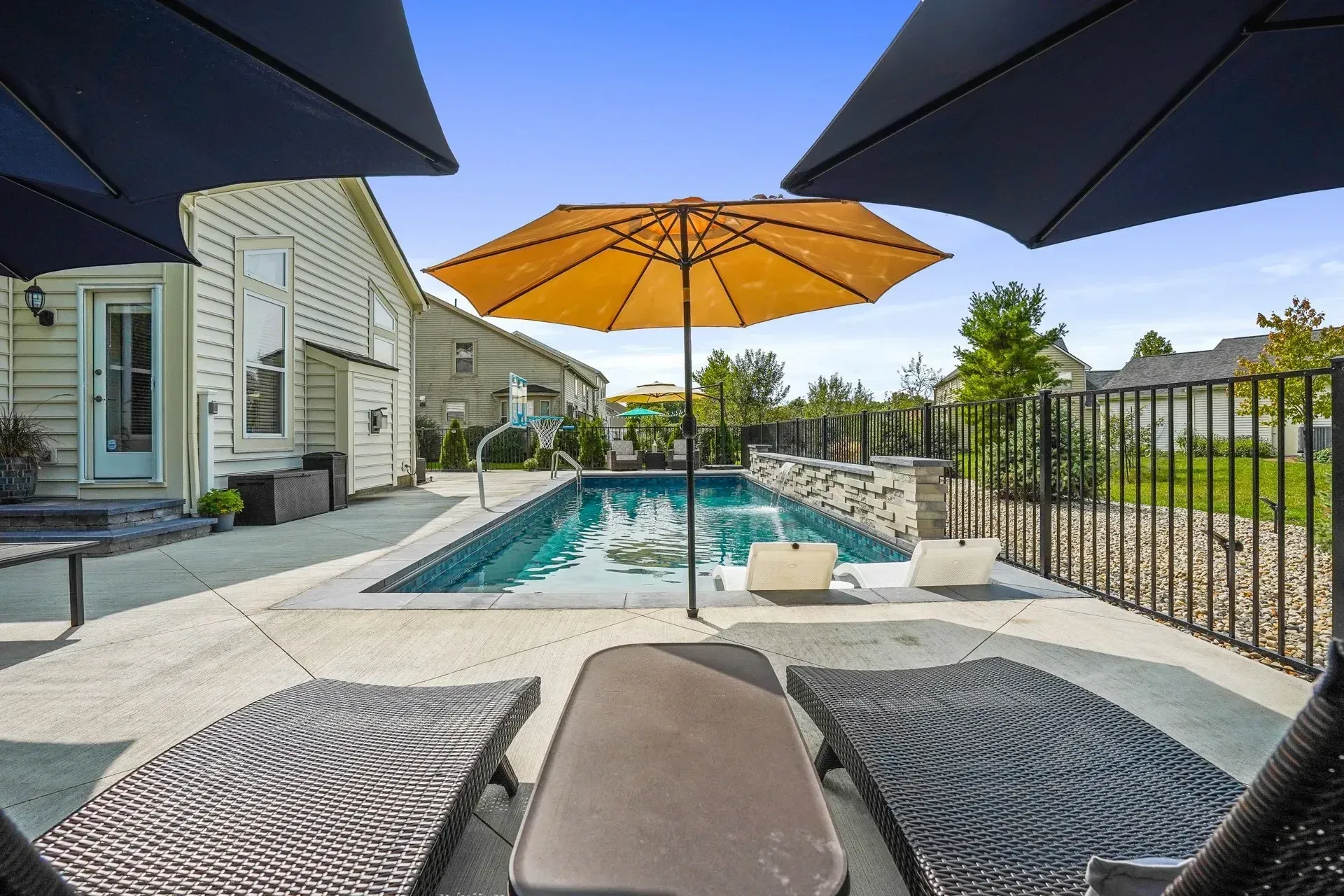
1. The Starting Point — Why a Kid Pool Stops Working at Year Twelve
When Primetime Pools walked the property in February, the pool itself was structurally sound. The gunite shell had no cracks, the skimmers were original and still seated properly, and the 8-inch bond beam had held its line across thirteen Milton winters. That mattered. A conversion only works economically when the shell is good — if we’d had to rebuild the shell, we’d have quoted a full custom rebuild around $180K to $220K instead of a conversion at $128K.
What had failed was the program. A pool designed for a 7-year-old and an 11-year-old doesn’t serve a couple in their late fifties whose kids come home for Thanksgiving and that’s it. The play shelf took up the most valuable real estate in the pool — the sunlit south end, where adults want to sit with a drink and watch the sunset over the Birmingham Hwy ridge. The diving board anchored the deepest corner, which is now where we wanted the spa to land. And the shallow-end steps were the only way into the water for anyone who wasn’t ready to do a swim ladder climb, which left zero lounge geometry.
Milton families who built pools between 2008 and 2014 are hitting this inflection point in clusters. The 2006 city-incorporation housing wave in Crooked Creek, Cogburn Estates, and along Hopewell Rd produced a generation of pools built for young families. Those families are now empty-nesters, and the remodeling question is the same across every subdivision: convert, or fill in and start over. We recommend conversion roughly eight times out of ten — it’s faster, it’s less invasive to the landscape, and it preserves the patio and the grade work the homeowner has already paid for.
Conversion economics: A Milton entertainment conversion of this scope runs $95K to $145K depending on spa complexity and kitchen scope. A full demo-and-rebuild on the same footprint runs $180K to $260K and adds 12 to 16 weeks.
2. The Raised Spa — $38K, and the Piece That Changes How the Deck Feels
The spa is the anchor. Everything else on this project — the bar shelf, the kitchen, the lighting — is subordinate to the spa’s position along the pool’s north wall. We raised it 18 inches above pool coping and cantilevered a tile-faced spillover so the water falls back into the pool along a 6-foot weir. That weir is what people hear before they see anything. Guests come around the corner of the house, hear moving water, and the entire perception of the yard shifts from “suburban pool” to “destination.”
Structurally, the spa ties into the existing pool shell through a shared bond beam and a monolithic gunite pour. We cored through the original pool wall at the plumbing tie-in, then poured the spa shell as a separate chamber with a dedicated heater, dedicated pump, and shared filtration. The hot/cold crossover plumbing runs below the pool deck in 2-inch schedule-40 PVC, with isolation valves in the equipment pad so the spa can run at 104°F while the pool sits at 82°F without bleeding heat across.
The spa footprint is 7 feet by 7 feet with seven ergonomic seats and two floor jets per seat. Total 14 jets driven by a dedicated 2-HP Pentair booster pump. We specified Pentair IntelliFlo3 for the pool circulation and a separate Pentair MasterTemp 400 heater for the spa — 400K BTU, because heat-up time matters when your guests arrive at 7 p.m. and you want the spa at temp by 8:15.
The finish detail that sells the spa is the spillover face: 1-inch by 4-inch glass mosaic tile in a graduated blue-to-silver pattern, wrapping the full 6-foot weir width. When the spillover fires, the water sheets across the glass and catches the up-lights we set into the spa’s exterior bond beam. It’s not subtle. It’s meant to read from the second-floor master bedroom at night, and it does.
3. The Bar Shelf — $16K for the Most-Used Feature on the Whole Project
We sold the bar shelf almost as an afterthought during the design meeting. The homeowners had never seen one in person. Three months after fill-up, they told us it’s where they spend 70% of their pool time — not the spa, not the shaded loungers. The bar.
A bar shelf is a submerged seating bench, typically 18 inches below waterline, running along one pool wall with stools spaced for shoulder-width clearance. Ours is a 12-foot run with six seats, each with a flat stainless footrest bolted into the shelf face. The pool edge directly above the shelf is a raised coping line with two umbrella sleeves set into the deck at 4-foot 8-inch centers, rated for 9-foot market umbrellas. The couple orders drinks at the kitchen, walks down four steps into the pool, and sits under the umbrellas with a half-submerged cocktail rail above the waterline.
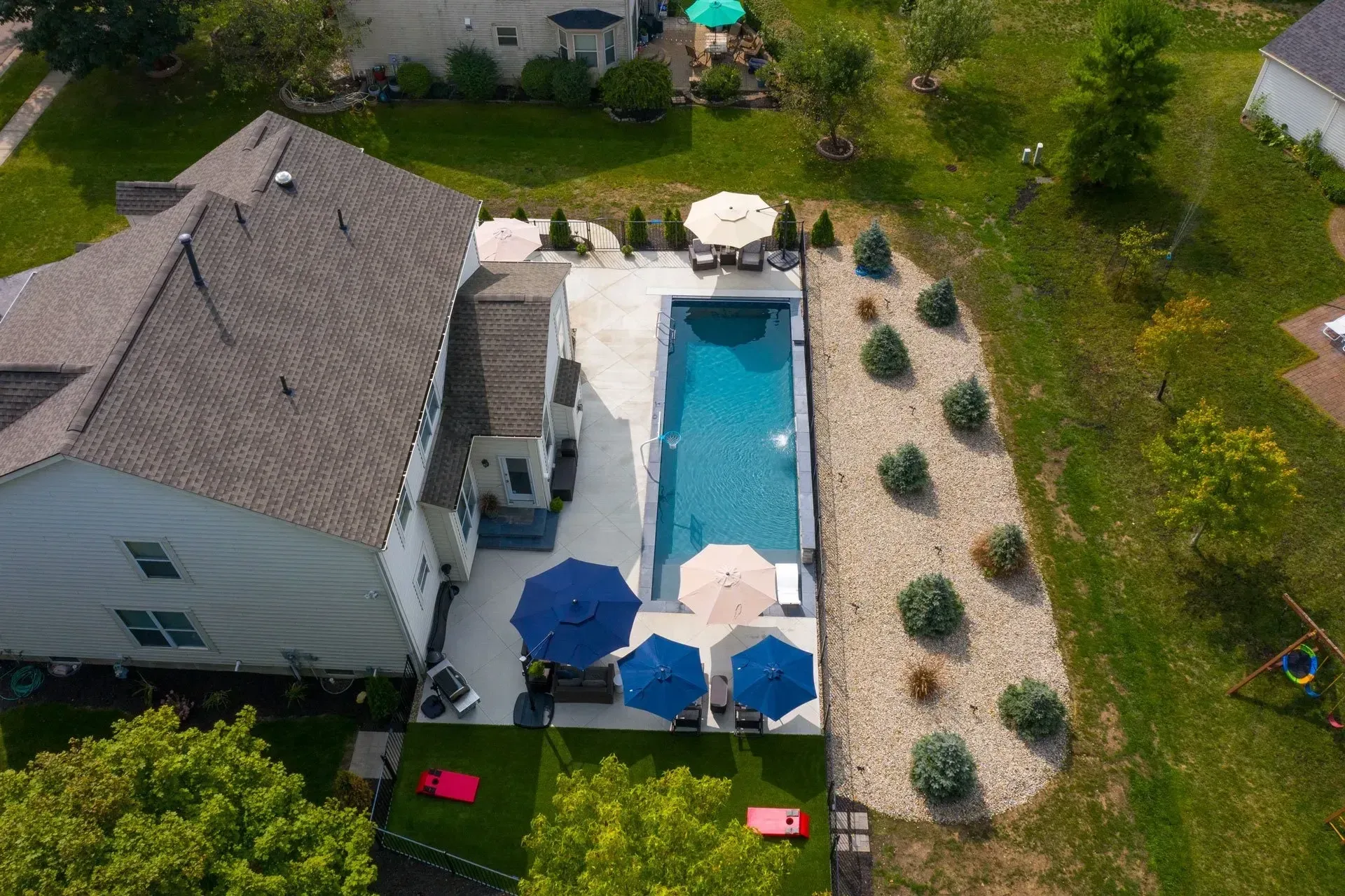
The bar shelf is also where we hid the pool’s two swim-jet returns. Returns on entertainment pools should never shoot at seated guests — that’s the kind of detail a production-grade builder gets wrong and nobody notices until the first party. We aimed ours away from the shelf at a 15-degree downward angle toward the pool center, which keeps circulation healthy without turning the seating wall into a turbulence zone.
4. The Outdoor Kitchen — $42K, and Why It Lives On the Pool Coping
The kitchen was the most deliberated piece of the project. The homeowners had looked at three other contractors’ proposals, and every one of them placed the kitchen fifteen feet away from the pool under a freestanding pavilion. We pushed back hard. On a Milton estate lot — where you have 2.3 acres of usable grade — separating the kitchen from the pool is the single most expensive mistake you can make in an entertainment-pool conversion.
Why? Because the person cooking is excluded from the pool conversation. The host ends up grilling alone while the guests are in the water thirty feet away. For an empty-nest couple whose entire remodel thesis was reconnecting with each other and their social circle, that layout defeats the point. We built the kitchen directly against the pool coping on the west side, with the grill counter’s long axis parallel to the pool so the griller faces the pool and the conversation continues uninterrupted.
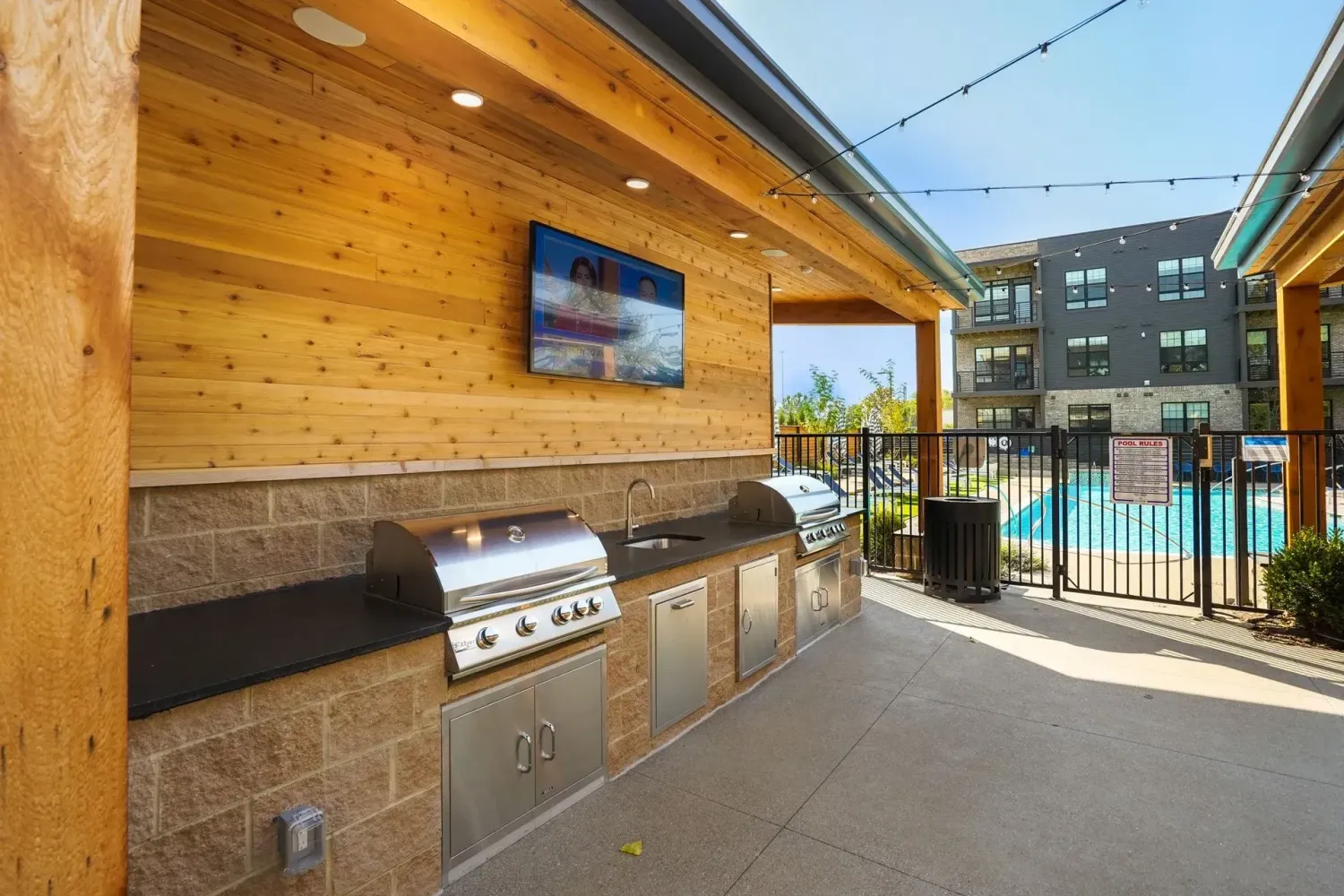
Specifications: Bull 30-inch 4-burner stainless grill built into a stone-veneer counter with a honed Steel Grey granite top. Under-counter beverage fridge (Blaze 24-inch, 5.5 cubic feet), a dedicated 18-inch stainless bar sink with hot/cold run from a tee off the pool equipment pad’s domestic line, and two tiled storage cabinets for skewers, tongs, and wine glasses. Total counter run is 14 feet.
Drainage and slope were the installation crux. The kitchen sits six inches above pool coping on a 1/8-inch-per-foot sheet flow away from the pool, running to a French drain we tied into the existing pool-deck drainage. Milton’s sustained rainfall of 53 inches per year means grilling-surface runoff is not optional to solve. We spec’d a 4-inch SDR-35 PVC main to daylight 38 feet downslope into the lower-grade lawn.
5. Lighting, Pergola, and Landscape — The $32K That Makes the Evening Scene Work
A Milton entertainment pool is used mostly at night. Summer highs of 88 to 93°F make afternoons marginal — parties start at 6 and run to midnight. Which means the lighting package is not a line item. It’s the single biggest determinant of whether the project looks finished or unfinished once the sun goes down.
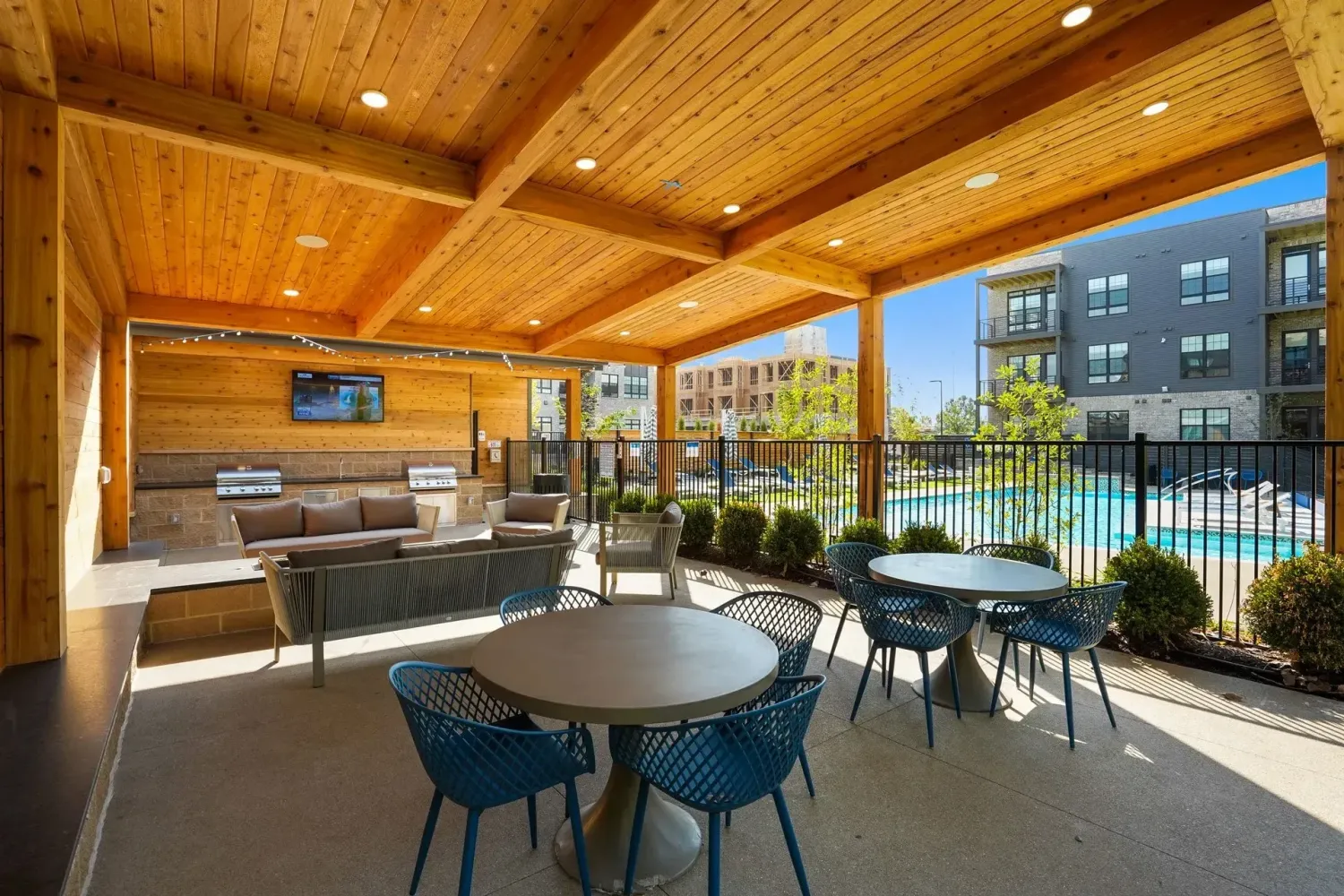
We spec’d a layered $14,000 lighting package with four distinct layers. First, pool interior: three Pentair 5G Color LEDs in the pool shell plus two in the spa, programmable to amber, warm white, and five party palettes via the pool’s automation controller. Second, water features: underwater micro-lights at the spillover weir, uplighting the wall tile face so the water sheet reads at night. Third, deck and hardscape: twelve FX Luminaire NP LED well-lights along the coping and around the bar-shelf umbrellas, run on a Hunter Pro-C transformer with a photocell and astronomical timer. Fourth, the kitchen: two dimmable task pendants under the pergola crossbeam and LED tape under the countertop overhang.
The $18,000 cedar pergola over the kitchen was a last-minute addition we pushed for after the homeowner asked about summer shade. A freestanding cedar pergola with 8×8 posts, 2×10 rafters, and 2×2 top slats at 4-inch spacing throws enough midday shade to keep the grill counter workable from 11 a.m. onward. We anchored the pergola posts through the coping-adjacent deck with simpson PBS66 standoff bases, not direct-buried, so the posts don’t sit in a moisture environment. Milton’s USDA Zone 8a freeze cycle — roughly 22 freeze events per year — rots any post end that sits below grade within 8 to 10 years. Above-grade anchors will outlast the cedar by decades.
Light what you want seen, dark what you don’t: The spa up-lights and the kitchen task lights should be the brightest elements on the property at night. The pool-interior lights should sit about 30% dimmer — the water amplifies them. The landscape uplights in the surrounding hardwoods should sit 60% dimmer than that. Layered dimming is what separates a professional scene from a Home Depot lighting kit.
6. Permits, Timeline, and What You Do While the Pool Is Offline for Six Weeks
Milton’s incorporation as a city in 2006 means pool and pool-accessory permits go through City of Milton Community Development at 2006 Heritage Walk, not Fulton County. Turnaround is faster — 10 to 14 business days — but the preservation and architectural review layer is stricter than you’d see in Duluth or Lawrenceville. On this estate lot, we pulled three separate permits: a pool-remodel electrical permit, a gas-line permit for the grill and spa heater, and a structural permit for the pergola footing.
The Crooked Creek HOA’s architectural review committee turned our package in nine business days. The Manor and White Columns — where the architectural review committee meets once every four to five weeks — can stretch the front-end by a month beyond that, so always front-load HOA approval on Milton estate projects. Submit to the HOA the same day you submit to Milton Community Development.
Milton’s creek-buffer setbacks — 25 to 75 feet from any named tributary — apply to Cooper Sandy Creek, Chicken Creek, Lake Creek, and the unnamed Etowah tributaries that cross many north Milton parcels. On this Crooked Creek lot, the nearest named tributary sat 340 feet from the pool footprint, so buffers were not in play. On Bethany Bend and Freemanville Rd lots closer to Cooper Sandy Creek, we’ve had to shift pool footprints by 15 to 20 feet to respect the buffer. Check the survey before you schedule a design meeting.
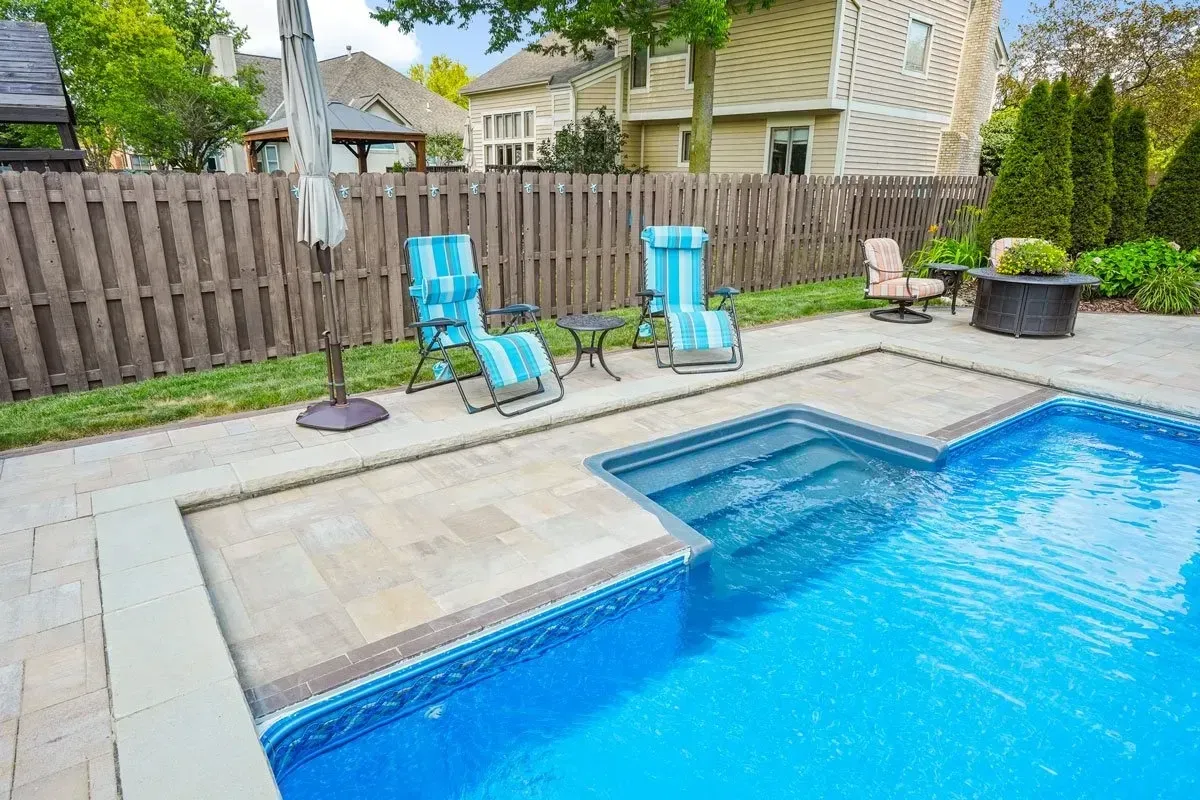
Timeline: Six to eight weeks door-to-door. Week 1 is permits and HOA. Weeks 2 and 3 are demo — ripping the play shelf, pulling the diving board and its deck anchor, draining the pool, and breaking coping where the spa wall will tie in. Weeks 3 and 4 are rough plumbing, spa shell steel, and gunite. Week 5 is tile, coping, and kitchen counter install. Week 6 is equipment pad upgrades, electrical, and pergola framing. Weeks 7 and 8 are plaster cure, acid wash, fill, chemistry balance, and punch-list. The homeowner fills the pool on Friday of week 7 and hosts the first party the Saturday of week 8 in nearly every project we’ve run.
You will not have a pool for 45 to 55 days. Plan around it. The homeowners on this project traveled to the Carolinas for two weeks in the middle, which is the best way to handle the demo-and-gunite phase — the site is loud, the yard is tracked up, and there’s nothing to watch but progress photos. Come back when the spa is taking shape.
The Empty-Nest Chapter, in Pool Form
The Crooked Creek project finished in April, three weeks before Milton’s pool season runs hot. The homeowners sent us a photo from a Memorial Day gathering — sixteen adults around the pool, six at the bar shelf under the umbrellas, two in the spa, the host at the grill with a glass of wine in his hand and his wife at the sink six feet away. That’s the conversion working. Not the hardware — the life.
A kid pool served a ten-year window of one version of your household. An entertainment pool serves the next thirty. If you’re in a Milton estate lot whose pool was built for a family that’s moved through, the conversion math almost always favors rebuilding program over rebuilding shell. Name your numbers early, commit to the six-to-eight-week scope, and build for how you actually live at this chapter — not how you lived at the last one.
Pool remodeling and entertainment conversions across 20+ cities within 30 miles of Winder, GA
From Milton empty-nest conversions to Dacula new-build entertainment pools, we design the program before we pour the concrete. Tell us how you actually host.