
Three coping profiles. Three price bands. One decision that determines whether your bond beam still looks clean in 2046, or whether the first freeze after your Laurel Springs home sells triggers a $14,000 remodel for the next owner. Here’s the short version before we go deep — then the full teardown by material.
Every coping quote in Suwanee ultimately lines up on three tiers. Same pool, same crew, same concrete shell underneath — the coping spec is where the budgets fork. Before we get into the material-by-material breakdown, here’s the numbered tease so you know what you’re reading toward:
- Square-cut coping — $18 to $28 per linear foot. Budget tier. Clean, contemporary, and the cheapest option a Gwinnett builder will install without wincing. Works, but doesn’t shed water off the bond beam the way the premium profiles do.
- Bullnose coping — $24 to $36 per linear foot. Mid-tier. Rounded outer edge, softer on bare feet and on pool toys that clip the edge. The safe middle for most Village Grove and Highgrove builds.
- Drop-face coping — $38 to $56 per linear foot. Premium. The profile has a vertical apron (the “drop”) that falls past the bond beam and effectively caps the beam the way a hat brim sheds rain off your face. This is the Laurel Springs and River Club spec.
On an 80 linear foot perimeter — typical for an 18×36 rectangular pool with a tanning ledge — the spread between square and drop-face is roughly $1,600 to $2,200. That’s the entire premium-tier math. And on a build where the pool and deck are already $110,000, that 1.5% uplift is what we’d call the highest-leverage dollar on the project. We’ll prove why, by material, below.
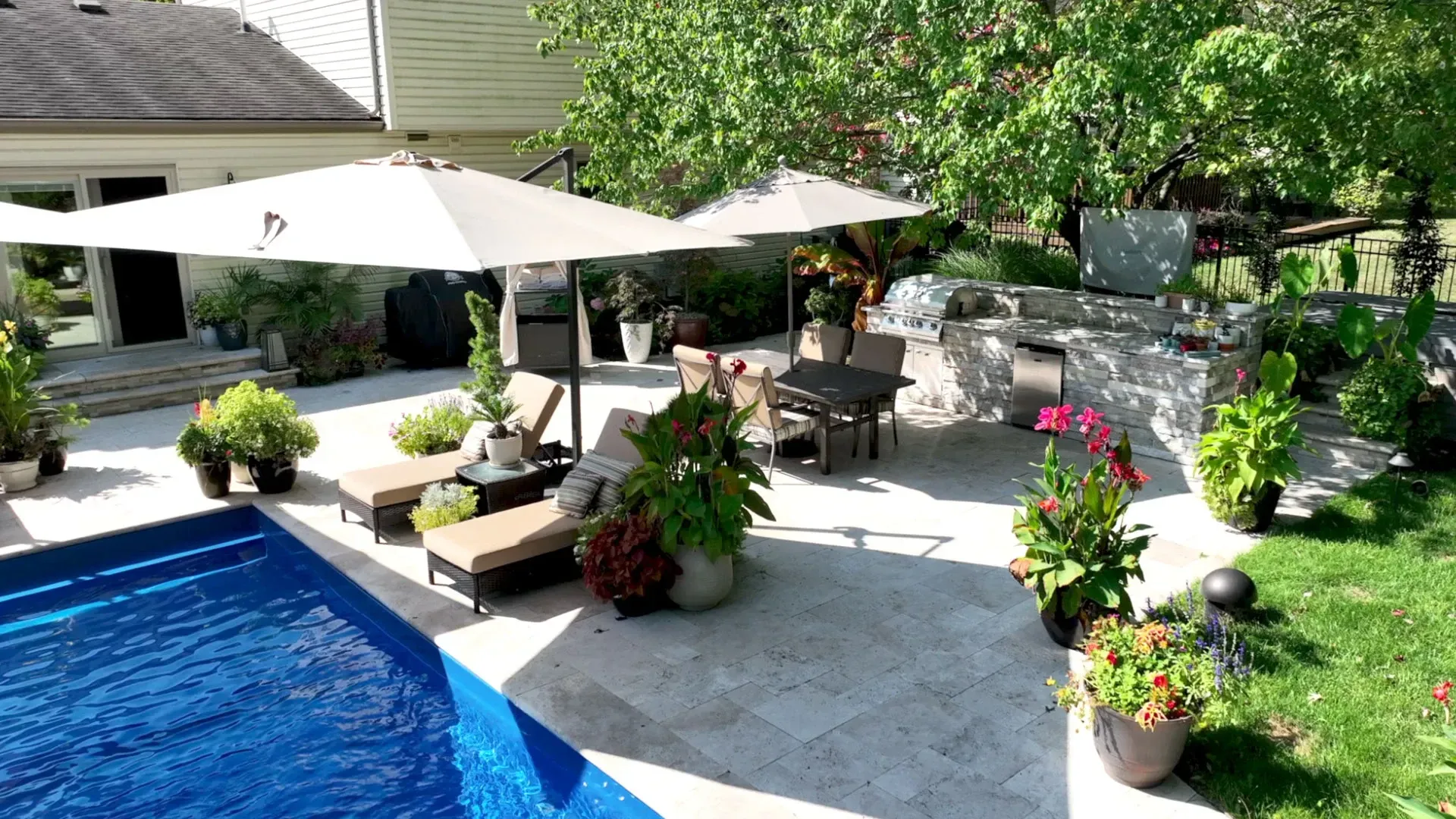
Travertine Coping — Where Drop-Face Actually Earns Its Price
Travertine is the material where the premium-tier decision stops being theoretical and starts being structural. A typical 1.25-inch French Pattern travertine paver deck in Suwanee is priced around $14 to $18 installed per square foot. The deck is already a premium call. The coping decision is whether you carry that premium all the way to the water’s edge.
Square-cut travertine coping in Suwanee runs $22 to $30 per linear foot installed. Bullnose travertine runs $28 to $38. Drop-face travertine — where the stone has a vertical face that drops 1.5 to 2 inches past the outside of the bond beam — runs $42 to $56 installed, and on the higher end of that range if the homeowner specifies a chiseled or antique-finish edge to match the deck.
Here’s why the drop-face wins on travertine specifically. Travertine is a calcium-carbonate sedimentary stone — naturally porous, naturally beautiful, and naturally vulnerable to edge spalling if water sits on the top of the bond beam. The bond beam is the top 8 to 10 inches of the gunite shell, where the rebar cage comes closest to the surface. Water that wicks into the top of the beam and freezes — and Suwanee hits roughly 20 freeze events per year at its 1,063-ft Piedmont elevation — is the mechanism behind the tile pop-off and edge cracks you see on 12-year-old pools in Settles Bridge and older parts of The Manor.
The drop-face profile does two things a square-cut can’t. First, the vertical face projects past the outside edge of the bond beam, so rain running off the deck never sheets across the top of the beam — it falls past it. Second, the profile physically covers the beam’s outer face, shielding the mortar line between the coping and the shell from UV and freeze-thaw. Over 20 years in Zone 8a, that single detail is usually the difference between a clean waterline and a remodel.
Suwanee travertine coping pricing, honest ranges: Square-cut $22–$30/LF installed. Bullnose $28–$38/LF. Drop-face $42–$56/LF. On an 80 LF pool perimeter, the drop-face premium over bullnose is roughly $1,120 to $1,440. Over square-cut, $1,600 to $2,080.
One more travertine specifier that matters in Suwanee: source quarry. The cream and walnut travertines most commonly installed here come from Denizli Province in Turkey (around Pamukkale) or from Guadalajara, Mexico. The Turkish stone has tighter pore structure and takes a drop-face profile cleanly. Mexican travertine is softer, more porous, and more prone to chipping when a mason cuts the drop — which is why we spec Turkish for every drop-face install and save the Mexican product for broom-finish deck pavers where the edges are square.
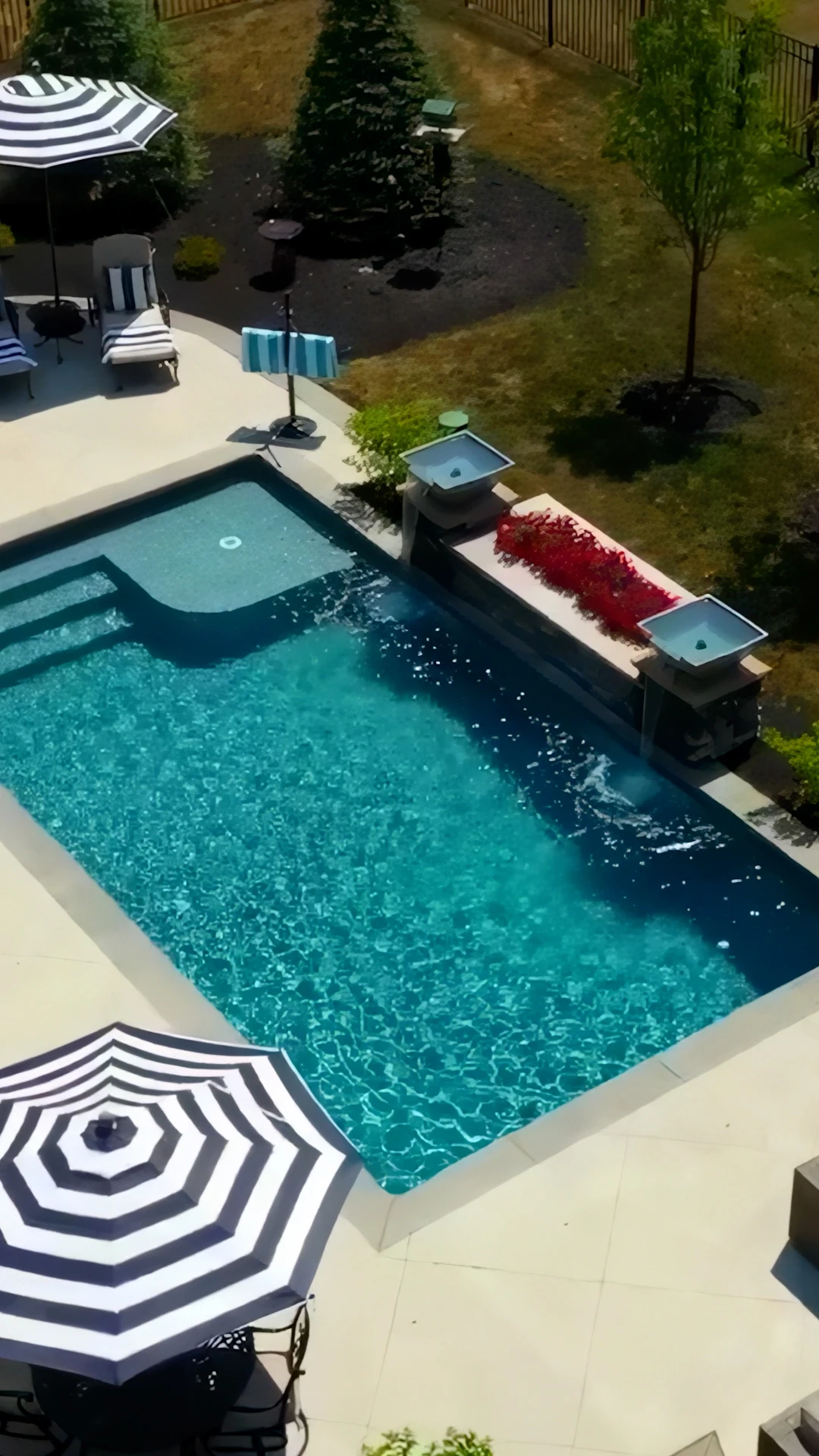
Poured Concrete Coping — The Budget Tier, Honestly Evaluated
Poured concrete coping — what older Gwinnett pools from the 1990s almost universally have — is the lowest-cost profile on the menu. Installed, it runs $18 to $28 per linear foot in Suwanee. That price includes forming, pouring, and a broom or trowel finish. It’s clean, it’s structural, and in a post-2015 Village Grove build it can look intentional if specified as a large-format cantilever with 12-inch pours and tight control joints.
Where poured concrete coping struggles in Suwanee’s climate is at the joints. A poured coping is a single contiguous cantilevered slab with control joints every 10 to 12 feet. Those control joints are the weak point. After five or six winters of freeze-thaw on Cecil series Piedmont clay soils — the same Cecil series Piedmont clay that sits under every pool from Dacula through Suwanee — the joints open, the cantilever lifts slightly at the corners, and rainwater begins reaching the bond beam through the joint itself.
You can specify a drop-face profile in poured concrete. It’s not common, but it’s real. The mason forms a vertical face that drops 1 to 1.5 inches past the bond beam. At that point you’re in the $28 to $38/LF range, and you’re asking a lot of the mason’s formwork. We’ve done it. We don’t love it. On a premium Suwanee build, if a homeowner wants drop-face geometry, we steer them to stone — travertine or bluestone — every time, because the factory-milled edge holds its line and the mortar-set install on a flat beam is more predictable than a cantilevered form pour.
A word on finishes. Poured concrete coping can be broom-finished (textured, slip-resistant, workaday), smooth-troweled (cleaner lines, slightly more slip risk when wet), or acid-stained to push it toward a travertine color. The acid-stained version ages unpredictably under chlorine splash — we generally avoid it on pools used more than 40 days per season. For a Chattahoochee riverfront lot where the pool sees real use, broom-finish poured coping is honest and durable; it just doesn’t shed water off the beam the way a drop-face stone does.
Bluestone and Granite Coping — The Natural-Stone Middle Ground
Bluestone coping — typically Pennsylvania full-color bluestone, 1.5-inch thick, thermal-finished top — is the quiet premium spec on Suwanee builds where the homeowner wants a cooler visual palette than travertine’s cream-and-walnut range. Installed coping price in Suwanee: $38 to $52 per linear foot, with drop-face pushing to $48–$58.
Bluestone’s case is thermal performance and texture. Thermal-finished bluestone stays roughly 8 to 12 degrees cooler than cream travertine in direct July sun at Suwanee’s 90 to 94°F highs. That matters on a pool deck your kids will cross barefoot. The drop-face profile on bluestone is particularly clean because the stone mills sharply — the drop face holds a crisp vertical line for decades, and the thermal top finish resists etching from chlorinated pool water better than honed.
Granite coping is rarer in Suwanee but shows up on the River Club and Bear’s Best Atlanta estates. We’ve installed flamed granite drop-face coping at $58 to $82 per linear foot — the upper end of the range. Granite is essentially immortal in this climate. It doesn’t absorb water, doesn’t etch from chlorine, and doesn’t spall at the bond beam. On a 20-year horizon, flamed granite coping on a well-built Suwanee pool will outlast the pool’s second plaster cycle without a single edge defect.
The tradeoff with granite is specificity. You’re locking the deck palette to a single stone color family — usually black, charcoal, or gold-flecked brown — and you’re paying a second-mortgage premium for a material that most homeowners can’t distinguish from bluestone at 15 feet. On a Laurel Springs estate where the architectural review board will evaluate the palette anyway, granite makes sense. On a mid-range Settles Bridge build, bluestone drop-face at $38 to $52/LF is the sweeter spot.
The Bond Beam — Why the Coping Question Is Really a Structural Question
If you take nothing else from this piece, take this: coping selection is bond beam protection, not deck decoration. Every coping conversation should start with what the profile does to the top 10 inches of your gunite shell over 20 years of Suwanee winters.
The bond beam is where your rebar cage terminates at the top of the shell. It carries the coping load, the deck load, and the tensile hoop stress when a pool full of water pushes outward against the shell walls. It’s also the part of your pool most exposed to freeze-thaw cycling — the surface where water enters, freezes, expands, and incrementally fractures the concrete over decades.
A square-cut coping sits on top of the beam and stops flush with the outer edge. Rainwater off the deck sheets across the top of the beam, wicks down into the mortar set bed, and sits there through freeze nights. A bullnose coping does the same — the rounded edge helps marginally at the outer lip, but the top of the beam is still exposed.
A drop-face coping extends a vertical apron past the outer edge of the beam. Water that runs off the deck never reaches the top of the beam — it falls past the drop face and lands in the lawn or planting bed beyond. The mortar joint between the coping underside and the beam top is sheltered by the overhanging profile. In 20 years of freeze-thaw in Suwanee’s Cecil clay, that sheltering is structural.
Permit and code note for Suwanee builds: Pool permits in Suwanee are issued by the Gwinnett County Department of Planning & Development at 446 W. Crogan St., Lawrenceville. Barrier and equipment specs follow the 2018 ISPSC as adopted by Gwinnett. Coping profile isn’t code-regulated — it’s a homeowner spec decision — but Laurel Springs HOA architectural review typically turns around coping/deck specs in 3 to 4 weeks and will flag a budget-tier spec on a luxury lot.
We’ve pulled out 14-year-old coping on pools around Settles Bridge where the original spec was square-cut poured concrete. The beam under those pools had mortar washout at the joints, hairline cracks running parallel to the coping line, and in two cases, partial delamination of the beam face. The remodel to repour the beam, re-tile the waterline, and reset the new coping in travertine drop-face ran $11,800 to $16,400. The original upcharge to specify drop-face travertine at the build would have been roughly $1,600.
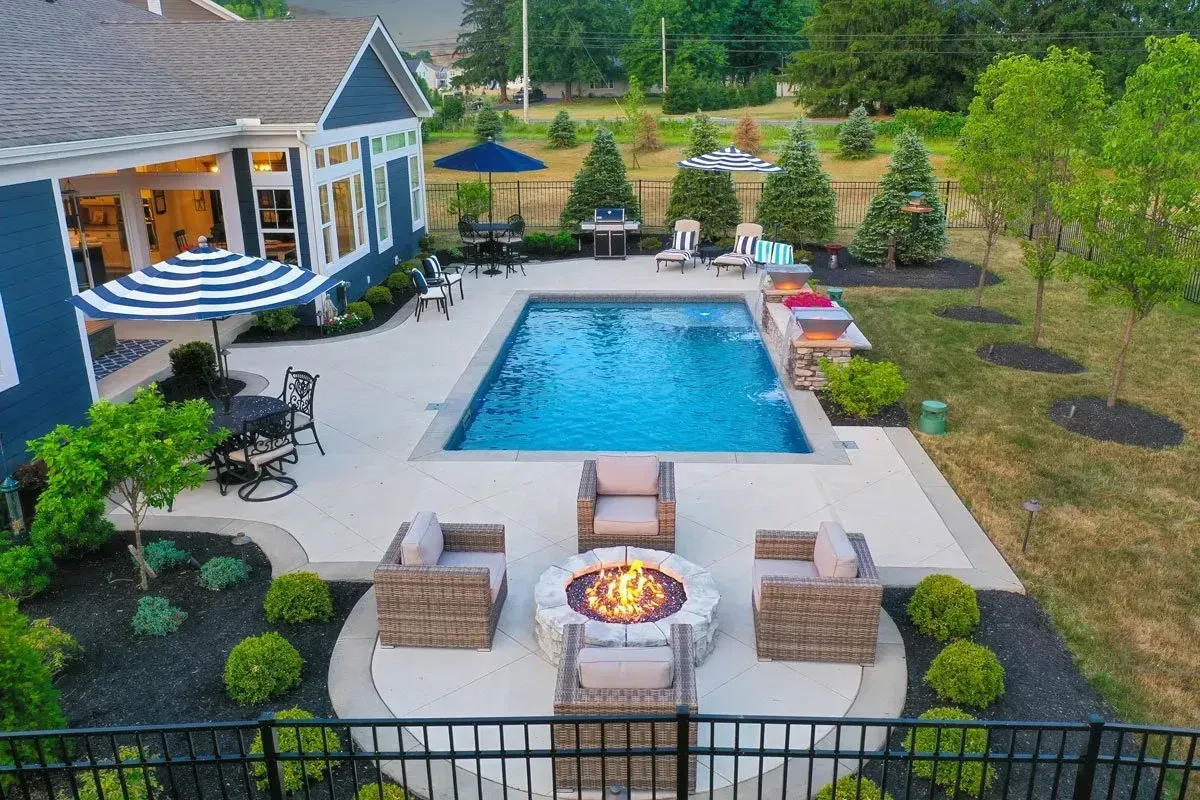
Suwanee-Specific Factors That Push the Math Toward Drop-Face
Three Suwanee-specific conditions raise the return on the premium-tier coping call above the Gwinnett average. All three are worth understanding before you sign a coping spec.
Chattahoochee River proximity and the fall fog line. Lots along Settles Bridge Road and down toward the river see consistent fall and spring morning fog rolling off the Chattahoochee. That fog deposits moisture on pool decks at 4 to 6 a.m. and holds it there until the sun clears the tree line. A square-cut coping absorbs that deposited moisture at the outer edge; a drop-face profile doesn’t. Over 25 fog mornings per year across 20 years, the cumulative moisture exposure difference on the bond beam is real and measurable.
Jackson EMC 240V service versus Georgia Power. Suwanee sits in Jackson EMC territory, not Georgia Power. Pool equipment inrush current behaves slightly differently on EMC’s distribution, and the service panel load calc we pull for a Laurel Springs build is often tighter than a comparable Sugar Hill build on Georgia Power. Not directly a coping issue — but it’s the kind of detail that tells you whether a builder has actually worked Suwanee before. A builder who doesn’t know EMC from Georgia Power doesn’t know Suwanee.
Laurel Springs HOA architectural review. Laurel Springs has one of the strictest HOA review processes in Gwinnett County. Typical turnaround is 3 to 4 weeks for pool and deck submittals. The review board almost universally requires natural-stone coping on new pool builds — not concrete. On paper, that’s a $1,600 “tax” on a Laurel Springs address. In practice, it’s the HOA doing exactly what a luxury community should: protecting long-term property values by preventing the budget-tier choices that age badly. If you’re in Laurel Springs, the coping decision is already partly made for you — and it’s made correctly.
The River Club at Suwanee and Bear’s Best Atlanta have similar though less codified review processes. Village Grove, Highgrove, and Woodbury have lighter architectural controls and leave the coping call entirely to the homeowner. In those neighborhoods, you can install square-cut concrete and be fully compliant. We still recommend drop-face travertine or bluestone on any build priced over $85,000 — because the coping is where that build either ages like a Peachtree Industrial Blvd showroom lot or like a 2008 quick-flip.
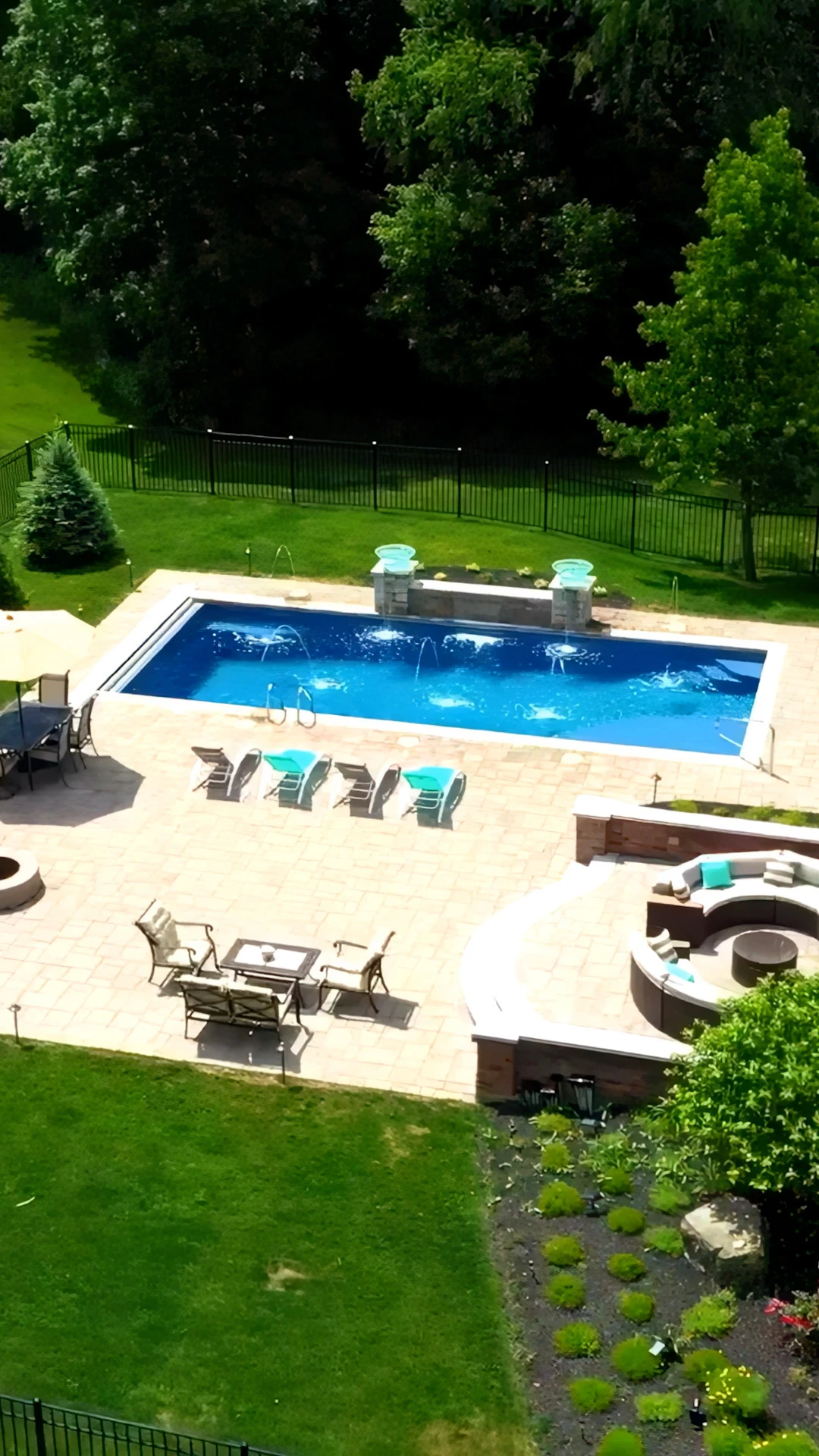
The Premium-Tier Math — $1,600 That Buys Back $14,000
Here’s the decision framed as a spreadsheet would frame it. On a standard Suwanee 18×36 rectangular pool with an 80 linear foot perimeter:
- Square-cut concrete coping: 80 LF × $22 average = $1,760 installed. Best-case service life before beam repair: 15 to 18 years.
- Bullnose concrete coping: 80 LF × $30 average = $2,400 installed. Best-case service life: 16 to 20 years.
- Bullnose travertine coping: 80 LF × $32 average = $2,560 installed. Best-case service life: 22 to 28 years.
- Drop-face travertine coping: 80 LF × $48 average = $3,840 installed. Best-case service life: 30+ years with routine re-sealing.
The delta from square-cut concrete to drop-face travertine is $2,080. On a $110,000 build, that’s 1.9% of project cost. The delta from bullnose travertine to drop-face travertine is $1,280 — roughly 1.2% of project cost.
The downside risk if the drop-face dollar doesn’t get spent is the $11,800 to $16,400 bond beam repair we described earlier. Probability-weighted over a 20-year ownership horizon in Suwanee’s freeze-thaw climate, that repair runs at roughly 35 to 45% likelihood for a square-cut concrete spec and drops to under 8% for a drop-face stone spec. Multiply through and the expected-value case for drop-face is overwhelming on any Suwanee pool priced over about $85,000.
The one exception — the place we genuinely recommend square-cut or bullnose concrete — is a sub-$65,000 budget pool on a rental or flip property where the 15-year horizon matters more than the 30-year. Those pools exist in older Suwanee proper on lots that will turn over again before the beam fails. For every other Suwanee build, the $1,280 to $2,080 premium for drop-face stone is the highest-leverage dollar on the project.
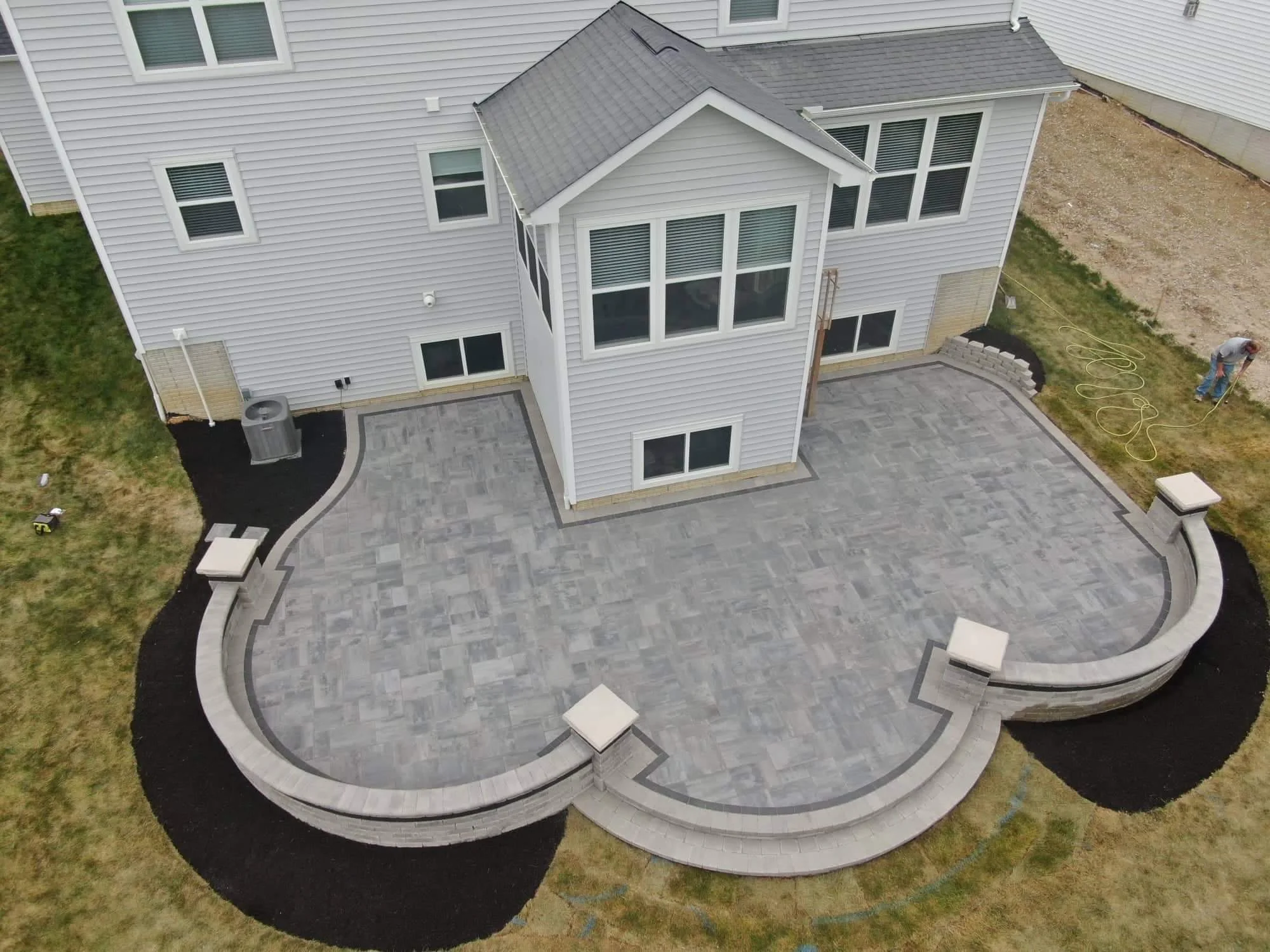
Whichever coping profile you end up specifying, write it into the contract by name and by profile dimension. “Drop-face travertine coping, 1.5-inch apron, Turkish cream, mortar-set on 8-inch bond beam, thermal top finish” is a contract line we’ll sign our name to in Suwanee. “Travertine coping” is a line item that leaves every material decision in the builder’s hands at delivery. Those two specs produce different pools 20 years later.
Drop-face and bullnose coping installs across 20+ cities within 30 miles of Winder, GA
From Laurel Springs to Settles Bridge, we spec coping by profile dimension and mill source — not by generic line item. If your Suwanee build is priced over $85,000, the drop-face call is almost always the right dollar.