
Bullnose coping looks beautiful the day the pool gets handed over. It also starts losing at year seven in a town that sees 30 freeze events a year, and by the time you notice the failure, the repair costs five to ten times what the upgrade would have cost you on day one.
Here is the argument, flat out: on a Dawsonville pool with an 80-linear-foot perimeter, drop-face coping adds roughly $640 to the build. That $640 buys you a vertical mitered skirt of stone that wraps down over the bond beam and protects the most vulnerable edge of the entire pool structure from water intrusion, ice expansion, and the freeze-thaw cycle that defines USDA Zone 7b/8a. Skip it, go with a clean bullnose radius, and you are statistically signing up for a $3,200 to $6,400 bond-beam repair somewhere between year seven and year nine.
That is the whole post. Everything below is the material science, the dollar math, and the reason Primetime Pools specs drop-face coping on almost every pool we build north of the Chattahoochee.
The reason this matters specifically in Dawsonville — and not in, say, Lilburn or Decatur — is climate and topography. Dawson County sits on the USDA Zone 7b/8a border at the highest elevation in our service map. We see more freeze events here than anywhere south of Cumming, the thermal mass of a pool shell changes temperature faster in a thin-topsoil-over-rock substrate, and the classic Piedmont-clay-blanket model of heat retention does not apply. Coping profiles that have been acceptable on builds in Snellville for twenty years fail earlier on builds in Applewood or Kensington Ridge. That is not an opinion — it is what the warranty callbacks look like.
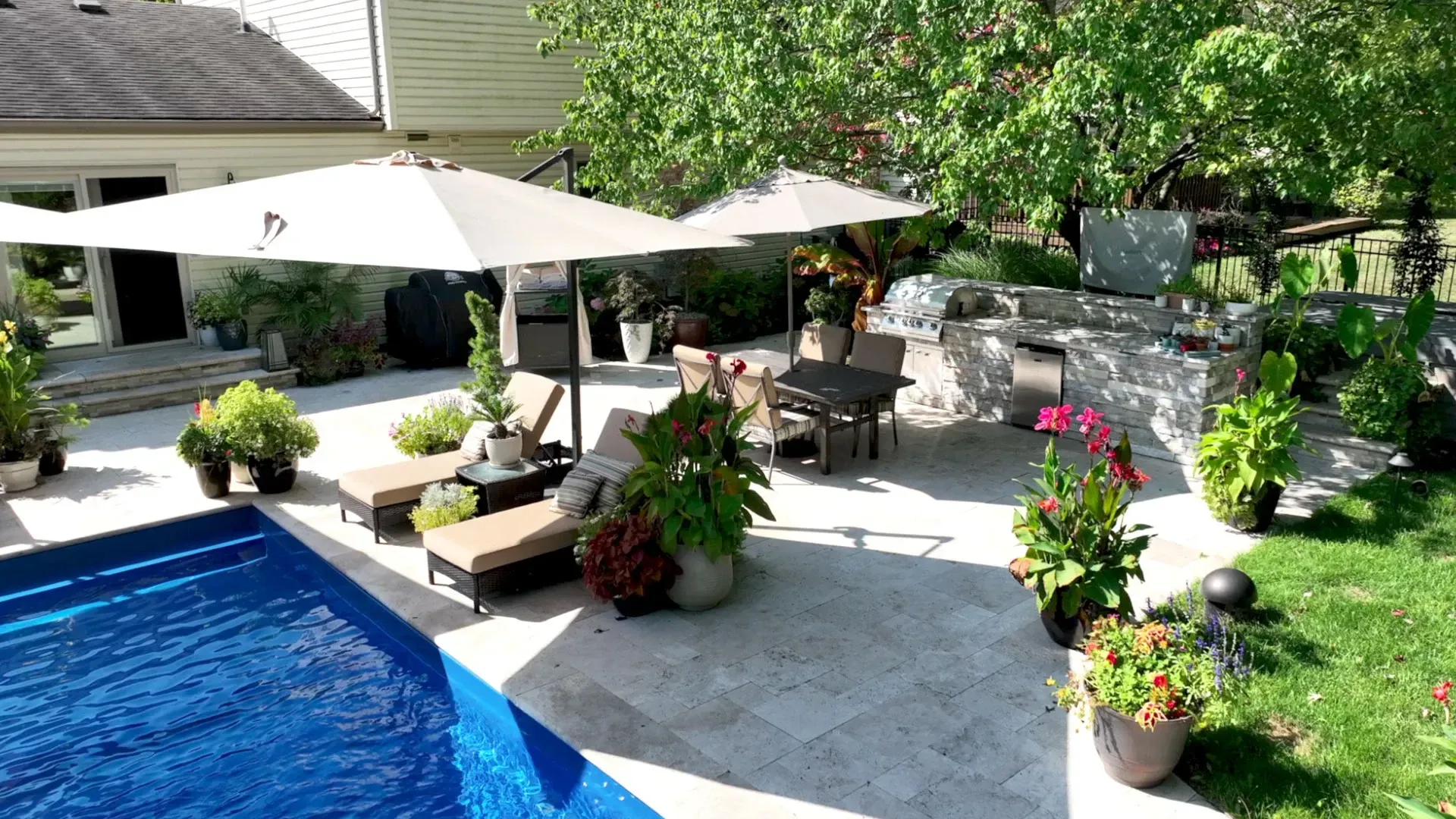
The Bullnose Failure Mode Nobody Models at the Contract Signing
Bullnose coping — the rounded half-pipe profile that sits on top of the bond beam — was engineered for climates like South Florida and coastal California. Warm, humid, ground never moves, no freeze cycle worth naming. It sheds water off the top face, and the bond beam concrete behind it stays dry enough that water never gets a chance to sit, soak, and then freeze.
Dawsonville is a different planet. At roughly 1,270 feet elevation, the city sits at the highest point in the Primetime service area. The Amicalola-adjacent foothills catch mountain-pattern storms in summer and cold snaps that plunge below 25°F in January. The National Weather Service Peachtree City office logs roughly 30 freeze events per year for Dawson County stations, compared to about 20 for Dacula and 14 for Snellville. Every one of those freeze events is a chance for water that has wicked into the bond beam joint to expand by nine percent and pry the coping stone loose from the substrate.
With bullnose, the path water takes is short and brutal. Deck runoff hits the back of the coping, runs along the mortar bed, and collects in the hairline joint between the stone and the top of the bond beam. In summer it evaporates. In January it freezes, expands, and does microscopic damage to the mortar. Repeat the cycle three hundred times over eight years and the damage is no longer microscopic. The coping stones shift. Water reaches the rebar in the bond beam. Rebar rusts, expands, and cracks the concrete from the inside out. That is the failure mode I see on Foxcreek and Etowah River Club pools built in the late 2000s almost every quoting season.
Freeze event count matters: A “freeze event” is any day where temperatures cross 32°F, not just consecutive freezing hours. Dawsonville’s 30/year vs. Dacula’s 20/year is a 50% higher exposure rate on the same coping material.
What Drop-Face Coping Actually Does Differently
Drop-face coping is not a different stone — it is a different profile. The top face still reads as clean stone along the waterline. What changes is the front edge. Instead of a rolled half-pipe bullnose, the front face drops straight down in a 1.5″ to 2.5″ vertical skirt that wraps over and past the top of the bond beam. In Primetime’s standard spec we use a 2-inch vertical drop on residential pools and 2.5″ on pools with raised spas or negative-edge features.
The skirt does three things bullnose cannot. First, it puts a physical barrier between the bond beam face and the direct weather — rain hits the vertical stone before it ever reaches mortar. Second, the drop creates a drip edge: water running down the face breaks cleanly off the bottom lip rather than running back under the stone by capillary action. Third, the larger gluing surface (the back of the skirt plus the bottom face that rests on the beam) roughly triples the bond area versus a flat bullnose sit. More bond area means fewer hairline failures at the mortar interface even before you count the freeze benefit.
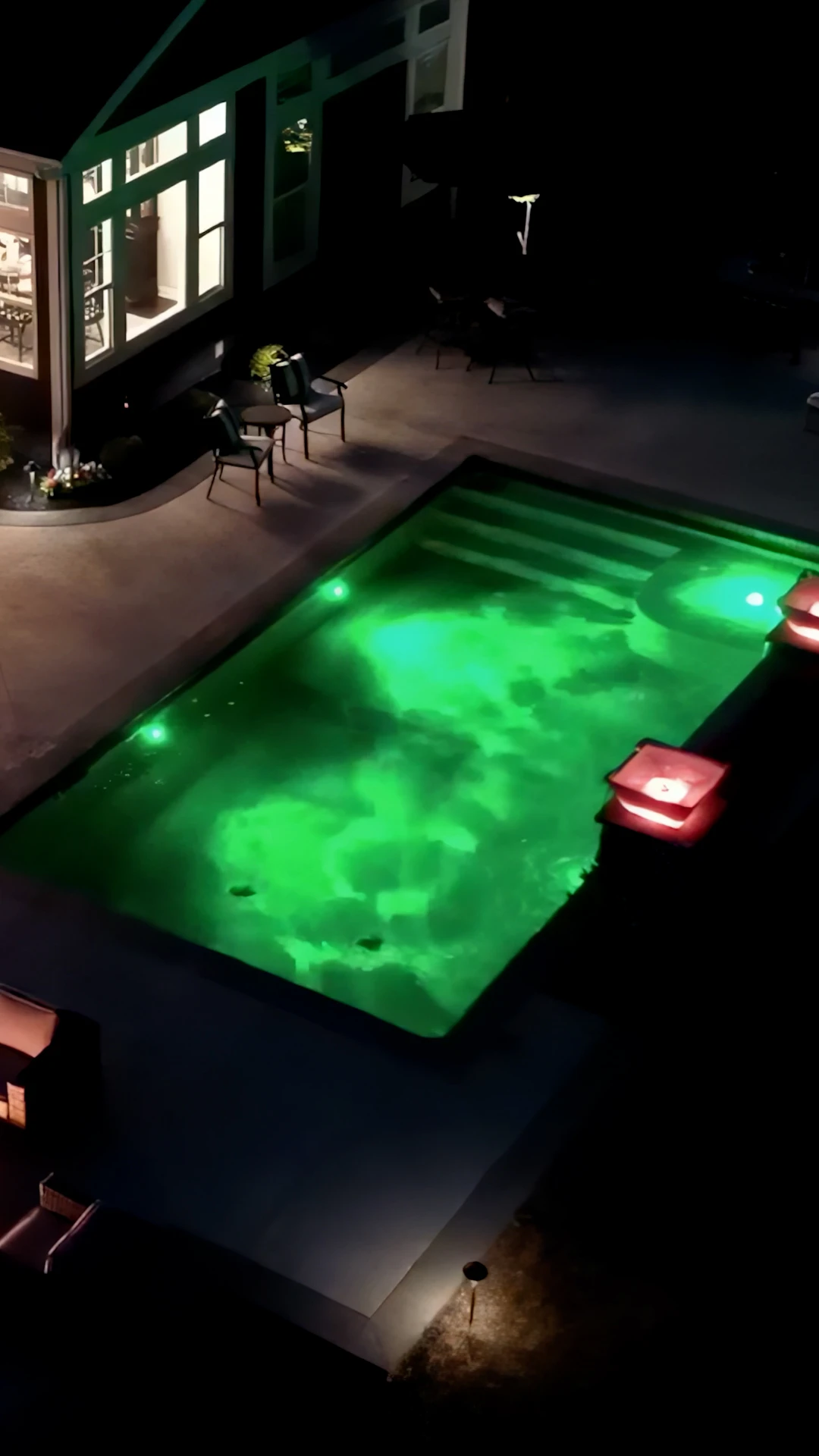
The visual trade-off is smaller than people expect. From eye level in the deck chair, drop-face and bullnose look nearly identical. The difference only reveals itself if you crouch at the water edge and look across the top line, where drop-face gives a slightly crisper shadow line while bullnose rounds off. If anything, luxury pool photography out of Big Canoe and the North Georgia mountain-home market has been pushing drop-face as the higher-end detail for the last five years — it is now the tell that says “custom” rather than “standard package.”
The Material-by-Material Math — What $8/LF Buys You
Coping gets specified three ways on most Dawsonville builds: travertine, natural stone (flagstone or thermal bluestone), or cast concrete. The drop-face premium runs roughly the same across all three, but the baseline and the failure mode differ, so the case for drop-face changes per material.
Travertine (unfilled, brushed)
Baseline bullnose travertine from the big mills — Cancun Travertine, Silver Travertine, standard walnut — runs $22 to $28 per linear foot installed in Dawson County. Drop-face in the same material runs $30 to $36/LF installed. That is an $8/LF premium, which on an 80-LF perimeter is $640.
Travertine’s Achilles heel in freeze-thaw zones is its porosity — the stone is full of micropores that wick water readily. Sealed annually with a penetrating siloxane sealer ($0.85/sqft/year), bullnose travertine lasts 12 to 15 years before enough freeze cycling has degraded the edge bond to require re-setting. Skip the sealer (which, realistically, most homeowners do after year three) and you are looking at 8 to 10 years. Drop-face travertine, even without obsessive sealing, is reliably lasting 20+ years on the oldest Primetime projects in the area.
Natural stone (thermal bluestone, Tennessee flagstone)
Bluestone coping is the premium move — denser than travertine, tighter grain, noticeably cooler underfoot in July. Baseline bullnose bluestone lands at $32 to $42/LF installed; drop-face bluestone is $40 to $52/LF. The premium shrinks in percentage terms on a pricier stone but the dollar cost of the upgrade is similar — roughly $8 to $10/LF, or $640 to $800 on our 80-LF reference pool.
Bluestone is much less porous than travertine, which makes the bullnose lifespan better — 15 to 18 years is typical. But the failure mode when it does go is uglier, because the bond beam damage behind a dense stone is often further along before surface signs appear. Drop-face on bluestone is less about the stone itself and more about protecting the concrete it sits on.
Cast concrete coping
The budget option. Bullnose cast concrete (poured in place or pre-cast units like Eldorado Stone caps) runs $16 to $22/LF. Drop-face cast concrete runs $24 to $30/LF. Same $8/LF premium.
This is where the math gets most lopsided. Cast concrete is the worst performer in freeze-thaw — it soaks water, it cracks, it spalls. Bullnose cast concrete in Dawsonville is rarely a 10-year product. Drop-face cast concrete, because the vertical skirt dramatically reduces bond-beam water contact, can stretch to 15+ years. You are not buying a premium product; you are buying survival time on a vulnerable product.
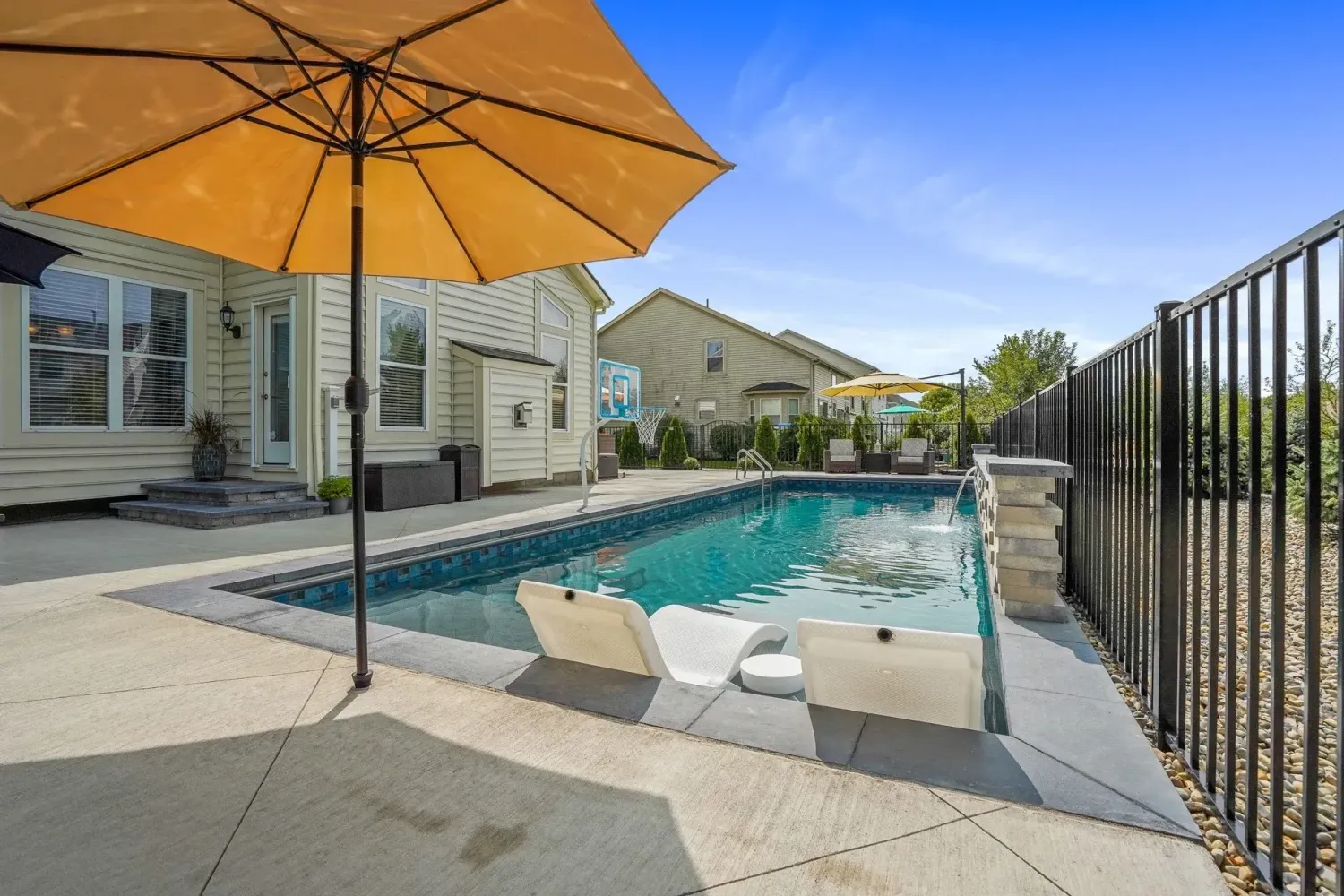
Dawsonville excavation note: Lots in Riverbend, Kensington Ridge, and Mountain Laurel frequently hit saprolite and weathered granite at 2 to 6 feet depth. Rock-blast charges run $8 to $14 per cubic yard over a standard dig. That is unrelated to coping, but budget-wise it matters when you are deciding where to spend the “upgrade” dollars. We almost always argue: blast the rock, don’t cut the coping spec.
The $640 vs. $6,400 Repair Math
Here is the comparison straight. Build an 80-LF perimeter pool in Dawsonville with standard bullnose travertine coping:
- Upfront coping cost: ~$1,920 (80 LF × $24/LF)
- Typical lifespan in Zone 7b/8a: 8 to 10 years before bond-beam repair
- Repair cost at year 8: $3,200 to $6,400
- Repair scope: remove existing coping, repair bond-beam spalls, re-set coping, re-tile waterline as needed, re-plaster if the repair required shell access
- Pool downtime during repair: 2 to 3 weeks
Same pool, same perimeter, drop-face travertine:
- Upfront coping cost: ~$2,560 (80 LF × $32/LF)
- Premium over bullnose: $640
- Typical lifespan: 20+ years, no major bond-beam intervention
- Repair cost in year 8: $0 if maintained normally
Net over 20 years, drop-face saves roughly $3,000 to $6,000 per pool compared to the bullnose replace-and-repair cycle. That is before you count the quality-of-life cost of two weeks with the pool drained in August so a crew can chip mortar off your waterline.
The Installation Detail Most Builders Skip — And Three Local Exceptions
When drop-face is actually wrong
Every spec has an anti-case, and drop-face is not the right answer on 100% of Dawsonville builds. There are three situations where I spec bullnose or a modified profile instead.
First: negative-edge or infinity-edge pools where the overflow weir is the architectural point. On those, the coping becomes a weir stone and a flat or slightly beveled profile is structurally required. Drop-face defeats the hydraulic design.
Second: very tight masonry raised walls where the coping must match an adjacent hardscape band at a precise elevation — usually in terraced hillside builds along the Chestatee River corridor. If the bond beam is fully faced with veneer stone that extends to grade, the bond beam is already protected and the drop-face becomes redundant. In those cases we’ll spec a flat-topped profile with a drip kerf cut into the underside.
Third: vinyl-liner pools. The coping on a vinyl liner clips into a track that does not accept a vertical drop. Different product category, different failure modes — and vinyl-liner pools are uncommon in Dawson County new construction anyway. Most clients in the Etowah River Club and Applewood price range are specifying gunite.
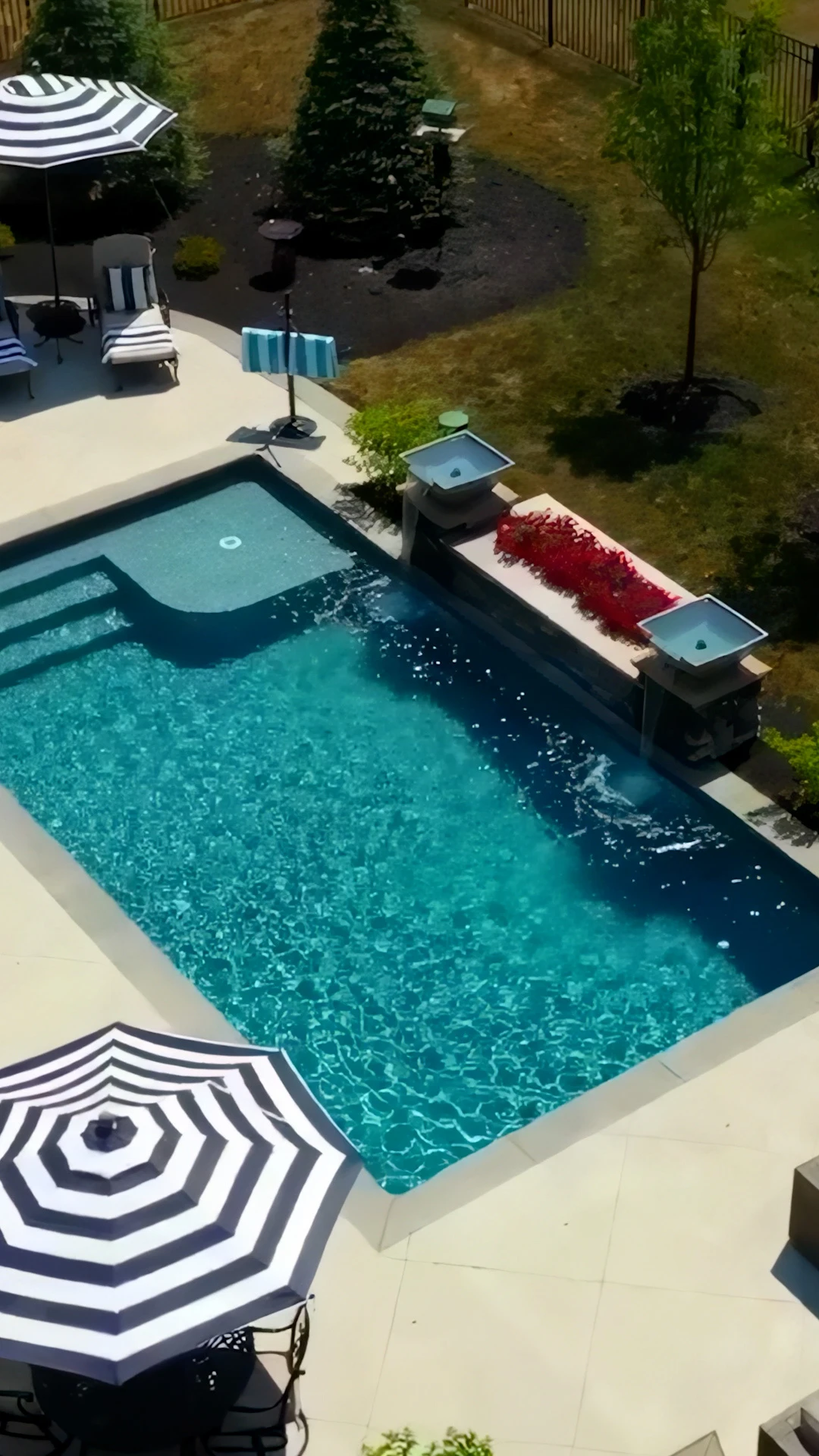
The mortar-joint detail most builders skip
Drop-face coping specified on the plans is half the battle. The installation detail at the mortar joint is the other half, and this is where I watch competitors cut corners.
The setting bed between the back of the drop-face skirt and the bond beam should be a polymer-modified thinset or a flexible epoxy mortar — not a Portland-cement-only mortar. The polymer/epoxy handles the slight differential movement between the stone and the concrete through temperature swings. Portland-only mortar, which is faster and cheaper, cracks at year three in Zone 7b/8a. Once that mortar joint cracks, the whole drop-face benefit is compromised because water enters the joint and you are back to the bullnose failure curve.
The other detail: the bond beam itself should be painted with a waterproofing membrane (we use BASF MasterSeal 588 as a standard) before the coping is set. This is a belt-and-suspenders move. The drop-face is the belt — it keeps most water off the beam. The membrane is the suspender — it seals the concrete itself against the water that inevitably gets through during a heavy storm or a 4-inch mountain-pattern thunderstorm off the Amicalola Falls ridge.
Permit-wise, none of this changes your approval path. Dawson County Dept. of Planning & Development at 25 Justice Way permits on the structural and electrical plans, not on the coping profile. You tell them gunite shell, NEC §680 bonding grid, electrical drop from Amicalola EMC, and they approve. Coping is an aesthetic upgrade from their standpoint — which is exactly why homeowners end up under-specifying it on their own.
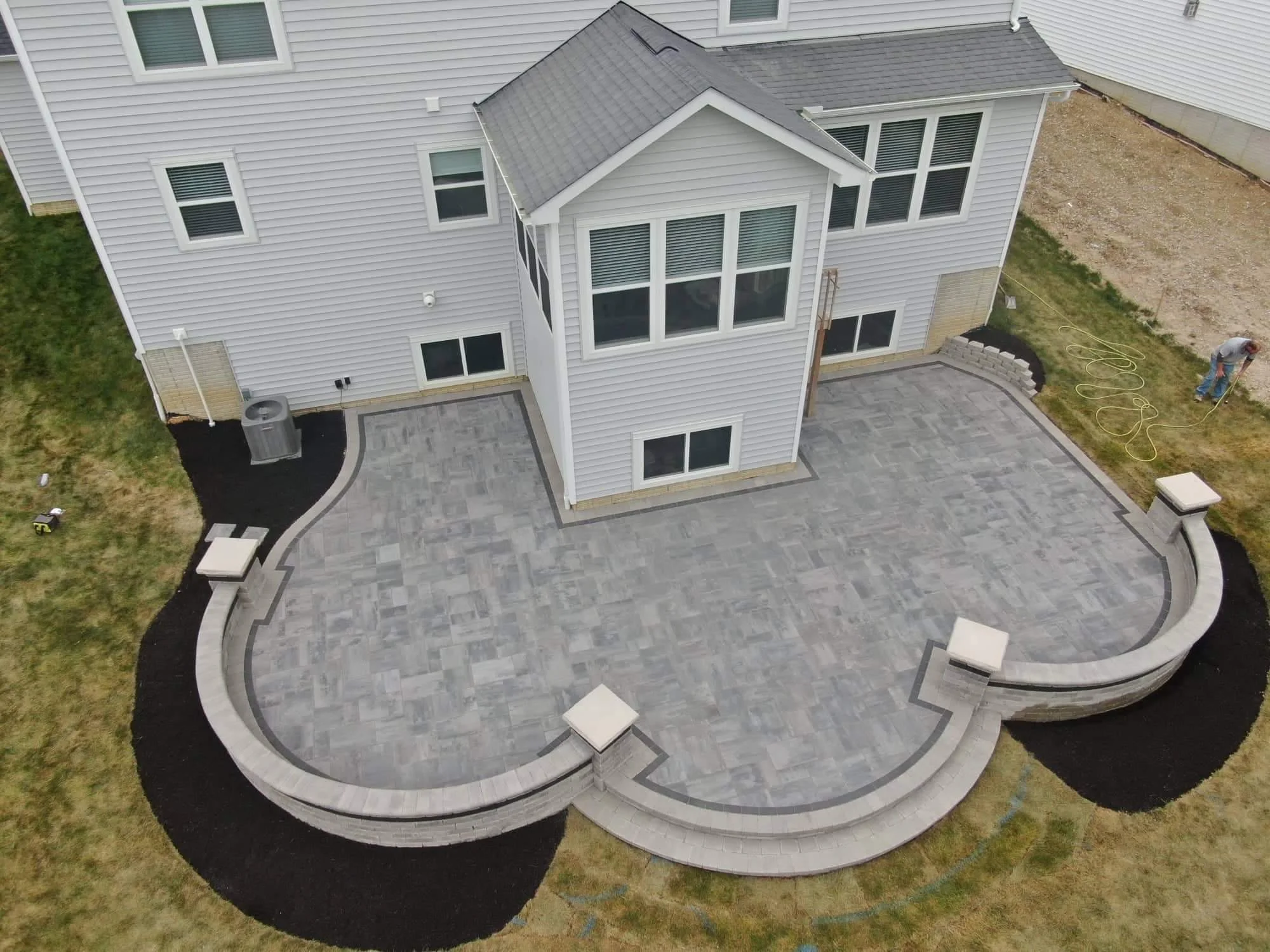
Our standard Dawsonville coping spec: 2-inch drop-face profile, polymer-modified thinset bed, BASF MasterSeal 588 waterproofing on the bond beam, sealed annually for travertine and every 3 years for bluestone. That is the package we price on every Dawson County bid.
If you are building new in Foxcreek, Riverbend, Mountain Laurel, or anywhere along the GA-400 corridor north of the outlets, drop-face coping is not an upgrade to be “value-engineered” out of the spec. It is the single highest-ROI $640 on the entire build. Spend it. Argue with your builder if they try to talk you out of it. The $6,400 bond-beam repair eight years from now — in the middle of July, with the pool drained and your kids asking why they can’t swim — is a much uglier conversation than the one where you wrote a $640 check in the first week of construction.
Pool deck and coping construction across 20+ cities within 30 miles of Winder, GA
From Dawsonville’s foothill lots to Snellville’s Piedmont clay, we spec coping, decks, and bond-beam detailing to the climate and subsoil on your actual parcel — not a Florida template dropped into North Georgia.