
A homeowner in Hamilton Mill called us last spring with a clear sentence: “Nobody has jumped off that diving board in four years.” The pool was built in 2001, the deep end was 8 feet 6 inches, and the utility bill to heat that extra 7,000 gallons was the straw that broke the decision. This is the conversion we kept coming back to — and the one Cumming families keep asking about.
Drive through the established sections of Cumming — Hamilton Mill on the Gwinnett side of the line, St. Marlo off McFarland Parkway, Polo Fields north of Highway 20 — and you pass roughly the same pool over and over. Built between 1998 and 2005, 16 by 34 feet, rectangle, concrete deck, tile waterline, and a deep end that plunges from 3 feet down to 8 feet 6 inches for a diving board that nobody uses anymore. The kids who used it grew up. The grandkids are too young. Insurance companies stopped loving diving boards around 2009. And the water bill to run 30,000-plus gallons at 84 degrees Fahrenheit all summer keeps climbing.
The owners of those pools fall into two camps. The first camp fills the deep end with dirt, pours new concrete over it, and sells the house two years later. The second camp calls us and asks what it would cost to do it right — to turn the diving well into a flat-bottom play pool with a tanning ledge, save the shell, save the plumbing runs, and end up with something their current family actually uses. That second camp is who this piece is for.
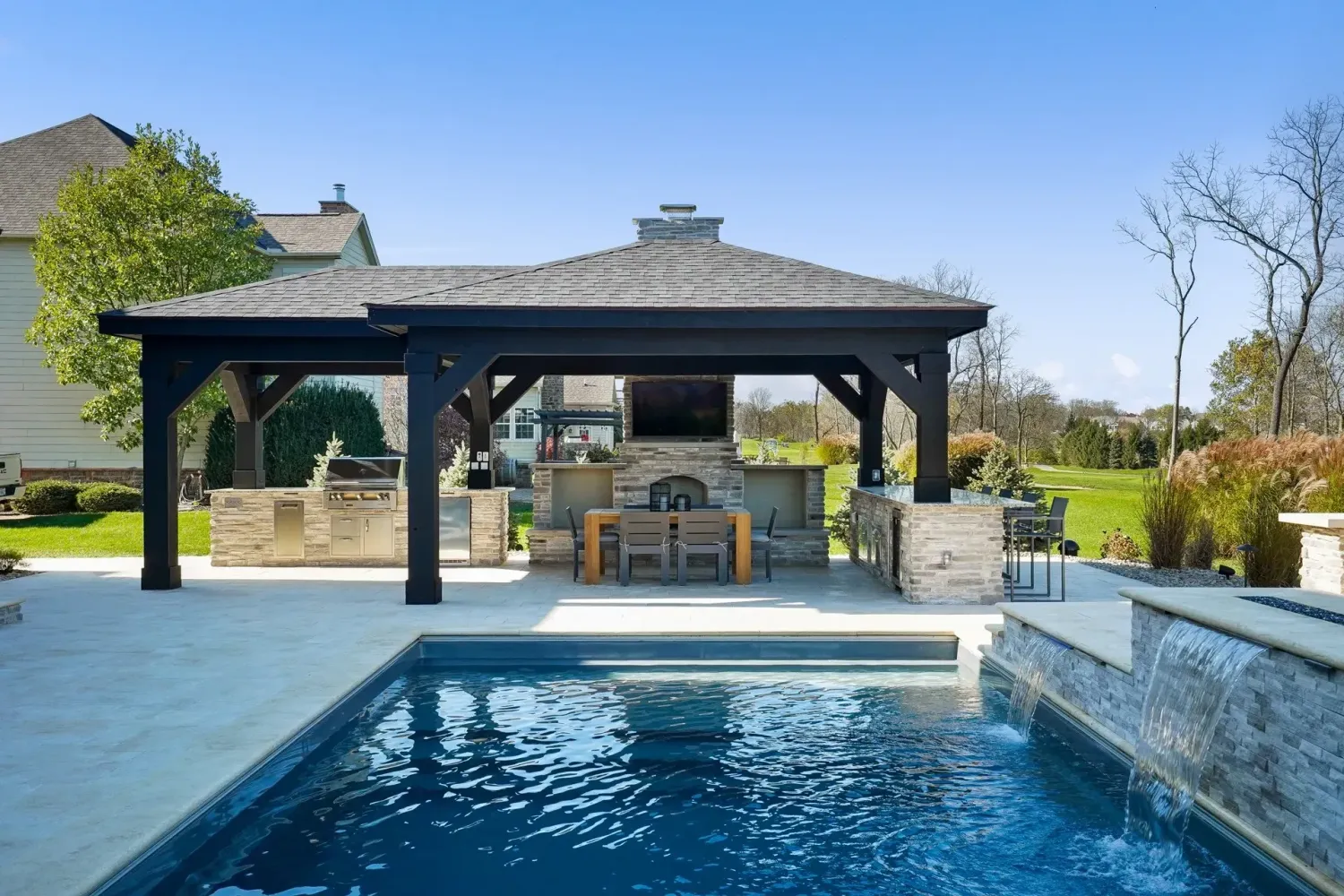
The rest of this post walks through the actual conversion — what we remove, what we keep, what Forsyth County permitting looks like, and the line items that make up the $24,000 to $42,000 range we quote for this work. If you own a 1990s or early-2000s diving pool in Hamilton Mill, St. Marlo, Polo Fields, Lake Windward, Windermere, Vickery, or Three Chimneys, the numbers below are yours, not a national average.
Step 01 — The Audit: What Stays, What Goes, What the Shell Will Actually Let You Do
Before a single jackhammer hits the deck, we spend about three hours on site with a measuring tape, a depth finder, a concrete hammer, and a flashlight that works underwater. The audit is not optional. A diving pool built in 1999 by a contractor who is no longer in business could have been built to any of a dozen spec sheets, and the wall thickness, rebar schedule, and bond beam depth determine what we can do to the shell without compromising it.
We measure existing depths at six points along the long axis. We note the transition slope — almost always a 3-to-1 hopper from the 3′ break into the deep end. We tap the gunite walls at the deep end floor and listen for hollow spots where rebar has rusted and spalled the concrete behind it. We confirm the bond beam (the thickened top lip where coping attaches) has not cracked and separated from the wall, which is common in the 25-year-old Cumming builds that sit on Cecil-series red clay. And we pull the skimmer lids to check the plumbing material — rigid PVC from the mid-1990s is typically Schedule 40 and reusable; flexible spa hose from the same era is not.
The audit produces one of three verdicts. Verdict A: the shell is solid and the conversion is straightforward. Verdict B: the shell is solid but the tile, coping, and plaster are at end of life, which turns this from a conversion into a conversion-plus-full-remodel (and bumps cost toward the top of the range). Verdict C: the shell has structural failures in the deep end and needs partial demo before the conversion can proceed. About 70% of Cumming diving pools we audit land in B.
What a Verdict B scope actually includes: shell shaving and raising in the deep end, new interior plaster or Pebble Tec finish throughout (11,000 to 14,000 square inches of surface area), new waterline tile, new coping, tanning ledge installation, one new return and one new main drain relocation, and replastering the hopper transition so it disappears into the new flat floor.
Step 02 — Shell Shaving: How You Raise an 8’6″ Deep End Without Pouring a New Pool
Shell shaving is the core of the conversion. Rather than filling the deep end with engineered fill (which settles unpredictably and voids the structural continuity of the pool), we raise the floor of the deep end inside the existing shell by bonding a new gunite layer to the old one. For a 1998 Hamilton Mill pool with an 8’6″ deep end, we typically shave the hopper walls back, pin new steel into the old shell with epoxy-anchored #4 rebar at 18-inch on-center spacing, and shoot a new gunite floor at the target depth — 4 feet 10 inches for the play-pool spec.
The math behind 4’10”: it’s deep enough to swim real laps for a reasonable-height adult (push off the wall, three strokes, turn), safe enough that most 9-year-olds can touch with their chin above water, and shallow enough that heating the pool from a typical Cumming spring water temperature of 58°F to a comfortable 84°F costs about 38% less than heating the same pool at the old diving-well volume. Over a 7-month Georgia pool season, that difference is real money on a Sawnee EMC electric bill.
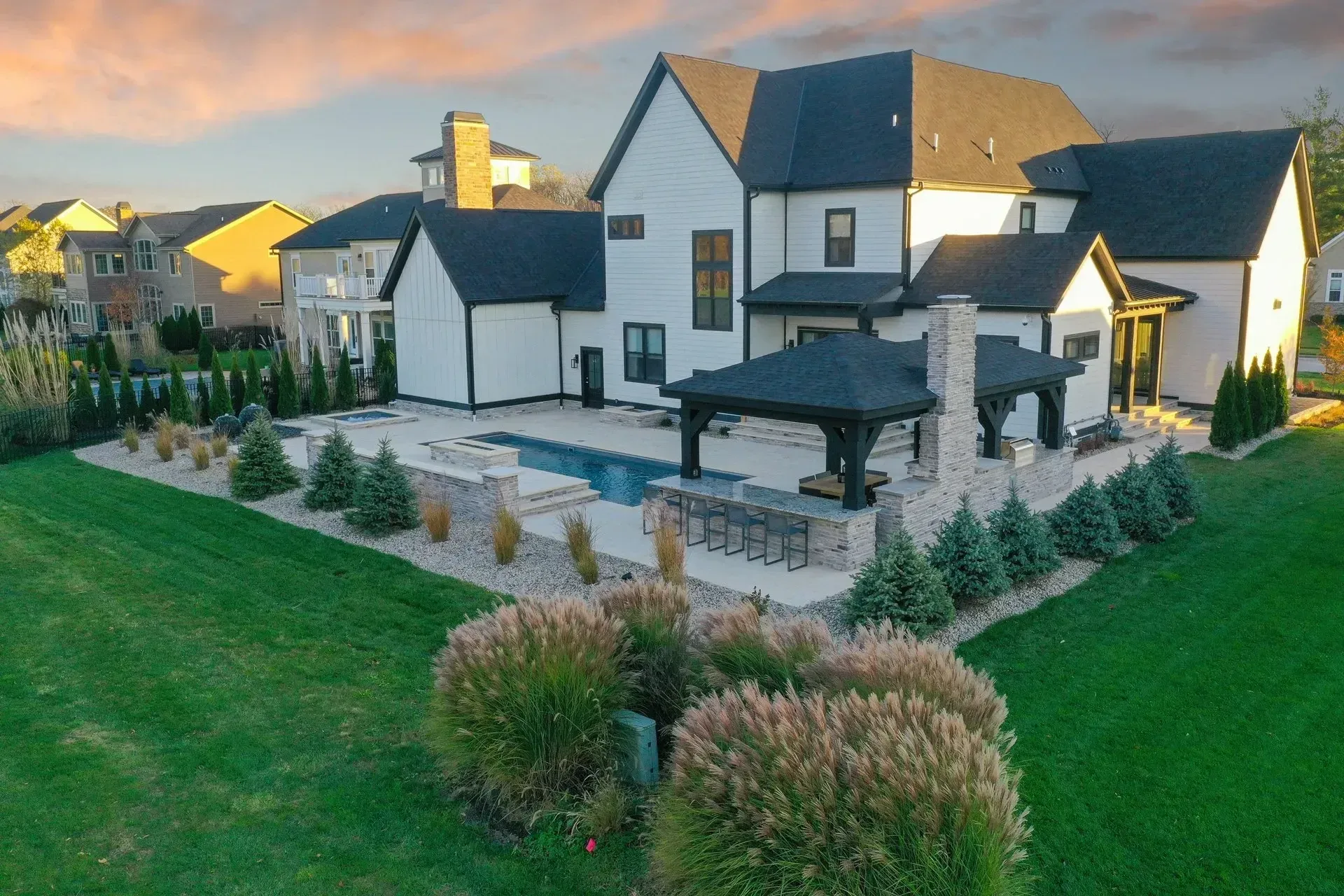
The re-shoot itself is a half-day job for a two-man gunite crew. We shoot 6 inches of new gunite over the new rebar cage, bonded to the old shell with a slurry coat and a chemical bonding agent. It cures for 14 days under a wet rag-and-plastic regimen before anyone touches it — skipping the cure is the single biggest reason aftermarket conversions fail at year 3 when the new layer delaminates. We do not skip the cure. Ever.
After cure, the hopper transition — the old 3-to-1 slope that ran from the 3′ break down into the deep end — gets filled and smoothed into a flat floor with a gentle 1% pitch toward the new main drain. When the plaster goes on, that transition disappears. You would never know, swimming in the finished pool, that there used to be a diving well underneath you.
Step 03 — The Tanning Ledge: Why We Always Put It on the Sunset Side
A conversion without a tanning ledge is a missed opportunity. The ledge — a 6-inch to 12-inch deep shelf wide enough for two chaise loungers — is what turns a play pool from a simple rectangle into a genuinely modern outdoor room. In every Cumming conversion we do, we add one. Where we put it is not random.
In Forsyth County, prevailing winds in summer come from the southwest, and Sawnee Mountain (1,963 feet) sits to the northwest of Cumming proper. That means afternoon sun lands hardest on the west-facing side of a typical backyard pool from about 2 p.m. to 7 p.m. We build the tanning ledge on that side — the sunset side — because that is when adults actually want to be horizontal on the ledge with a drink, not when they want to be jumping in the middle of the pool. If we put the ledge on the east side, it would be in afternoon shadow when it gets used. That’s a $4,800 mistake that happens if you hire someone who doesn’t think about solar orientation before pouring.
Tanning ledge spec we use in Cumming conversions: 9 feet long by 7 feet wide, 9 inches of water depth, with two 1.5″ umbrella sleeves cast into the ledge floor at 6 feet of spacing. Umbrella sleeves cost $180 to add during pour; retrofitting them afterward runs closer to $2,400. Always do it during pour.
Step 04 — Re-Plumbing for a Play Pool: What the Old Diving-Pool Plumbing Gets Wrong
A diving pool and a play pool have different plumbing priorities. A diving pool is volume-optimized — the returns are aimed to circulate a deep water column, and the main drain sits 8 feet below the surface where it rarely has to deal with surface debris. A play pool is surface-optimized — the returns are aimed to drive debris toward the skimmers, and the main drain sits 4 feet 10 inches down in a constantly active water column. The pump sizing and the return geometry are different.
For a 16×34 conversion in Cumming, we typically rebuild the return side with four wall returns instead of the old two, angled at 30 degrees off perpendicular to create a consistent counterclockwise surface current that pushes floating leaves from the southwest treeline (dogwoods and oaks are the usual suspects in older Cumming neighborhoods) toward the skimmers on the downwind side. The old main drain gets capped and replaced with a pair of VGB-compliant anti-entrapment drains per federal Virginia Graeme Baker Pool & Spa Safety Act requirements — the original 1998 single-suction main drain is not legal anymore, and any remodel that disturbs it triggers the upgrade requirement. It’s not optional.
Pump-side, we swap a 20-year-old single-speed 1.5 HP pump for a Pentair IntelliFlo3 VSF variable-speed pump. On a converted play pool with lower volume and better flow geometry, the variable-speed unit typically runs at 1,200 RPM for daily filtration — about 140 watts. The old single-speed drew 1,800. Over a Cumming pool season at Sawnee EMC’s current residential rate, that is a $640 annual delta, which pays back the pump inside three years. We write that math into the quote so you see it.
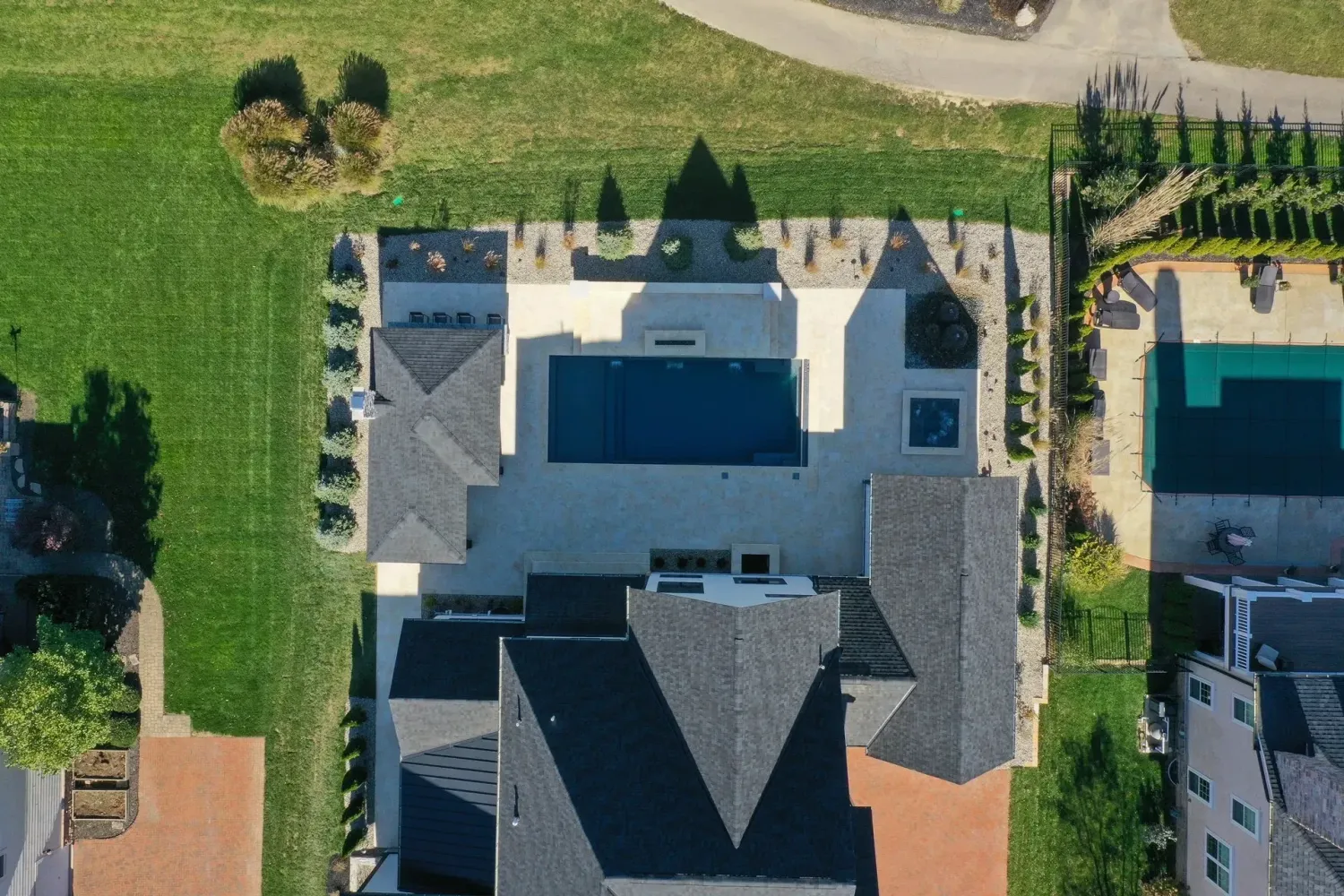
Step 05 — Permits, HOA Boards, and the Forsyth County Paperwork Trail
The Cumming conversion is an alteration of an existing permitted structure, so it runs through the Forsyth County Department of Planning & Community Development at 110 East Main Street in Cumming. You need a residential building permit for the shell modification, an electrical permit for the pump and any new bonding work, and a health permit because the pool drops below six feet no longer exists (a play pool conversion technically changes the permitted pool classification, and the county wants it on record).
Straightforward paperwork, but the timing matters. Forsyth County’s residential permit desk is running about 9 to 14 business days on conversions as of this season — faster than Fulton’s 18-to-25 and slower than Dawson’s 6-to-8. We file the drawings as a pdf set directly through the county’s ePlan portal rather than walking them in, which shaves about three days off the queue.
Then the HOA. If your Cumming pool sits inside one of the architectural-review communities — St. Marlo, Polo Fields, Vickery, Lake Windward, Hampton Park, Windermere — you also need approval from the community’s Architectural Review Committee before the county will stamp the permit. ARC turnaround is typically 2 to 3 weeks. St. Marlo’s board in particular wants to see the new coping material named (we specify natural travertine, French pattern, 1.25 inch, which they accept without comment) and the tanning ledge drawn on the plan. Polo Fields requires a surveyor’s site plan showing the post-conversion pool outline if the shape is changing; since our conversions keep the existing shell, the outline doesn’t change, and we submit a letter of no-change which usually clears in a week.
Electrical is the other quiet line item. Sawnee EMC is the utility for everything north of Highway 20 and most of Forsyth County proper, and their residential service to these older 1998-era subdivisions is typically 200-amp with a 240V sub-panel at the pool equipment pad. The 1.5 HP single-speed pump on a 25-year-old pool is usually wired to a 20-amp breaker off that sub-panel. The new Pentair variable-speed draws less current and runs on the existing wire, but the equipment bonding grid — the #8 solid copper that ties the rebar, the coping, the metal deck drains, and any light niches to the equipment pad — needs to be re-verified after any shell work. We bring in a licensed Forsyth County electrician to test continuity before backfill, because a failed bonding inspection after you’ve already poured the new deck is the kind of callback that ends contractor relationships.
Typical Cumming conversion permit window: 3 weeks HOA ARC + 2 weeks county permit desk (running in parallel, not sequence if you plan it right). Total lead time from contract signature to dig: about 4.5 weeks. Factor this into any spring-completion deadline.
Step 06 — The Numbers: What $24K to $42K Actually Buys in Forsyth County
Here is the real cost breakdown on a Cumming diving-to-play conversion, based on the last nine of these we have completed between Lake Windward and Mashburn Plantation. Your exact quote will land somewhere inside this range depending on plaster choice, tile grade, coping material, and whether you’re doing the equipment upgrade at the same time (which we recommend, since the equipment pad is already torn up).
- Drain, shell audit, engineered drawings, permits: $2,800 to $4,400
- Demo of hopper transition + existing plaster strip: $3,200 to $4,800
- New rebar cage + bonded gunite re-shoot (deep end floor raise): $6,400 to $9,200
- Tanning ledge construction (9′ x 7′, 9″ deep, 2 umbrella sleeves): $3,800 to $5,600
- Full re-plaster (Pebble Tec or equivalent) + waterline tile + coping: $7,200 to $11,400
- VGB main drain upgrade + four-return re-plumb + skimmer relocation: $2,400 to $3,800
- Pentair IntelliFlo3 VSF pump + install (optional but recommended): $2,900 to $3,600
Add those up at the midpoint and you are at roughly $32,400. At the low end, a straightforward conversion on a solid shell with keep-the-existing-coping tile runs $24,000. At the high end, a full Verdict-B scope with premium Pebble Sheen finish, travertine coping, 6×6 glass mosaic waterline, and the equipment upgrade lands at $42,000. For context: tearing out the old pool and installing a brand-new play pool on the same footprint in Cumming right now runs $95,000 to $140,000 and takes 16 to 22 weeks. The conversion is about a third of the cost and runs 5 to 7 weeks start to finish.
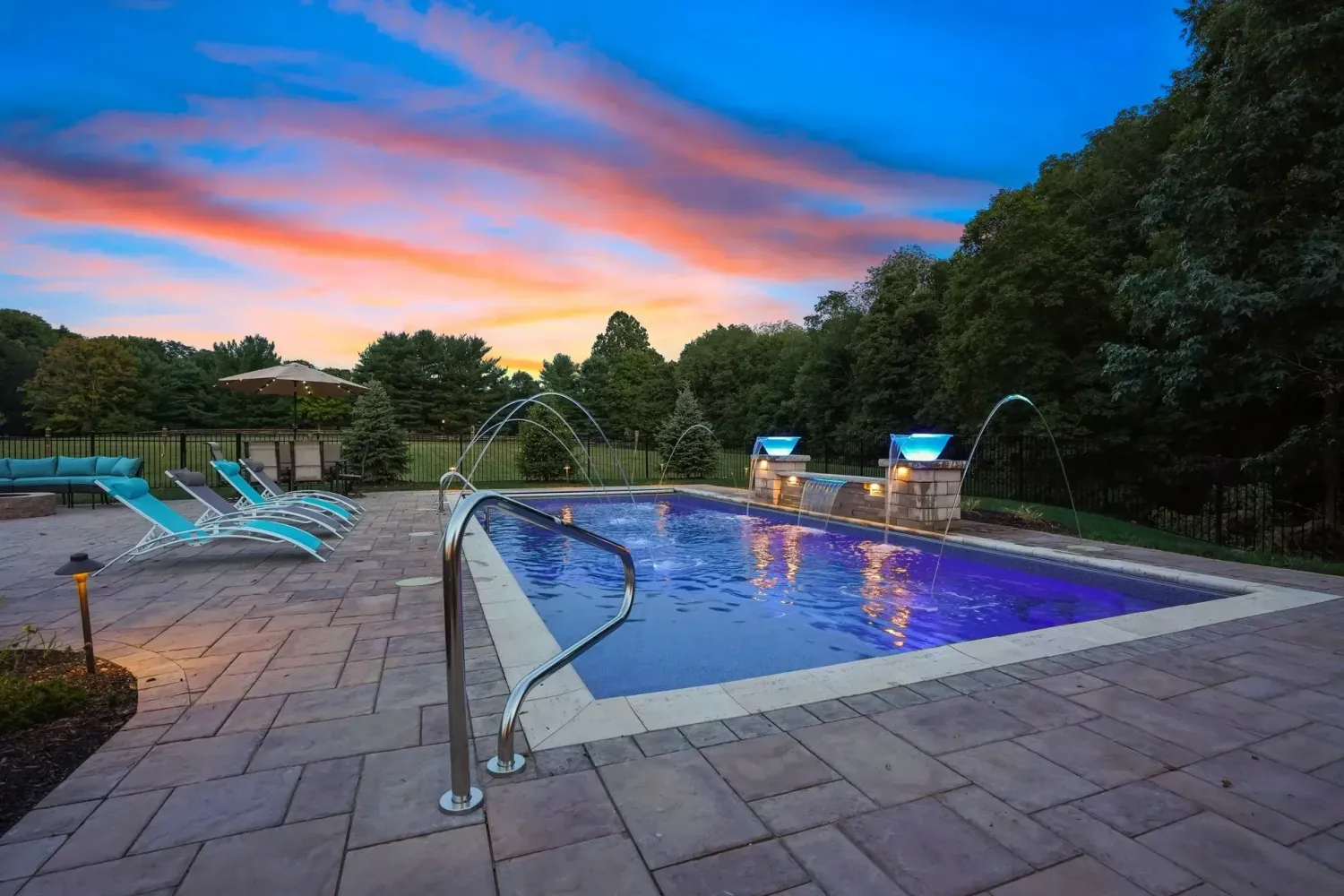
The resale number is worth saying plainly. In the Forsyth County market right now — Cumming’s median sale price crossed $675,000 in the last 18 months on the back of continued Atlanta-metro in-migration — diving pools are a net negative on listing photos for buyer personas under 45 with young kids. That demographic is exactly who is buying in Hamilton Mill, Vickery, and the new builds off Post Road. A converted play pool with a tanning ledge removes the objection, appeals to the buyer pool you actually have, and typically returns $18,000 to $26,000 of the conversion cost at resale based on comparable pairs we have tracked over the last three years. The rest is bought with the summers you spend actually using the pool again.
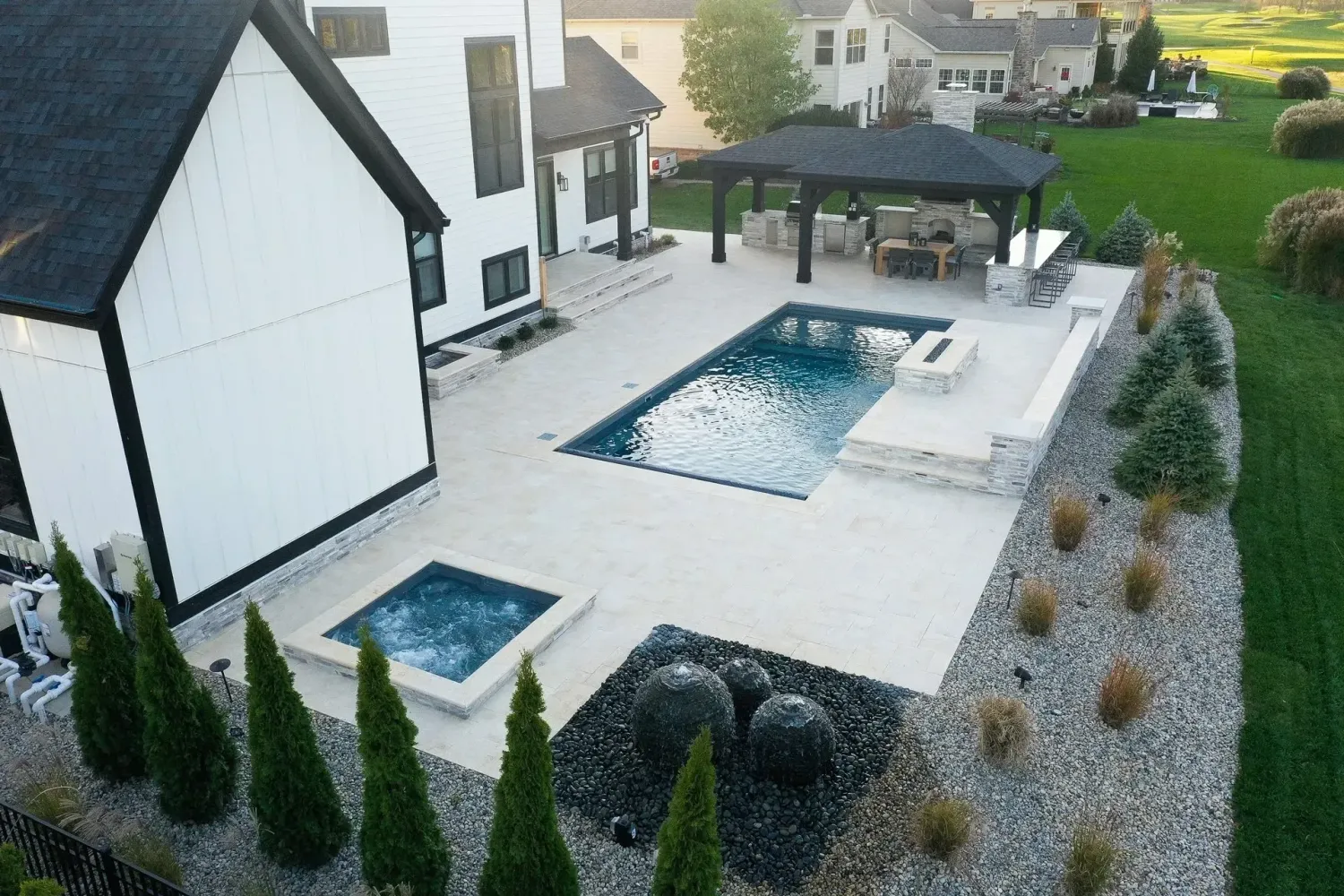
If you own one of those 1998-through-2005 diving pools in a Cumming subdivision and the diving board has not moved in two summers, the conversion math is worth a conversation. We audit for free, we write the scope as a real document (not a back-of-napkin range), and we finish conversions fast enough that a contract signed in April is swimming by the Fourth of July. Lake Lanier’s humidity will keep evaporation rates higher than they are in Dacula through August — which only makes the lower-volume play-pool conversion more worth doing.
Pool remodeling & diving-pool conversions across 20+ cities within 30 miles of Winder, GA
From Hamilton Mill to Windermere to St. Marlo, we shave shells, re-plaster, re-plumb, and pour the tanning ledge your current family will actually use. Forsyth County permits, HOA drawings, Sawnee EMC electrical coordination — handled.