
The call came from a homeowner on a shaded quarter-acre off Haw Creek Road. Her contractor had quoted $152,000 for an 18×36 rectangle, her HOA architectural board had sent it back twice for footprint concerns, and by the time she reached us she wanted to know a different question entirely — not how to squeeze a full-size pool into a treed yard, but whether a 12×24 dip pool could actually deliver what she wanted for under ninety grand.
It could. We built it. And over the last eighteen months we’ve built nine more like it across Forsyth County — Haw Creek, older Hampton Park, a handful of homes in Mashburn Plantation where lot coverage ratios matter. This is the post we wish existed when that first Cumming homeowner called us, because the dip-pool conversation in Cumming is not a scaled-down version of the full-pool conversation. It is a different design, a different electrical spec, a different HOA pitch, and a different winter cover plan.
What follows is the numbered process we now walk every Cumming dip-pool client through, start to permit-in-hand. If you live in Vickery, Windermere, St. Marlo, or any of the wooded older sections of 30040, this is written for you.
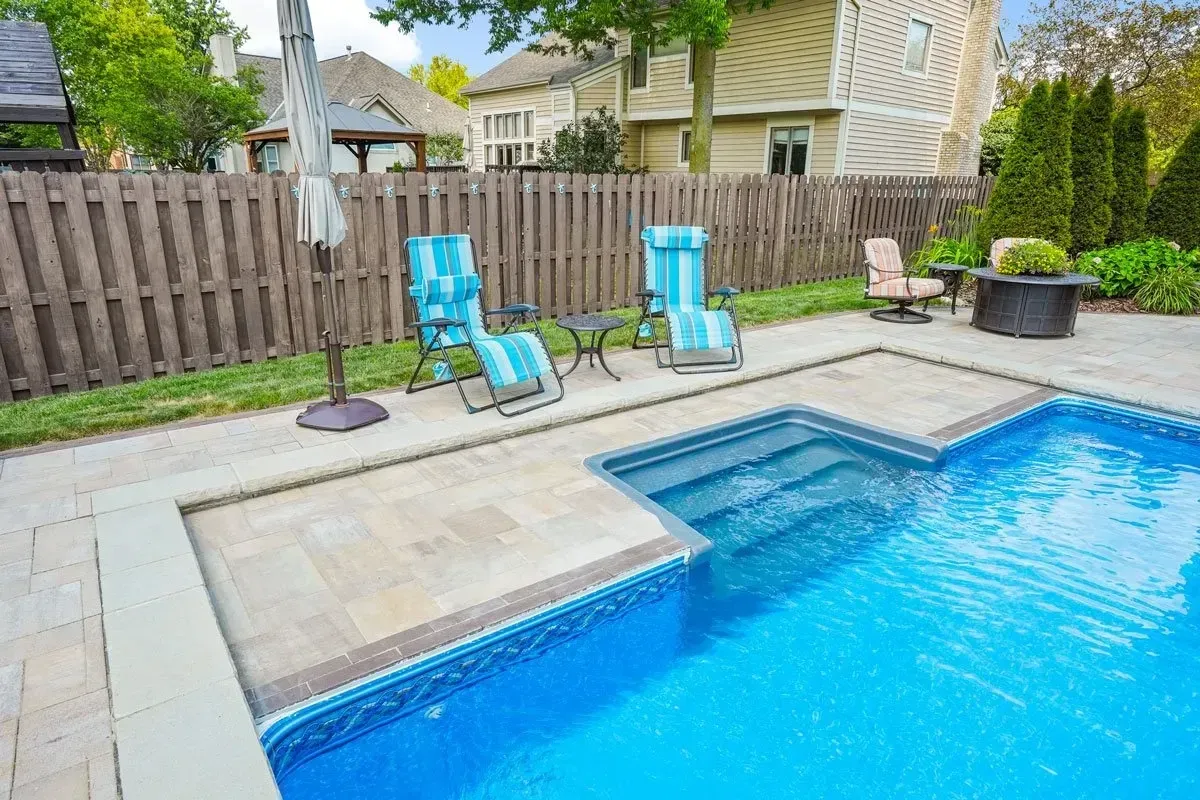
1. Why the Dip-Pool Math Actually Works in Forsyth County
Forsyth County is the fastest-growing county in Georgia, and the housing stock reflects it. A huge share of Cumming’s 2000-to-2015 subdivisions — Haw Creek, older Hampton Park, parts of Polo Fields — sit on quarter-acre to third-acre lots with mature hardwoods kept intact for shade. You cannot drop an 18×36 rectangle onto those lots without either taking down protected trees, crowding the septic field, or triggering an HOA setback rejection.
A 12×24 dip pool changes the geometry. Footprint drops from roughly 648 square feet to 288 square feet, turnkey cost drops from the $145K–$175K band into the $68K–$92K band, and the build schedule compresses from 14-18 weeks to 8-11 weeks. The homeowner trades lap swimming for lounging, morning coffee in waist-deep water, and — importantly in Cumming’s Zone 8a summers — a body of water small enough to keep at 88°F with a modest heat pump for under sixty dollars a month in shoulder season.
The math is not subtle. It’s the whole reason this trend has taken off in Cumming faster than in larger-lot markets like Dawsonville or north Hall County, where a full-size pool still fits easily. Here, it often does not.
Dip-pool cost anchor for Cumming, GA (2026): $68,000 to $92,000 turnkey for a 12×24 gunite pool at 4′-10″ max depth, with integrated bench, cream travertine coping, bullnose edge, variable-speed pump, cartridge filter, LED light, and a 65K BTU heat pump. Add $18,000–$28,000 for a surrounding paver deck (roughly 500 sqft).
2. Site Walk: What We Measure on a Cumming Wooded Lot
Every Cumming dip-pool project starts with a site walk before design. We carry a 100-foot tape, a laser level, a soil probe, and a drip-line marker — because on a wooded quarter-acre, four things determine whether the pool fits and at what price:
- Grade drop across the intended pool footprint. Cumming’s gently rolling foothills mean most backyards carry a 3-to-8-foot drop toward the nearest South Forsyth drainage tributary. A 12×24 can absorb up to about a 30-inch drop without retaining wall; beyond that, we’re pricing a short stacked-stone wall on the downhill side.
- Drip-line boundaries of protected hardwoods. Forsyth County’s tree protection rules kick in at specified trunk diameters, and we mark the drip line — not the trunk — as the no-dig boundary. Losing two mature oaks turns a pool into a construction zone the homeowner hates.
- Soil composition. Most of Cumming sits on Cecil series red clay, which is hard-packed, high-density, and not what you want to be explaining to a 12-ton mini-ex operator. We probe four corners and check for pockets of Appling sandy loam (common in older farm parcels near Post Rd and Bethelview Rd) because the two soils behave very differently during pool excavation.
- Setback distance from septic field, property lines, and structures. Forsyth County code requires a 10-foot setback from a septic drain field, and most HOAs stack an additional 5-to-10-foot setback from side and rear property lines.
That walk takes about an hour. By the end of it we know whether the project is a clean 12×24 footprint or whether we need to angle the pool 15 degrees off the house centerline to protect a tree — a move we’ve made on four of the last nine Cumming dip builds.
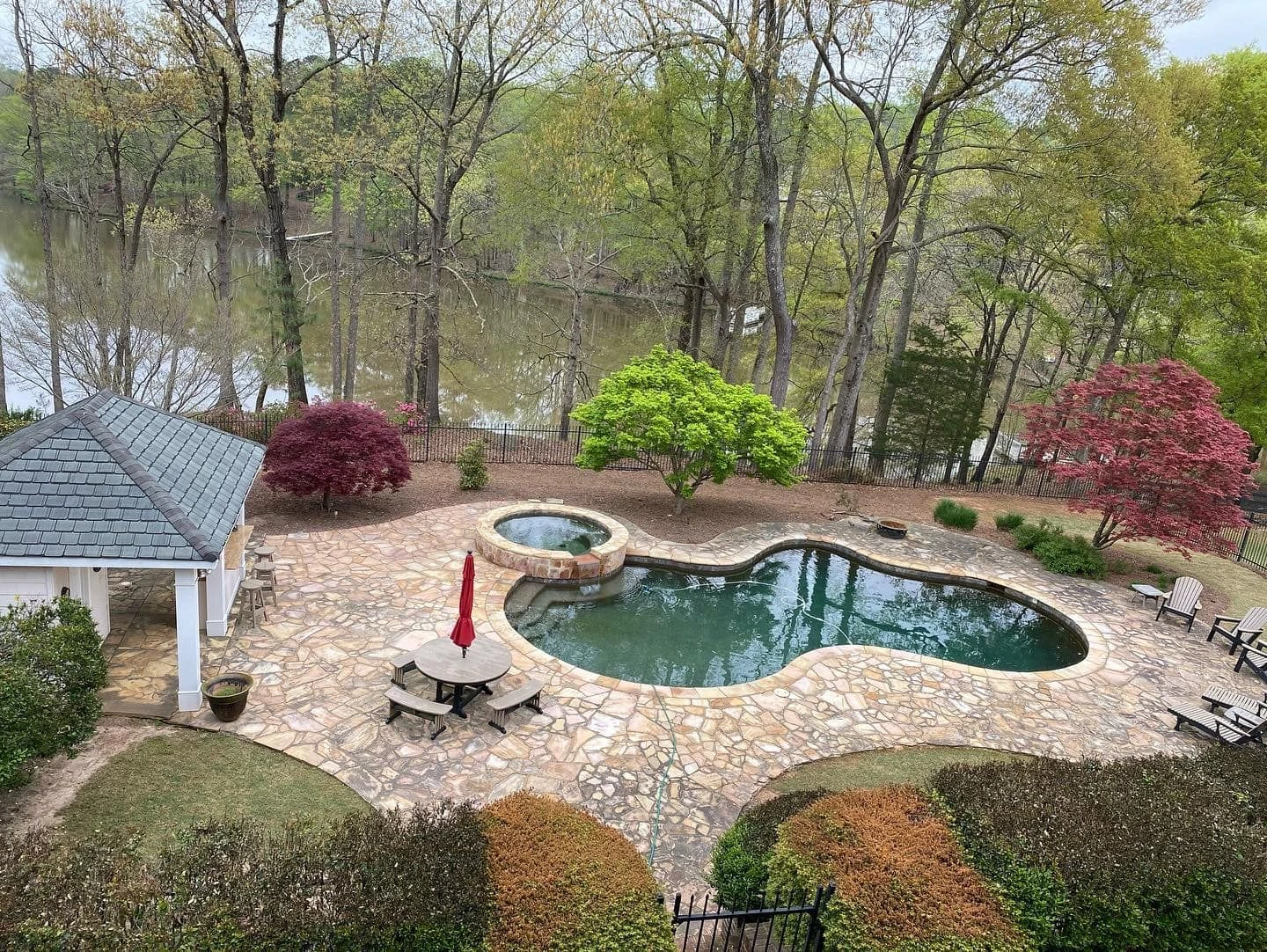
3. Getting the 12×24 Through a Cumming HOA Architectural Board
This step breaks more projects than soil, trees, or budget combined. The major Cumming subdivisions — St. Marlo, Polo Fields, Lake Windward, Three Chimneys, Vickery — all run architectural review boards with pool submission packets, and the turnaround averages 2-3 weeks for a dip pool versus 4-6 weeks for a full-size build.
The reason is footprint perception. A board member reading a site plan sees “288 sqft water feature, 500 sqft deck, 788 sqft total disturbed area” and the internal math reads as a reasonable addition to a quarter-acre backyard. The same board member reading a 648 sqft pool plus 1,100 sqft deck reads it as 1,748 sqft of hardscape replacing lawn — and starts asking questions about drainage, neighbor sightlines, and stormwater runoff. The 12×24 gets a shorter docket slot because it doesn’t raise those questions.
We build the HOA packet with this in mind. Every Cumming dip-pool submission from us includes:
- A scaled site plan showing the pool, deck, fence, and drainage plan against the existing lot survey
- Elevation renderings from the two nearest neighbor property lines (not just from the homeowner’s house)
- Material specs with manufacturer names — coping, deck pavers, fence style — so the board is not guessing
- A construction-access plan showing which side of the yard our trucks will use and how we’ll protect the street and driveway
That last bullet matters more than homeowners expect. St. Marlo’s board in particular has rejected pool submissions over vague construction-access plans. We write it in plainly.
4. Forsyth County Permitting and the Sawnee EMC Electrical Spec
Once the HOA approves, we pull the permit through the Forsyth County Department of Planning & Community Development at 110 E. Main St. in downtown Cumming. Residential pool permit turnaround in 2026 is running about 10-14 business days. Required submittals: site plan, pool cross-section, barrier/fence plan, electrical riser, and plumbing schematic. Inspection sequence is pre-pour, post-plumb, final.
The electrical side is where Cumming projects differ most from builds in neighboring counties. Sawnee EMC is the utility across nearly all of Forsyth County and is one of the largest electric membership corporations in Georgia. They require a signed load calculation before energizing any new pool equipment, and the inspector will check actual conductor sizing at final.
For a dip-pool equipment pad running a Pentair IntelliFlo3 VSF pump, a 150-sqft cartridge filter, an LED pool light, and a 65K BTU heat pump, a 60-amp subpanel is adequate — no need for the 100A subpanel we’d spec on a full-size build with an autocover and saltwater cell. That saves the homeowner roughly $1,800-$2,400 in panel, conduit, and conductor costs, plus an extra Sawnee EMC service visit.
Sawnee EMC load math for a Cumming dip pool: Pump 2.2kW, heat pump 4.9kW, lights 0.1kW, control panel 0.2kW. Total running load ≈ 7.4kW at 240V — sits comfortably under a 60A subpanel. Ground-fault protection required per NEC §680, equipotential bonding grid around the pool shell, and bonding lug inspected at pre-pour.
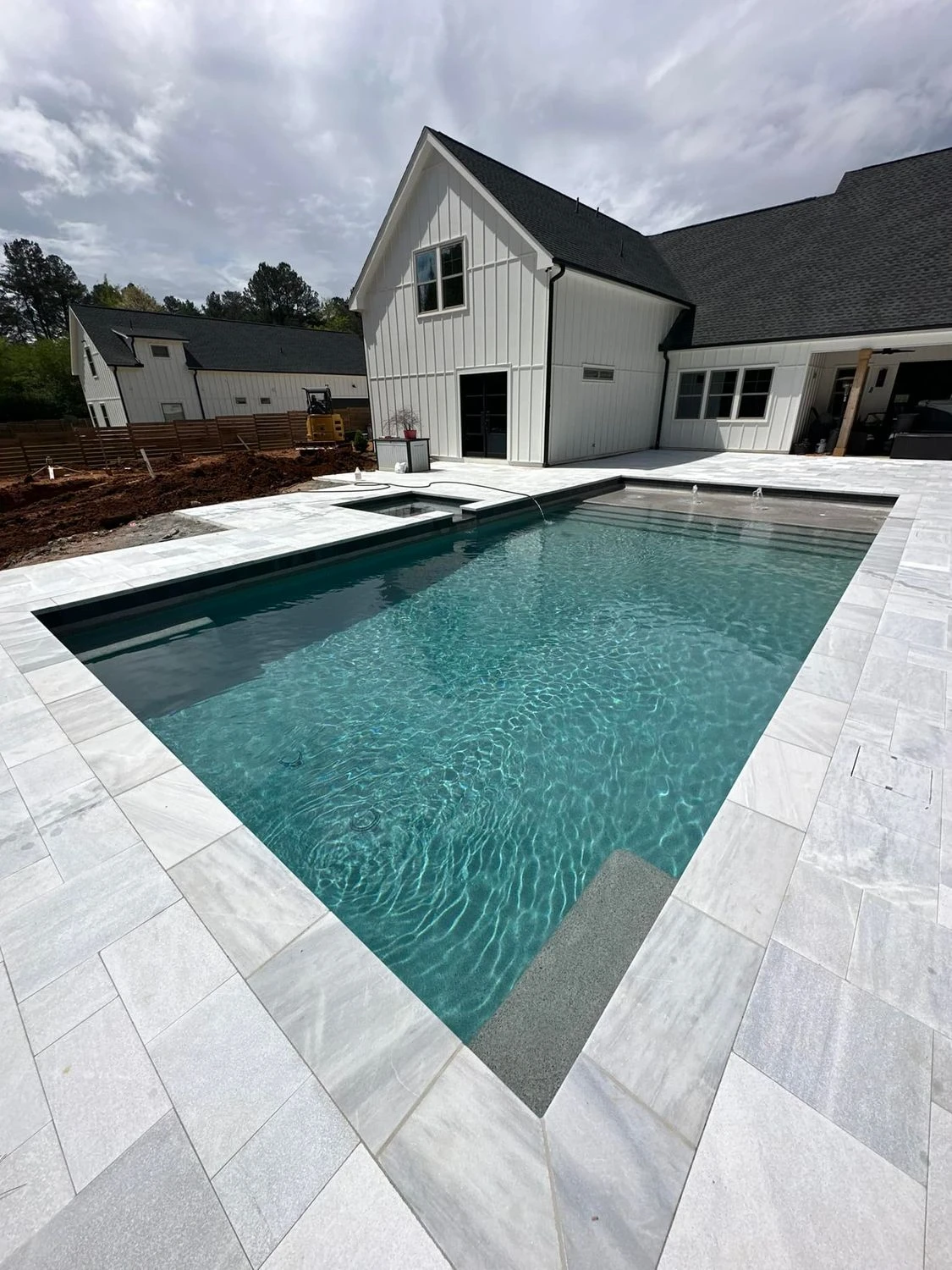
5. The 12×24 Shell: Depth Profile, Integrated Bench, and Why Gunite Still Wins
People ask whether vinyl or fiberglass makes sense at this size. For a permanent Cumming dip pool on Cecil red clay, neither does. Fiberglass shells at the 12×24 size show up in limited stock profiles that rarely match the depth we want, and the shell must be shipped in one piece through subdivisions with tight turning radii — a real problem in the wooded older sections of Hampton Park and Haw Creek where we’ve had to turn delivery trucks around. Vinyl works for short-term budgets but the liner will need replacement around year 9 or 10, and that replacement is roughly the same $8K-$11K regardless of whether the pool is 12×24 or 20×40.
Gunite wins on three fronts: exact shape control, exact depth profile, and 30-plus-year shell life. For a Cumming dip pool we target:
- Shallow end: 3′-6″ deep at the integrated bench
- Deep end: 4′-10″ maximum — anything deeper becomes an NEC §680 complication and pushes the pool out of “dip pool” classification into “swimming pool” for some insurance carriers
- Bench: 18-inch deep integrated bench running the full 12-foot short wall — this is the design move that makes the pool actually pleasant to sit in with friends, and it adds about $1,900 to the shell cost
- Step entry: Full-width 5-foot step run on one long side, tiled with a 1-inch porcelain mosaic to mark the edge clearly underfoot
We finish the shell in medium-blue pebble aggregate rather than straight white plaster. Pebble is about 12 percent more per square foot but holds up better against the pH drift we see in shaded Cumming yards where pine and oak debris constantly loads the water.
6. Chemistry, Cover, and the Lake Lanier Humidity Adjustment
This is the section most Cumming dip-pool content skips, and it’s the one that determines whether the homeowner loves the pool in year three or resents it. Small bodies of water behave differently than large ones — chemically faster, thermally faster, and with higher evaporation rates in Cumming’s Lake Lanier-proximate humidity profile.
A 12×24 at 4′-10″ holds roughly 9,800 gallons. A 20×40 at 7′ holds about 33,000 gallons. The dip pool responds to chemical additions roughly 3x faster, which sounds like a benefit until a homeowner over-chlorinates and spends a week pulling the free chlorine back down. We spec a Pentair IntelliChlor IC20 saltwater cell on every dip build specifically to smooth that out — the cell produces a steady 0.7 lbs of chlorine equivalent per day on a 12-hour cycle, which matches what a 9,800-gallon pool actually needs.
Evaporation is the next adjustment. Cumming’s proximity to Lake Lanier pushes average summer dewpoints 2-3 degrees higher than we measure in Dacula or Monroe, and a small unshaded pool can lose 1/2 inch per day on a hot clear July afternoon. Solution: auto-fill valve tied to the dedicated pool hose bib, set at 4 inches below coping, inspected annually. Without it, the homeowner learns about evaporation by finding a burnt-out pump impeller.
Winter cover is the final piece. For a Cumming dip pool we spec a Loop-Loc Ultra-Loc II mesh safety cover, custom-cut, anchored into the deck with brass anchors. At 288 sqft the cover runs $1,800-$2,300 installed — roughly 35 percent of what the same cover costs on a full-size pool. Forsyth County sees about 22 freeze events per year, with most concentrated between mid-December and mid-February, so we close the pool the first weekend the forecast shows three consecutive nights below 40°F and open it again on the first Saturday after Masters weekend in April.
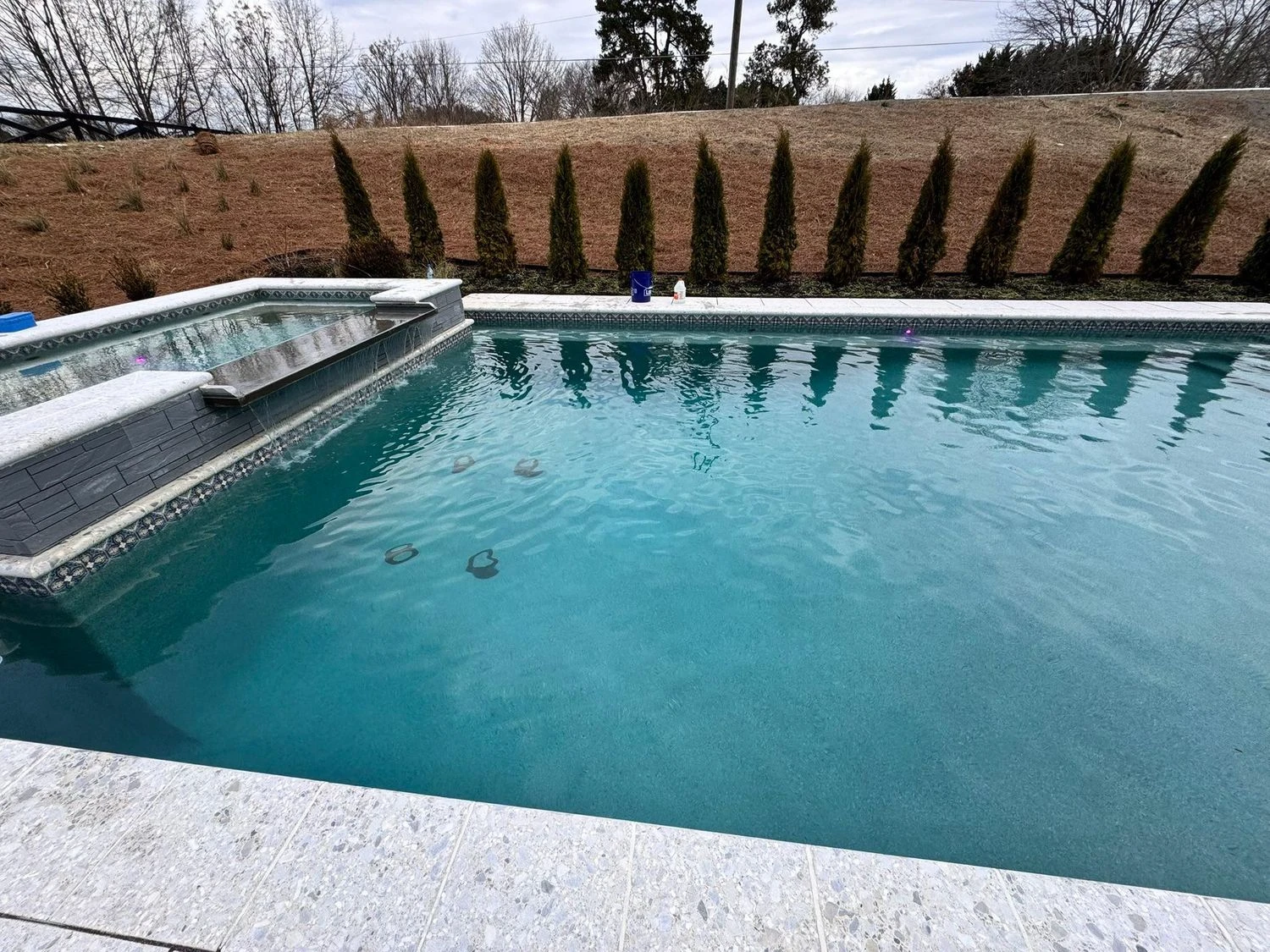
First-month chemistry for a new Cumming gunite dip pool: Plaster cure means elevated calcium and high pH for the first 28 days. Brush the shell twice daily for the first week, test every 48 hours, and hold off on salt addition until day 30. Add salt in two doses a week apart — full-dose startup has stained more new plaster in Forsyth County than any other single mistake.
Is a Dip Pool the Right Call for Your Cumming Lot?
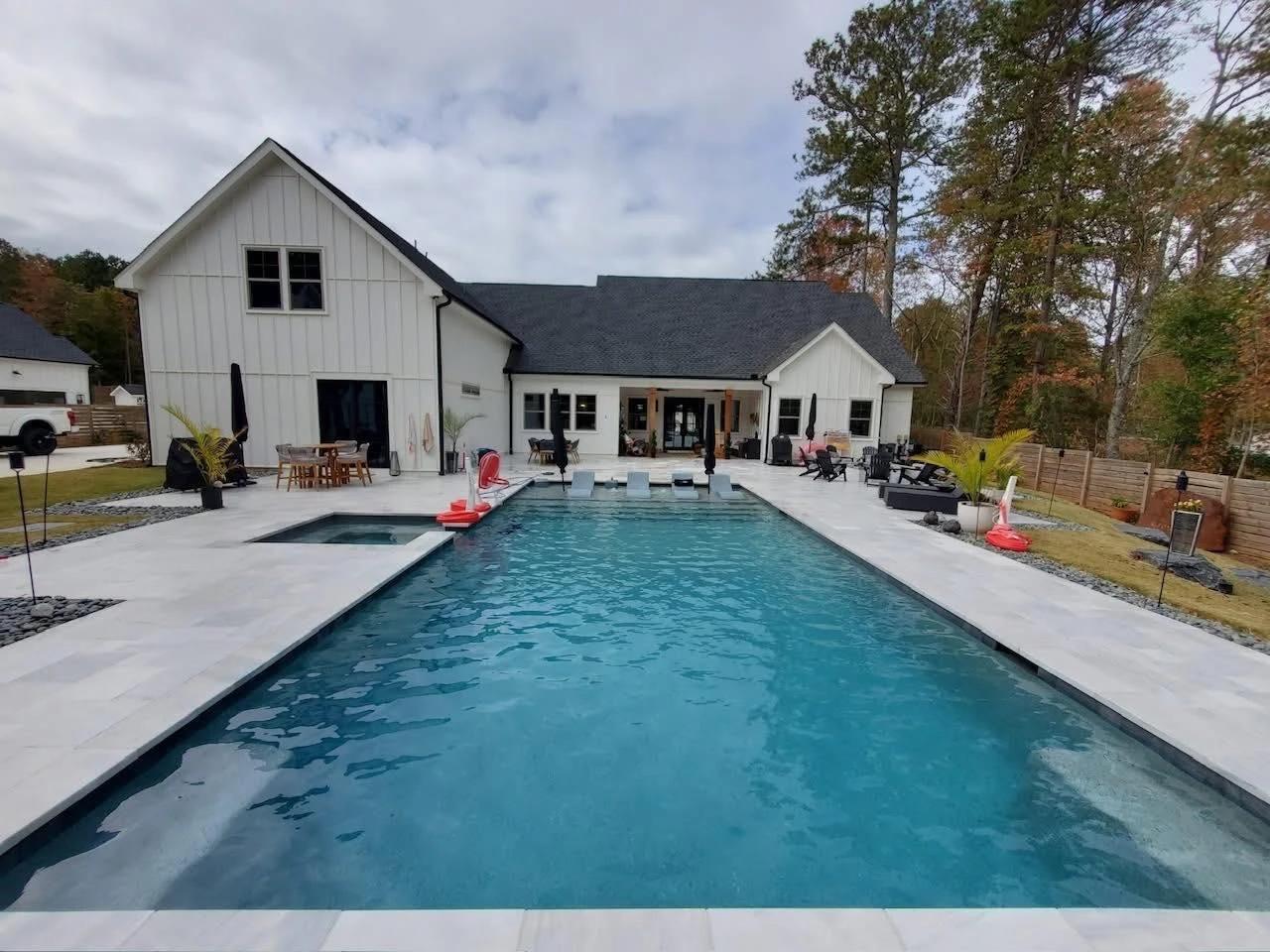
Here is the short version of the filter we apply on every inquiry. If your Cumming lot is a wooded quarter-acre to third-acre, your HOA has pushed back on larger pool plans, your primary use case is relaxation rather than lap swimming, and your budget ceiling sits below $100K turnkey — a 12×24 dip pool is almost certainly the right call. If you have four kids under twelve who want to play Marco Polo on weekends, or if you host backyard gatherings of 15-plus people regularly, a dip pool will feel cramped and you’ll wish you’d gone larger.
Not every pool company will tell you that. Ours will. We’ve walked away from two Cumming inquiries in the last year because the homeowner’s stated use case didn’t match a 12×24, and in both cases we referred them to the full-size conversation instead of selling them the smaller project. The point of this post isn’t to sell dip pools — it’s to map where they actually win.
When they do win, they win hard. On a shaded Haw Creek lot with a mature oak canopy, a 12×24 feels like a private plunge at a boutique hotel. On a St. Marlo parcel facing a golf-course easement, the smaller footprint keeps the sightline open and the board approval clean. On a sloped backyard near Sawnee Mountain Preserve, the smaller shell keeps the retaining wall work under $15K instead of over $40K.
Every one of those projects started with a one-hour site walk and a decision about footprint. Get that decision right and the rest of the build follows cleanly.
Custom Pool Construction across 20+ cities within 30 miles of Winder, GA
Dip pools, full-size gunite builds, sloped-lot retaining, and HOA-ready design packets — built across Forsyth County and the wider northeast Atlanta region.