
The average custom in-ground pool build in Metro Atlanta runs $68,000 to $142,000 in 2026 — a $74,000 spread that almost every Dacula homeowner assumes is arbitrary. It isn’t. Every dollar of that gap is traceable to a specific line item, and once you see them laid out, quoting a pool stops feeling like a negotiation and starts feeling like math.
Here’s the problem with the way pools get priced in Gwinnett County: the homeowner sees one big number, and the builder sees forty-plus small ones. A neighbor in Hamilton Mill spends $94,000. A house two cul-de-sacs over in Sycamore Ridge spends $121,000 the same year. Both say they got a “custom gunite pool.” Both are telling the truth. The difference isn’t markup — it’s which checkboxes got ticked on excavation, shell type, interior finish, coping, decking, equipment, and controls.
This post walks through the build in the order it actually happens: dirt leaves the yard, the shell gets shot, the pool gets dressed, and then the tech gets wired in. Every stage has a range. Every range has a reason. By the time you hit the last H2, you’ll be able to read any Dacula pool quote like a line-item invoice instead of a mystery.
One framing note before we dig in: the numbers in this post are real 2026 Metro Atlanta pricing pulled from active Primetime Pools proposals and cross-checked against industry supplier sheets. They are not Googled averages. They will drift 3–6% in either direction depending on fuel, steel, and labor conditions in any given quarter, but the structure of the line items and the size of the gaps between them is stable. A homeowner who understands the structure will never get blindsided by the number.
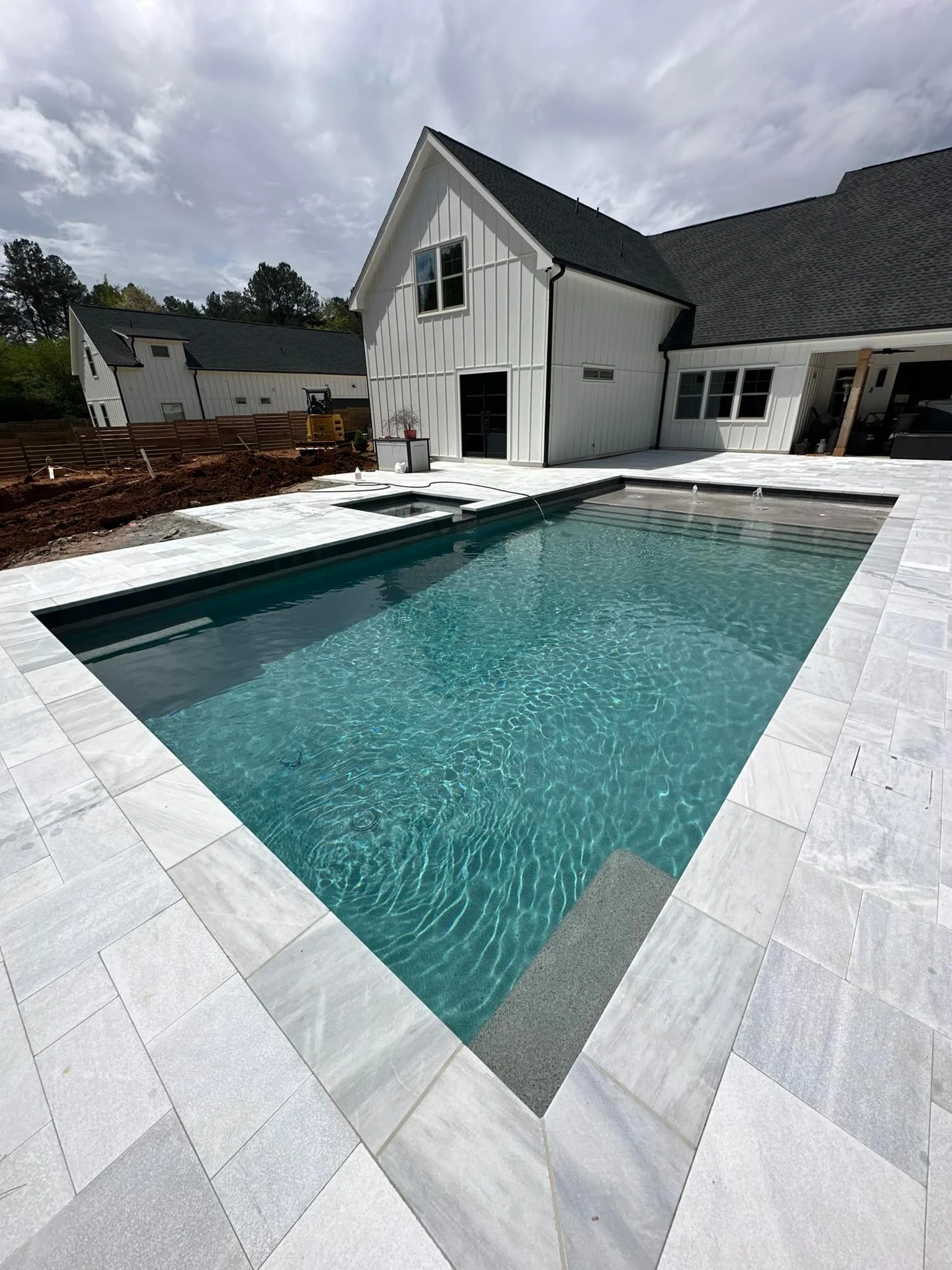
Stage 1: Excavation, Dirt Haul, and the Piedmont Clay Tax
Before anything else is priced, a pool is a hole. In Dacula, that hole is being cut into Piedmont red clay — the Cecil series that blankets most of eastern Gwinnett — and that single geological fact sets the floor for your whole budget.
For a standard 14×28 freeform shell at 3.5’ to 6’ depth, a pool crew moves roughly 110 to 140 cubic yards of soil. A 16×32 rectangle with a deep end closer to 7’ pushes that to 160–200 cubic yards. Every one of those yards has to go somewhere other than your backyard, and in Metro Atlanta the C&D (construction & demolition) tipping facilities charge $8 to $14 per cubic yard to take it — plus trucking, plus operator time, plus the fuel surcharge that has crept back into every 2026 invoice.
Add it up honestly:
- Excavation labor & equipment: $3,800–$6,200
- Dirt haul & tipping (120 cu yd avg): $2,400–$4,600
- Rock or hardpan allowance (Dacula-specific): $0–$3,500
- Temporary erosion & silt fence (Gwinnett code): $450–$900
The rock allowance is where Dacula jobs drift above the Metro Atlanta average. The same Piedmont clay that keeps foundations stable also holds pockets of decomposed granite saprolite and occasional boulders. When a machine hits one, the dig slows from four hours to four days. Honest builders disclose a line item for it before the dig starts. Shady ones call back on day two with a “change order” for eight grand.
A Dacula-specific wrinkle worth knowing: lots in the older sections of Hamilton Mill and Chandler Ridge were graded aggressively in the mid-1990s, which means compacted fill sits on top of native clay. A pool dig can pass through 3–4 feet of fill before it hits the original soil profile, and that transition sometimes exposes debris, buried stumps, or old footer chunks that weren’t mapped. Expect 0.5–1 extra excavation day per 30 linear feet of pool wall when this shows up, and budget $850–$1,600 for the extra machine time.
Access matters more than people think: If your backyard is gated, stepped down, or blocked by the 1995–2010 brick-and-stone veneer homes that dominate Hamilton Mill and Chandler Ridge, a builder may need a smaller mini-excavator and more trips — adding $1,800–$4,200 to the haul line alone.
Stage 2: The Shell — Where the Biggest Single Decision Lives
The shell is the single largest bucket on the invoice, and it’s also where the three-way fork happens: gunite, fiberglass, or vinyl-liner. In Dacula, gunite still wins roughly two-thirds of custom builds because the average lot is 1/3 to 1/2 acre of flat-to-sloped clay where a shaped, fully customizable shell is worth the premium. That doesn’t make the other two wrong — it makes them different tools for different jobs.
Here are the honest 2026 baselines, installed and plumbed but excluding decking and equipment upgrades:
- Gunite (shotcrete) shell: $68,000–$112,000
- Fiberglass drop-in shell: $55,000–$95,000
- Vinyl-liner shell: $42,000–$78,000
Gunite buys you shape freedom — beach entries, tanning ledges, integrated spas, vanishing edges, bench seats exactly where you want them. Fiberglass buys you speed (installed in 3–5 weeks vs. 10–14 for gunite) and a slightly lower floor price, but you’re choosing from a factory catalog of shapes. Vinyl-liner is the budget play: cheapest to install, liners need replacement every 8–12 years at $4,500–$7,500 a pop, and resale value in neighborhoods like Providence Club and Ivey Chase trails the gunite comps.
The detail most homeowners miss: size drives price more than any other shell variable. A 14×28 freeform vs. a 16×32 rectangle is roughly an $11,000 price delta before you add a single upgrade. That’s more steel, more shotcrete, more plaster, more water, more chemistry — compounded across every downstream line.
Rebar schedule matters in red clay: A quality Dacula gunite shell uses #3 rebar on 12” centers with a bond beam tied into the bench seats. Cheap crews go 18” centers to save steel. The difference is $800–$1,400 in materials and decades of crack risk.
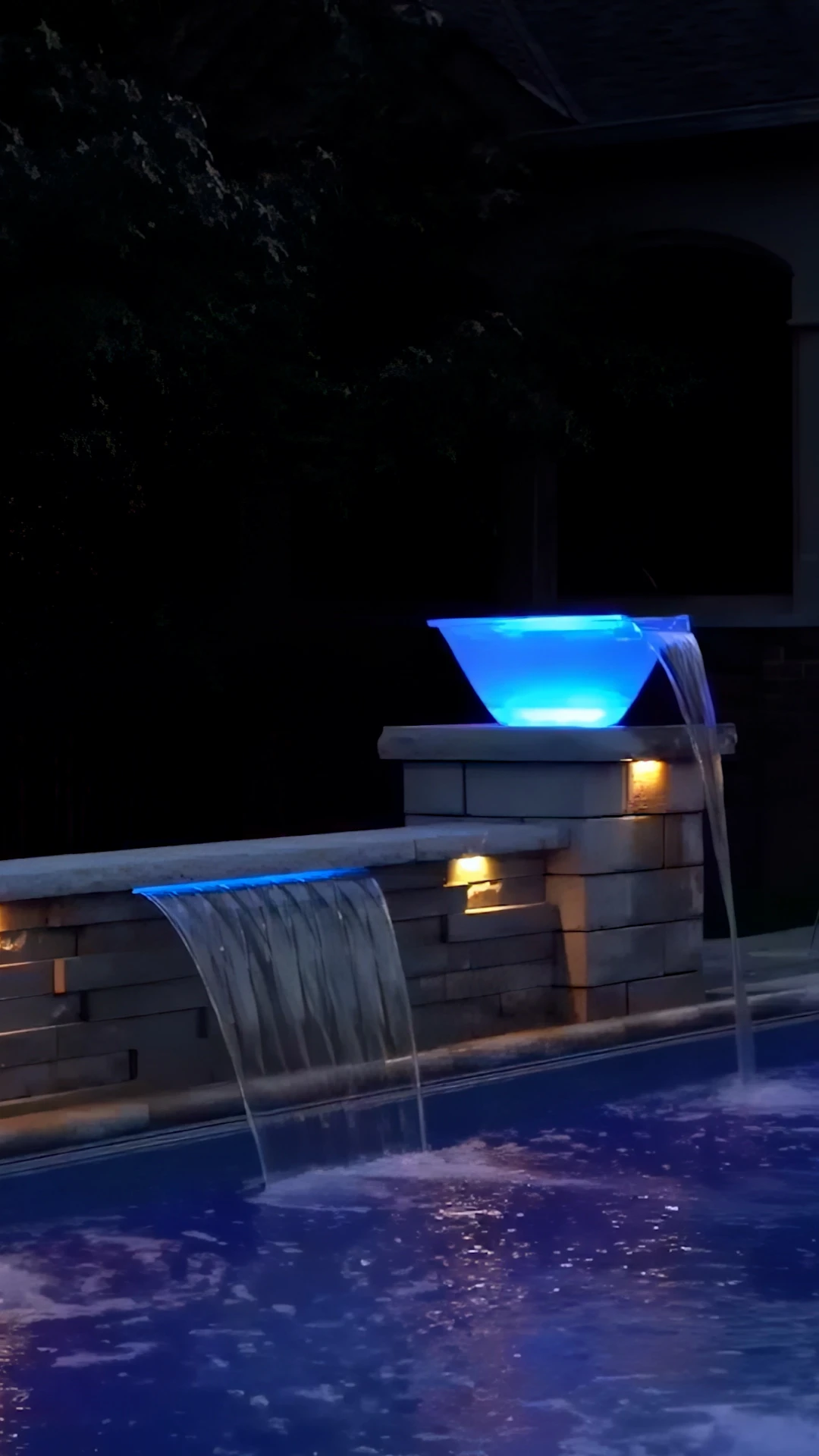
Stage 3: Tile, Coping, and Interior Finish — The “Dress” Line
This is the stage where two identical shells become two very different pools on paper. It’s also where the sticker-shock conversations happen, because tile, coping, and plaster together can swing a project $14,000 in either direction.
Waterline Tile
Tile runs in a 6” band at the waterline and wraps any raised walls or spa dams. Dacula budgets typically fall into three brackets:
- Builder-grade 6×6 ceramic: $1,400–$2,600 installed
- Mid-tier glass or porcelain mosaic: $3,200–$5,800
- Designer glass (iridescent, hand-cut, European import): $6,400–$12,500
Coping
Coping is the cap stone that ties the shell to the deck. Poured-in-place cantilever concrete is the cheapest, most popular for Dacula’s 1995–2010 brick homes, and ranges $2,800–$4,400 for a standard perimeter. Travertine coping lands at $4,800–$7,200. Flagstone or custom-cut limestone can push $8,000–$13,500. The choice matters visually because coping is the one material your eye reads every single time you walk outside.
Interior Finish
This is the actual “skin” of the water. Three tiers, and every Dacula homeowner should know them:
- White marcite plaster: $3,800–$5,200. Lifespan 7–12 years.
- Quartz aggregate (Diamond Brite, StoneScapes Mini-Pebble): $5,600–$8,400. Lifespan 12–18 years.
- Polished pebble (Pebble Tec, Pebble Sheen): $8,200–$13,800. Lifespan 18–25 years.
The plaster vs. pebble decision is the single most leveraged choice in this stage. Spending $4,400 more up-front buys you a decade of extra finish life, deeper water color, and measurably better resale on the Gwinnett comp sheet.
Plaster pigment is its own sub-line. A standard white marcite gives you that classic cyan water tone. Dark-bottom finishes — French gray, midnight blue, charcoal pebble — add $600–$1,800 in pigment and mixing labor but completely transform the reading of the water. On a wooded lot in Dacula backing up to mature pines, a dark-bottom finish mirrors the tree line and delivers the “natural pond” effect that drives the $180K+ tier builds. On a sunny lot in Ivey Chase facing south, a light-bottom finish stays cooler underfoot and reads as the tropical resort look — two different aesthetic goals, two different quote outcomes.
Stage 4: Decking, Hardscape, and Why $8 vs. $28 Per Square Foot Matters
Decking is where budgets quietly explode. It’s also where the biggest visual delta lives — the same pool can look like a builder-special or a magazine cover depending on what surrounds it.
Run the math on a 900 sq ft surround (a reasonable figure for a 14×28 pool with a 5’ average walkway plus a sitting area):
- Broom-finished concrete: $8–$14/sq ft → $7,200–$12,600
- Stamped & colored concrete: $14–$22/sq ft → $12,600–$19,800
- Travertine pavers: $22–$30/sq ft → $19,800–$27,000
- Premium paver deck (Belgard, Techo-Bloc, porcelain): $22–$34/sq ft → $19,800–$30,600
- Full natural-stone flagstone: $28–$42/sq ft → $25,200–$37,800
The jump from concrete to pavers isn’t just aesthetic. Pavers on a properly compacted aggregate base handle Georgia’s freeze-thaw cycles without the hairline cracks that start showing up on concrete slabs three winters in. For homes in Hamilton Mill and Ivey Chase where the brick-and-stone veneer architecture already reads premium, a concrete deck creates a visual mismatch that hurts both daily enjoyment and appraisal.
This stage also absorbs:
- Retaining walls (Dacula’s sloped lots): $4,800–$18,000
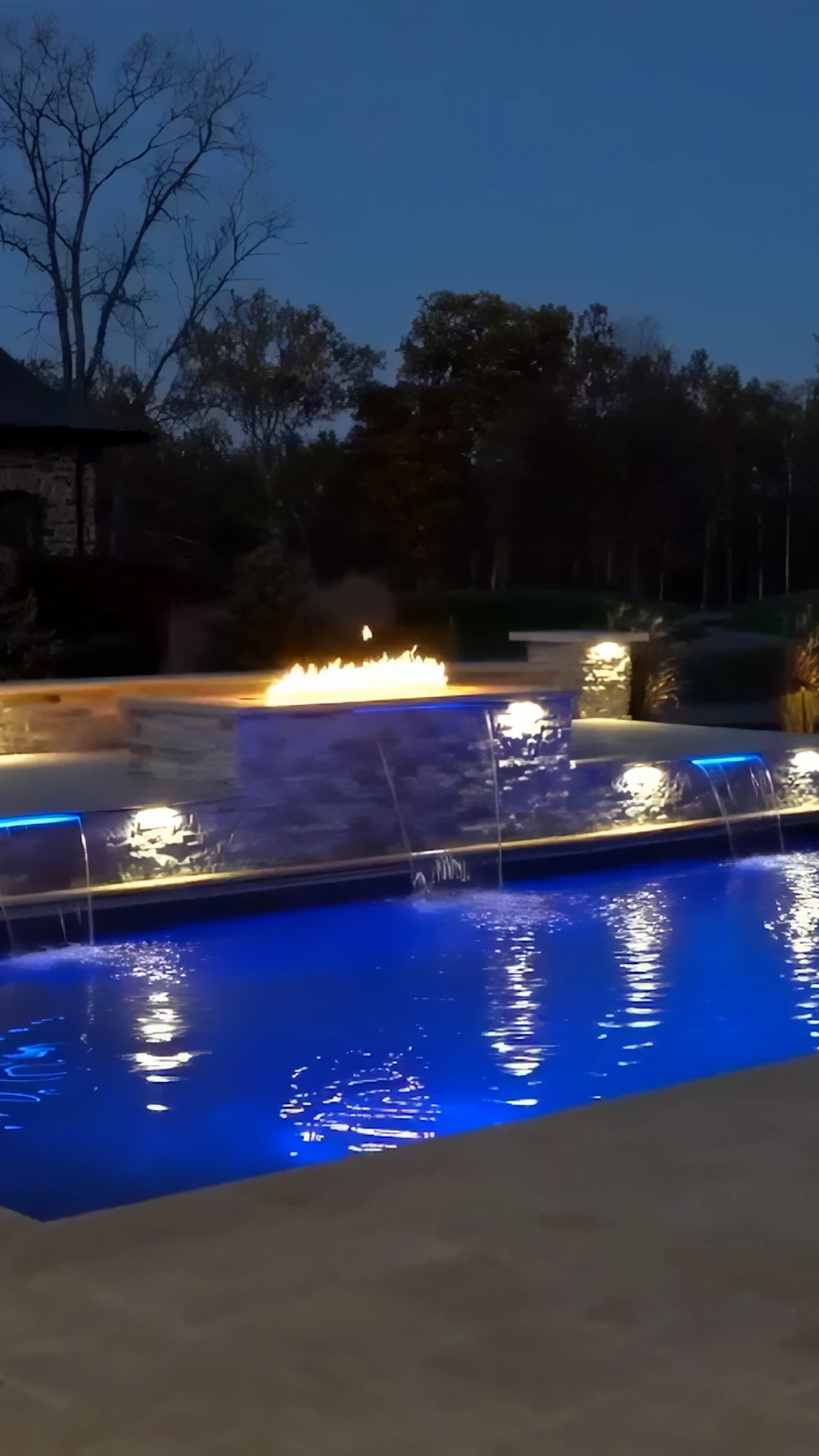
- Raised spa dam wall / water feature wall: $6,400–$14,500
- Integrated fire pit or fire bowls: $3,800–$12,800
- Outdoor kitchen rough-in (gas, electric, water stubs): $1,800–$3,600
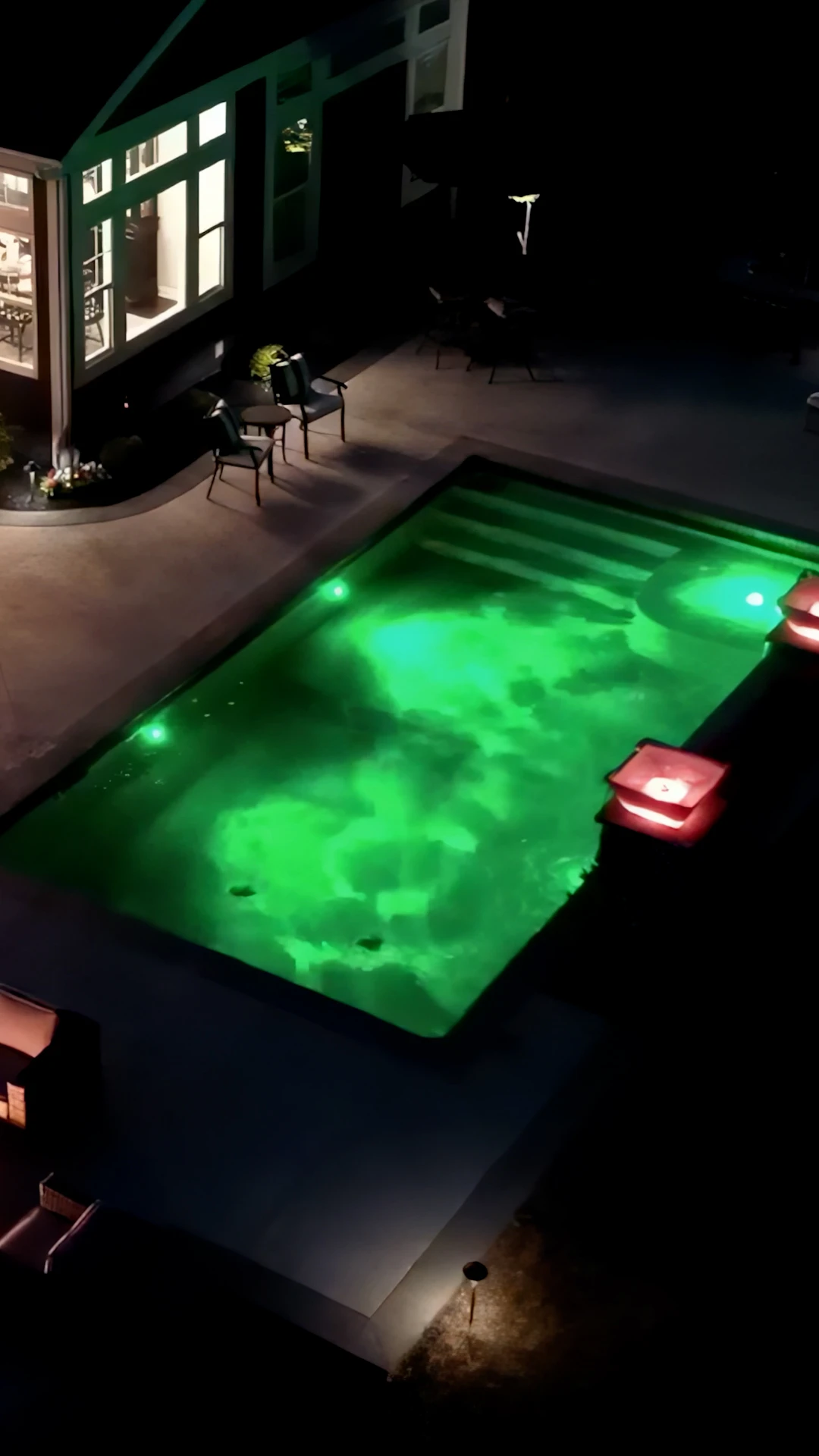
Stage 5: Equipment, Lighting, and Automation — The Invisible 20%
If the shell is the body of a pool, the equipment pad is the heart, lungs, and nervous system. This is the stage where budgets make or break the next ten years of operating cost, and it’s also where the most opaque line items live. Here’s what should actually be on the pad of a 2026 Dacula custom build.
Pumps
The Pentair IntelliFlo3 VSF variable-speed pump runs $1,900–$2,400 installed and pays itself back in roughly 22 months on a typical Gwinnett electric bill vs. a single-speed pump. The Jandy VS FloPro is the competitive equivalent in the $1,700–$2,200 band. If your quote says “single-speed pump” in 2026, walk away — Georgia utility rates make it a false economy, and several municipalities already ban them on new residential pool permits.
Heaters
Two branches here, and the right answer depends on how you plan to use the pool:
- Pentair MasterTemp 400K BTU natural gas heater: $2,400–$2,900. Fast heat, higher operating cost. Best for occasional shoulder-season use.
- Pentair UltraTemp heat pump (125K BTU class): $4,200–$5,400. Slower heat, 4–6× more efficient, ideal for homeowners who want to extend the Dacula swim season from April through October without wincing at the gas bill.
Sanitation
The Pentair IntelliChlor IC40 salt chlorine generator ($1,400–$1,800) has become the de facto standard on custom Dacula builds. Jandy’s AquaPure is the direct competitor in the same price band. Salt systems shift you from hauling chlorine jugs to adding 40-lb salt bags twice a year — softer water, lower weekly chemical cost, and a materially better swimming experience for kids.
Automation
This is where a $4,000 line item saves you an infinite amount of daily friction. The Pentair IntelliCenter (or Jandy’s iAquaLink on the Jandy equipment track) runs $3,400–$5,200 installed and gives you phone-based control of pump speeds, heater setpoints, lighting colors, water features, and spa modes. If you’re spending $100K+ on a pool and skipping automation to save four grand, you’re the person who buys a Porsche with crank windows.
Lighting
LED color-changing lights in 2026 are table stakes. Expect 1 light per 250–300 sq ft of pool surface, plus perimeter deck lighting, plus any feature lighting (scuppers, spa spillover, fire accents). Full package typically runs $4,400–$9,800.
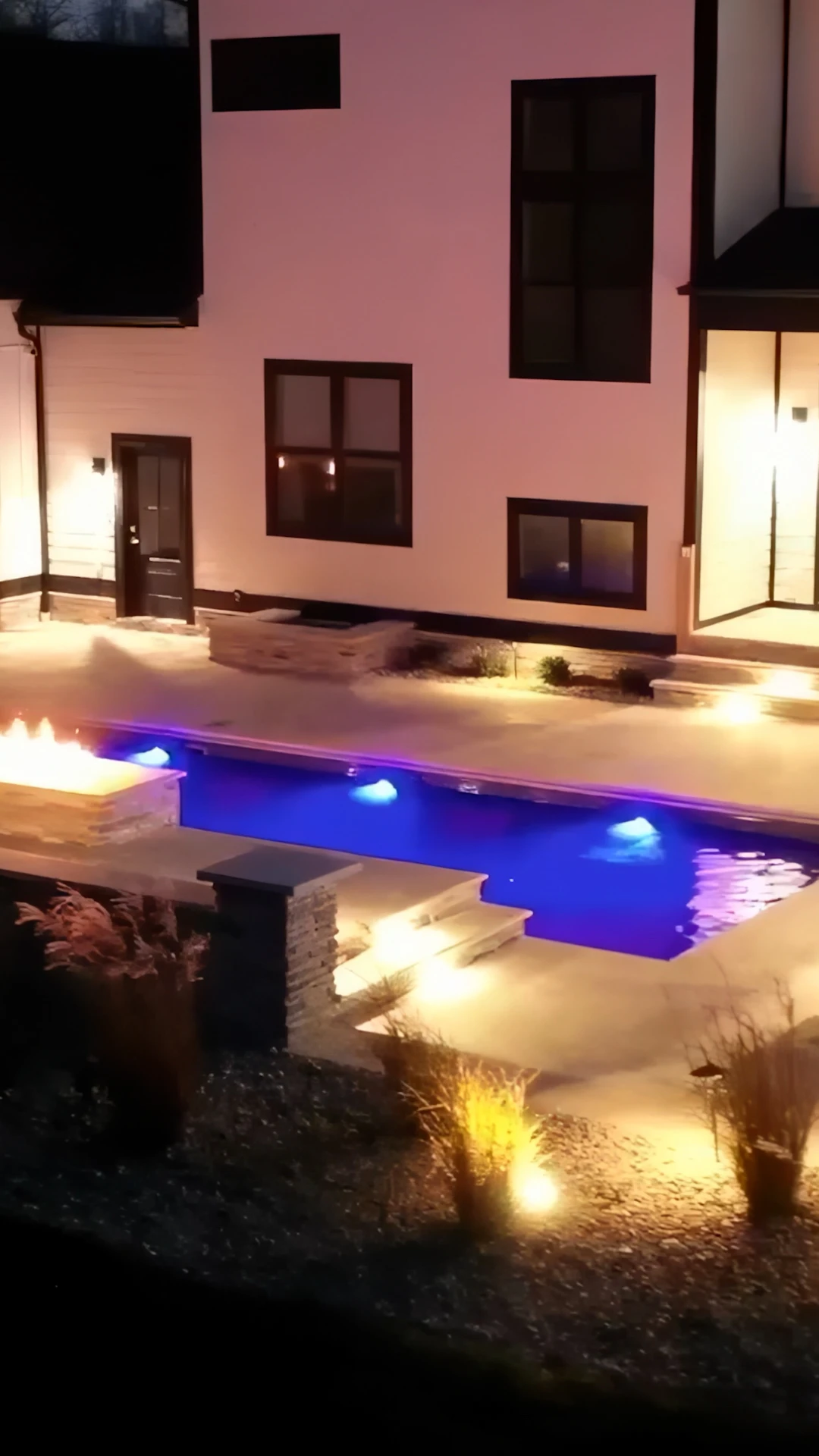
Permits, Fences, Landscaping, and the Honest Rollup
Before a single swimmer touches water, Gwinnett County has to sign off. Permits in Dacula go through the Gwinnett Department of Planning & Development in Lawrenceville (just south of I-85 exit 120), and the current fee schedule for residential pool permits runs $220–$440 depending on pool size and whether you’re combining the permit with a deck, retaining wall, or electrical sub-application. Plan review typically takes 10–18 business days.
Georgia code also mandates a perimeter barrier — a 4’ minimum fence with self-closing, self-latching gates — before you can fill the pool. Most Dacula homeowners in neighborhoods like Sycamore Ridge and Providence Club already have a backyard fence, but if yours doesn’t meet code, budget $3,800–$9,500 for aluminum or wrought-iron fencing around a typical backyard perimeter.
Landscaping is the last line item and the one that separates “backyard pool” from “finished project.” A reasonable surround — screening plants, mulched beds, uplighting, an irrigation tap — runs $3,200–$11,500 depending on mature plant sizing. Cost-per-plant climbs fast with size: 3-gallon shrubs run $22–$38 installed, 15-gallon screening evergreens land at $180–$260, and 30-gallon or B&B specimens cross $400–$750. Dacula homeowners with HOA sight-line requirements (common in Providence Club and Hamilton Mill) should expect to run closer to the top of the range on the first pass.
Two more line items that get buried in proposals: gas line extension from the meter to the equipment pad ($1,200–$3,400 depending on run length and trench conditions) and dedicated 240V electrical sub-panel for the pool equipment ($1,800–$3,200 including the Gwinnett electrical permit). Both are mandatory for any gunite build with a heater, and both sometimes get “bundled” into vague categories by cheaper builders who plan to hit you with a change order once the gas company actually shows up. Insist on seeing them broken out.
The honest 2026 Dacula rollup (14×28 gunite with mid-tier finish, paver deck, full Pentair equipment, automation, LED lighting, permits, and a basic landscape surround):
Shell & plumbing: $78,000 · Tile/coping/finish: $14,800 · Paver deck (900 sq ft): $24,300 · Equipment & automation: $13,600 · Lighting: $6,400 · Permits & fence: $2,800 · Landscape surround: $5,900
Total: ~$145,800 — right at the top of the “mid-tier custom” band.
Strip that same build back to concrete decking, white plaster, a single-speed pump, and no automation and the same hole in the ground delivers at roughly $92,400. Push it the other direction — pebble finish, travertine coping, flagstone deck, raised spa with sheer descents, heat pump, full IntelliCenter automation — and you’re at $178,000–$215,000. Same shell. Same neighborhood. Same crew. The $120,000 spread is every line item we just walked through, stacked end-to-end.
What to Demand From Any Dacula Pool Quote
If a bid comes back as a single lump sum with no breakdown, that is not a quote — it’s a gamble. A real custom pool proposal should itemize:
- Excavation yards & disposal (with tipping allowance)
- Shell type, dimensions, depths, rebar schedule, and PSI of shotcrete
- Exact tile, coping, and interior finish product names
- Decking material, square footage, and base prep spec
- Every piece of equipment by brand & model number (Pentair, Jandy, specifically)
- Automation tier and included features
- Lighting count, fixture spec, and control zones
- Gwinnett permit fees, inspections, and projected timeline
- Warranty terms on shell, finish, equipment, and deck
Every one of those lines should have a number next to it. When they do, you can compare two Dacula builders apples-to-apples and finally understand why one is $86K and the other is $134K for the “same” pool. Spoiler: they’re never the same pool.
Line-item custom pool builds across 20+ cities within 30 miles of Winder, GA
Every Primetime Pools proposal is itemized to the shotcrete PSI, the Pentair model number, and the coping SKU — so you’re comparing pools, not pitches.