
Picture a Saturday afternoon in Hamilton Mill. You’ve just finished walking the backyard with a designer. You’re standing at the sliding door, looking out toward the pool, and she’s pointing at a sweeping arc that follows the natural grade down to a firepit landing. Then you ask the question every Dacula homeowner eventually asks: “How much more does a curve cost than a straight edge?”
The honest answer is somewhere between four and six dollars per square foot of patio surface — and that’s before you get into the specialty paver lines, the waste factor, or the extra hours a mason spends fitting soldier courses around a radius. On a 400 square foot patio, you’re looking at a premium of $1,600 to $2,400 just for the curve itself. That number scares people, and we understand why. But what most Dacula homeowners don’t see from the showroom floor is the math behind it: the wet diamond saw that has to ride that line, the waste factor that climbs from 12% to 24%, the trapezoidal keystone fills that a good mason cuts by hand, and the 35% to 50% labor bump that shows up in every honest bid.
This piece is the full unpacking. We’re going to walk through exactly why a curved paver patio costs what it does in Dacula, what tools and techniques separate a clean radius from a sloppy one, and why — despite the premium — we still recommend curves on roughly two out of every three backyards we design in the 30019 zip code. If you’ve priced a curved patio and felt blindsided by the number, this should make the invoice make sense.
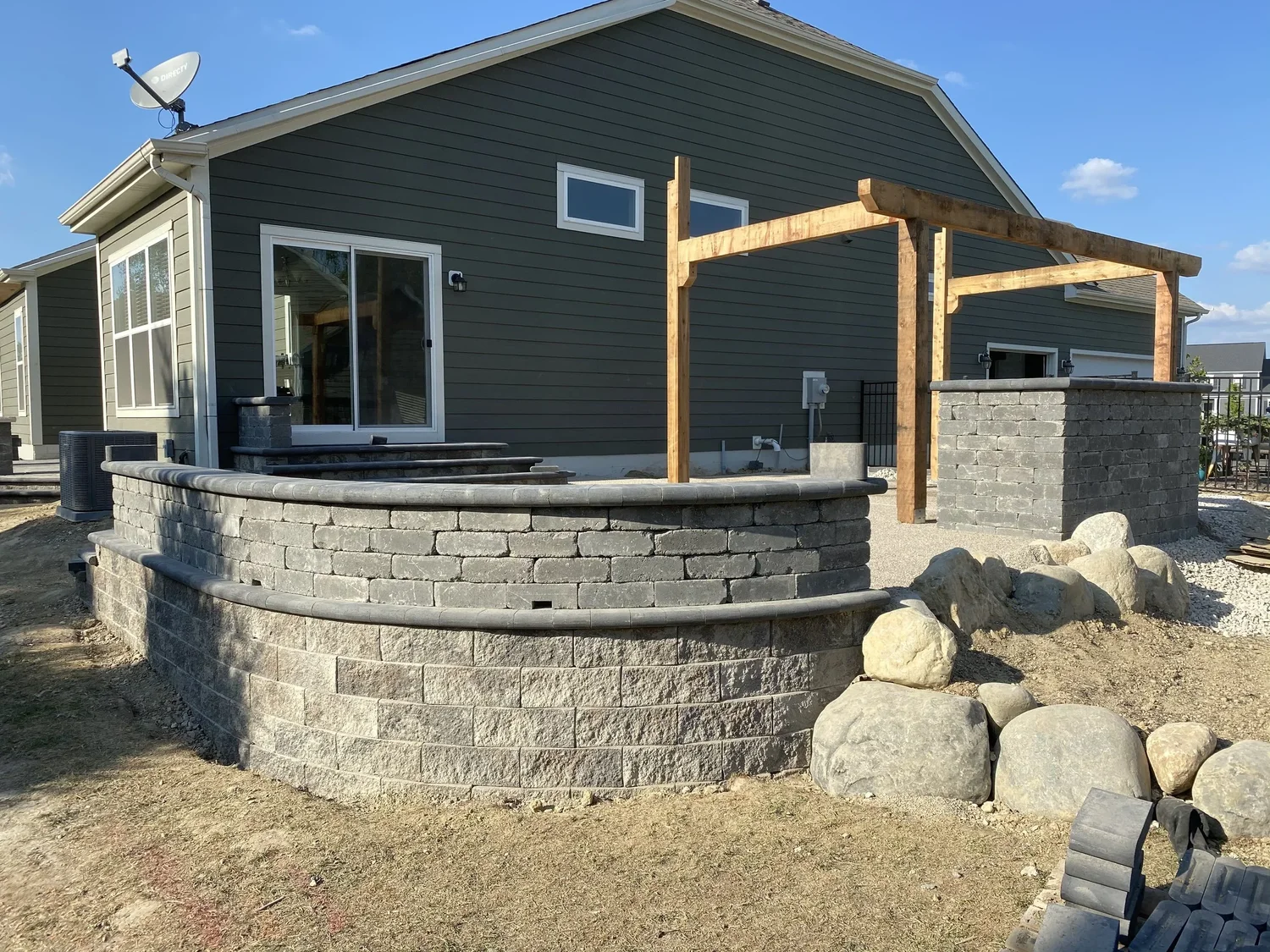
Why the Curve Itself Costs More — The Tool and the Blade
A straight-edge paver patio is, from the perspective of production labor, almost an assembly line. A crew lays field pavers in the running pattern of your choice, snaps a chalk line at the perimeter, runs that line with a handheld wet saw, and caps the edge with a soldier course. On a rectangular patio of 400 square feet, a practiced two-man team can set the field and snap the edge in a single working day. The saw work is linear, predictable, and fast.
Curves change the physics of the cut. A handheld wet saw with a 7-inch blade can’t ride a radius cleanly — the blade binds, the paver chips, and the cut line wanders. For a true radius, we bring out a wet diamond saw with a 14-inch blade on a rolling cart or a fixed-table jig, depending on the tightness of the arc. That saw is not a homeowner-grade tool. A professional-grade unit with an adequate water reservoir, a stable table, and a continuous-rim diamond blade runs $1,400 to $2,400 to own outright, plus $180 to $240 per blade replacement after every large curved project. Every curved patio bid you see in Dacula is carrying a share of that tooling cost, whether the contractor spells it out or not.
Then there’s the pace of the cut. A straight chalk-line cut takes a mason 30 to 45 seconds per linear foot — snap, ride, stack. A radius cut takes three to five minutes per linear foot because the paver has to be rotated on the table, checked against a template, cut in short arcs, then dressed with a second pass. A 30-foot curved edge that would take 20 minutes of saw time as a straight line will absorb 90 to 150 minutes as a radius. Multiply that across an entire patio and you understand why the labor line on the estimate climbs.
Tool cost breakdown: A production-grade wet diamond saw with a 14-inch blade runs $1,400 to $2,400. Continuous-rim diamond blades rated for concrete pavers add $180 to $240 per blade, and a large curved patio project in Dacula consumes roughly half a blade’s useful life.
None of this shows up in the homeowner’s mental model. You see a patio. You see pavers. You assume it’s the same product as a straight patio with a little extra shape. But the tool, the blade, the jig, and the pace of work are genuinely different. Every linear foot of curve is a category of labor that doesn’t exist on a rectangular build.
The Waste Factor Nobody Quotes You Upfront
On a rectangular Dacula paver patio, we order pavers with an 8% to 12% overage. That margin covers chalk-line cuts, the inevitable small miscut, a few broken units from delivery, and the handful of full pavers that get replaced after polymeric sand sweeping reveals a chipped face. Twelve percent is generous. On most straight-edge jobs we close out with 5% to 7% of the order still on pallets in the driveway, which the homeowner keeps for future repairs.
Curved patios blow that math apart. The waste factor on a radius build runs 18% to 25%. Here’s why: every paver that sits on the curve gets cut, and the discarded piece of each cut — the off-cut — is usually unusable on the rest of the patio because the angle is wrong. A straight-line cut produces a long rectangular off-cut that can fill a gap three rows away. A radius cut produces a crescent or a wedge that has no use anywhere else on the job. Roughly one in every six curved pavers becomes full waste.
There’s also the hand-selection tax. On a premium paver line — Techo-Bloc Borealis, Belgard Catalina Slate, Cambridge Renaissance — the mason will reject units with surface imperfections on the face that would be acceptable on a field paver but look bad on the cut edge of a radius, where the eye is drawn. That rejection rate adds another 2% to 4% to the material order. When you see a waste factor of 22% on your estimate and a straight-patio waste factor of 10%, the difference isn’t padding. It’s physics plus aesthetics.
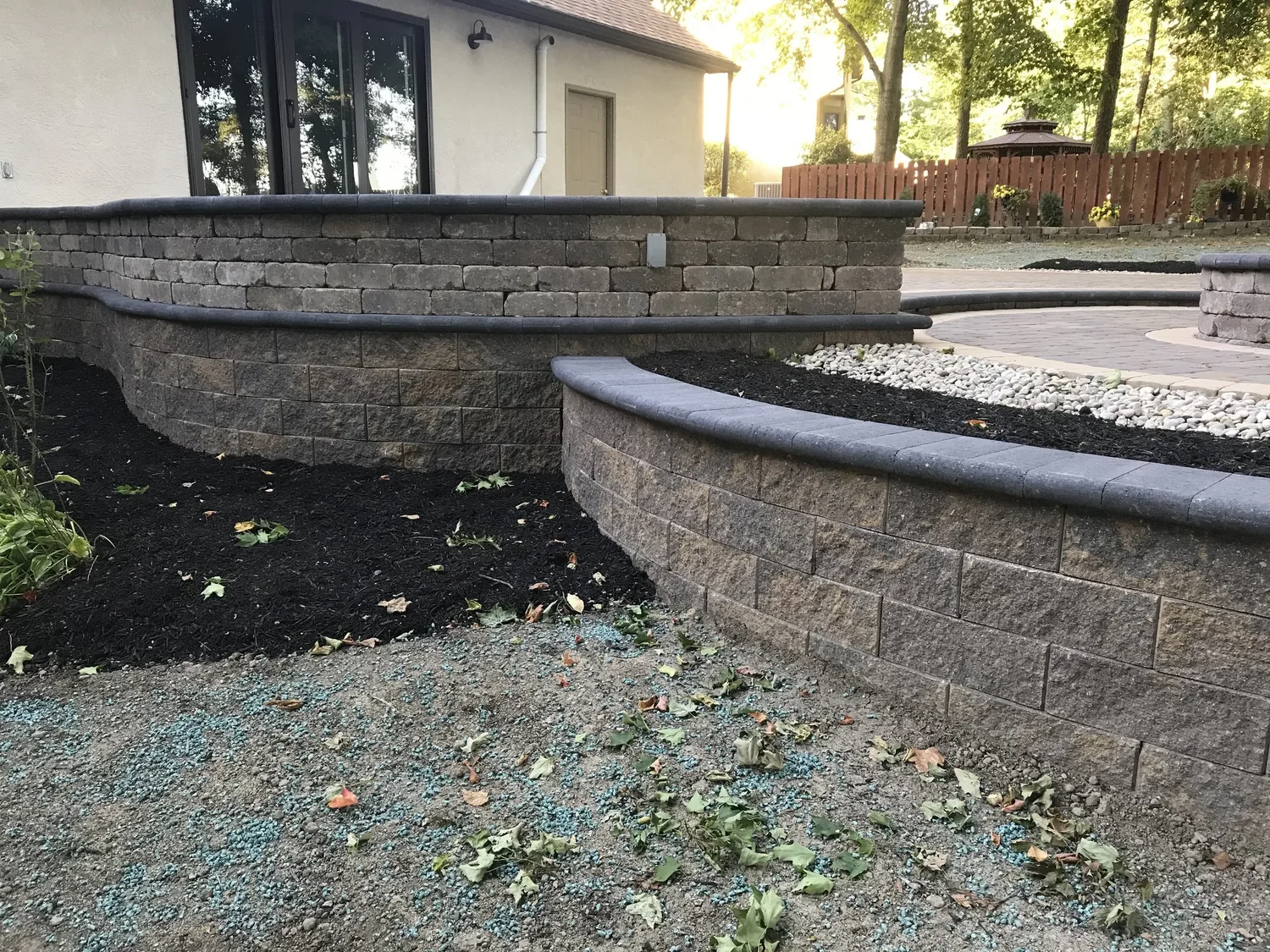
If you’re trying to translate this into numbers you can check, here’s the rule we use: on a 400 square foot curved patio in Dacula, we’ll typically order 5,000 to 5,200 pavers against a net-needed count of 4,100 to 4,300. The overage of 900 pavers at roughly $1.30 each across the common concrete lines adds $1,100 to $1,200 to the material cost alone. That’s about $3 per finished square foot before you touch labor.
Minimum Radius and the Paver Line Decision
One of the first questions we ask on a curved-patio design walk in Dacula is how tight the tightest curve needs to be. The answer drives everything downstream — paver line selection, cut strategy, and final cost.
A six-foot radius is the practical floor for a clean soldier-course curve using standard rectangular pavers. Anything tighter and the geometry fights you: the soldier pavers on the outer edge of the curve splay outward past the joint tolerance, and the fill pavers inside the arc need such aggressive trapezoidal cuts that the mortar-joint equivalent (the swept polymeric sand) can’t sit evenly. Six feet is where a 6-inch-long standard paver can hold a tight arc and still leave joint spacing that looks intentional rather than forced.
If your design calls for tighter radii — a 4-foot arc around a firepit, a 3-foot inside curve where the patio wraps around a tree well — you move to a specialty paver line. Techo-Bloc’s Circle Pack is the one we specify most often for Dacula jobs. The pack contains pie-slice units precut at the factory to form a perfect 12-foot, 10-foot, or 8-foot circle, plus transition wedges that let you step down to a tighter arc without custom cutting. Belgard and Cambridge offer similar circle kits. These packs add $280 to $420 per 10 linear feet of curve compared to the cost of using standard pavers plus cuts, but they eliminate the cut waste and they guarantee a clean joint line.
Minimum clean radius by method: 6 feet using standard rectangular pavers with a soldier course. 4 feet using a specialty circle pack like Techo-Bloc Circle Pack or Belgard Circle Kit. Below 4 feet, we recommend a flagstone or cut-stone accent rather than pavers — the geometry no longer rewards the material.
The Hamilton Mill lots we work on frequently have a six-foot fall across the back of the house, and the grade dictates where curves belong. A tight curve that hugs a grade break almost always needs Circle Pack geometry. A sweeping 15-foot or 20-foot arc that defines the outer edge of an entertaining space can run standard pavers on a soldier course without issue. The budget implication is real: on a backyard with both a tight and a broad curve, expect the Circle Pack section to run 40% to 50% more per linear foot than the sweeping section, even though both are “curved.”
Keystone Fill vs. Pie-Slice Cut — How We Close the Arc
Once the soldier course defines the outer edge of a curved patio, the mason has to close the pattern back to the field. There are two schools on how to do this, and they produce dramatically different visual results at meaningfully different costs.
The first is the pie-slice cut. Each field paver at the transition to the soldier course gets cut on a taper so its outer edge follows the arc. It’s the faster approach. A mason with a chalk-line template and a steady hand can run pie-slice cuts about 30% faster than the alternative. On the finished patio, the result looks acceptable from a standing height — you see the pattern close. But from a chair at table height, or in late-afternoon raking light, the pie-slice edges betray themselves. Every cut paver is a wedge pointing outward, and your eye traces the repeating wedges around the arc like a paperwheel. On premium patios, it reads as cheap.
The second is the keystone cut. The mason lays full, uncut field pavers up to the interior of the soldier course, then closes each gap with a trapezoidal keystone fill — a small, separately cut paver that plugs the space between two full field units and the inside of the soldier course. The keystone approach preserves the field pattern all the way to the edge. From the standing view, from the seated view, from every angle, the patio reads as a continuous field with a clean curved border. The cost difference is significant: keystone fills take 35% to 50% more mason time per linear foot of curve than pie-slice cuts, because each keystone is a custom cut with two angled faces rather than a single tapered face.
We always specify keystone fills on patios where the curve is within 15 feet of a seating area, which in practice means almost every primary curve on a Dacula project. Pie-slice cuts we reserve for garden-edge borders and secondary transitions where the viewer is always passing through at a brisk pace. It’s the difference between a patio that looks designed and one that looks priced.
Soldier Course Geometry — Why We Size Pavers to the Radius
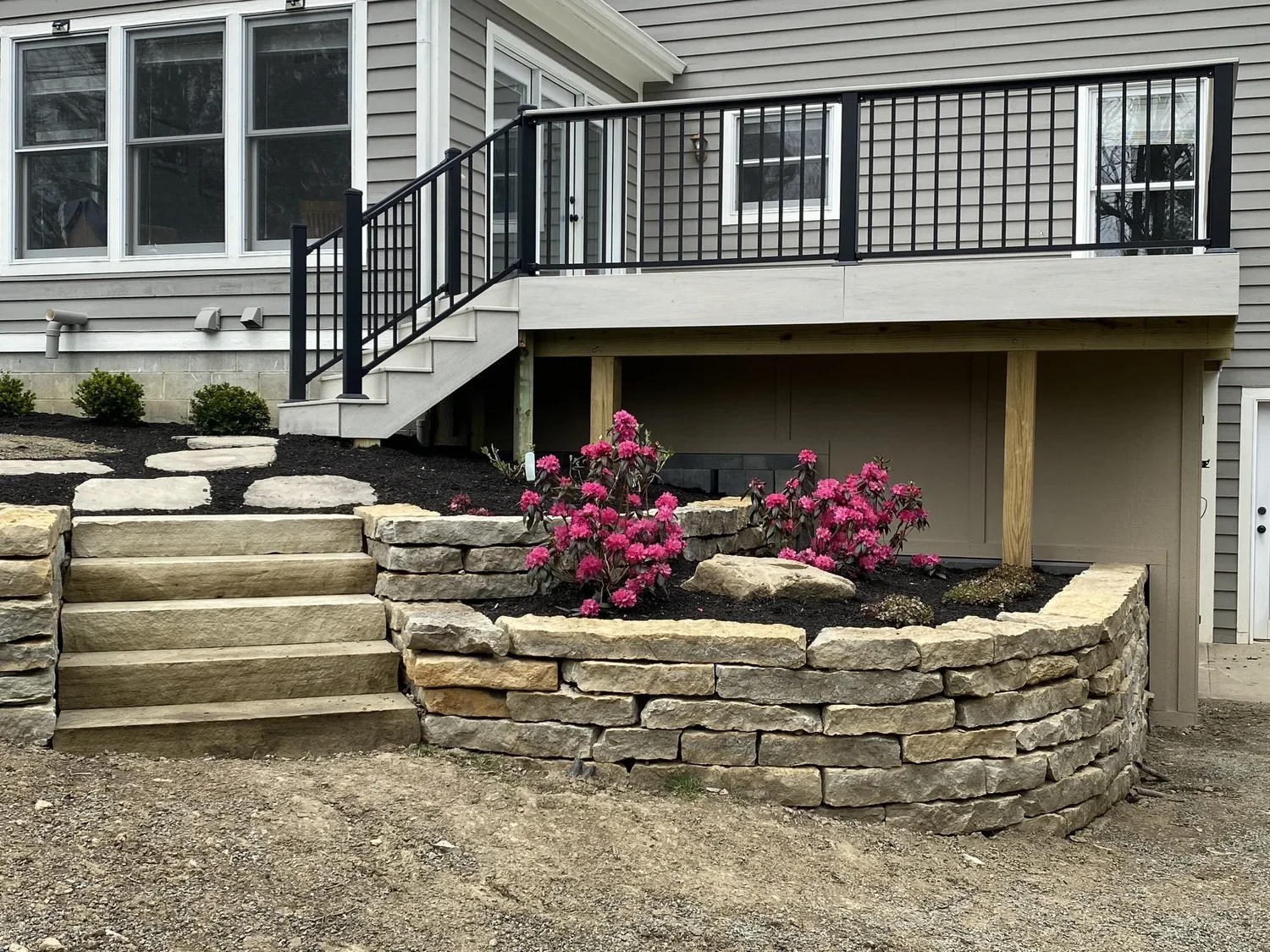
The soldier course — the single line of pavers that runs perpendicular to the field, following the curve — is where the most overlooked cost variable lives. It’s not about the cost of the soldier pavers themselves. It’s about the length of each unit relative to the tightness of the curve.
The rule is simple: the tighter the radius, the shorter the soldier paver needs to be. On a 15-foot to 20-foot radius, a standard 6-inch soldier paver walks the arc cleanly. The joint faces between adjacent soldier pavers open outward at a small angle that swept polymeric sand fills without trouble. On a 10-foot radius, that same 6-inch paver starts to show visible joint splay at the outer edge and tight compression at the inner. On a 6-foot radius, we switch to 4-inch soldier pavers, because the shorter length lets each unit traverse a smaller piece of the arc with a smaller joint angle.
Some paver lines sell pre-sized short soldier units in their collection — Techo-Bloc’s Blu 60 and Belgard’s Holland Stone both come in 4-inch variants intended for tight-radius soldier courses. Others require a field cut from a standard paver, which produces a clean unit but adds another round of saw time. On a project with multiple radii, we’ll often mix soldier-paver lengths along a single continuous arc: 6-inch units on the broad sections, 4-inch units on the tight sections, blended at the transitions with a half-unit cut. It’s fussy work, and it’s another place where the labor math leaves a rectangular patio behind.
On the soil side, Dacula’s piedmont red clay matters here too. Because the soldier course takes the brunt of edge stress from foot traffic, lawn equipment, and freeze-thaw movement, every soldier paver must sit on a fully compacted base with an edge restraint spiked through the base material into the subgrade. A soldier paver that shifts half an inch on a curve produces a visibly broken arc — the eye catches it from ten feet away. We use 12-inch non-galvanized steel spikes through PaverEdge aluminum restraint, installed at 10-inch on-center on all curved soldier runs. That spacing is tighter than the 16-inch on-center we’d use on a straight run, and the spike count alone adds another $80 to $120 in hardware to a typical curved patio.
The Design Sweet Spot — 70% Curve, 30% Straight
After a decade of building paver patios across Dacula, Hamilton Mill, Sycamore Ridge, and the surrounding 30019 neighborhoods, we’ve landed on a ratio that works almost universally: a patio reads best when 70% to 80% of its perimeter is curved and 20% to 30% is straight. Pure curves, where every edge is an arc, look frivolous — a backyard-as-racetrack effect that ages poorly and makes furniture placement awkward. Pure straights on a large patio look industrial. The 70/30 blend gives the eye a mix of movement and anchor.
The straight sections we preserve are almost always functional: the edge along the back of the house (straight to match the foundation), the edge along a retaining wall or planter (straight to simplify the interface), and the edge adjacent to a pool coping (straight to respect the pool geometry unless the pool itself is curved). Everything else — the free edges that face the lawn, the transitions to firepit landings, the accents around outdoor kitchens — is where we spend the curve budget.
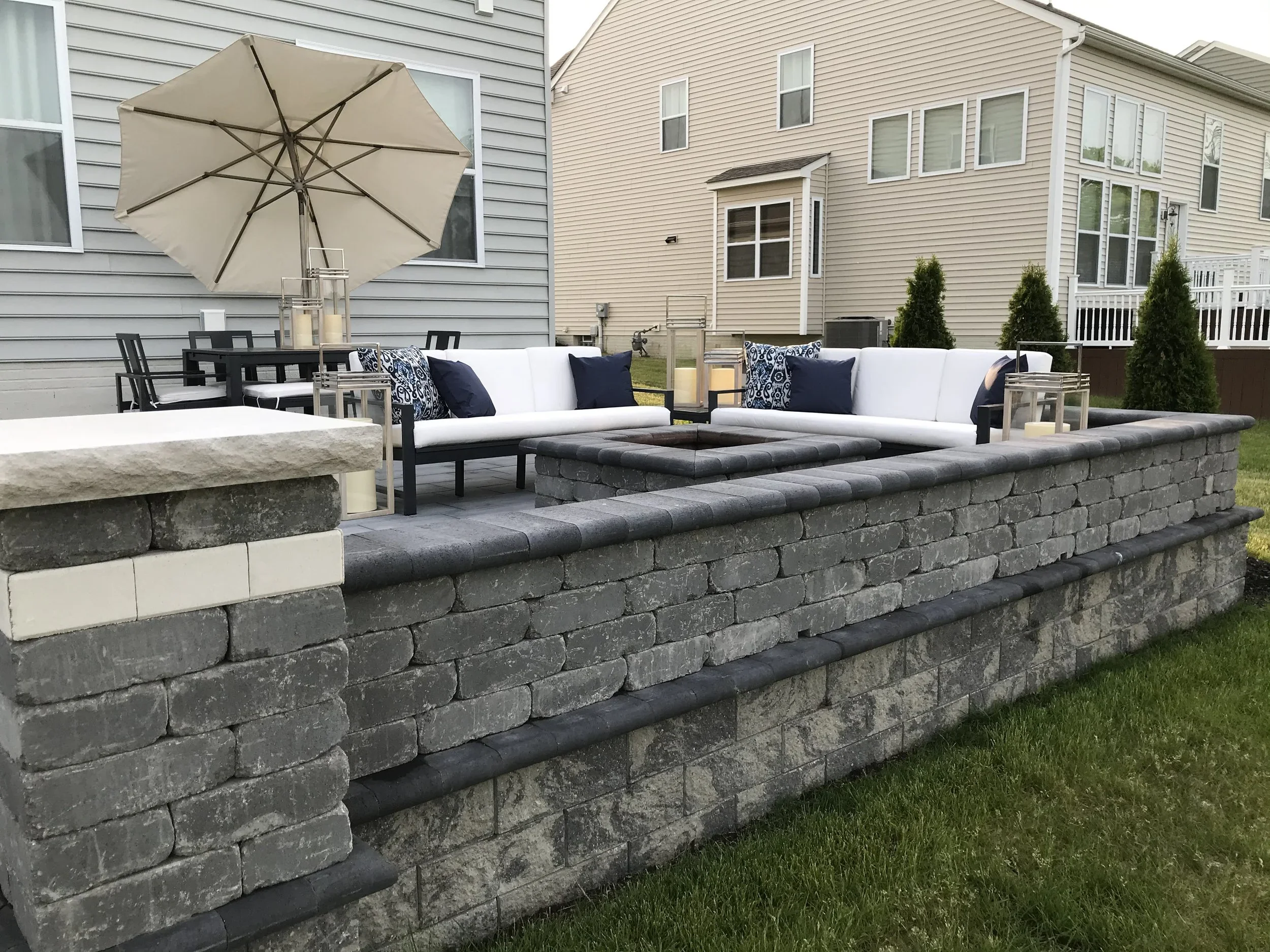
On a typical 600 square foot Dacula paver patio with a 70/30 ratio, the curve premium lands in the $2,400 to $3,600 range above the cost of an all-straight equivalent. That’s a real number, and for clients weighing the question, we lay it out flat: you are paying that premium for the visual reading of the patio from the back door and from every entertaining position, for the next twenty years. When you run the math against total project cost — base prep, pavers, soldier course, polymeric sand, edge restraint, labor, and the curve adder — the curve typically represents 8% to 12% of the total patio investment. The patio itself, not counting pool or pergola or hardscape elsewhere, usually runs $14,000 to $22,000 for 600 square feet in Dacula. The curve is a $2,500 line inside a $17,500 build, and it’s the line that makes the finished space look custom instead of contractor-grade.
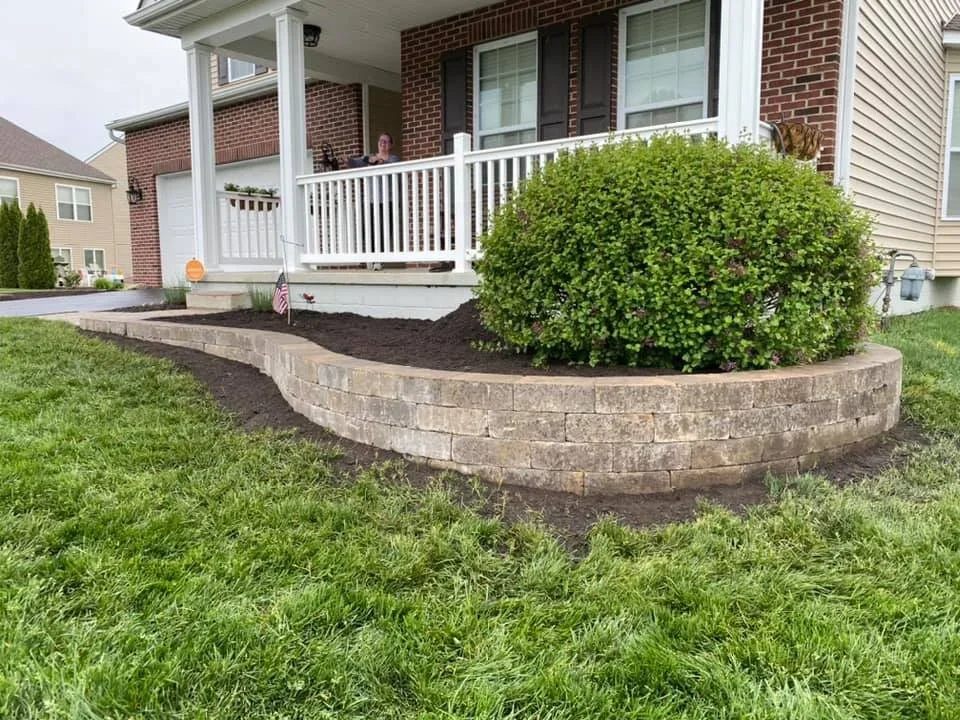
Two things we never compromise on when a homeowner wants curves. First, the base prep. A curved patio sits on exactly the same 6-inch compacted GAB-2 base as a straight one, installed in two 3-inch lifts with a 3,000-pound plate compactor running both directions. The curve doesn’t change the base; skipping base depth to save money on a curved project is how you end up with a patio that settles unevenly within three Dacula winters. Second, the polymeric sand. On a curve, the joint widths vary slightly along the arc — a premium polymeric sand like Techniseal HP NextGel or Gator Maxx G2 tolerates that variance. Standard playground sand or low-grade poly will blow out of the wider joints by year two. We do a two-pass polymeric sand application on every curved patio, one week apart, to lock the arc for the long haul.
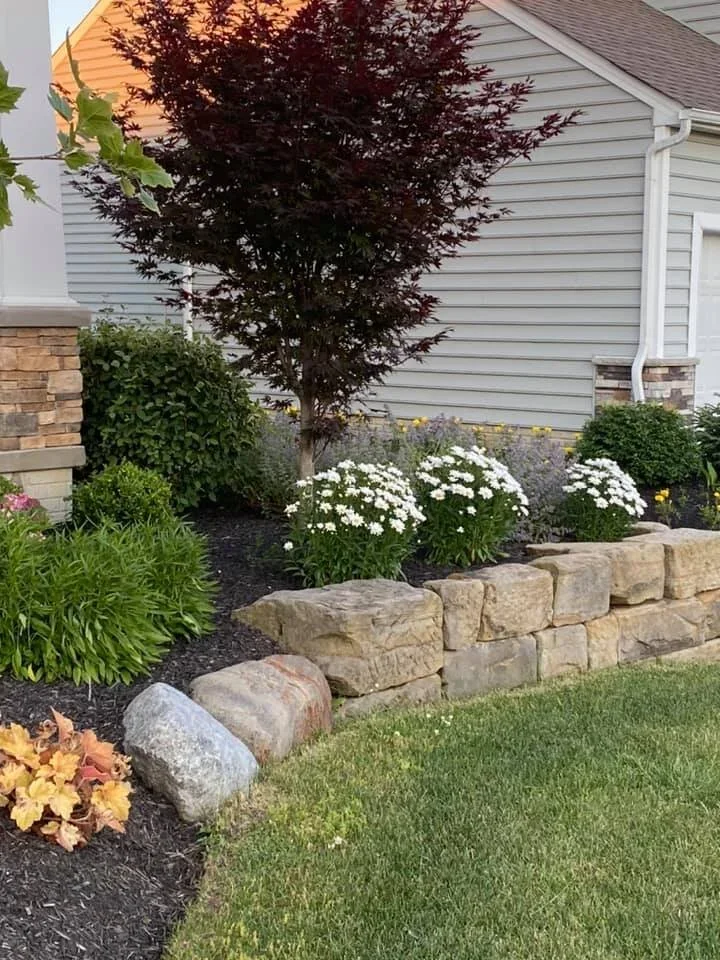
If you’re planning a patio in Dacula and the design has curves, the additional cost is real, but it’s not arbitrary. Every dollar of the premium traces back to a specific tool, a specific cut, a specific piece of hardware, or a specific hour of mason labor. The crews that do it right — with the 14-inch wet diamond saw, the keystone fill method, the sized soldier course, and the two-pass polymeric sand — produce a patio that ages for decades looking exactly the way it did the day it was installed. The crews that cut corners on any one of those elements produce a patio that looks fine at the walk-through and tired by year four. Before you sign a bid, ask which method the contractor uses for each of those four elements. The answers tell you everything about what you’re actually paying for.
Curved paver patios across 20+ cities within 30 miles of Winder, GA
From Hamilton Mill arcs on sloped Dacula lots to 70/30 curve-straight blends across Gwinnett, we design patios that hold their geometry for decades — not four winters.