
A homeowner off Freemanville Road called last spring with a thin line running the long-axis of his gunite shell. It was not a cosmetic plaster crack. It was a floor-plane crack telegraphed by weathered granite saprolite giving way under a twelve-year-old pool — a Milton signature failure we now see in roughly 45% of our crack callouts here.
The house sat on a three-acre parcel in the AG-1 preservation overlay, one of those homes where the driveway climbs 40 feet before you see the pool. The deck looked flat to the eye. But a laser level across the coping told a different story: the north edge had dropped three-quarters of an inch over twelve years. Roughly one-sixteenth of an inch per year, silent, cumulative, and concentrated where the pool sat on the transition from residual Cecil clay to weathered parent rock.
That pattern — long-axis floor crack, one-sided settlement, saprolite shelf underneath — is what makes Milton pool-crack repair fundamentally different from Alpharetta pool-crack repair, even though the two cities sit across Highway 9 from one another. Alpharetta cracks are dominantly wall cracks driven by clay expansion cycles. Milton cracks are dominantly floor cracks driven by granite weathering and rural-lot drainage. Same county on paper. Entirely different engineering problem in the ground.
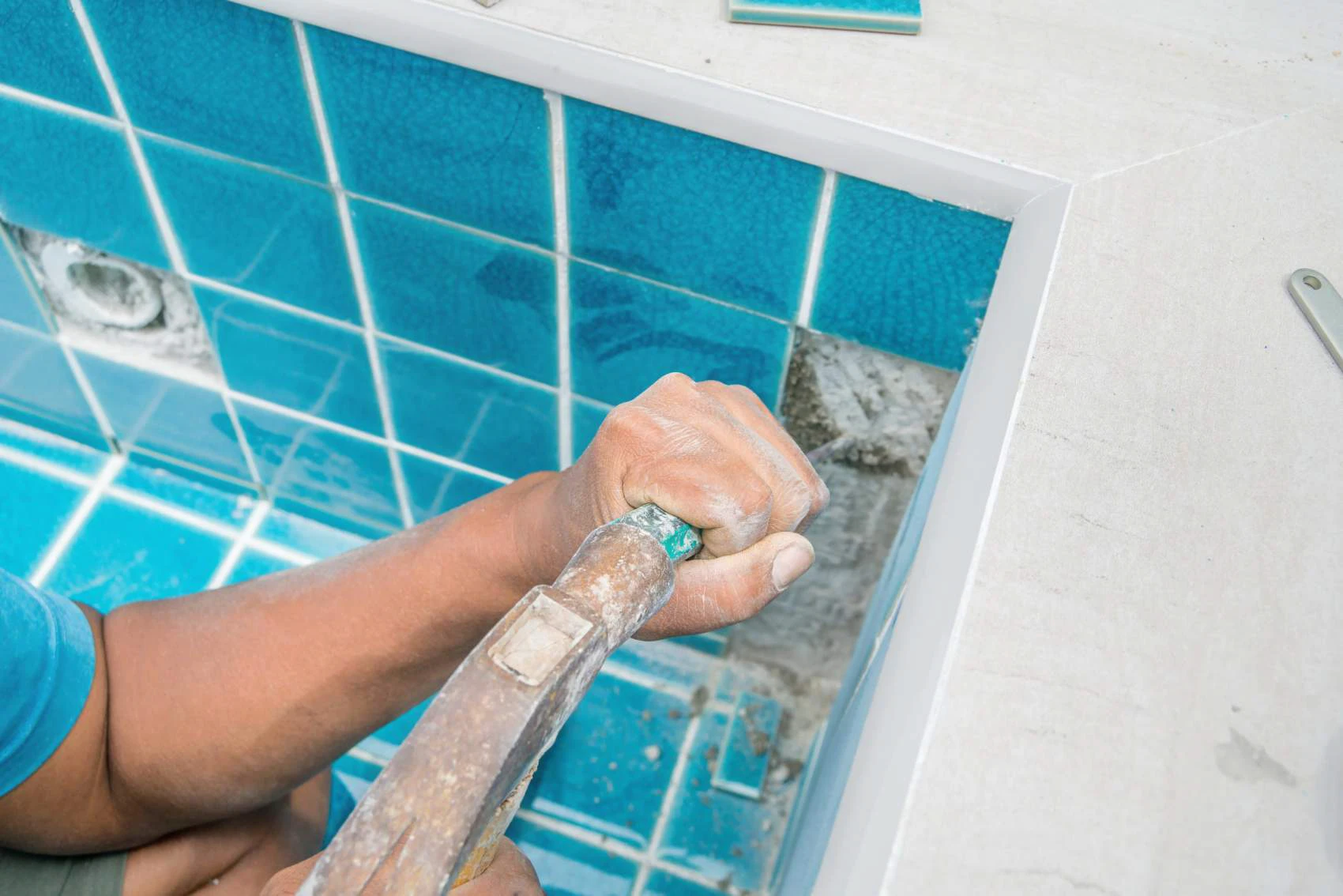
Why Milton Pools Crack Differently Than Alpharetta Pools
Milton incorporated as a separate city in 2006, pulling itself out of unincorporated north Fulton to preserve a rural character most of metro Atlanta has already lost. The incorporation changed a lot of things — permits now route through City of Milton Community Development at 2006 Heritage Walk instead of Fulton County — but it didn’t change what sits three feet under your pool.
The subsurface here is a two-layer system: Cecil clay residuum on top, weathered granite (geologists call it saprolite) underneath. On Milton’s ridgelines — the upper reaches of Cogburn, the higher lots in The Manor, the Potters Road estates — that residuum layer can be as thin as three to five feet. Dig a pool hole twelve feet deep and you’re carving straight into saprolite for the back half of the excavation.
Saprolite behaves nothing like the clay above it. It crumbles to sand under a shovel. It drains fast when wet and holds almost no lateral strength when a shell bears down on one edge of it. Most critically, it weathers unevenly. A single excavation face can show you firm rock on the east wall and friable, sugar-textured decomposed granite on the west wall. That asymmetry, frozen into the bearing surface when the gunite hits it, is the seed of every long-axis crack we later cut out.
By contrast, an Alpharetta pool five miles south is usually sitting on ten to fourteen feet of consistent clay. It moves — clay always moves — but it moves uniformly. That’s why Alpharetta crack patterns are typically horizontal wall cracks at the waterline, driven by soil expansion and contraction against the shell. Milton cracks don’t usually show at the waterline. They show on the floor, running the long direction of the pool.
Milton vs. Alpharetta crack distribution (Primetime internal 2019–2025 service data): Floor cracks = 45% of Milton cases; 28% of Alpharetta. Wall cracks = 31% Milton; 52% Alpharetta. Beam/coping cracks = 24% Milton; 20% Alpharetta.
Reading the Laser Level: The Diagnostic Tool Most Contractors Skip
The first tool that comes out of our truck on a Milton crack call isn’t a crack gauge. It’s a rotary laser level. A Leica Rugby 640 or an equivalent self-leveler, set up on a tripod ten feet from the coping, rotating through 360 degrees at the coping’s datum elevation.
We shoot eight points around the coping — two on each side. If the readings come back within 1/8 inch of each other, the pool is effectively level and the crack is probably a plaster-only issue. If the spread is 3/8 inch or more across opposite sides, we’re looking at shell movement. If the spread exceeds 5/8 inch and the long-side readings cluster against the short-side readings, we have classic long-axis differential settlement — the Milton pattern.
On the Freemanville Road pool, north-side coping sat 11/16 inch below south-side coping. That single measurement ruled out every non-structural explanation. We didn’t have a water chemistry problem. We didn’t have a cold-joint issue. We had a pool shell that had tilted.
Saprolite doesn’t settle uniformly because it doesn’t weather uniformly. What we typically find under these tilts is one of two bearing conditions: either a pocket of softer, more-weathered granite on the low side that has compressed under a decade of load, or a wedge of firm rock on the high side that refused to compress at all while the other side did. Either way, the shell tilts, and a tension fracture opens along the floor on the axis of greatest span — almost always the long axis of the pool.
The crack itself is narrow. A 12-foot long-axis crack on a 38-foot pool is typical. Width ranges from 1/32 inch at the surface to sometimes 1/8 inch at the deepest point. It leaks slowly — six to fifteen gallons a day is a common range — and it worsens every winter when freeze-thaw action wedges ice into the fracture and levers it wider.
The Forensic Sequence: What We Actually Do in the First 90 Minutes
Every Milton crack diagnostic follows a fixed sequence, because skipping steps means misdiagnosing the failure and writing the wrong scope. A wall crack mistaken for a floor crack gets a $1,900 cosmetic patch instead of the $9,000 structural repair it needed. The homeowner calls us back two years later when the patch fails and the shell has dropped another 1/4 inch.
The sequence:
- Full coping laser shoot — eight to twelve points around the perimeter, documented on a site sketch with elevations marked in thousandths of a foot.
- Crack mapping — every visible crack photographed with a scale reference, width measured with a feeler gauge, orientation logged against pool axis.
- Dye test — concentrated fluorescein dye dropped adjacent to each suspect crack with the circulation off. If the dye pulls into the fracture, we have a through-shell crack. If it stays in place, we have a cosmetic plaster fissure.
- Deck slab inspection — we look for companion cracks in the deck, particularly on the low side, because the same settlement that tilted the pool usually telegraphs through the apron concrete within a radius of twelve feet.
- Drainage inventory — every downspout, swale, area drain, and pool-equipment pad is walked and noted. In Milton, 70% of the settlement cases we see are amplified by drainage that dumps roof or driveway water on the low-elevation side of the pool.
- Creek-buffer check — if the parcel is within a named tributary buffer (Milton enforces a 25–75 foot setback from Cooper Sandy Creek, Chicken Creek, Lake Creek, and several Etowah tributaries), we flag it, because repair excavation near a buffer requires coordination with the City of Milton.
We leave the property with a written diagnostic report — not a verbal opinion. That document becomes the basis for the repair scope and, when needed, for a structural engineer’s stamp if the repair crosses the threshold where one is required.
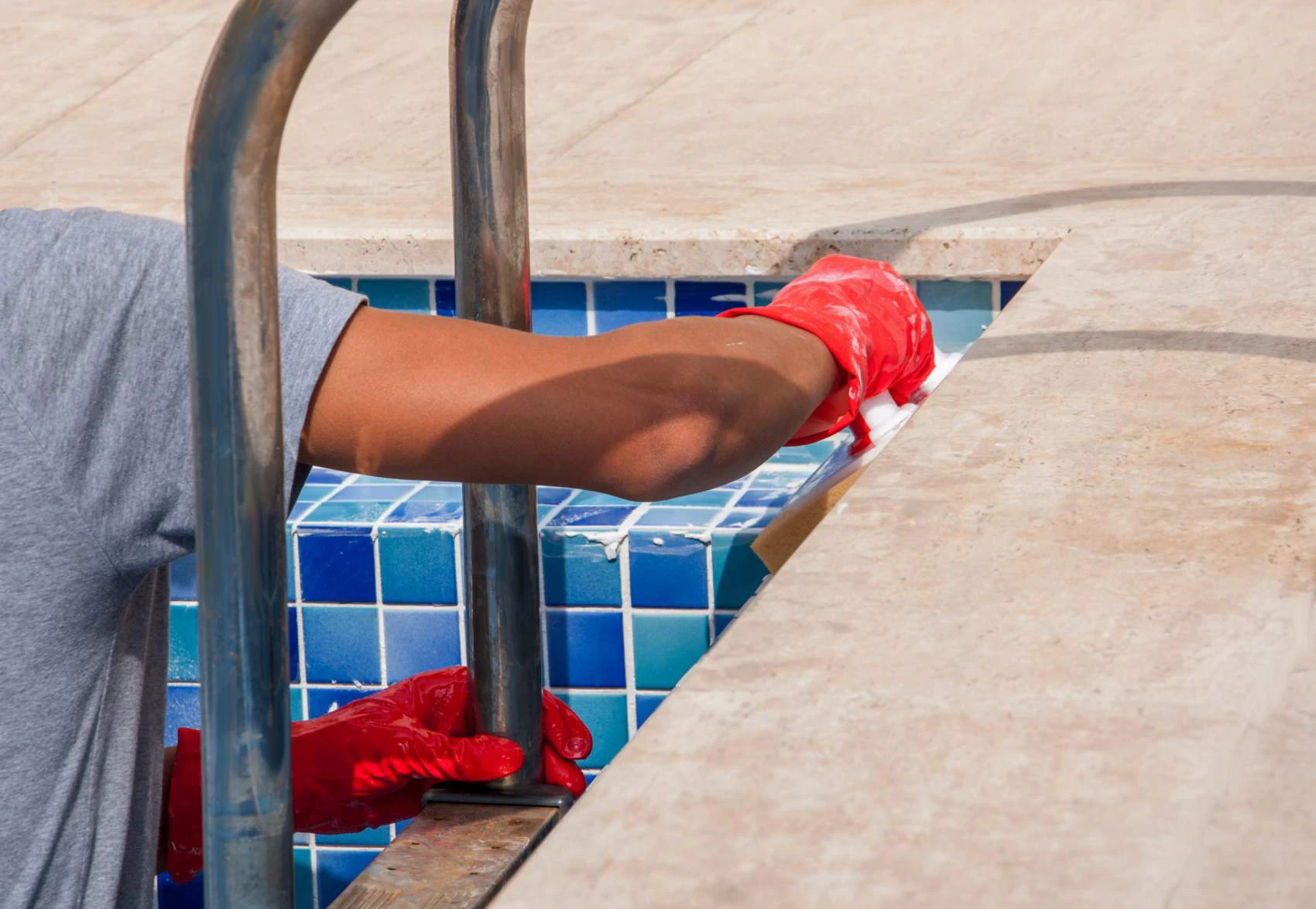
The Repair: Epoxy Injection, Structural Staples, and New Plaster
A long-axis floor crack on a Milton pool is repaired in three integrated steps. Skip any of them and the crack reopens within 18 to 36 months. Done correctly, the repair lasts the remaining structural life of the shell — typically 25 to 40 more years.
Step 1: Pressure epoxy injection
The crack is chased with a 1/4-inch diamond blade, cleaned, and fitted with injection ports every 8 inches along its length. We pump a low-viscosity structural epoxy — Sika Sikadur 52 is our default spec, which carries a compressive strength around 10,000 psi and a tensile bond well above the gunite’s own tensile capacity — into the deepest port first and walk it up the crack as each higher port weeps out clean resin. This fills the fracture plane from the substrate up, not top-down.
Step 2: Structural staple rebar
Once the epoxy has cured (usually overnight), we mill slots perpendicular to the crack every 12 to 18 inches along its length. Each slot takes a piece of #4 or #5 epoxy-coated rebar cut to about 18 inches. The slots are packed with hydraulic structural mortar — typically a Sika SikaQuick 2500 or equivalent — that bonds the staple to the surrounding gunite. The result is a mechanical stitch across the crack plane: even if future settlement tries to reopen the fracture, the staples carry the tension.
Step 3: New plaster over the repair zone
We resurface a 4- to 6-foot-wide band along the crack with new pool plaster — either a quartz-aggregate plaster or a polished-aggregate finish, matched as closely as we can to the original. Because Milton homeowners are almost always on a white or salt-finish plaster in the 12-to-18-year range, we usually recommend resurfacing the entire pool rather than spot-patching, because a four-foot patch of new plaster on an aged surface is visually obvious under angled sunlight.
Pricing reality for Milton structural crack repair: Epoxy injection + staple stitch + localized plaster patch runs $6,800–$9,400 per crack. Full-pool resurface on top of the repair adds $5,200–$12,800 depending on pool size and plaster grade. Total project range: $6,800–$14,400 for single-crack cases.
Rural-Lot Drainage: The Amplifier We Fix Alongside the Crack
Repairing the crack without addressing the drainage that caused the settlement is a short-term repair. The saprolite doesn’t suddenly stabilize because we injected epoxy. If roof water continues to dump against the low side of the pool, the differential load continues, and eventually the staples carry a load they were not designed to carry in perpetuity.
Milton’s estate lots create specific drainage conditions that subdivision pools don’t face. On a typical 1.5-acre to 3-acre parcel, the house usually sits on the highest point and the pool sits downhill on a graded terrace. Roof square footage is often 5,000 to 8,500 square feet. That roof produces 3,000 to 5,500 gallons of runoff during a typical 1-inch storm. On 53 inches of annual rainfall — Milton’s long-term mean — that’s 160,000 to 290,000 gallons per year of concentrated runoff moving downhill across the yard.
If the downspouts discharge into ordinary splash blocks and the ground slopes toward the pool, that water is saturating the soil and, more importantly, the saprolite on the downhill side of the pool shell. Saturated saprolite loses bearing strength. Repeat that cycle across 22 freeze events and a dozen summers, and the shell tilts.
The drainage fixes we install alongside crack repair:
- Buried 4-inch SDR-35 collection lines tied into every downspout within a 30-foot radius of the pool, daylighted at a downhill discharge point at least 25 feet from the pool shell — and outside any creek buffer if one applies.
- Swales regraded to direct sheet flow around the pool rather than across its footprint. We typically move 8 to 18 cubic yards of topsoil on a Milton drainage repair.
- French drains on the uphill side of the pool shell — 4-inch perforated pipe in washed #57 stone, wrapped in filter fabric, set at a depth below the pool floor elevation — to intercept subsurface flow before it reaches the saprolite bearing plane.
- Deck-drain retrofits along the coping on the low side, tied into the same buried collection network.
A full drainage repair on a Milton estate lot adds $4,800 to $11,500 to the crack repair, depending on linear footage and haul distance. It’s not a line item most homeowners budget for when they call about a crack. But it’s the line item that makes the crack repair a 30-year repair instead of a 3-year repair.
Permits, Preservation Review, and the Manor Architectural Committee
Repair scopes that touch only the pool interior — crack injection, staple rebar, plaster — generally do not require a permit in the City of Milton. The moment the scope includes structural work on the shell that changes its footprint, modifies deck drainage across a property line, or excavates within a creek buffer, a permit is required.
City of Milton Community Development turns around most pool-repair permits in 10 to 14 business days. That’s faster than Fulton County was before incorporation, but the review is stricter. Milton’s zoning ordinance enforces the AG-1 equestrian preservation overlay with real teeth: minimum 1-acre lots in most AG-1 areas, 3-acre minimums in certain sub-districts, and setbacks that exceed standard Fulton County pool setbacks by 5 to 15 feet in some cases.
For homeowners inside The Manor Golf Club, Crooked Creek, Atlanta National, White Columns, Bethany Creek, or Cogburn Estates, there’s a second layer: architectural review by the HOA’s design committee. The Manor’s review committee, in particular, runs four to five weeks with a structural review step for any work that involves the pool shell. We build that timeline into every Manor repair proposal — including a pre-application meeting with the committee so the submitted package doesn’t get bounced on a paperwork issue and start the clock over.
Creek-buffer setbacks on lots near Cooper Sandy Creek, Chicken Creek, Lake Creek, or Etowah tributaries run 25 to 75 feet depending on the stream’s classification. If the pool or its drainage work is inside the buffer, we coordinate with Milton’s environmental review staff and, when needed, bring in a registered land surveyor to stake the exact buffer line before any excavation starts.
When a Structural Engineer Belongs on the Job
Not every Milton crack requires a PE stamp. Most don’t. A single long-axis floor crack with less than 3/4 inch of coping-elevation differential, on a shell that is otherwise sound, is a contractor-scoped repair — we handle it start to finish without engineering.
A structural engineer belongs on the job when one or more of these conditions apply:
- Coping differential exceeds 1 inch across the shell, indicating accelerated or ongoing settlement.
- Multiple cracks exist in a non-random pattern — floor crack plus companion wall cracks, or a crack plus a beam crack, suggesting the shell is failing as a system rather than at a single stress point.
- The pool is within a creek buffer where subsurface water conditions are abnormal.
- Adjacent deck or house foundation shows companion cracking, indicating a broader lot-scale ground movement issue.
- Homeowner is selling the property within 24 months and wants a third-party stamped report for the disclosure file.
A geotechnical boring at the pool’s low side — typically two borings, 15 feet deep, logged by a licensed firm — runs $1,900 to $3,400 on a Milton estate lot. Engineering review and stamped repair drawings add another $2,400 to $5,600. On jobs where the stakes justify it — and in The Manor, most do — the engineering spend is small next to the downstream cost of a bad repair.
Freeze-cycle detail Milton homeowners underestimate: Milton averages 22 freeze events per year at its ~1,150-foot elevation. That’s 4 to 6 more than lower-elevation parts of Fulton County. Every untreated shell crack widens measurably each winter. A crack left alone for three winters will propagate 30–60% further in length than it would at lower elevations.
Twelve-Year Outlook: What We Tell Homeowners to Watch
A repaired Milton pool is not a maintenance-free pool. The ground it sits on is still saprolite-over-clay, and the drainage load across it is still 53 inches of rainfall per year. The repair buys you decades of structural life, but only if you catch the next early signal before it becomes the next structural event.
We leave every Milton repair client with a three-item monitoring protocol:
- Annual laser shoot. We come back with the same rotary level, shoot the same eight points around the coping, and compare the numbers to the closeout measurements from the repair. Any delta above 1/8 inch in a given year triggers a drainage inspection.
- Spring crack walk. After the last freeze, the homeowner (or we, on a service contract) walks the pool with a flashlight at a low angle, looking for hairline fissures in the plaster that weren’t there the previous fall. New fissures get photographed with a ruler for scale.
- Drainage outlet check after major storms. The buried collection network and the daylight discharge points need to be walked after every storm over 1.5 inches. Blocked discharges dump water back toward the pool footprint, which is how the original problem started.
The Freemanville Road pool we opened this piece with was back in service six weeks after the diagnostic call. Thirty-two months later, the coping laser still shoots within 1/16 inch. The homeowner runs the monitoring protocol himself every spring. That’s what a Milton structural crack repair looks like when it’s done once and done right — not a patch, not a cosmetic fix, but a reengineered shell-and-drainage system that respects what’s actually under the pool.
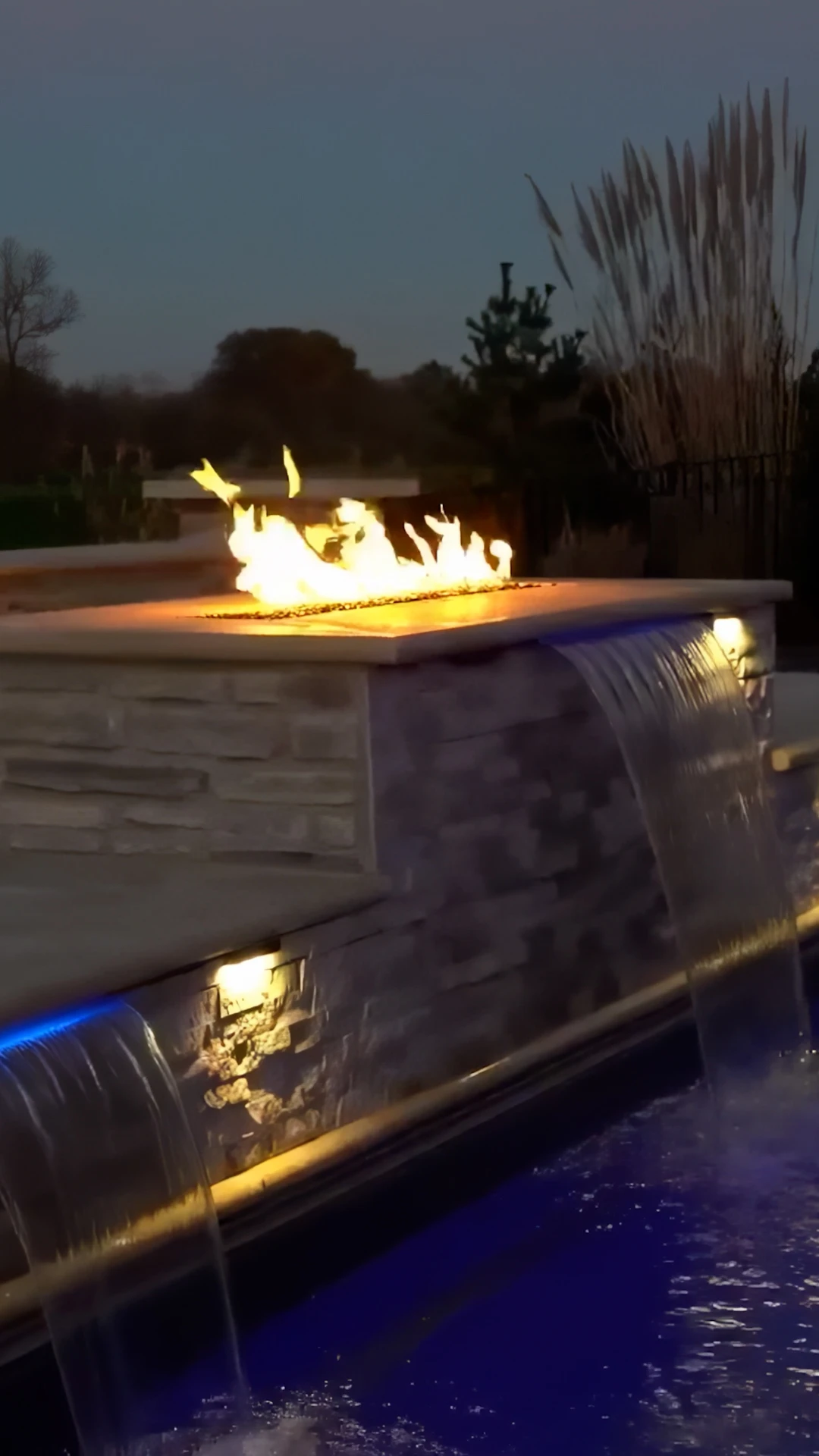
Structural pool crack diagnostics across 20+ cities within 30 miles of Winder, GA
Milton shells fail differently than the ones south of Highway 9. A laser shoot, a dye test, and a drainage walk tell us what the plaster can’t. That’s where every sound repair starts.