
Q: “My Laurel Springs pool is 28 years old and I just found a hairline crack that wasn’t there last November. Is this cosmetic — or is the shell failing?” A: It depends on three measurements you can take this weekend with a UV-reactive dye kit and a $4 feeler gauge — and the answer changes the repair bill by roughly $46,000.
That is the honest range for the pools built inside Laurel Springs between 1994 and 2008. The gunite shells that came out of the ground when Clinton was in office — the ones that anchored the original Davis Love III golf community lots along Brookstone Way and Shady Grove — are now entering the zone where year-20+ shell fatigue becomes visible. Some of it is cosmetic and can be closed for $1,200. Some of it is structural and will cost you $16,800 to rebar-and-epoxy-inject correctly. And a narrow slice of it — the shells that were poured thin and reinforced light during a boom-era Gwinnett labor shortage — will need a full rebuild at $48,000 to $88,000.
The diagnostic work separates those three futures. Plenty of Suwanee homeowners skip it, call the first contractor they find on Google, and get sold a resurface when they needed a structural repair — or a structural repair when they needed a resurface. This post is the exact diagnostic a Primetime Pools GA crew leader runs on a Laurel Springs call, written in the same order we run it on your deck. By the end you will know which of the three repair brackets your pool is in, what the honest cost range looks like, and how to decide whether to fix, remodel, or rebuild based on how many more years you plan to own the house.
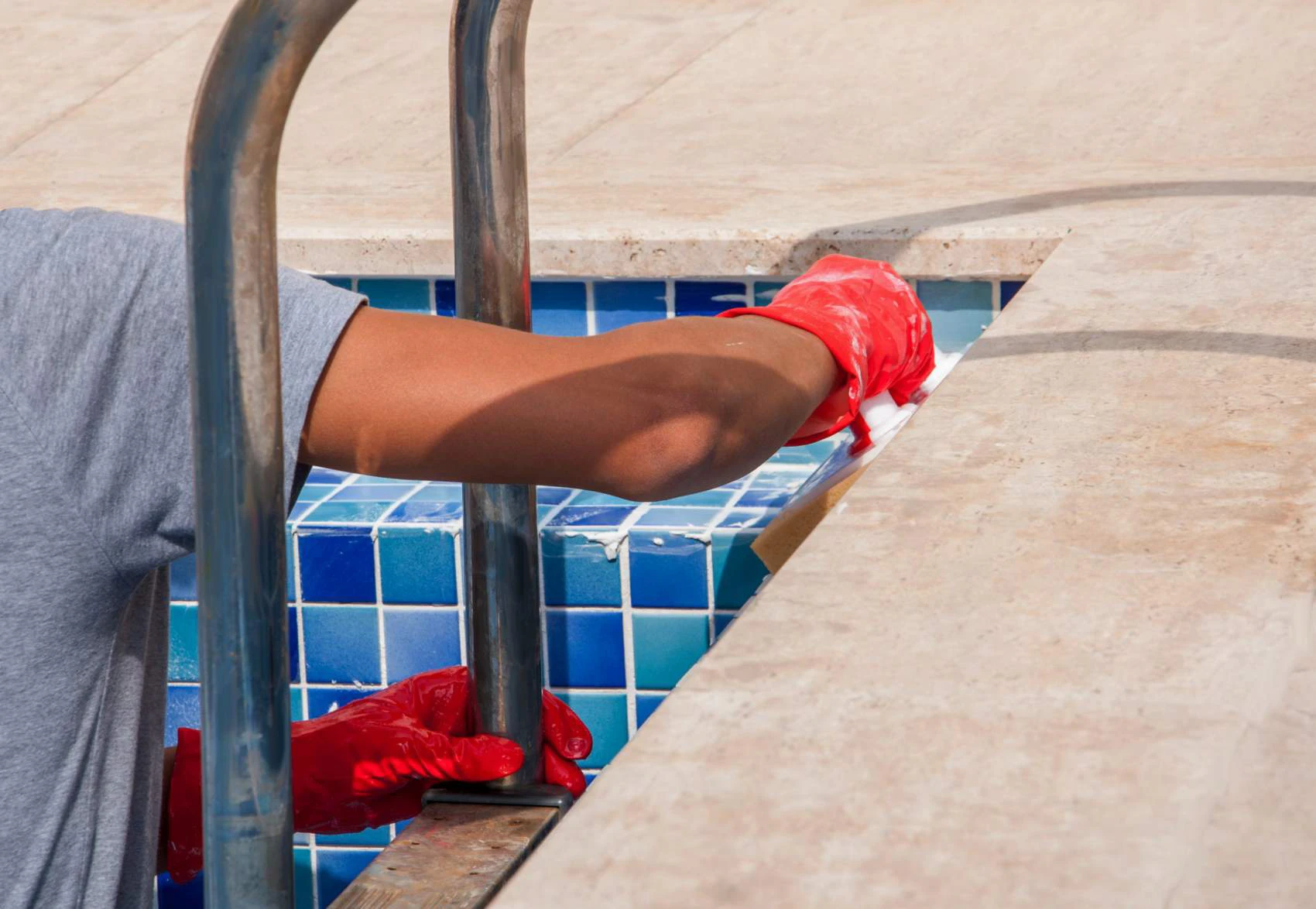
There is nothing mysterious about a 28-year-old shell moving. Gunite is a rigid composite — cement, sand, and a grid of #3 and #4 rebar — bonded chemically to the ground around it. Around a Suwanee pool, that ground is Cecil series Piedmont clay, which is the same red-orange clay that runs under every yard from Grayson to Sugar Hill. Cecil clay shrinks when it dries and swells when it rains. Over 28 years of Zone 8a freeze cycles — Suwanee averages around 20 freeze events per year — the shell flexes a few microns every time the soil moves. Eventually a stress concentration finds the weakest rebar tie in the shell and a crack opens.
That is normal. What is specific to Laurel Springs and the surrounding 1990s Suwanee builds is three compounding factors:
- Boom-era thin shells. Gwinnett permitted roughly 14,000 pool builds between 1994 and 2005. Crews were stretched. The code minimum at the time was a 6-inch shell with #3 rebar on 12-inch centers. A lot of those pools got poured at five-and-a-half inches with rebar on 14-inch centers. The shell is structurally sound at five-and-a-half — until it is twenty-five years old and sitting on clay that is heaving three-quarters of an inch between a dry July and a wet October.
- First-generation plaster. The Marcite-era white plaster that went into Suwanee pools in the 1990s was rated for a 10 to 15 year service life. By year 20 it is calcium-bound to the gunite and masking every hairline below it. You cannot see a structural crack through 28-year-old plaster. It has to be drained and the surface has to be acid-washed before the diagnostic even starts.
- The Chattahoochee River fringe. Lots on the south side of Settles Bridge Road and the properties inside The River Club at Suwanee sit on alluvial deposits with sandy loam mixed into the Cecil clay. Those pools have different movement patterns than the true Piedmont clay pools up in the Highgrove and Village Grove neighborhoods. Same county, same climate, completely different shell behavior at year 28.
If your pool was built in 1994 and you have never drained it for a structural inspection, you are flying blind. The crack you are seeing on the surface is the seventh or eighth thing the shell is telling you — and the first six were below the waterline tile.
Gwinnett permit history reality: Pool build permits for Laurel Springs are on file at 446 W. Crogan St., Lawrenceville under the Gwinnett Department of Planning & Development. You can pull the original pool permit, look up the gunite thickness called for on the plan, and — if the inspector noted it — the actual pour thickness. That one piece of paper can tell you whether your shell was poured at code minimum or under it.
The Three-Test Diagnostic: Dye, Gauge, and the 60-Day Widening Check
Here is the exact sequence a Primetime crew leader runs on a Suwanee crack call. The whole thing takes two visits and roughly 90 minutes of on-site work, spread over eight to ten weeks. Do not skip any step. Every contractor who has ever talked a Laurel Springs homeowner into a $12,000 “crack repair” that failed in three months skipped the widening check.
Test 1 — The UV-Reactive Dye Test
With the pool full, dial the pump off and wait four hours until the water is glass-calm. Inject fluorescein UV-reactive pool dye (we use a 4-ounce ampoule of standard hydrology-grade dye — the same stuff municipal water districts use for line-break detection) directly over the visible crack. Watch the dye plume with the pump still off.
- Dye sits still or drifts with surface current: Cosmetic crack only. Water is not moving through the shell. Repair bracket: $1,200 to $2,400.
- Dye draws into the crack and disappears within 60 seconds: Active leak. The crack is through-shell, water is exiting into the ground behind the pool. Repair bracket: $8,400 to $16,800 structural.
- Dye draws in, then emerges from a second location 10+ feet away: The shell has a branched crack system. You are looking at a full rebuild if the second location is below the waterline. Repair bracket: $48,000 to $88,000.
Test 2 — The Feeler Gauge
Drain the pool. Acid-wash the plaster surface until the crack is visible all the way to bare gunite. Take a $4 automotive feeler gauge — the kind mechanics use for setting spark plug gaps — and measure crack width at the widest point and the narrowest point. Write both numbers on the coping in chalk, dated.
- Under 0.008 inches (the thinnest feeler blade): Hairline. Surface-only. Likely cosmetic.
- 0.008 to 0.020 inches: Stress crack. Will need epoxy injection, not just plaster fill. Structural-adjacent.
- Over 0.020 inches: Shell failure. The crack has opened far enough that rebar behind it may already be rust-scaling. Full structural repair or rebuild.
Test 3 — The 60-Day Widening Check
This is the test that separates Primetime from the contractor who quotes on his first visit. Leave the chalk marks. Come back in 60 days. Re-measure the crack with the same feeler gauge. If the crack has widened by more than 0.004 inches across two months — especially if those two months straddle a seasonal transition like September to November when the Cecil clay is drying out — the shell is actively moving. You are in the structural or rebuild bracket regardless of what Tests 1 and 2 said. If the crack has not moved in 60 days, you are in the cosmetic bracket and a quality plaster patch will hold for 10 to 15 years.
Cosmetic Bracket: $1,200 to $2,400 — What Actually Gets Fixed
Roughly 55% of Laurel Springs crack calls land in the cosmetic bracket. The dye test showed the crack was not drinking water, the feeler gauge came in under 0.008 inches, and the 60-day recheck showed no widening. In that case the repair is straightforward and the price range is honest.
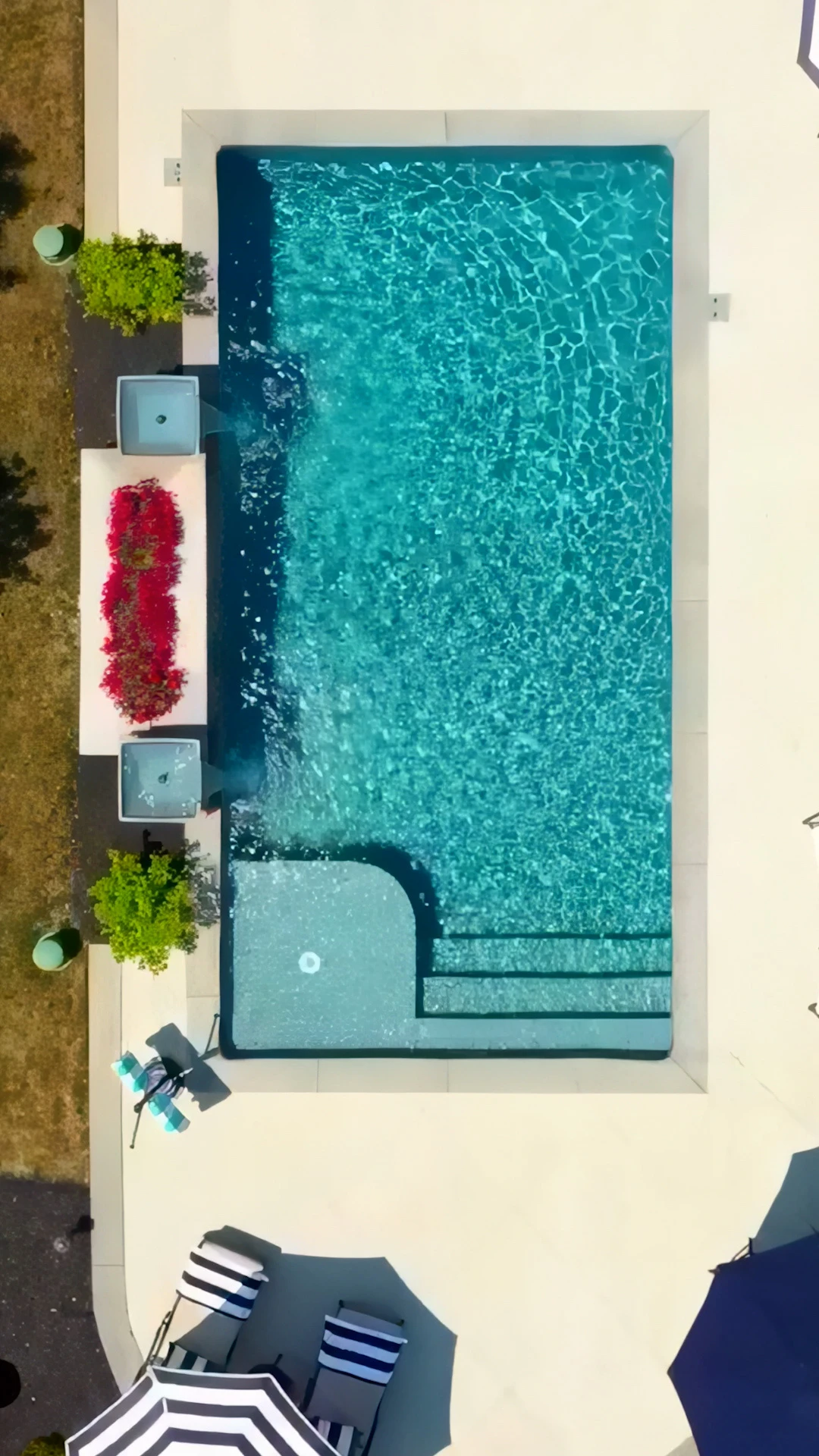
The work: drain the pool, acid-wash, V-groove the crack with a diamond blade to open it to about 3/16 of an inch, vacuum the dust out, prime the crack with a cementitious bonding agent, fill with hydraulic cement, skim-coat over the area with matching plaster, and refill. Two days of work, one crew day of drain-and-refill water, materials under $300. The range of $1,200 to $2,400 reflects crack length and plaster-match difficulty — if your pool has a custom-tinted plaster from a 2006 remodel you are at the top of that range because the tint has to be color-matched to the aged surface.
What NOT to do in the cosmetic bracket: do not let anyone sell you a full replaster ($8,000 to $14,000) for a cosmetic crack. A quality patch is structurally identical and lasts 10 to 15 years on a shell that is not moving. A full replaster is the right call when the plaster itself is aged out — not when you have a single cosmetic crack in otherwise healthy plaster.
Structural Bracket: $8,400 to $16,800 — Epoxy Injection and Staple Repair
About 35% of Laurel Springs crack calls land here. The dye test drew water, the feeler gauge came in between 0.008 and 0.020 inches, or the 60-day check showed the crack widening slowly. The shell is cracked through but not catastrophically — it is still a structurally sound pool, it just needs to be rejoined.
The repair is two-stage. First, the crack is pressure-injected with a two-part structural epoxy — we use a low-viscosity marine-grade epoxy designed for below-grade concrete repair, pumped at 40 to 60 psi through ports drilled every 12 inches along the crack. The epoxy fills the full depth of the crack, bonds to the gunite on both sides, and restores shear strength. Second, if the crack is longer than 36 inches or runs across a corner, we stitch it with carbon fiber staples on 8-inch centers — essentially stapling the two sides of the shell together with a material stronger than the original rebar.
After the structural work, the pool is replastered over the whole affected wall or floor panel. The plaster is purely cosmetic at this point — the epoxy and staples are doing the structural job. Total cost breakdown on a typical Laurel Springs repair:
- Drain, haul water, prep: $600 to $900
- Epoxy injection (materials and labor): $2,800 to $4,200
- Carbon fiber staples (typically 6 to 14 staples): $1,200 to $2,800
- Partial or full replaster: $3,200 to $7,400
- Refill, chemistry balance, startup: $600 to $1,500
The $8,400 figure is floor, not average: The $8,400 low end of the bracket assumes a single crack under 36 inches with a partial-panel plaster job. The $16,800 top end is typical for a pool with two or three cracks, one long floor crack, and a full replaster. Be suspicious of anyone quoting under $8,000 for structural work on a 28-year-old shell — they are either skipping the carbon fiber staples or plastering over the crack without injecting it.
Rebuild Bracket: $48,000 to $88,000 — When the Math Stops Working
The last 10% of Laurel Springs crack calls end up here, and this is where the honest conversation gets hard. A rebuild means demolishing the existing shell, hauling the debris, repouring the gunite with modern #4 rebar on 10-inch centers, replumbing to current Jackson EMC 240V service standards, retiling, and replastering. You are building a new pool in the hole the old pool occupied.
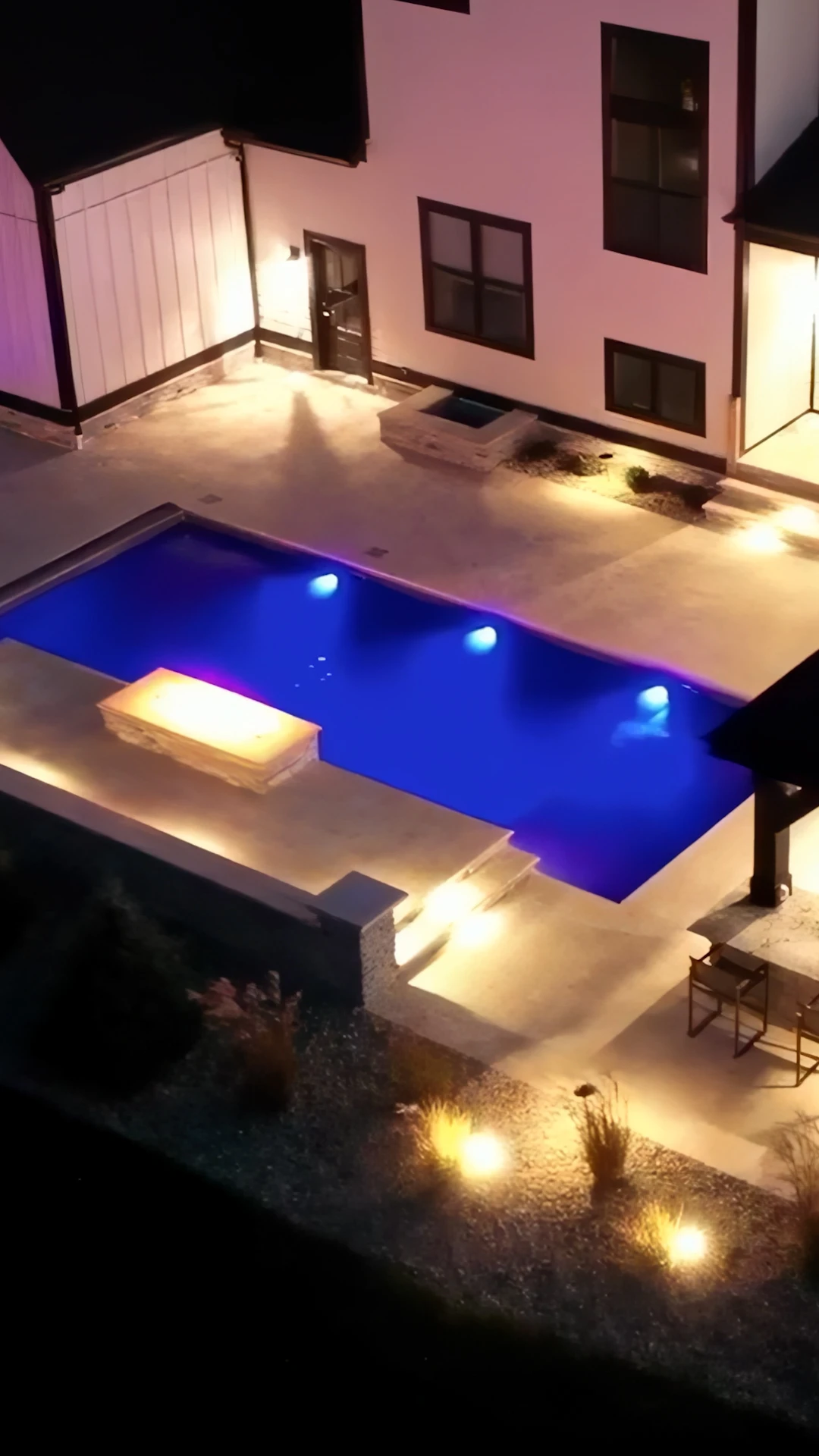
You end up in the rebuild bracket when the shell has multiple through-shell cracks, when the 60-day widening test shows active movement, or when the epoxy injection itself reveals that the rebar is heavily corroded and no longer structurally reliable. Put simply: the shell is past the point where patching makes honest financial sense.
The $48,000 floor assumes a rectangular pool under 400 square feet, same footprint, concrete deck not disturbed, no spa. The $88,000 ceiling assumes a 650-square-foot pool with attached spa, new tile, new coping, new equipment pad (Pentair IntelliFlo3 VSF pump and Pentair MasterTemp 400 heater are our standard specs for a rebuild of this scale), and full replacement of the travertine deck where access demolition is required.
Here is the honest mental math. A $16,800 structural repair on a 28-year-old shell is buying you probably 10 to 15 more years on the pool before another structural issue emerges. A $72,000 rebuild is buying you 30+ years on a fresh shell with modern rebar spec. If you plan to own the Laurel Springs house for less than 12 more years, the structural repair is the right call almost every time. If you plan to own the house for 20+ more years — or if you are building toward a resale narrative where the pool needs to be marketed as “new” — the rebuild is the financially correct decision even though the check is larger today.
The Decision Framework: Age + Crack Type + Resale Horizon
Here is the three-variable framework we walk Suwanee clients through on the back of a kitchen notepad. Every Laurel Springs call comes down to these three inputs.
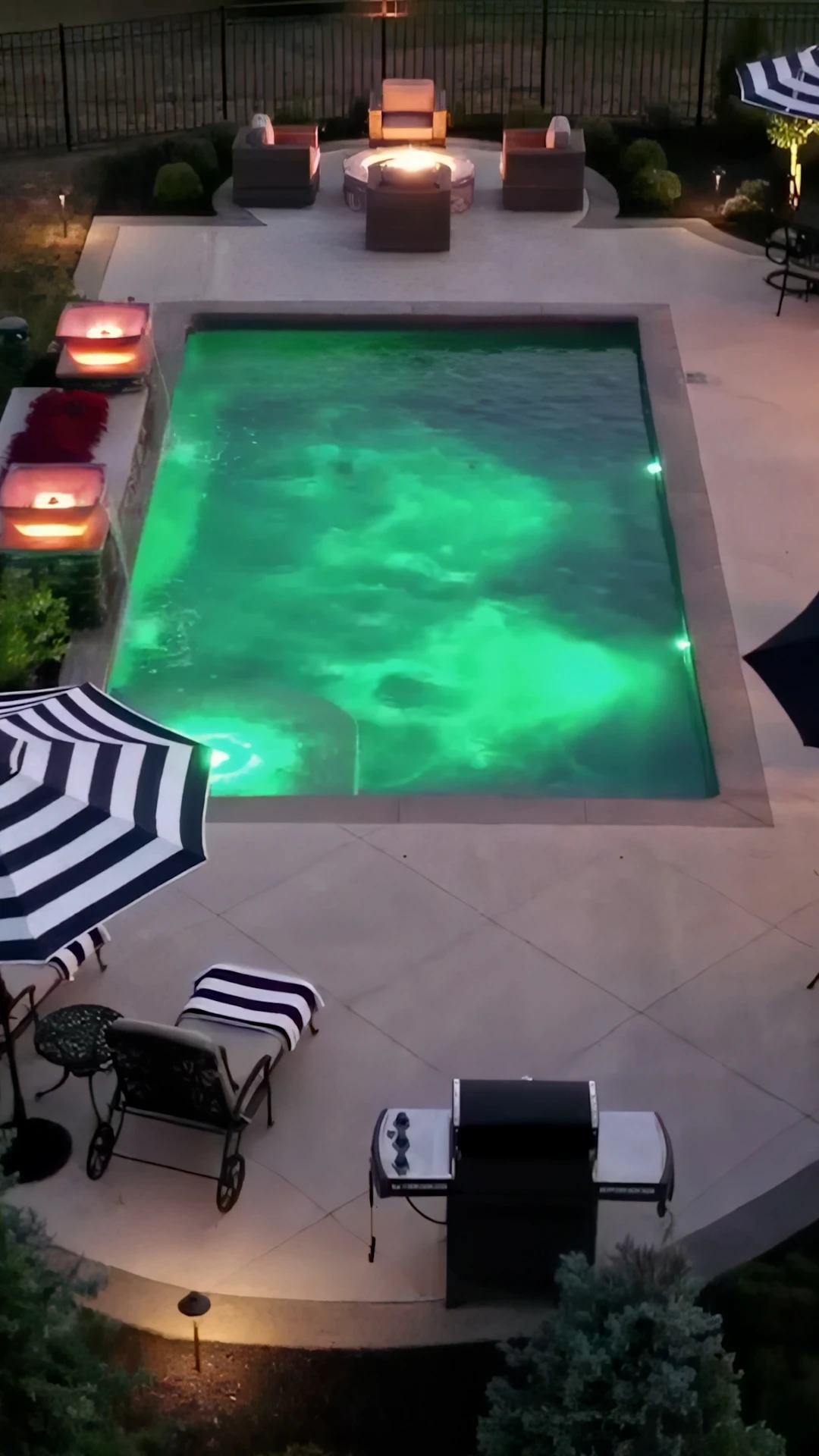
Variable 1: Shell age. Under 15 years — repair almost always wins; the shell has another 15 to 20 years of life. 15 to 25 years — structural repair is usually the right call if the dye test is clean. 25 to 35 years (the Laurel Springs sweet spot right now) — the decision turns on variables 2 and 3. Over 35 years — rebuild almost always wins because even a perfect repair will age out inside the next decade.
Variable 2: Crack type and count. Single hairline under 24 inches, no dye draw, no widening — cosmetic, $1,200 to $2,400. Single crack 24 to 60 inches with dye draw or 0.008 to 0.020 inch width — structural, $8,400 to $16,800. Multiple cracks, branched system, or widening crack over 0.020 inches — rebuild consideration, $48,000 to $88,000.
Variable 3: Resale horizon. Selling inside 3 years — repair the cheapest honest way and let the next owner inherit the shell. 3 to 10 years — structural repair if it is in the middle bracket; a well-done epoxy-and-staple repair is invisible to a buyer’s pool inspector and costs a fraction of a rebuild. 10+ years — rebuild makes financial sense if you are in the structural or rebuild bracket, because you will recapture the cost in enjoyment and in long-tail maintenance savings.
The Laurel Springs HOA factor: Rebuilds inside Laurel Springs require HOA architectural review — one of the strictest in Gwinnett County, with a typical 3 to 4 week review turnaround. That is in addition to the Gwinnett County permit process at 446 W. Crogan St. If you are rebuilding, factor 6 to 8 weeks of paperwork into the timeline before any demolition can start. Structural repairs under the cosmetic and structural brackets typically do not require HOA approval since the pool footprint is unchanged — but check your specific subdivision’s covenants before starting work.
Two additional Suwanee-specific factors that shift the math: lots inside Zone AE flood designations along the Chattahoochee River fringe (parts of Settles Bridge and some properties inside The River Club at Suwanee) have tighter rules on shell repair versus rebuild, because any significant concrete work below grade triggers a FEMA elevation review. And if the original pool was equipped for Jackson EMC 240V service (which is most of Laurel Springs — Jackson EMC not Georgia Power is the utility for the community), any rebuild will bring the pool up to current NEC §680 bonding code, which is a $2,400 to $4,800 line item inside the rebuild but often gets buried in the total.
The short version: diagnose the crack before you price the repair. Run the three tests. Know your bracket. And decide based on how long you plan to enjoy the pool, not on which contractor answered his phone first. A 28-year-old Laurel Springs pool is not automatically a rebuild — and it is also not automatically a quick plaster patch. The shell will tell you what it is, if you ask it correctly.
Pool repair and structural diagnostics across 20+ cities within 30 miles of Winder, GA
Laurel Springs, River Club, Settles Bridge, Village Grove, Highgrove — we run the dye-gauge-widening diagnostic on every 20+ year-old Suwanee shell before we quote a number. No guesswork, no upsells, no resurface-when-you-needed-a-rebuild.