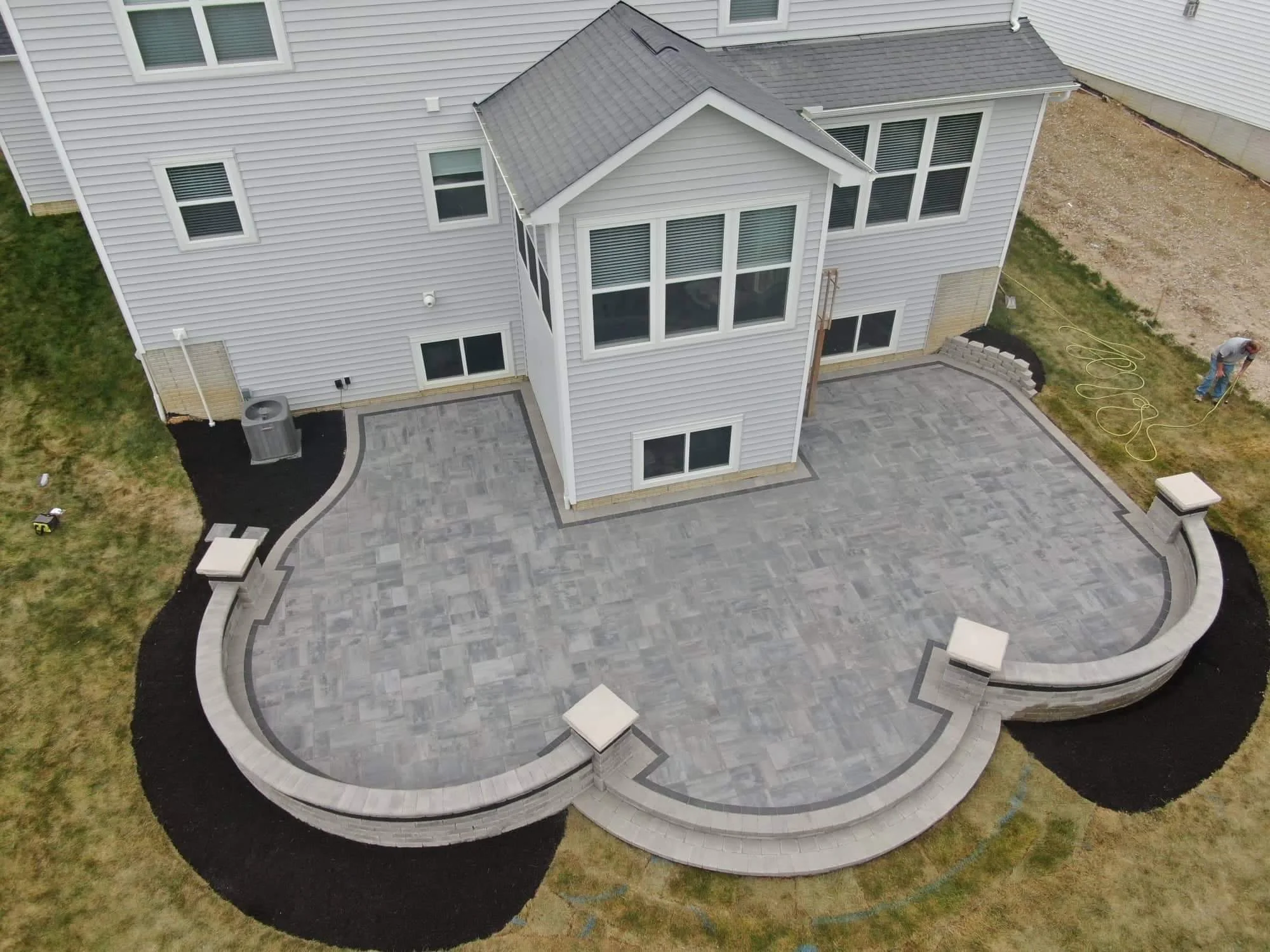
Four questions decide the coping on a Forsyth County pool. Answer them in order and the profile chooses itself — answer them wrong and you are re-setting stones by year 4 or 5, long before the pool shell has paid for itself. This is the decision tree we walk every client through, from Coal Mountain ridgelines to the south-shore subdivisions along Lake Lanier.
Coping is the narrow cap that finishes the top edge of the pool shell. Two inches of stone dictates whether the deck drains correctly, whether the tile survives a Zone 8a winter, whether the HOA architectural review committee signs off, and whether the pool still looks like it was finished last summer when you sell the house in 2041. Forsyth County runs ~22 freeze events per year and the fastest residential growth curve in Georgia, which means this one detail carries more weight here than it does in a milder climate or a slower market.
The decision tree has four branches. Run through them in sequence, not in parallel — each question filters the options before the next one cuts them again.
- Freeze-thaw cycles above 25/year? → drop-face profile.
- HOA aesthetic match required? → bullnose profile.
- Budget the leading priority? → eased-edge profile.
- Modern architecture build? → square-edge profile.
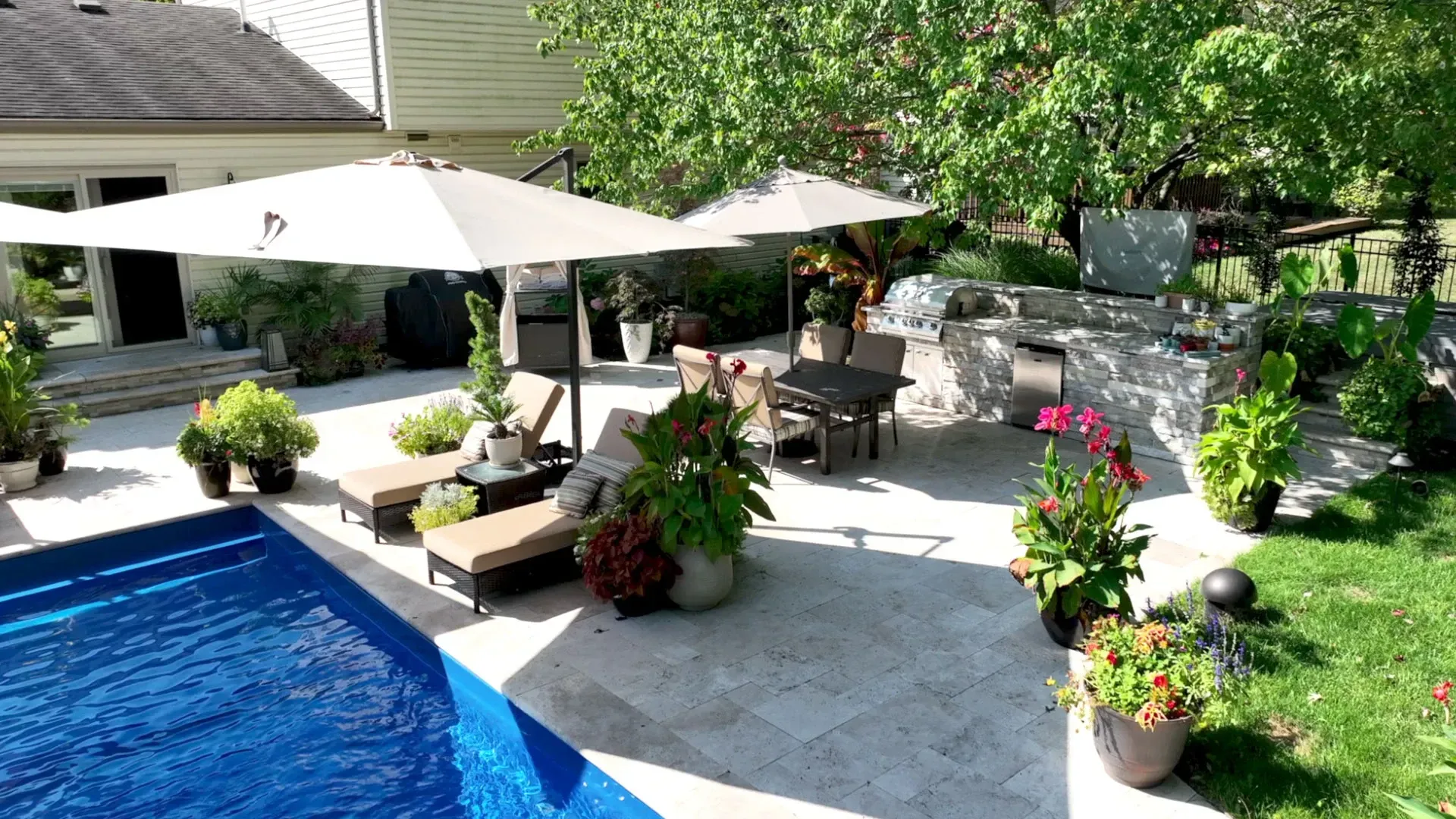
Branch One: The Freeze-Thaw Question — Why Drop-Face Wins Above 25 Cycles
The National Weather Service station at Cumming logs roughly 22 freeze events in a typical year, but north Forsyth — Coal Mountain, Ducktown, the ridgeline above Sawnee Mountain Preserve — regularly exceeds that. A yard sitting at 1,450 feet elevation, exposed to north-west wind off the mountain, will cycle above and below freezing 28 to 33 times per winter. Each cycle pulls water into the top millimeter of the stone, freezes it, and levers off whatever aggregate is nearest the surface. Over a decade that math becomes visible.
A drop-face coping profile — sometimes called a rebated edge — extends the stone down over the tile line by three-quarters of an inch to a full inch. Rainwater and snowmelt break cleanly off that overhang instead of sheeting back under the stone and into the bond beam joint. On our north-Forsyth builds above 1,400 feet, drop-face coping outlasts bullnose and eased-edge by a measurable margin because the underside of the stone never stays wet long enough to freeze.
Field rule: If the build site logs more than 25 freeze-thaw cycles in the 30040 or 30028 weather record, specify drop-face coping in travertine or dense limestone. Porous sandstone loses this contest every time.
Cost runs $52 to $68 per linear foot installed for a premium travertine drop-face, versus $34 to $42 for a comparable bullnose in the same material. The premium looks steep until you price a coping replacement in year 12 — which, on a 90-linear-foot pool, runs north of $8,000 once you count the tile that comes off with the stone.
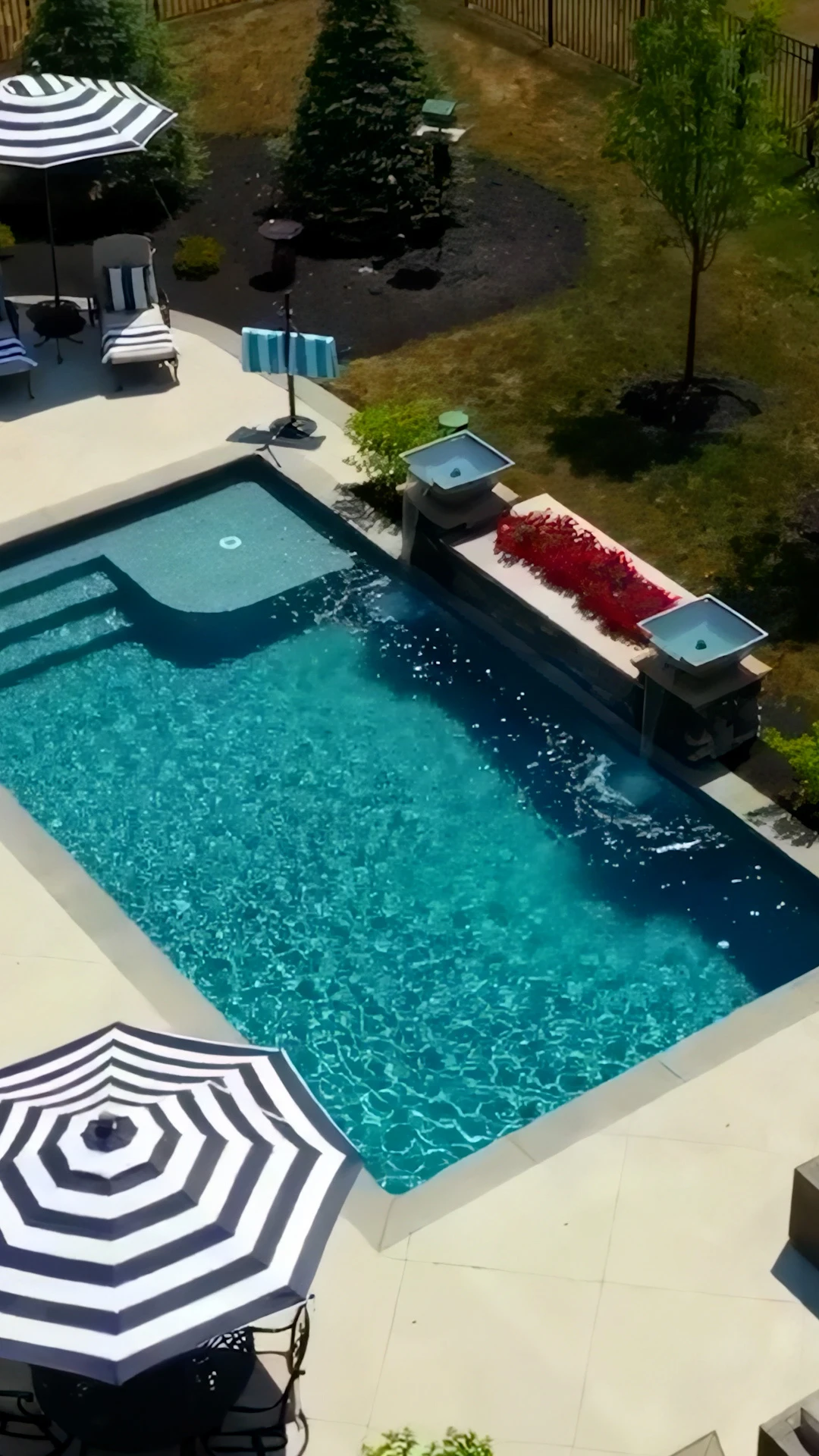
Branch Two: The HOA Question — Why Bullnose Is the Safe Pass
Nearly every subdivision built in Forsyth County since 1995 has an active HOA, and the architectural review committee has veto power over pool finishes before the permit is even pulled. South-Forsyth neighborhoods — Bethelview, Shoal Creek, Polo Fields — run the strictest review panels in the county. A square-edge travertine that reads as crisp and modern in a Dawsonville custom build will often get rejected in a traditional subdivision because it doesn’t harmonize with the surrounding brick-and-shutter housing stock.
Bullnose — a fully rounded top and front edge — reads as classical. It echoes the profile of windowsills, countertop edges, and masonry caps that already exist on Forsyth’s Georgian, Craftsman, and transitional homes. It is also the safest profile around small children and bare feet, which matters when the review panel includes parents on the HOA board.
The profile has a second practical advantage: a bullnose stone returns to plumb at any angle. On curved freeform pools and the popular U-shaped tanning ledges that drive much of our south-Forsyth work, the rounded edge follows the radius without revealing the miter cuts. Square-edge and eased-edge copings both expose the cut geometry on curves, which is fine on a rectangle and distracting on anything else.
Cost: $34 to $42 per linear foot in standard travertine, $46 to $58 in Techo-Bloc cast-stone bullnose. The cast-stone upcharge is worth it on builds that will see heavy sunscreen contact, since the manufactured profile is more uniform in density than quarried travertine.
Branch Three: The Budget Question — When Eased-Edge Is the Honest Call
We build pools from $85,000 to $400,000-plus in Forsyth County, and the $85,000 tier does not stretch to include premium coping. If the budget is the leading constraint — and there is no shame in saying so — the correct profile is eased-edge. An eased-edge coping is a stone with a slight chamfer on the top corner, somewhere between one-eighth and one-quarter inch. It softens the edge enough that nobody slices a calf on it, keeps the install labor straightforward, and leaves the rest of the budget free to spend on the shell, the equipment pad, and the deck material where it matters.
Eased-edge coping in standard concrete runs $22 to $30 per linear foot installed. In thermal-finished travertine, $28 to $36. The choice we push hardest against is poured-in-place cantilever concrete coping, which reads cheap on day one and cracks cosmetically by year three. The savings — roughly $12 per linear foot versus precast eased-edge — disappears the first time the homeowner asks why the coping has a hairline running the length of the pool.
On Forsyth County’s ubiquitous Cecil series Piedmont clay, the substrate moves more than the pool shell does. Poured cantilever is rigidly bonded to the bond beam, which means every millimeter of soil movement telegraphs directly into the concrete. Precast eased-edge — set in mortar with a proper expansion joint — absorbs that movement. It is the same mechanical principle as building a floating deck over frost-heave soil.
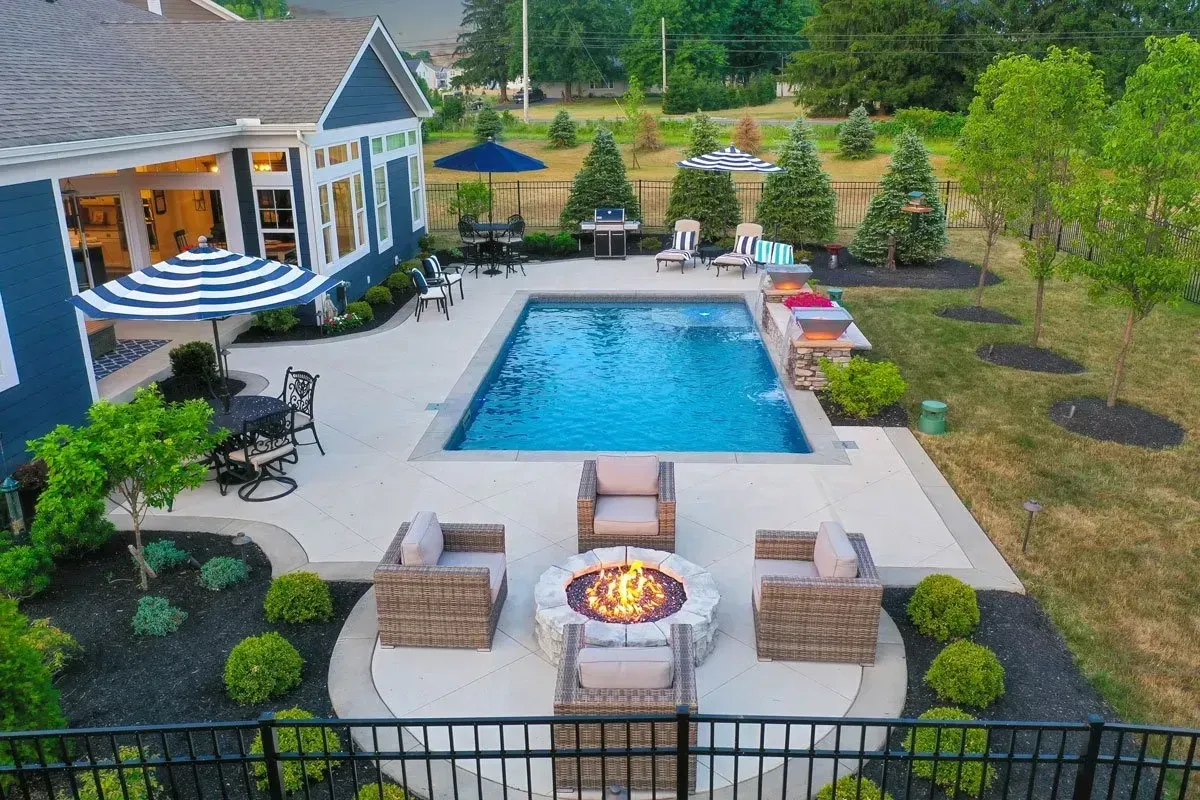
Branch Four: The Architecture Question — When Square-Edge Earns Its Keep
Forsyth County is building more contemporary homes right now than any other county in Georgia. The north-side estate market — properties of three to five acres feeding off Hwy 369 and Browns Bridge Road toward Lake Lanier — has swung decisively toward flat-roof transitional and full modern architecture over the last four years. On those houses, a bullnose coping reads wrong. The eye wants a square, deliberate 90-degree edge that matches the architectural vocabulary of the building itself.
Square-edge coping is the aesthetically aggressive choice. It is less forgiving on curves (see above), less forgiving in freeze-thaw (the top corner is exposed on two sides, not one), and less tolerant of sloppy install work. Every miter cut is visible. Every deviation from level shows. The trade-off is that when it is done correctly, square-edge coping on a modern pool is architectural — it reads as a continuation of the house rather than a pool accessory.
We specify square-edge exclusively in dense travertine or porcelain — Techo-Bloc Blu 60 porcelain coping is the go-to on builds where we need a perfectly uniform edge that won’t weather inconsistently over 20 years. Natural stone with density variation will weather unevenly and break the crisp visual line that justifies the profile in the first place. Cost runs $58 to $82 per linear foot installed.
Do not specify square-edge coping on builds with freeform pool shapes, raised spa walls with curved transitions, or north-Forsyth sites above 1,400 feet elevation. The profile punishes all three conditions.
The 15-Year Maintenance Reality — What Each Profile Actually Costs to Own
Forsyth County pool permits cleared 200-plus approvals in 2024, which gives us a growing dataset of 10-to-15-year-old pools to learn from. What the data shows is that coping is where neglect bills come due first, before the plaster, before the equipment, before the deck.
A bullnose travertine coping on a properly graded deck, with expansion joints maintained on a 3-year resealing cycle, will hold its line for 20 years. The same profile with deferred maintenance — sealer skipped, joints unattended — will show staining and efflorescence by year 7 and need spot replacement by year 12. The difference between those two outcomes is $600 every three years against $7,500 in year 12.
Drop-face profiles are the most forgiving because the overhang keeps water off the critical joint regardless of how diligent the owner is. Square-edge profiles are the least forgiving because every face is exposed. Eased-edge sits in the middle.
The other variable is the deck material the coping sits next to. A Techo-Bloc paver deck set on an 8-inch compacted base moves sympathetically with the coping over decades. A poured concrete deck will crack on its own schedule, and the crack will propagate into the coping joint every time. On Forsyth’s clay, we almost always specify paver decks for this exact reason — it is not primarily an aesthetic decision, it is a 15-year math problem.
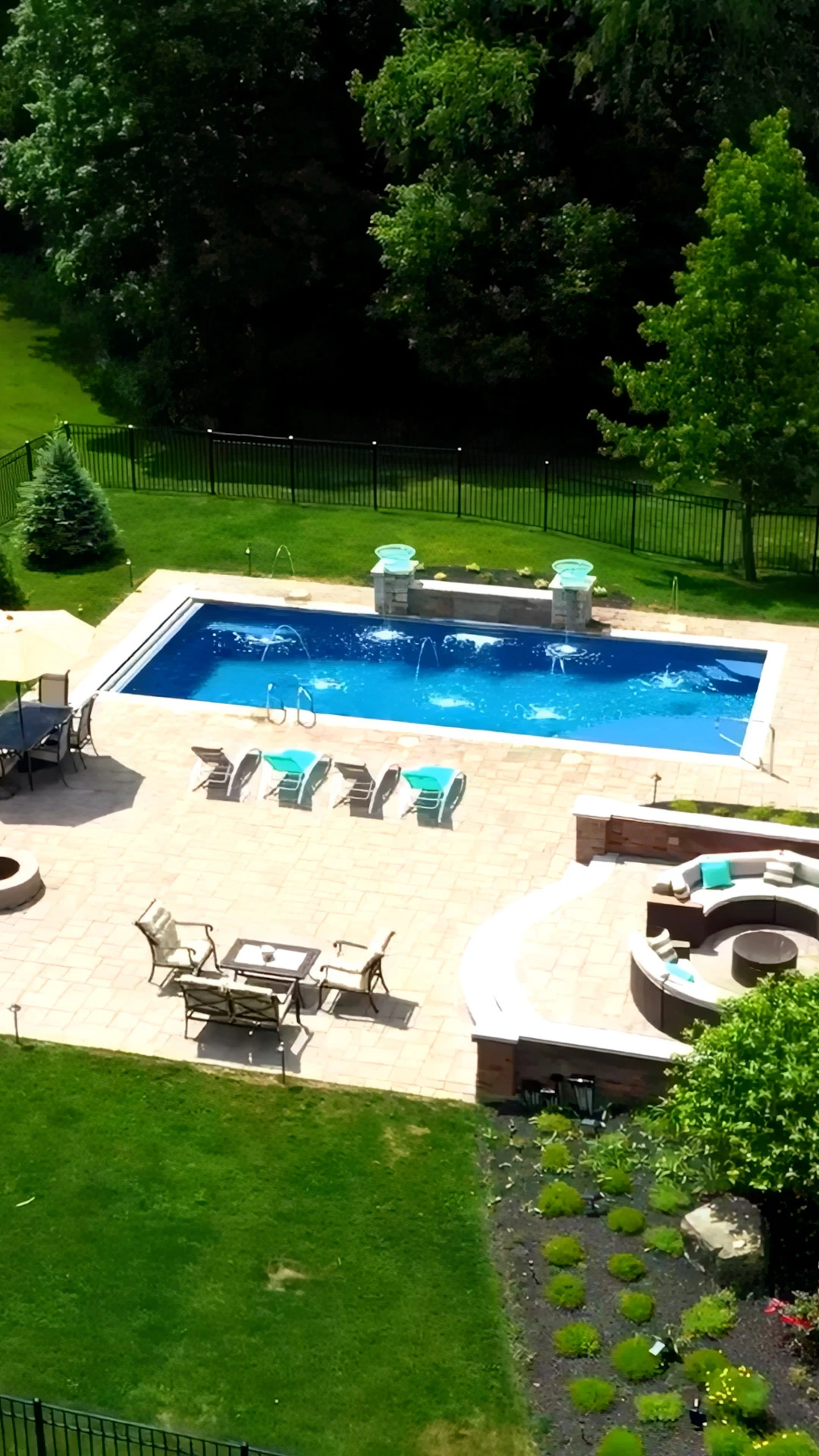
Running the Tree on a Real Forsyth County Build
Here is how the decision tree resolves on three representative 2025 builds:
Build 1: Three-acre property, Coal Mountain, 1,520-foot elevation, no HOA, custom modern architecture, $340,000 budget. Freeze-thaw cycles above 25? Yes. Tree stops at branch one: drop-face profile. Material: dense honed travertine because the architecture is modern and the site allows a premium spec. Cost: approximately $6,100 for 102 linear feet.
Build 2: Half-acre lot, Bethelview subdivision, traditional two-story home, active HOA with architectural review, $165,000 budget. Freeze-thaw above 25? No (subdivision sits at 1,150 feet, logs 18-21 cycles). HOA aesthetic match required? Yes. Tree stops at branch two: bullnose profile. Material: standard cream travertine, $3,800 for 98 linear feet of coping.
Build 3: Quarter-acre lot, south Forsyth, budget-driven build, no HOA, $92,000 total pool budget. Freeze-thaw above 25? No. HOA match? No. Budget the priority? Yes. Tree stops at branch three: eased-edge profile. Material: thermal-finish travertine in the pale-gold range, $2,550 for 88 linear feet.
None of these three pools got square-edge coping, and that is representative of the broader market. Square-edge is the correct choice on maybe 1 in 7 Forsyth County builds — specifically the ones where the house itself is full modern architecture and the site is south of the 1,400-foot contour. The tree exists to keep the profile honest to the build instead of honest to the current design trend.
The coping conversation takes us roughly 45 minutes in a design meeting — longer than most clients expect. It is worth it. A pool built in Forsyth County is a 25-year asset sitting on Piedmont clay under a Zone 8a freeze cycle, and the two-inch stone cap at the top of the shell is the single part of the build that takes the most weather abuse, carries the most design weight, and costs the most to redo after the fact. Pick the profile deliberately. The tree is how.
Custom pool construction across 20+ cities within 30 miles of Winder, GA
Coping selection is one of the 40-plus deliberate decisions we walk Forsyth County homeowners through before the shell is ever dug. The decision tree is how the pool still looks right in 2041.