
The call came from a Settles Bridge homeowner the Monday after a 4-inch Chattahoochee overnight surge. His travertine deck had survived. His neighbor’s had not. The difference was three quarters of an inch per foot of fall, documented on an elevation certificate nobody had read in eight years.
We do a lot of pool decks in Suwanee. Laurel Springs, River Club, Highgrove, Village Grove — the zip code 30024 might as well be its own market inside Gwinnett County. But the projects that sit southwest of Peachtree Industrial Boulevard, the ones that back up to the Chattahoochee or sit on the floodplain shoulder behind Settles Bridge Road, are not like the projects in the rest of Suwanee. They look identical on the brochure. They are built completely differently underneath.
This post is about that difference — specifically, how a pool deck gets graded when the lot sits inside FEMA Flood Zone AE or within the shoulder of it, what the Gwinnett County permit reviewers actually check, how impervious surface mitigation gets documented, and why the equipment pad elevation is the line between a deck that survives a 20-year storm and a deck that ends up as insurance photographs.
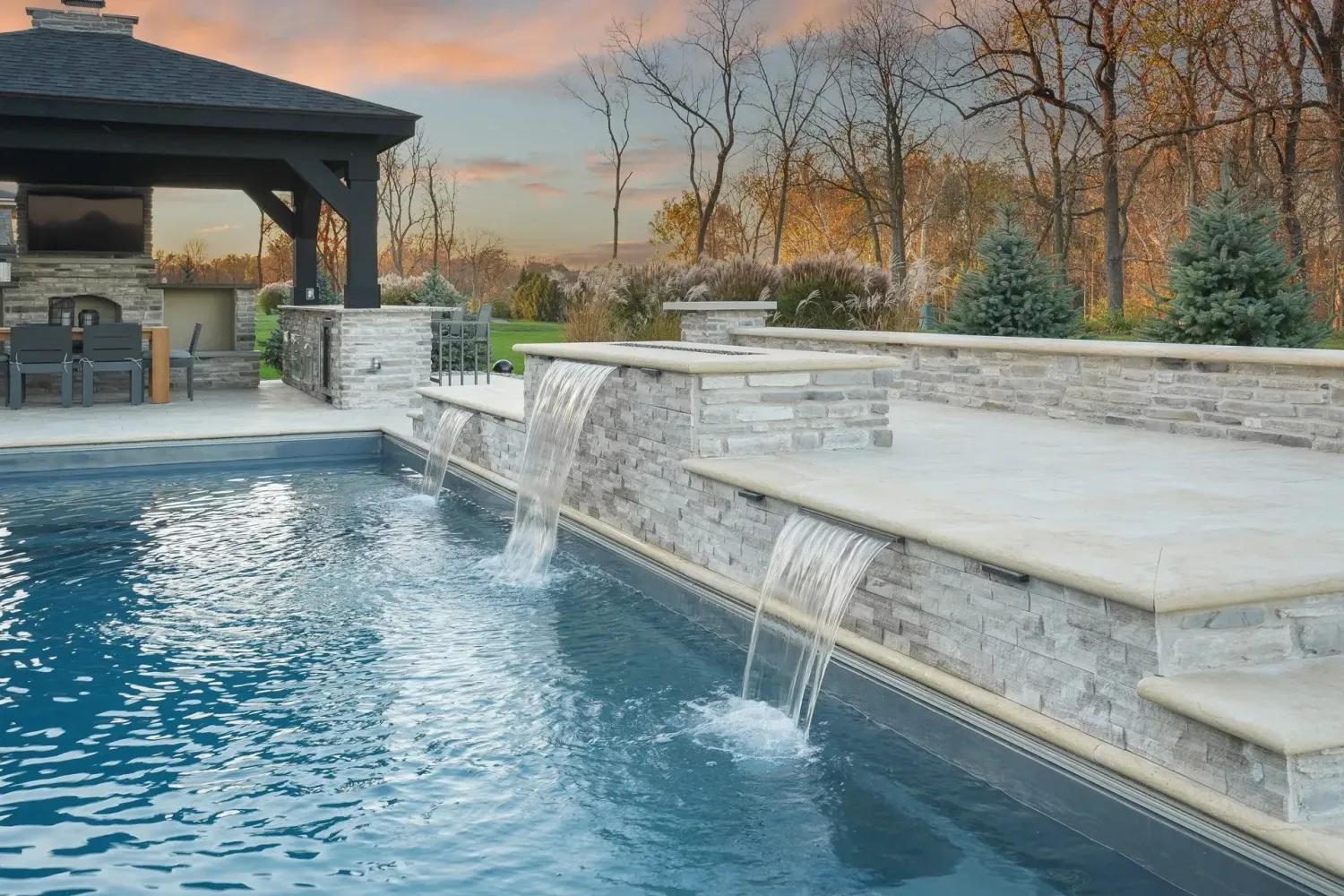
What Flood Zone AE Actually Means for Your Pool Deck
Most of Suwanee sits comfortably on rolling Piedmont at around 1,063 feet of elevation. The parts that don’t — the Chattahoochee-adjacent strips along Settles Bridge Road, parts of McGinnis Ferry, and select lots in older Suwanee proper — carry a FEMA flood-zone designation that shows up the moment your mortgage broker pulls the elevation certificate. Zone AE is the one you care about. It means the Base Flood Elevation has been studied, documented, and published. You know to the tenth of a foot how high the 1%-annual-chance flood will reach.
For pool deck construction, Zone AE does three things to your project. First, it fixes your deck-top finished elevation — in almost every case we specify the deck top at one foot above Base Flood Elevation, not flush with the existing lawn, because that freeboard is what keeps the slab from floating during a surge event. Second, it restricts impervious surface additions. A 720-square-foot deck in a dry-zone Suwanee lot is a signature on a permit; the same 720 square feet in Zone AE requires a stormwater mitigation plan filed with Gwinnett Department of Planning & Development at 446 W. Crogan St., Lawrenceville. Third, it changes the equipment-pad math entirely.
We’ve walked lots in Settles Bridge where the previous contractor poured a beautiful broom-finish deck at the exact same elevation as the house’s rear slab, which was itself only six inches above grade. The homeowner didn’t know what BFE was. Neither did the builder. The deck lasted two rain seasons before a Chattahoochee backwater event undermined the southwest corner and tilted the whole slab a full inch.
The one-foot rule: On Zone AE lots in Suwanee we build deck-top finished elevation to Base Flood Elevation plus 12 inches of freeboard. On Zone AE lots where insurance underwriters want tighter tolerances — typical in River Club and some Laurel Springs holdings — we’ll specify BFE plus 18 inches and the client pays roughly $14 to $22 per linear foot of retaining wall to hold the additional grade.
Why the Deck Slope Spec Changes on Floodplain Lots
Standard pool deck grading for a dry-zone Suwanee build is 1% fall away from the coping — about an eighth of an inch per foot. That’s enough to shed rainfall, prevent puddling, and keep the deck dry after a thunderstorm. It is not enough for a floodplain lot. On Zone AE builds we specify a minimum 2% positive slope from the coping to a dedicated drainage path, which on a typical 14-foot-wide deck means the outer edge sits roughly three and a quarter inches below the coping edge. That slope plus a subsurface drain network is what evacuates surge water before it sits on the slab long enough to migrate into the base.
The drainage path isn’t to the lawn. On a floodplain-adjacent lot the lawn is the flood — it’s the low point. The drainage path has to route to either an engineered dry well set above BFE or to a discharge point that sheds uphill of the 1%-annual-chance boundary. We typically tie pool deck drainage into a 6-inch perforated PVC collector wrapped in geotextile sock, bedded in number-57 washed stone, and terminated in a dry well sized to hold the 24-hour 25-year storm volume for the added impervious area.
The Impervious Surface Mitigation Math Nobody Talks About
Here is the part of a Suwanee Zone AE project that catches most homeowners by surprise. Gwinnett County doesn’t just let you add 600 to 1,200 square feet of paved deck inside a regulated floodplain. Under the county’s stormwater ordinance, any net increase in impervious area within the Special Flood Hazard Area has to be offset — either by removing existing impervious elsewhere on the property or by adding stormwater detention volume that holds the runoff difference between the pre-construction and post-construction condition.
For a typical 820-square-foot travertine deck on a Settles Bridge lot, that usually works out to a detention requirement of roughly 340 to 460 cubic feet of storage — which in practical terms means either a subsurface chamber system (we spec StormTech SC-310 chambers for most builds at this scale) or a surface detention basin tucked into a low corner of the yard. The chamber system runs an installed cost most of our clients don’t want to see on paper but is worth it for the lot aesthetics: you get your full deck, the county gets its storage, and the yard looks the same from the deck chair.
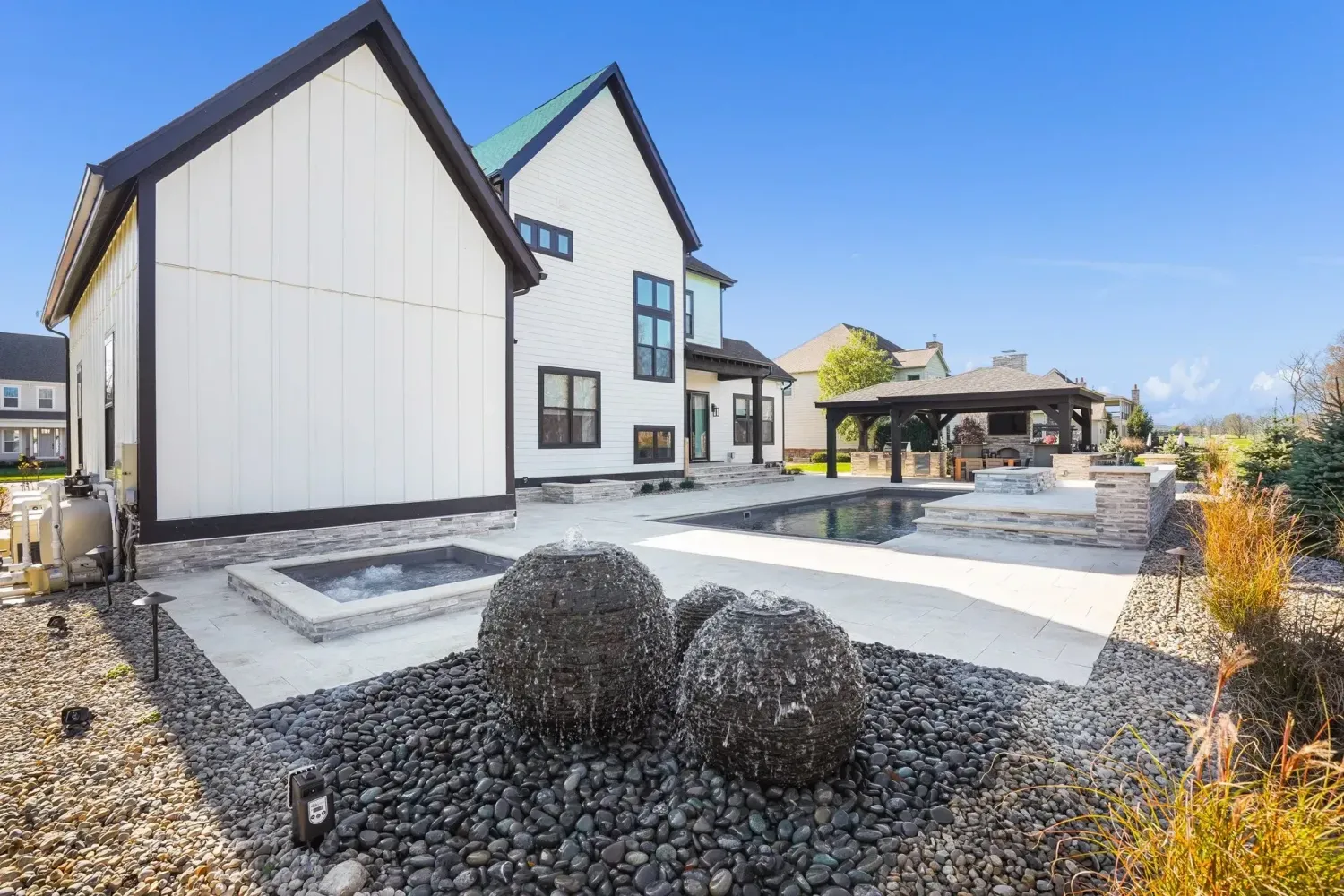
The second mitigation path — swapping existing impervious for new — works on some estate lots in Laurel Springs where the previous owner poured 1,200 square feet of driveway apron that nobody uses. We’ve demo’d asphalt aprons, restored the area to pervious turf-block or permeable paver, and banked the offset toward new pool deck square footage. Gwinnett accepts the trade on paper if the documentation is clean: a certified impervious-area survey before demolition, a post-construction survey after, and a signed stormwater management report from a licensed Georgia Professional Engineer.
Permit timing reality: Dry-zone Suwanee deck permits clear Gwinnett Planning in roughly 10 to 14 business days. Zone AE deck permits with impervious-offset documentation run 4 to 7 weeks because they cross-route through the county’s floodplain administrator before final sign-off. Build the timeline into your project plan before you sign a contract.
Base Flood Elevation and the Equipment Pad
Pool equipment is the single most expensive casualty of a flood event on a Suwanee floodplain lot. A variable-speed pump, heater, automation controller, and salt cell together retail somewhere north of $6,800 just on parts. Submerge that pad for six hours in silted river water and you are looking at full replacement plus a warranty claim most manufacturers will reject because flood damage is explicitly excluded from residential pool equipment warranties.
The fix is both simple and specific: we pour the equipment pad at a minimum of 18 inches above Base Flood Elevation, not above finished grade. That usually means a raised concrete pedestal pad poured on a small block-and-footing foundation, set against the house or tucked behind a privacy wall so the elevation doesn’t visually intrude. Jackson EMC 240V service feed gets run in conduit up the back of the pedestal with a weatherhead above the pad elevation so water ingress through the conduit is physically impossible in any reasonable flood event.
One thing to note that trips up out-of-area contractors: Suwanee runs on Jackson EMC, not Georgia Power. The service specification, meter clearance requirements, and inspection workflow are all different from the Georgia Power territory that covers most of the rest of metro Atlanta. If your contractor hasn’t pulled a Jackson EMC service on an equipment upgrade before, the first set of drawings will come back with corrections and your project will slip two weeks.
Post-Flood Cleanup Spec and What Your Warranty Actually Covers
Assume a flood event will happen. On a Chattahoochee-adjacent Suwanee lot it is not a question of whether but of how often. Federal flood maps for the Suwanee stretch of the river have been redrawn twice in the last fifteen years, and the Base Flood Elevation numbers have moved — generally upward — each time. We design every floodplain deck with a written post-flood cleanup spec attached to the final project documentation package.
The cleanup spec lists, in order: pressure-wash the deck surface within 72 hours with clean municipal water, not river water; inspect all expansion joints for silt infiltration and vacuum-extract any deposits before they cure; pull all equipment pad access panels and visually inspect for waterline evidence (a waterline on the heater cabinet that sits above the 18-inch BFE mark means the flood exceeded design expectations and insurance documentation needs to capture it); and re-verify deck slope at 12 measurement points with a four-foot level before declaring the deck serviceable. We include a printable checklist in the client’s final binder so whoever is on site after a flood event knows what to do in what order.
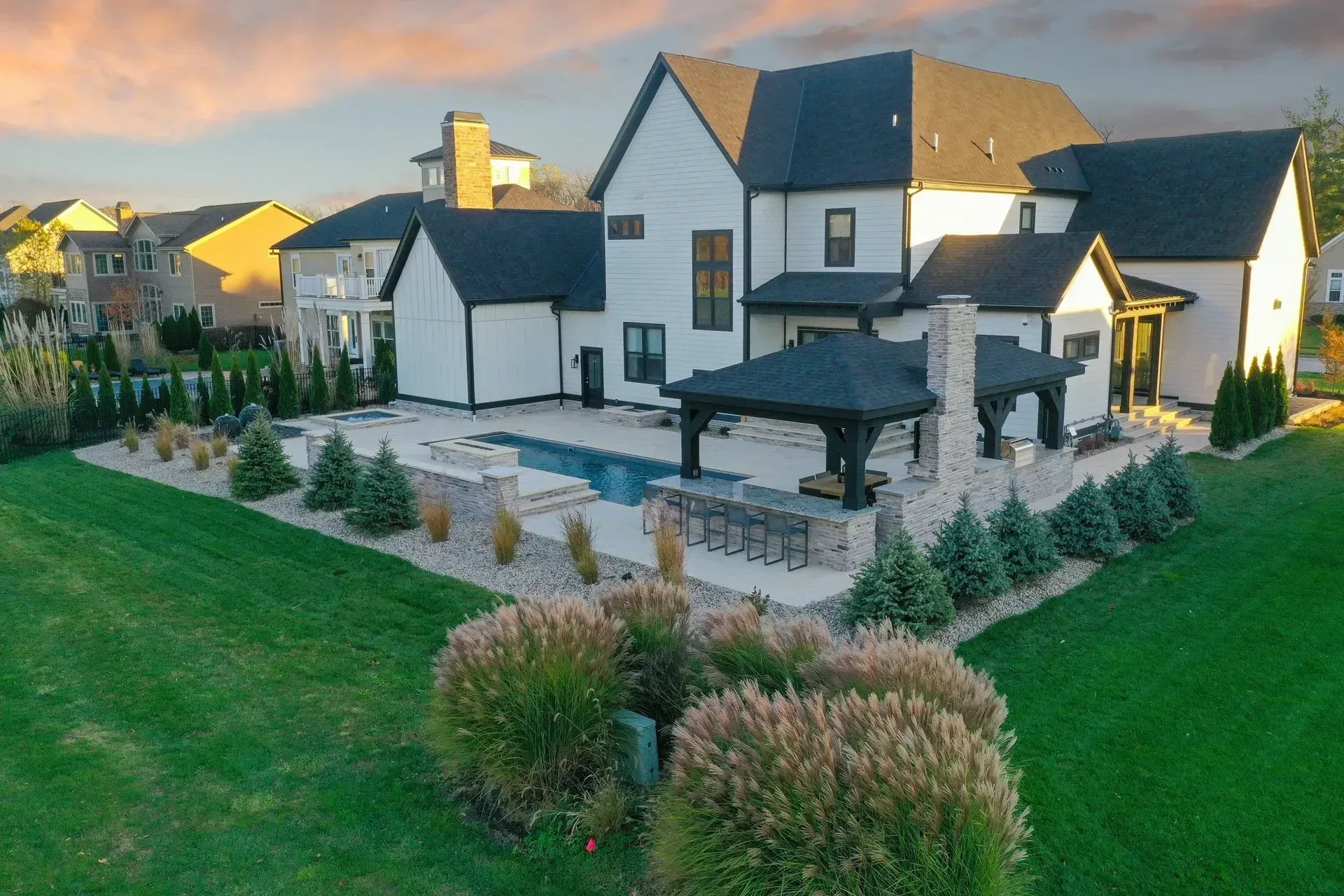
On the warranty side: read the fine print on every product going into a floodplain deck. Travertine pavers from the major quarries carry a material warranty that excludes “damage from flooding or immersion in non-potable water.” That language is everywhere. What it means in practice is that a flood-damaged paver — one that has absorbed silt into the interior porosity and stained — is not replaced by the manufacturer. It’s replaced by you, or by your homeowner’s flood policy, or by nobody if you don’t have a policy that covers exterior hardscape.
We address that at the design phase by specifying cream travertine from quarries with density ratings above 150 pounds per cubic foot, which run tighter interior porosity and resist silt absorption better than the budget imports. It’s a $2 to $4 per square foot premium on material cost. On an 820-square-foot deck that’s a rounding error relative to the cost of a post-flood replacement.
FEMA Documentation for Refinance and Resale
This is the one most homeowners don’t think about until they try to refinance or sell. FEMA documentation for any improvement inside a Special Flood Hazard Area has to be retained and handed to the next lender. The elevation certificate, the impervious-offset calculation, the stormwater management report, the equipment-pad elevation attestation — all of it sits in the property file and gets requested during underwriting.
On a Suwanee refinance inside Zone AE, the typical ask from the lender is: new elevation certificate stamped within the last 12 months, copy of the pool/deck permit with final inspection sign-off, and a written statement from the contractor confirming deck-top elevation and equipment-pad elevation relative to BFE. Contractors who don’t hand that packet over at project closeout are contractors whose clients lose three weeks at refinance time. We deliver the packet before final payment — it’s part of the standard closeout.
What This Looks Like Across Suwanee’s Real Neighborhoods
Suwanee is not one market. It’s at least four, and the floodplain story changes by subdivision. Laurel Springs — Gwinnett’s premier gated golf community — sits on elevated Piedmont above the Chattahoochee floodplain, which means most Laurel Springs builds don’t carry Zone AE complications. What they do carry is one of the strictest HOA architectural review processes in the county, typical 3 to 4 week turnaround, and specific material palette restrictions that narrow deck surface options to a short list.
The River Club at Suwanee is the opposite story. Some River Club lots back directly onto the Chattahoochee and are squarely inside Zone AE. The HOA there is design-forward and approves sophisticated hardscape, but the flood-zone requirements are binding and non-negotiable. Bear’s Best Atlanta — the private-club estates — splits the difference: elevated lots, strict architectural review, but generally outside the regulated floodplain.
Settles Bridge and Village Grove carry the most variable conditions. A lot on Settles Bridge Road can be dry-zone at one address and Zone AE two doors down. We always pull the FEMA Flood Insurance Rate Map and the most recent elevation certificate before we price a deck in those neighborhoods. Highgrove and Woodbury are generally dry-zone and move on standard permit timelines. The Manor and older Suwanee proper ranch/traditional lots are a mixed bag — usually dry but worth verifying on the FIRM.

Equipment Delivery and Access
One final Suwanee-specific note that affects pricing on any floodplain deck project: equipment delivery almost always routes through the Peachtree Industrial Boulevard corridor, which means staging trucks on a secondary road and ferrying materials to the job site in smaller loads. On River Club and Laurel Springs lots the HOA restricts heavy-vehicle access windows. On Settles Bridge riverfront lots the access road grade often won’t tolerate a fully-loaded paver truck. We build the logistics into the schedule and the line-item cost.
Fog is the other variable. Chattahoochee river fog on fall mornings will sit in the low spots until 10 or 11 AM. That’s a real thing for concrete placement — we don’t pour deck slabs in visible surface moisture, and on riverfront lots October through December means a later-morning start window than a typical Suwanee project further inland. Small detail. Adds up across a four-week project timeline.
The short version of all of it: a Chattahoochee-adjacent Suwanee deck is not a harder project, it’s a different project. Done right, it outlasts the surrounding landscape. Done wrong, it’s the cautionary photograph your neighbor sends to their insurance adjuster. The difference sits in a few specific decisions made before the first shovel — the elevation certificate, the slope spec, the detention calculation, the equipment pad pedestal, and the documentation package that moves with the property at resale.
Pool decks across 20+ cities within 30 miles of Winder, GA
Zone AE lot in Settles Bridge or River Club? We pull the FIRM, run the impervious-offset math, and design the deck around the flood assumption — not the brochure.